memory

Family appeals to Arizona community for clues to find Nancy Guthrie

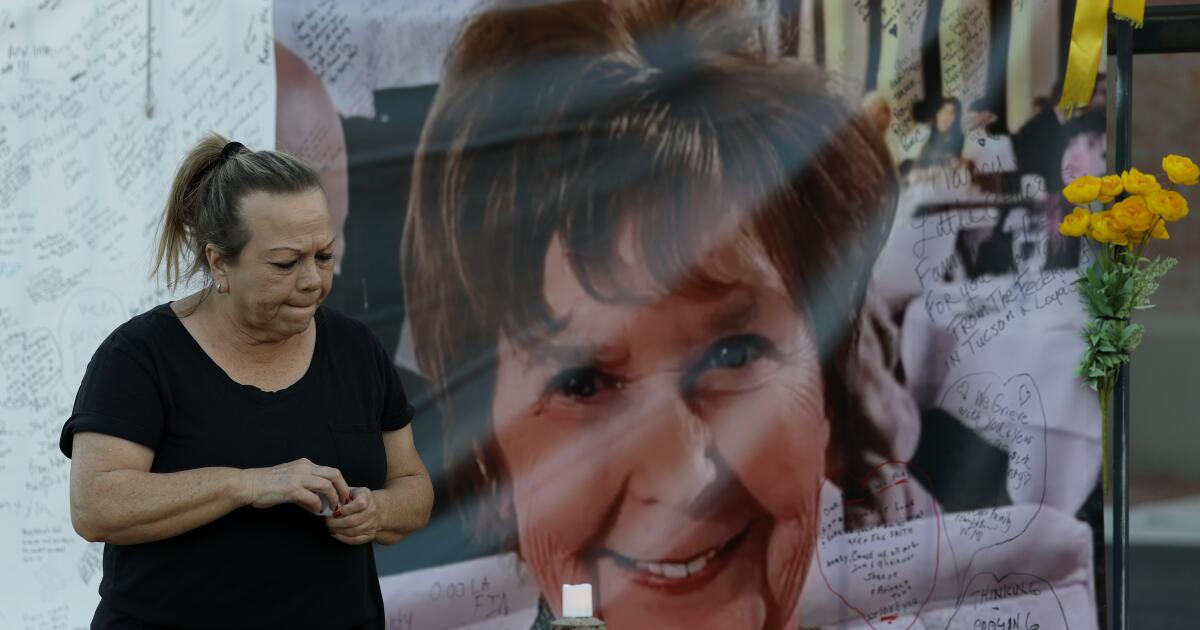
Savannah Guthrie is renewing pleas to neighbors, friends and residents of Tucson to jog their memories in hopes of sparking new leads in the disappearance of her mother, Nancy.

The “Today” show co-host posted a new family statement on her personal Instagram account Sunday morning, hours after the show’s Instagram account shared it.

After expressing gratitude to the community, the family said in its statement that it believes someone in Tucson or in southern Arizona may “hold the key to finding the resolution in this case.”

“Someone knows something. It’s possible a member of this community has information that they do not even realize is significant.”

The family urged people to go over their memories of Jan. 31 — when Nancy Guthrie was last seen — and Feb. 1 as well as the evening of Jan. 11.

“Please consult camera footage, journal notes, text messages, observations, or conversations that in retrospect may hold significance,” the statement said. “No detail is too small.”

They also acknowledged in the statement that their family’s matriarch may no longer be alive.

“We cannot grieve; we can only ache and wonder.”

Nancy Guthrie was reported missing Feb. 1. Authorities believe the 84-year-old was abducted or otherwise taken against her will. The FBI released surveillance videos of a masked man who was outside Guthrie’s front door on the night she vanished.

The Guthrie family has offered a $1-million reward for information leading to the recovery of their mother.

On March 5, Savannah Guthrie visited the NBC “Today” show studio in New York City for the first time since her mother’s disappearance. The show said she plans to return to the air at some point but “remains focused right now supporting her family and working to help bring Nancy home.”

Tucson is a little more than 100 miles south of Phoenix and 70 miles north of the Mexico border. The Catalina Foothills, the neighborhood where Nancy Guthrie lives, is known as an affluent area with popular hiking trails.

Savannah Guthrie has been a co-anchor of the longtime NBC morning show since 2012. One of her former colleagues, Hoda Kotb, has returned to “Today” to fill in during Guthrie’s absence.

Source link

Rainelle Krause dead: Coloratura soprano, aerialist was 37

Rainelle Krause, a coloratura soprano who went viral for singing a signature aria while hanging upside down from aerial silks, has died after a short hospitalization, her family announced “with immense sadness” Tuesday on social media. She was 37.

“Rainelle was a force in our lives, a brilliant talent defined by grit, fearlessness, curiosity, intelligence, integrity, and resilience,” the family said in a statement on Instagram. “Onstage, her voice matched the breathtaking power of her spirit. Offstage, she was a loving, caring soul whose vibrant energy lit up everyone around her. Our hearts are full from the years we shared, even as we’re shocked that her skyrocketing career was cut short.”

The family gave no further details about the circumstances of her death but said they were grateful to have Krause’s “preserved performances” to revisit. They said they would be planning a celebration of life “at a later date” but wanted to share the sad news now with friends and fans.

“Rainelle always gave her very best, pouring her heart into her art and those she loved,” the family said. “The best way we can honor her memory is by living her values every day. We encourage you to keep her memory alive by sharing her beautiful performances.”

Krause, whose website dubbed the Queen of the Night in “The Magic Flute” as her signature role, debuted in that role at the Metropolitan Opera over the holidays. She did the same last fall at Opera Atelier in Toronto.

“Although we knew Rainelle for only a matter of months, we will never forget her astonishing talent. We were awed by her bravery and daring and deeply moved by her willingness to draw all of us into her circle of friends,” Opera Atelier said Wednesday on social media. “Beautiful, generous, talented and kind, Rainelle is irreplaceable and will always hold a unique place in our memories.”

Born in Florida, Krause graduated from Indiana University’s Jacobs School of Music with a bachelor’s in music and a master’s degree in music in vocal performance. The English National Opera said she trained with the Sankt Goar International Music Festival and Academy in Germany, the OperaWorks Advanced Artist Program in Los Angeles, Opera Las Vegas, the Taos Opera Institute and Opera Nova Costa Rica.

She performed with opera companies in Nashville and Atlanta, and in Texas she sang with the Dallas Opera, with symphony orchestras in Irving and Plano, and with a master chorale in Amarillo. She was set to debut with the Santa Fe Opera in May.

Internationally, Krause’s “The Magic Flute” performances included gigs in Berlin, Copenhagen and elsewhere. Roles outside of the Queen of the Night included the title role in “Lucia di Lammermoor,” the princess in “The Snow Queen,” Zerlina in “Don Giovanni” and Pat Nixon in “Nixon in China.”

As for her viral acrobatic performances, those appeared to have been on hold in the year before her death.

“I can’t even begin to express how much I miss aerial work,” Krause wrote last March on social media. “I’ve been dealing with horrendous shoulder impingement for months, I’ve been in physical therapy since last summer, I’m continuously learning new ways to attempt to build strength and fluency in order to support my VERY hypermobile joints.

“I am in pain most days,” she continued. “But I’m not giving up, I’m seeing incremental improvements, and I will fly again — this time working in concert with the body I have, instead of forcing myself to ‘just put in the work’ with all the wrong pathways.”


Source link

S. Korea ranks No. 1 in export of memory chips, SSDs, face masks, 78 other items: report

South Korea had 81 products that led global exports in 2024, including memory chips and face masks, a report showed Tuesday.
In this photo, containers are stacked at a port in Pyeongtaek on March 12. Photo by Yonhap

South Korea had 81 products that led global exports in 2024, including memory chips, solid state drives (SSDs) and face masks, a report showed Tuesday.

The report published by the Korea International Trade Association (KITA) showed that the value of 81 Korea-produced items accounted for the largest share of global export value in their respective categories.

China was at the top with 2,087 items with the largest export market share, followed by Germany at 520 items, the United States at 505, Italy at 199 and India at 156.

South Korea had 19 items ranked between second to 10th in terms of export market share, KITA said, noting the country is likely to increase its number of globally leading products in the future.

The country’s top selling items included memory chips, electrical transformers, SSDs, lead-acid starter batteries for automobiles, rubber for automotive components and sheet masks.

Notably, Korea reclaimed the top spot for memory chips from China for the first time in five years in 2024, thanks to strong demand for high bandwidth memory (HBM) and other advanced products made by Korean companies, KITA said.

In the tanker segment, Korea lost the top spot to China on the latter’s strategy of securing large volumes of low-value vessels but is expected to retake the position in 2025 on the back of the recent boom in Seoul’s liquefied natural gas (LNG) ship orders, it added.

Copyright (c) Yonhap News Agency prohibits its content from being redistributed or reprinted without consent, and forbids the content from being learned and used by artificial intelligence systems.

Source link

Jack Osbourne welcomes baby girl with wife and reveals sweet name in memory of his dad Ozzy

JACK Osbourne has proudly welcomed a baby girl with his wife and revealed her sweet name which is a touching tribute to his dad Ozzy.

The former MTV reality TV star, 40, confirmed the happy news in a post on Instagram.

Jack Osbourne revealed he has named his newborn baby after late dad OzzyCredit: Instagram
Jack Osbourne and wife Aree Earhart revealed their pregnancy in DecemberCredit: Brian Roberts
Much-loved Ozzy with his son Jack in 2011Credit: Getty

And Jack revealed her name was Ozzy Matilda Osbourne in a sweet nod to his late father.

The tot was pictured lying peacefully next to what appeared to be a bat plushie and a badge that said ‘Hello World’.

Jack captioned the post: “She’s arrived and she’s perfect.”

Ozzy Matilda was born om March 5 just before 9am according to the duck-themed sticker.

magnificent seven

Ant & Dec secretly line up SEVEN brand new shows with all-star cast


STAR IN PAIN

McFly’s Harry Judd rushed to hospital after nasty gardening accident

Rock legend Ozzy, who died in July aged 76, had been told he was going to be a grandfather again before his death.

Jack previously revealed he and Aree’s tot was giving him hope while grieving for his Black Sabbath rock legend dad Ozzy.

The proud dad has three daughters from his previous marriage – while his and Aree’s firstborn is three-year-old Maple.

Fans were quick to congratulate Jack after his latest annoucement.

One said: “Yay, we have another Ozzy Osbourne! The world is right again.”

Another wrote: “Oh my goodness congratulations I love her name I’m sure ozzy is smiling.”

A third said: “The most perfect name she could have ever received!! Congratulations to you all…I am sure her birth is what everyone’s heart needed!!”

Jack and Aree have welcomed Ozzy Matilda into the worldCredit: Michelle Beller
His dad Ozzy died just 17 days after his farewell gig Back to the Beginning in BirminghamCredit: Ross Halfin
Jack’s family has grown with another baby

Speaking publicly for the first time about the happy pregnancy news back in December, Jack said it has been the joy his family – including his mum Sharon, 73 – have needed after such a tough year.

In an exclusive interview with The Sun on Sunday he said: “It’s awesome.

“I think it’s been partly a healthy distraction, partly healing – probably in that kind of ‘full cycle’ category, in a weird way.

“It’s very much taken energy out of the grieving side of things and parked in a bit more hopefulness.

“It’s been easy for me – I think it’s been a lot harder for my wife!

“We’re super-excited. It was sort of planned, I should say. It was maybe a little earlier than expected.

“But it’s definitely something that we were wanting to pursue and somehow it happened, miraculously.”

His beloved dad Ozzy played a farewell concert at the Villa Park stadium in his hometown of Birmingham last July.

At the benefit gig, the acclaimed heavy metal star reunited with all of his bandmates, which included Geezer Butler, Tony Iommi and Bill Ward.

The band performed some of their greatest hits, ending with a rendition of Paranoid.

During his last interview, heavy metal icon Ozzy said his “final encore” meant “everything”.

Jack then ventured into the I’m A Celebrity jungle to honour bat-biter Ozzy’s legacy and his wish for him not to be “moping about and being sad”. 

He lasted 21 days in camp and proved to be hugely popular among his campmates.

Ozzy’s death, following a six year battle with Parkinson’s Disease, reshaped Jack’s perception of their relationship with him now saying he is “really cherishing moments” – even the difficult ones.

Jack first rose to fame in 2002 after starring in the hit series, The Osbournes.

He received worldwide attention for his television tenure alongside his family, which included sister Kelly, and parents Sharon and Ozzy.

Ozzy spending Christmas with son Jack and four daughters
Jack with Ozzy in the second season of The OsbournesCredit: MTV
Ozzy would often take Jack and the kids on tour with his band Black SabbathCredit: Rex

Source link

As U.S. democracy is in peril, these Brazilian films offer perspective

When Brazilian journalist Tatiana Merlino watched “The Secret Agent” — one of this year’s Oscar nominees for best picture — it felt like seeing scattered scenes from her own life.

As the movie follows Marcelo (played by Wagner Moura) — a professor fleeing from a vindictive businessman during Brazil’s military dictatorship (1964-1985), the story skims through old audio tapes and newspapers, reviewed by a researcher looking into how he died. Like her, Merlino also dug into the past to piece together how her uncle, Luiz Eduardo Merlino, a communist activist, was killed by the right-wing regime in 1971. Though it was initially reported as a suicide, the family soon found his corpse with torture marks in a morgue.

“It became necessary to fight for memory, truth, and justice, because these crimes committed by dictatorship agents weren’t punished at that time, and have not been to this day,” says the 49-year-old journalist, who first saw “The Secret Agent” in São Paulo, and made a career from investigating human rights abuses.

“When a country does not come to terms with its past,” she adds, “its ghosts resurface.”

Recent dictatorship-themed movies like “The Secret Agent” and “I’m Still Here,” which won the Oscar for best international film in 2025, were instant blockbusters back home in Brazil. While both films honor those who, like Merlino, still seek justice for the regime victims, their popularity also got boosted by the country’s zeitgeist.

To many Brazilians, these movies served as reminders of what could have been had former far-right President Jair Bolsonaro, himself a retired Army captain and a dictatorship nostalgic, succeeded in his 2022 attempt at a coup d’etat.

On Jan. 8, 2023, encouraged by Bolsonaro, hundreds of vandals stormed into the Three Powers Plaza, a square in the country’s capital, Brasília, that gathers the congress, the supreme court and the presidential palace. Neither he nor the vandals accepted the 2022 election — won by the veteran leftist Luiz Inácio Lula da Silva, better known as “Lula.”

The uprising followed the same blueprint as the pro-Trump rioters behind the Jan. 6 insurrection in the United States. Although President Trump himself was federally prosecuted for election obstruction, the case was dismissed after his reelection in 2024.

Unlike the U.S., however, Brazil has charged, judged and arrested the conspirators — including Bolsonaro and members of his staff who participated in the coup plot.

“Bolsonaro doesn’t come from Mars,” said “The Secret Agent” star Wagner Moura to the L.A. Times in February. “He’s deeply grounded in the history of the country.”

In 1964, a U.S.-backed coup enacted a violent, 21-year autocracy run by the military, whose effects still resonate today, says Alessandra Gasparotto, a professor at the Federal University of Pelotas (UFPEL).

“It was a dictatorship that worked from a perspective of building certain legitimacy, keeping the congress functioning, but of course, after purging dissent,” explains the Brazilian historian.

“I’m Still Here,” for example, dramatizes the real-life quest of Eunice Paiva, a housewife whose husband Rubens Paiva, a former leftist congressman who had his tenure revoked after the coup, then disappeared in the hands of the military in 1971. To this day, his body still hasn’t been recovered.

In 2014, Bolsonaro, then just a congressman, spit on a bust of Paiva erected to honor his memory during the coup’s 50th anniversary in Congress.

“The cinema of all countries has the role of preserving memory, so if you take a look at the Holocaust, the American Civil War, or World War II movies, it has this role of almost an ally of history,” says writer Marcelo Rubens Paiva, son of Rubens Paiva and author of the book from which “I’m Still Here” is based. “There’s an old saying: History is the narrative of winners, while art is of the defeated.”

In the case of Brazil, the militaries who led the repressive apparatus of the dictatorship got away with torture and murder through a 1979 amnesty law. It was initially enacted to pardon alleged “political crimes” committed by the regime opposition and allow a transition to democracy — but it was also used to pardon the dictatorship’s human rights violations. Then, in the late 1980s, the military oversaw a slow, gradual shift to democracy, stepping down from power only in 1985.

“This new republic had more continuity than novelty, since many politicians who were central to the dictatorship moved to central roles in the democratic government,” explains Gasparotto. “That’s why they built this pact [to forgive the regime’s crimes].”

For that reason, these movies still feel contemporary. “The Secret Agent,” for example, blends past and future through the records analyzed by a researcher, while “I’m Still Here” highlights Eunice Paiva’s post-regime fight for the recognition of Rubens Paiva’s death; without any corpse to officialize his death, he was just deemed disappeared.

When Merlino watched the movie, for example, Eunice reminded her of her grandmother, Iracema Merlino.

“I’m the third generation of my family fighting for memory, truth and justice,” says Merlino. “It started with my grandmother, who passed away, then it was handed to my mother, who’s now very ill, then to me.”

Nowadays, she awaits trial for the third lawsuit attempt of the family to hold her uncle’s torturer, Col. Carlos Alberto Brilhante Ustra, accountable — the two other cases against the accused were dismissed over the years.

Since Ustra’s death in 2015, the Merlino family is now suing his estate for reparations. Yet he still remains a hero to some; in 2016, while Bolsonaro was still a congressman, he shouted a dedication to the memory of the torturer during the voting of the impeachment of Brazil’s former President Dilma Rousseff — herself one of the victims of Ustra in the 1970s, but among the few who survived.

“These films make connections with the present because understanding the past is important for understanding today’s contradictions,” says Marcelo Rubens Paiva. “What happened before interferes in the conflicts a country lives in today.”

So if authoritarians like Bolsonaro don’t come out of the blue, the same goes for other autocratic leaders, like President Trump.

Although founded on democratic principles, the U.S. itself has a long, muddled history with the concept. The authoritarian turn the country is reckoning with is part of a long legacy of inequality that stemmed from the 246-year institution of slavery. Following its abolishment in 1865 came a near-centurylong period of tension marked by racial segregation that we now refer to as “Jim Crow.”

“With some exceptions, the South was governed by a then-segregationist Democrat party — with [rampant] electoral fraud, authoritarianism, use of local police for political repression, and no chance for opposition, even [by] moderates,” says Arthur Avila, a history professor at the Federal University of Rio Grande do Sul (UFRGS) in Brazil.

Although the Civil Rights Act of 1964 and the Voting Rights Act of 1965 ended segregation and granted voting rights to people of all races — signed by then-President Lyndon B. Johnson, a Southern Democrat who broke away from the party’s history to spearhead progressive domestic policy — the decades that followed were ridden with manipulations of the electoral system. For example gerrymandering, or the practice of manipulating electoral district boundaries to favor one political party, is an ongoing, albeit controversial tactic among both Democrats and Republicans.

President Trump himself was federally prosecuted for election obstruction. The indictment alleged that, upon losing the 2020 election, Trump conspired to overturn the results and manipulate the public by spreading false claims of election fraud on social media. It argued that this, in turn, stoked a mob of his supporters into leading the deadly Jan. 6 attacks on the Capitol; but the case was dismissed upon his reelection in 2024.

In the lead-up to the midterm elections in November, Trump has pushed for federal control over elections, restrictions on mail-in voting and the addition of citizenship documents to vote, despite an existing federal law that already prohibits noncitizens from voting in U.S. elections. (He tried implementing the latter through an executive order in 2025, but it was permanently blocked by a federal court; a voter ID bill called the “SAVE America Act” is currently stalling in the Senate.)

“There’s a strong local authoritarian tradition in the U.S. that Trump himself feeds from,” says Avila.

Besides that, according to Avila, the country faces a growing “de-democratization” process from within. This shows in the rising control and dismantling of institutions by reactionary sectors — including efforts to block professional, educational and athletic programs promoting DEI, or diversity, equity and inclusion — from what many critics and scholars have cited as lingering resentment from desegregation, he says.

“We may see it as a slow authoritarian turn in North American politics that didn’t overturn the democratic regime yet,” Arthur considers. “But if this process goes on, and that’s a conjecture, in the next decade the U.S. may become a state of exception that keeps democratic appearances but has been stripped of any democracy’s substance whatsoever.”

As movies such as “The Secret Agent and “I’m Still Here” remind us, a great deal of maintaining a democracy has to do with keeping a good memory.

Source link