Spanish hotel chain Meliá to shutter hotels in Cuba in latest blow to island’s tourism sector
HAVANA — Spanish hotel chain Meliá has joined a growing list of companies with a long-standing presence in Cuba that are withdrawing or limiting their operations on the island after the U.S. announced new sanctions while upholding an oil embargo.
Meliá will cease operations at 15 of the 34 hotels it manages on the island, according to state website Cubadebate, dealing a blow to Cuba’s vital tourism sector, which has plummeted since its 2018 peak.
The report on Wednesday stated that Meliá’s decision was based on “a sense of corporate responsibility and external factors that have significantly affected the operation, legality and security of these establishments.”
The decision was announced May 26, just weeks after President Trump signed an executive order expanding sanctions against the island. Most of the sanctions targeted Grupo de Administración Empresarial S.A., a business conglomerate operated by the Cuban Revolutionary Armed Forces, with the U.S. asserting it was a threat to its national security.
The executive order freezes the assets of foreign companies, seizes their accounts in the United States and prohibits travel by their shareholders, investors and employees— virtually eliminating their activity in the U.S. financial system.
GAESA, a Cuban conglomerate created in the 1990s, owns a wide range of businesses, from car rentals and retail stores to transportation companies. It is Meliá’s partner in hotel management through one of its subsidiaries, Gaviota.
Meliá deals new blow to Cuba’s crumbling tourism sector
Meliá is one of Cuba’s most important partners in its vital tourism sector. Until its partial withdrawal, it operated some 14,000 rooms.
Spanish and Canadian firms are the biggest investors in Cuba’s hotel sector, noted Lee Schlenker, a research associate at the Quincy Institute’s Global South program, a Washington think tank.
“With the lack of international tourism, the fuel shortages, and just the broader decline since COVID…I’m sure that these companies will be rethinking their operations in Cuba with major implications for the people of Cuba, not just GAESA,” he said. “There are thousands of Cubans who work in these hotels.”
Several of the hotels that Meliá abandoned in idyllic destinations like the resorts of Varadero, Cayo Santa María and Jardines del Rey “were already closed and inactive due to energy problems and the drop in demand in Cuba,” according to Cubadebate.
Cuba’s government has blamed the U.S. energy blockade for prolonged blackouts, water shortages, supply problems, deficiencies in the healthcare system and disruptions in all aspects of daily life.
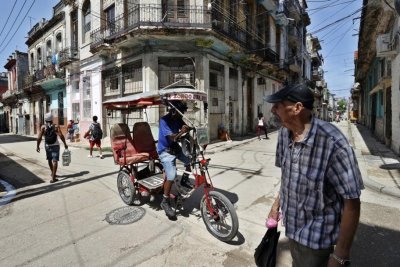
Those who work in Cuba’s crumbling tourism sector lamented Meliá’s announcement.
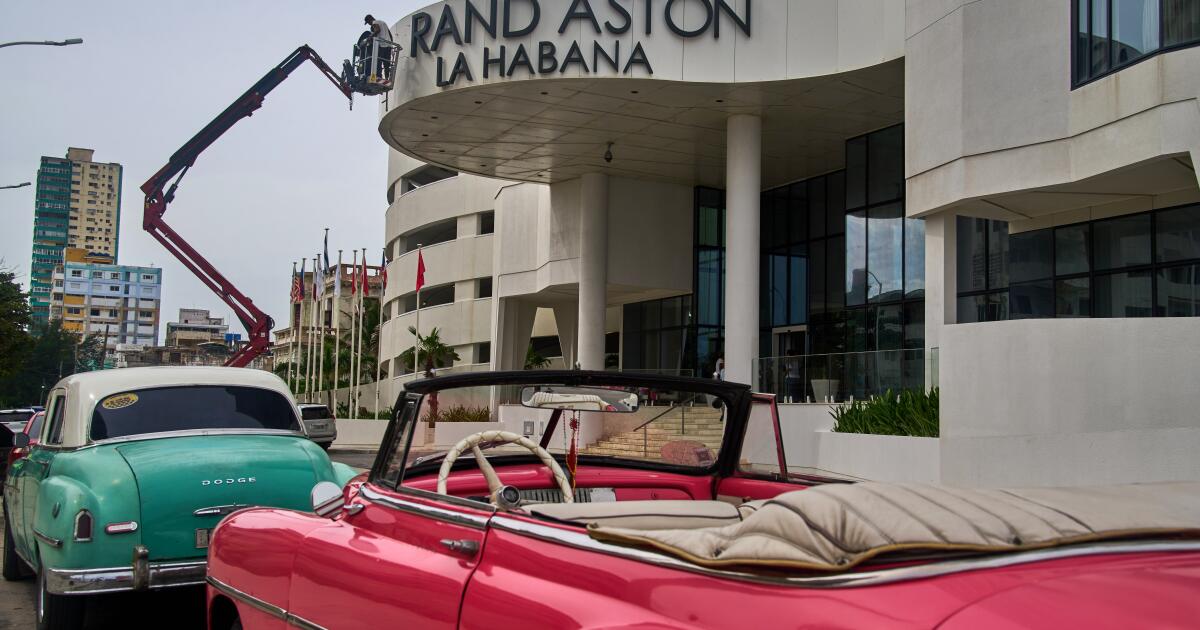
“It’s going to affect us, our families, and everyone involved in tourism. Our pay and income depend on this,” said Erich López, a driver of a green 1950s Dodge who has been driving for two decades to support his family.
For Carlos Luis Carbonel, a 62-year-old parking attendant who works in front of the giant Meliá Cohiba hotel in Havana, the situation “is going to be a blow.”
“This is terrible for everyone: for tour guides, for parking attendants, for hotel workers, for everyone,” he said.
Other major hotel chains including Canadian-owned Royalton and Spain’s Iberostar have limited or suspended operations in Cuba in the past week.
Tourism in Cuba, which reached a peak of 4.3 million visitors in 2019, saw a significant drop in the number of tourists arriving in the first quarter of this year, 48% lower than in the same period in 2025.
Only 298,000 tourists arrived in Cuba in January, February and March, compared to 573,300 international visitors during the same period last year, according to government data.
Cuba struggles to breathe
On Wednesday, the enormous and iconic sign of the Royalton Paseo del Prado hotel at the entrance of Old Havana was removed, as confirmed by The Associated Press during a visit. Meanwhile, the 500-room Iberostar Selection — also known as Tower K — the most modern and luxurious of the hotels slated to open in 2025, standing over 490 feet tall, has remained closed for days.
Airlines including World2Fly, Air France and Iberia have canceled flights to and from Cuba.
Also on Wednesday, Cuba’s Central Bank announced that Visa and MasterCard operations on the island would be suspended following the termination of relationships between foreign entities and FINCIMEX S.A., a Cuba-based agency affiliated with GAESA.
Last month, Canadian miner Sherritt International Corp. signed a non-binding agreement with Gillon Capital LLC, a family office linked to a former Trump adviser, to sell its stake in a mining business in Cuba.
In late January, Trump threatened tariffs on any country that sells or supplies oil to Cuba, as his administration pressures for a change in its political system and government. The move has deepened a crisis caused by seven decades of U.S. sanctions.
While U.S. and Cuban officials held talks earlier this year, tensions have risen. In late May, former President Raúl Castro was charged in a U.S. indictment for his alleged role in the downing of two civilian aircraft operated by Miami-based exiles in 1996 in Cuban waters.
Rodríguez writes for the Associated Press.