media coverage

3 ads that explain California politics

Three political ads meant to break through our collective indifference caught my eye this week, as we come down to the wire on the June 2 primary election.

Each one says less about the candidates involved, and more about this moment in politics and where the races for California governor and L.A. mayor may be headed. Each ad also hints at deeper issues that haven’t quite reached the water-cooler conversation level, but maybe should.

Becerra blunder

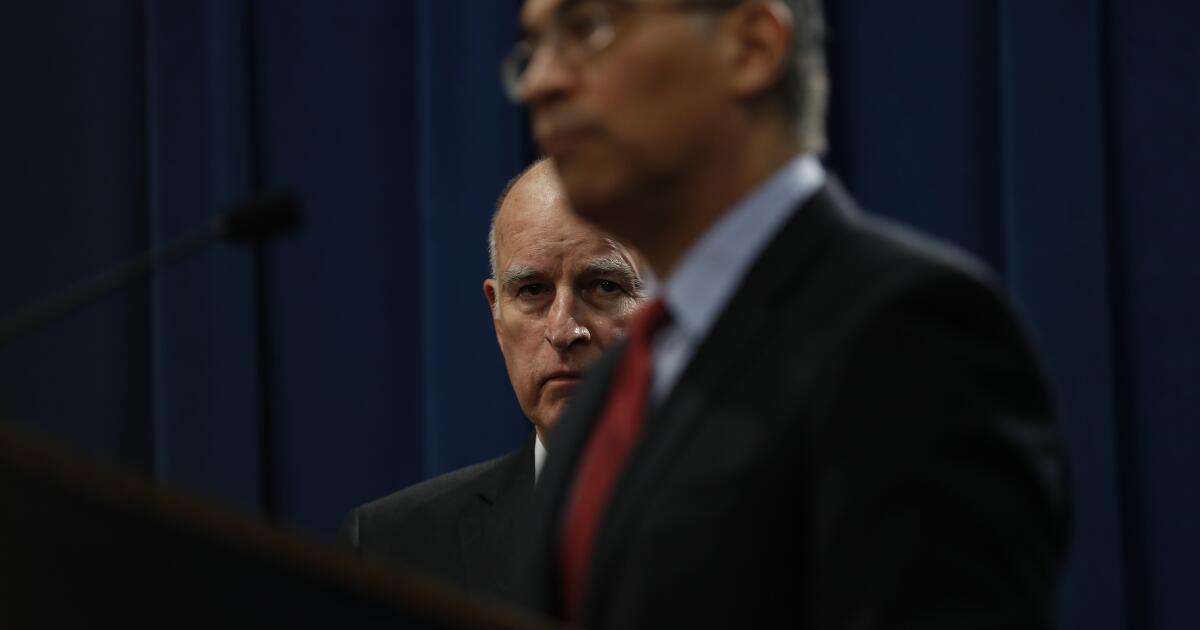
The first ad that grabbed my attention was a quick-turn by San José Mayor and gubernatorial candidate Matt Mahan (still stuck in single-digit polling numbers), who jumped on Xavier Becerra’s first major mess-up.

Becerra chastised KTLA interviewer — on camera — not to give him too many hard questions because, “This is not a gotcha piece, right?”

That left a lot of folks wondering about his temperament and transparency, something rival Katie Porter knows a bit about.

The video went viral, and Mahan mashed it up with now-infamous clips of Porter walking out of a different interview earlier in the campaign cycle.

The result was a fast, funny, pointed jab that made both Becerra and Porter look prickly and unaccountable. For Porter, that damage was done long ago. But this moment for Becerra, the very-slim-margin front-runner, could have sticking power.

New polls, which likely don’t account for the impact of this gaffe, have Becerra edging up in a lead over Tom Steyer or maybe just tied. If Becerra is leading, it’s not by much, and he’s not a shoo-in by any means.

The bigger issue is that there are many hard questions that Becerra will likely need to answer if he does make the general election — questions he’s largely been dodging with pat answers.

This week, one of the lobbyists charged in a scheme that allegedly stole more than $200,000 from one of Becerra’s old campaign accounts will appear in court again.

She’s apparently been working on a plea deal, so it’s likely either that will be formalized, or the case will move forward to a trial. Becerra is not accused of any wrongdoing and told my colleague Dakota Smith that he had testified before the grand jury in the case.

But Becerra has also said he was aware that up to $10,000 a month was being paid out of a dormant campaign account to manage that money, since his role as the Health and Human Services Secretary made it illegal for him to be involved directly.

The question that seems relevant in this age of fraud-and-waste panic is who pays $10,000 a month to have someone watch over a dormant account and doesn’t think that’s excessive? Becerra may have been an innocent victim, but $120,000 a year is a lot of money to pay someone to babysit a largely unused stack of cash.

If Becerra does make it through to the primary and faces Hilton or potentially Steyer, both successful businessmen, expect this lack of financial acumen to be an issue — a hard question that is fair to ask of the person who wants to run the fourth largest economy in the world.

Steyer backers

Speaking of money, the second ad (or sort-of ad) that caught my attention is tied to Steyer, the billionaire who has spent more than $100 million of his own money in this race.

The Sacramento Bee reported that Steyer’s campaign has been paying influencers to post support of him online. The account mentioned in the Bee’s report seems to have removed those videos, but others have archived some of them.

These posts are meant to decidedly not feel like advertisements, but just organic support from Steyer supporters. Steyer’s is far from the first campaign to do this and won’t be the last.

Trump, Kamala Harris, Charlie Kirk’s Turning Point USA — all of them have courted influencers, paid or unpaid, to reach voters, especially young ones. California is one of the few states with a law that tries to regulate some of this type of content, but it’s not a strong law.

While there may be nothing shocking in Steyer’s digital strategy, it should alarm us on the larger level of having a healthy democracy. We’ve largely forgotten the black hole of delusion that millions of Americans fell into during the pandemic era from online misinformation brokers. Remember QAnon?

Influence campaigns are shockingly powerful, and growing in sophistication by the minute. While Steyer’s efforts may be run-of-the-mill, it’s an area of political communication that demands greater transparency and regulation.

Pratt problems

Which brings us to Spencer Pratt, and the ad (ads, really) that caught everyone’s attention — the AI-generated mini-movies that blatantly steal the “Batman” and “Star Wars” intellectual property and which have earned so much viral attention that the mayor’s race can now fairly say it’s got national reach.

Pratt did not make these ads, but he’s reposted them, and millions have watched. Though it may seem obvious they are made by artificial intelligence, they are not identified as such.

Pratt has portrayed himself as angry with what he’s sees as Bass’ failure after the Palisades and Eaton fires — a fair criticism that many share. He’s made his own ads highlighting how his family is forced to now live in an Airstream trailer, though TMZ reported Wednesday that Pratt has actually been camping out at the Hotel Bel-Air, where rooms were starting at $1,420 a night this week. (Pratt disputes this reporting and said Wednesday that he doesn’t live anywhere.)

Though parody is protected speech, one of the AI videos Pratt has promoted ends with a crowd, including a child, pelting L.A. Mayor Karen Bass, Gov. Gavin Newsom and Kamala Harris with fruit until they flee.

Jeb Bush, the former governor of Florida, posted online that it was “maybe the best political ad of the year.”

I disagree. While a certain segment of conservative white male voters might find it hilarious to pelt women of color until they run in fear, I’m pretty sure there are some messages in that missive that aren’t getting the scrutiny they deserve.

The links between hate speech and political violence are well documented. Outrage and action are tied, but now increasingly removed from reality. How AI — especially AI depicting political rivals as unhinged, evil villains — will affect voters, and democracy in general, isn’t yet understood.

I doubt these ads on behalf of Pratt will change the minds of many voters, but they do change politics.

And not for the better.

What else you should be reading

The must-read: Ex-gubernatorial candidate Stephen Cloobeck interfered with witness in girlfriend’s case, authorities say
The deep dive: How a fast food taco showed us who Steve Hilton really is
The L.A. Times Special: A bombshell fraud case takes the spotlight in California’s high-stakes race for governor

Stay Golden,
Anita Chabria

Was this newsletter forwarded to you? Sign up here to get it in your inbox.
Source link

Column: Lots of ‘pie in the sky’ promises by governor wannabes with no way to pay for them

Here’s what the Democratic candidates for governor aren’t telling us: While promising the moon, they’ve avoided saying how they would keep paying for all of Sacramento’s current costly programs.

Termed-out Gov. Gavin Newsom and the Democratic-controlled Legislature have dug the state into a deep financial hole, and it faces severe deficit spending through the next governor’s first term.

The only honest solution is an unpopular mix of program cuts and tax increases, plus a focused, earnest and unlikely effort at making government more cost-effective and efficient.

The worst option would be the easy one that got Sacramento into its current mess: gimmicky budgeting that includes excessive borrowing, program delays rather than outright eliminations and fudged numbers.

Nonpartisan Legislative Analyst Gabriel Petek recently estimated “the state faces structural deficits running from $20 billion to $35 billion annually.”

He warned the state’s financial commitments funded by its revenue “[are] not sustainable” and added that mopping up the red ink “will likely require at least some — if not significant — spending reductions.”

The analyst pointed out that since 2019, under Newsom, state general fund spending has risen by $100 billion to $248 billion in the governor’s latest budget proposal in January. About 70% of the growth went to maintaining existing services and 30% was for expanding or creating new programs.

“In retrospect,” Petek continued, “the state could not afford to sustain its existing services while funding … expansions and new programs.”

Last week, the analyst reported some good news coupled with bad. He estimated a $25-billion boost in unanticipated revenue, driven by artificial intelligence enthusiasm and “the related stock market boom.” But, he added, “these surging revenues likely are not sustainable.”

You’re reading the L.A. Times Politics newsletter

George Skelton and Michael Wilner cover the insights, legislation, players and politics you need to know. In your inbox Monday and Thursday mornings.

The analyst said the stock market appears to be “in a speculative bubble, rivaled only by the dot-com boom” (that led to the Great Recession) “and the Roaring ‘20s” (that ushered in the Great Depression).

“The state should be prepared for revenues to be tens of billions lower within one or two years.”

Newsom will get another crack at legitimately balancing a budget on Thursday when he revises his spending proposal for the next fiscal year.

You can’t really blame the governor’s wannabe Democratic successors for dodging this fiscal thicket. Program cuts and higher taxes don’t attract voters. Moreover, the subject is weedy and boring. For that reason, I suspect, moderators didn’t even delve into it during three recent televised gubernatorial debates.

Regardless, budget-crafting is a governor’s most sacred duty and the source of much of their power. It would help voters to know where the candidates stand. Right now, they’re in hiding.

Former state Senate leader Don Perata, a Democrat, posted this last week about the chronic deficits:

“Apparently, candidates find this untroubling or maybe someone else’s worry. None … even mentioned it during those juvenile television ‘debates’ and the hundreds of millions spent on campaign commercials.”

Instead, various contenders have been promising voters a Santa’s sleigh of goodies: state-run single-payer healthcare, free childcare, partial no-tuition college, suspension of the gas tax, no state income tax for people earning under $100,000 and generous subsidies for Hollywood filmmaking.

Billionaire hedge fund founder Tom Steyer and former Orange County congresswoman Katie Porter have been touting single-payer healthcare, an idea pushed by politically potent nurses unions and Democratic progressives. Private insurance would be eliminated and, under most proposals, so would the popular Medicare. The state would manage all medical insurance — more efficiently and at less consumer expense, advocates insist.

But this concept seems far beyond the state’s financial reach and operational capability. Its cost could exceed twice the current state budget. And I shudder to think of our state bureaucracy trying to handle healthcare for 39 million people. First, get the DMV working right and the botched bullet train rolling.

For many years, underdog gubernatorial candidate Antonio Villaraigosa — a former Los Angeles mayor — has called the single-payer notion “snake oil.” In a CNN debate last week, he termed it “pie in the sky.”

Centrist San José Mayor Matt Mahan chimed in, asserting: “The candidates who are fighting for single-payer don’t know how to pay for it, and they’re not being honest about it.”

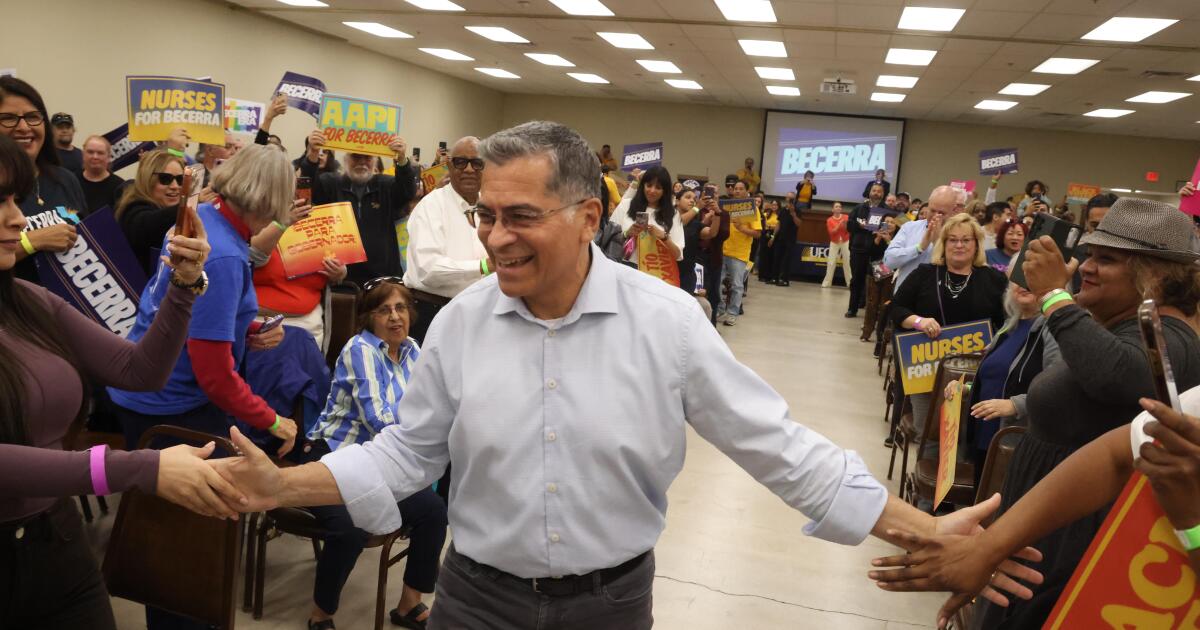
Practically everyone jumped on new Democratic frontrunner Xavier Becerra — former state attorney general and U.S. health secretary — for seemingly being unable to specify whether he’s for or against single-payer.

“I’ve been consistent for over 30 years,” he said, trying to explain that he favors Medicare-for-all as “the most efficient way that we can do healthcare.”

It was a silly waste of debate time. They were arguing over oranges and lemons — both citrus, but different. Becerra should have just made clear that he’s opposed to single-payer and supports a separate version of universal healthcare: Medicare-type coverage with a supplemental private insurance option for all Californians. If that’s indeed what he favors.

Mahan bragged that he’s “the only candidate in this race who is calling for a suspension of the gas tax.” It’s a highlighted Republican talking point. But no other Democratic candidate advocates suspending the tax because it’s a screwy idea.

The roughly 60-cent-per-gallon state gas tax pays for filling potholes and more serious road repairs and improvements. Moreover, the next governor won’t take office until January. Suspending the tax then — even if the Legislature approved — wouldn’t reduce today’s soaring pump prices.

My take on the debates:

Becerra survived. He’s refreshingly calm but needs to be more crisp.

Steyer was articulate and may have attracted Bernie Sanders fans.

Porter is a talented debater, but seemed overly defensive about her past hot temper.

Mahan was fine, but he just got off the bench and it’s late in the game.

Villaraigosa was straightforward as usual, and finally had a broad audience.

All should bone up on budget-balancing and tell us their thinking.

What else you should be reading

The must-read: How MAGA Sheriff Chad Bianco is shaking up the 2026 California gubernatorial primary
The other must-read: Tom Steyer tries to sell voters on his own personal change
The L.A. Times Special: Abortion access just took another blow. California wasn’t spared

Until next week,
George Skelton


Was this newsletter forwarded to you? Sign up here to get it in your inbox.
Source link

More abortion restrictions loom, even in California

In the ancient days of 2022, when the Supreme Court sledgehammered abortion rights with the Dobbs decision, the (Republican) party line was that the issue had returned to where it belonged: the states.

Fast forward to 2026 and it would now seem that the antiabortion crowd, faced with the aggressive pro-choice response of states such as California and lethargy on the part of the Trump administration to do more toward implementing a national ban, is no longer satisfied with that outcome.

They are now out to stomp on California, and a handful of other reproductive health sanctuaries, to ensure that what happens inside our borders fits their ideology.

“It’s strategic, it’s targeted,” Mini Timmaraju, president and chief executive of Reproductive Freedom for All, told me. “Even if you’re in a ‘blue state,’ you’re not safe.”

The U.S. Supreme Court will decide next week whether to take up the abortion issue again, in a case that could end medication-only procedures as we know them.

That would force women into a less-safe regimen with a lower success rate that would almost certainly lead to more complications — and therefore more controversy. Even in California, which would not be spared by what the court could do, and whose policies are central to the case.

Let’s break it down.

demonstrators participate in a May Day rally while holding pro-reproductive rights signs

Union members, immigrant rights supporters and anti-Israel demonstrators participate in a May Day rally and march in Washington, D.C., on Friday.

(Robyn Stevens Brody / Sipa USA via Associated Press)

Rogue California

After the Dobbs decision, 11 states passed near-total bans on abortions.

Six other states put early time limits on the procedures, and others passed bans in the second trimester, leaving women in much of the South and the Great Plains with no access to in-person care for hundreds or even thousands of miles.

In many of those places, those bans include making it illegal to receive abortion-inducing medications in the mail from states such as California. But that’s a hard law to enforce unless you go around opening lady-mail.

In recent years, the number of U.S. abortions arranged through telehealth and mailed medication has skyrocketed to more than a quarter of all procedures, though the often illegal nature of this route probably means the number is higher but underreported.

To protect the doctors and providers who are prescribing and sending these medications, California and other states have passed numerous laws to make it easier and safer — from allowing the prescriber to remain anonymous to shield laws that ensure those providers can’t be penalized or extradited to other states for prosecution, though some states are trying.

Earlier this year, Louisiana (a state with a full ban) tried to extradite a California doctor with no luck. Gov. Gavin Newsom gleefully denied that request, promising to “never be complicit with Trump’s war on women.”

US House Speaker Mike Johnson, a Republican from Louisiana, speaks during the annual March For Life on the National Mall

U.S. House Speaker Mike Johnson, a Republican from Louisiana, speaks during the annual March For Life at the National Mall in Washington, D.C., on Jan. 23.

(Graeme Sloan / Bloomberg via Getty Images)

Rogue Louisiana

In the Supreme Court case, Louisiana is thinking bigger — and expressing antiabortionists’ frustration with the Trump administration. The state is suing Trump’s Food and Drug Administration because it allows mifepristone, one of two medications used in abortions, to be prescribed via telehealth.

“Patients and these states with bans and extreme restrictions have relied on providers in blue states, abortion access states, to really help provide care,” Timmaraju said. “And this is a way to stop that.”

Antiabortion groups had hoped (and pushed) Trump to simply have the FDA remove its approvals of mifepristone, but Trump ain’t that dumb. Despite all his promises on the campaign trail, the administration would prefer to kick the can instead of the hornet’s nest on this one, especially before the midterms — since most Americans support abortion rights. So the FDA has said it’s “studying” mifepristone, which could take awhile.

Louisiana is claiming it had to spend $90,000 in taxpayer money to help two women who sought medical treatment after medication abortions (though it has not said they received the medication in the mail).

That’s a real harm, it argues, and gives them standing to sue the FDA to stop mifepristone from being prescribed by telehealth at all, claiming the FDA hasn’t done its due diligence to ensure that’s safe and it makes them really sad that they can’t stop women from ordering it.

The FDA has remained “completely silent on this point because the Trump administration doesn’t want to get involved,” said Mary Ziegler, a UC Davis law professor and expert on reproductive law.

“It’s totally one of the signs that the antiabortion movement is in an open rebellion, and is using the federal courts to express that because the political branches have been pretty non-responsive,” she said.

The marble statue Contemplation of Justice is seen outside the U.S. Supreme Court building

The Contemplation of Justice statue is seen outside the U.S. Supreme Court building on Monday in Washington.

(Andrew Harnik / Getty Images)

The Supreme Court lifted a stay Monday imposed by the 5th Circuit that stopped mifepristone from being tele-prescribed. So it’s available until at least May 11.

After that, who knows. It’s up to a court that has proven it’s no friend to reproductive rights.

It’s an issue with real consequence for Trump. If the court takes the case, the midterms must contend with abortion. If they don’t, the pressure on Trump to do so sometime intensifies. But its also an issue with real consequence for Californians.

Consequences in California

In California, there are 22 counties without an abortion clinic, Ziegler points out. In the far north of the state, women without access to telehealth abortions would be little better off than those in Louisiana if mifepristone by mail is stopped.

Instead, women would probably be forced to use the second medication, misoprostol, alone. This single-drug regimen has a lower effectiveness rate than the combined drugs, meaning more women will have to seek out secondary care — often in places where even in-person care is hard to come by. That could lead to more real harm, and therefore more high-profile cases of botched abortions to fuel a further ban on misoprostol.

Steve Hilton takes an interview after the California gubernatorial debate at Skirball Cultural Center on Wednesday.

Steve Hilton takes an interview after the California gubernatorial debate at Skirball Cultural Center on Wednesday.

(Jason Armond / Los Angeles Times)

And then there’s the fact that Newsom won’t be governor for much longer, and it will be up to the next chief executive to protect in-state providers from extradition. The top Republican contender, Steve Hilton, has previously said he would allow Louisiana to grab our California doctor if he were in charge.

Those kinds of threats have a chilling effect, both Ziegler and Timmaraju said. If enough providers are scared of the consequences of providing telehealth — or any — abortions, a ban becomes self-imposed.

Even in California.

What else you should be reading

The must-read: Immigration crackdown souring Orange County’s view of Trump, poll finds
The deep dive:How the Fight Over Israel Is Playing Out Inside MAGA
The L.A. Times Special: Who won the California governor debate on CNN? Here’s what our columnists say

Stay Golden,
Anita Chabria

Was this newsletter forwarded to you? Sign up here to get it in your inbox.
Source link

Column: California isn’t so cutting-edge when it comes to electing governors

Across America, 53 women have served as state governors. But not one in California. What gives? Aren’t we supposed to be enlightened out here in this cutting-edge state?

In fact, 14 women currently are governors in all sorts of states — north, south, flyover and Pacific coast. Big, midsize and small. Red, blue and purple.

We stand out with a huge black mark.

Voters have a chance to erase the ugly spot this year with Katie Porter in position to possibly be elected California’s first female governor.

Don’t get me wrong. I’m not saying Porter should be elected just because she’s a woman.

What I’m saying is that this is an opportunity to elect a perfectly qualified woman. If a male opponent is considered better suited for the job, fine. But first, let’s give her a good hard look and listen to her ideas. Maybe she’s too liberal — or not liberal enough. Perhaps too feisty and brusque than some unfairly find acceptable in a woman.

You’re reading the L.A. Times Politics newsletter

George Skelton and Michael Wilner cover the insights, legislation, players and politics you need to know. In your inbox Monday and Thursday mornings.

Independent polling shows that Porter basically isn’t getting any more support from women voters than she is from men.

I queried my best source on such matters: my daughter, Karen Skelton, a longtime political operative who has served stints in the Clinton and Biden White Houses. Why aren’t more women rallying around Porter?

“There was a time when women were excited to support women just because they were women, fueled by the historic prospect of electing ‘the first,’” she said. “But if anything has been proven in the last two presidential elections where women ran, it’s that identity politics does not work….

“It has to be more than her identity as a woman to get her elected.”

Yep. In my view, Democrat Hillary Clinton wasn’t very likable in 2016 and ran a lousy campaign. In 2024, Vice President Kamala Harris also lacked popularity. And she was dealt a losing hand by aging President Biden when he took too long to step aside.

Harris, a former U.S. senator with a long history of electoral success in California, would have been the heavy favorite to become the state’s first female governor if she had run. But she declined, opting for a possible third presidential bid in 2028.

Porter, 52, is a UC Irvine consumer law professor and former Orange County congresswoman who increased her statewide name familiarity by running unsuccessfully for the Senate in 2024.

Running for governor, she has been forthright and specific on what she’d try to achieve in Sacramento. She’d probably shake up the place.

One goal that should appeal to young families is free childcare. How’d she pay for that, I asked.

“Well, how do we afford public schools, roads, everything else, right?” the single mother of three answered, implying it’s about priorities. “The reason we don’t fund childcare, but we do fund other things, is because we expect women and mothers to do childcare for free or for pennies.”

She was scurrying along leading the Democrat pack last fall until tripping over two videos that displayed a hot temper.

In one, she threatened to walk out of a TV interview when a female reporter repeatedly asked how she expected to gain the votes of President Trump’s supporters. An irritated Porter said she didn’t need their votes, and she was right — but also rude.

In the other video — an oldie — then-Rep. Porter was shown yelling at a young female aide to “get out of my f— shot” during a videoconference with a Cabinet secretary.

Porter says she apologized to the staffer that day and they worked together for years afterward. And following a recent televised debate, Porter says, the former aide texted her congratulations and added that if she still lived in California, she’d vote for her.

The TV reporter, Julie Watts of CBS, was a moderator of a campaign debate last week and tossed some prickly questions at Porter and the other candidates.

“I was very calm and answered all the questions,” Porter notes. “I showed people I can do better” than the TV interview she has apologized for many times.

Porter has never completely recovered from the harmful videos. But she’s running close to two other Democrats — billionaire Tom Steyer and former U.S. Health and Human Services Secretary Xavier Becerra — in the June 2 primary.

“If a man had done the same thing, we wouldn’t be talking about it,” asserts Valerie McGinty, founder and president of Fund Her, an organization dedicated to electing women.

Several women agreed.

Assemblymember Cottie Petrie-Norris (D-Irvine), who has endorsed Porter, points to the late beloved, oft-profane legislative leader John Burton of San Francisco as an example of a double standard.

“Not a woman in American politics could get away with titling their autobiography ‘I Yell Because I Care,’” she says. On the book’s jacket cover, Burton is pictured speaking to a crowd with two raised middle fingers.

“People expect women to be strong but not too harsh,” Petrie-Norris says.

OK, but why do women get elected governor in other states, but not in California?

Mindy Romero, director of the Center for Inclusive Democracy at USC, says the vast amounts of money and human resources needed to win in humongous California make it especially difficult for women. They usually haven’t been included in the political pipeline long enough, she says, to build a hefty donor base, acquire elective office experience and gain statewide name recognition.

Three women have dropped out of the current race because they weren’t gaining ground. But it’s hard to argue it was because of any gender hurdles.

Previously, three women won their party nominations for governor but lost in November: Democrats Dianne Feinstein and Kathleen Brown in 1990 and 1994, respectively, and Republican Meg Whitman in 2010. None lost because of any double standard. It just wasn’t their year politically.

But California has elected three female U.S. senators — Democrats Feinstein, Barbara Boxer and Harris.

And nearly half the state Legislative seats are held by women.

It’s conceivable this year that California finally enters the 20th century — let alone the 21st — by electing our first female governor.

What else you should be reading

The must-read: Coded messages, ‘red boxing’ and other allegations in California’s testy race for governor
Money (That’s what I want): Billionaire-tax backers say they have enough signatures to qualify for ballot
The L.A. Times Special: Voter guide to the 2026 California primary election

Until next week,
George Skelton


Was this newsletter forwarded to you? Sign up here to get it in your inbox.

Source link

Here’s who (we think) won the chaotic California gubernatorial debate

Eight candidates for California governor shared a stage for 90 minutes Tuesday night, their second of three scheduled debates before the June 2 primary.

My colleagues Gustavo Arellano and Mark Z. Barabak joined me to decide who the winner was, or if there was a winner at all.

Arellano: The real MVP in this debate? State Supt. Tony Thurmond.

He brought up his family story — child of a Panamanian immigrant who lost his parents young, someone familiar with “government cheese” as sustenance growing up — in a way that didn’t sound forced or pedantic.

He usually stayed within the time limits that were barely enforced by moderators. And he kept knocking down Chad Bianco again and again, drawing applause when he brought up the Riverside County sheriff’s takeover of hundreds of thousands of ballots.

Thurmond is the only gubernatorial candidate currently holding a statewide position, a former Richmond City Council member and Assembly member. “Elect someone with a lived experience,” he told the audience in his closing statement.

So why has Thurmond polled so low again and again to the point that he keeps not getting invited to debates and therefore not getting in front of California voters?

California has never elected a Black governor — in fact, the state is notorious for not voting in Tom Bradley in 1982 even though polls showed him leading George Deukmejian all the way to Election Day (the phenomenon of voters telling pollsters what they think they want to hear instead of what they actually feel is now known as the Bradley Effect).

As California’s Black population keeps shrinking, it would’ve been wonderful to see Thurmond do better than he has.

Chabria: Gustavo is spot on with his take on Thurmond. He came across as polished, capable and knowledgeable. But also, he’s just too far down in the polls for any kind of comeback.

In my mind, though, Xavier Becerra was the clear winner. No, he didn’t blow the other candidates away.

But he landed more than one punch that will almost certainly be on social media feeds for weeks to come, especially when he went at Republican Steve Hilton. Early on, he called President Trump “Hilton’s daddy.” Later, he quipped at Hilton, “We don’t need a talking head for Fox News to tell us how the government works.”

The debate was chaotic in more than one moment, but Becerra managed to get more than his share of airtime and use it wisely. Tom Steyer, the other Democratic front-runner, mired himself in wonk-talk. He wanted to get deep into policy, and got lost in complicated issues such as oil refineries.

Steyer didn’t have a single memorable line, though his closing statement did redeem him somewhat. He called himself the “change maker,” and promised, “if you want change, there is only one person on this stage they are afraid of” — they being tech titans, oil companies and other gods of industry.

It was the same for Katie Porter and Matt Mahan, who didn’t do anything wrong, but also, didn’t break out.

But those back-and-forths of Becerra and Hilton are priceless because they’re quick and shareable. I won’t be surprised to see voters drift Becerra’s way, even if only a bit.

Barabak: No runs, no hits, no errors. Seven men — and one woman — left standing.

I didn’t see, or hear, anything that seems very likely to drastically shake up or dramatically reorder the governor’s race. No breakout performance that will launch any of the candidates into clear-cut front-runner status. No major gaffes to leave any of the contestants sprawled on the killing floor.

So to that extent, I would score Becerra as the evening’s (modest) winner. He’s clearly having a moment, surging from political near-death to the top tier in polls. (Though, let’s be clear, it’s still a muddle, with several candidates bunched in the 15%-20% support range.)

There have been suggestions Becerra needs to show a bit more fight and he did so Tuesday, in particular taking on Hilton. Some of his jabs seemed a bit forced and stagy. (That line about Trump as “Hilton’s daddy.”)

Better, as Anita noted, was the jab from the former congressman, state attorney general and Biden cabinet secretary about a Fox “talking head” explaining how government works.

I found Porter to be crisp and authoritative on policy; Steyer to be repetitive (I’m the only change agent on this stage, look how much money is being spent to stop me — though it’s a small fraction of the sum he’s sunk into his vanity-cruise campaign); Mahan and Antonio Villaraigosa to be largely afterthoughts, and Bianco to have all the warmth and appeal of the grouchy old man telling kids in the neighborhood to get off his damn lawn!

The Riverside County sheriff seemed not to be running for governor of California, but rather mayor of MAGA-ville, a strategy apparently intended to nab one of two spots in the June primary, allowing him to go on to crushing defeat in November.

I agree that perhaps the night’s most surprising performance came from Thurmond. The state schools superintendent is mired in bare single digits in polls and only just made the debate stage after being left out of last week’s meetup in San Francisco.

His chances of being California’s next governor are somewhere between zero and nil, which is why he escaped serious scrutiny. That said, he made the most of the 90 minutes on stage, laying out his compelling up-from-poverty life story and seeming to relish taking on Bianco in particular.

Too little, too late. But Thurmond certainly acquitted himself well.

What else you should be reading
The must-read: ‘This is like the Russian mafia’: L.A. judge elections see unusual drama
The deep dive: Gavin Newsom wants to break up with Elon Musk. Tesla is making that difficult.
The L.A. Times Special: John Seymour, Anaheim mayor and U.S. senator, dies at 88

Stay Golden,

Anita Chabria

Was this newsletter forwarded to you? Sign up here to get it in your inbox.
Source link