mayoral

Raman will lose homelessness committee chair as mayoral race heats up, sources say

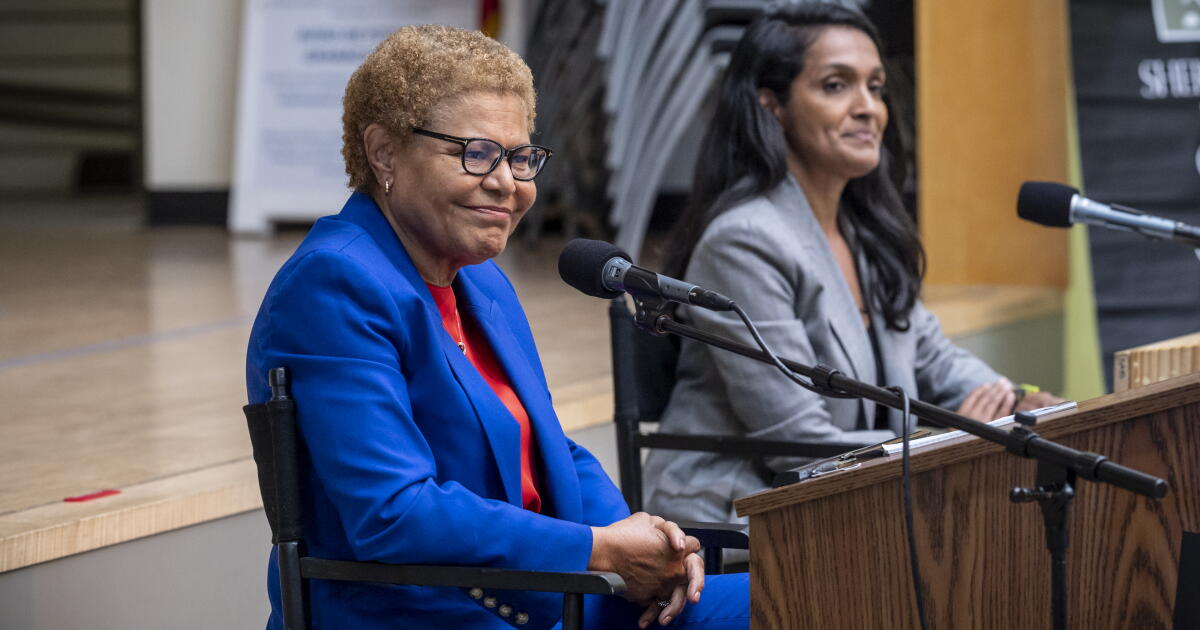
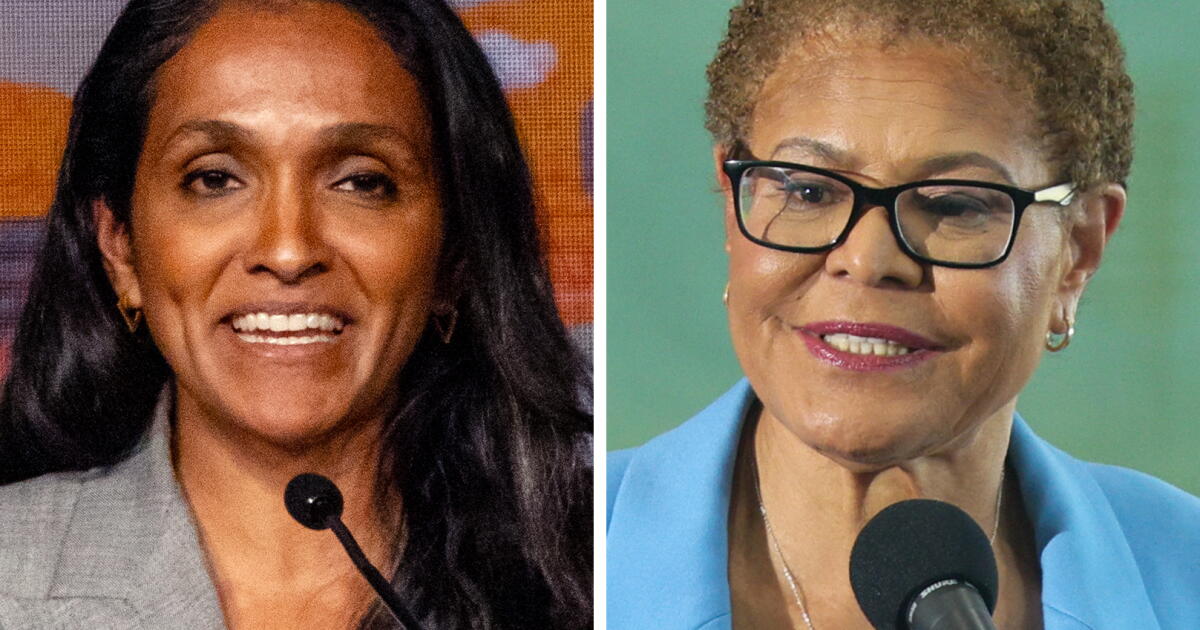
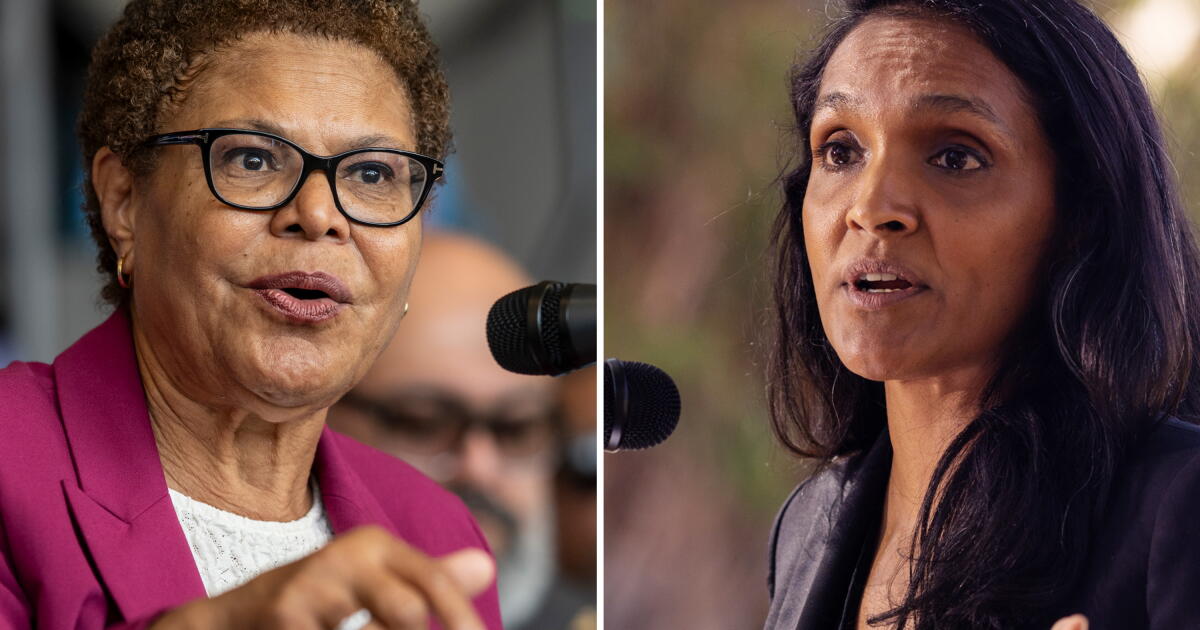
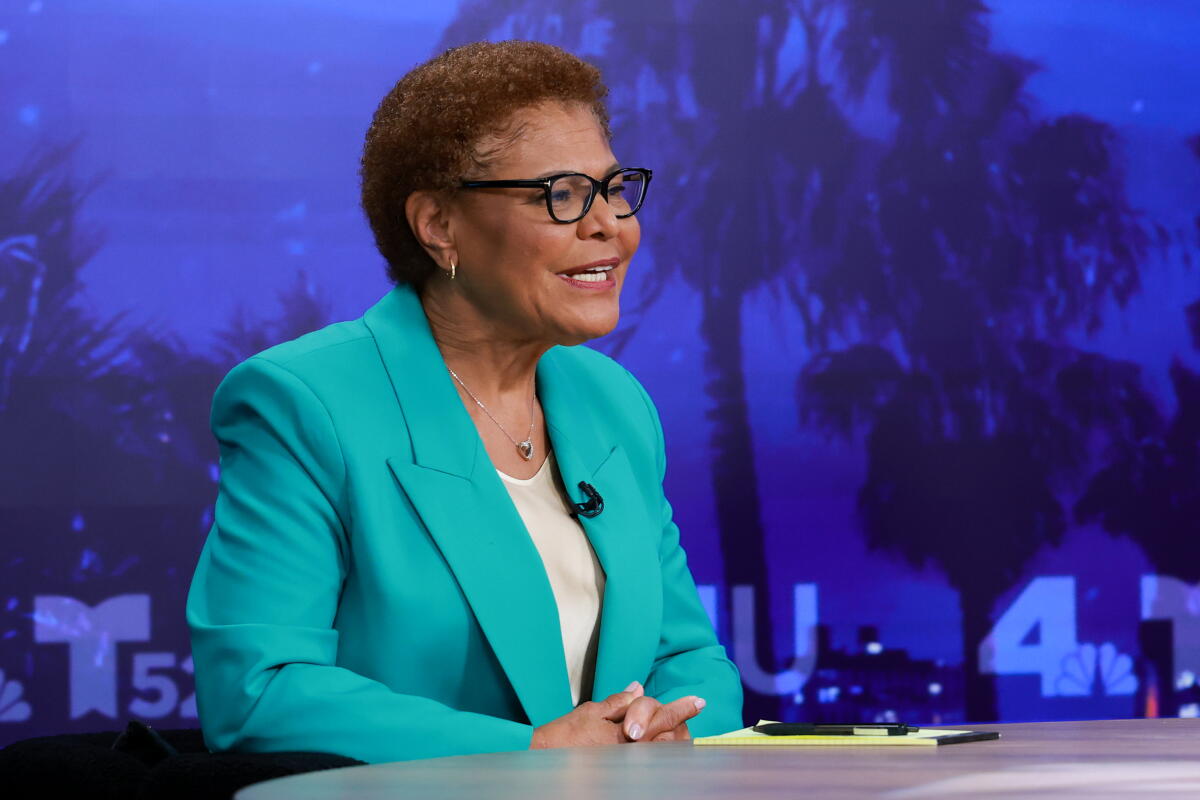
Los Angeles mayoral candidate Nithya Raman is expected to lose her leadership role on the L.A. City Council’s Housing and Homelessness Committee, which she has chaired since 2023, according to people familiar with the situation.

Council President Marqueece Harris-Dawson is planning to announce this week that the committee will be split into a housing committee and a homelessness committee — neither of which will be led by Raman, the people said.

Harris-Dawson is a close ally of Mayor Karen Bass, whom Raman is challenging for re-election. He declined to comment.

“It’s hard to imagine that it’s not related to politics. The timing of it would be too much of a coincidence,” said Zev Yaroslavsky, a former Los Angeles City Councilmember and Los Angeles County supervisor who now serves as chair of the Los Angeles Initiative at the UCLA Luskin School of Public Affairs.

Raman’s campaign didn’t immediately respond to a request for comment on the impending shakeup, which was reported earlier by the California Post.

The move comes at a pivotal moment in the mayor’s race on homelessness.

The city’s unsheltered homeless population increased this year after two straight years of decreases, the Los Angeles Homeless Services Authority reported last month.

While the citywide number has increased, the number of homeless people living on the street in Raman’s district decreased by 49%, a fact she has touted as she challenges Bass.

Raman and Bass have presented starkly different takes regarding the situation citywide and in Raman’s district.

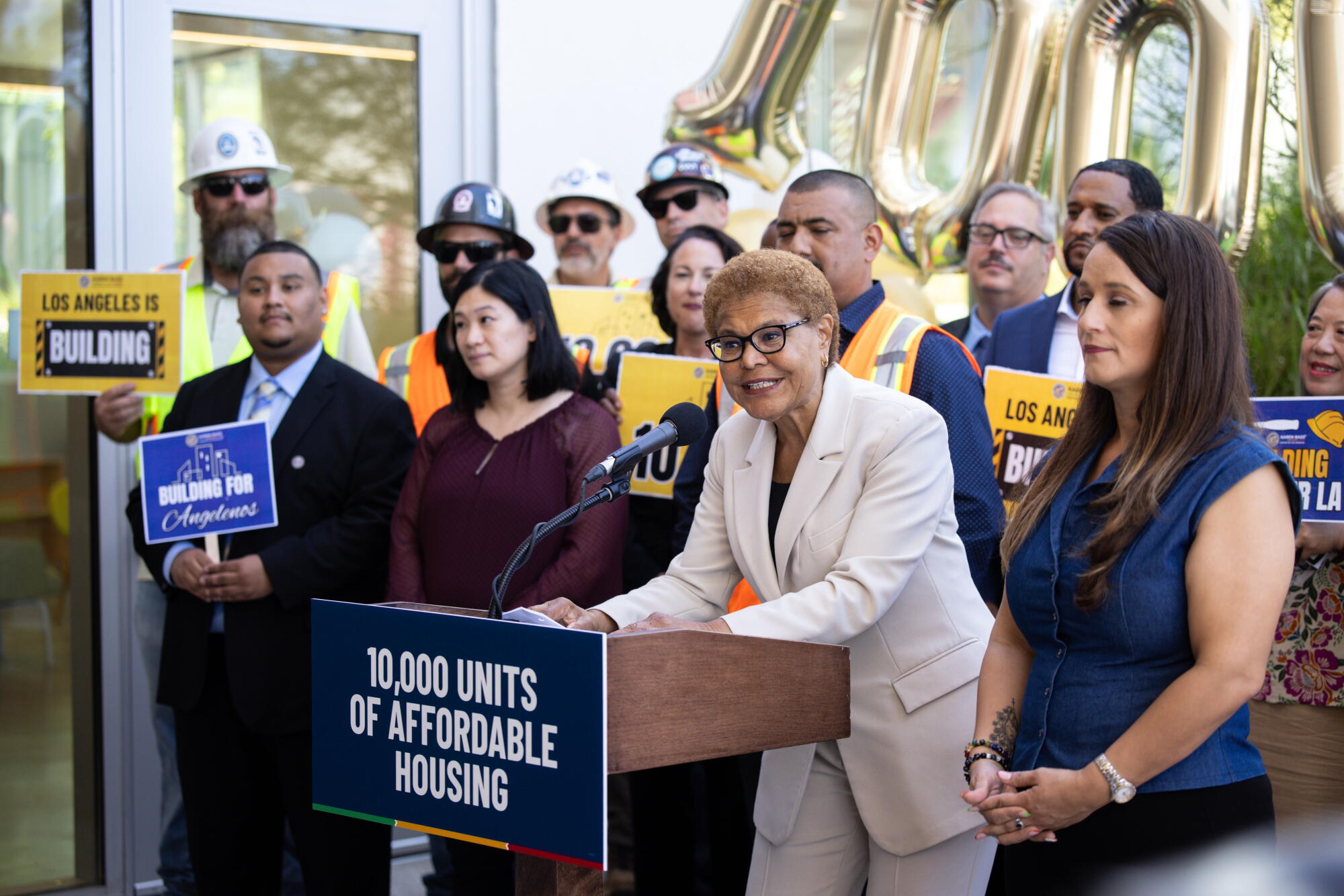
The mayor has posited that her signature program, Inside Safe, which addresses homeless encampments by moving homeless individuals into temporary housing, was largely responsible for the drop in Raman’s district and that federal and state budget cuts partially led to the increase citywide.

She also attacked Raman’s performance as the chair of the Housing and Homelessness Committee.

“While Raman takes credit for the City’s work in her district, ignoring the fact that she’s the Chair of the Homelessness & Housing Committee for ALL of Los Angeles, Mayor Bass is working to move our city forward and address years of neglect,” said Bass’ campaign spokesperson Alex Stack in a statement last month about the homeless numbers.

Raman claimed that there have only been three Inside Safe operations in her district and that her committee has been stifled by inaction from the mayor.

“Council can pass legislation… move motions forward, but it is the mayor that has charge of the implementation and outcomes, she said at a press conference last month.

Source link

Democratic socialists surge in mayoral races across the country as anti-Trump fervor rises

As Janeese Lewis George paves a path to the mayor’s office in Washington, D.C., she’s told voters they could have it all.

Her unapologetically expansive, left-wing agenda includes subsidized or even free childcare, increased down payment assistance for homebuyers and community resources to reduce crime, plus a promise to aggressively confront President Trump’s attempts to reshape the nation’s capital.

“People are tired of hearing what government can’t do. They want to hear what government can do,” Lewis George said in an interview before the city’s primary, where she defeated her Democratic opponents and positioned herself to win the general election in November in a city dominated by Democrats.

Lewis George’s victory signals a break with a quarter-century of centrist governance in Washington, and it puts her in the vanguard of democratic socialists who have ascended in urban politics over the last year. Zohran Mamdani toppled Andrew Cuomo, the scion of a political dynasty, on his way to becoming New York City mayor. Katie Wilson won an upset victory to lead Seattle last fall. And this month, Nithya Raman clinched a spot in the November runoff against Los Angeles Mayor Karen Bass.

All of them are members of the Democratic Socialists of America, or DSA. The political organization has seen its membership ranks swell from a few thousand to more than 100,000 nationwide over the last decade after an influx of younger Americans joined following the presidential bids of Vermont Sen. Bernie Sanders, also a self-described democratic socialist.

There’s little sign of national coordination among the candidates, and it’s unclear whether voters are gravitating toward their promises of improved government services, their vows to fight the Trump administration or their critiques of capitalism.

But from coast to coast, confrontational progressives are advancing in mayoral races. City leaders can draw outsized attention for their successes and failures, and democratic socialists will be under pressure from residents to deliver on their vows for a new kind of governance. Whether that translates to national politics is a next test for their movement.

“They are all channeling a displeasure with a status quo and a serious desire for economic populism that the establishment Democratic Party hasn’t been preaching,” said Eric Stern, a Democratic strategist with Fight Agency, a political consulting firm that strategized Mamdani’s mayoral campaign.

Stern added that Democratic voters appeared more willing to support the most progressive candidate in mayoral races rather than in contests for the U.S. House. Candidates like Mamdani and Raman, Stern said, are “daring voters to dream and fall in love not just with the individual candidates but also the political process as a whole.”

A rising left navigates America’s urban challenges

The trend of progressives surging in urban areas may have limits for its broader impact on Democratic politics. Democratic mayors in cities including Atlanta, Houston, Miami and San Francisco won on relatively moderate platforms in recent years.

Progressive have also faced noteworthy challenges. Chicago Mayor Brandon Johnson was endorsed by the city’s DSA chapter during his 2023 mayoral run but has since faced criticism from both moderate and liberal local leaders on issues such as immigration, the local budget and public safety. Recalls and public pressure ousted progressives elected to district attorney offices in multiple jurisdictions over the last five years, when criminal justice reform efforts ran into dissatisfaction over public disorder following the COVID-19 pandemic.

Trump’s hardline immigration and law enforcement tactics have also become a challenge for liberal cities. The president’s agenda poses an especially serious threat to Washington, D.C., because of its status as a federal territory.

“Maybe we take back Washington and run it on a federal basis,” Trump told reporters this month when asked about the potential election of a democratic socialist as the district’s mayor. “We won’t put up with it.”

But progressives hope the current wave of anti-Trump furor in deep blue cities across the country will help buoy the chances of those on the hard left.

“It’s not folks looking for the leftmost option so much as looking for a candidate who’s gonna be on their side,” said Ravi Mangla, speaking for the left-wing Working Families Party. The party often endorses the same candidates as the DSA and is readying to target more mayoral offices in the country’s biggest metropolises this fall and in 2028.

“It’s less about whether you are on the right or on the left so much as whether you are willing to punch up at the powerful,” he added.

Mamdani and Lewis George are both self-described “sewer socialists” who emphasize the need for responsive government services rather than critiques of market economics. The phrase recalls the socialist Gilded Age mayors whom critics derided as too preoccupied with managing public works projects.

The term’s revival is partly a strategic move to align leftist ideas with concerns over affordability and the economy, voters’ top concern in the midterm elections, and shift the public perception of democratic socialists from firebrands who support radical policies to independent-minded public servants.

“This is absolutely a change election and I’m excited to bring the change that people want, which is really putting people first in the city and having the moral clarity and courage to stand up to Trump,” Lewis George said.

For voters the ‘socialist’ label did not seem to matter

While conservatives have used the “socialist” label to attack Democrats as extreme or incompetent, some D.C. voters appeared ambivalent before Tuesday’s primary.

Several lifelong residents said they believed Lewis George was a “fighter” but didn’t think she’d have much of an impact on the local economy, given the city’s status as a federal district.

“I go back and forth on my own labels and whether I am supportive of that movement or not, but I am supportive of making D.C. more affordable,” Owen Fitzgerald, a University of Maryland graduate student, said of his support for democratic socialism.

Fitzgerald voted for Lewis George because she would stand up to Trump and said he’d first learned of her campaign from friends in his neighborhood. But he didn’t know she was a democratic socialist until he saw news reports describing her with the label.

“It sends a cultural message to this administration that the people who are surrounding them in the capital are opposed to their platform, opposed to their political agenda, and I think that it will send a message, both nationally and internationally,” Fitzgerald said.

Brown writes for the Associated Press.

Source link

Spencer Pratt concedes mayoral primary, vows to keep fighting for L.A.

June 13 (UPI) — Reality TV star-turned-Los Angeles mayoral candidate Spencer Pratt says he does not expect to advance to the general election after projections from primary voting suggest he will rank third behind incumbent Karen Bass and challenger Nithya Raman.

The Hills alum ran on a platform of making the city’s streets cleaner and safer, and speeding up the rebuilding of homes and businesses destroyed by wildfires in the Pacific Palisades more than a year ago.

Pratt, who lost his home in the blaze, released a 3-minute video Friday, stating the “campaign portion of my mission to save Los Angeles is coming to a close and I’m moving on to the next, more interesting phase.”

The spot already has gotten more than 8.6 million views on X.

It appears to be a mix of real and AI-generated footage, as well as movie clips.

In the video, Pratt said he plans to keep fighting to improve the lives of Los Angeles residents using the national social media following he has amassed in recent months.

He added that he has evidence that could damage one of the candidates as they head to the general election in November.

“We have some recordings of one of your exalted candidates doing and saying something that would make her resign in shame. I was saving it for the general election,” Pratt said.

“So, Karen, Nithya, ask yourself, ‘Is it possible that one of your employees may have a recording of you doing or saying something that would force you to resign in disgrace?’ Hope you sleep well at night over the next five months.”

The Los Angeles Times said the Bass and Raman campaigns have declined to comment on Pratt’s remarks.

According to the votes tallied Bass is in first place with 34 percent of the vote, Raman earned 29 percent and Pratt scored 26 percent.

If Pratt had won, he would have been the first Republican mayor of Los Angeles since Richard Riordan served two terms, ending in 2001.

Evacuated residents and those who lost their homes in the Eaton wildfire find supplies, resources and aid at the Clay House of Pasadena, which was turned into a donation center in Altadena, Calif., on January 12, 2025. Photo by Jim Ruymen/UPI | License Photo

Source link

Projections show Nithya Raman to advance in LA mayoral race

June 8 (UPI) — Nithya Raman will advance to a Los Angeles mayoral runoff in November, besting Spencer Pratt for second place in last week’s primary vote, sources including CNN and NBC News said Monday evening.

Raman, a City Council member, will run against incumbent Mayor Karen Bass; both are Democrats. Raman, a member of the Democratic Socialists of America, is considered a progressive challenger.

Raman emerged second Monday over Republican Spencer Pratt, a former reality TV star. Pratt was in second place as of primary day, but late-counted votes swung the tally toward Raman. They were part of a14-candidate field in the primary.

“Right now, we have a city that feels rudderless,” Raman told CNN before the primary. “So many positions that haven’t been filled, places where Angelenos feel abandoned on some of the most important issues facing this city. I will bring that urgency, I will bring that accountability, I will bring that focus that Los Angeles needs and that Angelenos need.”

Raman and Bass had close political ties before Raman entered the election late. Pratt campaigned on criticism of Bass’ response to the 2025 wildfires — he lost his house in last year’s Palisades fires — and homelessness.

NBC News reported that while President Donald Trump did not officially endorse a candidate in the election, he praised Pratt’s bid before the primary, saying, “I’d like to see him do well. He’s a character.”

Source link

Commentary: For mayoral candidates and all of L.A., here’s the homelessness conversation we must have

Ron, a West L.A. resident, thinks he knows why former reality TV star and political newcomer Spencer Pratt won so much support in his run for mayor.

People are frustrated, frightened and angry about homelessness “and the crime associated with it,” Ron said in an email. He added that he voted for Mayor Karen Bass, but “almost everything Pratt said about the homeless resonated with me. … The homeless run wild here, without consequence.”

“Many of us support him not because we think he’s perfect,” said Kathy, “but because we are deeply dissatisfied with the direction of Los Angeles and feel that traditional politicians have not delivered the results we were promised.”

Bob, “a left-leaning Palisades resident,” said the issue is not Pratt’s lack of credentials, but the failures of incumbents. “There was a columnist … who documented in depth the situation at MacArthur Park,” Bob wrote in reference to me. “What was his name and what happened to him? Did he change his tune?”

These are all fair points, and if Pratt holds onto one of the top two spots and makes it to the Nov. 3 general election, or he’s overtaken by late-charging Councilmember Nithya Raman, we’re going to hear a lot more about homelessness in coming months.

So whether we’re looking at a Bass-Raman contest or a Bass-Pratt showdown, here are some random musings, and I’ll begin by responding to Bob’s question about whether I have changed my tune.

Not in the least.

The situation in MacArthur Park — targeted Thursday in a crackdown that involved multiple arrests — has long been a disgrace, and the same is true of many other places I’ve written about for the past quarter of a century. Last month, I visited a Hollywood neighborhood where one frustrated resident hired her housekeeper to document chronic problems related to homelessness, illegal dumping and criminal activity.

Residents have good reason to ask why they haven’t gotten better results after responding to politicians’ pleas for more money over the years.

It’s no surprise that Bass had high unfavorability ratings and why, despite leading in the primary vote count, she’ll fall far short of the 50% needed to avoid a second election phase. I still can’t believe that when I first asked her about the sad state of MacArthur Park, she told me she was fully aware, because she often drove through the area on her way to work.

Then why hadn’t she led the charge to address the problems and return the park to the community?

It shouldn’t take months, let alone years, to take back control of public spaces, and Pratt’s criticism is warranted, no doubt. And my main issue is not the hypocrisy of him saying God wants him to be mayor while calling his opponents demonic entities and villainizing homeless people he intends to shoo away to Seattle. It’s that his “fixes” demonstrate a lack of understanding.

Let me make a confession. From one angle or another, I’ve been writing about the intersection of homelessness, mental illness and addiction for a couple of decades, and I still have a lot to learn.

And on a personal note, I lost my son to a drug overdose. He had a job and wasn’t homeless, but like a lot of people who struggle with depression and other demons, he was resistant to help, and even to the idea that he needed help.

There are a lot more substance users like him, living out of public view, than there are on the street. We notice only those who don’t have the means to pay the rent or the mortgage as housing prices rise. So when Pratt says we don’t have a homelessness problem, but a drug problem, he’s missing a critical component in understanding why L.A. has tens of thousands of unsheltered people.

Pratt said on his website that his “treatment first” approach would direct resources into mental health and drug treatment care, which sounds good except that those responsibilities are primarily under county jurisdiction, not city control.

He and others have attacked harm reduction practices, such as distribution of needles and other paraphernalia. And I have to admit that it seems counterintuitive to enable further drug use. But the idea is to prevent death, engage clients and start a relationship that might lead to transformative care.

The county reports that in 2024, fentanyl-related deaths decreased by 37% and meth-related deaths by 20%. Harm reduction can be “absolutely invaluable,” addiction specialist Rick Rawson told me when I was working in MacArthur Park, but we need much more than that.

“When you have someone who becomes so incapacitated that they can’t stand up,” Rawson said, “to say that you’re just going to provide them with harm reduction and hope they don’t die, I think that falls short of the responsibility we have to each other and to the sickest people.”

I’ll add here that I firmly believe we should intervene more aggressively with people who are gravely ill, or are a threat to themselves or others. I recently profiled two San Diegans who are advocating for use of an existing law to allow for deeper evaluations and longer-term treatment plans for people with chronic drug and mental health issues.

It’s worth noting that drug and alcohol rehab is seldom a quick or surefire remedy. As for mental illness, it took me one year, along with the help of trained professionals, to convince my friend Nathaniel to seek help after he’d spent decades on the street following a diagnosis of schizophrenia.

What I’ve found over the years is that many of those living in tents and cars and alleys and parks are damaged in numerous ways.

I’m less inclined to judge people from a distance after having met a man on Skid Row who said he fell apart after his young daughter drowned. I’ve met women who are victims of domestic abuse or sexual assault. People in the grip of killer drugs like meth or fentanyl don’t think as clearly as we’d like them to, and they repeatedly sabotage their own self-interest.

To see people take over public spaces, openly sell or use drugs, lash out and scare those around them is disturbing and sometimes scary. But to say they choose to live on the street, as Pratt has, is to miss the point, to excuse our own complicity, to overlook historic policy failures, and to choose contempt over compassion.

Homelessness can cause mental illness, and mental illness can cause addiction, and vice versa. One condition alone can be difficult to address, but intertwined maladies further complicate matters.

I recently checked in with a guy I wrote about who had been addicted and homeless in Koreatown, and he said his recovery took more than half a year. He was in residential treatment for a few months, then in intensive outpatient treatment. There are no shortcuts, he said.

I’m not here to defend Bass, or Raman and the rest of the City Council, which shares responsibility for the current state of the city. Limited progress has been made in the last 3½ years, with a marginally lower number of homeless people.

But there’s a long way to go in moving people indoors and restoring a sense of order and public safety. The many needs include smarter enforcement of existing laws, faster development of low-cost interim and permanent housing, better coordination of outreach and follow-up services and more people willing to do all of this work.

Let’s hope that in the coming months we’ll get an honest conversation about what’s working, what isn’t, and how to do better.

steve.lopez@latimes.com

Source link

Oh Se-hoon wins comeback victory in Seoul mayoral race

Oh Se-hoon, center, the People Power Party’s winning candidate in the Seoul mayoral race, celebrates Thursday at his campaign office in Jongno district, Seoul. Photo by Asia Today

June 4 (Asia Today) — The biggest upset of Wednesday’s local elections came in Seoul, where People Power Party candidate Oh Se-hoon overcame early expectations of defeat and won a dramatic late comeback victory in the mayoral race.

Oh’s win allowed the conservative bloc to hold South Korea’s capital despite a strong nationwide showing by the Democratic Party. The result immediately raised Oh’s standing as a potential conservative contender in the next presidential race.

Oh narrowly defeated Democratic Party candidate Jung Won-oh after an extremely close vote count that continued into early Thursday morning, becoming the first person to win a fifth term as Seoul mayor.

“Citizens have once again upheld the democratic principle of checks and balances,” Oh said at a press conference Thursday. “They have left Seoul as the last safeguard of democracy so that South Korea does not tilt completely to one side.”

Political observers said Oh’s victory significantly changes his political status. Holding the capital while the People Power Party struggled nationwide could become a major asset for a future presidential bid.

Oh’s campaign strategy also drew attention because he kept some distance from the party leadership under Jang Dong-hyeok and focused on his own record as incumbent mayor. Analysts said that approach may allow Oh to emerge as an independent center of gravity in any future conservative realignment.

A People Power Party official said Oh had now fully risen as a national political figure representing the conservative camp.

“This Seoul victory is virtually close to a ticket toward the presidency,” the official said.

— Reported by Asia Today; translated by UPI

© Asia Today. Unauthorized reproduction or redistribution prohibited.

Original Korean report: https://www.asiatoday.co.kr/kn/view.php?key=20260605010001627

Source link