Mayor

Immigration authorities detain former Kansas mayor who voted illegally

The former mayor of a conservative Kansas town was taken into custody by immigration authorities after acknowledging last year that he had voted in elections despite not being a U.S. citizen.

Joe Ceballos, who was born in Mexico and is a legal permanent U.S. resident, was detained Wednesday during a meeting at a U.S. Immigration and Customs Enforcement office in Wichita, Kan., according to his attorney, Jess Hoeme. He said Ceballos now fears he could be deported.

The 55-year-old resigned as mayor of Coldwater in December while facing state charges over voting as a noncitizen. While seeking citizenship in 2025, Ceballos admitted during an interview that he had voted, not knowing that green card holders don’t qualify, Hoeme said.

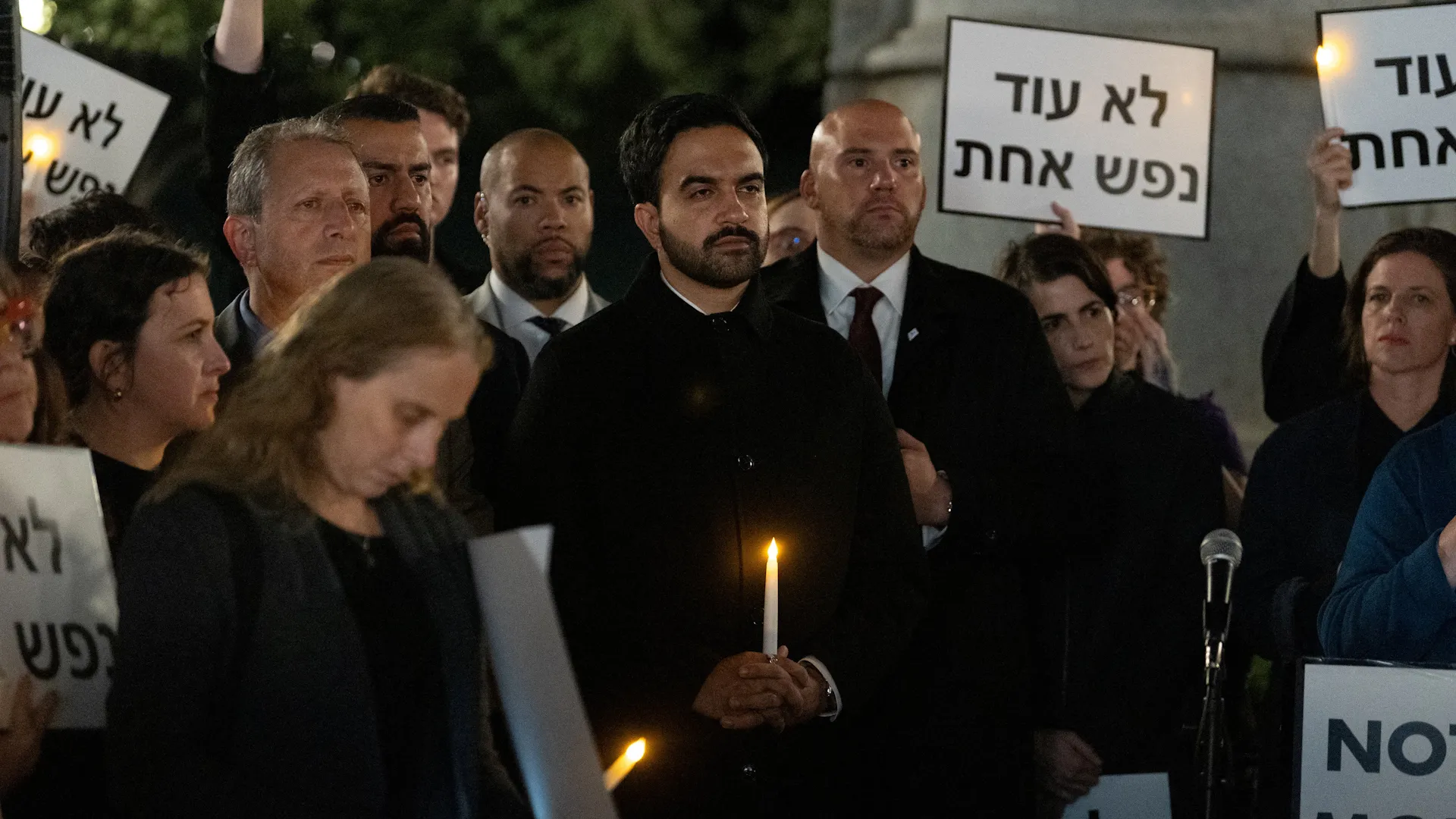
Ceballos was charged with voting illegally but pleaded guilty in April to misdemeanors in a deal with the Kansas attorney general. His case has drawn attention from the Trump administration and inspired supporters in his community, some of whom held signs reading “We Support Mayor Joe” and “ICE Out” as Ceballos walked into the federal building in Wichita.

“Let Joe go!” the crowd yelled.

“Thinking what could happen — it’s just kind of crazy,” Ceballos told reporters. “Obviously nervous. I don’t know what’s going to happen. I don’t know where they’re going to take me and what I can and can’t do inside there.”

An email seeking comment from the Department of Homeland Security was not immediately returned.

Trump and other Republicans have been warning of the dangers of noncitizens voting in elections since the beginning of the 2024 presidential election. Research, even by Republican election officials, show the problem is rare.

This year, Trump has been pushing Republicans in Congress to pass the SAVE Act, which among other things would require documented proof of U.S. citizenship to register and vote.

The administration also has significantly upgraded a program within Homeland Security that checks citizenship. At least 25 states, most of them controlled by Republicans, have used that system to check their voter rolls.

Ceballos was brought to the U.S. from Mexico by family when he was 4 years old. Hoeme said lawyers would next try to get an immigration judge to release him on bond.

He said Ceballos, at age 18, was encouraged to register to vote on the spot during a school field trip to the Comanche County courthouse. Ceballos has previously said in interviews with reporters that he voted for Republicans.

He was twice elected mayor of Coldwater, population 700, and also served on the city council. Ceballos won a new term in November but resigned after state Atty. Gen. Kris Kobach charged him with voting without being qualified and election perjury.

Kobach’s office, however, reached a deal with Ceballos. He pleaded guilty to disorderly election conduct, which Hoeme described as a misdemeanor similar to disturbing the peace.

“He has not been convicted of any kind of voter fraud. It should not have impacted his immigration status,” Hoeme said. “The Trump administration and ICE have doubled down on nonsense that he is a criminal.”

Ceballos has been a popular figure in Coldwater, where an advertisement in the Western Star newspaper encouraged people to support him.

“He’s kind of got to live the American dream, to come from absolutely nothing and build up — I don’t know about wealth — but to build up a business and have a job and be a productive part of society,” longtime friend Ryan Swayze told Wichita station KAKE-TV.

White writes for the Associated Press.

Source link

Was the mayor a spy? L.A. suburb wonders about depth of Chinese plot

As Eileen Wang and her supporters tell it, the former Arcadia mayor was led astray by a man she trusted and loved.

After chasing her political ambitions in the San Gabriel Valley suburb, Wang, 58, won a City Council seat in 2022 with the help of a campaign advisor who was also her romantic partner. Two years later, he was charged by federal authorities with secretly working on behalf of the Chinese government.

Wang, a naturalized U.S. citizen, distanced herself from her ex and remained in office, becoming mayor earlier this year. The scandal had mostly quieted — until Monday, on the eve of President Trump’s planned trip to Beijing, when a plea deal was unsealed revealing Wang’s own murky role as an agent for China.

A man walks past an empty space where a photograph of former Arcadia Mayor Eileen Wang hung between other photos on a wall.

A man walks past an empty space where a photograph of former Mayor Eileen Wang was removed in the lobby of Arcadia City Hall.

(Genaro Molina/Los Angeles Times)

Now, Wang has become a national political talking point, with critics painting her as a calculating foreign agent who sought to infiltrate the American government and undermine democracy.

Katie Miller, wife of top Trump advisor Stephen Miller, blasted Wang on social media site X as a “spy.”

“This is pure China trying to influence U.S. politics and U.S. elections,” Katie Miller said on Fox News.

Back home, some of Wang’s former colleagues in local government say they repeatedly tried to raise alarms about her.

“There were red flags everywhere,” said Sharon Kwan, an Arcadia city council member and former mayor.

Wang admitted in her plea agreement to posting and editing web content at the request of the Chinese government — without disclosing her ties to U.S. authorities, as the law requires. She ran afoul of the Foreign Agents Registration Act, or FARA, a federal statute that experts said has seen ramped up enforcement over the last decade, particularly in cases involving China.

But those familiar with the law — and international espionage — said it does not appear that Wang was engaged in spycraft as it is commonly understood.

Dennis Wilder, a former senior U.S. intelligence official and professor at Georgetown University, said that, in the CIA, Wang would be referred to as “an agent of influence.”

“She’s not a spy in the Jason Bourne sense,” Wilder said, referring to the fictional American agent. “She’s not out there recruiting sources and that sort of thing. That’s not the role that they want for her. But they see this other role as extremely important.”

A man exits Arcadia City Hall

A man exits Arcadia City Hall on Tuesday.

(Christina House/Los Angeles Times)

A run for city council

Wang moved to the U.S. around 30 years ago, in part, she told The Times in 2024, because she wanted “freedom for speech, freedom [for] thinking.”

Her mother was a Chinese medicine and acupuncture doctor and her father was a physician in Sichuan province before working at USC, she said. Authorities have not detailed how she immigrated or her path to citizenship. She landed in Arcadia, she said, lured by what the school district in the affluent city of 54,000 could offer her two young boys.

She ran an after-school program and was involved in some community organizations, but said she did not move in political circles until shortly before her 2022 run for city council. She switched her party affiliation from Republican to Democrat, which, she said, spoke more to the needs of voters in her district, where many share her Chinese roots.

“I walk about 140 days,” she said of her campaign, adding that she hit every door in her district five times. “I never stop.”

Yaoning “Mike” Sun, Wang’s former fiance, managed her campaign.

Arcadia City Councilmember Sharon Kwan

Arcadia City Councilmember Sharon Kwan stands outside the front entrance of the San Gabriel Valley suburb’s City Hall. “This is not something where we can just dismiss and pretend nothing happened,” said Kwan regarding the case against ex-mayor Eileen Wang.

(Genaro Molina/Los Angeles Times)

Kwan, who was elected to the city council at the same time, recalled Sun as a constant presence at city meetings and events, “always with the camera.”

“Always recording, always promoting her,” Kwan said. “She was like a celebrity to him.”

Two years after Wang took office, in December 2024, federal authorities arrested Sun on suspicion of acting as an illegal agent of China.

Prosecutors accused Sun in a criminal complaint of working with another man to cultivate Wang as a political asset for the People’s Republic of China or PRC. Federal prosecutors in Los Angeles identified the other man as John Chen, describing him in a sentencing memorandum as “a high-level member of the PRC intelligence apparatus,” who had “met personally” with Chinese President Xi Jinping.

Chen instructed Sun to submit reports on Wang, referred to throughout the complaint as “Individual 1,” to Chinese officials, including one the federal complaint said they referred to as the “Big Boss.” A draft of the report allegedly included a request for $80,000 to “support pro-PRC activities in the United States.” Sun was also told to tout Wang’s relationship with an unnamed U.S. congressperson, the complaint said.

Both men eventually pleaded guilty to working as unregistered agents of China, with Sun sentenced this year to four years in prison. Chen was sentenced to 20 months.

Wang spoke with Chen on the day she was elected and three more times over the next few months, according to the complaint in Sun’s case.

“You are doing a good job, I hope you can continue the good work, make Chinese people proud,” Chen told Wang, in a conversation on Jan. 23, 2023, according to the complaint in Sun’s case.

Chen and Sun also coordinated a trip to China in 2023 for Wang to meet with “leadership,” which would include stops in six different places, according to the complaint. It’s unclear whom Wang met with on the trip.

The fallout

After Sun’s arrest, Wang denied to several people that they had been engaged to marry. She said during a council meeting that their relationship ended in spring 2024.

Jolene Cadenbach, a pastor in Arcadia, said Wang confided in her that “she had been lied to” by Sun.

“I think he did a con job on her,” Cadenbach said.

The recent plea agreement gave the wrong impression about Wang, the pastor said.

“It made her sound like she was some kind of spy and it wasn’t like that at all,” she said. Wang was only following Sun’s orders, she added: “He told her to put up this site, she did it. She didn’t really investigate it.”

In a statement, Wang’s lawyers said she “apologizes and is sorry for the mistakes she has made in her personal life.” They said “she genuinely loves this city and is devoted to the people and the community within it,” but “her trust and love for apparently the wrong person… ultimately led her astray.”

Longtime Arcadia resident Sonia Martin sits on the porch of her home.

Arcadia resident Sonia Martin sits on the porch of her home. Martin said she had long expressed concerns about the city’s former mayor, Eileen Wang.

(Genaro Molina/Los Angeles Times)

After Sun was charged in 2024, Sonia Martin and other Arcadia residents showed up at council meetings carrying protest signs. Martin said she expected Wang to be pushed out. Instead, she said, most council members appeared to unite behind Wang.

“They wanted to have this feeling of, like, everything’s great here. We’re all warm. Look at us, it’s kumbaya,” Martin said.

Kwan said she repeatedly tried to bring up the concerns of constituents to her fellow council members but was brushed off.

“Everybody was just so silent,” Kwan said. “This is not something where we can just dismiss and pretend nothing happened.”

The job of mayor rotates among Arcadia City Council members, and when it was Kwan’s turn last April, she warned during her swearing-in speech that constituents “must remain vigilant against influence of foreign governments, including efforts by the Chinese Communist Party, that may seek to shape local policy for the interests that do not align with our residents.”

Since Wang’s plea agreement became public, some have scoffed at the notion that Chinese spies would establish an outpost in Arcadia, or that the web posts she made before becoming mayor amounted to any sort of meaningful propaganda campaign.

But according to Sun’s plea agreement, local office was just the start. Prosecutors said Sun’s 2023 report for Chinese officials boasted that “during the 2022 U.S. midterm elections, I orchestrated and organized my team to win the election for city council.” He called Wang a “new political star.”

Wilder, the former U.S. intelligence official, said that sounded like a familiar strategy.

“Maybe she would end up in Congress some day or at the state government level. They invest in these folks hoping they move up the political food chain,” the Georgetown professor said. “That is part of the Chinese long game.”

‘San Gabriel Valley deserves better’

In her plea agreement, Wang admitted that from late 2020 through at least 2022, she worked with Sun to run a website called U.S. News Center that branded itself as a news source for Chinese Americans.

Wang and Sun “executed directives” from Chinese government officials, posting requested articles and reporting back with screenshots showing how many people viewed the stories, the agreement says.

Prosecutors also say Wang edited articles at the request of officials and shared information showing the reach of the posts.

“Thank you leader,” she wrote on Aug. 20, 2021, after being complimented for a post that was viewed more than 15,000 times, according to the plea agreement.

Wang never disclosed that the Chinese government had directed her to post the content, according to court documents.

That sort of low-level violation of the law is not supposed to trigger federal charges unless, according to a February 2025 memo by then-Atty. Gen. Pam Bondi to Justice Department prosecutors, the case involved “conduct similar to more traditional espionage.” The Trump administration has pursued other high-profile foreign agent cases recently, with prosecutors winning a conviction Wednesday of a man charged with running a covert police station in Manhattan and keeping tabs on political dissidents.

When news broke of the charges and plea deal involving Wang, current and former city officials said they were not surprised.

A wall of photographs of former Arcadia mayors inside Arcadia City Hall.

A wall of photographs of former Arcadia mayors hang inside Arcadia City Hall. Eileen Wang is shown second from left on the bottom row. Wang admitted in court filings this week to working as an unregistered agent for China.

(Genaro Molina/Los Angeles Times)

“The warning signs around Eileen Wang were public for more than a year before this plea, agreement, and too many people in positions of influence defended and supported her,” April Verlato, a former mayor of Arcadia, said in a statement. “Our electeds should have represented what was best for the community and held her accountable. The San Gabriel Valley deserves better.”

Paul Cheng, mayor pro tem of Arcadia, said the council didn’t move earlier to oust Wang because a majority of its members wanted to let the federal investigation run its course.

“The public always says, ‘Why didn’t you investigate her when her boyfriend was arrested? Why didn’t you do something?’” he said.

Pedestrians walk along a sidewalk

Pedestrians walk along a sidewalk next to Huntington Drive in downtown Arcadia on Wednesday.

(Genaro Molina/Los Angeles Times)

But, he emphasized, “council members are not federal investigators.”

“We are not supposed to get involved,” said Cheng, an attorney. “It would make the situation 10 times worse.”

Cheng spoke highly of Wang, painting her as a committed civil servant with a passion for veterans, first responders and diversifying the businesses on Baldwin Avenue, the city’s main corridor.

“She probably attended the most events compared to all of us,” he said. “People have tried getting me to say she’s a horrible person, but I can only say what I saw, which was I thought she did a good job on council.”

Source link

Arcadia mayor, accused of being Chinese foreign agent, strikes plea deal

Eileen Wang, an Arcadia city leader facing charges of acting as an illegal foreign agent of China, resigned Monday after reaching an agreement to resolve the federal case.

Wang, who served as mayor of the San Gabriel Valley suburb, entered into a plea agreement with prosecutors over charges that she acted under the control of the People’s Republic of China to promote propaganda in the U.S. between 2020 and 2022, according to court filings.

Wang, who was previously elected to the City Council in November 2022, stepped down as mayor on Monday hours after the plea agreement was unsealed. Arcadia officials and Wang’s attorneys said the conduct described by federal authorities occurred before Wang was elected.

Wang appeared in federal court in downtown Los Angeles during a brief hearing Monday, where a judge instructed her lawyers to set a date when she would formally enter a guilty plea.

The maximum sentence for the charge is 10 years in prison.

Dressed in a blue suit jacket and skirt and accompanied by four lawyers, Wang listened to the proceeding through a Mandarin interpreter. She sniffled throughout the hearing, wiping at her eyes and her nose with her hand and a tissue.

The magistrate judge ordered a $25,000 bond and for her to surrender all of her passports and travel documents. Assistant U.S. Attorney Amanda B. Elbogen asked that the judge order Wang to refrain from any communication with the Chinese government, including consular officials in the U.S.

“Individuals in our country who covertly do the bidding of foreign governments undermine our democracy,” said First Assistant U.S. Attorney Bill Essayli in a statement Monday. “This plea agreement is the latest success in our determination to defend the homeland against China’s efforts to corrupt our institutions.”

In a statement, Wang’s attorneys, Brian A. Sun and Jason Liang, said “she apologizes and is sorry for the mistakes she has made in her personal life.”

“Her love and devotion for the Arcadia community have not changed and did not waver. She asks for the community’s understanding and continued support,” her attorneys said.

The city of Arcadia’s website said Wang was “vacating her position” and the process of selecting someone to step in as mayor would begin at the next City Council meeting.

“We understand this news raises serious concerns, and we want to be direct with our community about what we know and where we stand,” City Manager Dominic Lazzaretto said in a statement. “The allegations at the center of this case, that a foreign government sought to exert influence over a local elected official, are deeply troubling. We take them seriously.”

From late 2020 through at least 2022, Wang worked with Yaoning “Mike” Sun, her former fiance, to run a website called U.S. News Center that branded itself as a news source for Chinese Americans, according to the plea agreement unsealed Monday. Both Wang and Sun “executed directives” from Chinese government officials, posting requested articles and reporting back with screenshots showing how many people viewed the stories, the agreement says.

On June 10, 2021, the agreement says, Wang received a message from a government official about “China’s Stance on the Xinjiang Issue,” which included a link to a letter to the editor in the Los Angeles Times from the consul general of the People’s Republic of China in Los Angeles. The consul general had been responding to a Times editorial supporting a boycott of products made with cotton produced in the Xinjiang region of China.

At the time, news reports were highlighting the Chinese government‘s campaign of incarceration, persecution and “reeducation” of Uyghurs in the Xinjiang province.

“There is no genocide in Xinjiang; there is no such thing as ‘forced labor’ in any production activity, including cotton production. Spreading such rumor is to defame China, destroy Xinjiang’s safety and stability,” read the message from the Chinese government official, according to the plea agreement.

Minutes after receiving the link, Wang posted the article on her website and responded to the Chinese government official with a link to the article on her website, according to the court filing.

“So fast, thank you everyone,” the government official responded, the court records show.

Prosecutors also say Wang edited articles at the request of officials and shared information showing the reach of the posts.

“Thank you leader,” she wrote on Aug. 20, 2021, after being complimented for a post that was viewed more than 15,000 times, according to the plea agreement.

Wang never disclosed that the Chinese government had directed her to post the content, according to court documents.

Wang’s attorneys stressed in their statement “that the conduct underlying the information and the agreement with the government relates solely to Ms. Wang’s personal life — i.e., a media platform that she once operated with someone whom she believed to be her fiancé — and not to her conduct as an elected public official.”

Prosecutors charged Sun, a resident of Chino Hills, in December 2024 with conspiracy and acting as an illegal agent of a foreign government. Wang said her relationship with Sun ended in the spring of 2024.

Sun had also served as campaign manager for her City Council campaign to lead Arcadia, a landing spot for many Chinese and Taiwanese immigrants. Prosecutors accused Sun and his Chinese government contacts of cultivating Wang in hopes that she would rise in politics and help them strengthen China’s influence in California.

“We broke up the fiance relationship,” Wang told the City Council after he was charged. “We keep the friendship.”

Sun was sentenced in February to four years in federal prison after pleading guilty in October 2025 to one count of acting as an illegal agent of a foreign government.

Sun worked as an illegal agent for the People’s Republic of China, submitting reports to high-level government officials about work he was doing on the government’s behalf, according to a federal sentencing memorandum. This activity included combating Falun Gong, a spiritual practice banned in China, and supporters of Taiwanese independence. Sun also was accused of monitoring the then-president of Taiwan during her April 2023 trip to the U.S.

Facing calls for her resignation on the heels of her former fiance’s indictment, Wang vowed at the time not to step away from the council, emphasizing that she was “not responsible for the action of others.”

Wang said in a 2024 interview that she moved to Southern California from China 30 years ago. Her mother was a Chinese medicine and acupuncture doctor and her father was a physician in Sichuan province before working at USC, she said.

Wang appeared as usual at last week’s city council meeting, shepherding along discussions on street paving, the upcoming budget and a potential e-bike ordinance. Lazzaretto, the city manager, said in his statement that the city has conducted an internal review related to the charges and found no wrongdoing.

“We can confirm that no City finances, staff, or decision-making processes were involved,” Lazzaretto said in a statement. “We have found no actions that require reconsideration or that are invalidated as a result of these developments.”

Clara Harter contributed to this report.

Source link

‘Daredevil: Born Again’ Season 2 finale: What’s next for Matt Murdock

This story includes spoilers for Episode 8 of “Daredevil: Born Again” Season 2.

By the end of “Daredevil: Born Again’s” first season, showrunner Dario Scardapane knew they were heading toward Matt Murdock’s big reveal in Season 2.

The second season finale of the Marvel series, out now on Disney+, sees Murdock (played by Charlie Cox) declare to the world that he’s the vigilante Daredevil.

“Coming in with Season 1, I wish I could say I knew exactly where we were going,” says Scardapane during a recent video call. “But I knew that moment in the courtroom where Daredevil outs himself, we were definitely heading towards that.”

Iain B. MacDonald, who directed Episodes 7 and 8, said that everybody involved understood that it “was going to be a super significant moment” while they were filming the scene.

“When that’s out, that’s out,” MacDonald says. “That moment clearly has a domino effect for the rest of the episode. … I’m super excited to just to see how that’s received by the fans … because as a director, you want to deal with big moments in what you direct, and that is, for me, one of them.”

A continuation of Netflix’s “Daredevil,” which initially concluded in 2018, “Born Again” has followed Wilson Fisk’s (Vincent D’Onofrio) rise from criminal kingpin to the supposedly reformed mayor of New York. Fisk’s authoritarian tactics and campaign targeting vigilantes pushes Daredevil underground to try to assemble allies in order to bring the Kingpin down.

Matt Murdock in a courtroom

Matt Murdock (Charlie Cox) returned to the courtroom to make his case.

(JoJo Whilden / Marvel)

Their much anticipated showdown occurs in a courtroom in the season finale during the trial of Karen Page (Deborah Ann Woll).

“Myself and my DP [director of photography], Jeffrey Waldron, looked at a lot of courtroom dramas, just to really think about how we can tell those courtroom stories really well, and do it creatively and imaginatively … and in the language of ‘Daredevil,’ ” said MacDonald. “It was a challenge, for sure, [but] I really, really enjoyed shooting them.”

While Murdock may have triumphed in the courtroom, his revelation has consequences as teased in the episode. Scardapane says those consequences will be explored in Season 3.

“That last scene in Season 2 tells you where we’re going,” says Scardapane. “If the question is, are we doing a specific comic book run that is beloved by all, including me, I think that it’s pretty obvious what we’re doing in that last scene.”

The fallout for Murdock, as seen in the episode, is his arrest and imprisonment. In the final moments of the finale, the Man Without Fear is shown getting locked up at Rikers Island. Murdock appears to have accepted his fate, but a glimmer of smile hints that this is not the end of his story.

“Charlie and I talked about [the scene], and we knew that we wanted to end on that close-up of his face,” MacDonald says. “He said we can do two things here, one which is like acceptance of circumstances, like he’s resigned. He has made the sacrifice of outing himself to the world about who he really is [and] he has put himself away in service of the greater good … as well as have that little moment of a hint of a smile to say, this is a beginning. This is a new adventure. This is a new challenge.”

In a conversation edited for clarity and length, Scardapane discussed Murdock and Fisk’s arcs in Season 2, “Daredevil: Born Again’s” timely political themes and what to expect in Season 3.

Karen Page and Matt Murdock sitting at a restaurant table surrounded by lights

Karen Page (Deborah Ann Woll) and Matt Murdock (Charlie Cox) get a chance to celebrate in the “Daredevil: Born Again” Season 2 finale.

(JoJo Whilden / Marvel)

At what point did you know that what you were building toward in Season 2 would end with Matt Murdock in jail?

It’s kind of a process that snowballs. They had started before me. They were doing the Mayor Fisk run. It was much more procedural, much different tone. They did six episodes, and I came in, and we moved it more in line as a continuation of the Netflix series. When Fisk becomes the mayor of New York, you put the villain at a really, really elevated place. So, Season 1 was the rise of Fisk. Season 2 has got to be the rise of that which takes him down — the resistance.

That moment that Matt stands up in court and says, “I am Daredevil,” that’s like the record scratch. Everything has changed from this moment on. At the end of Season 1, beginning of Season 2, we knew we were heading toward that moment. That moment’s consequences, for Matt and for Fisk, are kind of the fodder for Season 3.

There are comic book runs that I shall not name — although they’ve been named — that take that dilemma that Matt put himself in and go to really great places with it. Coming in with Season 1, I wish I could say I knew exactly where we were going. But I knew at the very beginning, that moment in the courtroom where Daredevil outs himself, we were definitely heading toward that.

It felt significant that Matt and Fisk’s big showdown this season happened in a courtroom.

The fun of Daredevil since the comics started is here you have a lawyer who really believes in the justice system who goes out and breaks bones at night. He’s a vigilante lawyer. That’s such a dichotomy. When the villain takes power, when the villain is the police — this situation, the villain is the Anti-Vigilante Task Force — the villain has now become the power structure of New York and has become the justice system. How does Matt fight back? He fights back as a vigilante until it gets to a crucial moment where Karen is pulled into this flawed justice system. Now there’s nowhere he could go. He’s put in this place where both his personas have to integrate, have to kind of collide, for him to beat Fisk. I think that Charlie’s performance in that courtroom scene is his best courtroom performance in any episode of “Daredevil” ever. Building to that moment of Fisk and Matt facing off in court, it was pretty important because all four of them are in court there: Wilson Fisk, Kingpin, Matt Murdock and Daredevil are all there in that scene.

Wilson Fisk in a white suit sitting at a desk

Wilson Fisk’s (Vincent D’Onofrio) ambitions are thwarted in “Daredevil: Born Again” Season 2.

(JoJo Whilden / Marvel)

Fisk, the villain, ultimately loses this battle. Can you speak a bit about his arc this season?

One of the joys of this job is working with Vincent D’Onofrio, full stop. He’s done such a good job of humanizing a monster. I don’t write Fisk as a villain. I don’t think Vincent plays him as a villain. And that’s where the fun comes in.

Building up a man whose appetite, whose isolation, whose just general hunger to dominate, making that character and then giving him this one lifeline to humanity in Vanessa — that’s all calculated. We knew in Season 1 when Foggy was killed that Vanessa was going to be the cost for Fisk. The idea that Vanessa set up Foggy to die using Bullseye, and Bullseye ended up inadvertently killing Vanessa, that was 100% in the DNA from jump. Vanessa passed away in the comic books in two different ways, but that takes Fisk now into a place where, for me, all bets are off. I think that the Fisk that Vincent is playing in Episode 6, 7 and 8 and beyond are a different animal entirely. We just finished a very special episode that is pretty much all Fisk in this new incarnation and it was pretty exciting. Vincent’s in rare form in Season 3.

I understand that the Anti-Vigilante Task Force stuff was shot before the the story and imagery became extremely timely.

It’s really strange because there’s footage in the finale that’s intentionally supposed to reflect certain events. One of the things that I really wanted to do with this story, when you’re dealing with politics and everything, is we’re living in a time where these values of mutual respect, mutual listening, mutual live and let live … what I would say, democratic values are being thrown out the window when you’re dealing with the other side. If somebody doesn’t share your beliefs, it’s free game. And I’ve never really seen a time like that. So we took that story, where the mayor’s side has no quarter for the vigilante side and the vigilante side has no quarter for the mayor’s side. When they storm the rotunda, it looks very familiar. That is intentional. I’m not going to dodge that. Because it’s the idea that everybody sees themselves as a hero of this story, where they’re treating the people on the other side horribly. There’s no lesson there. It’s just the idea that when mobs get involved, when large groups of people get involved, the higher morals and higher sense of humanity falls apart.

You’ve mentioned that in writing and filming this show, you were looking at history. But what was it like when the present started mirroring what you already made based on the past?

The sequence in Episode 2, when the bodega is raided and people are dragged away by the Anti-Vigilante Task Force, that was filmed before Los Angeles, before Minnesota — before all of it. The whole thing got really strange in that the real world started to feel cartoony, and I don’t mean that in a positive way.

I think we were, as writers and directors, tapping into an unease and a malaise that’s just out there. Having it look exactly like things that then happened on the news, that was chilling. It was really hard to get my head around it. It was hard for the people involved, the directors, the fact that some of those sequences in our show, of people being dragged away and thrown into vans, looked exactly like what we were seeing on the news.

There have been other touch points, like the affinity some Task Force officers have for the Punisher logo, that crosses from the fictional into reality.

I’ve been wrestling with this since working on “The Punisher.” The map of what you do when you want to be an autocrat: You form a militia, you empower them beyond, you target a group that you want to make scapegoats, you round them up. When Charles Soule was doing the Mayor Fisk run in the comic books, that’s what he was thinking about. S—, Tony Gilroy did it in “Andor.” When you build any kind of story about an autocrat, it follows the same script. Weirdly, the script’s now playing out outside our door, and that’s become really hard to deal with. The funny thing about this show in these times is, no matter what I say, somebody’s gonna get all like, “Oh, they put politics in our comics” and “they’re trying to teach us a lesson.” Nobody’s trying to teach you a lesson. We’re just laying out a story about a guy who’s a criminal who becomes a mayor and a guy who’s a lawyer who tries to take him down. But does that have echoes in what’s going on outside our window? Yes, it does.

There is a sect of the audience that gets very vocal about the MCU getting too woke or comic books and superheroes becoming political.

One thing that just broke me when we started Season 3, I posted a picture of our writers room, and it’s just some of the best genre writers in the television business. I posted it [on Instagram] and I said “so stoked to get into it with these guys.” The first comment was, “Looks like a pretty woke room. Don’t ruin the show.” How does a room look woke? Oh, so you’re looking at the makeup of the people in that room, and you’re saying that that is something you don’t like? I can’t help you [with that]. I’ve just got to go into that room and write stories.

It’s also not like superhero comic books haven’t had storylines about marginalized communities or interrogating people in power.

Guys, comic books are political. They’ve always been political. The first graphic novel that ever won a Pulitzer Prize was “Maus.”

Jessica Jones stands near a masked mob

Jessica Jones (Krysten Ritter) gets in on the action.

(JoJo Whilden / Marvel)

I think I’ve waited long enough to ask about Luke Cage, played by Mike Colter, showing up in the finale. How did all of that come together?

One of the things that I’ve said a bunch about this show is we lean into the idea that these characters have grown up. The time that has passed between the end of the Netflix shows and the beginning of this show, we acknowledge and we lean into. Their lives have matured. As anybody knows, in the comics, Luke and Jessica had a child, Danielle. Now for me, as a writer, that’s just great story. We have a family of two very interesting people who were made iconic by the performances of Krysten Ritter and Mike Colter. What does that little family look like moving forward? So that tease at the end has seeds for acres and acres of stories. There’s a world that I’m super interested in, that a lot of the characters from the Netflix shows live in, that I’d love to see go forward. A lot of that’s out of my hands. But Mike and Jessica and that family are important to these stories.

Can you say anything more about what Luke has been up to since audiences last saw him?

Luke went to do some work for Mr. Charles. That’s a little bit of an Easter egg, a storyline that will play out in the future. Mr. Charles’s interest in alternatively abled people, or people who can do special things, that interest has long tentacles. It touched Luke and Jessica. It touches Bullseye at the end of the season, and that moves forward.

I think everybody’s been curious since Charlie Cox’s return. Matt’s back. Now Jessica and Luke are back. Are we going to see all of the Netflix era heroes assembled?

The best way I can answer that question is that we take comic book runs, fan desires and unfinished business. On “Punisher,” we were planning for a Season 3. I know [“Daredevil” showrunner] Erik Oleson was getting ready to work on a Season 4. That all ended very abruptly. None of the shows really got an ending that brought it all together. I wouldn’t say that “Defenders” was an ending that brought it all together. There’s so much unfinished business in those Netflix shows. We definitely, definitely knew from way back, how the ending of the Mayor Fisk rise and fall, where that was going to go next. And it’s funny because I’m talking to you as we’re trying to end where it goes next, and we’re thinking about, “OK, now what happens after that?”

I’m just going to throw it out there that I’d like to see Misty Knight and Colleen Wing back also.

[Jessica Henwick, who plays] Colleen has already said that she is not in Season 3, and that’s a real sad thing for us. It was not for lack of trying. I want to do Daughters of the Dragon, come on! That was teed up in “The Defenders.”

I wish I could be more forthright, but I have to save some some secrets for Season 3. But I do believe that we set a launching pad at the end of Season 2 that takes us into some pretty fun places that we’re in right now, and I gotta go finish that.


Source link

Ex-NYC Mayor Rudy Giuliani recovering from pneumonia, breathing on his own

May 4 (UPI) — Former New York City Mayor Rudy Giuliani is breathing on his own and recovering from pneumonia in Florida after he was hospitalized over the weekend.

Giuliani was hospitalized with the infection on Sunday where he was in critical but stable condition because of difficulty breathing but has improved over the last 24 hours, his spokesman said on Monday afternoon.

The mayor’s spokesman, Ted Goodman, said that he remains in critical but stable condition but he has improved markedly since his hospitalization, is now breathing on his own and has his family by his side.

On Sunday, Goodman had said that Giuliani was hospitalized but had not reported why he was in the hospital, nor did he offer any details.

“Mayor Rudy Giuliani is recovering from pneumonia,” Goodman said in a post on X.

Giuliani, he said, “is the ultimate fighter — as he has demonstrated throughout his life — and he is winning the battle. His family deeply appreciated the outpouring of love and support … Please keep the prayers coming.”

Goodman said that Giuliani was diagnosed with restrictive airway disease after the days he spent in lower Manhattan breathing dust-filled air after the destruction of the World Trade Center by terrorists on Sept. 11, 2001, which included asbestos that had been used in the construction of the buildings in the 1970s.

The condition, according to Johns Hopkins Medicine, is a decrease in the total volume of air the lungs can hold because of a decrease in the organs’ elasticity or issues linked to chest wall expansion when a person inhales.

Pneumonia can be caused by bacteria, viruses and other pathogens that can enter the lungs while breathing and, depending on the overall health of the person, can be deadly.

Pneumonia is a respiratory infection and, helped by the Sept. 11-linked condition, it overwhelmed his body and required mechanical ventilation in order to stabilize his overall condition.

“He is now breathing on his own, with his family and primary medical provider at his side,” Goodman said.

President Donald Trump signs a series of executive orders in the Oval Office of the White House on Thursday. Trump signed an order to expand workers’ access to retirement accounts. Trump also signed legislation ending a 75-day partial shutdown of the Department of Homeland Security after the House voted in favor of funding. Photo by Aaron Schwartz/UPI | License Photo

Source link

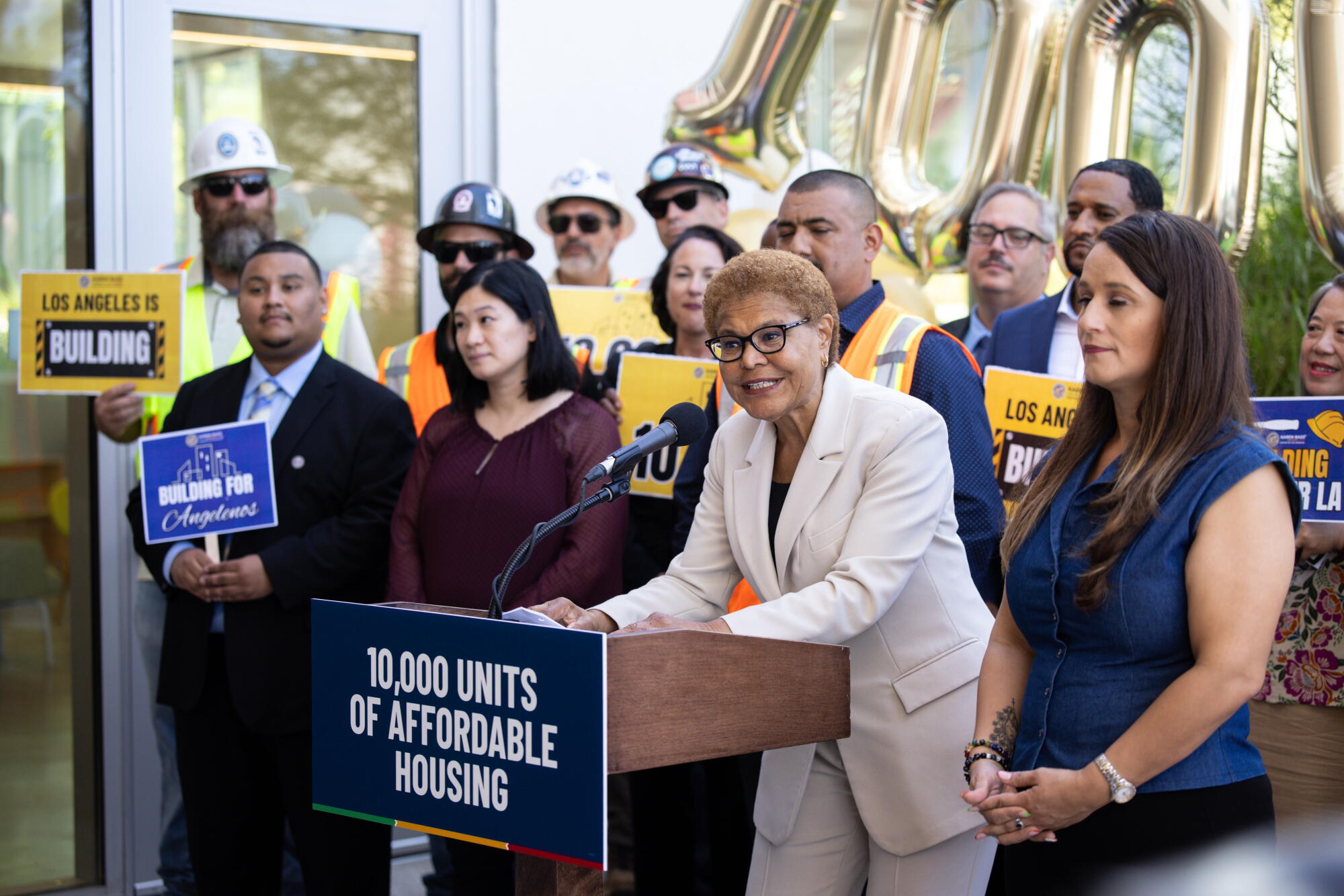
Kamala Harris endorses L.A. Mayor Karen Bass for reelection

Former Vice President Kamala Harris endorsed Los Angeles Mayor Karen Bass for reelection on Monday.

“Mayor Karen Bass is the leader Los Angeles needs right now. She has done what so many said couldn’t be done — the first ever two-year decline in homelessness, reducing crime to levels this city hasn’t seen since the 1960s, and refusing to back down when the federal government came after our neighbors,” Harris said in a statement. “She has my full support for re-election.”

The endorsement comes as ballots have begun arriving in Californians’ mailboxes at a critical moment in the race to lead the nation’s second-largest city. Although Bass leads in polls, she is viewed unfavorably by many Angelenos for her perceived lack of leadership in the aftermath of the devastating Palisades fire.

A quarter of voters supported Bass in a March poll by the UC Berkeley Institute of Governmental Studies that was co-sponsored by The Times. City Councilmember Nithya Raman had the backing of 17%, and conservative reality TV star Spencer Pratt had 14%. A quarter of voters were undecided.

Though Bass led the other prominent mayoral candidates, political strategists say the numbers are troubling for the incumbent because she is facing off against lesser-known rivals and because 56% viewed her unfavorably. And Pratt and Raman had raised more money than Bass this year through April 18, according to fundraising disclosures filed with the city’s Ethics Commission. However, Bass had nearly $2.3 million in the bank because she started fundraising for reelection two years ago.

Though Bass and Harris were rivals to be selected as presidential nominee Joe Biden’s running mate in 2020, the two Democrats have known each other for more than two decades and have a long shared history. Bass was sworn in by Harris as the 43rd mayor of Los Angeles in 2022. Two years later, at the Democratic National Convention where Harris became the party’s presidential nominee, Bass spoke about working with her more than a decade ago on youth homelessness and fixing the child welfare system when Bass led the California Assembly and Harris was a state prosecutor.

Harris also endorsed Rob Bonta for reelection as state attorney general, Malia Cohen for reelection as state controller and Lt. Gov. Eleni Kounalakis for state treasurer. Here’s a look at those races and the rest on the ballot.

Source link

Ex-NYC mayor, Trump ally Rudy Giuliani in critical condition

1 of 3 | Former New York Mayor Rudy Giuliani is interviewed on the floor of the 2024 Republican National Convention at Fiserv Forum in Milwaukee, Wis., on July 16, 2024. Giuliani has been hospitalized in critical condition, his spokesman said Sunday. File Photo by Tannen Maury/UPI | License Photo

May 3 (UPI) — Former New York Mayor Rudy Giuliani has been hospitalized and is in critical condition, his spokesman said Sunday.

Giuliani “is currently in the hospital, where he remains in critical but stable condition,” Ted Goodman said in a statement.

“Mayor Giuliani is a fighter who has faced every challenge in his life with unwavering strength, and he’s fighting with that same strength now. We do ask that you join us in prayer for America’s Mayor Rudy Giuliani.”

Goodman did not say why Giuliani, 81, was hospitalized.

The former mayor’s condition was also noted by President Donald Trump, who wrote on his Truth Social platform, “True Warrior, and the Best Mayor in the History of New York City, BY FAR.”

Trump also took the occasion to praise his political ally and former lawyer, who served as one of the key figures in the president’s baseless campaign attacking the results of his 2020 election loss to Joe Biden as “rigged.”

“They cheated on the Elections, fabricated hundreds of stories, did anything possible to destroy our Nation, and now, look at Rudy. So sad!” Trump wrote.

Trump in November pardoned Giuliani and 76 others tied to his efforts to overturn the 2020 election, including participation in what has become known as the fake electors scheme. The strategy involved the creation of false slates of pro-Trump electors in every battleground state that he lost to Biden, including Georgia.

The former mayor’s championing of Trump’s claims also resulted in his own financial troubles.

In September, he reached a confidential settlement with Dominion Voting Systems, which had filed a $1.3 billion defamation lawsuit against him for his allegations the company rigged the 2020 presidential election.

Giuliani was previously disbarred as a lawyer in New York and Washington, D.C.

Source link

John Seymour, Anaheim mayor and U.S. senator, dies at 88

John Seymour was the rare politician who didn’t mind harming his career if it meant doing right by his constituents.

As the newly elected mayor of Anaheim in 1978, he angered the city’s Police Department by suggesting the creation of a citizens oversight commission after residents complained that officers regularly harassed and beat them.

The lifelong Republican upset his party’s conservative base in the 1980s as a state senator, when he announced his support for abortion rights and opposition to offshore drilling.

“I’m not going to always be right,” Seymour told reporters in 1990. “Therefore, to expect one to never change a position on an issue … is too much to ask.”

Appointed to the U.S. Senate in 1990 after Pete Wilson was elected governor, Seymour lost his seat to Dianne Feinstein two years later and never ran for public office again. He remains the last California Republican to serve in that role.

“John was a guy who had great courage, he had great goodwill and a damn good mind,” Wilson, who was mayor of San Diego when he first met Seymour in the 1970s, said Monday. “He not only enjoyed a little combat, he was willing to give the time necessary for it.”

Seymour died on April 18 at his home in Carlsbad. He was 88, and the cause was Alzheimer’s disease, according to his son John.

As his party swung to the right, the moderate Seymour had no problem with becoming a political afterthought.

Supreme Court Justice nominee Clarence Thomas with republican senators John Seymour, R-Calif., Larry Craig, R-Idaho.

Supreme Court nominee Clarence Thomas, center, poses with senators on Capitol Hill in 1991. With Thomas, from left to right, are Sens. John Seymour (R-Calif.), Larry Craig (R-Idaho), Bob Dole (R-Kan.), Jesse Helms (R-N.C.), Connie Mack (R-Fla.) and Dan Coats (R-Ind.), right front.

(John Duricka / Associated Press)

“If somewhere in a footnote, history should record my public service, I would hope that they record me as one who cared more for people than for policy, one who was a no-nonsense guy who worked hard for those in need of help, but who wasn’t hesitant to knock heads of bureaucrats in order to get things done,” he told supporters at the kickoff to his Senate campaign in 1992.

Born in Chicago, Seymour settled in Southern California in the 1960s after a stint in the Marine Corps. The UCLA graduate started a real estate business in Orange County as the region transformed from farmland to suburbia. After four years on the Anaheim City Council, he became mayor in 1978.

He quickly established the pragmatic persona that would enable his rise in California politics.

Months after Seymour’s mayoral win, Anaheim police officers stormed a Latino neighborhood and beat up dozens of people in what became known as the Little People’s Park riots. At community meetings, Seymour admitted his shock at learning about the poor relations between the police and many residents.

The mayor described his approach as: “Don’t sweep it under the rug; don’t look the other way. Admit that we have a problem.”

At the same time, Seymour was negotiating with the Los Angeles Rams to move from the Coliseum to Orange County. While other O.C. officials proposed a new stadium, he convinced the Anaheim City Council to convert Angel Stadium into a multipurpose venue that he argued would create “the greatest opportunity for Anaheim since Disneyland and the California Angels.”

The Rams moved to the city in 1980. Two years later, Seymour was off to Sacramento as a state senator.

He became head of the Republican Senate caucus in his first year and bucked the stereotype of an Orange County GOP firebrand by largely eschewing culture war issues in favor of matters like higher pay for teachers and government support for poor parents that sometimes aligned him with Democrats. That made him few friends in his own party, with many finding his personal ambition grating — he once wrote a letter to then-Gov. George Deukmejian asking that he be appointed state treasurer — and a distraction from getting more of their own elected to Sacramento.

Seymour made no apologies for selling himself as a public servant while simultaneously seeking more power.

“I like to do things,” Seymour told The Times in 1987. “I’ve been a doer all my life. I don’t like to sit around sucking my thumb. I like to resolve problems.”

That year, conservative opponents deposed him as caucus chair. They snickered two years later when he announced that while he personally opposed abortion, he now supported a woman’s right to choose.

Sen. John Seymour in 1991.

Sen. John Seymour in 1991.

(Don Boomer / For The Times)

The impetus was a U.S. Supreme Court decision that gave states more leeway to regulate abortion. Since California had legalized the procedure decades earlier, Seymour reasoned that he should respect women’s choices. He spoke with people who were for and against abortion, and with his own family, before going public with his change of heart.

Naysayers accused the state senator of trying to pick up female voters as he was campaigning for the Republican nomination for lieutenant governor against fellow Orange County legislator Marian Bergeson, who opposed abortion. The charge was bogus, according to longtime Seymour campaign advisor Eileen Padberg.

“He didn’t get talked into it — he was an effing Marine,” she said. “He had to be convinced in anything before making a decision. In my career representing hundreds of candidates, John was one of very few who consistently would say about their stances, ‘This is going to kill me, but I gotta do it.’”

Seymour lost the primary to Bergeson. Six months later, he was once again one of the most powerful Republicans in the state when he took the Senate seat Wilson had just vacated to become governor.

Seymour’s son John recalled his father getting the call from Wilson while the family was vacationing in Shasta.

“Dad knew that it was a heavy, weighted responsibility, and that it would affect the family,” John said. “But we kids said, ‘You should do this, if it makes you happy.’”

Seymour became the second Anaheim Republican to serve in the position, after Thomas Kuchel in the 1950s and 1960s.

Wilson told The Times that he originally wanted to keep his friend in Sacramento to help push through his agenda. But the governor figured he needed a trusted voice in Washington even more.

“You’re looking for people who are not only friends but are capable and experienced and understand what’s necessary,” Wilson said. “And I don’t think I was doing him a great favor, because it was a tough time for the state.”

California was weathering its worst recession in decades and a punishing drought. The state’s vaunted defense industry was shedding tens of thousands of jobs with the closure of military bases after the end of the Cold War.

The daunting task didn’t faze Seymour.

“I mean, you gotta be good to succeed in the private sector,” he told The Times in 1992. “But if you’re gonna succeed in getting things done in the public sector, you gotta be better than that! That’s the challenge!”

Seymour spent most of his short time in the Senate in triage mode. He lobbied especially hard for California’s real estate industry, calling himself the “realtors’ senator.” But the diminutive man’s plainspoken demeanor failed to gain traction with California voters — a 1991 Times profile deemed him “the unknown senator.” And his one moment in the national spotlight became fodder for opponents.

In the spring of 1992, Los Angeles erupted in deadly riots after a jury acquitted four police officers who beat Rodney King. As he once did in Anaheim, Seymour went on a listening tour across affected neighborhoods, accompanying President George H.W. Bush.

This time, Seymour was accused of seeking photo opportunities a month before his primary election and being tone-deaf to the riot’s root causes by airing television ads stating, “We can’t be tough enough on lawbreakers.” White House aides ridiculed him in the press as the “Velcro senator.” His Republican opponent, Orange County Rep. William Dannemeyer, labeled him “Senator Flip Flop.”

Seymour easily beat Dannemeyer, then faced Democrat Dianne Feinstein, the former San Francisco mayor whose narrow loss to Wilson in the governor’s race had earned her widespread name recognition. He received only 38% of the vote as Feinstein rode a Democratic wave that swept Bill Clinton into the White House and a record number of women into the U.S. Senate, including Barbara Boxer in California.

California Department of Finance spokesperson H.D. Palmer worked for Seymour at the time and saw his “regular guy” boss give “one of the kindest and most gracious concession speeches I’ve ever heard.”

“Then he went down to O.C. to be with his supporters,” Palmer said. “He was true to his roots.”

Wilson soon appointed Seymour to head the California Housing Finance Agency, which helps first-time home buyers access low-rate loans. He stayed in that role for two years before becoming chief executive of the Southern California Housing Development Corp. The Inland Empire nonprofit, which managed and built affordable housing complexes, is now known as National Community Renaissance, or National CORE.

John, who is the nonprofit’s vice president of acquisitions, said his father had no regrets about leaving politics behind because “housing was his passion. He saw it as a platform for people to grow. He would say, ‘Once you’re housed, you have a big, beautiful horizon to do anything.’”

Seymour did lean on his past to urge skeptical cities and counties to allow affordable housing projects, challenging them to be like him: do the right thing regardless of political cost.

“If in fact you’re going to try to change an environment in which a mayor or city council will do what they know in their hearts is right, you need to offset the political blow,” he said at a housing conference in Cathedral City in 2002. “I challenge you to form a coalition.”

Seymour is survived by his wife of 54 years, Judy; children John, Shad, Jeffrey, Barrett, Lisa Houser and Sarena Talbert; nine grandchildren and eight great-grandchildren.

Source link

Paris and Lyon prepare as Nice mayor opposes 2030 Olympics ice hockey venue | Olympics News

Far-right mayor opposes plan for football team to lose stadium access due to 2030 Winter Games’ ice hockey.

French organisers of the 2030 Winter Olympics are looking at alternative locations for ice hockey outside of Nice, including Paris and Lyon, because of a political deadlock involving the coastal city’s new mayor.

Like the Milan Cortina Olympics, the French Alps project has split snow sports in storied mountain resorts and skating in a snow-free city, the Mediterranean resort of Nice.

Recommended Stories

list of 4 itemsend of list

Nice was to turn the city’s football stadium, Allianz Arena, into a temporary hockey rink.

But Nice’s newly elected far-right mayor, Eric Ciotti, opposes the plan, refusing to allow the resident football club to lose access to its stadium for months because of the games. Ciotti, a former conservative allied with the National Rally party of Marine Le Pen, was elected last month.

The 2030 Games organisers said on Tuesday they have worked with officials from Nice and its wider region, as well as the French government, to find solutions for placing ice hockey within the Olympic hub in Nice. A temporary ice rink, intended as a replacement for the originally planned Allianz Riviera stadium, was studied at other stadiums, mainly for men’s hockey matches.

“Technical, scheduling, and financial analyses highlighted the limitations of these options, particularly due to their very high cost and impact,” organisers added.

“With a focus on efficiency and budget optimisation, the (organising committee) has decided to broaden its investigations by examining the use of existing facilities in other major metropolitan areas such as Lyon or Paris, particularly those offering a minimum seating capacity of 10,000,” they added.

Results of their explorations will be presented to the organising committee’s executive board on May 11. The final venues are expected to be confirmed in June when the International Olympic Committee (IOC) decides the list of sports and events.

“The analyses carried out are leading us to turn towards existing facilities that are better suited and more sustainable. Several options are being studied to ensure hosting conditions that fully meet our requirements,” said Edgar Grospiron, the former Olympic champion freestyle skier who leads the organising committee.

The Paris Entertainment Company, which operates Adidas Arena and Accor Arena in the French capital, said last week it submitted a bid to host ice hockey. Both venues were used during the 2024 Paris Summer Games.

French Alps Games organisers said a second competition ice rink for skating is still planned at Nice’s exhibition centre, and other ice events scheduled in Nice remain unchanged.

Source link