mayor karen bass

L.A. finally reaches a deal for recovering its Olympic costs

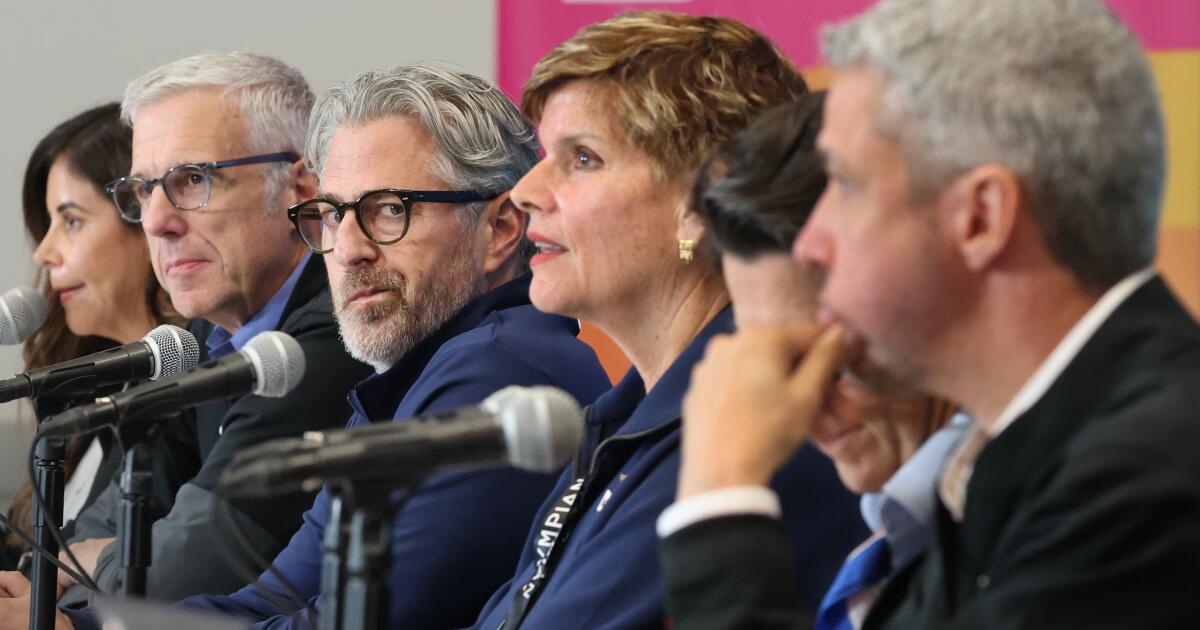
Los Angeles officials have reached a tentative agreement with organizers of the 2028 Olympic Games laying out the process for reimbursing the city for potentially hundreds of millions of dollars in public services.

The agreement, which still needs approval from Mayor Karen Bass and the City Council, would require the privately run Olympic organizing committee LA28 to provide the city with funding in advance to cover services that are ineligible for reimbursement from the federal government, such as traffic control and trash pickup.

The two parties would take a somewhat different approach for police protection at high-security venues. Under the proposed arrangement, the city would seek reimbursement from the federal government for security costs at those locations, said City Administrative Officer Matt Szabo, the city’s top negotiator.

If the federal government does not provide full reimbursement for those security costs, the city would seek to tap LA28’s contingency funds to cover the difference, Szabo said.

“This deal ensures the 2028 Games will have the City services needed to be safe and successful, while protecting the taxpayers from footing the bill,” he said in a statement.

Paul Krekorian, executive director for Bass’ Office of Major Events, praised the agreement.

“Mayor Bass’ priority is that the 2028 Olympic and Paralympic Games be fiscally responsible, protect taxpayers, and benefit Angelenos for decades to come,” he said. “This agreement helps deliver that commitment.”

Negotiations between the city and LA28 have played out behind closed doors over the last year, even as critics have grown increasingly vocal about the potential for taxpayers to be saddled with huge payouts if the Games fail to generate a profit. If organizers experience significant losses, the city would be on the hook for the first $270 million and possibly more after that.

Szabo acknowledged that under that scenario, the city would be far less likely to recoup all of its security costs if the federal government failed to provide full reimbursement.

Under an agreement finalized in 2021, the organizing committee must reimburse the city for any services that go beyond what would be provided on a normal day at a variety of locations, including parts of downtown L.A., Exposition Park, Venice and elsewhere.

President Trump’s “One Big Beautiful Bill” included $1 billion for security, planning and other costs associated with the Olympics. Nevertheless, some elected officials have voiced fears that money might not materialize once the Games are over, or that the city’s security expenses could exceed that amount.

The tentative deal, known as an Enhanced City Resources Master Agreement, goes before the council’s ad hoc committee on the Olympic Games on Tuesday, then to the full council.

Even with the agreement, many of the details surrounding taxpayer services during the Olympics and Paralympics will remain unresolved for at least a year.

The two sides still have to finalize agreements spelling out the services that will be provided at each venue by July 2027. They also must agree on the cost of those services by Oct. 31 of the same year.

According to a summary of the agreement released by the city Friday, Los Angeles World Airports, the Port of Los Angeles and the Department of Water and Power would need to enter into their own service agreements with LA28.

LA28 and the city were supposed to have a tentative agreement in place last fall. The negotiations dragged out for an additional nine months, in large part because of the “inherent complexity of the 2028 Games,” Szabo said in a memo he co-wrote with Sharon Tso, the city’s chief legislative analyst.

Under the terms of the 2021 agreement, LA28 must create a $270-million contingency fund that can be distributed as a surplus if the Games make money, or be used to cover any losses in the event of a shortfall.

The proposal unveiled Friday calls for the five-year-old agreement to be amended to ensure that those contingency funds can be used to cover the city’s costs in the event that other revenue is not enough to pay for certain city services provided during the Games.

The money from that contingency fund would be distributed to the city only after LA28 covers its own costs, according to the city’s summary.

If LA28 does make money, it would not be allowed to distribute its surplus funds to any other organization until after it has covered its financial obligations to the city, according to the tentative agreement.

Jacie Prieto Lopez, LA28’s vice president of communications and public affairs, said in a statement that her organization is pleased to forward the agreement to the council for consideration.

“We proudly stand behind this agreement which delivers on our commitment to execute a safe, secure, and fiscally responsible Games that benefits Los Angeles for decades to come,” she said.

Source link

Douglas Herman, asked about his departure, said he left over “strategic differences” regarding the direction of the Bass campaign.

The top strategist for Los Angeles Mayor Karen Bass’ reelection bid has left her campaign, just as she is gearing up for a bruising showdown against City Councilmember Nithya Raman in the Nov. 3 runoff.

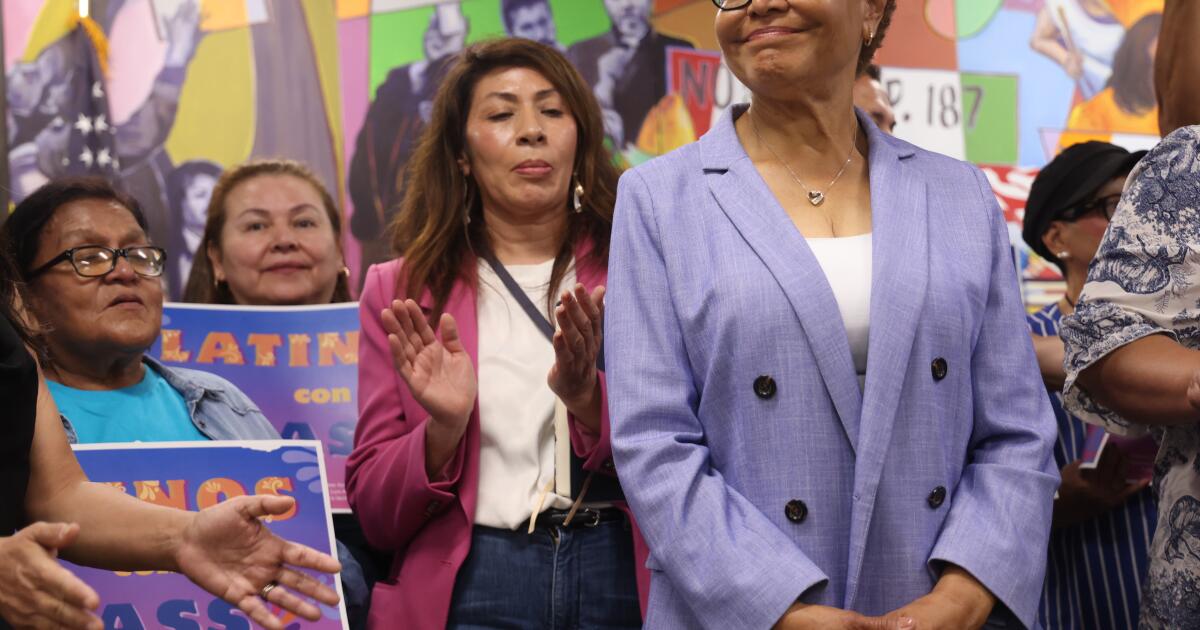
Douglas Herman, who has worked with Bass since 2021, told The Times on Wednesday that he stepped down from the campaign earlier in the day. He is being replaced by Julie Chávez Rodriguez, who was campaign manager for the Biden and Harris presidential campaigns in 2024, a Bass spokesperson said.

Chávez Rodriguez has spent the past few months running Unidos Con Karen Bass 2026, an independent expenditure campaign that focused on Latino voter turnout during the primary.

Herman, asked about his departure, said he left due to “strategic differences” regarding the direction of the reelection campaign. He did not provide details.

The Bass spokesperson, Alex Stack, declined to discuss Herman’s exit.

“Going into the general election, our campaign is proud to announce that Julie Chávez Rodriguez will be leading the team,” he said in a statement.

The granddaughter of César Chávez, co-founder of the United Farm Workers union, Chávez Rodriguez worked in both the Obama and the Biden administrations. She ran Joe Biden’s 2024 campaign until he dropped out and then ran Kamala Harris’ campaign, losing to President Trump. While working for Harris, she courted Latinos and working-class voters in battleground states.

Herman was a combative messenger for Bass, issuing broadsides against her rivals as she fought for a second four-year term. He had been advising her since her first run for mayor, when she defeated real estate developer Rick Caruso by about 10 percentage points. He also helped her fend off a recall attempt while in office.

Bass was the top vote getter in the June 2 primary election, securing 34% of the vote, compared to 29% for Raman and about 26% for reality TV personality Spencer Pratt. With a majority of voters registering disapproval of her performance, she faces a tough runoff campaign.

Raman, first elected in 2020, is expected to be a formidable opponent, drawing on her support from younger voters, entertainment industry workers and activists in the YIMBY movement, which seeks to tear down regulatory barriers to housing construction.

Source link

What’s on the ballot in the 2026 election in California?

The June 2026 election has been dominated by a down-to-the-wire governor’s race that has been filled with drama, scandal and much national attention.

A large group of Democrats are vying to replace Gov. Gavin Newsom in this very blue state. But the candidates have — until recently — struggled to generate wide excitement, and it’s far from clear who will win. On the Republican side, commentator Steve Hilton has benefited from the divided Democrats (and a Trump endorsement) to remain near the top of the pack in polls.

But the governor’s race is far from the only vital decision voters will make.

Los Angeles residents will vote for mayor in a race that is far from certain. And there are numerous state, county, local and judicial candidates to choose from.

Here is a breakdown:

When is the election?

The election is Tuesday, but early voting has already been already under way.

You can find your polling place here or by calling (800) 345-8683. All polling locations are open on election day from 7 a.m. to 8 p.m.

Once it’s cast, you can track your ballot here.

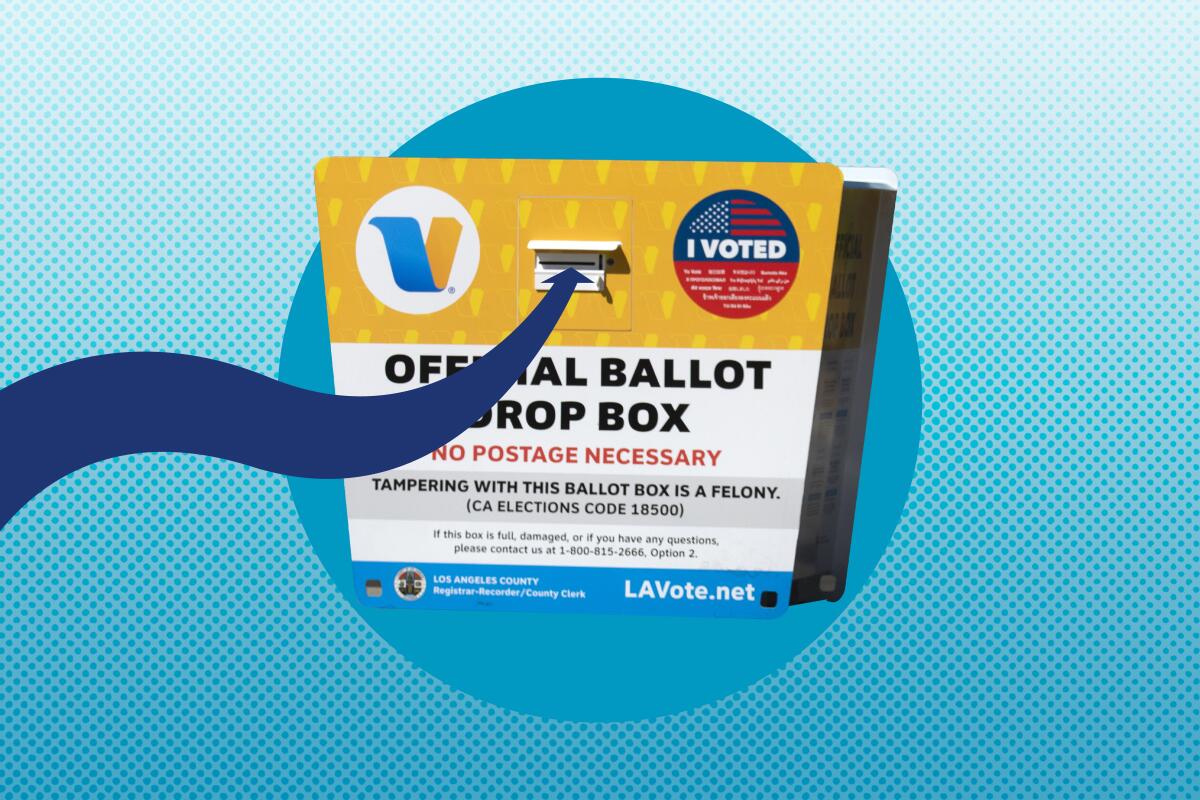
An illustration of an arrow flowing into a ballot drop box

(Photo illustration by Nicole Vas / Los Angeles Times; Francine Orr / Los Angeles Times)

What are the big statewide races?

Let’s start with the race for governor, of course. With Newsom term-limited, Democrats and Republicans are competing for California’s open gubernatorial seat in what could reshape the state’s political landscape. Democrats went in hoping for easy sailing, but a wide field and no superstar name has left the race something of a tossup, though Xavier Becerra has been rising in recent polls. On the Republican side, Hilton continues to poll strongly.

There is a possibility California could make history: The state has never has elected a woman as governor, and only once has a person of color held the office.

But there are many down-ballot statewide races as well,

photo illustration of Los Angeles City Hall with a ballot in the background

(Photo illustration by Nicole Vas / Los Angeles Times; Mark J. Terrill / Associated Press)

What are the big L.A. races?

The L.A. mayor’s race is grabbing all the attention. Polls show the leading candidates are Mayor Karen Bass, City Councilmember Nithya Raman and community activist and former reality TV personality Spencer Pratt. Those same polls show Bass has struggled in the aftermath of the 2025 firestorms, a big issue for Pratt. Another major topic is affordability, which Raman has taken up.

But there are several other competitive races plus ballot measures.

What are the big L.A. County races?

These contests don’t get the attention of the mayor’s and governor’s races, but L.A. County voters have a lot of choices to make.

What’s left?

Source link