WHEN it comes to city breaks, some of the cheapest in Europe are found a bit further east.
And Romania‘s Bucharest is not only affordable, but is getting more flights too.
Sign up for the Travel newsletter
Thank you!
The Romanian city has just got new UK flights – and you can get there for less than £20Credit: Getty Images – GettyOne of the biggest draws to Bucharest is its Therme spa and waterparkCredit: Alamy
Romanian airline, AnimaWings, has started six new weekly flights from London Gatwick to Bucharest.
This isn’t the only option though as there are also cheap flights with Ryanair from London Stansted with one-way journeys starting from £18.99.
Wizz Air also offers cheap flights to the city from London Luton.
With a flight time of just over three hours, Bucharest is the ideal city break destination.
Last year, The Telegraph even named Bucharest as being one of Europe’s ‘last great cheap cities’.
It added that Bucharest has everything you need for a good city break with “expansive, tree-lined avenues, lively bars and characterful museums.”
Bucharest is inexpensive, according to Numbeo – a pint of local beer costs on average £2.55 and an average meal is around £10.18.
For a three-course meal, you’re looking at around £50 and a cappuccino is just £2.45.
It’s not just food and drink that’s on the cheaper side as public transport is the same – a typical single journey on the tram and metro network is as little as 85p.
One of the most popular places in the city to go is Therme Bucharest, a spa and waterpark.
Split into three parts, the Galaxy area is a more family-orientated with 17 water slides, a wave pool and water playground.
The Palm zone is where people go to relax – with three mineral pools and swim-up bars, it has been created for relaxation.
And Elysium is a ”restoration area’ with lots of traditional and modern treatments from hammams to infrared light therapy beds.
Sun Writer Steve Corbett visited Therme and called it one of ‘Europe‘s greatest secrets’.
He compared it to Center Parcs’ Subtropical Swimming Paradise as he tried out the water slides, high-tech treatments and poolside bars.
It also has cheap beer with a pint costing £2 on averageCredit: AlamyThe city even has it’s own Van Gogh-inspired cafeCredit: Alamy
One woman even flew to Bucharest for a spa break at the Therme because it was cheaper than one in the UK.
Kara Wildbur booked her and her mum in at the Therme for £64 after finding out a spa break would be £400 back home.
Even with the flights being £157 return for the two of them, with the hotel costing £94 – it worked out cheaper than a UK spa day.
Another attraction is the Museum of Senses, which is an interactive museum – especially good if you’re visiting the city with kids.
It’s full of optical illusions, infinity rooms and hands-on exhibits.
Tickets for adults start from £9.33, and £6.79 for children.
When it comes to eating, there’s plenty of quirky cafes within the city.
Some top spots include The Grand Café Van Gogh in Bucharest which some visitors have said reminds them of Amsterdam.
It’s an art-themed cafe filled with Van Gogh artwork in the Old Town.
Another is Dulcinella which sells éclairs, New York-style rolls and is known for having an ‘Instagrammable-vibe’.
Caru’ cu Bere is considered the most famous restaurant and beerhouse in Bucharest and was founded in 1879.
Its house beer, called Berea casei, is brewed on-site and is still made from the original recipe – you can pick up 400ml from £4.30.
The best times of year to visit Bucharest are between April and October, with highs of 31C in June and July.
Just skip the winter months – the average temperature in December and January is around -2C.
A POPULAR holiday destination just a few hours from the UK is getting a huge new £960million airport expansion.
Mohammed V Airport in Casablanca, Morocco is currently expanding its airport with a new terminal which will be able to handle up to 20million passengers a year.
Sign up for the Travel newsletter
Thank you!
Mohammed V Airport in Casablanca, Morocco, is getting a new terminalCredit: Je-découvre
The new terminal will be ‘H’ shaped and is expected to be operational by 2029, in time for the 2030 FIFA World Cup.
It will have three levels with shops, green spaces and an airport hotel.
In addition, the terminal will be connected to Morocco‘s high-speed rail (LGV) network with links to Kenitra and Marrakech.
According to Architects’ Journal, the terminal will feature “sweeping undulations of the roof [evoking] the waves and movement of the Atlantic”.
The project also includes a 3,700-metre runway, which will run alongside taxiways and a new 42-metre-tall air traffic control tower.
British architecture firm, RSHP – who designed London’s Millennium Dome and Heathrow Airport’s Terminal 5 and control tower – will design the new terminal at Mohammed V Airport.
Ivan Harbour, senior design director at RSHP, said: “The airport will be a celebration of light, warmth and human scale, undulating from grand central spaces to intimate and calming oases, a memorable experience for all travelling through it.
“It will be a state of the art, responsible, building that interprets and celebrates the landscape of its place to create a graceful threshold between Casablanca and the world beyond.”
The airport currently has two terminals and serves around 11.5million passengers each year.
Royal Air Maroc flies direct to Casablanca from London Heathrow with flights starting from £178 one-way.
Though, with the airport expansion there could be more services to the UK in the future.
Casablanca’s main attraction is the Hassan II Mosque, one of the largest mosques in the world.
It also has a popular seaside promenade with lots of hotels and restaurants as well as Habous Quarter (known for its Moorish-style architecture, olive souks and bookstores) and the Old Medina with traditional markets.
The city is pretty cheap as well – a three-course meal for two usually costs around £23.74, while a beer is less than £3.
And the famous 1942 film Casablanca was also set in the city during World War II.
Despite mostly being filmed in studios in California, the film depicts the bustling city of Casablanca when it was used by people fleeing Nazi-occupied Europe.
It is expected to be completed by 2029 in time for the 2030 FIFA World CupCredit: Je-découvreIt will feature three levels, with shops and green spacesCredit: Je-découvre
RITA Ora put on a rather daring display as she attended an Oscars afterparty on Sunday night.
The Hot Right Now singer, 35, went completely braless and left little to the imagination in a daring sheer dress and massive feathered hat at Vanity Fair’s star-studded Oscars afterparty.
Sign up for the Showbiz newsletter
Thank you!
Rita Ora looked incredible on Sunday night as she posed up a storm at the Vanity Fair Oscars afterpartyCredit: GettyHer slender physique was on full displayCredit: GettyShe wore a huge dramatic feathered headpieceCredit: AP
Trailing behind her, the skirt of the dress even had a train, which also boasted of some embroidery.
There was also a massive bow at the back of her dress, which appeared to be of the silk fabric.
She completed the look with a massive “camp” feathered hat, which dominated the entire look.
Rita wore minimal makeup, a light pink rosy-colored lip and a silver-hued eye look.
Most read in Entertainment
Her hair looked short and curled beneath her massive hat, and she added a pair of white pearl earrings.
Reacting to the stunning snaps of Rita’s outfit for the afterparty, one person penned on X, “Oh Rita Ora this is such a slay wow.”
“She ate this,” declared another.
“Sublime,” swooned a third.
While a fourth penned: “What a beautiful dress.”
“THE HEADPIECE IS CAMPPPP,” added a fifth.
Who won on Hollywood’s biggest night?
One Battle After Another ran away with the night with six Oscars, while Sinners, which was nominated for a record-breaking 16 awards, came away with four. See the full winners list below:
They revealed they were starstruck when Ginger Spice popped into their rehearsal at a West London studio last month, accompanied by her husband Christian Horner’s daughter.
Asked about their celebrity fans, Danny said: “The legend that is Geri Halliwell and her step-daughter came to the rehearsal studio to watch our set. They had wanted to come to our London show, but were due to be away when it was on, so we invited them to our rehearsals.
“Geri was like a pocket rocket. Petite and loads of personality.
Last month, they attended their first Brit Awards, in Manchester, and have told how they brushed shoulders with singers Lola Young and Sam Fender, as well as Happy Mondays maracas player Bez.
Cruz said: “I was partying with Bez in the DJ booth — he is funny. He and I have got to go to Ibiza one day.”
To celebrate Mother’s Day, the boys have been treating their mums after receiving their first big pay cheque.
Hendrik said: “I have been saving money to try and finish my mum and dad’s house. They have been wanting to finish it for years.”
Despite the global stardom that awaits, it sounds like the boys are keeping their feet on the ground.
SIMON ‘PROUD’ OF LADS
DECEMBER 10 have revealed how their mentor Simon Cowell was proud of them after their sold-out London show.
The music mogul and his fiancee Lauren Silverman attended their gig at the O2 Academy Islington, in North London, last month.
December 10 have revealed how their mentor Simon Cowell was proud of them after their sold-out London showCredit: Getty
Band member Nicolas said: “He really enjoyed that we incorporated instruments into the live show, and when he spoke to us, that was one of the main things that made him really happy and proud.”
John added: “He has also always said that he just wants great songs. Over the past few months that we have been recording music, we have been working towards that.”
And the boys reckon it still feels surreal seeing thousands of teenagers queuing to hear them play.
Nicolas said: “I wouldn’t say it’s overwhelming, it’s more of a strange feeling, because the first show was a bit of a shock.
“It is a feeling for me, personally, that I don’t think I will get used to.”
WIN A SIGNED T-SHIRT
DECEMBER 10 have signed a T-shirt exclusively for one lucky Biz on Sunday reader.
For your chance to win the prize, email sunday features @the-sun. co.uk by March 26.
For T&Cs, visit thesun.co.uk.
HE HAZ TO SEE MATES
HE is one of the biggest pop stars on the planet, but Harry Styles says he had to change his mindset so he did not become a recluse.
He explained: “When you shut out a lot of the things that are assumed can be negative, you also just unconsciously shut out a ton of positive things.
Harry Styles says he had to change his mindset so he did not become a recluseCredit: Getty
“It can be hard to go to a bar and hang out with friends because there’s maybe people who would act [in a certain] way.
“There’s also incredible people that you can meet in that bar – that you also shut yourself off from.”
He added on SiriusXM: “I was having some experiences where I was meeting some really great people that were kind of really planting the seed of, like, ‘Oh, I don’t want to shut myself off from this world’.”
It comes as his record Kiss All The Time. Disco, Occasionally has topped the albums chart, while his track American Girls is No1 in the singles rundown.
DENISE VAN OUTEN and Johnny Vaughan are creating a new Big Breakfast-style TV show 25 years after the original was axed.
I can reveal the pair, who presented the Channel 4 show in the Nineties, are working on a new format set to shake up TV schedules.
Denise said: “In my new touring show [An Evening With Denise], of all the things I’ve done, The Big Breakfast section gets the biggest reaction. I think people are still craving that chaos and the fun – we’ve lost it.”
She added: “I’m working on something with Johnny, it’s going to have that feel to it. It’s all come from the show and speaking to people. I was like, ‘Oh, people are missing this, they want this’.”
I cannot wait.
YOU’RE SO ROUGE, CHRISTINA
CHRISTINA AGUILERA was red hot on stage in this basque and matching gloves.
The US hitmaker teamed them with thigh-skimming black boots in Austin, Texas, as she headlined the Coca-Cola Sips & Sounds Music Festival.
Christina Aguilera was red hot on stage in this basque and matching glovesCredit: Shutterstock Editorial
Highlights included a performance of her 2001 hit Lady Marmalade, from film Moulin Rouge!, as fireworks lit up the sky.
MAYA’S VILLA TO VILLAIN
MAYA JAMA has revealed what her dream movie role would be – and it’s not what you might expect.
The Love Island host, who is set to star in the second series of Guy Ritchie’s Netflix crime-comedy The Gentlemen, said: “I’ve always said I don’t want to be what people expect me to be on camera.
Maya Jama has revealed what her dream movie role would be – and it’s not what you might expectCredit: Getty
“I’d want to be the complete opposite to that . . . so a monster or a mean, evil person. A villain maybe would be nice.”
The pair, who married in 2018, have both appointed legal teams and have quietly started proceedings.
Millie Mackintosh and Hugo Taylor have filed for divorceCredit: Getty
Reality star turned author Millie, who has two daughters with entrepreneur Hugo, has been through the process before, having split from rapper Professor Green, who she was married to from 2013 to 2016.
A pal said: “Fans will be sad to hear that their relationship is really over, but the pair just want a clean break.
“Millie and Hugo are committed to co-parenting their two young children and keeping everything stable. They are still very amicable with each other and have a lot of respect for one another.
“They want the divorce to go through as painlessly as possible and are focusing on work in the meantime.”
Professor Green has a son with model and actress Karima McAdams, who he dated for five years after splitting with Millie.
Now, he is back in touch with Millie and said: “There’s no resentment in me. She is gorgeous. We were not good for each other at that time.
“We spoke about our mutual diagnosis (ADHD) and our kids.”
The couple are eyeing up Son Marroig, a stunning, 17th century, clifftop temple on the Spanish island for their summer nuptials.
Molly Smith and Tom Clare are set to tie the knot in Majorca – home of the original dating show’s villaCredit: Supplied
The venue is popular among celebrities, with Pixie Geldof, weatherman Alex Beresford and Man City defender Nathan Ake all having held their ceremonies there.
A source said: “Majorca is a stunning destination for a wedding and there is plenty of privacy on the island. Many of the buildings are difficult to access by road and it has a secluded feel.
“There is guaranteed sun and it offers a beautiful backdrop with the most stunning sunsets.”
Tom and Molly do a weekly podcast called NearlyWeds and post regular vlogs about their planning.
Congrats guys . . .
EX-PM SNAPS GEM OF A SHOT
GEMMA COLLINS posed with an unlikely fan at the Cheltenham races this week – as I am told that former PM David Cameron asked for a photo.
And reality favourite Gemma was only too happy to oblige David and wife Samantha in the Royal Box.
Gemma Collins with David and Samantha Cameron at the Cheltenham racesCredit: Gemma Collins/Instagram
A source said: “Gemma was honoured that David asked her for a picture. They chatted about politics and her fondness of current Conservative leader Kemi Badenoch.”
Chuffed Gemma quickly shared the snap with her 2.2million Instagram followers.
She wrote: “It was lovely to be in the Royal Box and have a good chat with David Cameron and his lovely wife. We spoke politics and . . . what we were going to bet on next.”
Gemma, who is a face of bookmaker Paddy Power, won a mighty impressive £20,000 at Cheltenham – and £5,000 off just one bet.
The GC was spotted shouting, “I’m loaded” as she basked in her glory alongside stars including Danny Dyer and Peter Crouch.
Weekly insights and analysis on the latest developments in military technology, strategy, and foreign policy.
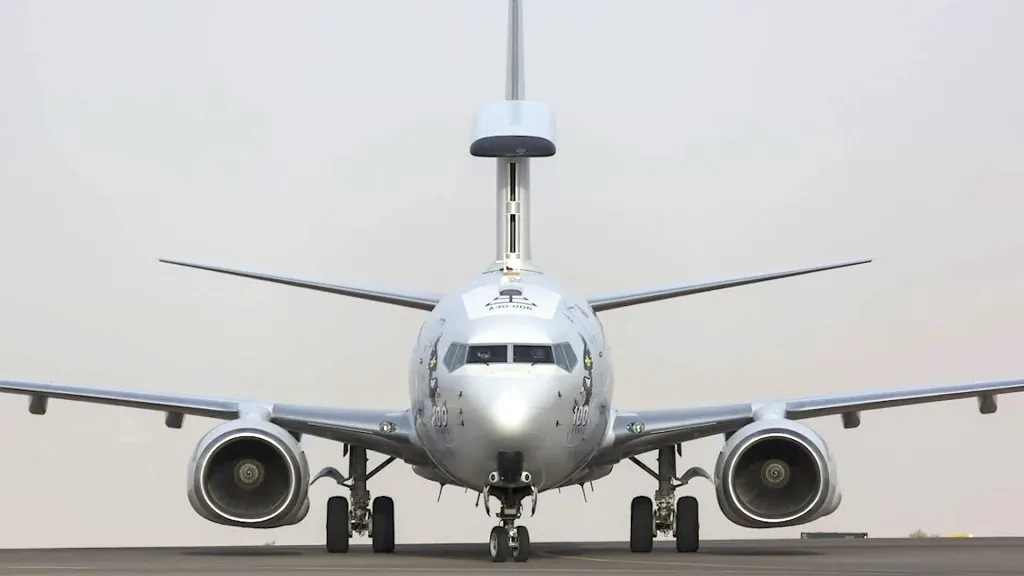
An Australian E-7A Wedgetail airborne early warning and control plane is headed for the Persian Gulf. This comes as Gulf Arab states continue to be subjected to Iran’s attacks in retaliation for ongoing U.S. and Israeli strikes. The E-7A is arguably the best airborne look-down sensor platform in the world at present, and will provide a particularly important boost in capability for spotting low-flying Iranian kamikaze drones and cruise missiles.
Australian Prime Minister Anthony Albanese announced the impending deployment of the E-7A to the Middle East at a press conference yesterday. The Royal Australian Air Force (RAAF) currently operates a fleet of six Wedgetails.
One of the RAAF’s six E-7s. RAAF
“Twelve countries across the region, from Cyprus through to the Gulf are continuing to be targeted. The United Arab Emirates alone has been forced to shoot down over 1,500 rockets and drones,” Albanese said. “This growing wave of dangerous and destabilising attacks from Iran puts civilian lives at risk, of course including Australian lives, of which there are more than 20,000 people based in the UAE.”
“In responding to requests, following a conversation that I had with the President [of the UAE,] Mohammed bin Zayed [Al Nahyan; also Crown Prince of Abu Dhabi], and other requests, Australia will deploy an E-7A Wedgetail, to the Gulf to help protect and defend Australians and other civilians,” Albanese continued. “The Wedgetail will provide long-range reconnaissance capability, which will help to protect and secure the airspace above the Gulf. The Wedgetail and supporting Australian Defence Force personnel will be deployed for an initial four weeks in support of the collective self-defense of Gulf nations.”
The E-7A is based on the Boeing 737-700 Next Generation airliner airframe. Its most prominent feature is the Northrop Grumman Multi-role Electronically Scanned Array (MESA) sensor installed on top of the fuselage, which offers 360-degree coverage and can scan for aerial and maritime threats. It also has an extensive suite of communications and data-sharing capabilities, backed by modern processing power, allowing for the rapid exchange of information with other friendly assets in the air and in other domains. You can read more about the aircraft here.
Northrop Grumman MESA Radar – Boeing E-7 AEWC
“As the Prime Minister has said at the request of the UAE, we will be deploying an E-7 Wedgetail to the Gulf. This is one of the leading capabilities in the world in terms of airborne long-range reconnaissance and command. And we are one of the leading nations in the use of the E-7,” Richard Marles, Deputy Prime Minister of Australia and the country’s Minister for Defense, also said at the press conference yesterday. “There will be in the order of 85 personnel who will go with this airframe and that’s the normal crew. The airframe will be leaving Australia today and the expectation is that it will be in the region in the middle of the week and operational by the end of the week.”
Albanese and Marles also said the Australian government planned to send a tranche of AIM-120 Advanced Medium Range Air-to-Air Missiles (AMRAAM) to the UAE. In addition to ground-based air defense, Emirati fighters have been working to intercept incoming Iranian threats.
As noted, the biggest boost in capability the RAAF’s E-7A will bring to the Gulf is its look-down sensor capability. From the aircraft’s high perch, the MESA sensor has an excellent field of view to spot low and slow-flying targets, even if they are relatively small. Wedgetail would also be able to see threats as far out into the Persian Gulf, or even possibly beyond.
So much garbage being passed around here in long jargon filled threads that sound like AI about E-7 Wedgetail and the potential RAAF deployment to the Middle East. Here is all you need to know:
it’s arguably the best low flying drone and CM detection sensor on earth.
Having another eye in the sky to provide additional alerts about incoming threats and more overall situational awareness will be a boon for defenders in the air and on the ground, in general. The E-7A can also be refueled in flight, meaning it can stay on station longer.
The UAE, which is the clear focus of the Australian deployment, does have a fleet of 5 Saab GlobalEye airborne early warning and control aircraft, but the extent to which they are operating now is unknown. While a modern and capable design, GlobalEye does not provide the same level of coverage and capability as the E-7A, and is also based on the smaller Bombardier Global 6000 business jet, which cannot refuel in flight.
GlobalEye on operational mission
There is more airborne warning and control coverage elsewhere in the Gulf, including six U.S. Air Force E-3 Sentry Airborne Warning and Control System (AWACS) aircraft forward-deployed to Saudi Arabia just ahead of the current conflict with Iran. Saudi Arabia has its own E-3s and GlobalEye jets. How effective the aging Cold War-era E-3, in particular, is at this point at spotting and tracking low-flying kamikaze drones is unclear. In general, the E-7’s active electronically-scanned array MESA sensor offers clear advantages over the Sentry’s older radar, especially when it comes to smaller, slower, and lower-flying targets.
For years now, the U.S. E-3 fleet, overall, has struggled with readiness issues, which you can read more about here. As an aside, the strain on the E-3 fleet, now magnified by the current conflict, together with Australia’s deployment of an E-7 to the region, makes the Pentagon’s attempt last year to cancel the U.S. Air Force’s Wedgetail program seem even more bizarrely short-sighted.
A US Air Force E-3 Sentry seen at Prince Sultan Air Base in Saudi Arabia in 2022. USAF
In speaking yesterday, Australia’s Marles drew a comparison between sending the E-7A to the Middle East now and the past deployment of a Wedgetail to Poland to provide coverage along that country’s border with Ukraine. However, that mission was ostensibly focused on watching for threats to cross-border transfers of aid to the government in Kyiv.
The need for E-7A in the Gulf now is substantially more pressing.
Since the current conflict began, the UAE has been providing particularly granular data about incoming Iranian missile and drone attacks, as well as interception rates, offering a good sense of the current threat ecosystem in the Gulf. As of the last official tally from the UAE’s Ministry of Defense, the country’s forces have intercepted 1,385 kamikaze drones, 241 ballistic missiles, and eight cruise missiles since February 28.
Overall, Iranian retaliatory attacks have notably slowed in recent days across the region, but they have not stopped. Based on its own data, the UAE saw a notably high number of Iranian drones get past its defenses yesterday. This comes amid persistent media reports of concerns among several Gulf Arab states, as well as the U.S. military, about the dwindling stockpile of anti-air interceptors and what has turned into a war of attrition with Iran. Publicly, American and regional authorities have pushed back on this reporting. At the same time, Australia’s plan to rush AIM-120s to the UAE is certainly evidence of demand for additional munitions.
Reasonable to ask what the raw numbers for ballistic missile and drone attempts vs. hits are, which are plotted in these figures. Again, all figures are from UAE MOD. pic.twitter.com/dhj86h6DbD
There is also a question of where the Australian E-7A will be based and what threats there might be as a result to the aircraft, aircrew, and the rest of the 85-person contingent. Albanese and Marles do not appear to have explicitly said where the jet will be flying from to provide coverage over the UAE and other parts of the Gulf region.
With Iran showing no intention of halting its drone and missile attacks across the Gulf, Australia’s E-7A Wedgetail, wherever it might be stationed, looks set to bring immensely valuable added look-down surveillance coverage to the region.
Weekly insights and analysis on the latest developments in military technology, strategy, and foreign policy.
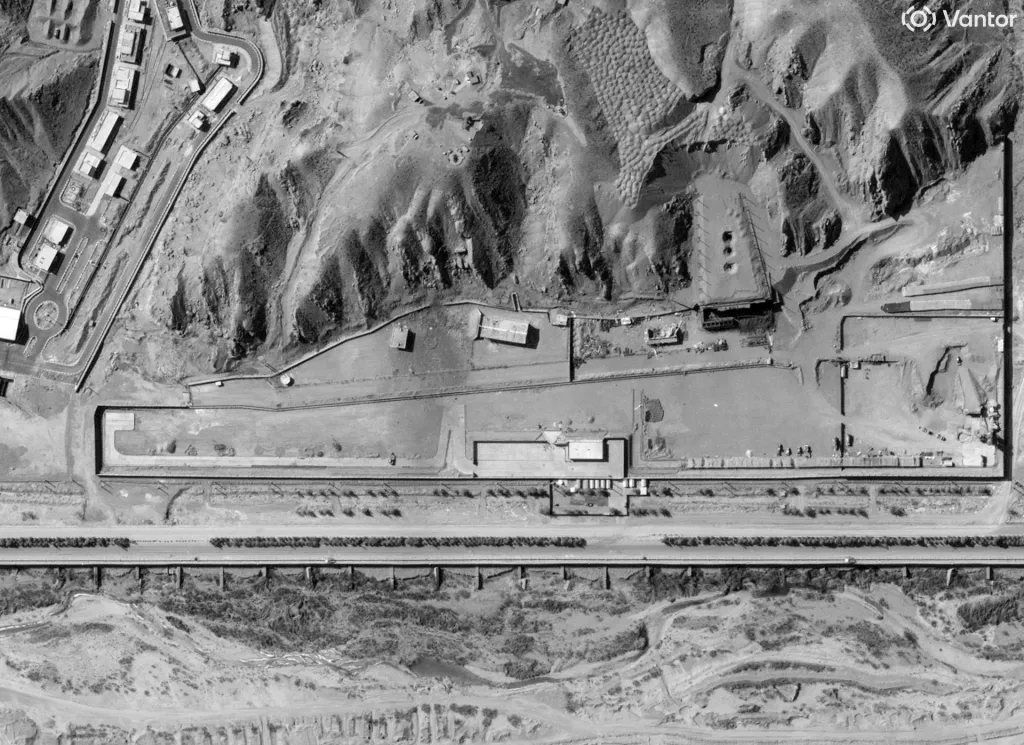
Satellite imagery from Vantor shows that a site long linked to Iran’s nuclear program has been struck. A trio of very large impact points also raises the possibility that the hardened facility was hit by 30,000-pound GBU-57/B Massive Ordnance Penetrator (MOP) bunker buster bombs. MOPs were first used operationally in U.S. strikes on Iranian nuclear facilities last year, dubbed Operation Midnight Hammer. The Taleghan 2 site was newly encased in a concrete shell and then covered with soil in the months leading up to the current conflict, which may have created a need to use munitions more capable of burrowing down into it to have a better chance of ensuring its destruction.
Vantor’s post-strike images of Taleghan 2, seen at the top of this story and below, were taken earlier today. As noted, three very large and precise impact points are visible on top of the facility.
Vantor also shared previous images of Taleghan 2 taken on March 6, 2026, and November 14, 2025. Other parts of Parchin were notably struck on March 6, but Taleghan 2 was left untouched at that time.
High resolution imagery provided to the Institute by image @VantorTech shows significant damage to the solid rocket propellant motor production facilities at Parchin. These production plants have been destroyed multiple times, first during Israeli airstrikes in October 2024, and… pic.twitter.com/FfNk6SczGh
Taleghan 2 had already been covered in a new layer of concrete by mid-January of this year. Soil had also been added on top weeks before joint U.S.-Israeli operations began on February 28. Iran was also observed taking steps to further harden and/or seal up a host of other key facilities across the country in the lead-up to the current conflict, but not to this degree. TWZ highlighted similar activity at Iranian nuclear sites ahead of the Operation Midnight Hammer strikes last year.
Over the last two to three weeks, Iran has been busy burying the new Taleghan 2 facility at the Parchin military complex with soil. Once the concrete sarcophagus around the facility was hardened, Iran did not hesitate to move soil over large parts of the new facility. More soil… pic.twitter.com/LWSrCnDdfy
We do not know what munitions were used to strike Taleghan 2, but the impact points are at least broadly consistent with what was seen at Iran’s Fordow and Natanz nuclear sites after Operation Midnight Hammer. During that operation, B-2 bombers dropped 12 GBU-57/Bs on Fordow and another two MOPs on Natanz.
When reached by TWZ, U.S. Central Command (CENTCOM) declined to comment on whether GBU-57/Bs had been dropped on Taleghan 2 or any other site in Iran in the course of the current campaign. The only aircraft currently certified to carry MOPs operationally is the B-2 bomber, with each one being able to carry two of the massive bombs at a time. B-2s have been striking Iran since the first night of the conflict.
A B-2 bomber seen taking part in strikes on Iran. CENTCOM
From what can be seen via satellite imagery, Taleghan 2 does appear to be as deeply buried as either Fordow or the underground facility at Natanz. At the same time, it was very thoroughly and deliberately hardened against attack just in the past few months, which could have driven a decision to target it with GBU-57/Bs. That work was also done relatively quickly with a clear eye toward shielding the site from strikes.
A B-2 bomber drops GBU-57/B MOP during a test. USAF
Other aspects of the target may have factored in, as well. In the strikes on Fordow last year, B-2s dropped six MOPs each down two air shafts to achieve the desired penetration. Those air vents offered a weak channel through which the bombs could penetrate far deeper to get to the targeted chamber deep within the mountain. Though it may be shallower, there do not appear to be any similar inlets readily visible at Taleghan 2. Using 30,000-pound bombs would also have helped guarantee more total destruction of this high-priority facility. The determination that MOPs were required might also explain why it was not struck previously.
The video below is a montage of imagery from past GBU-57/B tests that the U.S. military released last year after Operation Midnight Hammer.
GBU-57 MOP test
It is possible that other munitions may have been used to strike Taleghan 2. Smaller bunker busters could be dropped in succession on the same aim point in order to create openings and then create significant effects inside. CENTCOM has previously confirmed B-2 strikes on deeply buried targets in Iran using salvos of 2,000-pound-class bunker buster bombs.
Last night, U.S. B-2 stealth bombers, armed with 2,000 lb. bombs, struck Iran’s hardened ballistic missile facilities. No nation should ever doubt America’s resolve. pic.twitter.com/6JpG73lHYW
Striking Taleghan 2 otherwise fits with the U.S. military’s stated core objective of neutralizing Iran’s nuclear program. The site is tied to long-standing allegations of nuclear weapons-related work at Parchin, which Iranian officials have consistently denied. Taleghan 2 is specifically believed to have been a production facility for specialized conventional explosives required for nuclear weapons.
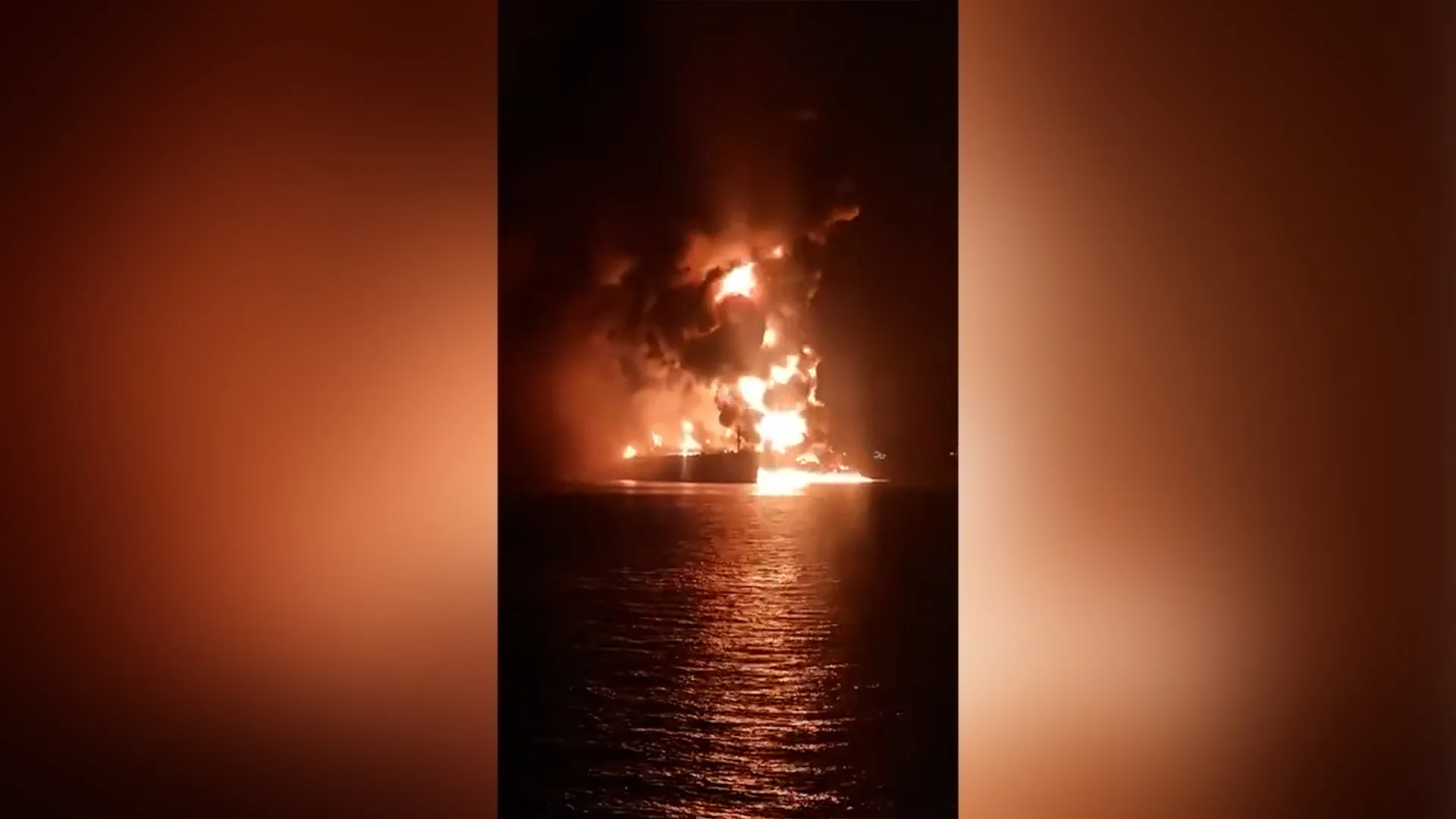
Two foreign tankers were seen ablaze in Iraqi territorial waters after a strike near the al-Faw port. Authorities say they evacuated 25 crew members but have confirmed at least one death and are battling to control the flames.
A MEDITERRANEAN destination nicknamed ‘the land of jasmine’ will soon have an even bigger airport with space for millions more passengers.
Plans have been revealed to expand and modernise Tunis-Carthage International Airport in Tunisia, Africa as it aims to quadruple its passenger numbers in just five years.
Sign up for the Travel newsletter
Thank you!
Tunis-Carthage International Airport will undergo a £743million upgradeCredit: Alamy
The airport – which is the 10th busiest in Africa – will undergo a major £743million makeover over the next five years.
The country’s Transport Ministry shared that the plans will include building a new passenger terminal as well as the existing terminal being renovated.
Between the two terminals, the Transport Ministry aims to increase passenger numbers from five million people per year to 18.5million passengers by 2031.
There will also be a new technical building and the air traffic control tower will be upgraded.
Some reports suggest that the broader project will involve adding VIP lounges as well.
In addition, the Transport Ministry hopes that it will improve connectivity placing Tunisia as a gateway to the Mediterranean with links to Africa, Europe and emerging destinations.
The upgrade could also pave the way for new airline partnerships and flight routes.
News of the makeover follows original plans for building a new airport being put on hold.
Known as ‘the land of jasmine’ for its use of jasmine flowers in festivals, cultural traditions and perfumes, Tunisia takes about three hours to fly to from the UK.
The Sun’s Deputy Digital TV Editor Jill Robinson recently visited the city and said: “Winding my way through narrow streets, the smell of jasmine and mint tea fills the air as I pass craftsmen, locals doing their shopping and an abundance of cats.
“It would have been easy to think I was in the souks of Marrakech, but I’m in Tunis, the capital of Tunisia.
“While its Medina is not as chaotic as its Moroccan counterpart, the historic streets bustle with locals selling their wares as tourists like me squeeze through.
Tunisia is around three hours from the UK with flights in April costing as little as £30 one-wayCredit: Getty
“From traditional clothing to jewellery, perfume to sweet treats, there’s any amount of treasures to be found just as long as you’re prepared to haggle.
“The Medina was built around the big mosque — nicknamed the Olive Tree Mosque due to the trees there in the 8th century — but it is also home to 100 smaller mosques.
“While Tunisia is an Islamic country, its history and influences are vast — including Arab, Andalucian, Turkish and Berber — and are visible to see as you take in the colourful arched doorways, former palaces and humble homes.
“On a day trip from my hotel, I learned about the rich culture of Tunis and the ancient ruins of Carthage, whose most famous son Hannibal (of elephants fame) became one of history’s most celebrated generals and took on the might of the Roman Empire in the Second Punic War.”
If you fancy a beach day, head to La Marsa where you will find a number of calm beaches, with cosy cafes and crystal clear waters.
Nearby, you can also head to the blue-and-white village of Sidi Bou Said, which sits on a clifftop and is often compared to Santorini in Greece.
Near the capital Tunis, you can head to the blue-and-white village of Sidi Bou SaidCredit: Alamy
There’s Djerba Island as well, which is loved for its sandy beaches and vibrant nightlife.
The temperature can reach up to 20C in March and 22C in April, making it the ideal destination to grab a bit of warmth while the UK remains around 10C.
Nouvelair Tunisie offers direct flights from London Gatwick to Tunis-Carthage Airport and Tunisair offers direct flights from both London Heathrow and Gatwick Airports.
Weekly insights and analysis on the latest developments in military technology, strategy, and foreign policy.
So, here we are, once again. The United States has flooded the Middle East with combat capabilities. A massive investment has already been made in airframe hours, manpower, and naval resources in preparation for what could be the biggest initial military action America has taken in more than 20 years. Such an operation is not without absolutely massive risks. Iran has prepared for this day for many decades, and so many questions remain outstanding. Glaring ones. Ones that impact the globe and especially those tasked with fighting what could very well be a bloody war that has, at least at this time, highly opaque goals.
Let’s talk about those questions.
What is the goal?
This is the biggest unknown. What are we getting into here? Aside from the possibility that this is a giant feint — a hammer and anvil tactic to force a diplomatic outcome — there have to be clear military goals. Would an air campaign be focused on destroying Iran’s nuclear program alone? There are limitations to achieving that goal with airpower. Israel, too, is well aware of this. Is this goal to be paired with absolutely neutering Iran’s military-industrial base, along with its existing combat capabilities? That would seem more likely, but doing so would require a much larger, sustained operation.
There have also been reports that the White House is eyeing a limited operation in order to force Iran to make a deal. This seems wildly reckless both on a military and diplomatic level, and I doubt these reports are true. The Pentagon would never recommend this. It would ruin any element of surprise and the cumulative impact of using everything at its disposal to shock, blind, and deafen Iran’s command and control. It would also likely result in Iran counter-attacking, which sets off a chain of events that will be hard to pull back from.
The limited strike to pressure Iran to make a deal with the threat of more seems extremely problematic on so many levels. Messaging that now is a sign of weakness in the negotiations. Sorry, that’s the reality. I can’t believe military commanders would recommend this. https://t.co/1R5TwcRhOZ
Then there is regime change. That term comes with immense baggage for obvious and totally relevant reasons. Even if this goal is achieved — the collapse of the current regime — mainly through strikes, what comes next? Is there a plan in place for who will succeed Khamenei, and what would that group’s own goals be? How would they seize power when the power vacuum appears? Or will decapitating the regime throw Iran into civil war or even worse, a country controlled by the fanatical IRGC, which, on paper, would seem to be a prime candidate with the might and infrastructure to assume control.
In other words, could lopping off the head of the snake just see another, even more gruesome serpent take its place?
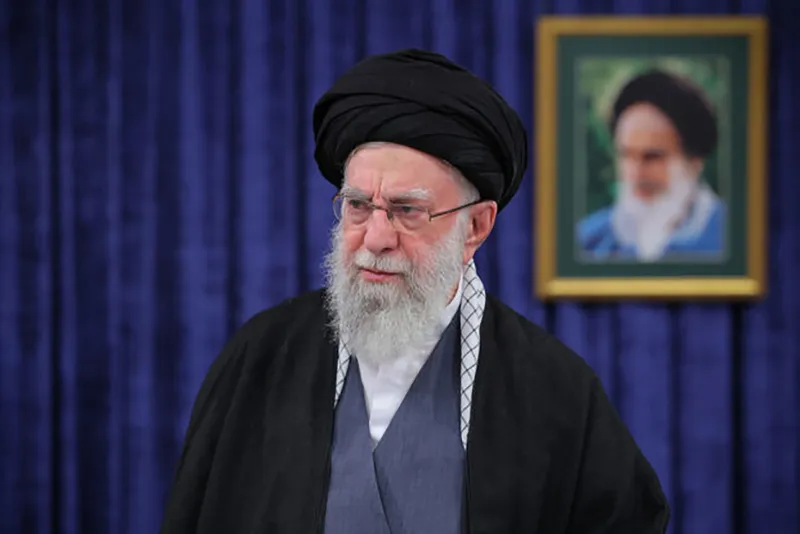
Iran’s Supreme Leader Ali Khamenei addresses the public on the occasion of the 47th anniversary of the Iranian Revolution, according to Iranian state television in Tehran, Iran on February 9, 2026. (Photo by Iranian Leader Press Office/Anadolu via Getty Images) Anadolu
We don’t know the intelligence or what is going on clandestinely to see that such a risky operation has any chance of long-term success. Without a solid plan, such a move would seem to only invite more risk.
And once again, obtaining this level of transformation largely via airpower is a highly questionable proposition, at best. There is absolutely no appetite domestically to engage in another ground war in the Middle East, so that option is a non-starter, which is a good thing, as America’s track record in this regard is terrible.
Finally, as we have mentioned before, the U.S. military has a lot of combat capability now in the region, and more that can strike from afar, but there doesn’t appear to be enough to sustain a long campaign with a wider set of objectives. So this may limit what can be achieved.
That brings us to the next question.
What will Israel’s role be?
I think it’s safe to assume that Israel will be involved deeply in any major military operation the United States executes against Iran. Frankly, for any sustained campaign, based on the airpower capabilities in the region, America will need Israel’s help, and for that to be en masse.
Israel brings hundreds of fighter aircraft, unique munitions, and more to the fight. Supported fully by America’s tanker force, Israel’s tactical airpower will be far more effective than it was during the 12 Day War less than a year ago. Combining forces fully to achieve a common outcome is more powerful than the sum of its parts in this case.
Beyond traditional airpower, leveraging Israel’s intelligence would be critical. Traditional intelligence products from Israel will be key in achieving any outcome faster in an air war. The same can be said for the flow of U.S. information in Israel’s direction. Still, operating seamlessly is very tough in such a complex, long-range combat scenario. While Israel and the United States have repeatedly trained on smaller scales for this type of operation, doing it on a massive scale is a different story. How the tasking orders would be assigned and deconflicted would be very interesting to watch.
An Israeli Air Force F-15 Strike Eagle moves into formation with a U.S. Air Force B-1B Lancer over Israel as part of a presence patrol above the U.S. Central Command’s area of responsibility Oct. 30, 2021. Multiple partner nations’ fighter aircraft accompanied the B-1B Lancer at different points during the flight, which flew over the Gulf of Aden, Bab el-Mandeb Strait, Red Sea, Suez Canal, Arabian Gulf, Strait of Hormuz and the Gulf of Oman before departing the region. (U.S. Air Force photo by Senior Airman Jerreht Harris) Staff Sgt. Jerreht Harris
But even above the traditional combat power and intelligence Israel can offer such a mission, Israel’s deep presence on the ground in Iran will be arguably of the greatest value. Nobody is anywhere as deeply embedded inside Iran as Israel. And this will impact the full gamut of potential operational scenarios.
Case in point is the Mossad’s novel operation to take out Iran’s air defenses in key areas using operatives on the ground equipped with one-way attack drones and loitering anti-tank guided missiles. While suppression and destruction of enemy air defenses is largely thought to be relegated to the role of airpower, it is anything but limited to just this domain. And Israel proved this on an unprecedented level in the opening stages of the air war in June. Those near-field attacks on Iranian air defense sites allowed standoff munitions, drones, and eventually manned aircraft to make it to their targets, firmly setting the momentum in Israel’s favor during the opening parts of the campaign. It wouldn’t be that surprising if this is repeated, at least in some altered fashion, during whatever could happen in the coming days.
תיעוד מטורף: הכוח המבצעי של המוסד בשטח איראן בעת פריסת מערכות תקיפה מדויקות שנועדו להשמיד את מערכות ההגנה האווירית האיראנית pic.twitter.com/X3Xtcc5JJ9
— איתי בלומנטל 🇮🇱 Itay Blumental (@ItayBlumental) June 13, 2025
Mossad operatives on the ground also worked to assassinate the cream of Iran’s nuclear scientist corps during the operation, mainly using drones launched from near their targets. We would likely see a similar operation take place against military and regime leadership in the opening stages of the looming conflict, if it comes to pass. There are no indications that the United States has anywhere near this capability working inside Iran.
This morning, Israel launched a strike to Iran and killed Iranian nuclear scientist and military head, IIRG, Hossein Salami.
Look at the place of impact. It was exactly the bedroom of the man. How did they conduct this strike such that it only affected just his flat, without any… pic.twitter.com/UNLEVUCf0G
— Apostle Michael Olowookere (@myk_da_preacher) June 13, 2025
Israel continues targeting Iran’s nuclear scientists: Israeli media report that the strike on a residential apartment in Tehran moments ago aimed to assassinate an Iranian nuclear scientist. pic.twitter.com/oRTv2zcj4w
As we have discussed for years, Israel would likely be willing to put special operations units on the ground to seize and destroy absolutely critical hardened targets, such as nuclear sites or possibly individuals hidden within regime bunkers, that are not capable of being destroyed from the air. The United States could as well, but the political risks would be far higher if such an operation went awry.
Finally, it is worth noting that going to war alongside Israel against Iran brings additional diplomatic risks in the region, although these have waned in recent years as Arab countries have become far less hostile to the Jewish State. These Arab states also could see a massive benefit from a successful campaign that rejiggers the status quo in the region and ends Iran’s troublesome influence throughout it. Still, the economic disruption alone could be large, especially if the war carries and if Iran actively works to deny access to the Persian Gulf.
Real dangers
We have not seen modern Iran fight for its very life against the United States or even Israel. On paper, Iran can do immense damage to the region. Yes, it can close and mine the Strait of Hormuz, causing massive repercussions that could last long after the war ends, a possibility which you can read about here. This is a well-understood danger. But above even that, Iran has an absolutely huge inventory of standoff weapons — specifically cruise missiles, long-range one-way attack drones, and most importantly, ballistic missiles. On the latter, there is a broad misconception that Israel wiped out Iran’s ballistic missile capabilities. This couldn’t be further from the truth.
During the 12 Day War, Israel was concerned with Iran’s long-range ballistic missiles — MRBMs and IRBMs. These are also the easiest to find, fix, and destroy. They are large and their launchers are vulnerable because of it, especially during the pre-launch fueling stage. The location of the storage areas for these missiles is well known, including the missile cave complexes, some of which have the ability to launch the missiles through apertures in launch room ceilings. By hitting the entry and exit points of these facilities, these weapons are not destroyed but they are trapped inside.
In addition, Israel focused their interdiction ‘missile hunting’ efforts on these long-range weapons that threaten its homeland. They were also the weapons that had to be exposed as they were employed in retaliatory strikes during the war. The shorter-range stuff didn’t need to be as it was largely not used.
To make this clear, Iran’s far more plentiful short-range ballistic missiles that threaten American bases in Gulf Arab allied states were not heavily targeted. The same can be said for the shorter-range drones and cruise missiles.
So no, these capabilities were not knocked out by any means, and they are also by far the easiest for Iran to disperse and hide. This makes hunting for them from the air extremely problematic. This is especially true when Iran enters into a combat state, where it distributes these missiles, which are largely loaded onto common truck platforms, into population centers and hidden under pretty much anything. They can also shoot and scoot much faster than their long-range counterparts.
The IRGC-N took a massive delivery of anti ship missiles for coastal defense
Note the dual tube launcher in the pics, which we’ve never seen before. Seems to be a new anti ship new cruise missile. Sadly no information was given besides pics
— Iran Defense commentary (unofficial) (@IranDefense) August 9, 2024
With all of America’s intelligence capabilities, finding and destroying these weapons from the air will be extremely challenging. Even the relatively meager arsenal belonging to Yemen’s Houthis proved vexing for the U.S. military after many months of sustained ‘hunting.’ The Houthis continued to get off successful coastal launches throughout these operations. The scale of the Iranian threat is exponentially larger, and the country has more complex terrain to hide these weapons.
Iran’s shorter-range standoff weapons number in the thousands. They have the ability to saturate the best defenses on earth and lay waste to prized targets across the Persian Gulf and the Arabian Sea, and deeper into allied Arab nations. This not only makes nearby basing of U.S. aircraft and personnel problematic, but it greatly increases the cost of any war the United States could execute against Iran.
We have seen what it took to defend against just one volley of Iranian short-range ballistic missiles. It resulted in the largest volley of Patriot interceptors in history. Even that defensive action wasn’t entirely successful at rebuffing the attack, let alone repeated ones that would include layers of drones, as well as cruise and ballistic missiles.
Footage of a US/Qatari PATRIOT surface to air missile system conducting a large ballistic missile engagement over Al-Udeid this evening, salvoing out dozens of PAC-3 interceptors at incoming Iranian ballistic missiles. pic.twitter.com/a7OHrs9svr
There is also a risk to American warships, even those that are operating far out to sea. Iran has shown it has the ability to launch long-range anti-ship weaponry not just from its coasts and warships, but from unassuming seaborne platforms, including using containerized missiles and drones. The farther U.S. Navy vessels have to operate from Iranian territory also means their missiles won’t be able to penetrate as far into the country. A carrier’s air wing will need additional tanking support to get to its targets, and sortie rates will be lowered.
These capabilities, along with the possibility of closing the Strait of Hormuz, drastically increase the chances of expanding the conflict by pulling Arab countries into it, as well, which would complicate, not help the cause, at least in many respects.
Iran knows full well where American aircraft are currently based, and they will throw everything they have at these sites. This includes America’s sprawling airbase in Jordan that is packed with tactical airpower. They know what defenses are there and have an understanding of what it will take to overwhelm them if they get the chance to do so. So the idea that we could not see mass losses of aircraft and other materiel, and even lives, on the ground, even when striking from afar, is not reality.
The same can be said about an air war. The U.S. has the most advanced air combat capabilities on earth, but ‘shit happens,’ especially during war. Even the Houthis nearly downed U.S. fighter aircraft optimized to destroy enemy air defenses. But regardless of defenses and the state of Iran’s air defense overlay, putting Americans over Iran, and repeatedly over days and weeks, is a risk. Aircraft can malfunction and mistakes can be made. When that happens, it will require even more risk to push combat search and rescue assets into the area to try and recover the crew. In other words, regardless of America’s outstanding air warfare capabilities, there is still a real risk involved in any operation over Iran.
A U.S. Air Force F-16 Fighting Falcon conducts night time air refueling operations above the U.S. Central Command area of responsibility, June 26, 2023. The KC-135 Stratotanker allows air assets to significantly increase flight time and decrease time spent on the ground. (U.S. Air Force photo by Senior Airman Jacob Cabanero) Senior Airman Jacob Cabanero
Finally, if Iran is really backed into a corner, and especially if its most extremist elements remain in play, it could resort to weapons of mass destruction. Specifically, chemical weapons and rudimentary radiological ones (dirty bombs) could be used in a dying gasp of the regime. If they did this, it would mean a certain end for the sitting power structure in the country, but if that is going to happen anyway, they could lash out in horrible ways. There is debate as to whether Iran would, or even could, actually do this, but historically, the regime in Tehran is no stranger to the use of chemical weapons.
Defending Israel again
Iran did not run out of long-range ballistic missiles during the 12 Day War, either. They ran out of ones available for launch, and they likely saw real degradation in their ability to launch those accessible due to Israel’s interdiction efforts and disarray in Iranian command and control after nearly two weeks of being bombarded. Since that war, Iran has been pumping out more of these missiles at a high rate, despite Israel’s attacks on missile production-related targets. Some of these weapons are quite advanced, proving their ability to penetrate the IDF’s multi-tier integrated air defense system, the most advanced one on Earth, an air defense capability you can read all about here.
The Israel Missile Defense Organization (IMDO) of the Directorate of Defense Research and Development (DDR&D) and the U.S. Missile Defense Agency (MDA) completed a successful flight test campaign with the Arrow-3 Interceptor missile. (MDA) Missile Defense Agency
If Iran was truly fighting for its life and knowing the end could be near, how many missiles will it send at Israel, and how many interceptors are available to defend against those barrages? Iran also has become increasingly savvy on what tactics to employ and where in order to overwhelm Israel’s defenses. While targeting has focused, at least to a degree, on military and governmental targets, if this was an all-out conflict, it’s likely Iran would just concentrate on population centers with whatever it has to throw at the cause.
The U.S. stockpile of advanced munitions is already a real concern after multiple campaigns to defend Israel, the long and violent standoff in the Red Sea, and the war in Ukraine. This is especially true for its more advanced interceptors, which are also in extreme demand among allies globally. This is all happening as the threat from China is growing more concerning by the day. A war in the Pacific will consume stocks of these weapons at a vastly higher rate than anything we have seen before. If those magazines run dry, it could mean the difference between winning and losing in that critical theater. And remember, these weapons take years to produce and cost many millions of dollars each. So it’s not like you can just say, ‘we’ll buy more.’ Of course, we will, but we won’t get those weapons for years, even as expansion of production is now underway across the DoW’s munitions portfolio.
Lt. Gen. Patrick Frank, U.S. Army Central Commanding General, meets with a Terminal High Altitude Area Defense (THAAD) crew next to a launcher emplaced and prepared to launch interceptors to counter ballistic missile threats at an undisclosed location in the CENTCOM Area of Operations, Dec. 12, 2023. THAAD is an important component of the integrated air and missile defense network that defends critical assets in the U.S. Central Command area of responsibility amidst needs for increased force protection. (U.S. Army Courtesy Photo) Capt. Duy Nguyen
So the cost of taking on Iran is not just in money and assets, and especially blood, it’s the opportunity cost of expending precious weapons in a war of choice that would be essential in a war of necessity that could erupt at any time.
Wild cards
There are capabilities and war plans we know nothing about. It may be possible that the United States thinks it can break Iran’s command and control capabilities so quickly that it can preempt many of its most dangerous weapons from being used in large quantities. This could come in the form of cyber attacks, other forms of espionage, electronic warfare, and exotic weaponry — and more likely a combination of the above. It could also be the orchestration of an insider coup-like scenario.
There is also the possibility that the United States thinks Iran’s military apparatus would simply collapse under a full combined aerial assault by the U.S. and Israel. A possible decapitation of the regime is another factor here.
If this is the case, and Iran’s warfighting capabilities can be left largely unused, then the risk equation changes. But this is a massive bet to make, and just how certain whatever measures are used will have the exact crippling effects intended could mean the difference between go and no-go for a major campaign.
The guided-missile destroyer USS Arleigh Burke (DDG 51) launches Tomahawk cruise missiles to conduct strikes against ISIL targets. Arleigh Burke is deployed in the U.S. 5th Fleet area of responsibility supporting maritime security operations and theater security cooperation efforts. (U.S. Navy photo by Mass Communication Specialist 2nd Class Carlos M. Vazquez II/Released) Chief Petty Officer Carlos Vazquez II
In other words, we really don’t know what the United States and Israel still have up their sleeves. And maybe they have nothing that would cause such a dramatic effect at all. Instead, hitting them traditionally fast and hard, along with cyber, espionage, electronic warfare, and everything else, will be needed to erode Iran’s ability to fight back over time.
Regardless, the United States and Israel have prepared for exactly this eventuality for decades, so there certainly are bound to be some surprises. Of what magnitude is the question.
What if a deal is made, but Israel doesn’t think it’s good enough?
It’s possible that the game tree could expand in such a way that the United States makes a nuclear deal with Iran, but it does not address the long-range missile threat, or even the nuclear program, to a sufficient degree in Israel’s eyes. If this occurs, there is still the chance that Israel goes it alone and tries to do as much damage as possible to both of these elements. In some ways, this could be played to America’s advantage as it could deny being involved in the conflict and work to see if the deal sticks even after Israel’s kinetic action. In this case, American resources would be used to defend Israel, but not participate in the attack.
This may sound far-fetched, but it really isn’t an impossibility. Especially if Trump realizes how much of a commitment achieving something meaningful via an air campaign could become, as well as the risks of what comes after on the ground in Iran.
Whether a nuclear deal would even survive such a situation is unclear, but it’s possible.
Why now?
In the end, these are the fundamental questions Trump has to be asking himself and his aides: Is going to war with Iran really worth the risks, both the known ones and unknown ones, and what is the goal in doing so? Is that goal readily attainable and at what cost?
These questions also bleed directly into the political arena. Trump claimed to be the President that would get America out of wars, not start them, and especially ones that seem like they could spiral out of control relatively easily, resulting in much longer-term commitments. While he has had some stunningly successful military victories as of late, and there is a danger for politicians to think it will always turn out a similar way, that can change very quickly. If America wakes up to seeing a U.S. pilot being dragged through the streets of Tehran, any support for this conflict could quickly evaporate.
Above all else, the question has to be asked, why now? What has prompted the idea of declaring war on Iran at this moment? Yes, the protests and the brutal deaths of thousands at the hands of the regime seemed to have moved Trump, but that was subsequently used as a pretext for nuclear negotiations, not to correct human rights abuses.
President Donald J. Trump and First Lady Melania Trump receive honors from rainbow sideboys aboard the Nimitz-class aircraft carrier USS George H. W. Bush (CVN 77) during a Titans of the Sea Presidential Review Oct. 5, 2025. (U.S. Navy photo by Mass Communication Specialist 2nd Class Pierce Luck) Petty Officer 2nd Class Pierce Luck
In addition, Trump has declared repeatedly that he destroyed Iran’s nuclear program after the B-2 strikes in June. So why, just eight months after that action took place, is the United States about to go all-in against Iran over its nuclear program? We have heard anecdotes about possible threats of Iran starting the nuclear program back up, the threat posed by the enriched uranium they already have, and the possibility that they could develop new, longer-range missiles that could hit the U.S. one day, maybe. Yet nothing has been presented in a concrete manner as to why doing this right now is essential. It doesn’t match Trump’s long-standing political rhetoric at all.
There is obviously much the public doesn’t know, but the risk-reward equation seems like a uniquely puzzling one with this crisis, at least at this time.
If Iran doesn’t make a deal, it seems clear that Trump has put himself in a position where he will either have his bluff called or he will need to commit to an air war against Iran.
What happens from that historic split in the road is really anyone’s guess.
A sinkhole suddenly opened at an intersection in Omaha, Nebraska, swallowing two cars stopped at a red light. Police said both drivers escaped before crews arrived and no injuries were reported. Authorities warn the street could remain closed for days amid fears the hole may expand.
SOME fans across the country have discovered that their tickets to see Harry Styles have been automatically refunded.
The popular artist, 32, announced his latest tour Together, Together last month which will debut new songs from his upcoming album Kiss All The Time. Disco, Occasionally.
Sign up for the Showbiz newsletter
Thank you!
Some fans have woken up to discover their tickets to see Harry have been voidedCredit: AFP
In addition to performing 12 shows in Wembley Stadium, Harry had one gig booked at Manchester‘s Co-op Live in March.
However, due to overwhelming demand that couldn’t be met, select tickets to the show have been cancelled and refunded.
Ticketmaster released a statement on the decision to axe the tickets, explaining that some customers managed to purchase tickets they shouldn’t have been able to buy in the first place.
These include many of the £20 tickets which were later resold on other ticket selling sites, and therefore were no longer eligible for use at the venue.
Ticketmaster explained: “We’re working with the Harry Styles ‘One Night Only’ team to cancel and refund any orders that have violated the rules of sale.
“As all tickets are non-transferable, any tickets listed on unauthorised resale sites are void and will not get fans into the show – so we’re cancelling and refunding these.
“There is also a ticket limit of 2 tickets per person, so any orders above that are being cancelled and refunded.”
The majority of the voided tickets appear to have been sold on Viagogo.
Ticketmaster added: “They [Viagogo] have been asked to stop listing tickets, in line with the artist team’s goal of keeping tickets in the hands of fans for no more than £20 [+ fees].
“While we are cancelling all tickets we find listed there, ultimately Viagogo controls what is on their site – meaning listings can remain even after we’ve cancelled them.”
If you’re hoping to see Harry at the event, your best bet is to keep an eye on Ticketmaster’s wesite.
Though the show is in incredibly high demand, so luck will need to be on your side.