Marlon

Marlon James and Douglas Stuart are among Booker semifinalists

Booker Prize winners Marlon James and Douglas Stuart are in the running again for the prestigious fiction award, alongside Dublin gangs, dystopian science fiction and the New England characters of Pulitzer Prize laureate Elizabeth Strout.

Judges read 163 novels to come up with the 13 semifinalists announced Tuesday for the $66,000 Booker Prize, a list described by historian Mary Beard, head of the judging panel, as literary “dynamite.”

The list includes James’ “The Disappearers,” about a group of gay men in a hostile 1980s Jamaica; Stuart’s “ John of John,” a story of father-son secrets on a remote Scottish island; and Strout’s heartfelt small-town tale “The Things We Never Say.”

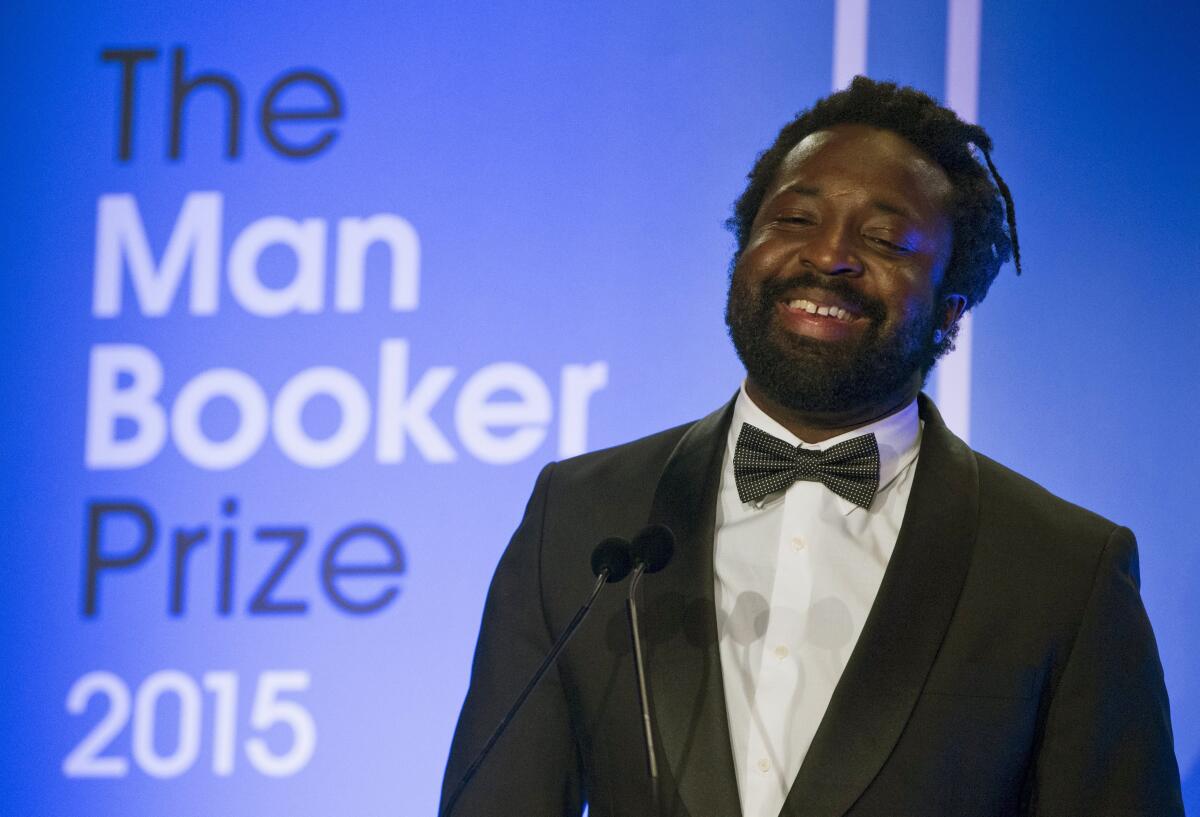
Author Marlon James in 2015.

Marlon James is semifinalist for the 2026 Booker Prize for fiction. In 2015, he became the first Jamaican writer to win the prestigious literary award.

(Neil Hall / Associated Press)

James won the Booker in 2015 for “A Brief History of Seven Killings,” and Stuart won in 2020 for “Shuggie Bain.” Strout’s “Oh William!” was a finalist in 2022. She won the Pulitzer Prize for fiction in 2009 for “Olive Kitteridge.”

They sit alongside lesser-known names on a Booker longlist that includes authors with roots in Britain, Ireland, Jamaica, Mexico, Turkey and the United States.

Three of those on the list are debut authors: Turkish American writer Kenan Orhan for the family history saga “The Renovation,” British author Rebecca Perry for the Medieval-to-modern tale “May We Feed the King” and Ireland’s Djamel White for “All Them Dogs,” a thriller set in the Dublin underworld.

White, at 28, is the youngest author in the running. The oldest is 81-year-old M. John Harrison, whose postapocalyptic tale “The End of Everything” is a rare science fiction novel to make the Booker list.

The other contenders are “The Shadow of the Object” by Chloe Aridjis, “Black Bag” by Luke Kennard, “The Vivisectors” by Missouri Williams, “Switzy” by Emma Cline, “Helen of Nowhere” by Makenna Goodman and Gwendoline Riley’s “The Palm House.”

Beard said the five jurors, who include Pulp frontman Jarvis Cocker and American novelist Patricia Lockwood, tried to look beyond the idea of a typical Booker winner — “slightly serious, about to be classic.” Instead, they chose novels that are “trying to expand the boundaries of how we can think about ourselves in completely different ways,”

“Sometimes they’re using humor, sometimes it’s pathos, sometimes there’s shock value,” Beard said. “They’re risk-takers. They are dynamite. They say, ‘Come on, try seeing it a different way.’ ”

Pulitzer Prize winner Elizabeth Strout.

Pulitzer Prize winner Elizabeth Strout is a semifinalist for the Booker Prize for fiction for her novel, “The Things We Never Say.”

(Leonardo Cendamo)

Founded in 1969, the Booker Prize has a reputation for transforming writers’ careers and is open to novels from any country published in the U.K. and Ireland. Last year’s winner was “Flesh” by Hungarian-British writer David Szalay.

The judges will announce six finalists on Sept. 22, and the winner will be revealed Nov. 9 at a ceremony in London.

Lawless writes for the Associated Press.
Source link

‘Scary Movie’ review: It won’t kill Anna Faris and Regina Hall’s careers

Call “Scary Movie” lazy, dumb and offensive. It would enthusiastically agree. The lowbrow horror parody thrives on shtick about weed, race and genitalia. The only thing that scares it is high expectations.

But amid the rampant stupidity of the first “Scary Movie,” released in 2000, original director Keenen Ivory Wayans discovered two major talents: Regina Hall and Anna Faris. As heroines Brenda and Cindy, respectively, Hall and Faris were daffy, dopey and committed. Alongside a cast of Playmates (Carmen Electra, Shannon Elizabeth) and family members (Wayans brothers Marlon and Shawn), they played stupid like Shakespeare. In two decades since, both gave up the Ghostface to do better things: Hall in “Girls Trip” and “One Battle After Another,” and Faris in “Smiley Face” and “The House Bunny.” (Frankly, Faris deserves to be doing more.) If a sixth “Scary Movie” is going to lure them back for what the ensemble openly frets is a rebooquel — as in a reboot-sequel, here pronounced “re-booty call” — it better be good.

Fine, good is a stretch. The latest “Scary Movie,” which simply recycles the title “Scary Movie,” is as lazy, dumb and offensive as the others. But Hall and Faris, now playing the dotty mothers of the next generation of victims, are hilarious, romping about like their Brenda and Cindy have clearly been knocked on the head too often. (Brenda, fans of the franchise know, has technically already died twice.) I laughed 10 times, which makes this “Scary Movie” the best of the bunch — a pallid compliment.

Directing duties have shuffled to Michael Tiddes, a longtime Wayans collaborator, who gets gutsy performances from three of this entry’s newbies: Olivia Rose Keegan and Savannah Lee Nassif as Cindy’s estranged daughters, a pill-popper and a Wednesday Addams clone, and Ruby Snowber, maximizing every second of her feature debut as a high school tramp.

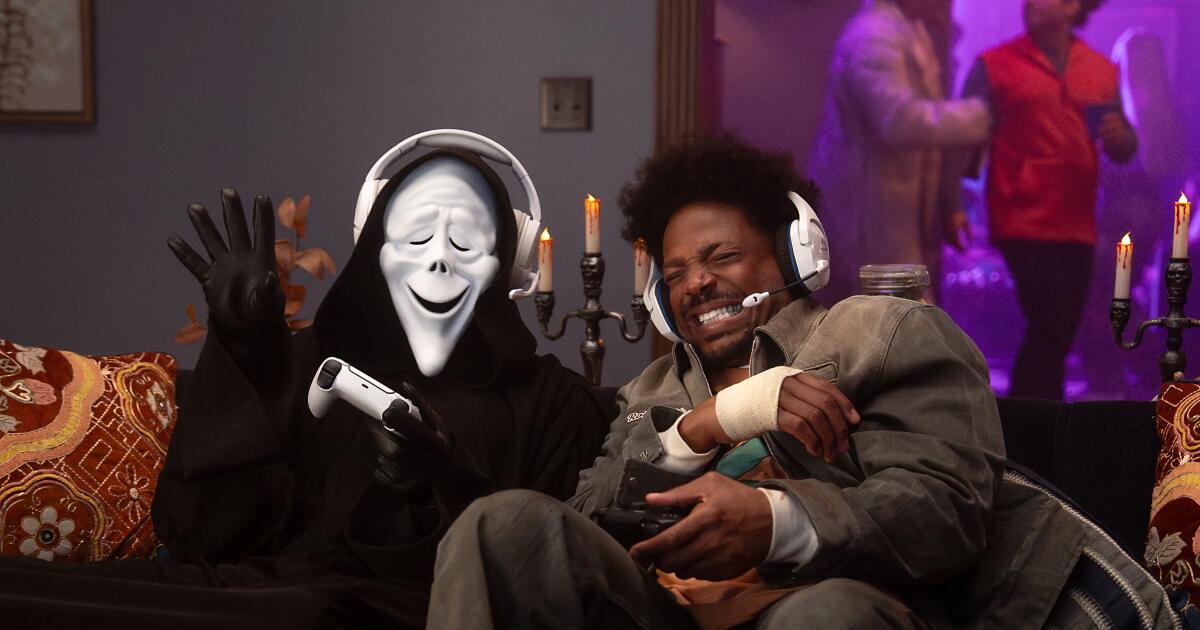
The Wayans clan left the series early on due to a contract dispute with Harvey and Bob Weinstein. Now seven have returned. Four Wayans (Craig, Keenan Ivory, Marlon and Shawn) co-wrote the script with Rick Alvarez; three more (Kim, Damon Jr., and Gregg) act in the film alongside Marlon and Shawn, who revive their characters Shorty, a stoner with a shrill cackle, and Ray, whose only personality trait is being gay. In one of many homages to “Sinners,” Ray promises a church he’ll act straight. Then he mimes tucking his manhood between his legs and dancing like Buffalo Bill in “The Silence of the Lambs.”

Yes, Shorty and Ray were also murdered in the first movie. No, it doesn’t matter. “Scary Movie’s” one genuinely ingenious move is to resurrect actors without shame. Jon Abrahams’ bad boyfriend (stabbed), Lochlyn Munro’s lout (slit throat), and Electra’s eye candy (pierced through the breast implant) are back, too, as are a pair of erotically linked survivors, Cheri Oteri’s news anchor and Dave Sheridan’s moronic cop, whose spittle-flecked chin is the grossest thing in a film that has a mall Santa costumed like “Terrifier’s” Art the Clown gifting a child a set of severed testicles.

“The Silence of the Lambs” remains the only horror film to win best picture at the Academy Awards. This “Scary Movie” has no delusions of that. Yet in the years since the last installment, 2013’s “Scary Movie 5” — a sequel so awful that even its own director, Malcolm D. Lee, later admitted, “It’s not worth your time” — the horror genre at-large has become ambitious, with “Sinners,” “The Substance,” and “Get Out” earning Oscar nominations and “Weapons’” witchy Amy Madigan seizing the supporting actress prize.

This “Scary Movie” makes fun of all four of those newer hits, as well as the recent rebooquels of “Halloween,” which was earnest, and “Scream,” which couldn’t decide what tone to hit. Each send-up is funny for at least an entire minute, a lifetime when you’re watching Marlon’s Shorty mug for the camera. Either Shorty has the most screen time or he’s just so excruciating that it feels like it.

I cannot make the straight-faced argument that the worst “Scary Movies” were held back by their source material. Still, it’s true that when the series was at its nadir, so few vibrant horror films were being made that it was stuck lampooning the now-forgotten Jessica Chastain chiller “Mama.” Likewise, when this “Scary Movie” takes a jab at Nicolas Cage’s more-kooky-than-tedious “Longlegs,” the limp gag of the creepy Shorthand (Chris Elliot), underscores that the movie itself just isn’t that interesting.

“Scary Movie” inserts two political jokes that earn a solid gasp-giggle-groan. Yet, the most grating new addition is a self-righteous student named Dei Meeks (Sydney Park), who polices the humor. The movie relishes killing the killjoy. A whole mob does her in; it’s the one death that feels angry. I’d have been happy to see her die in her first scene. Not that I empathize with canceled comics who posture as if they’re victims under attack, but it would do this country good if it could occasionally share a laugh.

Don’t waste one brain cell trying to deduce the assassin. The answer is surprising and satisfying. While the script’s hasty nods to “KPop Demon Hunters” and the biopic “Michael” make it feel like it was written on yesterday’s Kleenex, the immediacy allows “One Battle After Another’s” Teyana Taylor to acknowledge that Madigan’s Aunt Gladys stole her Oscar. Swilling tequila shots and hollering “Viva la revolución!,” she’s hysterical in the cleverest opening slasher scene since Drew Barrymore answered the phone in the 1996 “Scream.” I’d watch six more “Scary Movies” if Taylor starred in them. But like Hall and Faris, she deserves better.

‘Scary Movie’

Rated: R, for crude sexual content, graphic nudity, strong violence, and drug content and language throughout

Running time: 1 hour, 35 minutes

Playing: Opening Friday, June 5 in wide release

Source link