TORONTO — It’s not everyday that we take photos of Oscar winners, unless we happen to be at the Toronto International Film Festival, when it is everyday.
On Friday, during our first session of operations alone, we had the pleasure of shooting Academy Award winners Michelle Yeoh and “Boyhood” mom Patricia Arquette, not to mention two-time Cannes Palme d’Or winner Cristian Mungiu, most recently of the upcoming “Fjord.”
You should bookmark this link and check it regularly to see Jason Armond’s beautiful portraits. Courteney Cox? Jodie Comer? Sebastian Stan doing his serious face? It’s all here.
Our first wave of video interviews is live
Want a quick hit of festival buzz? How about Courteney Cox, Arquette and David Harbour getting scrappy over their favorite pizza toppings? They’re here to promote the Cox-directed “Evil Genius,” about the notorious pizza bomber incident.
Ten years after “The Love Witch” rocked audiences, writer-director Anna Biller is back with “The Face of Horror,” a medieval ghost story and a Technicolor-styled riot of design. She dropped by and mixed it up with our Mark Olsen.
Being a scream queen is a serious honor for Jane Levy and Jessica Rothe, in town with the excellent new slasher “River” but already our favorites for, respectively, “Evil Dead” and “Happy Death Day.”
What are we watching tonight?
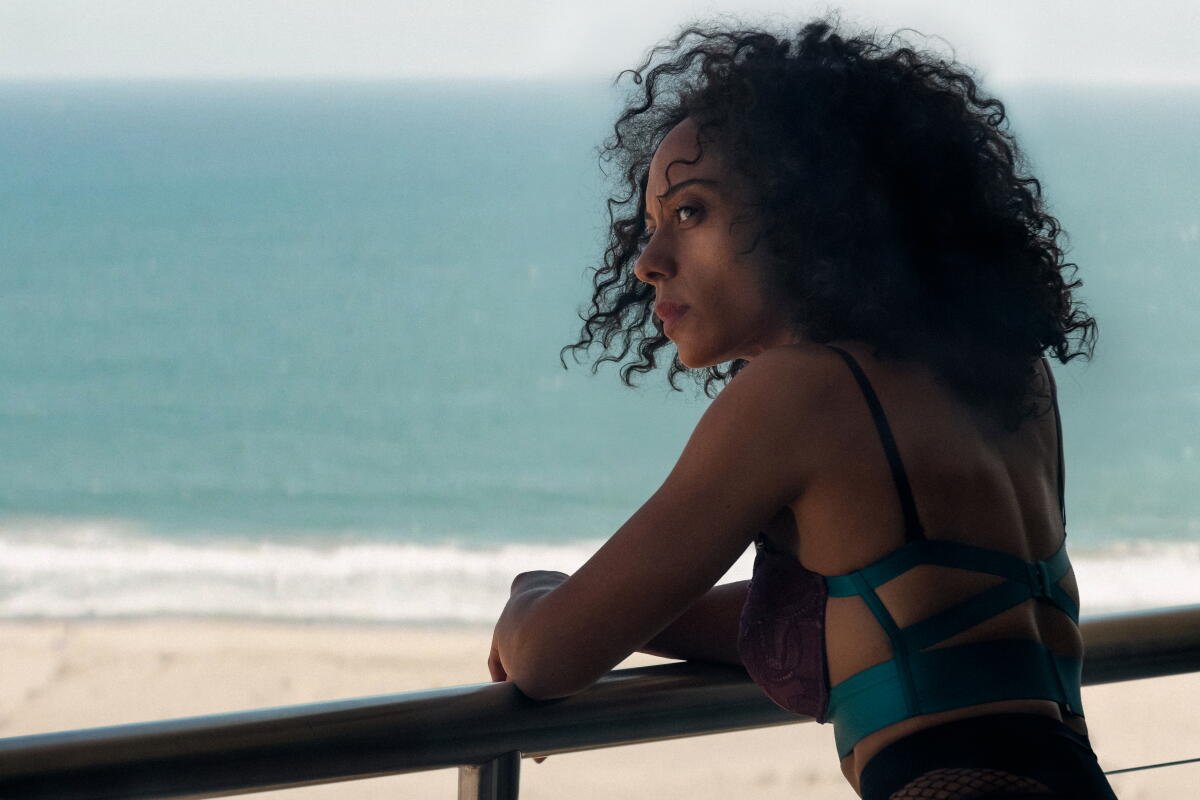
‘Misty Green’
Rosalind Eleazar in the movie “Misty Green,” directed by Chris Rock.
(Merrick Morton / TIFF)
Misty Green is an actor — played with searing conviction by Rosalind Eleazar in a star-making performance — who may have missed her moment.
Though the industry has not made things easy for her as she suffers racist and sexist slights both big and small, Misty has not done herself any favors either, at times self-sabotaging with a careless attitude toward her undeniable talent and the work that must go with it.
The past few films Chris Rock has written and directed himself, including 2014’s “Top Five,” have felt distinctly personal, as if he is working out his own feelings about his career and the world.
“Misty Green” points toward redemption and hope on the other side of darkness: a pitiless examination of contemporary Hollywood and the difficulty of holding it all together. — Mark Olsen
‘Closing Night’
Sarah Paulson in the movie “Closing Night.”
(TIFF)
The first half of Cody Fern’s strong debut is about the sweet schadenfreude of watching estranged sisters Sandra (Sarah Paulson) and April (Naomi Watts) scream at each other.
The second half pivots to ask if it’s as cathartic to leave things unsaid. Sandra, a stern Broadway actor, has hit the end of her career. April, an anxious Michigan hairdresser, is in Manhattan to see her dopey son Theo (Toby Wallace) and his pregnant girlfriend Lucy (Odessa A’zion) — who, after the family’s controlling matriarch Diane (Dianne Wiest) shows up, should start having second thoughts about passing down their dysfunctional DNA.
Both Fern and his co-screenwriter Devon are actors themselves, so they’ve written their leads one show-stopper scene after another.
Impressively, Paulson even manages to steal the climax away from Watts’ flighty kleptomaniac as her hard luck character takes her lumps with the courage of someone facing down a firing squad, chin held high. — Amy Nicholson
‘Elsinore’
Andrew Scott in the movie “Elsinore.”
(Anthony Dickenson / Focus Features)
Already becoming a must-see out of Telluride and now Toronto, this extraordinary actor’s showcase (arriving in theaters Nov. 20) is carried by a fascinatingly complex turn by Andrew Scott, who just might finally earn some of the hardware he deserved for 2023’s “All of Us Strangers.”
Scott plays real-life Scottish actor Ian Charleson, the bright presence of “Chariots of Fire” and “Gandhi” who never quite had the movie career he deserved. But near the end of his career, in defiance of an AIDS diagnosis, he took on the stage role of Hamlet and left a burning impression.
It’s a performance that consistently elevates “Elsinore” from its recognizable trajectory. Scott deepens Charleson’s race against his own mortality with notes of humor, desperation, guilt, self-delusional avoidance and ultimately the deftness of someone who likes playing pretend. — Joshua Rothkopf
Sign up for The Envelope
Get exclusive awards season news, in-depth interviews and columnist Glenn Whipp’s must-read analysis straight to your inbox.
By continuing, you agree to our Terms of Service, which include arbitration and a class action waiver. You agree that we and our third-party vendors may collect and use your information, including through cookies, pixels and similar technologies, for the purposes set forth in our Privacy Policy such as personalizing your experience and ads.
Kelvin Washington: Hello, and welcome to this week’s episode of The Envelope. Kelvin Washington, Yvonne Villarreal and Mark Olsen here. We’ve been talking about it now for the last couple of weeks, but we’re less than a month away from the Emmys. Mariska Hargitay is gonna be the host. I’m looking forward to that because who’s living a better life than her? She’s nominated, of course. She’s hosting. And her Knicks won the NBA championship — she’s at this point an honorary Knick. I mean, it’s like she’s on the team.
Yvonne Villarreal: And she went to the Taylor Swift wedding.
Washington: That’s a good point.
Villarreal: Don’t forget that. And starring on Broadway.
Washington: So she is living her best life, yeah.
Villarreal: She’s living a better life than I am.
Washington: So I’m going to answer the question first. I’m gonna ask you, what are you looking forward to [at the Emmys]? Maybe some things you’re excited for. For me, it’s just seeing this culmination of all these things for her and just having a big moment there. I think she’s gonna own that space and I think everybody’s gonna enjoy it as well. What are you looking forward to?
Villarreal: I’m really, really excited to see my beloved Philip and Elizabeth Jennings as nominees — Matthew Rhys and Keri Russell. Not to be parasocial, but I just love that they’re both nominated. I just want a magical night for them both.
Mark Olsen: I don’t want to be a bring-down bummer here, but, you know, I find that the Emmys in particular, even more than the Oscars, kind of play favorites, and the same winners can happen again and again. It’s not as bad as it may once have been, but I’m always rooting for new blood, first-time nominees, people that it’s exciting to see them kind of get this platform. So nothing against your beloved, but I would be excited to see an underdog or somebody kind of an outsider. Say, for example, the rest of the cast of “Widow’s Bay,” which as you’ve said before, really came out of nowhere, [and] it’s become a bit of a favorite this season. And there’s some other performers there, Dale Dickey, Stephen Root, Kate O’Flynn, and I think any of them winning would be really exciting.
Villarreal: I won’t argue with that.
Washington: I was waiting on an argument.
Villarreal: We fight off camera.
Washington: And by the way, Mark, I mean, can good be good? Or great be great? If I’m great 10 years in a row, can I just be great 10 years in a row and win? You’re putting limitations on my victories.
Olsen: Yeah, but at some point, your shelf is full.
Washington: That’s true. Don’t worry about what’s going on in my mantle, all right?
That being said, we got Matthew Rhys, who you had a chance to speak to. Double nominee here, “Widow’s Bay” and “The Beast in Me.” Tell me a little bit more about your conversation.
Olsen: Just a rare double nominee, lead actor in a comedy series with “Widow’s Bay,” and then lead actor in a limited or anthology series or movie with “The Beast in Me.” And I think what’s exciting here is that these are just two very different performances. He’s this manipulative, maybe psychopathic real estate developer in “The Beast in Me,” and then this kind of harried, put-upon single dad and mayor of a small, cursed New England island in “Widow’s Bay,” and I think both of these roles show new sides of Matthew to audiences. But then when you take them together, it just feels like something else entirely.
Washington: All right, well let’s take a look. It’s M&M — Matthew and Mark — here now.
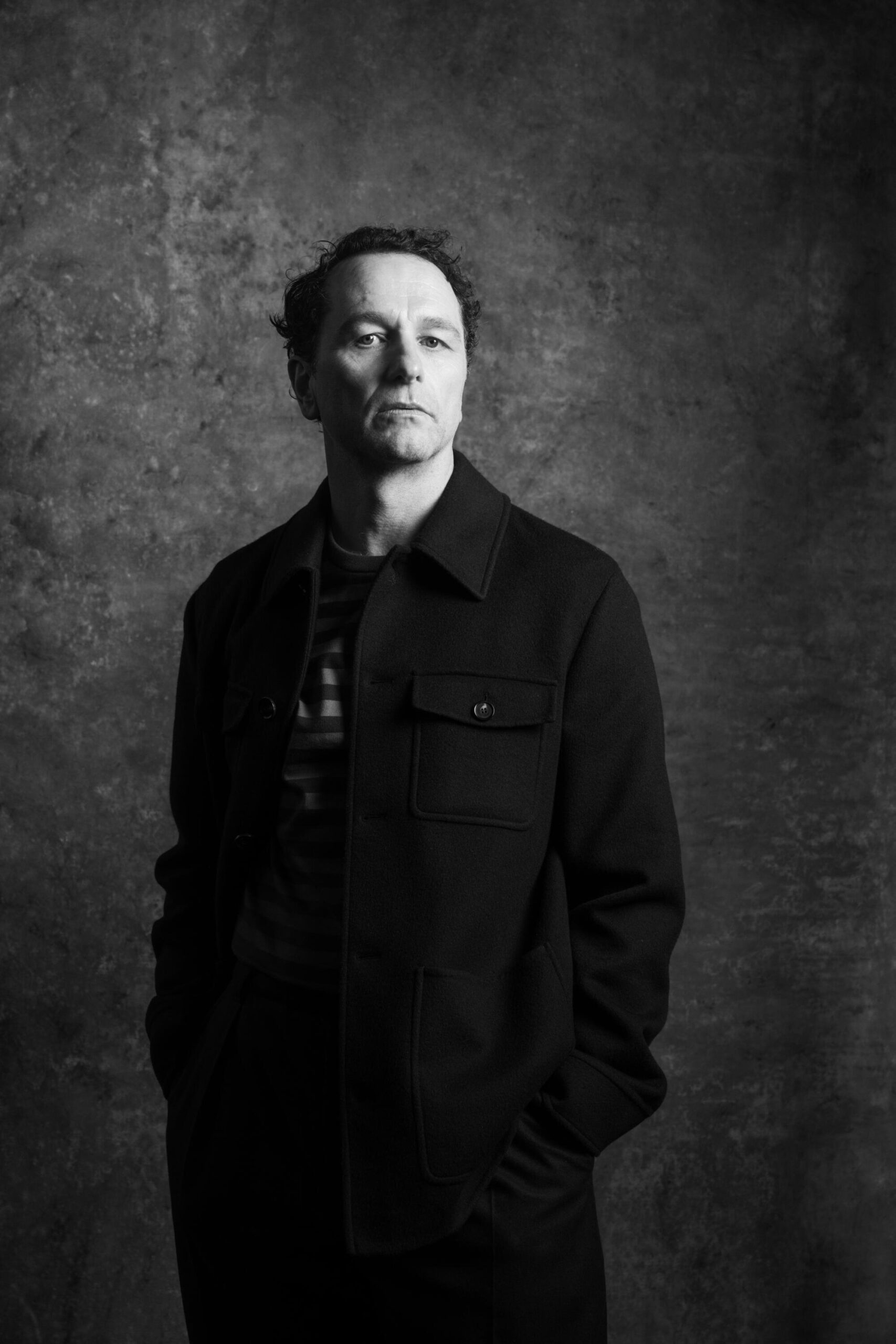
Matthew Rhys.
(Ebru Yildiz / For The Times)
Mark Olsen: For the Los Angeles Times and The Envelope, I’m Mark Olsen. I’m here today with Matthew Rhys, who is nominated for an Emmy for lead actor in a comedy series for “Widow’s Bay” [and] lead actor in a limited or anthology series [or movie] for “The Beast in Me,” and another nomination as executive producer on “Widow’s Bay.”
Matthew Rhys: I forgot about the executive producer part. It’s an exciting time.
Olsen: And now being nominated for these two performances, which are very different performances —
Rhys: [whispers] They’re not really.
Olsen: Now tell me about that. You don’t think they are?
Rhys: Look, I think I was about to speak for a number of actors and I shouldn’t. I can only speak for myself. Sometimes there’s seemingly or feels like there’s very little difference in them. I’m not, I don’t pretend to be an enormously transformative actor, hunting for the “chameleon” praise.
Olsen: But do you consider yourself versatile? It’s so interesting to me to hear you say you don’t see these roles as that different.
Rhys: I wouldn’t say I’m versatile in that chameleon-like way or transformative way, I just try to work from a place… We’re already into it.
Olsen: That’s what we’re here for.
Rhys: I know. It always makes me nauseous. I do try to live in a place that feels real to me and that what we talk about, working from your center. So when I move away from that, things start to feel insincere, so I tend not to.
Olsen: With “Widow’s Bay,” a lot of the coverage around it has been talking about how it’s been a real surprise hit. And I’m just wondering, what is it that you think that audiences are responding to?
Rhys: You know, timing is everything. I do think there was a place that was ready for “Widow’s Bay,” whereby nothing of the sort had been around for a while. You hadn’t had “Twin Peaks,” although we were kind of slightly “The Office,” “Twin Peaks,” sprinkling of “Northern Exposure” maybe, but nothing I think of that sort had been for a while. So I think people were just ready for something different, and then we’re certainly different.
Olsen: Betty Gilpin, your co-star on the show, she is also a nominee, in a recent interview said that she feels like it’s as if audiences are rejecting this idea of a really sort of safe, algorithm-approved show. And do you feel the same?
Rhys: Absolutely, and it’s wildly refreshing to know that people are going, “No, we want something different. And we are intelligent enough to deal with it. So give it to us.” And that I found very, very inspiring, very encouraging — that television and film should be pushing itself continually for that original material and not relying on remakes.
Olsen: When did you realize that the show was connecting in the way that it is? I’ve seen in some other interviews you say that even when you were shooting it, you weren’t totally sure, didn’t totally think that it would connect with people.
Rhys: No, none of us — a lot of us were like, “Are we getting the tone right? Is this right? Is this going to work?” It was a swing. It was an absolute swing. A kind of beautiful one, nonetheless. But we were all concerned — not concerned, maybe just intrigued — as to how it would be received. And it was a little bit more word of mouth. Friends were saying, “Oh, I’ve seen your show.” And then throughout my career, it’s probably the job I’ve been stopped most for. And I’m not saying that happens often. But at least twice I’ve been stopped for it. So that’s been refreshing.
Olsen: And people are really talking a lot about this mix of tones. It’s a horror-comedy that’s both very much funny and scary. What was the challenge of getting that mix right?
Rhys: Making both real, ultimately. I know that sounds very obvious and stupid, but it’s true. And also Katie Dippold spoke to this, the creator and writer, where she said she kind of thought one can almost relieve the other. When there’s incredible tension from horror, when the laugh comes in, it’s almost a big laugh because it’s the relief of being allowed to laugh. So she says sometimes that can pay off in a way. It’s much harder the other way around, but it also works the other way around where you catch an audience off guard because they’re laughing and then you hit them with horror. So I think both bizarrely can help each other.
Olsen: I’m thinking about something like the episode that’s mostly on a boat, that gets very sort of slapstick-y at moments, but then there’s still something very terrifying about what’s happening there.
Rhys: Yes, we’ve hit the nail on the head. That kind of tone I found very hard. There are these borderline farcical moments of wrestling with a man who’s 400 years old and it becoming kind of very comedic physically and yet it has to remain that there’s this element of danger or threat that’s very real and palpable. And so those are the moments you try and ground in a way so that the extreme elements can also live in a real place.
Olsen: Because you mentioned a man who’s 400 years old, the mythology of the show gets more complicated as it goes along, right up until the very last episode. Were there moments where you had to sort of step aside and ask people to explain it to you?
Rhys: No, because I think the chronology is laid out beautifully throughout the series and you’re kind of led in a way where it unfolds very organically. So I was very relieved that to be the case that there’s no kind of, “Wait, where are we? What’s, who’s this?” So that I thought was kind of beautifully executed. And because of that, because of the detail in the backstory, then the story I think pays off far greater.
Olsen: The final episode really lands it so well as far as being both funny and scary and also the way that it sets up a next season, which happily is happening. The finale promises even more murder and mayhem for Season 2. I know the writers room is already hard at work. Do you have any insights on what at least you would like to see happen?
Rhys: No, I’m desperately intrigued as to what she has in mind because I wouldn’t have the first clue as to where to start Season 2. I’m very assured that the warped mind of Katie Dippold will helm us into a giddy storm.
Olsen: One thing I have to ask about “Widow’s Bay” is simply, in preparing to play this small-town mayor who’s very concerned about tourist season, did you refer at all to maybe the most famous other small-town mayor played by Murray Hamilton in “Jaws”?
Rhys: Well, I would like to say yes because “Jaws” is an enormous favorite of mine, but he’s a very different mayor, if you look at his mayor. He’s very assured. He gets a little frustrated with Brody, but he’s not that kind of cortisol-burning, wild-eyed panic that Tom Loftis is. He is far more assured of what he should be doing for the municipality than Tom is. I even said at one point, I said, “Can we get away with the jacket, you know, the anchor jacket?” And they were like, no, because that would be too obvious.
Olsen: I like that you had the impulse.
Rhys: A lot of my performances have some reference to “Jaws,” regardless of the piece, because I’m usually Quint. So I was very upset in the boat scene you referenced when obviously myself, Stephen Root and Hamish Linklater sat around and said, OK, Stephen Root, you are obviously Quint, what does that make Hamish and myself? Who’s [Richard] Dreyfuss and who’s Roy Scheider in this? And Hamish went, “Well, I’m Dreyfuss.” I was like, “I am not Brody.” They’re like, “You’re wearing the life jacket. Of course you’re Brody!” This is the kind of thing actors talk about.
Olsen: But you weren’t happy with that?
Rhys: I’ve always wanted to be Quint. I love Brody, but my heart lies with Quint
Olsen: Now, I came to realize that “Brothers and Sisters,” it goes back 20 years now that you were on that show. And I’m just so curious, working steadily in TV for 20 years now, how has the job of being an actor on TV changed in that time?
Rhys: I don’t think it’s changed, per se. From a personal point of view, it’s been incredible to play the wide variety that I’ve been allowed to. I think the scope of television has changed wildly in 20 years and the length and breadth of the variety there is kind of remarkable at times. And sometimes you wonder if it’s sustainable. If anything, it’s offered more opportunities, I think, for actors, but the kind of core fundamentals I think are still the same.
Olsen: Do you yourself watch a lot of TV?
Rhys: Yes, yes. I never watch myself, but yes. I tend to lean towards more documentaries than anything else. Fiction, I’m always like, “Oh, that’s the day job.”
Olsen: Because I know you’ve talked a lot about your interest in boats, and is there a lot of boats-and-restoration content out there?
Rhys: What, fiction or documentary-wise?
Olsen: I wonder what your algorithm is like.
Rhys: I don’t do much with Instagram but my algorithm is generally older men showing you how to kind of spile a garboard plank next to a keel, things like that.
Olsen: And are there a lot of documentaries about boats and restoration?
Rhys: There’s a lot on YouTube, none of which really hold your attention. What I think is like, where is the kind of “Chef’s Table” of boat restoration? That’s what I’m waiting for.
Olsen: I think you maybe have to be the one to make that show.
Rhys: I might have to, but I worry about the breadth of audience we’d have there. Or how to make boat restoration interesting to the masses. Therein lies the challenge.
Olsen: Well, they say niche markets sometimes …
Rhys: You can capture a zeitgeist moment.
Olsen: With your work on television, you have a really strong track record between “Brothers and Sisters,” “The Americans,” “Perry Mason,” now with “Widow’s Bay,” and also with “The Beast in Me.” For you, what goes into choosing a role?
Rhys: This is the real luxury of having a degree of choice. It’s not always choice, but more often than not, a project comes along that I’ll read and there’ll be a number of things. I’ll be like, “Ooh, I’ve never done it.” Like “Widow’s Bay,” I read it and I went, “The scripts are fantastic and I have never done anything like this in my life.” “Beast in Me,” the same, the writing’s so strong, but also that role is something I’d never done before. And the same, obviously, for “The Americans” and “Brothers and Sisters.” So if there’s an opportunity to try something very new, to me, it’s the ultimate luxury. And so that’s been a real driving force. And strong stories, the want of knowing how it ends, just simple storytelling.
Olsen: Do you find that your instincts have changed over the years? Are you looking for the same things that you feel like you were when you were starting in television 20 years ago?
Rhys: No, not necessarily. I always wanted, if I was fortunate enough, to do something that would challenge me, that would push me, that I hadn’t done, that’d scare me, that’d make me nervous every day on set, which a lot of these projects have done. I thought that would be all that I’d want.
Olsen: Because your character in “The Beast in Me,” again, I have to come back to this idea that you think these two roles are kind of similar, because your character on “The Beast in Me” seems so self-assured, like he has a confidence that Loftis does not have.
Rhys: Yes, that is very true and it was the observation of the wealthy that kind of led me there and especially uber-wealth, where there’s a real assurance of not having to try almost because there’s no need and this innate feeling that you will absolutely get your own way and people will bend to your will purely because of wealth.
Olsen: And now playing that role, getting a little taste of that, like, is that a nice place?
Rhys: What, self-assured?
Olsen: Is that a good position to be in, that people do what you want.
Rhys: Oh, I’m sure it’s great. I’ve never tasted it. It’s something I aspire to by the hour. And being riddled with all the cliched insecurities that every other actor, when you’re playing it, you go, “God, this feels great. To not even have to try with people must be so wonderful.” I’ve no desire to kind of glean the kind of affirmation from the person I’m talking to. Almost quite the opposite.
Olsen: “Widow’s Bay” has such a big ensemble, and then in “The Beast in Me,” really most of your scenes are just you and Claire Danes in this series of escalating conversations. Did you like that distinction? For “The Beast in Me,” did you like the pared-back intimacy of those scenes that the two of you have?
Rhys: Absolutely. I think that was the big draw of the piece, these two people who are kind of, they’re like two magnets in a way, they’re so drawn, they are so repulsed, they’re kind of images of each other’s shadow self, they see so much of each other while [being] polarizingly different. That to me was part of the great draw of that piece, with these two people and how they connected or seemingly didn’t.
Olsen: I don’t think you’ve worked with Claire Danes before?
Rhys: Prior to that, no.
Olsen: Because just in a practical sense, what is it like for two actors when you have so many of your scenes together? Like you sort of have to feel out not only how the characters are, but also how you as performers, as work colleagues, get through the day. What is that process like?
Rhys: I mean, look, with Claire, having known and watched her body of work, [I knew] she’s like a powerhouse and kind of brings that to set. And from day one of rehearsals, I kind of sat up and went, “Oh God, right, come on, let’s focus here,” because she has that laser that is on a switch. And when it’s switched, it’s on. And woe betide you if you haven’t prepared as well as she has. So that was very quick. The ascent of going, “Right, yes, A-game at all times, please.” Which is fantastic. It’s everything you want in a scene partner. It’s someone who kind of scares you and kind of raises your game and demands, you know, a kind of a better tennis game, although I’ve never played tennis. I’m sure it’s great.
Olsen: Do you feel like you’re that kind of actor too?
Rhys: No. I’m the one making fart jokes and then kind of going, “Will you concentrate?” I don’t think I have that kind of prowess, that kind of switch [that] is so alarmingly kind of night and day. I creak into it.
Olsen: Because there’s an intensity to your performance here. I mean, it goes big at times, there’s the “Psycho Killer” dance —
Rhys: The Achilles’ heel. I begged them to remove that scene because anywhere I see the scene direction “He dances” or “[Character] dances,” I can taste the vomit in my own mouth.
Olsen: And now did you choreograph that ahead of time?
Rhys: Nope, I just went for it. In fact a very charming woman came up to me on the street and she goes, “I love ‘The Beast in Me’ and I loved how camp your dancing was.” And I went, “Oh, it wasn’t meant to be necessarily camp.” Well, clearly it was to her. And also playing drunk, drunk and dancing, I was like, “Oh, some vicious planets are aligning.”
Olsen: And do you have a trick to drunk acting?
Rhys: Yes, I get drunk. It’s a very simple trick that most actors overlook. You just drink and then you’re drunk. The only time I venture into Method acting.
Olsen: But then about how many takes do you have in you?
Rhys: Two. No, no, I didn’t get drunk. I got tipsy. No, no it’s very different. It’s hard, it’s hard. That’s always a hard one because also we shot that over the entire day. So it started at like 8 a.m.And to be perfectly honest, sometimes you’ll do a take and it’s like, the drunk acting is too apparent. Let’s bring it back. Claire Danes nailed drunk acting from take one. And I was like, god— it! I mean, she’s done it again.
Olsen: And then also the chicken scene, how many chickens did you have to eat?
Rhys: I come into my own. Eating on screen is not and never has been a problem for me. I will take down any amount of food and I will not ask for a spit bucket. They were like, “Oh, we have a spit bucket.” I think, “No, I’m not spitting up perfectly good chicken” — and it was really good chicken. I think I went through about three chickens. What I loved about that scene, and this is what I love about all good writing, is when a brief element, usually it’s wordless, can say so much about a character or what the character is trying to do to the person in the room through a very simple action. So I loved that from what it did in that moment. He’s doing it overtly to try and intimidate her. It’s something which says so much about him and the way he does it, I thought it was an incredibly beautiful and shrewd piece of writing.
Olsen: Over the course of the series, how did you modulate how crazy to seem?
Rhys: Because it’s kind of present from the get-go. And that was a heavy reliance on the directors. We had some incredible directors on that. Antonio Campos, who kind of began and ended us, we had a little bit of a dial, and he was like, “Bring it back a bit” or “I think it needs a little more.” He was very good at truly kind of conducting in that moment. And we had the luxury of being able to do a few takes where he’s like, “Bring it up a bit” or, “OK, that’s good, let’s take it down a bit.”
Olsen: Were you happy with how that ended up?
Rhys: I don’t watch it. I haven’t watched myself in about 10 years. I get stuck on the wrong things. I become too concerned about the way I use my hands or how strange my walk is or the weird kind of idiosyncrasy of my mouth. So then when I’m doing it next, I’m like, “I am not going to do anything with my hands and I’m going to change my walk.” And then the director is like, “What is wrong with your walk and why are you sitting on your hands?” So I tend not to watch myself.
Olsen: You said 10 years ago. Did something really make you be like, “I’m not doing that anymore?”
Rhys: In fairness, it was more than 10 years ago. It was “Brothers and Sisters.” I started watching that and I was like, “Oh my God. Why has no one said anything? Look at my posture.” And then you become obsessed with sitting with better posture. And then everyone’s like, “Why are you sitting weirdly?” I was never clever enough to take from it a kind of positive critical foundation. I was taking the wrong things, usually physically attributed, that would get in my head when I was acting. And then that’s all I could think about while I was doing it, and I was on a road to ruin.
Olsen: So often you’re doing an American accent or a voice that is not your own and I know for myself I feel like I wouldn’t be able to think about anything but that, that’s all I would be able think about while I was performing.
Rhys: The accent is strange because I think in one way such an enormous part of my head is always working on the next sound to come out of my mouth. I think it stops you in a way from kind of acting, if that makes sense. It takes the self-conscious element out of you because you’re so busy working on something else. My acting teacher from drama school would always say, “Give yourself something to do to stop yourself acting.” It’s like you’re spending so much time thinking about the way you sound, it can relax you in a different way because you’re not thinking about acting.
Olsen: And then is it also a big challenge for you to try to make different American accents? How hard is it for you to do those different American sounds?
Rhys: It depends on the accent. I mean, sometimes the more extreme sounds are easier to hook into, like, you know, the Southern states or Boston or New York. Then you get, you know, California’s kind of softer, so it’s harder. It doesn’t have that extreme hook to find. And then there are just simply words in the American dialect that can take me down, like “murderer” or “world,” sometimes “girl” is tricky. But “murderer.” Which is unfortunate, because I played lawyers, spies who kill people. I’ve had to say it a lot. So I always go, “Can I say ‘killer’?” I just sound like I run out of battery.
Olsen: Do you find that living in America, has it helped you?
Rhys: Oh, without question, because going into a job, a couple of weeks before, I’ll be doing it — not at home, because it drives the kids crazy. They’re like, “He sounds so fake.” And then they’re like “Oh, here he is, he’s doing that again.” I’m like, “I’m not Dick Van Dyke, so I don’t know who you’re impersonating.” So yeah, you can go into the bodega and pretend to be American.
Olsen: On the day that Emmy nominations were announced, you did an interview with my colleague, Yvonne Villarreal, and you told her that you were meeting your partner, Keri Russell, also an Emmy nominee, at a mystery location. Would you mind completing that story? Where did you go?
Rhys: We went to the U.N. No, we didn’t, but I wish I could say that. We went to the Armory in New York with, oh God, I can’t remember the name of the exhibition. It was an incredible exhibition where three enormous tanks of water were filled with water and ceramic bowls and a current was introduced and then these ceramic bowls would clank into each other to make different noises in this incredible space. It was wondrous. Now, if the artist, for some unknown reason, watches this and goes, “I can’t believe he didn’t remember my name or the name of the exhibition,” I apologize profusely. But it was incredible.
Olsen: That sounds like a great way to spend the day.
Rhys: Yeah, it was. It was fantastic. And then we had a great dinner and celebrated and said, you know, “This is the high point, it’s downhill from here on out.”
Olsen: Well, the two of you were recently referred to as television’s first couple.
Rhys: I said that.
Olsen: And I’m wondering, I can only imagine you don’t walk around thinking of yourself —
Rhys: Oh, no, I do. I have a badge and a T-shirt, but no one believes me.
Olsen: But what does that make you think of when you hear yourselves referred to in that way?
Rhys: It kind of makes me laugh. You go, “Oh, God.” And also — and I hate to sound like I’m some bitter old fool, but I am — we’ve done it a long time. We’re of a certain age. You kind of know tomorrow there’s another first couple. So you go, “We’re today’s first couple, and it’s great. And we’ll take it and we’ll enjoy it.”
Olsen: Do you find, especially in the way that your personal and professional lives are intertwined, is it good that you have each other to keep yourselves in check?
Rhys: Yes, it also helps that you have a partner that fully understands what you do, because it’s a mad circus life and sometimes, you know, it’s hard, I think, for partners who don’t quite understand how crazy it is. So it is great in that respect that you fully understand what the other one is doing.
Olsen: And is that also part of where your interest in boats comes from? Is it something that’s totally separate?
Rhys: So she could kick me out of the house is why she bought me the boat.
Olsen: There’s something just totally separate from your work life.
Rhys: Absolutely, absolutely. And it’s something so other. … Opinions can vary so wildly, you know, critics can contradict each other in certain criticisms. The kind of more simple aspect, especially when I was restoring the boat, was that it felt a lot purer and simpler. That you can, at the end of the day, you look back at this piece of wood you’d be working on and go, “There we are, I did that.” And there’s no one saying, “Well, you could have done it this way.” You know what I mean? I always enjoyed the satisfaction it gave me in that sense.
Olsen: Wait, how many boats do you have?
Rhys: I only have one. She’s for sale, if anyone’s interested.
Olsen: Do you want to now find another boat to do this all over again?
Rhys: I don’t, because my wrists have given up. It was much harder than I thought it was going to be. It was an incredible journey, and it was kind of inspired by Hemingway, in a way, it was the same class of boat that he had. So I had all these giddy, kind of rose-tinted romantic notions of what I was doing until I was knee-deep in fiberglass, going, “Why did I think this was a good idea?”
In this week’s episode of The Envelope podcast, Chase Infiniti discusses her meteroic rise, her Emmy nomination for “The Testaments” and nurturing the ambition to become an actor since age 10.
Kelvin Washington: Hello, everyone, and welcome to this week’s episode of The Envelope. You have myself, Kelvin Washington, alongside my usual suspects, Yvonne Villarreal, Mark Olsen as well. It’s been a week, so I’m trusting everybody’s good. Yvonne, we’re coming to you here because you’re going to help us break this down. Don’t bug the eyes. Yes, we’re coming to you. The [TV] Academy, they’re making some changes when it comes to the live broadcast, and it can be a little bit confusing. That’s why we got you here. Tell us more.
Yvonne Villarreal: They announced that they will be moving five categories that are usually handed out during the ceremony, the Primetime [Emmys] ceremony, to a week prior and handing them out during the Creative Arts Emmys’ weekend. They say the decision is sort of to make space to innovate the live show and incorporate new things. You know, viewership is always something that they’re after. But it’s causing a stir in Hollywood because we’re losing some mainstays of the show, and that’s writing for a variety series, but also taking a big hit is the limited series or movie categories. We’re losing supporting actor, supporting actress, but also writing and directing. And people have a lot of thoughts. Mark, I want your thoughts. Kelvin, I want your thoughts.
Mark Olsen: I feel like there’s a disconnect between the people who watch award shows and the people who make and produce award shows, where I feel like those of us who watch them, we just want more sort of genuine moments from the talent, from the nominees. I want more speeches! And so taking away five categories, there’s going to be that much fewer speeches. I just can’t help but think of like Linda Cardellini, who’s one of the people nominated, she was on our roundtable earlier this year and just like a great presence, a stalwart TV actor, and to have to take away that chance for her to potentially get up onstage be really genuine, why would you not want that as part of your show instead having these kind of like canned comedy bits or, you know, hacky reunions plus canned comedy bits that nobody particularly wants.
Villarreal: It’s an awards show.
Washington: True, but maybe I’m Nobody in this case. We were talking about this a little bit earlier, you guys were making fun of the 1990s reunions there. I enjoyed it. I enjoyed seeing, I think it was maybe two years ago, when they had “Martin” up there and they had never been invited; they were kind of joking, “Oh, we never got invited” or “We never won an Emmy.” And so I think it’s been pretty cool. And I will say that this is the challenge for productions, when you’re trying to appease everyone. Is it about the awards? It is about the length of time — just speed this thing up? Is it about having the magical moments? And then you see the Grammys try to get these things right as well. You’re never gonna be able to please everyone. So I think it’s always a difficult balance. So we’ll see how it works out this year. But I’m looking at you, Mark, some people might enjoy those. And you too, those nerdy little reunion shows.
Villarreal: But in a time when it’s already hard to get a show visibility in this marketplace, and so many people don’t know what’s nominated anymore, when you’re taking away an access point for them to discover something or not tell them about a show, it’s a short-sighted change I think.
Washington: The only response I would add to that is that’s kind of where we are. Even if you keep up with television, movies and music, it seems to be a lot more word of mouth than historically where things are plastered everywhere. And even if you didn’t care about the particular thing, you saw it, you heard it. Now it’s like word of a mouth and just watercooler or just the algorithm telling you what to like.
With that being said, somebody who’s having a great run right now, Chase Infiniti. I know you had a chance to speak with her. Of course, “Handmaid’s Tale” did so well. Then there’s the spinoff, “The Testaments.” Tell me a little bit more about your chat with her.
Villarreal: Talk about, like, a breakout nomination this year. Chase has really been a star on the rise. She made her debut in Apple TV’s adaptation of the legal thriller, “Presumed Innocent” playing Jake Gyllenhaal’s daughter. And in recent projects, she’s played this young revolutionary, both in Paul Thomas Anderson’s “One Battle After Another” and now in “The Testaments,” which takes place after the events of “The Handmaid’s Tale.” She’s the daughter of a high-ranking commander, but she’s also the biological daughter of June, who’s Elisabeth Moss’ character. And this show is really about seeing the rebellion of young teenage girls and how they are sort of key to the inside resistance of toppling this regime. And so we talked a little bit about that.
Washington: All right, well, you got me a little nervous. You’re talking about the rebellion of teenage girls. You know, I’ve got a 9, a 7, and a 5-year-old, so that could be my future.
Villarreal: Let’s hope it is. They’re the future.
Washington: You’re right, you’re right. Yvonne and Chase, here they are now.
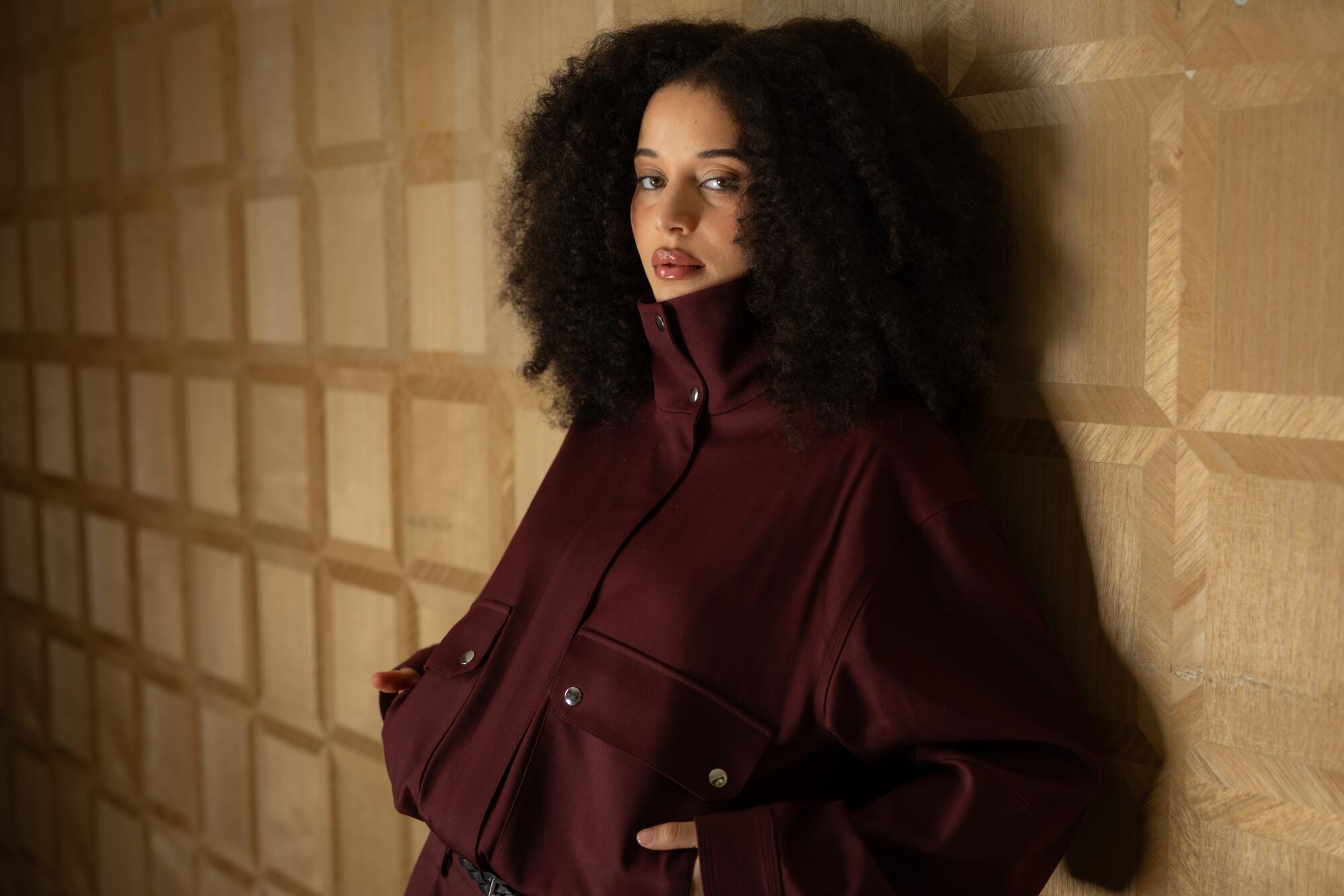
Chase Infiniti, photographed in late March ahead of “The Testaments” premiere.
(Jason Armond / Los Angeles Times)
Yvonne Villarreal: Chase, thanks so much for being here. Congratulations on your Emmy nomination. What do you want to remember about this moment, this feeling?
Chase Infiniti: Oh. I don’t know. I’m trying to take little pictures in my brain of everything and remember all of the influx of emotions that I felt that entire time, but also throughout the whole journey of making Season 1 of “The Testaments.” There’s so many things about it that I’m like — I just never want to lose that feeling. There’s a lot of [memorable] moments I had on set and also during the press tour and then even finding out about the Emmy nomination, which feels very crazy to say. But even finding out about that, there’s so many little things that I’m like, “I never want to lose that feeling. I want to keep it in my brain forever.”
Villarreal: Is it as thrilling as what you remember feeling when you booked that first role in a local production of “Hairspray,” when you were 10?
Infiniti: It definitely does. I also feel very grateful that with my job and with everything I get to do, I really try to keep intact how much I love the work and how much I love creating. That’s what helps it keep that same energy as me finding out I’m playing Crystal in “Hairspray” versus me finding out that I have an Emmy nomination.
Villarreal: Were you on Cloud 9 getting the news of Crystal?
Infiniti: Oh, yeah. I was so happy because I was it was the first time I ever had a name in a musical. And I remember when I was a kid, I watched the movie version of it every night for six months. Not a lie. Me and my sister would turn it on religiously after school and we would start singing “Good Morning, Baltimore.” It got to the point where we knew almost every line in the movie.
Villarreal: I feel old asking which version of “Hairspray”… Zac Efron? What was it about it?
Infiniti: It’s just catchy — everything about it. It just makes me happy, When I hear “Run and Tell That,” I just want to do twirls in my room. I love musicals so much and they make me so happy. If I’m ever down or need a little pick-me-up, I’ll literally just blast that soundtrack. I blast the soundtrack to “Pippin” or … “Shrek: The Musical.” I remember being in the production and it kind of brings me back to those happy memories I had ,or productions that I saw that I was like, “Oh, my gosh, this really makes me want to work towards being in something like that.” I love musicals.
Villarreal: It was just two years ago where the general public was starting to learn your name with your debut in Apple TV’s “Presumed Innocent.” Since then, you’ve navigated the film award season with “One Battle After Another,” and now the TV awards season with “The Testaments.” How do you make sense of what this moment is? Are there still things you’re getting used to? What have you enjoyed about this part of the job?
Infiniti: There’s a lot of things I’m still getting used to. Especially with “One Battle,” I think the biggest adjustment I had was people knowing me before I walked up to them — people that I’m massive fans of. I met Angela Bassett at something, and she came up to me and said my name, and I was like, “You’re Angela Bassett, and you know who I am?” That was like an “Oh, my gosh” [moment]. I’m still really adjusting to that. I feel like there’s a disconnect in my brain between like what I think people know of me versus what reality actually is. And my friends bring it up all the time and they’re like, “Chase, these people know who you are.” But I can’t wrap my head around that. It’s very strange, especially going from like a 0 to 100 situation. That’s something that I’m still trying to find an adjustment on in my brain.
[What have I] enjoyed about it? I’ve gotten to meet all of my superheroes, in a way. All the people that I’ve grown up watching on the screen and on the stage, [I’ve encountered at] all of these different events and in passing, and everyone could not be kinder and just getting to meet them and just pour into them how much they’ve shaped my life and shaped the creative work I want to do. Another adjustment thing is hearing them pour back into me too. That’s something that I’ve been getting used to. But meeting the superheroes of it all in my brain has been something I’ve really loved. Also getting to meet people who’ve watched “The Testaments”; like younger girls who’ve watched it and then really found a connection point with it, and it’s had an impact on them and their friends. That’s something I really cherish about getting to do what I get to do. I had it with “One Battle.” It’s really cool to see it happening again with “The Testaments.” That’s a very wonderful gift.
VIllarreal: Before we delve further into “The Testaments,” I do want point out this moment onstage at the Academy Awards. When “One Battle After Another” won best picture, Paul Thomas Anderson singled you out, calling you “My American girl” and the “heart of this movie.” Place me in that moment as Chase.
Infiniti: Well, I didn’t hear him. I just heard him say my name. I remember he was going down the list and saying names of different people, and I thought that it was something like that. I was touched that he even mentioned me onstage. Obviously, that movie has quite literally changed my life and that entire cast. And I love Paul so much. So I didn’t hear him onstage, and it wasn’t until afterwards that my parents had sent me a screenshot of the [closed] captions from that night. They were like, “This is what Paul said about you.” I just remember feeling so honored that I got to be a part of something that changed my life, but [it was a film that] also really, I think, changed a lot of people’s lives as well; they connected with it. I can distinctively remember every single day on that job. I just remember feeling such a rush of emotions after reading [what he said] because I love that movie and I love Paul so much. I could not be more grateful for that opportunity and for the opportunity to play Willa, let alone get to be a part of the crazy world that is a Paul Thomas Anderson set. But I learned so much. There’s so much I could say about it.
Villarreal: How did playing Willa inform how you thought about Agnes, who’s also this young revolutionary in the making, as you were putting yourself on tape for “The Testaments”?
Infiniti: I signed on to it with one script in mind. Obviously, I had read the book beforehand, so I had an idea of what she was going to go through, but I didn’t necessarily know how it was going pan out onscreen. The biggest help Willa [provided] beforehand going into that is, I feel like I, by nature, have a little bit of a rebellious spirit, but I really had to turn it up with Willa. I think that being able to access that through Willa and then shape it differently for Agnes, given the circumstances of where she is, was the biggest key between the two. They do share the strong sense of rebellion. Granted, Agnes doesn’t know where it comes from. She doesn’t really know how to handle it, necessarily. But I think that that was a nice way into Agnes and creating her world mentally of where she is and also the inner turmoil of, “I know that there’s this thing happening inside me, but I don’t really understand it.” I think [that] was the biggest cheat code from Willa to Agnes.
Villarreal: What was it about “The Testaments” that spoke to you and made you want to tackle the material?
Infiniti: Just from that one script alone that I read before I signed on, it was hidden that it was “The Handmaid’s Tale,” but you can get a sense of what the world is based off of that initial script. I just fell in love with how detailed it was. It didn’t feel like there were any question marks in the world, and I think that diving into something [like] that felt very interesting because it’s not otherworldly but it feels otherworldy in the sense of the way that they speak and the way Gilead itself looks on paper versus on the screen. That was something that I found to be very interesting. But I think with Agnes specifically, I really love the amount of love that she has for her friends, because that’s something that I feel very strongly about. My friends and my family, but especially my friends, are the people I cherish most in my life. My loved ones are near and dear to my heart, and I will do anything for them. That’s something that I really loved about Agnes. That makes me very happy to see, that even in a world that’s so dark and so dim — even if she doesn’t view it as that, it is dark and it is dim for a young girl in Gilead —she still has so much love and so much hope for her friends. And I found that to be very inspiring.
Villarreal: Did you have any hesitation about the heaviness of this fictional world?
Infiniti: I don’t think that that necessarily terrified me, because I think that I have this very privileged ability to step into this world that seems like it’s so far outside of what we are, I guess, used to — but it’s really not. Nothing that Margaret Atwood writes is fiction. It is all based off of history or things that are happening at the time that she’s written it. I knew that it was going to be very relevant. I’m in this very privileged position where this isn’t my reality, but this is the reality of so many women around the world. And I thought when I read this script that this was a way for people to not, I guess, become desensitized to seeing these things, because I think that we’re in a world where it’s so easy to just turn off your phone, scroll past something, and just ignore what’s actually really happening. With “The Testaments” and with the things that these girls go through, I truly feel heartbroken. But if this in any way can wake people up, can help people continue to ask questions and really question their own environments, that was something that I wasn’t scared of. And I really felt empowered to join something that was doing that. And I am also grateful that on that set, it never felt like the material was too heavy for a day because our entire cast and our entire crew kept the energy on set very light. And if there was ever a point where a day was extra heavy, I knew that I could turn to Lucy [Halliday, who plays Daisy] and she would always be there for me. I know that I can turn to one of the directors and they would always be there, or even one of the [production assistants]. Everybody on set was very forthcoming with kindness and always very open. That was something that helped to keep the heaviness of the subject matter [from] going home with us.
Villarreal: Agnes has only known obedience and repression. She’s very controlled with her emotions. As somebody with roots in musical theater, did you have to curtail some of those instincts that you might’ve had to be a little more expressive? How was it settling into Agnes?
Infiniti: It was honestly pretty easy because you get into the space, you get into the world, and you instantly are transported and you get little context clues based off of the things that you see in Agnes’ room versus the things that you’ve seen in the school — or the absence of things. The absence of things really helped to start to put me in a box in a way — not the negative connotation of that — like putting the costume on. It really helped for me to feel the restriction of the world to understand what Agnes’ mind is, and getting to see that from the outside and then getting to step into it. It wasn’t that hard to shut off that part of my musical theater brain, but I think part of that is also I’ve learned how to maneuver through that just based off of “Presumed Innocent” and “One Battle,” because both of those parts are also very, very much so not musical theater-y at all. So I think that was also something that I had the privilege of learning on both of those sets.
Villarreal: Something that stands out with Agnes is we’re witnessing her awakening. Gilead is all she’s ever known. And she’s very dutiful to the practices of that society. But she’s grappling with coming into her identity and feeling this gap of her internal thoughts and feelings and what society tells her to be. What was important to you in having those two realities live side by side?
Inifiniti: The one thing I never wanted her to lose was her sense of love. She is a character who that is at the root of most of her decisions, especially when it comes to the final episodes with Becka [played by Mattea Conforti]. I think the love that Agnes has in this world is something baseline I never want to lose. I really tried to maintain that throughout.
There’s so much that you keep to yourself — your inner thoughts, your inner personality in a way — versus what you outwardly show the world. I just had to turn up the extremes when it came to Agnes, and really make sure to keep those things that she keeps close to her heart guarded. And put on this almost armor in a sense of what she views to be the most perfect version of herself for the outside world. And then watching that kind of crumble, those layers are peeled apart based off of what happens to her and what she sees happen to her friends. But also, there’s a point in everyone’s life where they realize, “Oh, what I had been raised under the belief of is actually not the reality. Whether it be something like that or whether it be an idea or an ideal that you have about the world or about yourself or your morals, just based off of what you’ve been raised with. I think that everybody has a point in their life where they have to face a version of reality that they’ve been told versus what actually is reality. There’s things that I’m still learning, and there’s still things that I’m questioning just based off of what I see in my personal life, and then also with my friends or what my family goes through.
Villarreal: A key character in the show is menarche and the menstrual cycle. We see how it’s weaponized, but we also see how it gives these young girls their power. What was it like to explore that?
Infinti: The thing I honestly really enjoyed about it is the openness of it. Like, you know when you go to the bathroom — and this is perfect podcast talk — and you’re taking your pad or your tampon to go change, but you’re hiding it because you’re like, “I don’t know if I want anybody to see it” [or hear] the crinkling of everything. But I think that the openness of everything in the show — granted, circumstances are completely different — but the openness that they have with it, I found to be very freeing and refreshing in a way. That was something, especially when we started shooting, that we all talked about, because we were like, “We’ve never been in a place where it didn’t feel like there was a stigma against it.” It felt like we were almost encouraged to talk about it. Getting to put this show out into the world and letting girls see that there isn’t something that they should be afraid of, but also letting them see that this is normal. This is not something that we should be scared of, let alone try to hide, because it’s a part of womanhood. It’s also a part of girlhood and a point of connection between younger girls. Getting to see it on the screen and see the way that these girls talk about it, ignoring the society of Gilead and the amount of pressure that the men put on them in this society, that connection that they have with those few things that span across culture, that is something that we were all very happy to kind of have that openness with something that we’ve felt so scared to talk about, especially at like 14 and 15.
Villarreal: Scared to experience too.
Infiniti: I remember when I got my period for the first time I was like, “What is happening? I don’t know what is going on.” The first person that you call, if it’s not your mom or another maternal figure in your life, is your friends. Because they’re normally the person closest to you in proximity if you’re at school or if you were at an after-school activity or something like that. Getting to have that openness felt very refreshing to have on set.
Villarreal: There was so much openness that there was a menarche playlist curated by director Mike Barker. Tell me the backstory on this.
Infiniti: We did. I’m trying to remember how we found out about this playlist. We were doing a camera test for the costumes, and I remember Mike just putting on this playlist and he’s like, “I like putting up these songs for everyone to listen to” because there was no dialogue in this little camera test between me, Mattea, Rowan [Blanchard], Lucy, Brad [Alexander], Amy [Seimetz] and Mabel [Li] — I can’t remember if I might be forgetting somebody else, and I’m so sorry if I am. But it was a bunch of the cast and then there was also some pinks in there just to see how everything looks on camera. And we were hearing all these different songs playing. We’re like, “Wow, this is great. Thanks for putting together a playlist, Mike.” At some point, Lucy went to grab his phone to look at what the song was and his playlist was open, and she’s like, “Why is the playlist called ‘The Menarche Playlist’? And after that, it just became us trying to get him to approve a song that we would suggest.
Villarreal: I remember you telling me Britney Spears’ ”… Baby One More Time” was on it. But I had wondered who else made the cut.
Infinti: “… Baby One More Time” was on it. I think that was the first song on it, but there would be points in lunch — we’d all eat lunch together — and we’d be like “OK, Mike, what about this one for the menarche playlist, or what about about this one?” We would all secretly hope that they would get added to the show.
Villarreal: Did one of your suggestions get added?
Infiniti: There are songs on there that I don’t even remember. So one of them probably did get added. I just don’t remember what it was.
Villarreal: Agnes is somebody that doesn’t really experience culture. We don’t know what kind of music she likes, what kind of TV or film she likes. And you’re someone that’s very much into culture, at least from what I’ve seen. Were you thinking about what she might like? How did you think about her backstory with that kind of absence?
Infiniti: I was really just relying on what you saw of her in “The Handmaid’s Tale,” and that was the extent of what I would let a part of her backstory be because she doesn’t remember much about her childhood. Once she becomes conscious, in a way, in Gilead, all I did was rely on the things that I knew that she liked and really try to remind myself, “She doesn’t know what a movie is. She knows what ‘Jaws’ is, but she doesn’t really have an understanding of what watching a movie is like. She doesn’t know what YouTube is, she doesn’t know what a phone is.” I had to keep reminding myself, especially at the beginning, to not put those things in the forefront of our minds, unless, of course, like you’re a Pearl girl who has prior knowledge of everything. A lot of it was just reminding myself, “You don’t know what this is, she doesn’t know what this is.” If I were to meet Agnes right now, she would probably think I was crazy because she just doesn’t understand a lot the things I’ve seen, and the things that we use in our day-to-day life, and I really tried to make sure to keep that intact, but also relying on the bits of information that I had from “The Handmaid’s Tale” going back to the show. And also, of course, we had Bruce Miller, so I could ask him anything.
Villarreal: What would you, Chase, expose her to? If she were to come to you, what she should be listening to or watching, what’s the guide you’d give her?
Infiniti: The crash course to being 14? I would show her One Direction. I’m sorry. That is something that is so quintessential to being a 14-year-old, especially me being 14. I would be like, “Agnes, I see the things that you love and you’re obsessed with. I’m going to show you the thing that I was in love and obsessed with when I was your age.” I would be very curious to see how she would react to hearing One Direction for the first time; hearing “What Makes You Beautiful,” that would be interesting to see. I would show her something that is representative of me being her age. I still am a fan. I’ve always been a fan my whole life, but especially One Direction, that’s probably something I would show her.
Villarreal: Who was Chase at 14? You talked earlier about having a little bit of that rebellion in you. And after playing these two characters back to back, what have you sort of learned yourself, about your power or finding your voice, especially in an industry like Hollywood?
Infiniti: Something that I realized when I was probably about 13 or 14 is, I used to be very upset when people would underestimate me. I found a way to, I guess, not make it my superpower … but use it as opposed to [letting it be] something that would defeat me. [I would] use it as something to continue to motivate me to work towards the goal that I already had because there’s always gonna be people that underestimate you. There’s always going to be people in the world that want to pour negativity into you when you’re truly just living your life, working towards the things that you want. That was something that I realized pretty young because I knew at 10 that I wanted to be an actor. And so at that point, I kind of made a shift in my mind where I was like, “OK, I need to start working towards the thing that I want to do.” At 13, people were like, “Why are you so motivated to do this? It’s a bit embarrassing that you want to be an actor. What makes you think you can do that?” And I was like, “Because I want to do it.” I never had a doubt in my mind that this would be the thing that I would get to do because that was something that my parents always told me. They were like, “Dream big because the dreams that you’re imagining can be your reality, especially if you work hard enough towards it.” And I feel very lucky that I get to do the thing I’ve always dreamed of doing.
Villarreal: How does that live side by side with also learning how to deal with rejection so young?
Infiniti: It’s a lot of tears, a lot of sad days, sad weeks, conversations with my friends, conversations with parents. But from being underestimated, I remember my dad being like, “You have to get comfortable with ‘no.’ And it’s not going to be fun. It’s not gonna be something that you’re excited to hear, because no one’s excited to hear that they didn’t get something that they really wanted.” Now I’m at a point where I’ve really learned how to process it and not let a no or a rejection affect my view of myself or affect my view of a performance or my abilities to do anything. It took a long time to learn, and I’m still nowhere near perfect, but I’m definitely at a place that’s better than when I was 13 because it is hard for somebody that young to get that amount of rejection. It’s also hard for somebody at my age to handle that level of rejection, especially when you get so close to something. I have to give that credit to processing those things to my parents because that is all them. I had many tear-filled nights when I was a kid because I was so sad that I didn’t get a solo in something, and they’re like, this doesn’t mean that you’re not talented. I’m also somebody who believes the right things will find you. And they’re [my parents] also the people that kind of instilled that in me too.
Villarreal: Does that reframing of no also give you the confidence to approach Leonardo DiCaprio and Benicio del Toro and say, “Will you make a TikTok with me?”
Infiniti: It honestly was like a lot easier than I thought it was going to be. I was very specific. I did lots of research because I also was like, “I want it to be something that they can look at and also laugh at.” They can enjoy it.
Villarreal: Do you think you’ll get there with Ann Dowd? A TikTok?
Infiniti: I would love to. I don’t know what it would be, but I would love to make a TikTok with Ann Dowd one day. If it could be like all the girls on set making a TikTok, I would be very happy. I do have some planned. So, we’ll see.
Villarreal: Margaret Atwood makes a cameo in the finale of Season 1. How do you even talk to Margaret Atwood when you meet her? What was that experience like for you?
Infiniti: The person who was probably the most shocked was Lucy because Lucy Halliday is the biggest Margaret Atwood fan I think I’ve ever met. I had the gift of getting to witness Lucy meeting Margaret for the first time. But meeting her — she’s so kind. [Producer] Warren Littlefield says this all the time where he’s like, “You can’t talk to Margaret Atwood and not learn something with every conversation.” I just remember being very quiet and listening to her talk and listening to her ask questions of me, ask questions of Lucy, but we would just pour into her and be like, “Thank you so much for your work because you truly have touched millions.” She’s also so funny and so witty and very charismatic. I remember being very nervous beforehand, but she made it very easy for our nerves to go away. The highlight was getting to see Lucy meet Margaret.
Villarreal: You’re about to head out to Canada to start production on Season 2. You’ve seen two scripts. What do you hope to see for Agnes in Season 2?
Infiniti: I hope Agnes is happy, and I hope that she can continue to push and find her happiness. I hope that she doesn’t lose her spark, and I hope that’s something that she continues to explore and understand why she is the way that she is. Those are two hopes that I have.