Marco Rubio

U.S. imposes new Cuba sanctions as Caribbean tensions rise

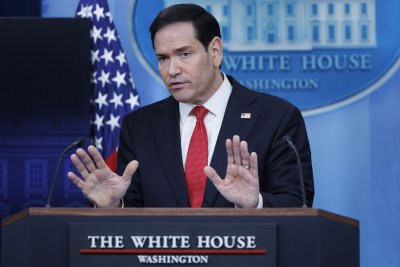
May 19 (UPI) — U.S. Secretary of State Marco Rubio said he has imposed additional sanctions against Cuba, with more to come in the days and weeks ahead, as the Trump administration ratchets up the pressure on the communist government of President Miguel Diaz-Canel.

The sanctions announced Monday by the U.S. State Department target 11 Cuba officials and three Cuban security and intelligence entities, freezing any assets under U.S. jurisdiction and prohibiting U.S. persons from doing business with them.

Agencies blacklisted were Cuba’s Ministry of Interior, the National Revolutionary Police Force and its Directorate of Intelligence, Havana’s primary foreign intelligence agency.

Officials hit included the heads of the Revolutionary Police Force as well as various ministers, the chief of staff of military counterintelligence, the chief of the Central Army of Cuba, the chief of the Eastern Army of Cuba, and the president of Cuba’s National Assembly for People’s Power, among others.

Rubio described them as “Cuban regime elites” and officials who have been involved in repressing the Cuban people.

“Regime-aligned actors such as those designated today bear responsibility for the suffering of the Cuban people, the failing Cuban economy and the exploitation of Cuba for foreign intelligence, military and terror operations,” he said in a statement, while warning that more sanctions “can be expected” in the following days and weeks.

“Today’s designations further restrict the Cuban regime’s ability to suppress the will of the Cuban people.”

Late Monday, Diaz-Canel lashed out at the United States over the sanctions, saying no one in Cuba’s government, political party or military institutions has any assets or property to protect under U.S. jurisdiction — and the Trump administration knows this.

“The anti-Cuban rhetoric of hate tries to make people believe such things exist in order to justify the escalation of its total economic war,” he said in a social media statement.

“That’s why we will continue to denounce, int he firmest and most energetic way possible, the genocidal siege that seeks to strangle our people.”

He described Trump’s Cuban policy as “collective punishment” and “an act of genocide,” calling on the international community to prosecute those responsible for it.

President Donald Trump has been targeting Havana with sanctions and economic restrictions since early this year, when he declared a national emergency concerning Cuba on the grounds that it has aligned with “numerous hostile countries, transnational terrorist groups and malign actors adverse to the United States.”

Trump has blocked Venezuelan oil shipments to Cuba, adding to the decades-old economic embargo and worsening the island nation’s energy crisis. The country’s fuel oil stocks have run dry, according to officials, and blackouts are common.

Trump has repeatedly raised the prospect of military action against Cuba and has stopped short of directly calling for regime change as he seeks to extend the United States’ influence across the Western Hemisphere.

Cuba blames the United States for its current economic and energy situation, and the sanctions came as its foreign minister, Bruno Rodriguez Parrilla, on Monday, defended Havana’s right to self-defense in response to reports that claimed the island nation had purchased drones from Russia and Iran.

While some Republicans, including Sen. Rick Scott and Rep. Carlos Gimenez, both of Florida, celebrated the sanctions, several Democrats have condemned the Trump administration’s broader campaign, accusing it of manufacturing a pretext for war.

Reps. Delia Ramirez of Illinois and Nydia Velazquez of New York lambasted the administration in a joint statement, accusing it of attempting to justify another “unauthorized and unlawful military invasion,” seemingly referring to the U.S. military abduction of Venezuelan President Nicolas Maduro in January and Trump’s late February strikes on Iran, which triggered a war later halted by a fragile cease-fire.

“For the Trump administration, the goal is another military incursion. They will justify their actions by claiming it serves the freedom of Cubans,” the Democratic pair said, calling on Congress to pass a war powers resolution to curb Trump’s ability to make war without congressional authorization.

“Today, we must act to stop the destructive ambitions of imperialists and warmongers.”

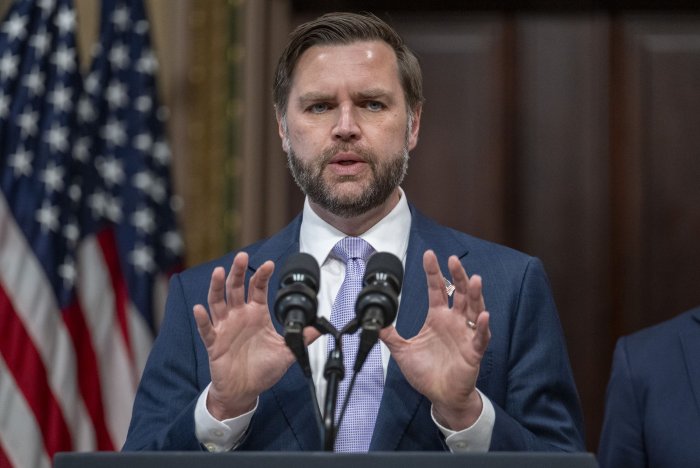
Vice President JD Vance speaks during a news conference on anti-fraud initiatives in the Indian Treaty Room of the Eisenhower Executive Office Building at the White House on Wednesday. Photo by Daniel Heuer/UPI | License Photo

Source link

Xi, Trump attend gala dinner, toast friendship at high-stakes summit

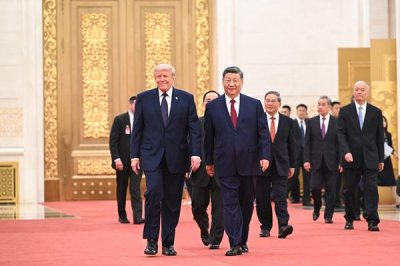
1 of 2 | U.S. President Donald Trump (L) and Chinese President Xi Jinping (R) lead their delegations into a gala dinner at the Great Hall of the People in Beijing on Thursday during a high-stakes summit in the Chinese capital. Photo by Chinese Ministry of Foreign Affairs

May 14 (UPI) — Chinese President Xi Jinping hosted President Trump at a glittering state banquet in the Beijing’s Great Hall of the People on Thursday as the two leaders wrapped up the first day of a planned two-day summit.

The elegant dinner came after a day of discussions in which Xi warned Trump that mishandling the matter of Taiwan’s independence could push the two superpowers into “conflict,” but which also included moments of agreement and praise offered by both leaders.

The dinner menu included roast duck, pork buns and and beef ribs served by waiters in traditional red clothing, the Australian Broadcasting Corporation reported, while the entertainment program was highlighted by a performance of the American hit song “YMCA” by the People’s Liberation Army band.

During his speech at the elaborate dinner, Trump described U.S.-China relations as “one of the most important in history” and focused on the long-standing ties between Washington and Beijing.

Xi, meanwhile, drew parallels between the 250th anniversary of U.S. independence and the start of China’s 15th Five-Year Plan for economic and social development.

“The over 300 million American people are reinvigorating the spirit of patriotism, innovation and enterprise, and ushering in a new journey for the development of the United States,” he said, according to the Chinese Ministry of Foreign Affairs.

The peoples of both China and the United States are “great,” Xi added, saying, “Achieving the great rejuvenation of the Chinese nation and making America great again can go hand in hand. We can help each other succeed and advance the well-being of the whole world.”

Among the banquet attendees were administration officials such as Secretary of State Marco Rubio, Treasury Secretary Scott Bessent, Defense Secretary Pete Hegseth and White House Chief of Staff Stephen Miller, as well as U.S. business leaders including Tim Cook of Apple and Elon Musk of Tesla and SpaceX, the New York Times reported.

The dinner came during a day of talks held against the backdrop of the Iran conflict and mounting tensions over trade, technology and regional security.

Xi, however, placed Taiwan — a self-governing island of 23 million people that China claims as its territory and has vowed to bring under its control — at the top of the agenda.

“The Taiwan question is the most important issue in China-U.S. relations,” Xi told Trump, according to a readout from China’s Foreign Ministry.

“If it is handled properly, the bilateral relationship will enjoy overall stability,” Xi said. “Otherwise, the two countries will have clashes and even conflicts, putting the entire relationship in great jeopardy.”

Trump did not answer questions from reporters about Taiwan after the meeting.

“Great. Great place. Incredible. China’s beautiful,” Trump said when asked about the talks with Xi, according to a pool report.

Washington does not maintain formal diplomatic relations with Taipei but is Taiwan’s main international backer and arms supplier under the Taiwan Relations Act, a 1979 law that states threats to the island are “of grave concern” to the United States.

The Trump administration announced an $11 billion arms package for Taiwan in December, including rocket systems, drones and anti-tank missiles, though delivery has yet to move forward. Trump said in February that he discussed the sale with Xi and would make a determination “pretty soon.”

Trade also loomed large over the summit after years of tensions over tariffs, export controls and advanced technology restrictions. Trump traveled with a delegation of prominent U.S. executives as his administration seeks expanded Chinese purchases of American aircraft, agricultural goods and energy products.

Xi and Trump also discussed the Middle East, Ukraine and the Korean Peninsula during their meeting, according to the Foreign Ministry.

Trump arrived in Beijing on Wednesday evening for his first visit to China since 2017. Xi did not meet Trump at the airport, but welcomed him Thursday with a red carpet ceremony, troop review and 21-gun salute at the Great Hall of the People. Children waved flowers and American flags as the leaders entered the hall for talks.

In comments at the start of their meeting, Xi said the world was at a “new crossroads” amid mounting geopolitical instability and called on the two countries to work together.

“Currently, transformation not seen in a century is accelerating across the globe and the international situation is fluid and turbulent,” Xi said. “Can we meet global challenges together and provide more stability for the world?”

“We should be partners, not rivals,” he added.

Trump called the gathering “maybe the biggest summit ever” and praised Xi’s leadership.

“We’ve had a fantastic relationship,” Trump said. “We’re going to have a fantastic future together. Such respect for China, the job you’ve done. You’re a great leader.”

After talks lasting more than two hours, Trump and Xi traveled to the Temple of Heaven, a ceremonial complex dating to the Ming Dynasty where Chinese emperors once prayed for good harvests. A state banquet was scheduled for Thursday evening.

Source link

Trump builds momentum with at least 3 more wins; Rubio drops out, Kasich takes Ohio

Donald Trump romped to victory Tuesday in Florida, chasing Marco Rubio from the race, but Ohio Gov. John Kasich won his home state, raising hopes for those seeking to stop Trump and settle the presidential contest on the floor of the Republican National Convention.

Trump also won North Carolina and Illinois and was locked in a close fight with Sen. Ted Cruz in Missouri.

“I’m getting ready to rent a covered wagon, we’re going to have a big sail and have the wind blow us to the Rocky Mountains and over the mountains to California,” Kasich said at a jubilant rally outside Cleveland.

That is just the sort of extended nominating fight the GOP establishment sought to avoid by stacking the political calendar with big early contests, capped by Tuesday night’s winner-take-all primaries in Florida and Ohio. California votes on June 7, near the close of the primary season.

Now, many of those same party types see an inconclusive nominating contest as the best and perhaps only chance of thwarting Trump, even if it threatens to shred the GOP in the process.

The setback in Ohio, where Trump campaigned hard, was his most disappointing performance since he finished second to Cruz in February’s Iowa caucuses.

His unhappiness was evident as he addressed reporters at his posh Mar-a-Lago private club in Palm Beach, Fla., and complained about the miseries of running for president.

“Lies, deceit, viciousness. Disgusting reporters. Horrible people,” the Manhattan businessman and reality TV star said. “Some are nice.”

Cruz, speaking with 99% of the Missouri votes counted, once more insisted he was the only candidate who could defeat Trump.

“Starting tomorrow morning, every Republican has a clear choice. Only two campaigns have a plausible path to the nomination — ours and Donald Trump’s,” the Texas senator told supporters in Houston. “Nobody else has any mathematical possibility whatsoever. Only one campaign has beaten Donald Trump over and over again.”

With Trump’s unmatched string of victories, no other candidate is nearly as well positioned to win the nomination ahead of the July convention in Cleveland. He padded his overall delegate lead with Tuesday’s victories, putting him ahead of Cruz and Kasich, who had not won a state before Ohio.

But there were signs Tuesday that not just the establishment but rank-and-file Republicans have yet to rally around the party’s polarizing front-runner.

Nearly 3 in 10 Republican voters across the five states said they would not vote for Trump if he wins the party’s nomination, according to exit poll interviews. Four in 10 said they would consider voting for a third-party candidate if the choice came down to Trump or the Democratic front-runner, Hillary Clinton.

Defections of that magnitude could badly undermine Trump in the general election, and that prospect will probably be stressed by his opponents going forward into next week’s contests in Arizona and Utah.

Rubio spoke to the controversy surrounding the GOP front-runner as he departed the race.

In a Miami concession speech delivered less than half an hour after the polls closed in Florida, the freshman senator congratulated Trump, wagging a finger and shushing members of the audience who booed his kind words.

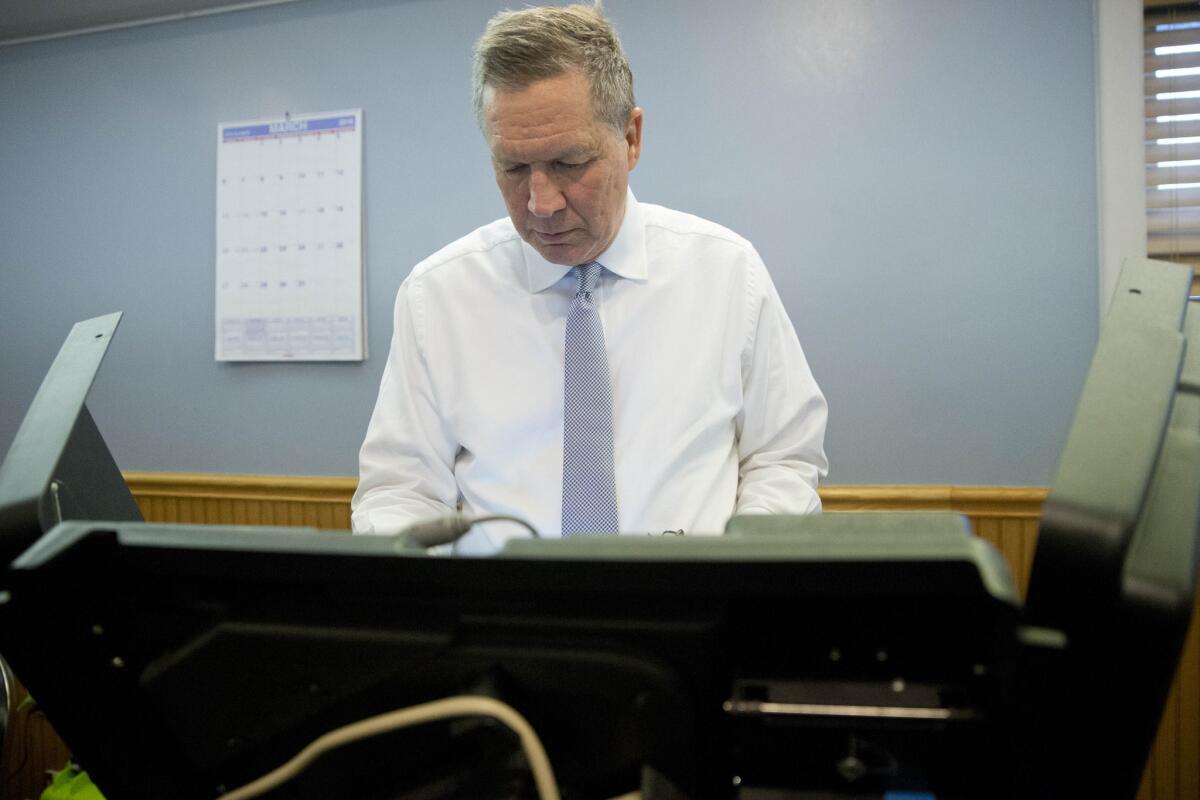
Ohio Gov. John Kasich votes Tuesday in Westerville, Ohio.

Ohio Gov. John Kasich votes Tuesday in Westerville, Ohio.

(Matt Rourke / Associated Press)

Rubio then devoted the bulk of his lengthy remarks to warn against succumbing to the anger and frustration that have fueled Trump’s improbable rise.

“The politics of resentment against other people will not just leave us a fractured party,” Rubio said, as disconsolate family members stood by onstage. “They’re going to leave us a fractured nation” where people hate each other for their political views.

“Do not give in to the fear,” Rubio said. “Do not give in to the frustration.”

The son of Cuban immigrants and, at age 44, the youngest candidate in the field, Rubio was seen as one of the GOP’s rising stars, with a capacity to broaden the party’s support among millennial voters and the nation’s fast-growing Latino population.

But he failed to win more than a few contests and was never seriously competitive in his home state. Trump captured 99 delegates in Florida’s winner take-all-primary, more than a quarter of those at stake in Tuesday’s balloting.

The victory in winner-take-all Ohio gave Kasich 66 delegates, more than doubling his total but still leaving him well behind Trump. His goal is to build momentum with a series of wins positioning him as the strongest candidate heading into the Cleveland convention even if, as seems inevitable, Kasich is shy of the 1,237 delegates needed to win the nomination outright.

Pennsylvania, where Kasich was born, is the next big target on April 26.

The results Tuesday followed one of the oddest, most contentious weeks in a campaign that has been filled with strange and surreal moments.

The precipitating event was a racially charged near-riot at a Trump rally Friday night in Chicago, which was canceled out of security concerns.

Trump’s opponents quickly seized on the moment and the violent imagery that played around the world to once more challenge his temperament and fitness to be president. They accused him of fomenting the unrest through belligerent remarks that seemed to egg on his audiences into physically confronting dissenters.

Trump denied any responsibility, blaming the violence on what he called professional agitators linked to Democratic hopeful Bernie Sanders. He said the protesters provoked his supporters and were stifling their rights to free speech and assembly.

“I don’t condone violence,” Trump said repeatedly, though he sympathized with backers who chose to “be effective” with protesters in the audience. (Previously he used more pugilistic language.)

Trump said he might even pay the legal fees for a supporter who sucker-punched a demonstrator at a North Carolina rally, drawing widespread condemnation. He won the state anyway.

Indeed, for weeks increasingly desperate Republican opponents have mounted an effort to stop Trump, to seemingly little effect.

More than $10 million in negative ads blazed across the Florida airwaves in just the last week alone, attacking Trump for his ethics, the failings of his business empire and his all-over-the-map political ideology.

Those meant nothing to Mark Owens, who stepped into the Miami Beach sunshine Tuesday and lighted a cigar after casting a ballot for the political neophyte.

“We’ve trusted politicians for 200 years to run our country,” Owens said. “It’s time to give someone else a shot.”

With polls suggesting Florida was firmly in Trump’s grasp, much of the campaign focused on Ohio, another traditional fall battleground.

Trump laid on extra events, including an election-eve rally outside Youngstown in place of a planned Florida appearance, and he turned his attention to attacking Kasich after long ignoring the Ohio governor.

He assailed him for his support as a congressman for the North American Free Trade Agreement, a pact with Canada and Mexico that, Trump said, devastated the state’s economy. He also laid on personal insults in a bid to snatch a victory in Kasich’s home state and clear the governor from the race.

Kasich, whose strategy centered on staying above the salvos flying among other candidates, accused Trump of creating a “toxic” political atmosphere and, wrapping himself in the establishment mantle, spent Monday stumping alongside Mitt Romney, the party’s 2012 nominee.

With Kasich suddenly a factor in the GOP contest, the skirmishing here in Ohio seems a likely preview of what is to come.

While he pledged to take the high road at his victory party Tuesday night, Kasich sent a different message speaking to reporters earlier in the day.

He said, “I will be … forced going forward to talk about some of the deep concerns I have about the way this campaign has been run by some others — by one other in particular.”

There is no doubting who he had in mind.

mark.barabak@latimes.com

Twitter: @markzbarabak

Times staff writers Michael Finnegan, Kurtis Lee and Seema Mehta in Los Angeles and Kate Linthicum in Miami contributed to this report.


Source link

U.S. restricts visas for 13 linked to fentanyl online pharmacy

May 13 (UPI) — The United States announced visa restrictions on 13 people linked to a U.S.-sanctioned, India-based online pharmacy that the Trump administration accuses of selling Americans hundreds of thousands of counterfeit prescription pills laced with fentanyl.

The people targeted by the State Department on Tuesday were identified as being “close business associates of KS International Traders and its owner.”

The U.S. Treasury sanctioned KS International and Mohammad Iqbal Shaikh, 34, in September. Shaikh was also among 19 people indicted in New York in the fall of 2024 on charges of selling counterfeit, fentanyl-laced pills to Americans over the Internet and via encrypted messaging platforms.

The targeting of KS International comes amid the Trump administration’s broader crackdown on drug smuggling. Among tactics employed was President Donald Trump‘s December 2025designation of illicit fentanyl and its core precursor chemicals as weapons of mass destruction.

In June, Secretary of State Marco Rubio announced a new policy to impose visa restrictions on drug traffickers, their family members and close personal and business associates.

State Department spokesperson Thomas Pigott said Tuesday that the barring of entry to the 13 individuals “underscores the United States’ and India’s enduring and shared commitment to dismantling illicit drug entities and disrupting trafficking networks that harm Americans.”

“Those complicit in poisoning Americans will be denied entry to the United States,” he said in a statement.

The Trump administration has increasingly used visa restrictions across several policy areas, from punishing Haitian government officials and members of criminal organizations accused of obstructing the nation’s fight against terrorist gangs to Nicaraguan citizens believed to be facilitating irregular immigration into the United States.

Source link