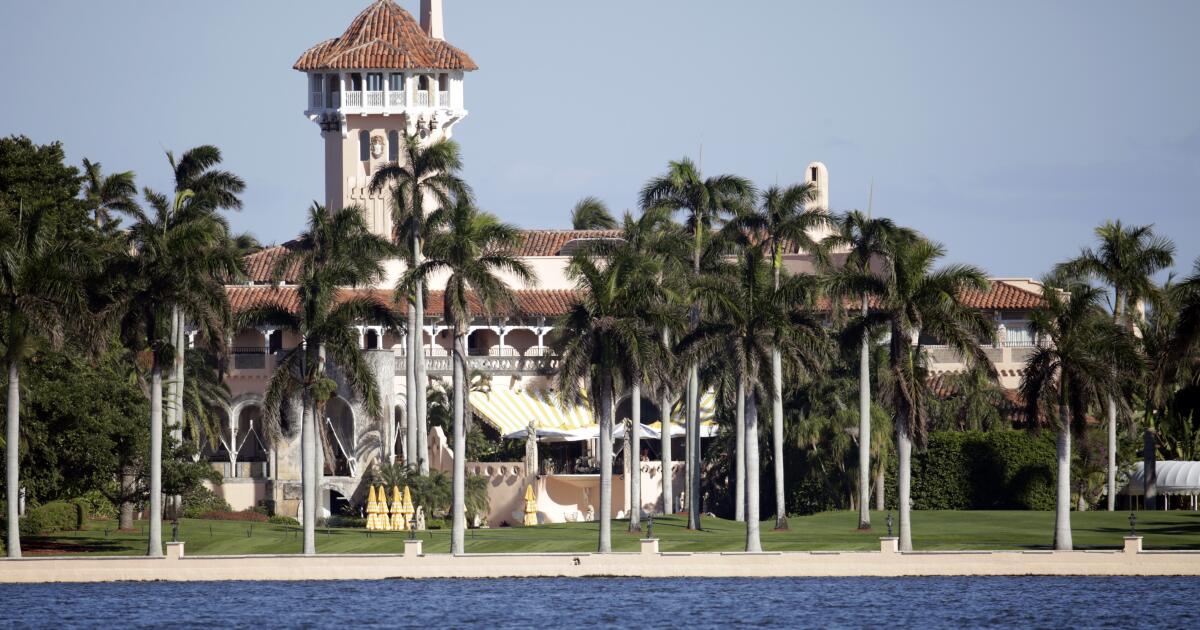
MaraLago

Netanyahu’s Mar-a-Lago win that wasn’t | Israel-Palestine conflict

Yesterday, Israeli Prime Minister Benjamin Netanyahu paid his fifth visit to the United States since President Donald Trump took office in January. Before the meeting between the two, the Israeli press described the prime minister as fully engaged in an attempt to placate his domestic political partners by achieving “concessions” from Trump. What were these concessions? They were predominantly related to denying Turkiye any presence in the Gaza stabilisation force and to US approval for an Israeli strike on Iran.

Netanyahu failed on both counts. Trump specifically referred to his good relationship with Turkish President Recep Tayyip Erdogan, and spoke of “Bibi’s” respect for him, too. With regard to Iran, Trump mentioned Iran’s willingness to “make a deal” and provided clear guidelines for American involvement while saying nothing about authorising a solo Israeli operation. Israeli media suggests that Trump provided Israel with a “green light” for a strike on Iran. That is not reflected in Trump’s official statement in any way.

Trump talked about the reconstruction of Gaza beginning “soon”. When he spoke of the disarmament of Hamas, he said that it must happen or nearly 60 states will make it happen. Hamas has already agreed to disarm if the process is carried out by a Palestinian-led force. Trump said nothing to suggest that he does not agree with Hamas’s logic, especially when one considers the refusal of most participating countries to carry out a violent disarmament of the group. Trump also made no mention of the last hostage body held in Gaza as a necessary condition for moving to “Stage II” of the deal.

Nothing is more significant in Trump’s world than the use of language and symbolic gestures. When Trump referred to Netanyahu as a “great wartime prime minister” as he was discussing his blueprint for “peace”, he made it clear that his guest was running out of time. This was also clearly apparent when Trump said he had spoken with Israel’s official head of state, President Isaac Herzog, about a pardon for Netanyahu and was assured such a pardon was imminent. President Herzog, by the way, categorically denied that such a conversation had taken place.

What may be the best reflection of the Trump-Netanyahu meeting at Mar-a-Lago has to do with a brief conversation over the phone between Trump and Israeli Minister of Education Yoav Kish. The purpose of the call was for Kish to inform Trump that he will be awarded the Israel Prize on Israel’s Independence Day in 2026.

The award is given out by the minister of education in a televised ceremony attended by Israel’s leaders. It marks the official end of Independence Day celebrations. Its recipients are most frequently career academics at a late stage of their careers. The prize reflects a lifetime’s devotion to the expansion of human knowledge. Sometimes, special prizes are awarded in civic categories, most often for what is called a “life’s work”, such as fostering coexistence between Jews and Palestinians, promoting social equality, etc.

The prize, as understood by its name, is nearly always awarded to Israeli citizens but can be awarded to Jews living abroad and even to non-Jews who have made a “special contribution to the Jewish people”.

In other words, the Trump-Netanyahu meeting involved Trump instructing Netanyahu with regard to upcoming measures and Netanyahu snapping to attention and signalling his acceptance by heaping yet another semi-fictitious honour on Trump’s already crowded head.

Yet, despite these clear displays of the unequal nature of their relationships, there have been persistent voices suggesting that Trump and Netanyahu are operating in cahoots. According to such analyses, the United States fully supports the Israeli attempt to “change the Middle East” – Netanyahu’s favourite phrase – as the Americans make a pivot to Asia and the global race for dominance with China.

Israel will “take care” of the “Iranian threat” as the Arabs languish in their own irresolvable internal tensions and competitions. The mobilisation of Arab states after the Israeli strike on Doha is all but ignored.

These voices also point to the fact that Israel continues to completely ignore the “ceasefire” enacted by “Stage I” of the Trump plan, and does so with the full support of the United States. In fact, Trump said that Israel has “lived up” to the ceasefire “100 percent”, and that he has no problems with Israel’s actions in Gaza. These include bombing, destruction of buildings and infrastructure, the blocking of life-saving aid amid harsh weather and many other steps that ensure and expand the ongoing Israeli genocide.

It is indeed extremely difficult to reconcile this with the notion that Israel has run out of options for delaying Stage II and an internationally-brokered solution to Palestinian statehood. After all, one hears repeatedly from Israeli media about initiatives to “settle Gaza”, “relocate” 1.5 million Palestinians to Somaliland and dismantle the Oslo Accords, one ethnically cleansed Palestinian community at a time.

The US and other countries, like Germany and the UK, continue to buy Israeli arms at a massive rate and to equip Israel with arms of their own. How is it possible to reach a conclusion that the Israeli genocide is reaching its endgame?

The short answer is that it is not. Israel continues to kill, destroy, subvert and expand its efforts to destabilise any semblance of regional order. For example, Israel recognised the statehood of Somaliland in order to have a “dumping ground” for ethnically cleansed Palestinians, but also to pit the United Arab Emirates against Saudi Arabia, as both have conflicting interests in Somalia, and, by doing so, ensure that the Palestinian question is not addressed and that everyone remains frozen by fear of Israeli weapons.

The longer answer recognises the effects of this genocide on Israel itself: Genocide consumes genocidaires.

That is not to suggest that justice is assured by cosmic forces; far from it. Justice should be pursued at the most grounded and realistic level, as should the dignity and preservation of Palestinian lives.

However, the genocide has shaped Israel in its image on a daily, immediate level. Violence is rising as quickly as the prices of the staples, democracy is backsliding, and there is no end in sight to the “forever war”. This is not an abstract, “strategic” matter.

While Israel has been actively seeking to delete Palestinian identity for nearly 80 years, it has not succeeded in doing so. Israel’s internal contradictions have surfaced with paralysing force over the past two years.

Israel will not “die” or “recede”, but the gap between Israeli perceptions of the world and global perceptions of Israel has never been wider.

Trump and his vision of America do not appreciate “losers”. Israel no longer has any “wins” in the offing. It can and does kill and burn, procrastinate and obfuscate.

Even Trump recognises that this power has no lasting effects following its own immediate application. Israel has no options. There is no greater loss.

The views expressed in this article are the author’s own and do not necessarily reflect Al Jazeera’s editorial stance.

Source link

Netanyahu, Trump set to discuss Gaza peace plan at Mar-a-Lago

Israeli Prime Minister Benjamin Netanyahu and President Donald Trump talk with reporters at the White House in Washington, D.C., in February. Netanyahu is scheduled to visit Trump Monday in Florida. File Photo by Shawn Thew/UPI | License Photo

Dec. 29 (UPI) — Israeli Prime Minister Benjamin Netanyahu will visit with President Donald Trump Monday in Florida to discuss the peace plan with Gaza.

Netanyahu is also likely to lobby the president for help with Iran as it continues its work on nuclear weapons.

The meeting will happen at Trump’s Mar-a-Lago resort in Palm Beach, Fla. On Sunday, Trump met with Ukrainian President Volodymyr Zelensky at the resort to continue working on a peace plan between Ukraine and Russia.

Local officials have said that more than 400 people have been killed in Gaza since the cease-fire, NBC News reported.

The Trump administration wants to see progress on the plan’s second phase in January. That means a Palestinian technocratic government would be created. Hamas would disarm, and the Israeli Defense Forces would pull out of Gaza.

But some believe that Netanyahu will stall the process and demand Hamas fully disarm before the IDF withdraws. Hamas has said it will disarm as progress moves toward an independent Palestinian state.

Netanyahu and his staff have repeatedly rejected Palestinian statehood since October.

Israeli Defense Minister Israel Katz said last week that Israel will build settlements in Gaza and “never fully withdraw” even as Hamas disarms, the BBC reported. This would violate the cease-fire agreement.

Secretary of State Marco Rubio will meet with Netanyahu before Trump’s meeting.

Two other tenets of the cease-fire haven’t yet emerged: A “Board of Peace” led by Trump is planned for governance of Gaza, and the International Stabilization Force, led by the United Nations, which will help with peacekeeping in Gaza.

Rubio has said those measures will be in place “very soon.”

Israeli officials are concerned that Iran is moving forward with its plans for ballistic missiles, and Netanyahu is expected to discuss options with Trump at Monday’s meeting.

Israel damaged the operations in June, but it wants to attack again, NBC News reported.

Source link

Ukraine’s Zelensky meets with Trump at Mar-a-Lago

Ukrainian President Volodymyr Zelensky, pictured during a meeting at the White House with U.S. President Donald Trump in August, arrived at Mar-a-Lago on Sunday morning to work on a proposed 20-point peace plan between Russia and Ukraine. File Photo by Aaron Schwartz/UPI | License Photo

Dec. 28 (UPI) — Ukrainian President Volodymyr Zelensky on Sunday arrived at Mar-a-Lago in Palm Beach, Florida, to meet with U.S. President Donald Trump about a proposal for a cease-fire and end to Russia’s war in Ukraine.

Zelensky and his entourage arrived Sunday to discuss a 20-point plan — that may include conceding territory and shared operation of a nuclear power plant — to potentially end the war that started more than three years ago with Russia’s invasion of Ukraine.

Ahead of the meeting, Trump spoke with Russian President Vladimir Putin by phone for more than an hour, during which reportedly agreed that a long-term peace deal is preferable to a cease-fire, with Putin calling for Zelensky to make a “courageous, responsible political decision,” The New York Times reported.

Zelensky arrives for the meeting as Russia has amped up its attacks on Kyiv and other parts of Ukraine in recent days, which some have called a tactic on Russia’s part to force the Ukrainians hand in making a peace deal.

“Given the situation on the front lines, Kyiv must not delay making that decision,” Yuri Ushakov, one of Putin’s foreign policy aides, said during a press briefing on Sunday.

Trump told reporters when he welcomed Zelensky to Mar-a-Lago that he believes “we have the makings of a deal,” and that both Putin and Zelensky are both serious about making a peace deal, CNN reported.

Zelensky, Trump and representatives from both of their administrations are negotiating the 20-point peace plan that Zelensky reworked from a U.S.-proposed 28-point plan earlier this year.

Plans have also been drawn up for a three-party security guarantee between Ukraine, the U.S. and Europe, as well as a bilateral deal with the United States, in addition to economic cooperation to rebuild Ukraine, which has been brutally battered by Russia for the last three years, the Kyiv Independent reported.

According to the BBC, Putin and Trump are likely to speak later on Sunday after the meeting at Mar-a-Lago.

President Donald Trump holds a signed executive order reclassifying marijuana from a schedule I to a schedule III controlled substance in the Oval Office of the White House on Thursday. Photo by Aaron Schwartz/UPI | License Photo

Source link