manifesto

Torrance man charged with attempt to assassinate Trump; records detail alleged ‘manifesto’

Federal prosecutors on Monday charged 31-year-old Torrance resident Cole Tomas Allen with attempting to assassinate President Trump after rushing past security at the White House Correspondents’ Assn. dinner in Washington on Saturday.

The domestic terrorism charge, announced during a brief arraignment hearing in federal court in Washington and detailed in a subsequent charging document, carries a potential sentence of life in prison for the Caltech graduate and high school tutor.

Prosecutors also charged Allen with transporting firearms across state lines while traveling by train from California to Washington and with discharging a firearm during the incident at the Washington Hilton, where officials said a federal agent was shot in his ballistic vest.

In the charging document, prosecutors also detailed an email Allen allegedly sent to family members just as he was preparing to breach the event perimeter, in which he allegedly wrote that top Trump administration officials were his target but that he was willing to “go through” others at the event to reach them.

Allen was instead taken down by agents shortly after rushing past them and before descending stairs and entering a ballroom where Trump and other top administration officials were seated. No officials were injured during the incident, which the White House described as the latest in a string of attempts on Trump’s life.

Federal public defenders assigned to represent Allen did not respond to a request for comment Monday. Allen could not be reached for comment. A person previously reached at the Allen family home in Torrance — which was searched by the FBI over the weekend — declined to comment.

At the morning hearing, Asst. U.S. Atty. Jocelyn Ballantine said Allen “traveled across multiple state lines with a firearm” and “attempted to assassinate the president with a 12-gauge pump-action shotgun.”

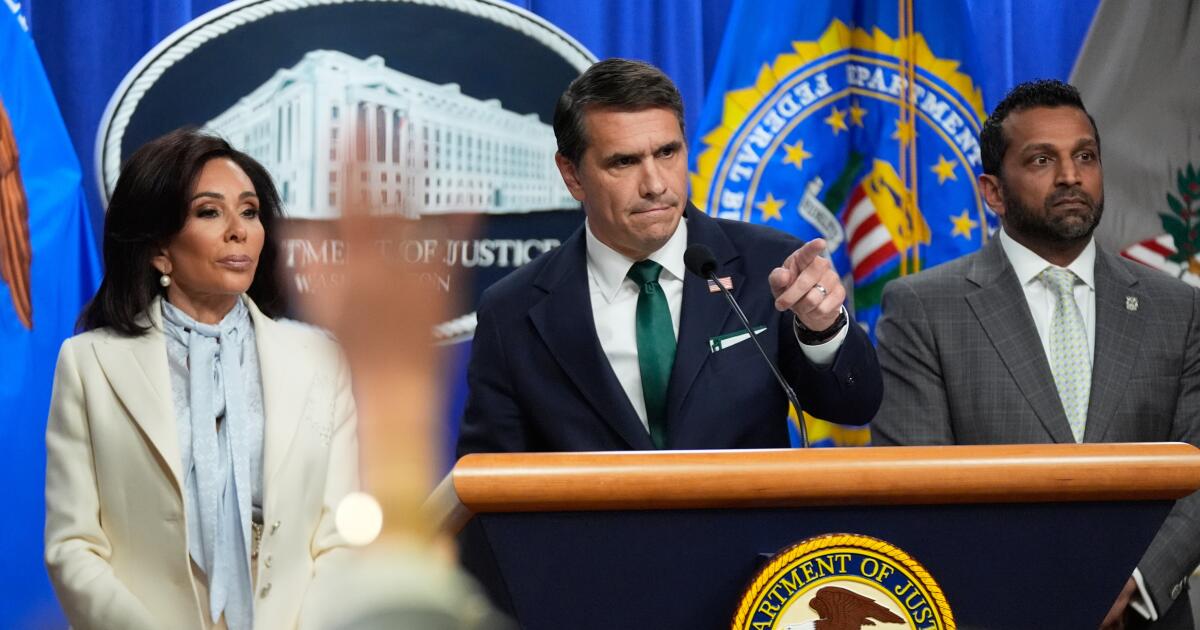
Top administration officials — including acting Atty. Gen. Todd Blanche and FBI Director Kash Patel — echoed those claims at a subsequent news briefing. Blanche described Allen as a serious threat, while also downplaying his proximity to the president and the likelihood that he ever could have caused harm to administration officials.

“Law enforcement did not fail. They did exactly what they are trained to do,” Blanche said. He said Allen had either fallen or was tackled to the ground while under fire from law enforcement.

Blanche and Jeanine Pirro, the U.S. attorney for the District of Columbia, said Allen was charged with attempting to assassinate the president because of his writings — which Trump and others in the administration have referred to as a “manifesto.”

Blanche said officials have seized devices from Allen’s hotel room and his home in Torrance, which could add additional context to his motivations, but officials were not prepared to discuss what may have been found on those devices. Pirro said additional charges were pending.

Blanche emphasized that the investigation into the incident is in its early stages. It still isn’t clear, for example, who fired the shot that struck the Secret Service agent.

“We’re still looking at that,” Blanche said.

In the charging document, prosecutors included the text of the manifesto — an emailed document they allege Allen had scheduled to automatically send to family members around the time he entered the secured area at the hotel, in which he declared that Trump administration officials were his targets.

In the emailed document, titled by the writer as an “Apology and Explanation,” Allen allegedly wrote that Trump administration officials would be “prioritized from highest-ranking to lowest” in terms of how he targeted them.

“I would still go through most everyone here to get to the targets if it were absolutely necessary (on the basis that most people *chose* to attend a speech by a pedophile, rapist, and traitor, and are thus complicit) but I really hope it doesn’t come to that,” he wrote, according to the charging document.

Allen allegedly wrote that Secret Service agents were “targets only if necessary, and to be incapacitated non-lethally if possible”; that police, hotel employees and hotel guests were not his targets; and that he would be using buckshot to “minimize casualties,” according to the document.

“I don’t expect forgiveness, but if I could have seen any other way to get this close, I would have taken it,” he wrote, according to the documents. Allen, a tutor in Torrance, also apologized to his family, colleagues and students, but said he felt he had to act as a U.S. citizen represented by the Trump administration.

“What my representatives do reflects on me. And I am no longer willing to permit a pedophile, rapist, and traitor to coat my hands with his crimes,” he allegedly wrote.

The charging document also described the initial moments when Allen entered the secured area and a Secret Service agent was allegedly shot in his ballistic vest.

Prosecutors wrote that federal agents “heard a loud gunshot” as Allen rushed through a metal detector holding a long gun, that a Secret Service officer identified only by the initials “V.G.” was “shot once in the chest” in a ballistic vest, and that he “drew his service weapon and fired multiple times at ALLEN, who fell to the ground and suffered minor injuries but was not shot.”

Allen was found in possession of a 12-gauge pump-action shotgun and a Rock Island Armory 1911 .38-caliber pistol, the document alleged.

Prosecutors requested Allen be held in detention. U.S. Magistrate Judge Matthew J. Sharbaugh, who presided over the hearing, set a second hearing for Thursday morning to determine whether Allen will be held in custody.

Federal public defenders assigned to Allen after he submitted a financial affidavit to the court requesting representation noted that Allen has no prior criminal record, a factor in determining a criminal suspect’s handling before trial.

Those attorneys — Tezira Abe and Eugene Ohm — did not respond to a request for comment after the hearing.

Allen, clad in a royal blue jumpsuit, showed no visible injuries and said little at the hearing, aside from identifying himself and acknowledging that he understood the legal proceedings.

Allen had allegedly outlined his disdain for and intent to kill Trump administration officials in the manifesto written before the correspondents’ dinner. According to the New York Post, Allen in that document described himself as a “Friendly Federal Assassin” who wouldn’t hesitate to shoot any of the more than 2,600 people in attendance to reach officials.

Those at the event included hundreds of journalists and many Trump administration officials — including Vice President JD Vance and First Lady Melania Trump.

Allen had booked a room at the Washington Hilton, where the dinner took place.

Trump in a “60 Minutes” interview Sunday said he “wasn’t worried” at the sound of gunshots. “We live in a crazy world,” he said.

Trump, who has been dogged by questions about his relationship with the deceased sex trafficker Jeffrey Epstein throughout his second term, bristled at the shooter’s reference to a “pedophile” and “rapist” in the manifesto.

“I’m not a rapist. I didn’t rape anybody,” Trump said in the interview with CBS reporter Norah O’Donnell. “I’m not a pedophile.”

He also railed against O’Donnell for quoting that portion of the manifesto, saying it was inappropriate to do so.

During an earlier news conference Monday, White House Press Secretary Karoline Leavitt said the White House was considering whether to revise Secret Service protocols for large events attended by the president, despite his satisfaction with the agency’s performance at Saturday’s event.

Leavitt said the Secret Service successfully neutralized the suspect and cleared the president, first lady and vice president from the room within minutes.

Still, with major celebrations planned around the nation’s 250th anniversary, the World Cup and the Olympics, discussions on potential updates to Secret Service plans will begin this week, led by Chief of Staff Susie Wiles, Leavitt said. For security reasons, the results of those discussions will likely be kept a secret, she added.

“If adjustments need to be made to protect the president, they will be made,” she said.

Leavitt also called on Congress to pass funding for the Department of Homeland Security, which houses the Secret Service, after a political impasse has led to an historic 73-day lapse in such funding.

Leavitt also suggested anti-Trump rhetoric from the president’s detractors played a role in him being targeted and needed to be toned down.

“It is inspiring these crazy people across the country to target not just the president, but those who work for him and those who support him,” Leavitt said.

“Nobody is recent years has faced more bullets and violence than President Trump,” she added. “This political violence stems from a systemic demonization of him and his supporters by commentators — yes, by elected members of the Democrat Party, and even some in the media.”

Blanche echoed that argument — pointing blame at the media, many of whom had been in the ballroom with Trump.

“When you have reporters, when you have media just being overly critical and calling the president horrible names for no reason and without evidence, without proof, it shouldn’t surprise us that this type of rhetoric takes place,” he said.
Source link

Trump: Suspect in correspondents’ dinner shooting wrote ‘manifesto’

April 25 (UPI) — President Donald Trump said Sunday a suspect arrested in connection with a shooting at the White House Correspondents’ Association Dinner in Washington, D.C., had written an anti-administration “manifesto.”

Other reports indicated the suspect, identified as Cole Thomas Allen, 31, of Torrence, Calif., had sent a communication to family members minutes before the late Saturday incident at the Washington Hilton Hotel

In the note, he reportedly said he was targeting members of the Trump administration in his attack.

Trump told Fox News Allen’s “manifesto” indicated he “is a sick guy.

“When you read his manifesto, he hates Christians. That’s one thing for sure. He hates Christians, a hatred. And I think his sister or his brother actually was complaining about it. You know, they were even complaining to law enforcement. So he was, he was a very troubled guy.”

Security camera footage supplied by the White House showed a man charging through a security checkpoint outside the hotel ballroom where the correspondents’ dinner was being held.

The Washington Metropolitan Police Department said one person was in custody in connection with the incident and it is believed he acted alone. Two firearms and multiple knives were recovered at the scene and a Secret Service Uniformed Division officer was injured and hospitalized with “non-life threatening injuries,” they added.

The White House told Fox Sunday Allen’s family members had notified the New London, Conn., police department on Saturday when they received the communication. Administration officials also claimed Cole Allen’s sister, Avriana Allen, told the Secret Service her brother had been making “radical” statements and was in possession of weapons.

Meanwhile, NBC News reported the communication shows Allen apologized to his parents, colleagues, students, bystanders and others for what he was about to do.

“I don’t expect forgiveness,” Allen reportedly wrote. “Again, my sincere apologies.”

He also reportedly criticized the president without specifically mentioning him and noted that security precautions at the hotel were not as stringent as he had expected them to be.

Administration officials “are targets, prioritized from highest-ranking to lowest,” he wrote, according to NBC News, adding, “I experience rage thinking about everything this administration has done.”

The New York Times reported federal authorities in Los Angeles served a search warrant on Allen’s house in Torrance but refused to comment on Trump’s assertion that Allen had penned a “manifesto” before correspondents’ dinner attack.

Acting U.S. Attorney General Todd Blanche said a preliminary investigation had determined the suspect “traveled by train from Los Angeles to Chicago, and then Chicago to Washington, D.C., where he checked into the hotel where the correspondent’s dinner was at in the last day or two.”

On NBC’s Meet the Press, Blanche said authorities believe that the two firearms the suspect carried during the attack had been purchased “within the past couple of years,” adding, “We believe that he was targeting administration officials in this attack, attempted attack. But that’s, again, quite preliminary as law enforcement continues to go through all the evidence.”

U.S. Attorney for the District of Columbia Jeanine Pirro told reporters Allen is expected to be arraigned Monday. He is facing two preliminary charges including using a firearm during a crime of violence and assault on a federal officer using a dangerous weapon.

Media analyses of Allen’s social media accounts portray him as self-described independent computer game developer, including a game called “Bohrdom” that was released in 2018. He reportedly earned an undergraduate degree in mechanical engineering at the California Institute of Technology.

At a press briefing after returning to the White House following the incident, Trump said he believed that this was a “lone wolf” attack as he praised the response of Secret Service and law enforcement after recognizing the threat.

Trump said there was no indication of a motive, political or otherwise, but that “we’ll find out very quickly” about this “very sick person.”

Allen has been taken to the hospital, as has the Secret Service agent who was injured, The Washington Post reported.

Dinner was being served at the annual gathering of the Washington press organization when shots could be heard from the ballroom, causing many in the room to freeze.

President Trump, Melania Trump and other members of the administration on the dais and in the ballroom were evacuated within minutes of shots being heard over C-SPAN and other networks broadcasts.

As the officials were cleared from the room, Secret Service agents swarmed it and ordered other guests to stay in their seats.

Trump said in a post on Truth Social that he wanted to return to the dinner and for the “SHOW TO GO ON,” but security insisted that they leave the hotel and return to the White House.

Most of the other guests remained in the ballroom after organizers made an announcement that the show would continue shortly.

There was also speculation whether Trump would return to the dinner after the announcement the show would continue and the Presidential Seal was not immediately removed from the podium on the dais.

“Law Enforcement has requested that we leave the premises, consistent with protocol, which we will do immediately,” Trump posted about an hour after the incident.

“The First Lady, plus the Vice President, and all Cabinet members, are in perfect condition,” Trump posted. “I have spoken with all the representatives in charge of the event, and we will be rescheduling within 30 days.”

An announcement in the ballroom mirrored Trump’s announcement about rescheduling the dinner for next month.

C-SPAN reported that waiters started to clear the salad portion of dinner as guests started to open wine while waiting for more information about the situation before the announcement that the dinner is going to be rescheduled.

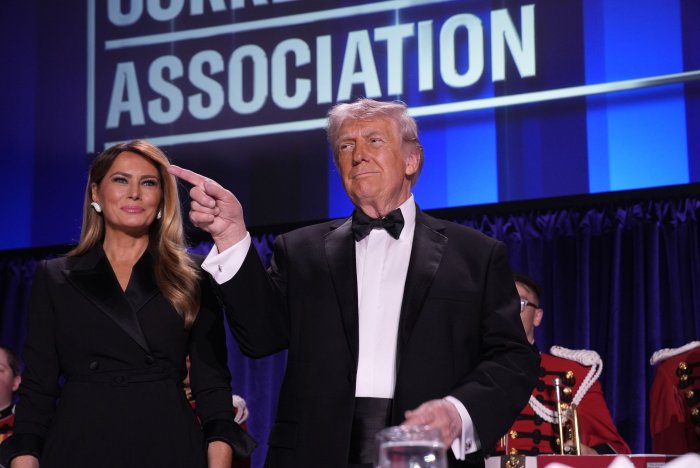
President Donald Trump and first lady Melania Trump participate in the 2026 White House Correspondents’ Association Dinner in Washington on April 25, 2026. Photo by Yuri Gripas/UPI | License Photo


Source link

D.C. gala gunman wrote ‘manifesto,’ traveled from California before attack, officials say

Cole Tomas Allen, the suspected gunman who rattled the nation’s top leaders by exchanging gunfire with federal authorities after racing through the secure perimeter of a press gala in Washington late Saturday, had made a long journey from Southern California and written a “manifesto” threatening Trump administration officials before the short-lived attack, officials said.

Allen, a 31-year-old Caltech graduate and high school tutor from Torrance, is believed to have taken a train first to Chicago and then on to D.C. before checking into the Washington Hilton with two guns he had previously purchased, authorities said.

The attacker managed to bypass several layers of security at the White House Correspondents’ Assn. dinner before being taken down by armed agents outside the ballroom where President Trump and an array of other top federal officials were seated.

Allen could not be reached for comment, nor could an attorney for him be identified as of Sunday.

According to Trump, Allen had also authored a “manifesto” prior to the attack, which he had shared with family and which his brother had flagged to local law enforcement in Connecticut. The New York Post reported that Allen described himself in the document as the “Friendly Federal Assassin” and revealed he intended to kill Trump administration officials.

New London (Conn.) Police Deputy Chief John Perry said that around 10:30 p.m. a man came into the lobby of the agency’s headquarters to report that he’d received a troubling email from Allen. The relative initially thought it was spam, but then saw the news of what unfolded in D.C. and felt he needed to report it.

Perry would not say what was in the email, and did not know exactly what time it was sent. But the relative said he only saw and opened it around 10 p.m. “I think he was watching what was going on and kind of put two and two together and said I need to go to my local PD,” Perry said.

Police officials provided the email to the Secret Service and FBI, he said. Trump said the document would be released, but it had not been as of Sunday. Officials said criminal charges against the suspect were pending, with an initial court appearance likely Monday.

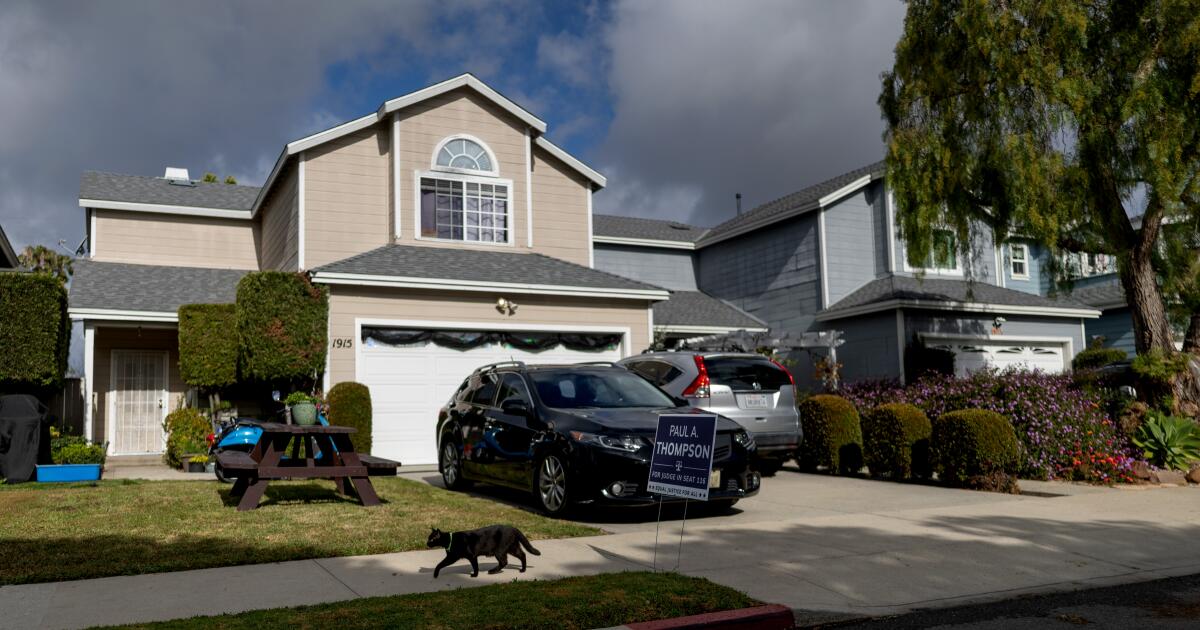
Late Saturday, both local and federal law enforcement, including from the FBI, swarmed the Torrance neighborhood where Allen is believed to have lived in a home with his family, with Torrance police clearing the road and putting up police tape along part of the street. A man who responded to a knock on the front door said, “Not right now,” and declined to comment further.

The thwarted attack marked the latest in a string of incidents in which gunmen have gotten dangerously close to Trump, renewing questions about the safety and security of the nation’s commander in chief at a time of intense political division at home and roiling conflicts abroad.

Trump was grazed on the ear by a bullet at one of his presidential campaign events in Butler, Pa., in 2024 — the first of two attempts on his life during that campaign cycle. The other involved a gunman targeting the president as he golfed in Florida, before federal agents intervened. Earlier this year, a gunman was killed at the president’s Mar-a-Lago club, after breaching a security perimeter.

On Sunday, questions swirled as to how such a security lapse could have happened again — and whether large, high-profile events are safe for top officials in a nation where firearms are easy to obtain and ubiquitous.

Acting Atty. Gen. Todd Blanche, in an interview on “Meet the Press” Sunday morning, said federal authorities believe the suspect had set out alone “to target folks that work in the administration, likely including the president,” but that a motive was still being determined and evidence still being gathered — including from devices taken from Allen and in interviews with people who know him.

“As of now, we don’t have any connection to any particular policy directive of President Trump or Iran or anything else that we’re doing in this country, but we are looking into it,” he said.

Blanche also downplayed the threat posed to Trump, other officials in the room such as Vice President JD Vance and First Lady Melania Trump, and the hundreds of other attendees to the annual event — suggesting Allen had essentially been stopped in his tracks shortly after making his break through a checkpoint of metal detectors and federal agents, dramatic video of which Trump posted online.

“Let’s not forget that the suspect didn’t get very far. He barely broke the perimeter,” Blanche said. “And so while this was extraordinarily dangerous and put a lot of lives at risk and there’s no doubt that that’s something that we’re going to have to learn from over the next couple weeks, the system worked. We were safe, President Trump was safe. His Secret Service agents kept him safe. All of us were safe.”

Blanche’s assessment of the attacker’s breach past security — which he said was only “by a few feet” — was disputed by some.

According to other attendees, including Times journalists, event staff were checking tickets, though not very thoroughly, at multiple points prior to escalators that descended to the metal detectors where Allen allegedly dashed past armed security.

The detectors were right outside the event hall and where the bathrooms for the event were located, and the assailant was taken to the ground about 10 to 15 feet beyond them, attendees said. The shots — including two from the gunman, according to Blanche — were heard in the ballroom.

Allen, who graduated from Caltech in 2017 with a degree in mechanical engineering and is registered to vote with no party preference, made a $25 political contribution earmarked for then-Vice President Kamala Harris’ campaign challenging Trump for the presidency in 2024.

While at Caltech, he was a teaching assistant and a member of the school’s Christian fellowship and the Nerf club, according to his LinkedIn profile. He later studied computer science as a post-graduate student at CSU-Dominguez Hills.

Allen was named teacher of the month in December 2024 at C2 Education, which specializes in college test preparation, tutoring and academic advising. A representative for C2 Education was not immediately available for comment.

According to the New York Post, Allen himself had derided the event security in his writings beforehand, describing finding far less security at the hotel than he had expected when he arrived, armed, to check in.

“I expected security cameras at every bend, bugged hotel rooms, armed agents every 10 feet, metal detectors out the wazoo. What I got (who knows, maybe they’re pranking me!) is nothing. No damn security. Not in transport. Not in the hotel. Not in the event,” he wrote, according to the Post. “I walk in with multiple weapons and not a single person there considers the possibility that I could be a threat.”

Authorities did not detail Allen’s alleged travel route to D.C., other than to say it was by train. In response to questions about whether Allen had taken Amtrak to get to Washington and whether his luggage would have undergone any security screening, Amtrak said only that it is cooperating with federal authorities.

Trump also zeroed in on security at the hotel being inadequate, in addition to posting the video of the suspect rushing past security and multiple pictures of him detained on the floor of the hotel.

While praising the federal agents who took the attacker down, Trump suggested that events with top U.S. officials should be held in more secure facilities — such as the giant ballroom he is trying to build on the White House grounds after demolishing the former East Wing.

“What happened last night is exactly the reason that our great Military, Secret Service, Law Enforcement and, for different reasons, every President for the last 150 years, have been DEMANDING that a large, safe, and secure Ballroom be built ON THE GROUNDS OF THE WHITE HOUSE,” Trump wrote on social media Sunday. “This event would never have happened with the Militarily Top Secret Ballroom currently under construction at the White House. It cannot be built fast enough!”

Weijia Jiang, president of the correspondents’ association, said in a statement Sunday that the group’s board “will be meeting to assess what happened and determine how to proceed.” She also thanked the U.S. Secret Service and other law enforcement for keeping people safe, and praised journalists in the room for leaping to work to inform the public of what had occurred.

Times staff writers Richard Winton, Ben Wieder and Justine McDaniel contributed to this report.

Source link

Technofacism? Why Palantir’s pro-West ‘manifesto’ has critics alarmed | Technology News

The US tech giant Palantir Technologies has posted what it terms a summary of Palantir CEO Alex Karp and head of corporate affairs Nicholas Zamiska’s book, The Technological Republic, on social media.

Many of the positions articulated in the book go far beyond what would normally be expected of a tech company: calling for the introduction of national service, the “moral” duty of technology companies to participate in defence, the necessity for hard power if what it calls free and democratic powers are to prevail, and an embrace of religion in public life.

Recommended Stories

list of 4 itemsend of list

The publication of what appears to be a 22-point manifesto comes at a critical time for Palantir, which faces global criticism for its support of US President Donald Trump’s controversial immigration crackdown and its backing of the Israeli military’s actions in Gaza and the occupied West Bank.

Many have expressed alarm at the book’s emphasis on cultural hierarchies and what it calls “regressive” cultures.

Eliot Higgins, the founder of the online investigations platform Bellingcat, sarcastically pointed out how “completely normal” it was for a tech company to post what he said was a manifesto attacking democratic norms. “It’s also worth being clear about who’s doing the arguing,” Higgins added. “Palantir sells operational software to defence, intelligence, immigration & police agencies. These 22 points aren’t philosophy floating in space, they’re the public ideology of a company whose revenue depends on the politics it’s advocating.”

So, what is Palantir, why is it so controversial, and why has it posted the “manifesto” now?

What does the book say?

As well as referring to the hard power needed to replace the “soaring rhetoric” previously used to defend “free and democratic societies”, the book rails against what it calls the “psychologization of modern politics”, which appears to criticise anyone the authors feel has become too emotionally invested in their political representatives and identity.

The call for people to care less about politics appears to critics as a way of deflecting from Palantir’s own controversial political positions and its openness to working with government policies that clamp down on liberty. Worryingly for some is also the book’s emphasis on what it calls the technology sector’s “obligation to participate in the defence of the nation”, and on the supposed inevitability of developing AI weapons.

Among other points, the writers appear to defend billionaires, such as Elon Musk, whose achievements, they say, are not met with “curiosity or genuine interest” but are instead dismissed by those who “snicker” at the South African-born businessman. Musk was heavily criticised for his role as the head of DOGE, or the US Department for Government Efficiency, which scrapped several government agencies without much regard for the roles those agencies played, or the legal and political process necessary to shut such agencies down.

Palantir’s post concludes by criticising “the shallow temptation of a vacant and hollow pluralism”. It argues that an unthinking commitment to inclusivity and pluralism “glosses over the fact that certain cultures and indeed subcultures… have produced wonders. Others have proven middling, and worse, regressive and harmful”.

How have people reacted?

Not well.

Mark Coeckelbergh, a Belgian philosopher of technology who teaches at the University of Vienna, described Palantir’s messaging as an “example of technofascism”, while Greek economist and former Finance Minister Yanis Varoufakis said Palantir had effectively signalled a willingness “to add to nuclear Armageddon the AI-driven threat to humanity’s existence”.

Posting on social media, Arnaud Bertrand, the entrepreneur and geopolitical commentator, claimed that Palantir had revealed a dangerous “ideological agenda”.

“They’re effectively saying ‘our tools aren’t meant to serve your foreign policy. They’re meant to enforce ours’,” he wrote.

What is Palantir?

Palantir Technologies is widely regarded as one of the world’s most influential data analytics firms, securing major contracts with governments, militaries and global corporations.

Founded in 2003 by Alex Karp and Peter Thiel, with support from In-Q-Tel, the CIA’s venture capital arm, it built its early business on post-9/11 intelligence work and has since expanded internationally, with contracts across Europe, the Middle East, and beyond.

While retaining his shares in Palantir, Thiel is understood to no longer play an active role in its day-to-day operations. Karp has positioned himself as the public face of the company.

Under Karp’s leadership, Palantir has drawn heavily on the expertise of former members of Israel’s cyber-intelligence unit, 8200. After the company announced a “strategic partnership” with Israel in January 2024, its involvement in Gaza and the occupied West Bank expanded considerably. Using a mix of intercepted communications, satellite material and other digital data sources, Palantir began integrating these inputs to help produce targeting databases – effectively, “kill lists” – for the Israeli military.

It has also cultivated close ties with US security agencies, particularly during the Trump administration, of which Thiel has been an enthusiastic backer, and has also worked with Israel in its occupation of the West Bank and genocide in Gaza.

According to its critics, including the rights group Amnesty International, “Palantir has a track record of flagrantly disregarding international law and standards, both in the violations of the human rights of migrants in the United States, to which it risks contributing to, and its ongoing supply of artificial intelligence (AI) products and services to the Israeli military and intelligence services that are linked to Israel’s ongoing genocide in Gaza.”

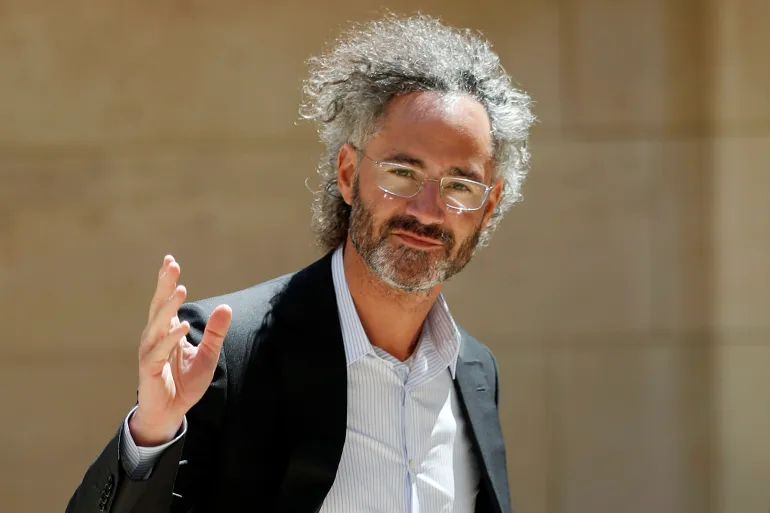
FILE - In this Wednesday, May 15, 2019, file photo, Palantir CEO Alex Karp arrives for the Tech for Good summit in Paris. Seventeen years after it was born with the help of CIA seed money, Palantir Technologies is finally going public. (AP Photo/Thibault Camus, File)
CEO Alex Karp founded Palantir with Peter Thiel, with investment from the CIA, in 2003 [File: Thibault Camus/AP Photo]

What exactly has Palantir been accused of in Israel and the US?

Palantir Technologies has faced criticism across the world for its enabling of government surveillance and military systems in the US and Israel.

In the US, it has been accused of supporting immigration enforcement and policing tools that aggregate vast personal datasets, including medical information, enabling profiling and raising due process and privacy concerns. In Israel, critics allege that its AI and data platforms have been used in military operations in Gaza, potentially contributing to the targeting decisions that have underpinned Israel’s genocide there.

Responding to questions from Al Jazeera earlier this year, a spokesperson for Palantir said, “As a company, Palantir does support Israel. We’ve chosen to support them because of the appalling events of October 7th. And more broadly, we’ve chosen to support them because we believe in supporting the West and its allies – and Israel is an important ally of the West.” The spokesman was referring to the Hamas-led October 7, 2023, attack on Israel, after which Israel launched its genocidal war on Gaza.

Why post the ‘manifesto’ now?

Palantir’s politics and alarm over its influence are growing and gaining traction across much of the West.

As well as concern among US Democrats, politicians in Germany, Ireland, and in the European Parliament have criticised the tech giant, whose products, according to one German lawmaker and cyber security expert, have fallen short of security standards across the bloc.

In the UK, the row over the National Health Service’s adoption of Palantir technology has led to some of the fiercest criticism yet. MPs calling for the UK to take advantage of an early break in the tech giant’s 330 million-pound ($446.4m) contract with the health service labelled Palantir “dreadful” and “shameful” in a debate last week, after which even the government conceded that it was “no fan” of the US company’s politics.

Louis Mosley, the head of Palantir Technologies UK, defended the company by arguing that it had no interest in patient data and existed only as a tool to better manage health service resources.

Source link