How Repeated Flooding Is Worsening Child Malnutrition in Adamawa
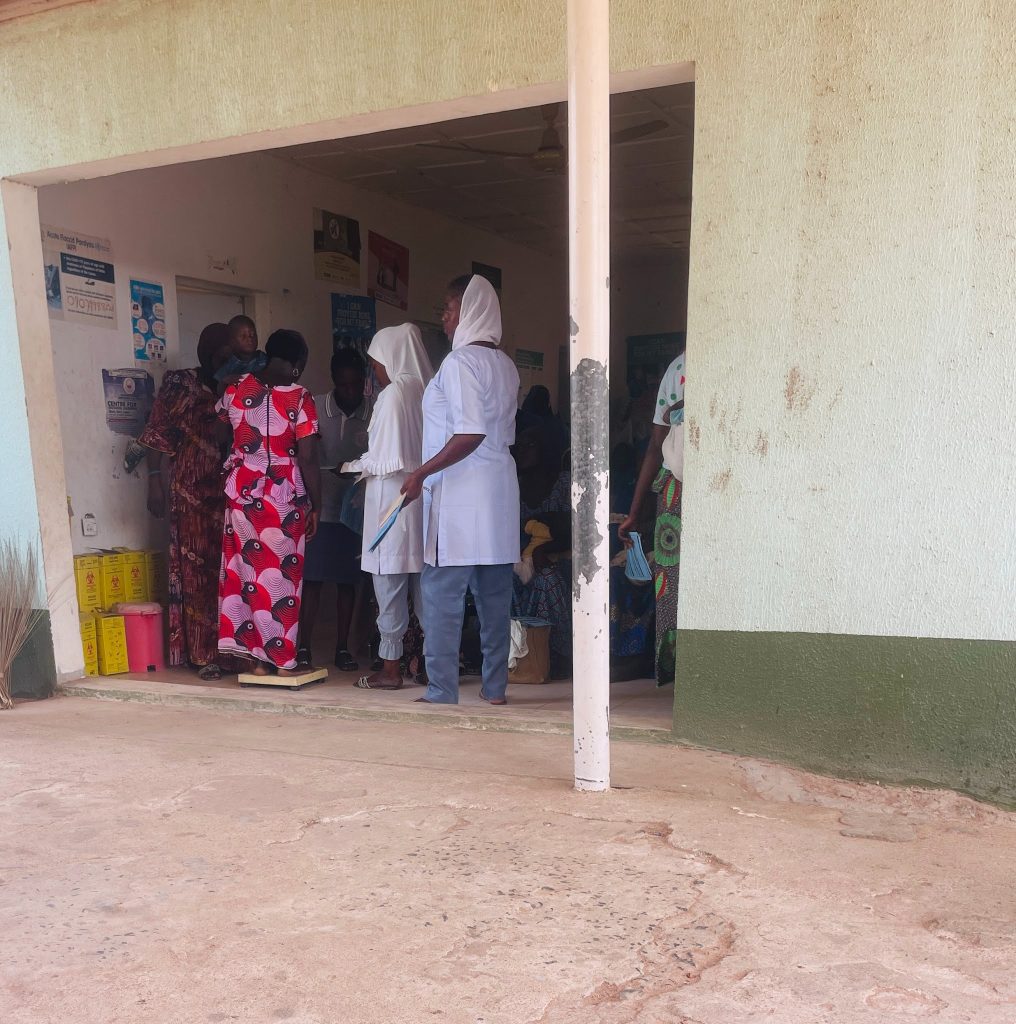
Every Thursday, 35-year-old Fatima Sani joins hundreds of other women from neighbouring communities across Demsa, a local government area in Adamawa State, northeastern Nigeria, to obtain Ready-to-Use Therapeutic Food (RUTF) for her one-year-old malnourished daughter at the Demsa Primary Healthcare Centre. The mother of nine has made several trips to the centre to ensure her daughter recovers from malnutrition. Her treatment includes RUTF, a paste made from powdered milk, peanuts, butter, vegetable oil, sugar, and a mix of vitamins and minerals. A sachet contains 500 calories and essential micronutrients.
“My youngest children are twins, and both of them were diagnosed with malnutrition,” Fatima told HumAngle. “One of them has been declared healthy and discharged by the centre, so I no longer bring him here, but I come to obtain RUTF for his twin, and hopefully, she recovers and gets discharged too.”
She noted that the twins were the only children in her household ever to be diagnosed with malnutrition in her household. When asked what the cause might be, Fatima replied: “Hunger.”
She sells fresh vegetables at the local market in Demsa, and her husband, whom she referred to as Sani, is a rice farmer. She explained that most of his harvest is kept for household consumption, while the rest is sold to meet other needs. Then, a disaster repeatedly washed away his produce.
“For three years in a row now, floods have been destroying my husband’s farm,” she said, adding that the destruction in 2025 left him devastated. “The rice had reached maturity, but on the expected day of harvest, the flood came and washed everything away.”
‘Food is scarce’
UNICEF, in its 2025 report, highlighted that flooding is worsening the nutrition crisis in Adamawa, as the destruction of farmlands, disruption of livelihoods, displacement of households, and damage to health and nutrition facilities have all contributed to reduced access to food and essential nutrition services in the state. This has led to a surge in malnutrition levels, doubling the previous year’s estimates and placing children, pregnant women, and lactating women at increased risk.
After the flood ravaged her husband’s farm, Fatima said, feeding her family became extremely difficult. “We now eat once or twice a day. Some days, there is nothing at all,” she said. She added that her husband, Sani, left Demsa about two months ago in search of greener pastures due to feeding difficulties in their household.
Helen Daniel, another woman who collects RUTF for her malnourished granddaughter at the healthcare centre in Demsa, told HumAngle that the 20-month-old child was almost dying when she first saw her. “I had gone to the village to check on my daughter when I noticed that my granddaughter’s ribs were visible. At close to two years, she could barely stand, and she was struggling to keep her head firm,” Helen said.
Her daughter and son-in-law are full-time farmers in Wuro-Laka, a nearby village in Demsa, so when floods ravaged rural communities around their area, including their farmland, they lost their only means of livelihood.
“Food is scarce, and they only eat what they can get,” Helen said.
Since she had seen women trooping into the Demsa Primary Healthcare Centre with their children who exhibited the same symptoms as her granddaughter, Helen returned to Demsa town with the child after her visit and headed there too. There, the child was diagnosed with malnutrition in March.
“This is my sixth trip to the centre, and I can boldly say there has been a significant improvement in my granddaughter’s health since I started feeding her the RUTF. She has gained weight, and I can’t wait for her to start walking,” Helen said.
Dr Innocent Agaba, Senior Registrar at the Department of Paediatrics, Modibbo Adama University Teaching Hospital, Yola, explained that malnourished children who are left untreated do not attain their full intellectual potential and may eventually die. “They will be duller than their peers, and they are literally going to be shorter and smaller than their peers,” he said.
His observation is consistent with global research. Studies by the World Food Programme, World Health Organisation, and UNICEF have found that childhood malnutrition and stunting are linked to poorer cognitive development, reduced educational outcomes and delayed physical growth, with long-term consequences that can persist into adulthood.
The paediatrician also noted that malnourished children are prone to health complications and organ failures.

Across flood-prone areas
According to the Integrated Food Security Phase Classification, armed conflict, inflation, and extreme weather are the main drivers of acute malnutrition in Northern Nigeria, which is affecting about 6.4 million children aged 0 to 59 months, as well as 786,000 pregnant and breastfeeding women.
The 2025 analysis shows that, of the 21 local governments analysed in Adamawa State, the malnutrition rate was reported to be in the Alert Phase (Phase 2), indicating a deteriorating nutrition situation requiring close monitoring and targeted interventions. Meanwhile, some LGAs in Borno were in the Critical Phase (Phase 4), meaning malnutrition levels had reached an emergency threshold, with a high risk of illness and death among affected children and urgent action was needed to prevent further deterioration.

The effects of repeated flooding on child nutrition are not limited to Demsa. Across Adamawa State, other flood-prone communities are facing similar challenges. In Imburu, a community in Numan Local Government Area of Adamawa State, families are also grappling with rising cases of malnutrition linked to the loss of farmland and livelihoods.
Twenty-one-year-old Shaawalatu Yakubu is one of the RUTF recipients at the primary healthcare facility in Imburu. She told HumAngle that her family is yet to recover from the devastating impact of last year’s flooding. The family relied on produce from their maize farm. Before the damage, she explained, her family’s needs were fully met, and her daughter was on a different meal plan that included soya beans and custard pap with milk, but now, the child is fed whatever is available.
“The flood washed away our maize farmland that reached maturity, including other farmlands and households in the area,” she said.
Shaawalatu, who resides in Ngbalang, a neighbouring community around Imburu, receives RUTF for her malnourished daughter every Wednesday. “The RUTF is free, and I have seen changes in my daughter since I started feeding her with the supplement,” she said.
Aisha Musa, whose son is being treated at Imburu Primary Healthcare Centre, said that the prices of foodstuffs in the area had gone up because most farmers are trying to make up for losses incurred in the previous flood. “One mudu of maize was ₦550 Naira, but now, it’s ₦750,” she said. To help her son tackle the crisis, she feeds him soya beans and guinea corn pap alongside the RUTF supplement.
An assessment conducted by the National Emergency Management Agency (NEMA) and the Adamawa State Emergency Management Agency (ADSEMA) in June 2025 found that over 9,000 hectares of farmland were destroyed by floods across Adamawa State, while over 23,000 people were displaced. Communities in Numan, including Imburu, Ngbalang, Lure, and Zangun, were severely flooded. Farmlands were submerged, and residents were forced to seek shelter in makeshift homes.

Still, there’s a challenge
Every registered woman receives 14 packs of RUTF per child each week across the state’s nutrition centres. Two sachets are to be administered daily. However, there are times when supply is inconsistent, and the children don’t meet the feeding standard.
Norah Noel, a healthcare provider at a nutrition centre in Fufore, another flood-prone local government area in Adamawa, said that RUTF shortages affect recovery rates among malnourished children in the region and that, despite assistance from the Adamawa State government and humanitarian agencies, these shortages persist.
“Since last October, we haven’t had RUTF on the ground. The rate of malnutrition is increasing because we have plenty of cases that are coming,” she told HumAngle.
Norah stressed that children aged six to 10 months are among the most affected in the region, adding that more cases are recorded during the rainy season because repeated flooding in the area causes food scarcity.
The healthcare provider also explained that the Fufore facility, located in the town centre, is always overwhelmed with cases from neighbouring villages. Since there is a shortage of RUTF, Norah stated that the centre is seeking alternative measures to provide care for those affected, while critical cases are referred to larger healthcare facilities.
She explained that some people spend an average of ₦6,000 to ₦10,000 on transport to reach the centre, only to be disappointed by RUTF shortages.
“What we do is show them how to make Tom Brown,” Norah said. Tom Brown is a locally produced flour mixed with grains to prevent relapse in malnourished children.
While the healthcare centre carries out outreach in some of the rural communities in order to reach the malnourished children, Norah believes some children might never make it to the facility, especially those in inaccessible areas.
In June 2025, UNICEF revealed that over 400,000 children in Nigeria’s northeastern and northwestern regions would be at risk of imminent nutrition stockouts. This means a shortage of RUTF and Supplementary Food, with data indicating a reduction in overall partner and financial volume.
According to the paediatrician, it is important for malnourished children to complete their full course of RUTF, which can last several weeks or even months. Recovery is considered complete only when a child reaches the recommended weight-for-height Z-score or when their Mid-Upper Arm Circumference (MUAC) returns to a normal range.
Stopping treatment too early can undo any progress that has been made. “If a person begins to enjoy some benefits from some recovery and then stops, he just reverses back to his initial stage and returns to a pre-morbid state,” he said.
Yet for many families in rural Adamawa, completing treatment is often easier said than done. During the rainy season, flooding frequently cuts off access to healthcare facilities, making it difficult for caregivers to obtain RUTF or attend follow-up appointments.
Smith Jocthan, the Facility Manager at Demsa Primary Healthcare Centre, told HumAngle that residents from communities like Kodomun, who rely on the facility for RUTF, do not usually show up during the rainy season. Other residents in Fufore raised a similar concern.
“Their culverts have a problem. When it is flooding season, it’s not easy for them to come to the facility,” he said.
For health workers on the frontlines, these access challenges underscore a broader problem. Both Jocthan and Norah identified flooding as a major driver of the malnutrition crisis in Adamawa. In Demsa, Jocthan said, repeated flooding is affecting children’s well-being.

Beyond the physical barriers created by flooding, health workers say social and cultural factors also hinder efforts to tackle malnutrition. Jocthan noted that certain misconceptions also contribute to the slow recovery rate in the region, which leads to low rates of discharge among the malnourished children in Demsa. “One such tradition among some people is that a child under five years should not eat eggs. Because if they do, they will become thieves. We know eggs are a source of protein, but most children are denied the opportunity of getting that protein,” he said.
Despite the setbacks, he said the facility is making progress. “This is because many are educated on how to prepare local foods. Before, there was no knowledge of that,” Jocthan said.
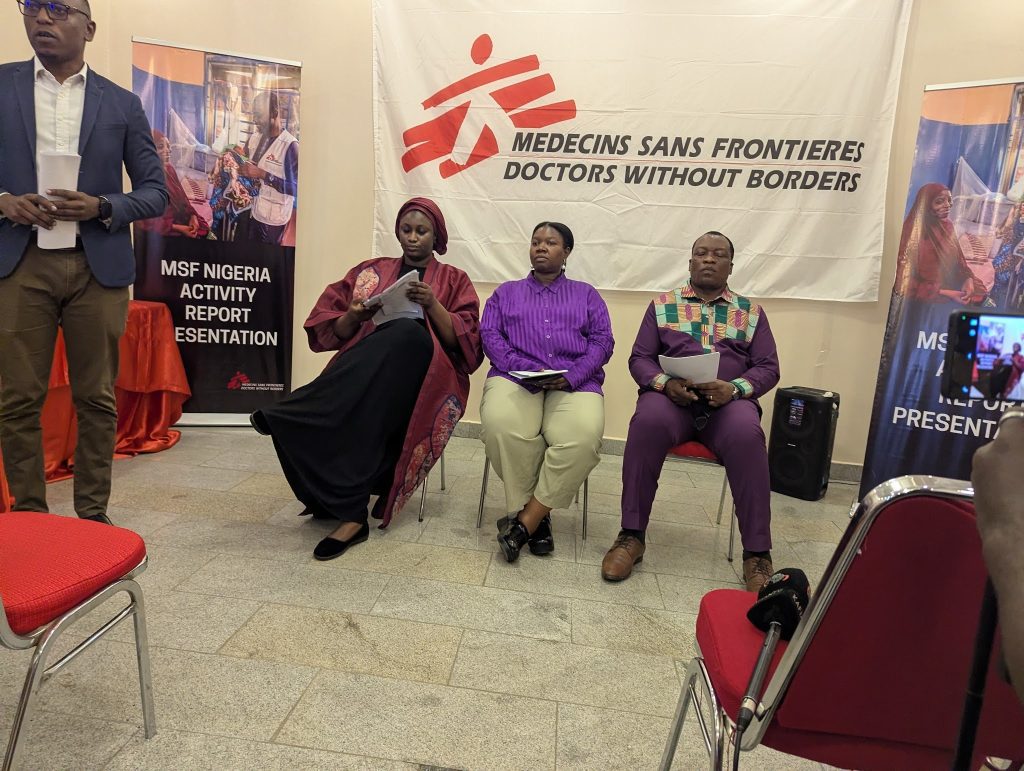
In May, Médecins Sans Frontières (MSF), an international humanitarian organisation, warned that malnutrition is no longer a seasonal emergency but a permanent feature of Nigeria’s humanitarian landscape, especially in the northern region, where cases are extremely critical.
Dr Agaba stated that RUTF supplementation alone is far from enough. “One of the biggest challenges to dealing with malnourished children, especially in impoverished settings, is that people assume RUTF is enough,” he said. The paediatrician stressed the importance of other aspects, such as a healthy, well-fed mother, understanding of a balanced diet, and exclusive breastfeeding.
What to do with the floods?
A study on the causes and effects of floods in Adamawa State has identified the opening of dams, excessive rainfall, rising water levels, and poor drainage as major factors.
When floods pushed families out of their homes in the Benue River Valley in 2025, Agoso Bamaiyi, an environmental scientist, noted that the overflowing of the Benue River through its tributary, the Gongola, is the main driver of flooding in the region. Even though the expert acknowledged climate change and global warming as contributing factors to the rising frequency and intensity of floods, he argues that the Benue’s overflooding remains the central cause in Adamawa. He says dredging the Benue River and constructing a reservoir dam will address the flooding situation.
In May, the National Emergency Management Agency (NEMA) met with the Adamawa State Governor, Ahmadu Fintiri, as part of its response to rising climate-related threats. Zubaida Umar, NEMA’s Director-General, disclosed that no fewer than 33 states are at risk of flooding this year, with Adamawa listed among the most vulnerable according to projections.
Governor Fintiri has said that his administration is preparing ahead of the disaster. While measures such as monthly sanitation and drainage clearing are already in place, he emphasised the need for continuous sensitisation of residents in high-risk areas and revealed the government’s plan to establish temporary shelters to accommodate displaced persons in the event of flooding.
Fintiri also advocated for stronger federal support so as to ease the impact of the flood on affected communities.
HumAngle reached out to the National Emergency Management Agency (NEMA) and the Adamawa State Management Agency (ADSEMA) for comments on their efforts to address the root causes of the flooding, but has not yet received a response.
With little clarity on what is being done to prevent future flooding, families continue to grapple with its consequences on their own. Helen is determined to nurse her granddaughter to full health. “I will make sure she eats well and is taken care of, and once she recovers, I won’t send her back to the village but will live with her instead. I’m not sure she can survive another cycle of hunger,” she said. Fatima shares a similar hope for her child. She wants her daughter to fully recover and eventually get cleared of malnutrition, just like her twin brother.