major studio

Traditional Hollywood is investing big in internet stories. Here’s why

Last month, veteran Hollywood producer Roy Lee got three calls in a single day from executives at three different studios. Each believed they had found the next internet-native short poised to become a Hollywood blockbuster — an online monster named Siren Head — and each was ready to make an offer and wanted Lee’s help to develop a movie.

The frenzy traces back to the enduring global box-office runs of two low-budget horror films, Curry Barker’s “Obsession” and Kane Parsons’ “Backrooms,” which have earned $403 million and $349 million, respectively. Studios have become fixated on hunting down every short film, internet meme and indie video game with the potential to “put something new and fresh on the screen,” Lee said.

“In the past, whenever we were putting together movies with the studios, they would resort to going back to safer bets with filmmakers who’ve made movies before,” Lee said, whose L.A.-based horror production company, Spooky Pictures, secured three Barker films before “Obsession” hit theaters. “But because of the [ongoing] success, bosses are going to their lower-level executives saying, ‘You better find the next person and bring them to us.’”

The race for Hollywood to capture new-age internet intellectual property, or IP, is well underway. And, in some cases, it’s happening on terms decided by the online creators themselves, according to interviews with agents and producers.

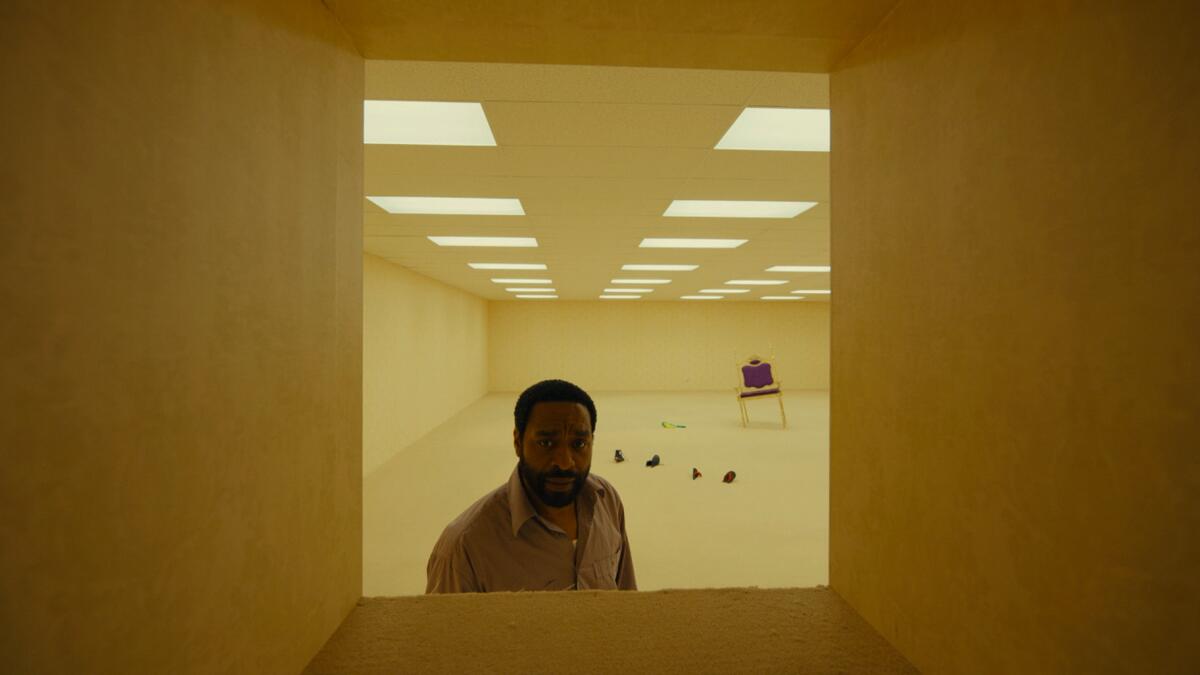
A still of leading actor Chiwetel Ejiofor in 'Backrooms'

A still of leading actor Chiwetel Ejiofor in “Backrooms.”

(A24)

A new kind of scouting

Mining the internet for the next big thing isn’t a new idea. What’s changed is how major studios approach the creators behind it. In the past, studios have plucked influencers from their online niche and slotted them into whatever mainstream production needed a face. Under the precedent set by Barker and Parsons, studios are now looking to acquire a fully developed idea from creators who already have a built-in audience, agents say.

The industry has long been criticized for leaning too hard on sequels, franchises and remakes led by well-seasoned directors. But after “Obsession” and “Backrooms” were released, it became clear what kind of story could still pull audiences into a theater. Both films came from digital-native storytellers in their 20s who arrived with sizable online followings already attached. In the wake of their success, Parsons is reportedly working on a “Backrooms” sequel for A24, and Barker has another horror movie in the works for Universal Film Group.

“Hollywood is realizing that they have to take more chances,” said Jordan Lonner, Barker’s agent at United Talent Agency. “You have to take those leaps to attract a younger audience. They can feel when something is authentic and that they’re being served something by filmmakers that actually understand them, versus when they’re being served by a big corporate giant.”

Creators are calling the shots

As Hollywood looks to the internet for answers, agents and executives say creators may soon have more leverage than ever at the negotiating table. For example, creators probably will retain ownership and control of their IP, said Ty Flynn, a partner and agent at UTA’s Creators division.

“[Creators] can really have the final say in the creative oversight of their project,” Flynn said. “It’s definitely something that is unique to the space, because they’re obviously the masters of their audience. They know better than anyone else how their audience responds. It’s in the best interest of any partner to [have it] play out, versus trying to control it from the start.”

Two people awake in a bed together

“Obsession” stars Inde Navarrette and Michael Johnston.

(Focus Features)

While creators break into the mainstream, their representatives say traditional companies are growing more comfortable betting on digital stars. UTA‘s roster includes Alix Earle, Jake Shane and Markiplier — the last of whom recently landed his own box-office breakthrough with “Iron Lung.” The YouTuber, whose real name is Mark Fischbach, self-financed the horror film for $3 million, distributed it on his own and earned roughly $50 million in 4,000 theaters worldwide.

Creative Artists Agency is also teaming up with private equity firm TPG to buy creator-led companies.

Kori Adelson, president of North Road Films — one of the financiers behind “Backrooms” — predicts this shift also will change how studios weigh “price point to risk.” If major companies are willing to diversify their budgets, she said, it could open the door for small-, mid- and big-budget projects to reach a wider range of viewers.

“There’s a direct relationship between budget and authenticity,” Adelson said. “The bigger the budget, the more protections that are in place to ensure that it makes money, because the investment is so big, so you are by definition not able to take risks. And the lower the price point is, the more freedom you have to be bold and to take big swings and to be original.”

Even before the release of “Obsession” and “Backrooms,” multiple studios competed for the theatrical rights to the popular online video game “99 Nights in the Forest,” hosted on Roblox. Disney’s 20th Century ultimately won, with the game’s developers signing on as executive producers.

“Studio people were bending over backwards to make all these promises that would never happen in the past,” Lee said.

There are limits to this model, however

Replicating this success at scale won’t be easy, said Paul Dergarabedian, head of marketplace trends for Rentrak. Because major studios operate with far bigger budgets, he said, the low-budget, indie playbook doesn’t simply transfer over.

Buzz Lightyear and Woody in Disney and Pixar's "Toy Story 5."

Buzz Lightyear and Woody in Disney and Pixar’s “Toy Story 5.”

(Disney / Pixar)

“The whole point is that [‘Obsession’ and ‘Backrooms’] were made by independent filmmakers with very modest budgets,” Dergarabedian said. “It makes sense that everyone’s looking for what’s next, but it’s not an easy task. Both of those films came about very organically and authentically.”

Many studios will remain “inherently risk-averse,” said Darrell Miller, an L.A.-based entertainment lawyer — largely because of how much cash flow they need just to operate. He said, “Obsession’s” $403-million worldwide gross is a “big win” for Focus Features, the indie distributor backed by Universal, but it doesn’t compare to what a major studio needs from a tentpole release.

“Major studios have to generate over a billion to pay for the overhead, the operation and the size of their business model,” Miller said. “Blockbusters average between $200 [million] and $400 million [to make] and they’re spending another one to two times for marketing. The major studio game is much bigger.”

Every film, regardless of budget, carries a degree of unpredictability. Plenty of indie productions flop at the box office or never land distribution at all — just as plenty of big-budget releases continue to resonate with mass audiences. “Toy Story 5,” for one, has taken the 31-year-old franchise to new heights. The animated film, made with a budget between $150 million and $200 million, has earned upward of $763 million globally less than a month after its release.

Some creators are saying no

Even as studios chase internet-native IP, some of the most sought-after creators are turning them down. For Luke Pounder and Tristan Tales of L.A.-based TalesVision, traditional Hollywood isn’t the goal. The duo, known for fictional young adult content on YouTube, plans to keep leveling up their material while keeping it native to the internet.

“We never wait on a green light from anyone to tell the stories that we want to tell, and social media has already given us that opportunity,” Tales said.

The pair had been in talks with traditional studios about a few of their ideas, but timeline constraints and the potential loss of creative control steered them away. Even as creators become bigger stakeholders in these deals, for Pounder and Tales, that still isn’t enough.

Later this year, they‘ll launch their first premium series, “Lostlings,” with Lion Forge Entertainment. The eight-episode, half-hour series will premiere on their own YouTube channel.

“YouTube isn’t just like this discovery platform where you pluck the talent or the IP and then throw it into the traditional system. YouTube can be that next phase as well, where you take the talent or the IP and distribute it on there,” Pounder said. “YouTube has to catch up to its creators and their ambitions.”

Meanwhile, the competitive bidding war for the internet urban legend Siren Head closed last week, with Warner Bros. winning the theatrical rights for an undisclosed amount. The film will be directed by Brian Duffield (“No One Will Save You”) and co-written by Zach Cregger (“Weapons”). Trevor Henderson, the artist who created the monster online, will serve as an executive producer.

Lee, who will serve as a producer on the “Siren Head” movie, sees this as just the beginning.

“We’re talking about making films the traditional way using the talent that learns their craft either by doing shorts on YouTube, or doing things in a non-traditional manner.”

Source link

DGA ratifies four-year contract with major studios

The Directors Guild of America on Thursday night said it approved a four-year contract with the major studios.

The new contract will boost studio contributions to DGA’s healthcare plan, increase minimum salaries and offer AI protections. The DGA declined to say how many voted in favor of the contract, but in a memo to members, union President Christopher Nolan and National Executive Director Russell Hollander said members “voted overwhelmingly” to ratify it.

“Throughout this process, our focus was clear: protect our members, strengthen the Guild, and address the challenges facing our industry during a period of profound change,” Nolan and Hollander wrote in a memo to members sent on Thursday. “… We have achieved critical wins that put the Guild in a position to further protect our members economic and creative rights now and into the future.”

The newly ratified contract provides some stability in Hollywood, about three years after a summer of strikes led by the Writers Guild of America and performers guild SAG-AFTRA. WGA approved a contract with major studios under the Alliance of Motion Picture and Television Producers in April and SAG-AFTRA members ratified their contract in June. All the contracts extend the terms to four years instead of three years, which studios had sought out.

The AMPTP in a statement thanked DGA, WGA and SAG-AFTRA “for their thoughtful and collaborative approach to negotiations.”

“Together, we reached agreements that deliver substantial gains for guild members while supporting greater stability across the entertainment business,” the AMPTP said. “We are encouraged by the trust built throughout this cycle and look forward to building on that momentum to advance opportunity and shared success across our industry.”

The new DGA contract starts on July 1 and runs through June 30, 2030. Key aspects of the agreement include requiring the studios to increase their contribution to DGA’s health plan by 24.4% over four years. In return, the DGA would support “modest” increases to the eligibility threshold and annual premiums.

The contract also increases minimum salaries on many jobs by 2.5% in the first year and up 3% for each of the following years in the agreement.

It also adds more rules around the use of AI technology, including requiring that directors oversee any footage created by artificial intelligence.

Source link

DGA’s board throws support behind tentative contract with major studios

The Directors Guild of America’s national board on Friday unanimously recommended its membership vote in favor of a four-year contract with the major studios that would increase wages, boost contributions to its health plan and establish guardrails surrounding AI technology.

“We entered this negotiation with three main priorities: secure our Health Plan, protect jobs, and ensure that our members remain secure as AI continues to impact our industry,” DGA President Christopher Nolan said in a statement. “We succeeded in these areas and gained in many others.”

Under the proposed contract, major studios would increase their contributions to the DGA’s health plan by 24.4% over four years, the largest since the plan was founded. In return, the DGA would recommend changes to its plan’s trustees including “modest” increases to the eligibility threshold and annual premiums, the DGA said on Friday.

The contract also increases minimum salaries for most jobs by 2.5% in the first year and up 3% for each of the following years in the agreement. Directors of network non-prime time strip dramatic programs will see their minimum salaries increase 2.5% for each year under the agreement.

The union, which represents more than 19,500 directors and members of directorial teams in areas such as film, commercials and news, said the agreement helps the union’s push for a federal production incentive. Hollywood creatives believe such a benefit could prevent U.S. entertainment jobs from moving overseas where production costs can be significantly lower. The proposed agreement secures a commitment that most senior management at the major studios represented by the Alliance of Motion Picture and Television Producers “would engage in meaningful advocacy for a federal production incentive above and beyond the ongoing lobbying efforts of the Motion Picture Association,” according to the DGA.

The contract also adds more guardrails to AI technology, including treating footage created by artificial intelligence as the same as footage shot by a camera, meaning it will still be under the director’s control, according to the DGA. Major studios will also be required to notify the DGA if an employer decides to license a director’s work to train a generative AI system to create new work, the union said. The agreement also establishes an employer-funded program to enhance directors’ AI skills.

“With these gains, a four-year Agreement was both appropriate and necessary to provide stability and potential for growth at a moment when the industry has been experiencing contraction,” Nolan said in a note to members on Friday.

DGA and AMPTP reached the tentative contract earlier this week. At that time, AMPTP said “we appreciate the hard work and commitment of our guild partners in achieving a fair deal that helps advance a stable and successful entertainment industry.”

DGA members will have until June 25 at 5 p.m. to vote on the plan. If approved, the contract would go into effect July 1 and run through June 30, 2030.

Source link

SAG-AFTRA members approve deal with major studios

SAG-AFTRA members overwhelmingly approved a four-year TV and film deal with major studios including Netflix, Disney and Warner Bros. Discovery on Thursday night, increasing minimum wages and addressing concerns about the use of AI performers.

The deal, which was expected to be approved, received the support of 91% of SAG-AFTRA members who voted on the agreement, which starts July 1 and ends June 30, 2030. The union represents 160,000 performers, including actors, stunt performers and influencers.

“This agreement builds on the foundation members fought to establish and carries that work into the next chapter of our industry,” said SAG-AFTRA President Sean Astin in a statement. “It delivers meaningful gains in compensation, strengthens protections around artificial intelligence and digital identity, reinforces the long-term security of members’ benefit plans and recognizes the realities of how performers work today.”

Under the new deal, the length of the agreement between SAG-AFTRA and major studios represented by the Alliance of Motion Picture and Television Producers expands from three years to four years.

It also boosts minimum wage by 3% annually, increases contributions to the health plan by 1% and expands the bonus to the union’s Success Bonus Distribution Fund based on residuals that performers get for popular streaming programs.

The contract also addresses concerns about the growing use of artificial intelligence in TV and film and its impact on actor jobs. Last year, many actors spoke out about Tilly Norwood, a computer-generated “actor” and whether synthetic characters like her could threaten their livelihoods. Some performers have also advocated for getting paid if their likenesses are used to create such characters made through AI systems.

Not all members were in favor of the contract, saying it did not go far enough in protecting performers against AI.

“It normalizes the use of AI replicas and synthetic performers rather than drawing a firm line protecting human performers and their jobs,” said Chuck Slavin, a background actor and performer.

Slavin, a former New England local board member, ran against Astin for SAG-AFTRA president last year.

Producers agreed to “a principle strongly favoring human performances” and that producers would only use a synthetic if it “brings significant additional value to the motion picture.” If a producer decided to use a synthetic in a role that could be done by a human, they would need to notify the union and bargain in good faith.

Additionally, the contract merges the pension plans of the Screen Actors Guild and the American Federation of Television and Radio Artists, which were previously separate but combined in 2012 to form SAG-AFTRA.

Their health plans were consolidated in 2017, but the pensions have remained separate . That was a major sticking point with members, some of whom couldn’t qualify for benefits as their contributions were split between two plans. Studios agreed to boost their overall contributions to the combined plan by 1%.

SAG-AFTRA’s deal comes after the Writers Guild of America members also approved an agreement with the AMPTP in April.

The groups were able to agree on contracts this year, without striking as they did in 2023.

“SAG-AFTRA’s leadership brought a genuine commitment to partnership, and together with the WGA agreement, these deals demonstrate what is possible when the industry works toward practical solutions that support its long-term stability,” AMPTP said in a statement.

The Directors Guild of America began negotiations with AMPTP last month, with its contract expiring on June 30.

Staff writer Cerys Davies contributed to this report.

Source link

SAG-AFTRA gets more AI protections in new tentative contract

Union leaders trumpeted gains in SAG-AFTRA’s tentative contract with the major studios, citing stronger AI protections and the consolidation of previously separate pension plans.

“The theme of this negotiation really has been about looking out for the future of performers, and I think that the contract delivers on that,” Duncan Crabtree-Ireland, SAG-AFTRA’s chief negotiator, said in an interview Tuesday.

After striking the deal a little over a week ago, SAG-AFTRA said its national board approved the proposed contract on Monday.

The union‘s membership, which includes more than 160,000 actors, broadcast journalists, dancers, DJs, stunt performers, voice-over artists and other entertainment professionals, will begin voting on the new contract later this week.

“The scope of the contract is something that I hope the members find meaningful,” SAG-AFTRA President Sean Astin said.

One of the chief gains, he said, was merging of the pension plans of the two previously separate unions — the Screen Actors Guild and the American Federation of Television and Radio Artists — fourteen years after they agreed to combine.

Their health plans were consolidated in 2017, but the pensions have remained separate until the current negotiation cycle. That was a major sticking point with members, some of whom couldn’t qualify for benefits as their contributions were split between two plans. Studios agreed to boost their overall contributions to the combined plan by 1%.

Union leaders also pointed to stronger protections against AI, including new guidelines that govern how studios should use generative AI and that strongly favor “human performances.”

The guardrails state that producers should not intend to use AI in a human role unless a synthetic actor brings “significant additional value” to the production. The contract draws a distinction between a digital replica that is created with a performer’s consent vesus a synthetic digital character that is not authorized.

“Digital replicas are derived from human beings who have compensation and other protections available to them,” Astin said. “If it can’t be done like that, then they’ve got to bargain with us for some very unique use of synthetics…That’s a pretty high bar.”

Under the new contract, minimum wage rates will increase by 3% annually. The agreement also boosts the so-called bonus for residuals that performers get on most-watch streaming shows. Members will increase their contribution to the health plan by 1%.

The actors’ union first began negotiations with the Alliance of Motion Picture and Television Producers in February and extended those talks in March. They were briefly paused to allow the studios to finish negotiations with the writers’ union.

SAG-AFTRA joins WGA as the latest Hollywood union to strike a four-year deal with the studios. The previous contract term was three years.

The Directors Guild of America is the last union that still needs to land its own agreement. Negotiation sessions with the studios started on Monday. The contract is set to expire on June 30.

Source link