maine

Contributor: In politics after Trump, nothing is disqualifying

After a decade of Trumpism, it should come as no surprise that President Trump’s ethos (presenting scandal as strength, outrage as authenticity and public disgrace as evidence you’re a “fighter”) has trickled down into congressional campaigns of both parties.

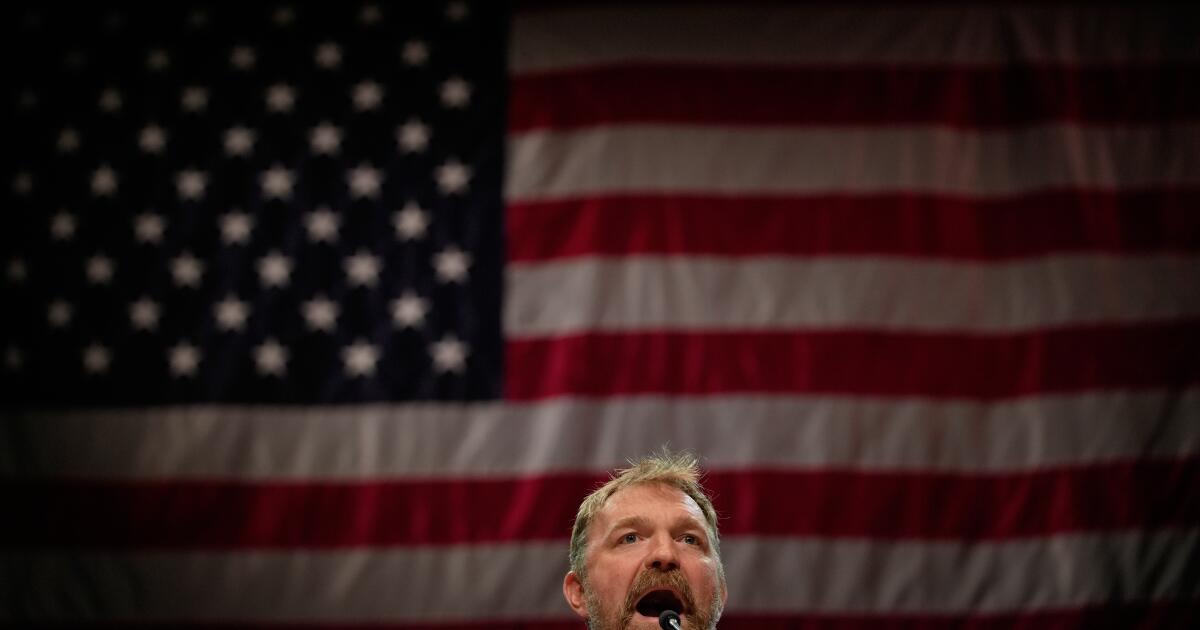
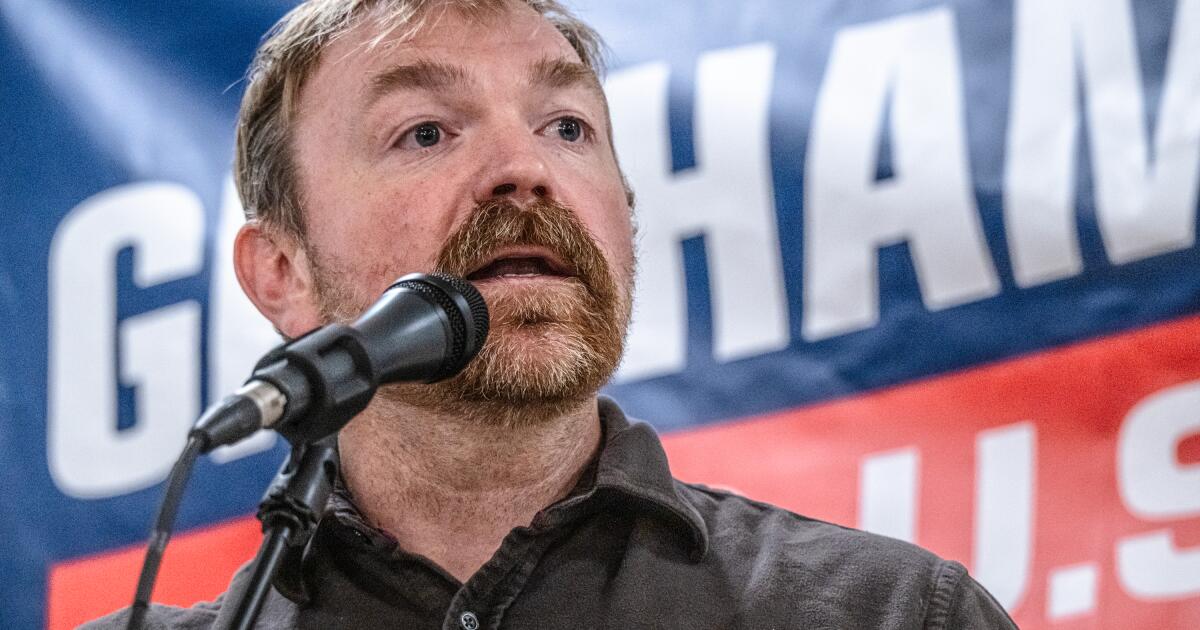
In Maine, for example, controversial oysterman and veteran Graham Platner, a Democrat, appears poised to face Republican Sen. Susan Collins, after incumbent Gov. Janet Mills’ failure to launch led her to drop out of the Senate primary.

Under old “pre-Trump” rules, Platner’s campaign would have withered instantly after revelations that he once had a Totenkopf SS tattoo, previously identified himself as a communist, said Black people were poor tippers, and wrote that white people “actually are” as racist and stupid as Trump thinks they are.

Instead, after all this surfaced, Platner actually rose in the polls. Considering the circumstances, there are several reasonable explanations for this.

Maybe Maine Dems have concluded that moral purity tests are politically suicidal after years of watching heterodox figures like Joe Rogan and Elon Musk drift away from the party.

Maybe Platner’s rough-edged outsider persona simply feels more authentic than another interchangeable politician in a pantsuit droning on about “working families.”

Perhaps the difference is that, unlike Trump or Texas’ scandal-plagued Republican Atty. Gen. Ken Paxton, Platner has at least attempted contrition.

Or maybe Maine Democrats have absorbed the same lesson Republicans adopted in 2016: Once voters stop treating scandal as disqualifying, policing your own side for off-the-field behavior starts to look like unilateral disarmament.

I mean, who could blame them for thinking you’ve got to fight fire with fire? America, after all, reelected Trump after 34 felony convictions.

At a certain point, continuing to insist that “character matters” starts sounding like advice Ward Cleaver might have offered Wally on “Leave It to Beaver.”

But Maine isn’t the only example of voters viewing scandalous behavior as a “keeping it real” feature, not a bug.

Another just took place in Texas, when the aforementioned Paxton crushed normie incumbent Sen. John Cornyn in a Republican primary runoff, garnering nearly 64% of the vote.

Paxton, it’s worth noting, was previously indicted on felony securities fraud charges, impeached by the Texas House on allegations including bribery, accused by senior aides of abusing his office to help a donor and real-estate developer and accused by his wife (a Texas Republican politician) of infidelity, just to name a few of his greatest hits.

Yet, not only did the scandals not doom Paxton, they probably helped him. They signaled a willingness to fight, casting him as both a victim and an outsider. There may be no purer expression of trickle-down Trumpism than Paxton, which probably explains why Trump endorsed him.

At this point, you might be thinking that all is lost. But there are counterexamples that lend to optimism.

Paxton’s Democratic opponent in Texas, for example, offers a stark contrast, as well as an opportunity to test the level of our societal decline in November.

Texas Democrats could easily have nominated their own chaos agent in Rep. Jasmine Crockett, a progressive firebrand whose flair for viral combat suggests she understands the incentives of modern politics perfectly well.

Instead, they chose James Talarico — a young state legislator, former middle-school teacher and Presbyterian seminarian — who projects the kind of earnest optimism that lands somewhere between Barack Obama and Pete Buttigieg.

If a Democrat like Talarico can win in deep-red Texas — against a scandal-plagued candidate who shouldn’t get within 10 miles of the U.S. Capitol — it will perhaps provide a modicum of hope that red lines still exist, and that some voters still believe character is destiny.

But regardless of who wins that matchup, the fact that both Paxton in Texas and Platner in Maine emerged as their party’s respective Senate candidates (Platner won’t technically be the Democratic nominee until after the Maine primary in June) still suggests something profound has shifted in American politics.

Not long ago, the scandals attached to either man would have ended a campaign overnight.

Today, they function more like résumé enhancements. Because the defining lesson of the Trump era may be this: Nothing is disqualifying anymore.

If a failed nepo baby and middling reality-TV star can become president, survive endless scandals (think “Access Hollywood”), rack up felony convictions, be found liable for sexual abuse, sit by and watch a Capitol riot, and then return to power anyway, traditional ideas about character and electability are simply no longer relevant.

The question now is whether Trumpism has become America’s permanent political operating system — or whether the new rules apply only to Trump himself.

November will offer some hints.

Matt K. Lewis is the author of “Filthy Rich Politicians” and “Too Dumb to Fail.”

Source link

Trump’s DOJ sues 4 Democratic-run states over denying undercover license plates for federal agents

President Trump’s administration is suing four states over their refusal to issue undercover license plates to federal agents, the latest front in the wider struggle between the White House and Democratic-led states over the Republican president’s immigration crackdown.

The Department of Justice alleges in separate lawsuits announced Thursday that Maine, Massachusetts, Oregon, and Washington state are imposing unconstitutional restrictions that it says impede law enforcement and threaten agents’ safety.

“By denying undercover license plates to DHS components, including ICE, while issuing them to their own state agencies, these governors are pursuing discriminatory and obstructionist policies against federal law enforcement,” said acting Atty. Gen. Todd Blanche in a statement.

“These actions undermine federal immigration enforcement, allow dangerous criminals to escape justice, and terrorize American communities,” Blanche added.

The Justice Department filed the suits on Wednesday in U.S. district courts in the respective states. The four state governments are accused of trying “to obstruct the Federal Government’s immigration enforcement efforts, even though control over immigration and the nation’s borders is an exclusive federal power.”

Additionally, the Justice Department argues in the suits that the U.S. Constitution’s Supremacy Clause bars state governments from regulating federal law enforcement.

Maine Secretary of State Shenna Bellows, who oversees her state’s plate program and is also a Democratic candidate for governor, said she’s confident her decisions will hold up in court.

“What ICE did in Maine and continues to do was terrorize our friends and neighbors,” Bellows said in an interview Thursday. “There are no secret police in a democracy and we will always stand up for our Mainers safety and freedom.”

A spokesperson for Massachusetts Atty. Gen. Joy Campbell said the state’s lawyers are “reviewing the complaint and will defend the RMV policy to the greatest extent possible.”

Officials in Washington and Oregon did not respond to a request for comment on the federal action.

Feds say agents are endangered when easily identified

The administration asserts that federal agents “frequently investigate and apprehend violent criminals, including cartel members, gang members, sex offenders, human traffickers, and other violent offenders” and says making those authorities easily identifiable subjects them to increased harassment and potential physical harm.

The lawsuit comes after a back-and-forth between the DOJ and some state officials. The administration previously sent state officials letters demanding they justify their policies.

Maine Atty. Gen. Aaron Frey answered the Justice Department last week, defending his state’s policy and disputing the DOJ’s contention that it has hampered federal enforcement actions.

“Rather, the program reflects a legitimate and constitutional policy choice by the SOS not to allow its resources to be commandeered by the federal government for use in civil immigration enforcement activities that have, in Maine and elsewhere, resulted in multiple incidents of abusive and unconstitutional conduct by DHS officials,” Frey wrote.

Bellows, in her role as secretary of state, announced a pause on confidential license plates in January, after federal authorities ramped up their immigration enforcement activities in the state. Bellows said at the time that the state wanted to be “assured that Maine plates will not be used for lawless purposes.”

The federal suit against Maine argues that the state “has issued confidential license plates to law enforcement agencies for many years” and that “such plates are explicitly authorized under Maine law.” The state’s review this year, the suit argues, resulted in unlawful state regulation of the federal government by requiring federal applicants for state license plates to attest that federal vehicles that obtained confidential plates would not be used for civil immigration enforcement. The suit also states that Maine did not impose commensurate requirements on state or local agencies applying for the plates, making the program discriminatory against the federal government.

Bellows has previously defended her decision.

“When ICE asked for confidential license plates, I said no” because “covert civil immigration enforcement is not something Maine will facilitate,” she said last week.

Arguments are similar to debate over agents’ masks

The Trump administration’s arguments on the license plates are similar to its defense of federal agents wearing masks on their deployments to American cities. That became a flashpoint in an extended government shutdown over Department of Homeland Security funding, as Democrats on Capitol Hill demanded key changes to how Trump’s mass deportation plans were carried out after masked federal agents killed two U.S. citizen protesters in Minnesota.

The White House and DHS have maintained the agency’s mask policy, and the administration already has won a federal court order blocking a California law that barred law enforcement officials from covering their faces in the state.

Additionally, the administration has been at odds with so-called sanctuary cities where local law enforcement does not assist federal authorities with immigration enforcement. And Blanche has instructed the Justice Department’s Civil Division to identify all state and local laws, policies, and practices that could impede what the administration describes as “lawful federal operations.”

Barrow and Whittle write for the Associated Press. Barrow reported from Atlanta. Whittle reported from Scarborough, Maine.

Source link