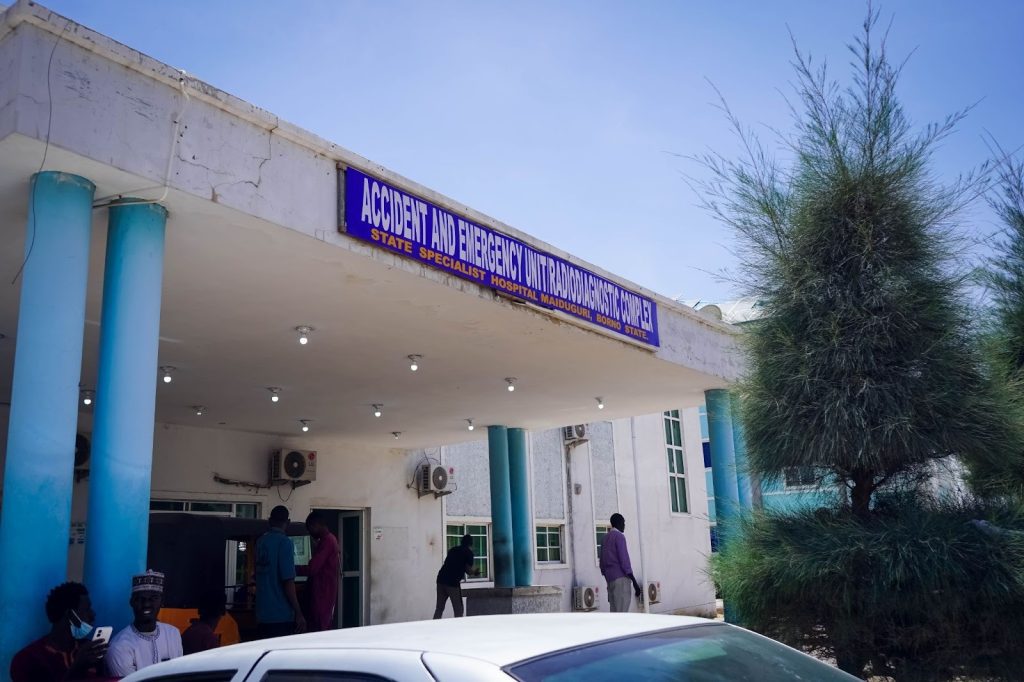
Maiduguri

Reformed Gangs Are Becoming the Guardians of Peace in Maiduguri

Ngomari Costine has a terrible reputation. The area, in Maiduguri, northeastern Nigeria, is filled with delinquent youth popularly referred to as Marlians, named after a controversial Nigerian musician whose songs and style they imitate. 

Groups of young people in flashy clothes and elaborate hairstyles gather in front of shops and on benches outside houses in the area. But it’s not their dressing that worries residents; it’s what lies beneath: gangs ready to turn violent at the slightest provocation.

The same issue plagues Gwange 2, another densely populated neighbourhood where hundreds of teenagers roam the streets at almost every hour. Their presence alone sends jolts of fear down the resident’s spine; their actions do far worse than that. 

“Almost every day, there is a gang violence incident,” said Zanna Abba Kaka, the District Head of Ngomari Costine. “This made our community a highly unsafe place to live in.” 

The aftermath of the heydays of Boko Haram insurgency in Nigeria’s North East, particularly in Borno State, which is the epicentre of the violence, has left behind a generation of young people who have become psychologically accustomed to violence. 

When the insurgency began to wane and relative peace returned, new forms of insecurity started to take root. The easy availability of light weapons, coupled with limited education and shrinking economic opportunities, pushed many young people into drugs, theft, political thuggery, and the violent street gangs that now dominate several neighbourhoods.

Much of this violence, according to Zanna, stems from political manipulation. “These thugs regard themselves as employees [of the politicians] and they do as they wish.”

The consequences are visible in everyday life. In Gwange 2, community leader Alkali Grema recalled one day at the front of his house when an 18-year-old boy attacked his peer with a knife and slashed his neck before others could intervene. 

“It happened so fast,” he said. This was a reprisal attack and just one out of many. Unfortunately, the victim lost his life. Alkali said he had witnessed so many instances where the gangs wielded dangerous weapons; “shiny and can be as long as the length of an adult’s shin.”

‘Unity for Peace’

As such incidents became more frequent and brazen, the authorities began to act. Investigations traced the flow of these weapons to the city’s Gamboru Steel Market, prompting several crackdowns. But when blacksmiths were banned from producing them openly, many quietly moved their operations underground.

In 2019, a different approach emerged. The non-profit International Alert, known for its peacebuilding work, launched the Hadin Kai Domin Zaman Lafia (Unity for Peace) project with support from the US Embassy’s Trans-Sahara Counterterrorism Partnership programme. The initiative aimed to reorient the community through peacebuilding and vocational training.

At-risk youth were identified and trained in tailoring, painting,  and embroidery. To foster a sense of belonging between the disarmed youth and other members of the community, International Alert engaged local entrepreneurs to facilitate the training.

The non-profit also organised dialogue sessions between community leaders and young people. Gradually, results began to show. The programme inspired community-driven initiatives like sanitation and improved school enrolment for vulnerable children. 

“We were able to enrol more children in Gomari Costine Primary School than ever before,” Zanna said. “Sometimes the school accepts them without us paying for registration or other charges.”

A thug’s turnaround

Thirty-nine-year-old Sani Umar has spent most of his life in Gomari Costine. He grew up underprivileged, without formal education or marketable skills, and for 15 years was one of the most feared political thugs in the area. He led a group called “A dakatar da Mutane”, roughly translated as “People must be stopped”.

Sani was one of the 150 youths who participated in the Unity For Peace initiative. “During the programme, I learnt tailoring and ventured into the tailoring business, but it wasn’t moving well because people don’t really bother much about making clothes in this economy, so I switched to selling tea,” he told HumAngle.

Three men sitting on a blue mat inside a hut with a woven straw wall. They are smiling and wearing traditional clothing.
Sani Umar at a shed outside the palace of the District Head of Gomari Costine. Photo: Ibrahim Hadiza Ngulde/HumAngle.

These days, you will find him at his tea joint as he tends to his customers and earns an honest living. Three years ago, at this time, he would likely be at their popular gang joint in the community, where many youths like him, who were jobless, would gather to chat, argue, and fight.

While narrating his life in the last decade, Sani looked sombre, with a demeanour that screams regret, especially as he shared a particular incident that threw him into fear and isolation in 2015.

“We attacked a neighbouring community, where unfortunately, my friend stabbed an opponent who was pronounced dead,” Sani paused. “I was shaken and I had to go into hiding to avoid arrest, and I couldn’t be seen in the community, at places where I normally stay for a long time. I was very much disturbed by that.” 

The event haunted him for years, but it was not until 2019, after joining the reform programme, that he finally walked away from violence.

Women leading peace

International Alert is not alone in this effort. In Gwange 2, the Unified Members for Women Advancement (UMWA) implemented the Youth Peace Building Initiative with support from the European Union’s Managing Conflict in Nigeria (MCN) programme. The project targeted 20 gang leaders, training them to advocate for peace and reject violence.

According to Hassana Ibrahim Waziri, UMWA’s Executive Director, her team began by identifying at-risk youth and inviting gang leaders for open discussions. “We gradually introduced peace concepts before expanding to the wider community,” she said.

To win trust, they organised a mass circumcision ceremony for boys; a culturally symbolic act showing they had the community’s best interests at heart.

After weeks of training and sensitisation, the reformed youths were appointed as peace ambassadors. Among them was Hassan Kambar, also known as Go Slow. He used to be feared as the leader of one of the local gangs, “The Branch”. He joined the group as far back as 2000, working as a thug for one of the big political parties then. 

“When UMWA came, they made us realise that if we keep living this way, what future will our younger ones have? That touched me deeply, and I decided to quit,” he said.

Illustration of two hands shaking in the foreground, with silhouetted protesters holding "Peace" and "Unity for Peace" signs in the background.
‘Unity for Peace’. Illustration: Akila Jibrin/HumAngle

Today, the 45-year-old serves as a chairperson in the Civilian Joint Task Force (CJTF) and earns a living as a carpenter.

Their transformation has had ripple effects. Ahead of the 2023 elections, some former gang members carried placards urging voters to reject violence. Others formed night-watch committees to guard their communities.

Many now dream of joining the police, army, or civil defence, determined to serve the same society they once harmed.

Peacebuilding also took a local turn. In Maiduguri, respected elders known as Lawan traditionally mediate disputes under a symbolic shed outside their homes. This same model was adopted in Gwange 2 and Ngomari Costine, where elders and youth now meet regularly to discuss issues.

“At first, the community leaders were afraid. They did not want to be involved with these boys, but they are our kids, there’s nothing we can do,” Dr Hassana. 

Three men in traditional attire sit on a patterned mat under a shelter, with a wall and trees in the background.
Alkali Grema sits under the symbolic mediation shed outside his palace, where he witnessed a teenager’s death during a gang clash years ago. Photo: Ibrahim Hadiza Ngulde/HumAngle.

She explained that UMWA’s approach focused on changing mindsets as much as behaviour, as this goes with educating them that violence doesn’t equal strength as perceived by the gangs, rather it is about the capacity to organise and live peacefully with people, to move forward and foster development.

“We target the mindset… even though we do not give skill acquisition training, some of them reach out to us for recommendations when they want to join forces to do better with their lives,” Dr Hassana said.

Measuring change and facing limits

Community leaders who spoke to HumAngle said gang violence has declined noticeably. “Around 2020 and 2021, we used to get such cases every day, not only in this area but in Maiduguri generally, but it has reduced,” said the District Head of Ngomari Costine.

Yet the progress is fragile.

Zanna, who mobilised the youth to participate in the Unity for Peace programme, noted that only about 150 participants joined — far too few for a city the size of Maiduguri. Many young people remain outside the reach of these projects.

The sustainability of the programme poses another obstacle. While the programmes briefly expanded to London Ciki, Polo, and nearby communities, other hotspots such as Dala and Kaleri continue to struggle with gang activity.

And there is no system in place to ensure that these skills are transferable to the teeming upcoming youth. As much as the beneficiaries may want to help their community, they can only engage one or two people whenever they get a job.

According to UMWA, its Youth Peace Building Initiative lasted just one year due to limited funding. “Ideally, such projects should run longer to make the changes stick,” Hassana explained. 

Like most NGOs, both groups rely on donor grants. As funds shrink, their reach contracts, and the continuity of their work becomes uncertain.

A fragile peace

With non-governmental organisations stepping back, local authorities have become the last line of defence. Cases of conflict are now referred to the Lawan or CJTF chairmen, who attempt mediation before involving the police.

But sustaining peace comes at a personal cost. In Gwange, Lawan Grema said the absence of UMWA’s support has made his role harder. “Sometimes I remove money from my own pocket to settle small disputes,” he said. “People are no longer motivated to keep the peace.”

For these communities, the calm that has returned is hard-won but fragile. Without steady support, the cycle of neglect and violence that once defined them could easily begin again.


This story was produced under the HumAngle Foundation’s Advancing Peace and Security through Journalism project, supported by the National Endowment for Democracy (NED).

Source link

A Year After Maiduguri Flood, Fears Linger Despite Positive Forecasts

Weather forecasts suggest Maiduguri and surrounding communities in Borno State, northeastern Nigeria, are set for reduced rainfall in the coming days, offering some relief to a city haunted by last year’s Sept. 10 devastating flood.

The chance of rain, which stood at 74 per cent last week, is expected to drop to 11 per cent today, easing pressure on the city’s fragile drainage systems and flood-prone neighbourhoods. ​According to AccuWeather, scattered showers are still expected, but without the intensity that typically triggers flash floods.

For residents, however, the reassurance is tempered by painful memories. Nearly half of Maiduguri was affected last year, with at least 150 lives lost, according to the National Emergency Management Agency, and over 400,000 people displaced. Critical infrastructure was damaged, livelihoods destroyed, and many survivors are still struggling to recover. 

The improved forecast offers hope, but Maiduguri’s long history of flooding means residents remain wary. Last year’s calamity was not caused solely by rainfall but by inadequate infrastructure, blocked drainage systems, and the dam’s failure. HumAngle reported extensively on the series of events that led to the flood. 

Flooded street with people sitting outside a building, surrounded by water.
A neighbourhood during the Sept .2024 flooding in Maiduguri. Photo: Usman Zanna/HumAngle 

Babagana Zulum, the state governor, who visited the Alau Dam recently, assured residents that water levels are now stable after controlled releases since July.

“Based on current engineering analysis, there is no cause for alarm,” he told journalists.

Yet not everyone is convinced. Timothy Olanrewaju, a resident who was affected by last year’s flood, said the government’s assurance should be taken with a grain of salt.

“We can’t assume that just because the rain is easing compared to last month that we won’t experience flooding,” he said. “Two communities, 505 Housing Estate and Fori Layout, were flooded last weekend, even though there was no heavy rainfall in the city. The Ngada River simply overflowed its banks, and the water made its way into those communities.”

Like many residents, Timothy said he has yet to replace most of the items he lost in the last flood. “Even my car, which was submerged in the water for over a week, is still in terrible shape. I’ve spent a lot of money on it, but it’s not fully repaired,” he said, adding that he is still traumatised. 

“Every time I hear the sound of rain, I start to panic, thinking the flood is coming. A few days ago, I learned that some communities in the city were flooded, and it made me anxious. I began to worry that we would experience the same things we did last year.”

Group of people gathered at a water control structure, with one person pointing towards the water.
Governor Zulum during an inspection visit to Alau dam in Borno State. Photo: Abdulkareem Haruna/HumAngle

Residents take precaution

In the absence of certainty, some communities are taking matters into their own hands. At the State Low-cost Estate, one of the hardest-hit areas last year, residents have begun desilting their clogged drains during environmental sanitation exercises.

People working together to clear debris from a roadside under sunny skies.
Residents of State Low-cost Estate in Maiduguri unclogging drainage channels. Photo: Abdulkareem Haruna/HumAngle

“We were blamed for the flooding we face here because of blocked drainage,” said Abdulkareem Mai Modu, a resident of the estate. “So, in order not to take any chances, we decided to pool our resources and clear all our waterways to avoid any disaster.”

Others, like automobile mechanic Yahaya Garba, remain displaced. ​“We are still taking temporary abodes at the homes of our relatives. I hope there will be a permanent solution to this annual calamity that comes to our homes,” he said. Yahaya’s home in Bulunkutu is still submerged from the recent excessive rainfall.

In the 505 Housing Estate, where floodwaters recently breached perimeter fences, resident Babagana Wakil described wading through knee-deep water.

​“Many residents to relocate as quickly as possible,” he said.

Water flowing through a concrete dam with a blue and gray structure on a cloudy day.
Water is gradually being released at Alau Dam to prevent overflow. Photo: Abdulkareem Haruna/HumAngle

“The government needs to step up and ensure they monitor the flow of water and, when they see danger, pass on information to residents as quickly as possible so people can evacuate from flood-prone areas,” Timothy added.

Weather forecasts predict reduced rainfall in Maiduguri, Borno State, Nigeria, easing the flood risk that previously devastated the city. The probability of rain has decreased from 74% to 11%, which is expected to relieve stressed drainage systems. Despite the improved forecast, memories of last year’s flood that affected half of the city remain, causing continued wariness among residents.

Governor Babagana Zulum reassures citizens that water levels at the Alau Dam are now stable, but skepticism persists as minor flooding has already occurred without significant rain. In response, communities like the State Low-cost Estate proactively desilt clogged drains to prevent a repeat disaster and avoid being blamed for future flooding. Residents urge the government to improve water flow monitoring and rapidly alert those in flood-prone areas.

Source link

Eight Months After Maiduguri Flood, What Has Recovery Looked Like for Victims?

When the devastating floods washed through Maiduguri in northeastern Nigeria in September 2024, Aisha Ahmed, a resident of Gwange community, and her family fled their house to a safer area along Bama Road in the Borno State capital. 

“It was my worst experience because my family and I thought the world had come to an end,” the 46-year-old recounted. “We couldn’t sleep well because we did not know if the water would rise again and meet us by morning.” 

Like Aisha, several other residents across Maiduguri fled; some were trapped in their homes, others died, shops, schools, and other facilities were shuttered, and roads were impassable. 

It’s been about eight months since the floods swept through the city. Aisha says the post-flood restoration efforts are “a sign that Maiduguri has bounced back.” The Borno State government and other development partners initiated a series of interventions aimed at restoring key infrastructure and providing relief to affected residents. 

According to the National Emergency Management Agency, over 414,000 people were affected across nine local government areas in the state, with 389,267 individuals displaced and 7,155 houses damaged. The flood’s impact was widespread, not only in urban Maiduguri but also in nearby rural communities. 

“It is now history. I can walk around Gwange with ease. The roads have been cleared, the drainage channels restored, and even the air feels different because there is movement and life has returned to normal. It’s like we all came back stronger,” she told HumAngle, adding that, “It’s not perfect yet, but this is a huge step forward. I am proud of how far we have come.”  

Several public landmarks and facilities that were damaged or rendered inaccessible due to the floods are now being restored. Roads that were once impassable due to erosion have since resurfaced. Temporary bridges have been installed in communities cut off during the flood. Public schools which were flooded or closed have reopened after rehabilitation work, allowing students to return to class.

Wide road with vehicles and pedestrians under a clear sky, lined by buildings and trees, during sunset.
The custom area in Maiduguri, once affected by flooding, is now refreshed as daily activities resume. Photo: Usman Abba Zanna/HumAngle

For Adamu Isa, a bricklayer and father of five living in Simari, a community that was flooded, the memories of the flood are still fresh. His home, located close to a motorable path, was heavily affected. The flooding swept for more than a week in their area, destroying their walls, collapsing their outdoor toilet, and leaving the family displaced. 

“We could not save anything that night. We joined others to flee in the middle of the night. It was a dangerous journey while the volume of the water continued to increase,” he recounted. This video documentary captures a visual account of the city under water.

When news came that the government was distributing relief funds to flood victims, Adamu registered his name and bank account details but wasn’t sure he would be selected. Some months later, he received a text alert showing ₦100,000 deposited into his account. 

“It felt like a miracle. It was the first time I received anything like that from the government. Even though it wasn’t enough to rebuild everything, I used part of it to fix one room and clear the sewage from around the house,” he told HumAngle.

Man sitting at a doorway amid floodwaters, surrounded by a concrete wall and cloudy blue sky above.
Families learned to live with water during the flood period. Photo: Usman Abba Zanna/HumAngle

Adamu knows the money can’t restore everything the flood took. His house still bears the scars — a missing window shutter, a broken pit latrine, and walls that tell a story of a season they barely survived. But for him, the relief aid was not just money, it was recognition: “We are not forgotten. I feel lucky. My children are back in school. We sleep under a roof. Life is back now, and we thank God for that. At the end of the day, being alive is the most important thing.”

The state government-instituted Flood Relief Disbursement Committee says it received several relief materials and ₦28.9 billion in donations from well-wishers, including the federal government, Borno State and other state governments, corporate organisations, non-profits, and development partners such as the United Nations. Of this, over ₦18.08 billion was disbursed in cash to 101,330 households affected by the flood, according to spokesperson Dauda Iliya.

He added that ₦987 million was allocated to 7,716 traders whose goods and businesses were damaged in affected markets, as well as ₦313 million to 814 worship centres and ₦213 million to 267 private schools. Additionally, ₦89.4 million was disbursed to 1,788 youth volunteers who actively contributed to rescue and relief efforts during the disaster, and ₦12.5 million supported 22 private clinics that assisted with emergency medical care.

While some beneficiaries like Adamu confirmed receipt of funds, HumAngle found that many survivors continue to live in temporary shelters or with relatives, with some yet to receive any assistance. One of such residents is Musa Hussaini, who lives in Wade, a community along Dikwa Road in Maiduguri, one of the areas worst affected by the floods. He said officials documented victims nearby but never reached his neighbourhood.

“We waited for them to come, but they stopped just a few blocks away,” he told HumAngle. “Then we started hearing that people were getting credit alerts, but no one from our side received anything. We were left like that, just watching and hoping.”

Musa and his family fled as the waters rose, leaving everything behind. The floodwaters destroyed their belongings, and they remained displaced for weeks, sheltering by the roadside with other affected families.

“Every household in the area was displaced,” Musa said. “Life felt like it had come to an end. We thought we would never return to normal again. But we are grateful to God that things have been restored, and we are slowly rebuilding.”

Musa now supports his family by working as a tricycle rider to provide for his family.

“At least we are alive, and for that, we are thankful,” he sighed. 

Despite the experience of Wade residents and others, the relief disbursement committee announced in December 2024 that the process had concluded. In its final report, the committee stated that ₦4.45 billion remained from the total donations received. The committee, according to its chairperson, Baba Bukar Gujibawu, recommended that the balance be used for the rehabilitation of roads in flood-affected areas.

Residents and civil society groups, such as the Arewa Youth Consultative Council, have called for transparency and accountability in how the funds were managed and distributed, insisting that promised support should not get lost in bureaucracy but reach the communities still struggling to recover.

At the peak of the Maiduguri flooding, a HumAngle investigation uncovered that the disaster was due to years of neglect of the Alau Dam, a critical infrastructure designed to regulate water flow and provide irrigation and drinking water in the state. The disaster was triggered by the collapse of one of the dam’s gates, which overflowed and released massive volumes of water, washing through parts of the metropolis and sweeping into rural communities downstream. The damage was worsened by the lack of timely maintenance and the failure to hold the responsible authorities accountable.

Funds meant for its repairs were either mismanaged or misappropriated, according to the investigation. 

In response, the federal government in October 2024 pledged ₦80 billion to rehabilitate the Alau Dam and prevent future disasters. However, as of the time of filing this report, repair work has yet to begin.

As another rainy season begins, communities remain exposed. For survivors still living on the margins, the question isn’t just about what was lost, but whether they’ve truly been seen.

Source link