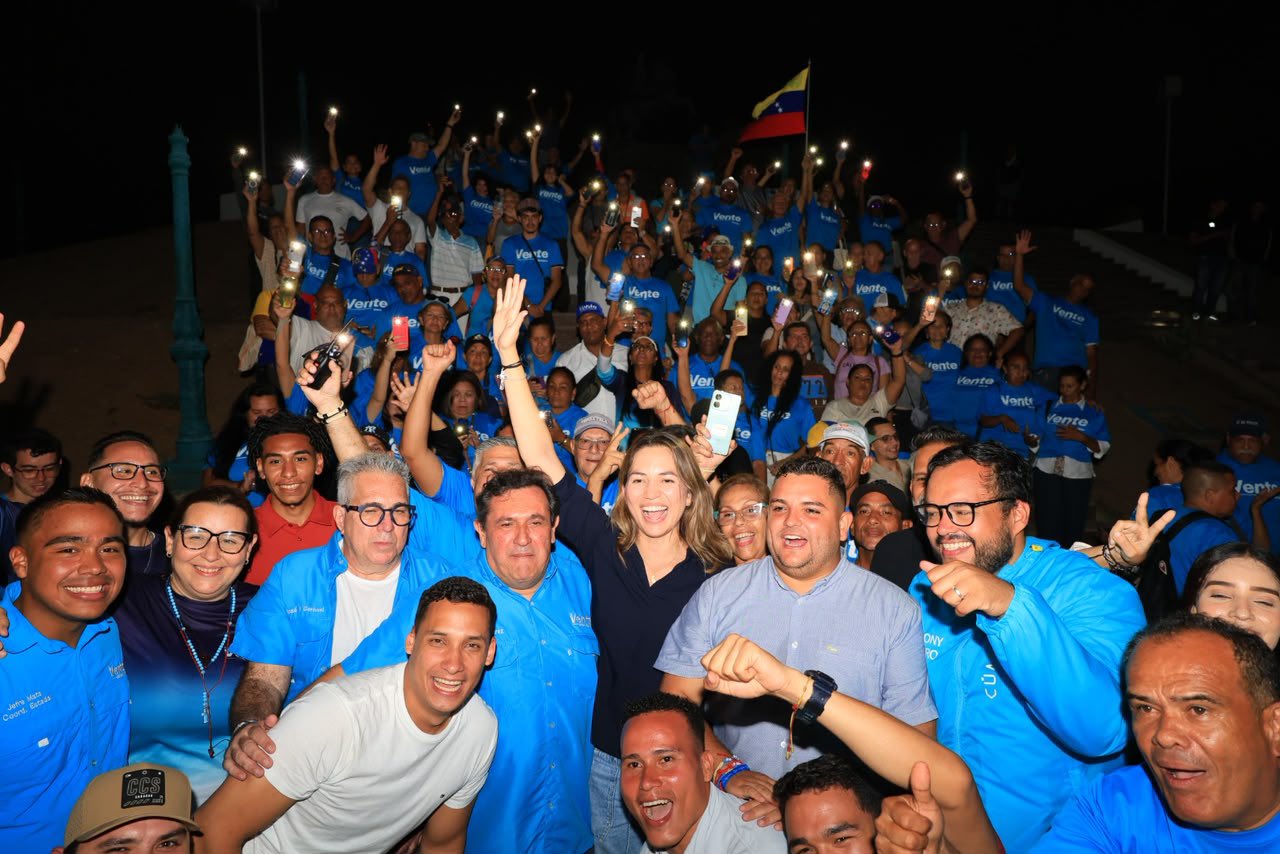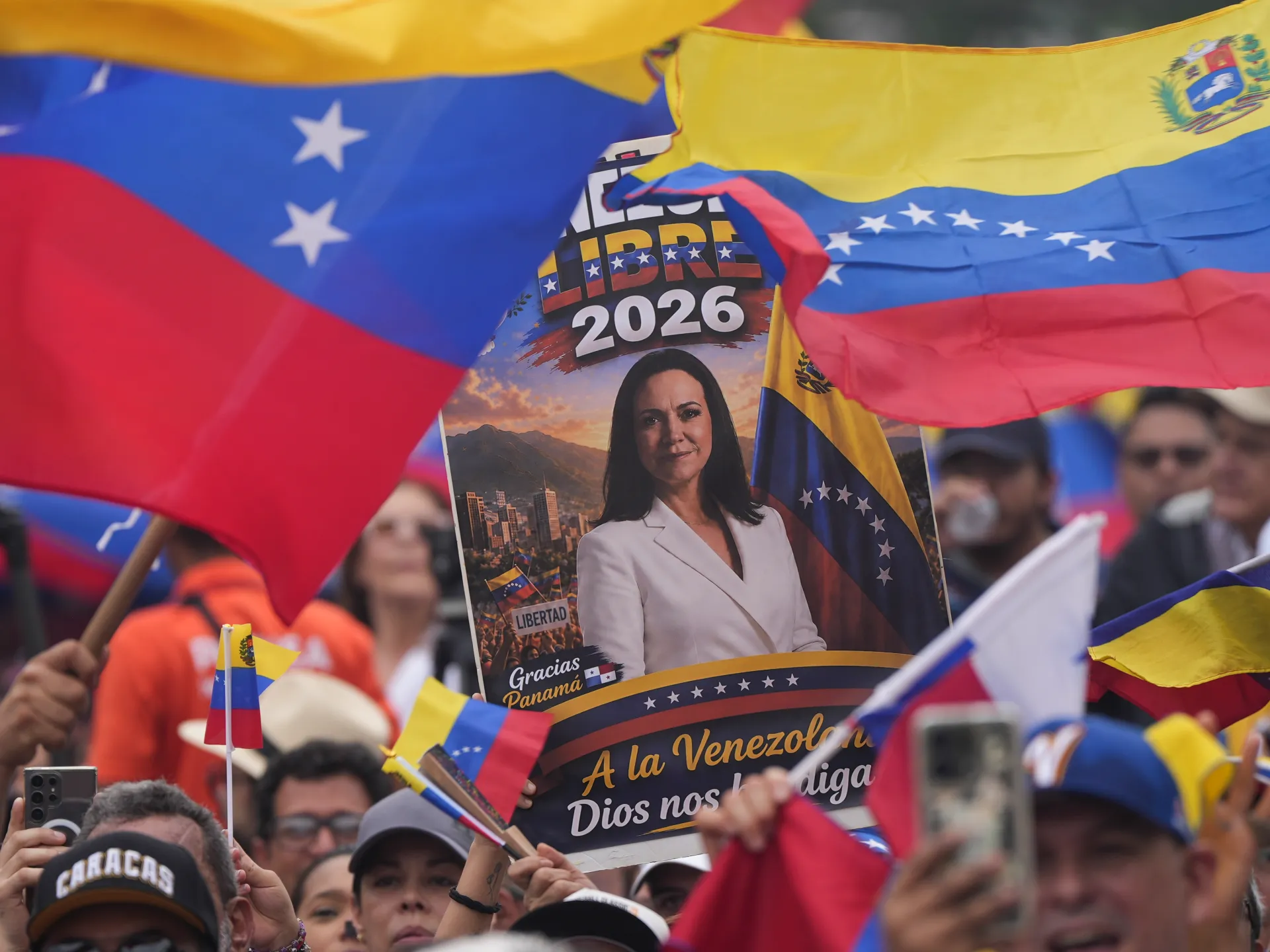
Machado

A Tiger’s Shadow Stalks María Corina Machado

For a quarter century, Venezuelan politics has revolved around a single divide: chavismo versus anti-chavismo. Entire political careers were built around that struggle, as parties rose and fell according to their ability to interpret it. Leaders were judged less by what they proposed than by how effectively and fervently they opposed the regime. 

No one has embodied that tradition more successfully than María Corina Machado. Her achievement was not simply electoral. She transformed anti-chavismo from a coalition of parties and personalities into something closer to a political identity.

That transformation helped make Machado the dominant figure in Venezuelan politics since 2024. It may also explain why the beast showing its fangs at the other side of the Western border deserves to be taken seriously by the opposition. 

Political movements rarely remain the property of the people who built them. Over time, people begin to invest parts of themselves in them. They become attached not only to leaders, but to their own idea of what those leaders represent. Their loyalties gradually shift from individuals to identities, at that point, succession becomes possible.

The curse of the trailblazer

Colombia’s recent election offers an intriguing illustration of how this process can unfold. At first glance, Abelardo de la Espriella’s victory looked like a victory for the Colombian Right. It may turn out to have been something more interesting.

De la Espriella did not defeat Uribismo. If anything, he inherited it. Many of his voters still admire Álvaro Uribe and some probably voted for him repeatedly. What changed was not their opinion of Uribe, but their sense of who now spoke most convincingly for the political tradition he created.

The Tiger did not campaign against Uribe’s legacy. He campaigned as its most uncompromising heir, as he described himself “más uribista que doña Lina” (Uribe ‘s wife). His appeal rested on a simple proposition: Uribe had been right all along, but those who claimed to represent his legacy lacked either the conviction or the will to carry it through to its logical conclusion. This is a very different kind of political challenge. It does not seek to replace a movement. It seeks to inherit it.

De la Espriella’s voters didn’t change their opinion of Uribe, but their sense of who now spoke most convincingly for the political tradition he created.

That possibility should sound familiar to Venezuelans.

The question is not whether Machado is losing support. By any reasonable measure she remains the dominant figure in the Venezuelan opposition. The more interesting question is whether anti-chavismo, having become an identity in its own right, could one day develop ambitions, expectations and frustrations that exceed her ability to contain them.

The strange thing about political victories is that they rarely belong entirely to those who achieve them. Over time, successful leaders create constituencies, expectations and myths that acquire a life of their own. What begins as a political movement gradually becomes a political identity, and once identities take root they stop asking permission from the people who created them.

The comparison that comes most readily to mind is Winston Churchill. The British prime minister lost the first election after the Second World War, in one of the great paradoxes of democratic politics. The standard explanation is that Britons decided the war had been won and wanted someone better suited to building the peace.

Bukele, Trump and Milei often feature more prominently in the imagination of many Venezuelans than the leaders who shaped domestic opposition politics before Machado.

The Venezuelan case may eventually present the opposite problem. Machado’s future challenger, once one emerges, is unlikely to argue that the struggle against chavismo has ended. If anything, the argument would be the reverse: not that Machado was wrong, but that she stopped too soon.

If such a figure were ever to emerge in Venezuela, it would likely appear first as a sentiment rather than as a politician.

A nameless threat

One can already glimpse fragments of that sentiment across the Venezuelan diaspora, in Miami, Houston or Madrid among voters who remain deeply committed to the opposition but increasingly impatient with the pace of events, and Machado’s approach to Trump’s plan. Many admire Machado, some even revere her. Yet admiration and impatience are not mutually exclusive sentiments.

A decade ago, one of the most common criticisms of Machado was that she was too confrontational. Today, some of her critics seem to believe she has not been enough of a hardliner. The shift may appear subtle. It is anything but that.

What unites these constituencies is not necessarily ideology. Many disagree on policy, strategy and even on the nature of a future Venezuelan transition. What they seem to share is a growing impatience with the political habits that defined the opposition during the previous two decades. Their political reference points are increasingly international. Bukele, Trump and Milei often feature more prominently in their imagination than the leaders who shaped Venezuelan opposition politics before Machado.

The result is a political vocabulary that would have sounded unfamiliar not long ago. Arguments about negotiations and elections increasingly coexist with arguments about strength, authenticity, betrayal and whether the opposition has shown sufficient willingness to exercise power rather than merely seek it.

The Tiger represents a possibility: that the greatest challenge facing anti-chavismo in the years ahead may not come from its enemies, but from the unresolved question of what victory should look like.

None of this means that a Venezuelan Bukele is waiting in the wings, nor does it suggest that Machado’s position is immediately threatened. As things stand, the opposite appears true. But political identities rarely remain frozen in time. They absorb new influences, adapt to new frustrations and develop new aspirations. The question is whether anti-chavismo is beginning to do the same.

Perhaps someone like Abelardo The Tiger never comes. Perhaps Machado successfully leads Venezuela through a transition and remains the uncontested leader of the movement she helped build. That remains the most likely outcome.

But history suggests that political movements rarely remain suspended in a single moment forever. The forces that transformed Machado into the dominant figure of Venezuelan opposition politics, frustration, perseverance, impatience, conviction and a refusal to accept the permanence of chavismo, are not forces she alone controls.

That is why The Tiger matters. The point is not whether it materializes as a candidate, a faction or a movement. The point is that it represents a possibility: that the greatest challenge facing anti-chavismo in the years ahead may not come from its enemies, but from the unresolved question of what victory should look like.

For 25 years, Venezuelan politics revolved around how to confront chavismo. María Corina Machado provided the most compelling answer that question has yet produced. The shadow crouched in the woods is the possibility that a different question is beginning to emerge.

And predators have a peculiar habit. They tend to show up before people eventually give them a name.

Source link

A match made in opposition: Venezuela’s Machado courts Spain’s right wing | News

Madrid, Spain – Venezuela’s opposition leader Maria Corina Machado is aligned with Spain’s main right-wing party on its economic visions, but they are divided by social issues such as abortion, analysts say.

On a visit to Spain this weekend, Machado chose to snub an invitation to meet Socialist Prime Minister Pedro Sanchez and the left-wing coalition government officials.

Recommended Stories

list of 2 itemsend of list

The Nobel Peace Prize winner said she had chosen not to meet Sanchez because he was hosting a summit of left-wing leaders from Latin America in Barcelona.

“What has transpired in the past few hours at the meeting held in Barcelona with various political leaders from different countries is proof that such a meeting was not advisable,” Machado told a meeting in Madrid on Saturday.

Instead, she held a series of meetings with leaders from the opposition conservative People’s Party (PP) and the far-right Vox party.

Machado received a rapturous welcome from Alberto Nunez Feijoo, the PP party leader and Venezuelan emigres in Madrid, on Friday.

On Saturday, the Venezuelan opposition leader met Isabel Diaz Ayuso, the populist conservative Madrid regional leader, one of Sanchez’s fiercest critics and a possible rival to Feijoo.

Ayuso presented Madrid’s gold medal to Machado, while Madrid’s Mayor Jose Luis Martinez-Almeida – also of the PP – handed her the keys to the city before a rally with Venezuelan supporters.

Machado also met Santiago Abascal, the leader of Vox, in the Spanish capital.

Feijoo praised how Machado had championed freedom even at the cost of going into hiding in Venezuela away from her family.

“Spain knows well the value of freedom; it cost us dearly to obtain it. The generations of our parents and grandparents know what it is to live without freedom. That is why we cannot look the other way,” Feijoo said.

What divides Venezuela and Spain’s opposition?

Despite the cordial welcome, there are significant differences between Machado and Feijoo, commentators said.

A liberal conservative, who has said she is an admirer of Margaret Thatcher, Machado has been dubbed Venezuela’s “Iron Lady”.

She moved from the right politically to the centre-ground during the 2024 presidential campaign to attract voters in the middle ground.

As a conservative, Machado heads a Venezuelan opposition that is split and which also contains more liberal factions.

In contrast, Feijoo heads a well-organised conservative political party, which has only recently suffered divisions after the formation of the hard-right Vox party in 2013, analysts said.

Carlos Malamud, an expert on Latin America at the Real Elcano Institute, a think tank in Madrid, said the structure of both opposition groups was different.

“Machado is the leader of a small, disorganised opposition, while Feijoo is the head of the PP, which is a well-organised national political party,” he told Al Jazeera.

Malamud said Machado did not demonstrate the traits of a would-be Venezuelan president by refusing to see Sanchez.

“If Machado wants to be the president of Venezuela next year, she needs to be prepared to meet the head of the Spanish government, whoever that may be,” he explained.

“Perhaps the Venezuelan opposition sees the Spanish Socialist Party as being allied to (former Spanish prime minister) Jose Rodriguez Zapatero.”

Zapatero has played a controversial role in acting as a mediator between Spain and the government of former Venezuelan President Nicolas Maduro, who was abducted by the United States in January.

Maduro faces charges of narcoterrorism, conspiracy to commit narcoterrorism, drug trafficking, money laundering and corruption, which he denies.

Machado ‘more conservative’ on social issues

Malamud said one factor which unites Machado and Feijoo is that they came from political systems which suffered from polarisation.

“Venezuelan politics is the same as Cuban politics, or like Spanish. They all suffer from the same degree of polarisation,” he added.

Ana Ayuso, an investigator in Latin American affairs at the Barcelona Centre for International Affairs, said Machado shared the liberal economic theories of Feijoo, but they differed on social issues.

“She is in favour of freedom of trade and a small state, so she is quite liberal on economic affairs like Feijoo,” Ayuso told Al Jazeera.

“She is also closer to Isabel Diaz Ayuso in terms of economics, in terms of free trade and the participation of the state.”

“However, she is more conservative when it comes to social issues. Machado is against abortion, and religious affairs are important to her. She is close to the [Roman] Catholic Church. Feijoo supports the right to abortion.”

In an interview in 2024 with Spanish newspaper El Pais, Machado said she was against abortion but in favour of changing the law in Venezuela to allow abortion in cases of rape.

At present, the law in Venezuela allows abortion only when there is a risk to the life of the mother or child. Otherwise, it is illegal and can carry a jail sentence of up to two years.

“Machado does not have any similarities with Vox. Venezuela does not have a problem with immigration. Emigration is the problem,” added Ayuso.

She said the Venezuelan opposition leader had initially been a staunch supporter of US President Donald Trump, but he had shunned her in support of Delcy Rodriguez, the acting Venezuelan president.

Machado was now closer to Marco Rubio, the US secretary of state, who supported her cause within the MAGA movement, she added.

Source link

‘No regrets’: Venezuela’s Machado defends giving Nobel medal to Trump | Donald Trump News

Maria Corina Machado gave Trump her Nobel Peace Prize after the US leader captured Nicolas Maduro.

Venezuela’s main opposition leader Maria Corina Machado says she has “no regrets” about giving US President Donald Trump her Nobel Peace Prize medal.

Machado, the 2025 recipient of the prestigious prize, presented the medal that accompanies the prize to Trump when she met him at the White House in January, two weeks after he ordered US special forces to seize Venezuelan President Nicolas Maduro from Caracas.

Recommended Stories

list of 4 itemsend of list

Trump’s military operation to remove Maduro, who is currently detained in the US facing drug trafficking charges, is “something we Venezuelans will never forget”, she was quoted by AFP news agency as saying at a conference in Madrid on Saturday.

“There is a leader in the world, a head of state in the world, who risked the lives of his country’s citizens for Venezuela’s freedom,” she said.

Trump, who has long publicly coveted the Nobel Peace Prize, called Machado’s presentation of the medal at the time a “wonderful gesture of mutual respect”.

The Norwegian Nobel Committee, which honoured Machado for her tireless campaign to restore democratic rights in Venezuela and her struggle to achieve a peaceful transition from authoritarian rule, made clear after the handover that the prize is nontransferable and cannot be revoked, shared or transferred to others.

Machado, who had been living in hiding before leaving Venezuela in December to collect her prize in Oslo, said she was coordinating her return to the country with Washington.

US key to ‘democratic transition’

“I am speaking with the US government, and we are working in coordination, with mutual respect and understanding,” she said, adding that she believed Washington was “key to advancing a democratic transition” in Venezuela.

Trump has, however, publicly questioned Machado’s standing, calling her a “very nice woman” but saying she lacks “respect” within Venezuela. He has instead backed Maduro’s former vice president, Delcy Rodriguez, as the country’s interim leader.

Venezuela’s opposition last week called for presidential elections. Machado, who was banned from running in the disputed 2024 vote that returned Maduro to power, has not yet said whether she would stand in a future poll.

While in Spain, Machado declined a meeting with Prime Minister Pedro Sanchez, citing his hosting of a progressive leaders’ summit in Barcelona as proof the meeting was “not advisable”. Sanchez had said he was willing to meet her at any time.

This snub comes in contrast to her frequent encounters with Sanchez’s right-wing opponents.

Source link