Luxembourg

Belgium’s largest wildfire on record spreads towards German border | Climate News

Neighbouring countries send personnel to help keep the blaze from crossing into Germany.

Firefighters are battling Belgium’s largest wildfire on record as it burns through the High Fens nature reserve near the German border on Sunday.

The fire broke out on Friday in Belgium’s Liege province and has been spreading east towards Germany. It has burned more than 27sq km (10.4sq miles).

Recommended Stories

list of 2 itemsend of list

Belgium’s previous record fire occurred in 2011, burning 14sq km (5.4sq miles) of the same reserve, the European Forest Fire Information System said.

More than 250 emergency services personnel have been deployed, among them firefighters from Belgium, Germany, Luxembourg and the Netherlands.

Firefighters focused on containing the advancing front of the fire, spokesperson for the government of Belgium’s Wallonia province, Stephanie Ernoux, told the Reuters news agency.

About 600 people in the Belgian border municipalities of Waimes and Butgenbach were told to leave their homes on Saturday as winds shifted and smoke spread.

Authorities said no homes had been affected as of Sunday morning, but urged people to stay away from the fire zone.

In Germany, the town of Monschau said the fire had come within about 3km (1.9 miles) of the border. Officials did not expect the flames to cross the border, the town said, but it advised residents of three of its districts to leave temporarily due to the smoke.

The fire came as Belgium had just come through another burst of severe heat, the thermometer touching roughly 37C (98.6F) in places on Friday, on top of weeks with barely any rain.

Like other parts of Europe, Belgium is in the middle of a summer of repeated heatwaves. Weather agencies logged temperatures above 35C (95F) in several European countries on Thursday, and the United Kingdom had its hottest day of the year when west London reached 38.1C (100.5F).

Fires have frequently followed the heat. Thousands of people have been driven from their homes in Germany, France, the UK, Croatia and Greece in recent days, and about 500,000 hectares (about 1.24 million acres) have burned across the European Union this year.

Source link

Top French court upholds assisted dying law, rejects teen social media ban | Courts News

The decisions mark both a victory and a setback for President Emmanuel Macron, who had championed both policies.

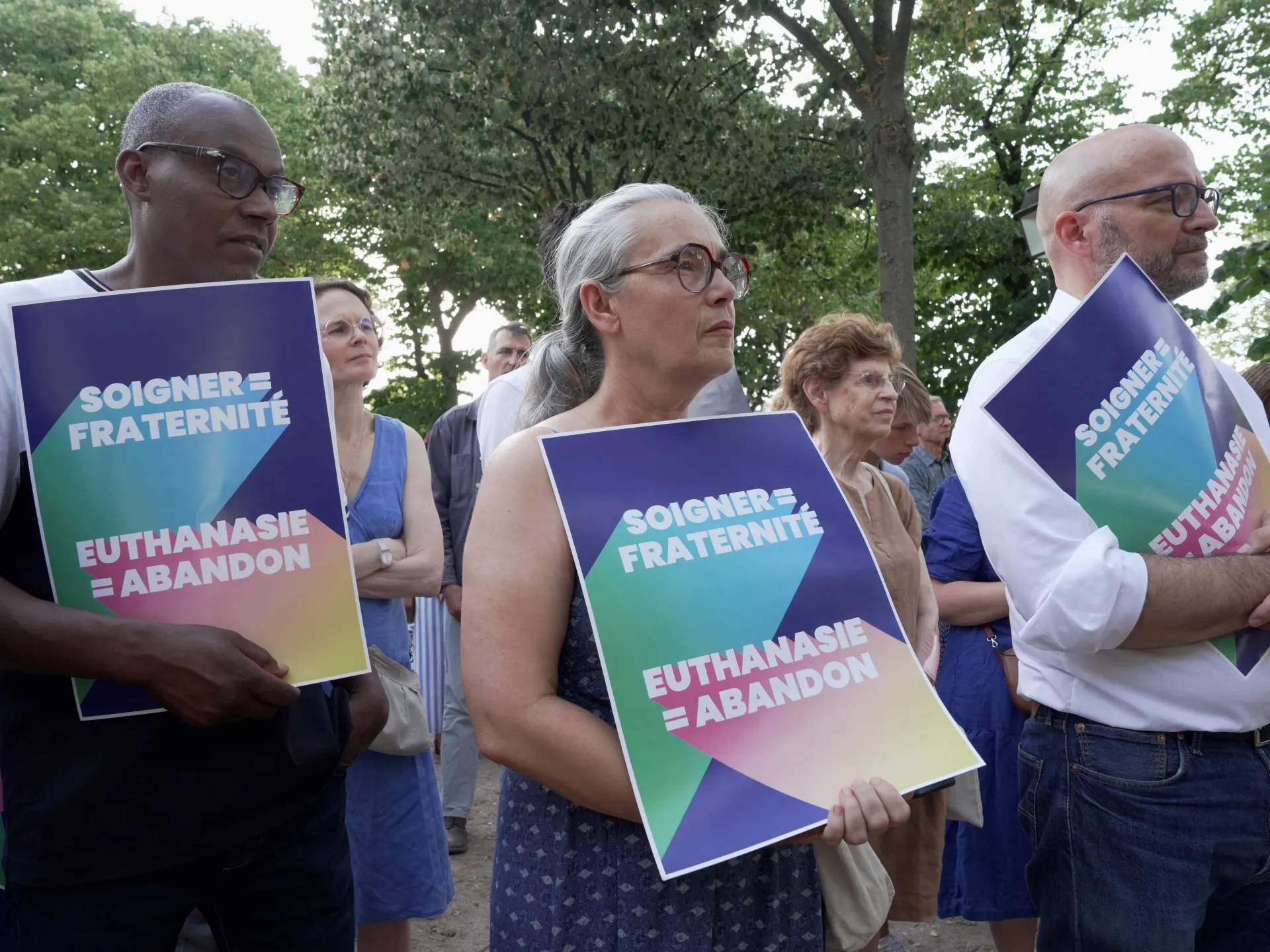
France’s Constitutional Council has upheld a law passed by parliament to legalise assisted dying in specific circumstances, while striking down a separate bill that sought to ban under-15s from using social media.

The council, France’s highest constitutional authority, issued its rulings on Friday. The decisions mark both a victory and a setback for President Emmanuel Macron, who had championed both policies.

Recommended Stories

list of 3 itemsend of list

France is set to join several European countries that have already legalised assisted dying, including Belgium, Germany and Luxembourg, among others.

“This decision marks the culmination of a long democratic and parliamentary effort, conducted with listening, respect, and rigour,” Elisabeth Borne, MP and former French prime minister, said in a post on X about the assisted-dying decision.

“I welcome this definitive validation of a text that guarantees everyone the freedom to choose, within a strict and protective framework.”

The council upheld the law in its entirety while clarifying three provisions, including the so-called conscience clause, under which pharmacists may refuse to assist a patient in ending their life.

Private treatment centres can also refuse to participate in the procedure if it goes against their mission, and other centres can serve local needs. Lastly, in the case of protected patients, the opinion of the person responsible for their welfare must be taken into account.

French citizens and legal residents can request medical support in ending their lives under strict conditions. The legislation stipulates that the patient must be “suffering from an incurable, life-threatening illness in an advanced or terminal phase”, and that the illness must cause “constant physical or psychological suffering that is untreatable or unbearable”. Lastly, the patient must exercise free and informed consent.

The French National Assembly passed the bill last month by a majority of 50, with 291 voting in favour and 241 against.

Meanwhile, the Constitutional Court struck down legislation banning under-15s from social media, citing freedom of expression.

“By prohibiting minors under the age of fifteen from accessing certain online services, the law inherently requires every person, even an adult, to prove their age before accessing them,” the court said in its decision.

“However, by failing to specify the conditions and limits under which such proof must be provided, the legislature has not established the legal safeguards necessary to ensure compliance with these requirements,” it added. The court also said that the law fails to safeguard people’s privacy.

The bill was one of Macron’s flagship policies and was passed by parliament last month.

It stipulated that everyone in France would have to verify their age to access social media sites, and it was supposed to come into effect in January 2027. Macron was eager for the bill to be passed before the presidential election next year.

After Friday’s ruling, Macron asked Prime Minister Sebastien Lecornu to work on a new “legally robust draft” of the legislation.

Last month, Amnesty International responded to the French parliament’s decision to impose the social media ban on teens, urging lawmakers to focus their efforts on forcing companies to redesign their apps, including what it described as “addictive features”.

“There is no doubt that regulating platforms to protect children is an imperative of our time. We commend states for taking social media harms seriously but rather than pursuing blanket bans, efforts should be on forcing platforms to abandon their reckless pursuit of profit to the detriment of human rights,” Secretary General Agnes Callamard said.

“Building safe platforms requires a robust response. To ensure platforms are spaces where children can access community, connection and knowledge in a healthy and safe way, governments should first focus on banning the features that drive harm, including engagement-based algorithms that Amnesty International’s research has shown can draw children into rabbit holes of depressive and suicidal content.”

Source link

Rally for Luxembourg teacher fired over pro-Gaza posts | Gaza

NewsFeed

Students and supporters of a Luxembourg teacher fired over social media posts held a demonstration for her this week. Fatima Kurtic was fired in October over a post deemed anti-Israel. She told Al Jazeera about the motivations and costs behind her pro-Palestinian activism.

Source link