Lula

‘They want to colonise us’: Brazil’s Lula warns of foreign interference | Politics News

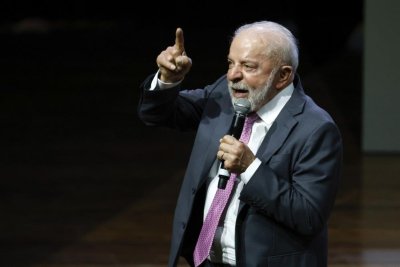
Brazilian President Luiz Inacio Lula da Silva has criticised what he called the return of a colonial approach towards developing nations during a summit in Colombia.

But while Lula did not mention United States President Donald Trump in his remarks, he gestured at actions undertaken by the Trump administration, including the January 3 abduction of Venezuelan leader Nicolas Maduro and the fuel blockade in Cuba.

Recommended Stories

list of 3 itemsend of list

“It’s not possible for someone to think that they own other countries,” Lula said, in an apparent reference to US policy.

“What are they doing with Cuba now? What did they do with Venezuela? Is that democratic?”

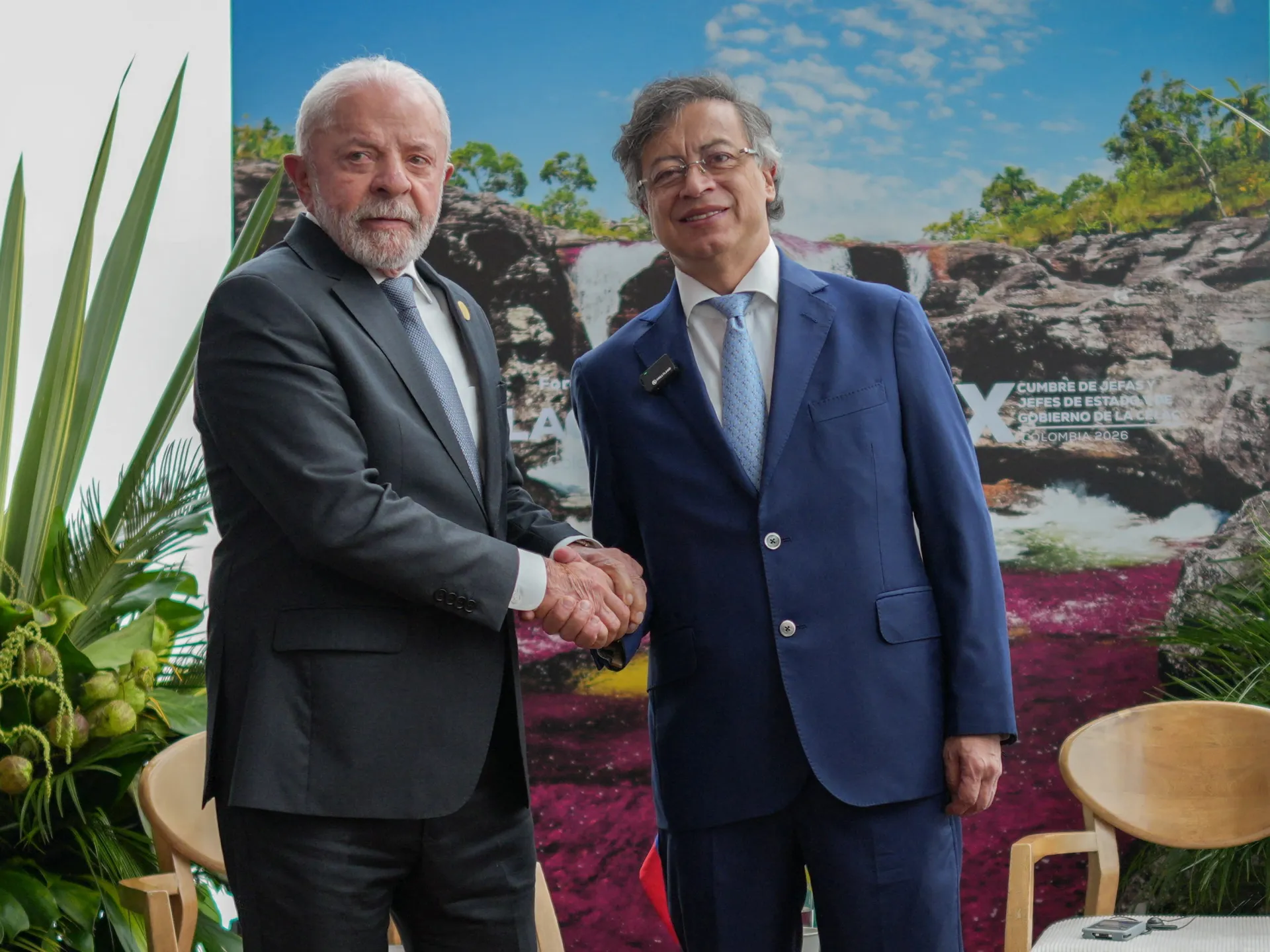
Lula delivered his remarks at Saturday’s summit for the Community of Latin American and Caribbean States (CELAC), which featured a high-level forum with delegates from Africa.

He told delegates that their countries had already experienced being plundered for gold, silver, diamonds and minerals.

“After taking everything we had, now they want to own the critical minerals and rare earths that we have,” Lula said, without specifying who “they” might be. “They want to colonise us again.”

The left-wing Brazilian president also criticised the ongoing war launched by the US and Israel against Iran.

He drew a parallel between that conflict, which began on February 28, and the US-led Iraq war, which began in 2003 on the pretext of eliminating “weapons of mass destruction”.

“Iran has been invaded under the pretext that Iran was building a nuclear bomb,” Lula said, before pivoting to the US campaign in Iraq, which resulted in the overthrow of Iraqi leader Saddam Hussein.

“Where are Saddam Hussein’s chemical weapons?” Lula asked. “Where are they? Who found them?”

A history of intervention

Washington’s history of intervention in Latin America goes back more than 200 years to when then-President James Monroe claimed the hemisphere as part of the US sphere of influence.

While large-scale, overt US involvement in the region mostly petered out after the Cold War, Trump has rekindled the legacy.

Since assuming office last year, Trump has launched boat strikes against alleged drug traffickers in the Caribbean, ordered a naval blockade on Venezuelan oil exports, and gotten involved in electoral politics in Honduras and Argentina.

Trump imposed a 50 percent tariff on Brazilian goods last year, citing the trial against the country’s former president, Jair Bolsonaro, as a motive. The US has also shown keen interest in Brazil’s rare earth deposits.

Then, on January 3, US forces abducted and imprisoned Venezuelan leader Nicolas Maduro, flying him to New York to face drug and weapons charges.

While such actions have thrilled right-wing leaders across the continent, they have raised fears among left-wing politicians, who have voiced grave concerns over what they see as US bullying.

“We cannot allow anyone to interfere and violate the territorial integrity of each country,” Lula said Saturday.

Frustration with the UN

Lula, who has said he will run for a fourth, nonconsecutive term in Brazil’s upcoming October elections, also criticised the United Nations for its inability to stop multiple conflicts around the world.

“What we are witnessing is the total and absolute failure of the United Nations,” he said, pointing to the situations in Gaza, Ukraine and Iran.

He called, once again, for reform of the UN Security Council, which is mandated with ensuring international peace and security. But it has failed to stop major conflicts because of the veto power of its five permanent members: China, France, Russia, the United Kingdom and the United States.

There have been decades of efforts to reform the Security Council. But they have all been unsuccessful.

Colombian President Gustavo Petro, whom the US Drug Enforcement Administration has designated a “priority target”, echoed Lula’s condemnation of the UN.

The body “is acting in impotence, and that is not what it was created for. It was created after World War II precisely to prevent wars. And yet, what we have today is war,” Petro said at the summit.

But the world needs the UN to provide climate solutions and curb global warming, Petro said.

“The more serious humanity’s problems become, the fewer tools we have for collective action. And that path leads only to barbarism.”

Relatively few presidents and prime ministers from Latin America and the Caribbean attended the summit in Colombia, a sign of the continent’s deep divisions.

Those present included the presidents of Brazil, Uruguay, Burundi and Colombia, as well as the prime ministers of Guyana and Saint Vincent and the Grenadines, along with deputy ministers, foreign ministers and ambassadors.
Source link

Trump adviser banned by Lula from visiting Brazil

March 13 (UPI) — A State Department official was barred Friday from going to Brazil because of a proposed visit to jailed former Brazilian President Jair Bolsonaro, who is in prison for plotting a coup four years ago.

The official, Darren Beattie, was approved for a visa to attend a critical minerals summit next week, but his visa was pulled because the meeting with Bolsonaro was determined to be outside his diplomatic authorization, Brazil’s Supreme Court ruled Thursday, Bloomberg and The Guardian reported.

After the ruling, current Brazilian President Luiz Inacio Lula da Silva ordered his government to revoke Beattie’s visa entirely, at least partially because U.S. President Donald Trump denied Brazilian health minister Alexandre Padilha a visa and revoked visas held by his wife and daughter.

“That American guy who said he was coming here to visit Bolsonaro, he’s been barred from visiting and I have forbidden him from to Brazil so long as they don’t free up the visa of my health minister, which has been blocked,” Lula said Friday.

Bolsonaro is serving a 27-year prison sentence after he was convicted for plotting a coup after losing the 2022 election to Lula.

The charges were based on Bolsonaro’s supporters storming government buildings in January 2023 — a plan that had started in 2021, before the 2022 election — in an effort to prevent Lula from taking office.

Brazilian Foreign Minister Mauro Vieira said that although Beattie’s visa application included the minerals summit and meetings with other Brazilian officials, he only asked for the other meetings after asking for the Bolsonaro visit.

Trump and many within his administration, including Beattie, have been critical of the Brazilian Supreme Court and the country’s officials for jailing Bolsonaro on the coup charges.

“It should be noted that a visit by a foreign state official to a former president in an election year may constitute undue interference in the internal affairs of the Brazilian state, Vieira told the Supreme Court.

Lula and Flavio Bolsonaro, who is the son of the former president, are currently locked in a close race for Brazil’s presidency after a poll found them tied for the first time with 41% of participants, which would lead to a runoff election.

The Brazilian presidential election is scheduled for Oct. 4, and a runoff would be Oct. 25.

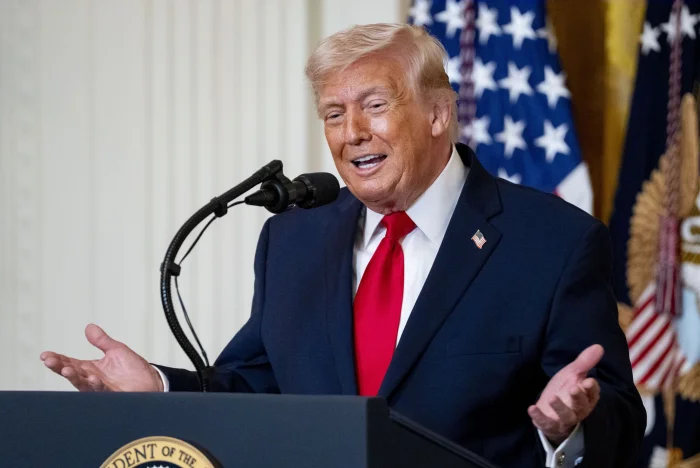
President Donald Trump speaks during an event celebrating Women’s History Month in the East Room of the White House on Thursday. Photo by Bonnie Cash/UPI | License Photo

Source link

Lula, Flávio Bolsonaro tied in Brazil presidential runoff poll

Brazilian President Luiz Inácio Lula da Silva (pictured) and right-wing Sen. Flávio Bolsonaro are each polling 41% in a potential runoff election. Photo by Sebastiao Moreira/EPA

March 12 (UPI) — Brazilian President Luiz Inácio Lula da Silva and right-wing Sen. Flávio Bolsonaro are tied for the first time for a potential runoff after the Oct. 4 presidential election, according to a poll released Wednesday. A runoff would be Oct. 25.

The survey found each candidate with 41% support in a hypothetical second round.

Bolsonaro, a member of the Liberal Party and son of former President Jair Bolsonaro, leads among voters who identify as independent, a shift that could give him an edge.

Among independents, Bolsonaro gained 6 percentage points and would lead Lula 32% to 27% in a runoff scenario. Another 36% said they would not vote and 5% were undecided.

The gap between the two candidates has narrowed steadily, from 10 points in December to seven in January, five in February and zero in March, according to the survey conducted by polling firm Quaest and commissioned by Genial Investimentos.

Similar trends have appeared in other recent polls. A Datafolha survey published Saturday showed Lula with 46% support compared with 43% for Bolsonaro.

Quaest tested first- and second-round scenarios with eight potential candidates. In first-round simulations, Lula leads in two scenarios and is statistically tied with Bolsonaro in five others. Lula’s support ranges between 36% and 39%, while Bolsonaro’s support ranges between 30% and 35%.

Felipe Nunes, Quaest’s director, said Bolsonaro’s gradual rise began after his father publicly named him as a potential candidate in December.

“Flávio has managed to consolidate Bolsonaro’s electorate. He has grown among right-wing voters and improved his performance among independent voters,” Nunes said, according to news website O Globo.

The poll also showed worsening public assessments of the government and the economy.

Both Lula and Bolsonaro face high rejection rates, with 56% of respondents saying they would not vote for Lula and 55% saying the same about Bolsonaro.

“The shift over time is striking. In December, Lula had much greater potential and lower rejection. Now, both have similar levels,” Nunes said.

The survey found 48% of Brazilians believe the economy has worsened over the past 12 months, while 24% say it has improved. In February, negative perceptions stood at 43%.

Source link