LowCost

10,000 Low-Cost Cruise Missiles In Three Years Procurement Plan Laid Out By Pentagon (Updated)

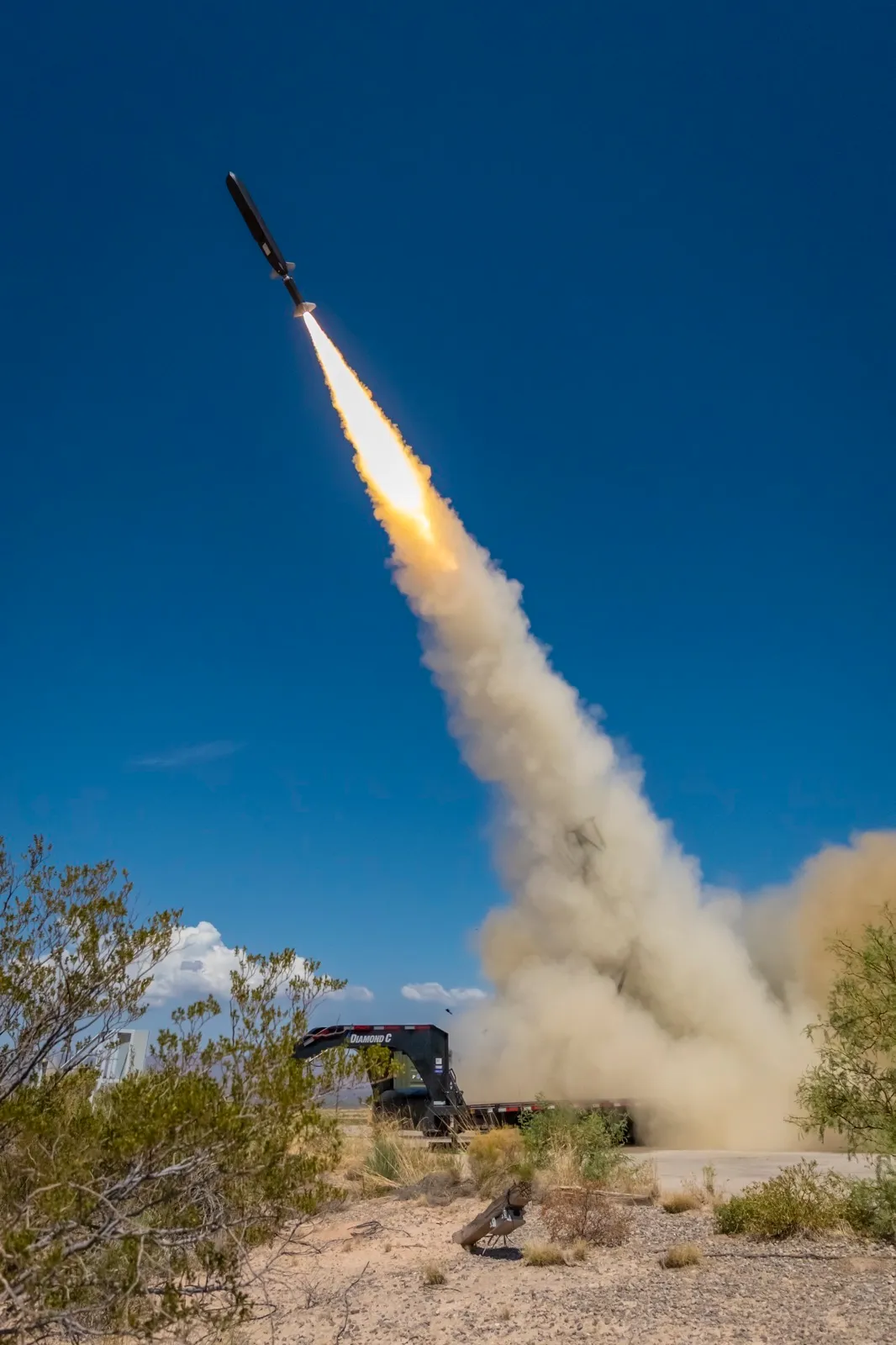
The Pentagon has outlined plans to acquire at least 10,000 lower-cost cruise missiles over the next three years, as well as a similar number of relatively ‘cheap’ Blackbeard hypersonic missiles. The new framework deals are part of a broader strategy to dramatically bolster America’s stockpiles of standoff strike munitions and prime the industrial base to sustain those inventories going forward. This is all seen as especially critical for supporting the demands of future high-end fights, such as one in the Pacific against China, and doing so in a cost-effective manner.

“The Department of War has reached new framework agreements with a slate of disruptive new entrants and commercial innovators to aggressively expand the United States military’s strike capabilities,” the Pentagon declared in a press release today. “Agreements with Anduril, CoAspire, Leidos, and Zone 5 will launch the Low-Cost Containerized Missles [sic; Missiles] (LCCM) program, while a parallel agreement with Castelion advances an initiative to scale low-cost hypersonic solutions.”

The @DeptofWar has reached new framework agreements with a slate of disruptive new entrants to aggressively expand the United States military’s lethal cruise missile and hypersonic missile strike capabilities.
 
Low-Cost Containerized Missiles (LCCM) Program:
• Anduril
•… pic.twitter.com/Fr2xAnBM7y

— Department of War CTO (@DoWCTO) May 13, 2026

“The new frameworks for LCCM will drive a fast-paced experimentation and assessment campaign that will culminate in a Military Utility Assessment by the sponsoring Service Components. Designed to move at the speed of commercial industry, the agreements establish the terms for future firm-fixed-price production contracts,” the release adds. “This effort positions the Department to procure over 10,000 low-cost cruise missiles across these portfolios in just three years, starting in 2027. The Department is creating a pathway for rapid and repeatable production of high-volume, lethal strike capabilities. The agreements include firm fixed material-unit costs for production lots in 2027 through 2029.”

The Pentagon has not yet explicitly defined what it means by “containerized” in this context, or how exactly these munitions might be fielded. However, there is already a clear focus on designs that could be fired from containerized launchers on land or loaded on ships. As TWZ has reported on many occasions, containerized systems offer immense operational flexibility, as well as the ability to blend in with standard shipping containers, creating targeting challenges for opponents. The LCCM munitions could be adapted for air launch, if they are not expected to also be employable in that mode already. Common munitions that could be employed from launch platforms across domains would offer additional benefits in terms of logistics and production, as well as helping to keep costs down through economies of scale.

The Navy’s Mk 70, one of which is seen here firing a Standard Missile-6 (SM-6), is an example of a containerized missile launcher already in U.S. military service. USN

Anduril has already announced that its contribution will be the surface-launched version of its Barracuda-500M design, a weapon that can also be air-launched. The company says it plans to deliver a minimum of 1,000 of these weapons to the U.S. military each year for the next three years.

Anduril has signed a production agreement with @DeptofWar to rapidly deliver Surface-Launched Barracuda-500M at scale.

Affordable missiles designed for long-range precision strikes.

We will deliver a minimum of 1,000 rounds per year for three years, with the first rounds… https://t.co/j9nlNOE1XR pic.twitter.com/G2Lj6GiemS

— Anduril Industries (@anduriltech) May 13, 2026

Leidos says it will supply an LCCM design that leverages existing work on its air-launched AGM-190A Small Cruise Missile (SCM), also known as Black Arrow, originally developed for U.S. Special Operations Command (SOCOM). The company plans to deliver 3,000 of these units under the new framework deal.

Leidos completes successful test launch of a Small Cruise Missile thumbnail

Leidos completes successful test launch of a Small Cruise Missile


“At approximately twice the size of the AGM-190A, the LCCM offers increased mission effectiveness and fuel capacity to maximize range. Building on the Leidos Small Cruise Missile’s heritage, the LCCM leverages key design features including a modular airframe and a common Weapon Open Systems Architecture (WOSA) to enable rapid integration, upgrades and mission adaptability,” Leidos’ press release adds. “The design also utilizes Leidos’ established supply chain and scalable production approach. While initially ground-launched, LCCM’s modular design could also support maritime platform integration and air-launched variants.”

At the time of writing, CoAspire and Zone 5, the latter of which was recently acquired by Norway’s Kongsberg Defence & Aerospace, do not appear to have issued press releases regarding the Pentagon’s LCCM announcement. However, both companies have already developed cruise missile designs under the U.S. Air Force’s Extended Range Attack Munition (ERAM) program, which was focused first on delivering new, lower-cost air-launched strike capabilities to Ukraine. CoAspire’s ERAM design is called the Rapidly Adaptable Affordable Cruise Missile (RAACM), while one from Zone 5 is named Rusty Dagger.

RAACM Cruise Missile Video Long Range Flights Summer 2025 Cleared for Public Release thumbnail

RAACM Cruise Missile Video Long Range Flights Summer 2025 Cleared for Public Release


A Rusty Dagger missile is seen under the right wing of the US Air Force F-16D Viper, just outboard of the drop tank, during a test. USAF/Tech. Sgt. Thomas M. Barley

ERAM is also now feeding into the Air Force’s Family of Affordable Mass Missiles (FAMM) program. That service’s proposed budget for the 2027 Fiscal Year had already laid out plans to buy nearly 28,000 FAMM munitions over the next five years.

In FY 2027, the US Air Force is requesting $55 Million in discretionary and $300 Million in mandatory (reconciliation) funds for the Family of Affordable Mass Missile (FAMM) to procure 1,000 All Up Rounds covering both the Palletized (FAMM-P) and Lugged (FAMM-L) variants. The… pic.twitter.com/EgVaefmJgY

— Air-Power | MIL-STD (@AirPowerNEW1) April 22, 2026

CoAspire has talked in the past about surface-launched versions of its RAACM and its new longer-range RAACM-ER. Zone 5 could similarly look to adapt its existing Rusty Dagger missile to meet the specific LCCM requirements.

CoAspire’s RAACM-ER design. Jamie Hunter

“Concurrently, once Castelion achieves testing and validation, the Department will award a two-year multi-year procurement contract for a minimum of 500 Blackbeard missiles annually, with options to extend for up to five years,” the Pentagon’s press release today also notes. “To further encourage Castelion’s self-funded facility expansion, the Department is actively seeking the necessary authorizations and appropriations to purchase over 12,000 Blackbeard missiles over five years.”

Castelion has already been developing a ground-launched version of Blackbeard for the U.S. Army. Last month, the company formally announced that it had received a separate contract from the U.S. Navy for an air-launched version to arm that service’s F/A-18E/F Super Hornets.

Looking back at Castelion’s most important 2025 test flight on our path to deliver credible deterrence. Thanks to @Saronic for providing autonomous shipborne telemetry support that enabled critical data capture.

We’re gearing up for an even more demanding flight-test schedule in… pic.twitter.com/BWigwRKFku

— Castelion (@Castelion) February 2, 2026

“The experimentation and assessment campaign for LCCM will be led by the Office of the Under Secretary of War for Research and Engineering, with the Army Program Acquisition Executive Fires serving as the transition partner and acquisition lead for procurement,” according to the Pentagon. “To kickstart this initiative, the Department will procure test missiles from all four LCCM companies starting in June 2026, laying the groundwork for the assessment phase of the program. These agreements were developed in close coordination with the United States Air Force Program Acquisition Executive Weapons, the Test Resource Management Center and multiple components across the War Department, including the Office of the Under Secretary of War for Acquisition and Sustainment.”

It should be stressed here that the problem set that LCCM and the tangential framework arrangement with Castelion are intended to address, that of a critical need for production of cost-effective strike munitions at scale, is not new. Expenditures of critical air-to-surface and surface-to-surface munitions, as well as anti-air interceptors, by the U.S. military, as well as its allies and partners, in conflicts in recent years have only underscored the vital need to bolster these inventories. Demand for stand-off munitions, in particular, would be far greater in any future high-end fight against a near-peer adversary like China. That is a scenario where American forces could easily find themselves tasked to prosecute tens of thousands, of targets, just in the opening phase.

Furthermore, existing munitions are often exquisite in design, and take months, or more often years, of lead time to produce. The Pentagon’s focus on “disruptive new entrants and commercial innovators,” rather than any of America’s long-established prime defense contractors, with its newly announced framework deals, is extremely significant in its own right. This is the latest example of a major shift away from awarding high-profile contracts to large legacy providers, helping to diversify the industrial base and promote competition. This also means moving away from companies accustomed to very long lead procurement and production arrangements.

The LCCM effort follows years of work in the pursuit of lower-cost stand-off munitions, especially by the U.S. Air Force. This is underscored by the fact that all of the companies named today already have relevant designs that they have been working on under contract to the U.S. military. This, in turn, has already led to an explosion in the market for munitions in this general category, many of which increasingly blur the line between long-range kamikaze drones, traditional cruise missiles, and decoys. It should also be noted that the new lower-cost munitions are not intended to replace existing exquisite designs, but instead to form a valuable high-low capability mix that offers a more cost-effective and flexible blend of options for striking targets.

Kratos’ Ragnarok, examples of which are seen here loaded on an XQ-58 Valkyrie drone, is just one of several other lower-cost cruise missile designs in development today, just in the United States. Kratos

The U.S. Army and U.S. Navy have also made significant investments already in containerized launchers capable of firing various types of longer-ranged missiles.

US Navy Mk 70 launchers are seen here in a trailer-based configuration, underscoring the flexibility that containerized systems offer. USN

If the frameworks announced today produce the promised results, they could be instrumental in laying the foundation for the production of lower-cost strike munitions for years to come.

Update: 6:20 PM EST –

Zone 5 has now provided a statement regarding today’s announcement from the Pentagon.

“Zone 5 is proud to partner with the Department of War on the Low-Cost Containerized Missiles program to deliver affordable, scalable strike capacity to our warfighters needed to deter and defeat emerging threats,” Thomas Akers, CEO of Zone 5 Technologies, said. “This program reflects exactly where American defense innovation must go: faster development, on-demand production, and high-volume weapons that can be fielded at the pace of relevance. We are honored to be a part of this effort to expand the munitions industrial base and strengthen America’s arsenal.”

Contact the author: joe@twz.com

Joseph has been a member of The War Zone team since early 2017. Prior to that, he was an Associate Editor at War Is Boring, and his byline has appeared in other publications, including Small Arms Review, Small Arms Defense Journal, Reuters, We Are the Mighty, and Task & Purpose.


Source link

New Low-Cost Cruise Missile Features Tomahawk-Like Range

A new, longer-range version of the Rapidly Adaptable Affordable Cruise Missile (RAACM) has been unveiled by CoAspire at the Sea-Air-Space 2026 exposition near Washington, D.C. The development comes just days after the U.S. Air Force launched market research for its Family of Affordable Mass Missiles — Beyond Adversary’s Reach (FAMM-BAR), reflecting the service’s interest in low-cost, long-range strike weapons, specifically for anti-surface warfare.

Jamie Hunter of TWZ spoke about the RAACM-ER (RAACM pronounced ‘rack-em;’ ER for Extended Range) with Doug Denneny, founder, CEO, and owner at CoAspire.

A frontal view of the RAACM-ER. Jamie Hunter

First off, it’s worth looking at the original RAACM, a modular, low-cost cruise missile that leverages 3D printing to bring down cost and enable rapid production ramp-up.

“When we designed the original RAACM, we knew that it was going to be the size of a GBU-38,” Denneny said, referring to the 500-pound version of the Joint Direct Attack Munition (JDAM), which is 92.6 inches long and has a wingspan of 14 inches.

An official video promoting the original RAACM:

RAACM Rapidly Adaptable Affordable Cruise Missile thumbnail

RAACM Rapidly Adaptable Affordable Cruise Missile


“When you go to that size, there are great reasons to do it, but it doesn’t go as far as a larger variant could do,” Denneny continued. “We really wanted to take everything we learned and now have an extended-range version. And what’s beautiful about the additive manufacturing that we use is that we can really optimize fuel tank volume, which means this can go very far.”

According to the manufacturer, the RAACM-ER has a range greater than 1,000 nautical miles.

This is especially remarkable considering the relatively compact size of the weapon. Indeed, when it comes to anti-ship missiles, the only weapon in the U.S. inventory that comes close is the BGM-109 Block V Maritime Strike Tomahawk (MST). This can be launched from destroyers, submarines, and the U.S. Army’s Typhon system. Like the RAACM-ER, it is subsonic, but a single round costs $3.64 million, according to the Navy. While the RAACM-ER clearly has a degree of low observability, it is not to the same degree as on the MST.

A full battery set of four Typhon launchers, as well as the trailer-based command post. U.S. Army

Like RAACM, the extended-range model is designed for launch from aircraft, as well as from the ground and from naval vessels. For surface-launched applications, the RAACM-ER adds an additional rocket booster behind its turbojet, meaning it can be propelled out of its launch canister.

Despite the nomenclature, the RAACM-ER is a new design, rather than a modification of the RAACM.

Denneny explained: “Our engineers came to us and said, ‘Hey, if we’re going to make a bigger one, should we make it look just the same?’ I mentioned earlier that RAACM was made that shape just to ease integration. We’re an engineering company, so we said, ‘Let’s optimize fuel volume, let’s optimize survivability features, let’s optimize physics so that this thing can go as far as possible and take the sensors needed. That’s why it’s in this slightly different shape.”

The RAACM-ER is somewhat reminiscent of the AGM-158 Joint Air-To-Surface Standoff Missile (JASSM), in terms of appearance and capabilities, but Denneny is keen to avoid direct comparisons.

Stealthy AGM-158 JASSMs loaded onto an F-15E. U.S. Air Force/Photo by Airman 1st Class Susan Roberts Stealthy AGM-158 JASSMs loaded onto an F-15E. JASSM uses an imaging infrared seeker — seen in the hexagon-shaped window on the missile’s nose — to match the target in its databank and fine-tune its terminal attack run. (Photo by Airman 1st Class Susan Roberts)

“Physics is physics,” he added. “When people look at shapes, they look similar, but just like an Airbus looks like a Boeing, but what they have different inside is really what matters, and that’s how we differ in many ways.”

In terms of sensors, the RAACM-ER is currently fitted with a GPS navigation system, suitable for air, ground, and surface launch.

“Both our RAACM and our RAACM-ER also have a long-wave infrared sensor in the nose,” Denneny continued, “so we have the opportunity to search and find targets as well.”

Unlike the JASSM and similar cruise missiles, however, the RAACM-ER, like the RAACM before it, is optimized for low cost.

For Denneny, “the most important thing is affordable mass. [This] means keeping the cost down, so that the nation and our allies can purchase these at scale. That’s number one. Number two is to use as many commercial off-the-shelf parts, so that we’re we are not locked into a single supplier for anything. The final thing is to have something that can survive enemy countermeasures, and also hit the target, whether it’s stationary or moving. Those are the main requirements.”

Jamie Hunter

When it comes to price point, CoAspire has optimized mass rather than the highest-end capabilities. This is a reflection not only of the sheer number of targets that the U.S. military and its allies would face in a potential conflict with China, but also the fact that a considerable proportion of missiles won’t make it to their targets anyway. Still, as recent conflicts have shown, the ability of lower-end drones, especially, to overwhelm adversary air defenses when fielded in large numbers is significant. After all, quantity has a quality all of its own.

Denneny confirmed that CoAspire plans to test-fly the RAACM-ER “very soon.”

The original RAACM has already undergone flight trials aboard a contractor-operated A-4. CoAspire is now under contract to the U.S. government for RAACM, and the weapon is in production at the company’s plant in Manassas, Virginia.

In the past, we’ve learned that both the Air Force and the Navy have funded work on the RAACM project. It has also been reported that CoAspire is one of two companies producing Extended Range Attack Missiles (ERAM) for Ukraine — this may well involve the RAACM or a related weapon.

Two candidate weapon prototypes competing for the US Air Force’s Extended-Range Attack Munition program 👇. Both Coaspire and Zone 5 Technologies were awarded contracts late last year in support of the #ERAM program. Both are expected to enter testing this year. https://t.co/9cGBuB9z3s pic.twitter.com/gc3ZDtX54m

— Air-Power | MIL-STD (@AirPowerNEW1) February 9, 2025

As for the RAACM-ER, this was unveiled only a week after the Air Force launched market research for its Family of Affordable Mass Missiles — Beyond Adversary’s Reach (FAMM-BAR).

“The potential procurement objective is to produce an inventory for the [U.S.] Government and Foreign Military Sales. The expectation is that the annual production orders will range from 1,000 to 2,000 units per year for five years (procurement numbers will vary by year),” the Air Force says in the request for information.

The FAMM-BAR program lists five desired attributes for the potential weapon: a range of at least 1,000 nautical miles, a speed of at least 0.7 Mach, the option of palletized delivery from a cargo aircraft, the ability to receive midcourse navigation updates, and the manufacturing capacity to produce more than 1,000 rounds annually. The main target set for the weapon is “slow-moving maritime” vessels.

A video showing a demonstration of the Rapid Dragon air-launched palletized munitions concept, using surrogate weapons delivered from the cargo holds of a C-17A and an EC-130J:

Rapid Dragon Flight Test thumbnail

Rapid Dragon Flight Test


This requirement reflects the growing focus on anti-surface warfare as the U.S. military plans for a high-end conflict in the Pacific, especially against China. The U.S. military is increasingly investing in a diverse mix of anti-ship capabilities, part of a broader strategic shift driven by China’s growing maritime power. At the same time, real-world operations have exposed how rapidly missile stockpiles can be depleted, intensifying concerns that sustaining the massive volumes of anti-ship fires required in a China conflict will demand significant expansion of U.S. production capacity and inventories.

At the same time, the RAACM-ER would be useful for striking static land targets during an Indo-Pacific war, too. With such a considerable range, the weapon will also be better able to deal with increasingly far-reaching air defenses, something that the Pentagon is increasingly concerned about, including the likelihood of enemy missiles that can target its aircraft at ranges as great as 1,000 miles.

It should be noted that there are already other FAMM programs underway, namely the FAMM-Palletized and FAMM-Lugged cruise missiles for the Air Force. However, these require ranges of 250-500 nautical miles.

At this point, the low-cost, long-range strike weapon field is becoming increasingly crowded. Other contenders include designs from Anduril, General Atomics, and Zone 5 Technologies. From the last of these companies, the Rusty Dagger recently underwent release tests from an Air Force F-16 as part of the FAMM-L effort.

A U.S. Air Force F-16 takes off carrying a Rusty Dagger, from Zone 5 Technologies, as part of the Family of Affordable Mass Munition — Lugged tests. U.S. Air Force photo by Tech. Sgt. Thomas M. Barley

Global Technical Systems is also pitching a cruise missile with a range of 1,200 nautical miles and an anti-ship warhead.

However, with the original RAACM already in production, and proven in flight tests, the new RAACM-ER looks well-positioned to go far — figuratively and literally — in the FAMM-BAR program.

Contact the author: thomas@thewarzone.com

Thomas is a defense writer and editor with over 20 years of experience covering military aerospace topics and conflicts. He’s written a number of books, edited many more, and has contributed to many of the world’s leading aviation publications. Before joining The War Zone in 2020, he was the editor of AirForces Monthly.


Source link