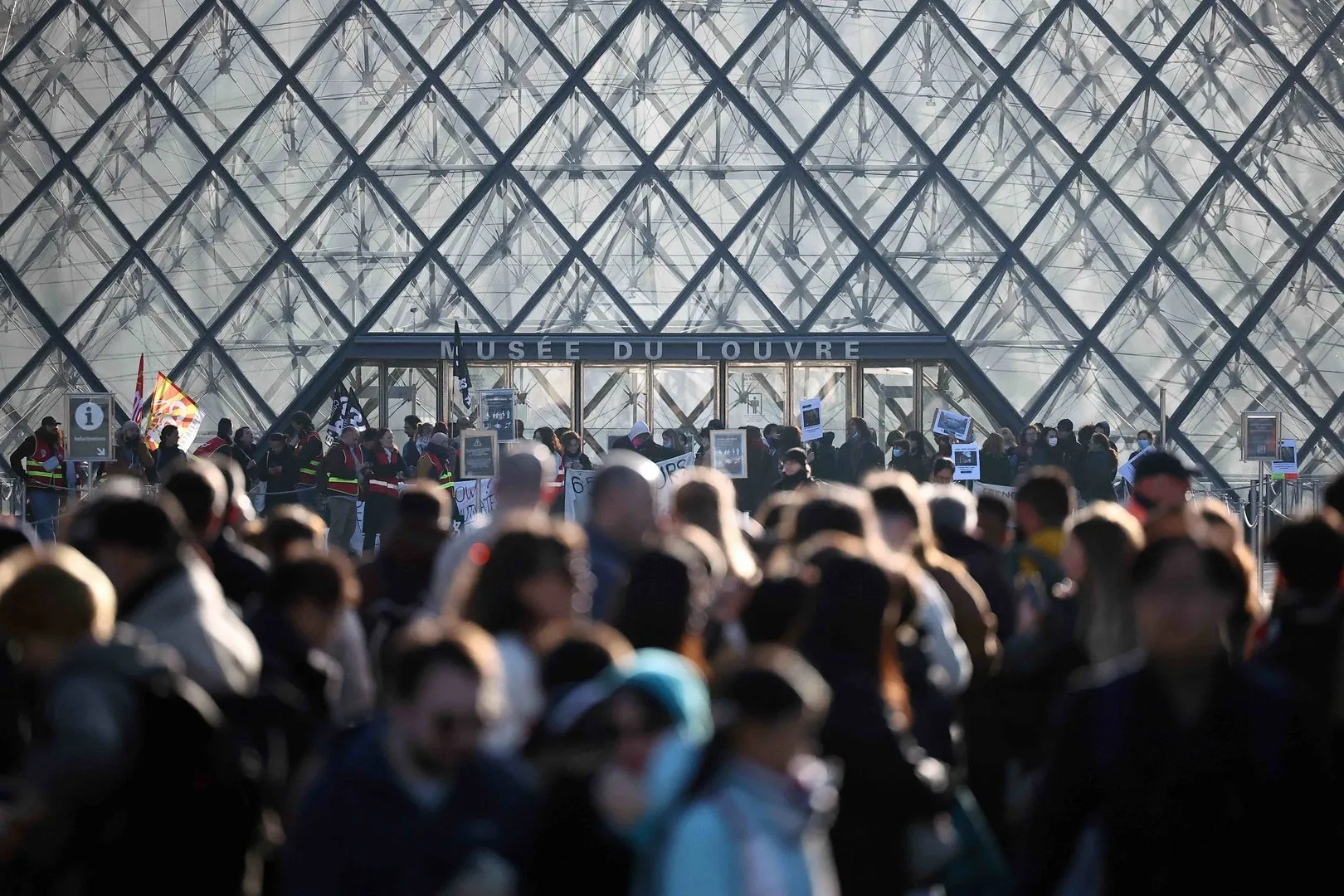
Louvre

5 European tourist spots where Brits are being charged more since Brexit

It’s the time of year where Brits flock to the continent to explore its cultural delights, but many will find that in addition to longer queues at passport control, they could paying more to visit top attractions

Exploring Europe has become a lot trickier, and more expensive, since Brexit. From 90-day restrictions to the new Entry/Exit System (EES) that non-EU residents need to go through, the days of carefree hopping across the continent are over.

In the latest blow to Brits, some of Europe’s top tourist attractions have also started two-tier pricing schemes for EU and non-EU residents, meaning not only are we relegated to the longer queues at airports, on arrival we’ll also pay more to experience the country when we arrive.

Here are some tourist spots where you’ll need to pay more if you don’t have an EU passport.

1. The Louvre

According to a report by Which?, visitors to the Louvre, one of the most popular tourist attractions in Paris, face a two-tier pricing system. The museum increased its prices last year, from €22 to €32 (around £19 to £27), for anyone from outside the European Economic Area (EEA). So, visitors from any of the 27 EU countries, or Iceland, Liechtenstein or Norway, will pay €10 (about £8.64) less than British tourists.

Other Paris attractions such as the Palace of Versailles and Sainte-Chapelle have also introduced dual pricing depending on nationality. British visitors to the historic château in Versailles will pay €3 more for their tickets (about £2.50).

2. Teide National Park

Tourists visiting Teide National Park, the largest of its kind in the Canary Islands, will need to pay for a permit to walk its most popular trails. This recently introduced fee runs from €10 to €25 (approx. £8.64 to £21.50) depending on where you go and whether you take a guide. Tenerife residents don’t pay this charge, and people who live on other Canary Islands get heavy discount.

It’s not the only Canary Islands attraction to offer deep discounts for those who live on the archipelago. For example, a visit to Siam Park, a sprawling waterpark in Tenerife is around €44 for a standard adult ticket, about £38, but half the price if you live on one of the local islands.

3. Acropolis of Athens

Hoping to take the kids to see the iconic Acropolis of Athens? if they’re British passport holders you’ll need to fork out more. While EU residents up to the age of 25 can visit the Acropolis for free, non-EU kids from the age of six to 25 will need to pay €10. Older adults also get fewer discounts if they’re from outside the EU. While seniors over 65 from the EU can pay a reduced €10 entry fee, Brits of the same age pay the full price of €20 (about £17.25).

4. The Royal Palace of Madrid

The Royal Palace of Madrid offers free hours between Monday to Thursday, from 4 pm to 6 pm from October to March, and from 5pm to 7pm from April to September, but these are only available to citizens of the European Union and Latin American citizens holding proof of nationality. Brits who want to visit the official residence of the Spanish royal family will need to pay nearly €25, although there are half-price tickets for younger people.

5. Pompeii and the Colosseum

Young people hoping to explore Italy’s state museums such as Pompeii and the Colosseum will pay more if they’re from non-EU countries. Many Italian attractions offer heavy discounts for young people up to the age of 25, bringing the cost of tickets down to under £2 in some cases. But these aren’t available to British passport holders.

Elsewhere in Italy, visitors to Rome will now need to pay for access the lower basin and steps of the iconic Trevi Fountain. As of February, visitors need to pay €2 to get close to the popular sightseeing spot, although locals can still enjoy it for free.

Have a story you want to share? Email us at webtravel@reachplc.com

Source link

Tourists name Europe’s ‘unfriendliest’ cities saying people were ‘unbelievably rude’

These are some of the least welcoming cities in Europe.

European capitals continue to be beloved getaway destinations for countless Britons looking for a quick break from daily life. With straightforward access by plane or train, these cities are perfect for long weekend trips. Yet an increasing number of locations are gaining notoriety amongst travellers for being hostile, dirty and dangerous.

One city in particular has been singled out as a place to avoid, according to recent reviews from British visitors. Long considered the ultimate destination for a romantic retreat, Paris has faced significant backlash, reports the Express.

In a Reddit thread, one user branded the city as grimy and said locals were “unbelievably rude”.

ExplanationWorried14 wrote: “I said ‘merci’ when someone actually stopped at a crossing and he looked angry and shrugged like I was an idiot.

“Some school girls sang a song about me being an English w****, despite me wearing a long, flowing hippie dress that in no way revealed any flesh, and I felt unsafe.”

“Got followed by two men near the Louvre. Would never go back. I don’t know why people say it’s romantic… I guess those people are into some weird stuff.”

Another commenter pointed to rampant criminal behaviour and mentioned that the French capital came with a steep price tag.

Mister Pink said: “Lots and lots of crime is very visible all around in the form of pickpockets and con artists. Very expensive, and the Parisians generally were pretty rude.

“At least when you go to the nicer bits of London for food, the area tends to be quite nice to match the outrageous prices.”

Other well-known European cities fared little better in the eyes of the Reddit users, who were equally ruthless in their verdicts.

Berlin was branded as a city overrun with rude locals.

Philosophyguilty wrote: “Old school Berliners are vicious. If you live in Berlin for any length of time, you will have a tale or two about them.”

Softwarepanda agreed, writing: “Never been in a place with so much grumpiness.”

Brussels was labelled as having a “pretty grim vibe”, while Rome — a city forever synonymous with La Dolce Vita — was alleged to be crawling with “scammers and gropers”.

Source link