Louisiana

Late-down defense, special teams focuses for USC ahead of Oregon bout

In No. 12 USC football’s first three dominant wins of the season, its opponents combined to convert about one-third of third-down attempts and made one fourth-down conversion in three attempts.

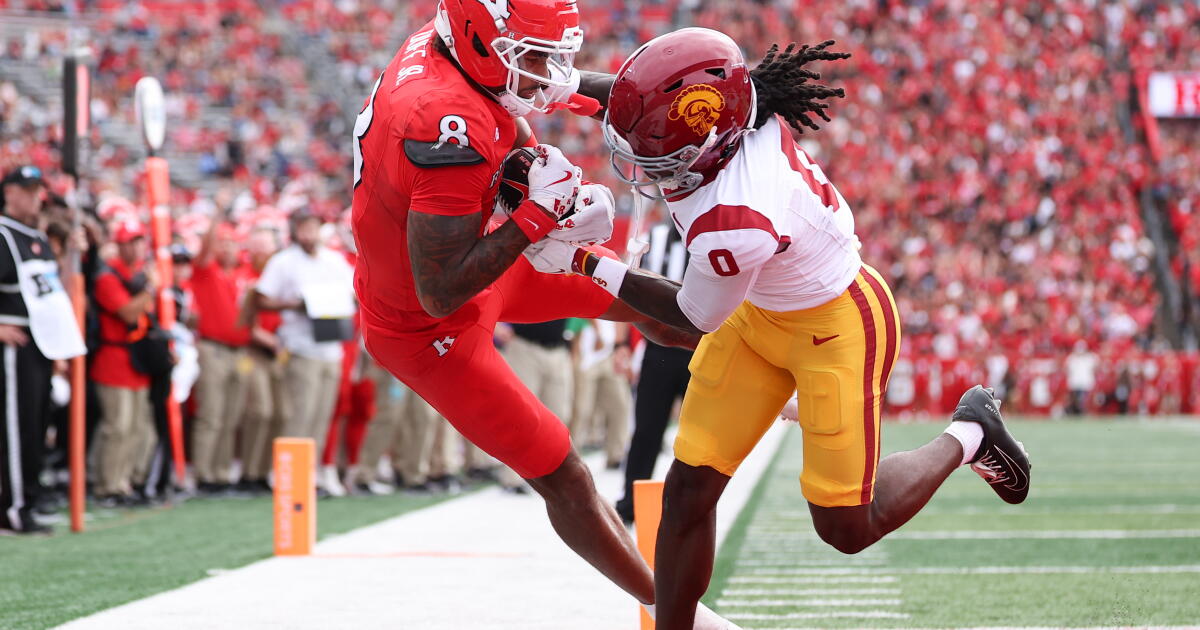
On Saturday, in a rocky 42-35 win over Rutgers (0-3, 0-1 Big Ten) that saw the Trojans give up 292 passing yards, nearly get outgained overall and suffer multiple injuries in the secondary, the Scarlet Knights converted 6-of-11 third downs and made 3-of-4 fourth-down tries.

Against one of the worst teams in the Big Ten, USC’s high-powered offense and a clutch pick-6 from cornerback Prophet Brown were enough to survive the defense’s late-down struggles for a fourth consecutive win. However, with No. 20 Oregon (2-1) coming to Los Angeles Memorial Coliseum on Saturday with a star veteran quarterback in Dante Moore, that might not be possible.

“As a secondary, we’ve got to be a little bit tighter in those situations. We’ve got to make those competitive plays,” Trojans coach Lincoln Riley said Tuesday of third- and fourth-down situations. “We have a good defensive line. We have a group that can rush the passer. We’ve got to make guys hold onto that ball, make our pass rush work and make those plays when we get to the point of attack.”

USC hasn’t beaten Oregon in two matchups under Riley, including a 42-27 loss that all but eliminated the Trojans from College Football Playoff contention late last season, and has only won two of the teams’ last 10 meetings. A second loss this season for the Ducks or a loss this early in USC’s loaded conference schedule could make either team’s CFP path more difficult moving forward.

Though Brown echoed a common team sentiment that Saturday’s game is just like any other despite the potential CFP stakes, he said third- and fourth-down defense could be a deciding factor.

“Great defenses find a way to get off the field on third and fourth down,” Brown said. “Going into this game, it’s definitely going to be a big indicator on how it’s going to go, how we do on third and fourth down.”

Secondary, wide receiver groups dealing with injuries

During the Rutgers game, both cornerback Jontez Williams and safety Alex Graham appeared to be dealing with injuries, which Riley acknowledged Monday on Trojans Live. Riley said on the show that he was hoping to get both back “right away.”

Williams did not appear on USC’s initial availability report released Wednesday evening after telling reporters Tuesday that he was “ready to go.”

Graham, however, was listed as questionable on the report, which is updated daily from Wednesday through Saturday during a typical game week.

Standout freshman wide receiver Trent Mosley, who racked up 13 catches, 255 yards, four receiving touchdowns and a punt-return touchdown in his first three games with USC, was listed as doubtful. Mosley missed the Rutgers game after appearing to favor his right knee after a third-quarter touchdown the week prior against Louisiana.

On Tuesday, Riley deferred a question about Mosley’s return timetable to the availability report. Last week, Riley said he didn’t expect Mosley to be out “extremely long term,” but did not offer specifics.

Another of USC’s top receiving options, Corey Simms, was listed as out. Simms had at least two receptions in each of the Trojans’ first four games for nearly 200 yards and caught a touchdown against Rutgers.

Standout sophomore defensive tackle Jahkeem Stewart was also listed as questionable after missing the first four games of the season with a foot injury. Stewart dressed for the game against Louisiana on Sept. 12, but Riley said the team “made the decision to pull him back a little bit” after seeing him warm up for that game.

“He’s definitely getting better and better each week,” Riley said Tuesday.

Special teams an emphasis in practice

Hours before their playoff hopes were dashed, the 2025 Trojans had the ball and were as in it as they could be.

More specifically, the then-No. 15 Trojans were tied with then-No. 7 Oregon 14-14 early in the second quarter and playing well on the road. Should they have won the game, USC would have had a reasonable argument to the CFP selection committee to make the 12-team field.

The Trojan offense stalled and was set to punt. Oregon’s Malik Benson took a line-drive punt 85 yards to the end zone to give the Ducks a lead. The Trojans compounded mistakes and fell convincingly afterward.

“It was a huge, huge play in the game,” Riley said after the game. “You definitely don’t want to give them something like that.”

Last week, the play that kept Rutgers in the game near the end of the first half also came from a punt formation, but with the roles reversed.

The Scarlet Knights ran a fake punt to convert a fourth-and-21 for a 44-yard gain that sparked a touchdown drive to close the gap to 3 points.

“The special teams play last year (against Oregon) really turned the game. The one the other day did too,” Riley said. “In these big games, when you’ve got two really good teams going at it, it always feels like there’s a couple of just really, really impactful special teams plays.”

With last year and last week in mind, how much emphasis did Riley and company place on special teams with a critical matchup with Oregon upcoming?

“A ton,” Riley said.
Source link

Trent Mosley’s stellar season continues as No. 14 USC beats Louisiana

At the end of a topsy-turvy Saturday that saw the Big Ten’s top contenders tumble, Trent Mosley stood just inside USC’s 15-yard line, looking skyward.

By that point, Ohio State had just blown a 20-point, fourth-quarter lead to Texas, and Oregon had, hours earlier, been stunned by Oklahoma State. The path to the top of the Big Ten suddenly seemed open as ever, just as the Trojans’ tremendous freshman caught the punt and took off in search of an opening himself.

With his stunning start to the season, no one player at USC — and perhaps in all the nation — had manufactured more hope through two games. While the conference’s other top teams spent the day licking their wounds, here, once again, was Mosley weaving joyfully through the open field and conjuring the very same magic from thin air. He shook off one tackle, then another. Soon enough, he was gone for an 86-yard punt return, and the No. 14 Trojans were rolling, comfortably on their way to a 49-30 win over Louisiana.

The second half didn’t feel quite as hopeful, as the Trojans let up and let Louisiana linger around through a victory that coach Lincoln Riley deemed “up and down.”

Still, the win was USC’s 10th straight at home, going back to the 2024 season, and gives the Trojans’ a spotless nonconference slate in 2026 — not that anyone would confuse their early-season schedule for a murderer’s row. There won’t be any easy home wins from here, though, with USC’s next three games against Oregon, Washington and Ohio State.

“It’s been good getting adjusted to this,” Mosley said. “But now we go on the road, so that’ll be a new adjustment.”

USC has, in glimpses this season, looked like a team that belongs among those Big Ten behemoths. And the most encouraging of those moments have largely come from the Trojans’ talented freshman class.

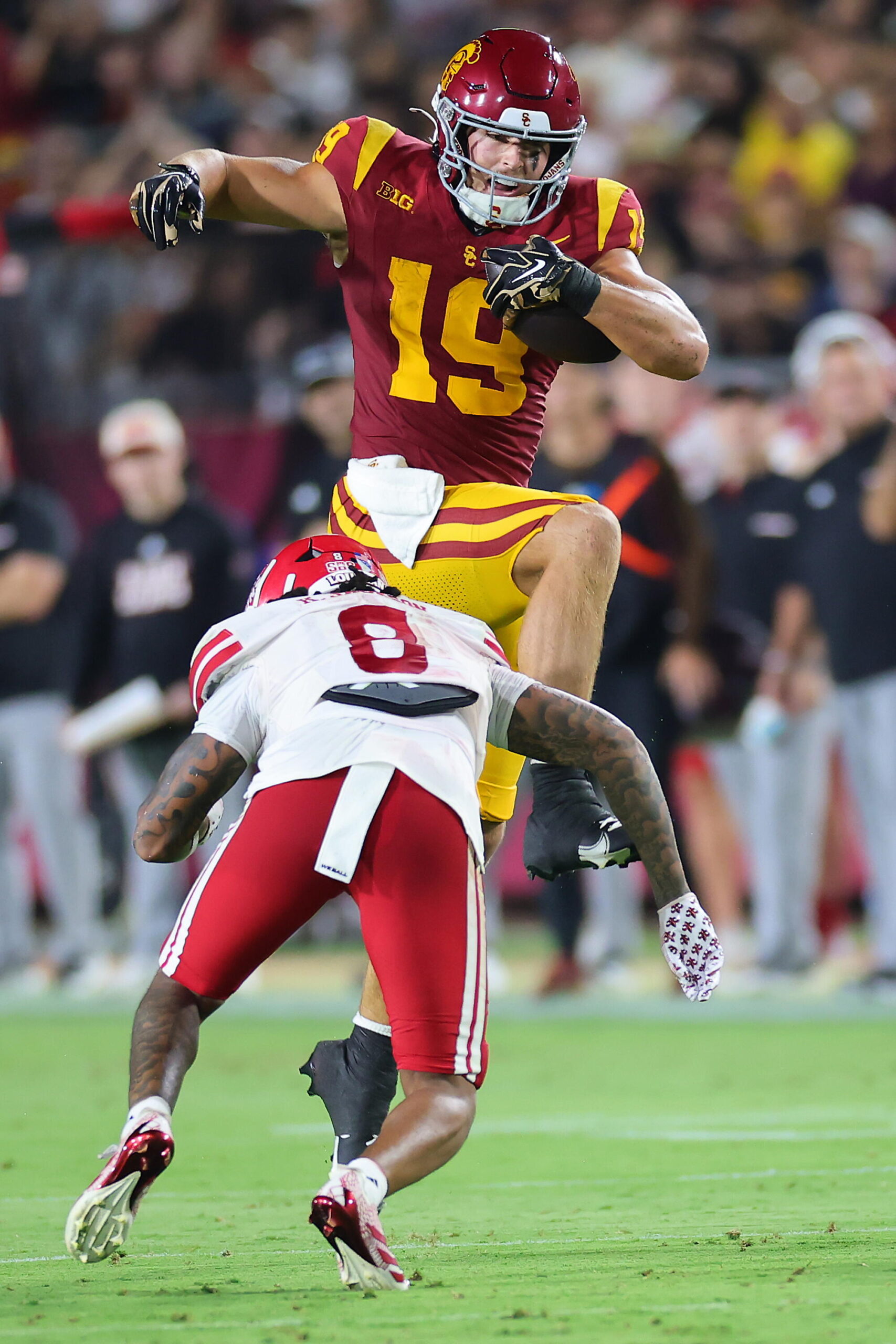
Mosley, who also had an acrobatic receiving touchdown Saturday, wasn’t the only one who made his presence felt. Tight end Mark Bowman had his eagerly anticipated breakout game, as he exploded for six catches, one of which he capped by hurdling two defenders. He finished with 83 yards and two touchdowns, all in the first half. Defensive tackle Luke Wafle, meanwhile, continued his streak of early dominance by tallying a team-leading seven tackles.

USC tight end Mark Bowman hurdles over Louisiana safety Kody Jackson.

USC tight end Mark Bowman hurdles over Louisiana safety Kody Jackson during the first half Saturday.

(Kevin Terrell / Getty Images)

“I feel like our peak, our trajectory should be even higher because of how many young guys are playing,” Riley said.

The win wasn’t nearly as dominant an effort for the rest of USC’s defense, which was coming off of a shutout of Fresno State. Louisiana averaged 7.6 yards per play and scored 20 points in the second half, led by dual threat quarterback Lunch Winfield, who scampered to 91 rushing yards.

“We’re just gonna take this as a learning moment,” defensive tackle Jide Abasiri said. “I just feel like sometimes we’ll get comfortable or complacent, then that’s something we need to, going forward, fix when adversity hits.”

It wasn’t the sharpest night for the Trojans’ offense, either. Though, you wouldn’t know it from the box score. While USC rushed for 214 yards, nearly 100 came in the fourth quarter, with the game well in hand. Quarterback Jayden Maiava put up numbers once again, as well, completing 19 of 29 passes for 261 yards and five touchdowns.

USC receiver Trent Mosley makes a touchdown catch under pressure from Louisiana safety Maurion Eleam Saturday.

USC receiver Trent Mosley makes a touchdown catch under pressure from Louisiana safety Maurion Eleam Saturday at the Coliseum.

(Mark J. Terrill / Ap Photo/mark J. Terrill)

The five passing scores tied a career high. But Maiava said after the game that it “definitely didn’t feel like” that strong of a performance.

Through two games, Maiava had accounted for as many touchdowns (six) as he had incomplete passes entering Saturday’s game. But on Saturday, he missed his first three passes, the third of which went directly to a Louisiana defensive back.

The interception was Maiava’s first of the season, and it led to a Louisiana field goal, giving the Ragin’ Cajuns (1-1) an early lead. It was also the first time the Trojans trailed this season.

USC (3-0) and its quarterback settled down after that. The Trojans mounted a 12-play scoring drive on the ensuing possession, and Maiava found Bowman for a five-yard score. Then, they mounted a 10-play drive, and Maiava found Bowman again.

By that point, USC’s offense had piled up almost 200 yards, while Louisiana had scraped together just 18.

But the Ragin’ Cajuns refused to go away — for the moment, at least. They marched the length of the field and scored, cutting USC’s lead to 14-10.

That was the closest they’d get. The Trojans mounted a third straight drive of 10 plays or more, and this time, Maiava fired a touchdown pass through the hands of a Louisiana defensive back on its way to freshman Kayden Dixon-Wyatt.

The knockout blow came soon after that. After its follow-up drive went nowhere, Louisiana made the mistake of punting to Mosley, who took off sprinting to his right and didn’t stop until he reached paydirt.

The punt return was his fourth score of the season. He added a fifth before the final buzzer sounded.

The rest of the night wouldn’t go nearly as smoothly. The intensity, Riley said, “dipped a little bit.” Louisiana would linger, well into the fourth quarter.

But by then, the Trojans could safely coast their way to a clean non-conference sheet, knowing the trust test of their season – and their stellar true freshmen – is still to come.

Source link

Civil rights groups make urgent plea for voting rights in D.C., ahead of midterm elections

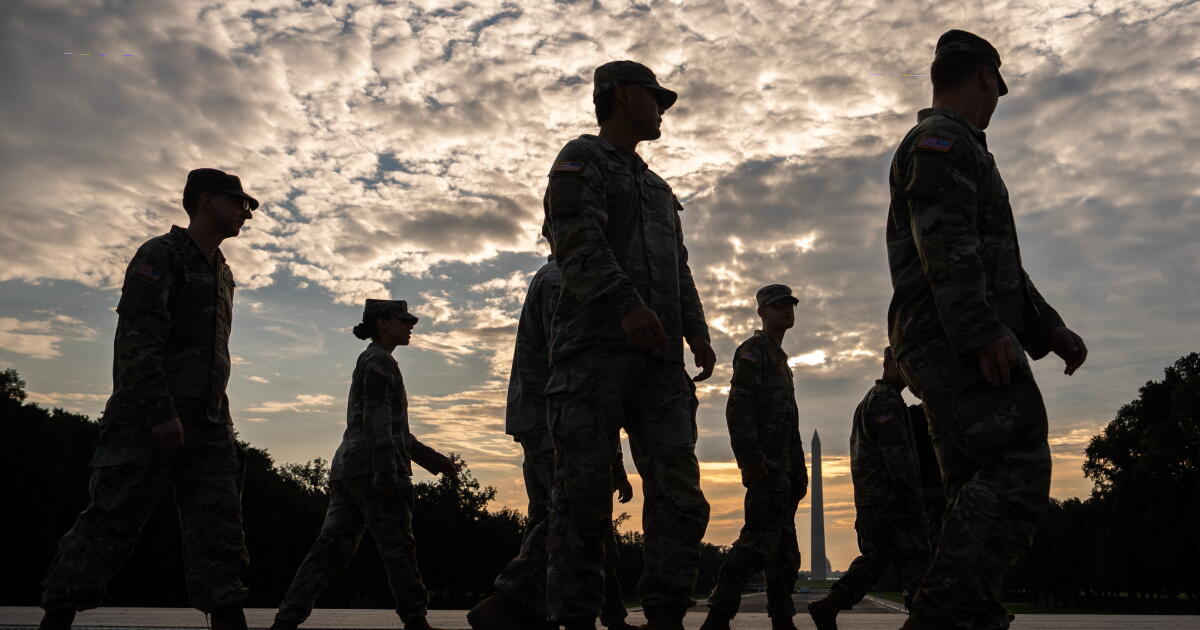
Thousands of protesters are rallying Friday on the National Mall in support of voting rights and racial justice ahead of the midterm elections, following a wave of changes to voting laws and redistricting that civil rights groups have condemned as detrimental to Black Americans.

The 2026 “Defend the Vote” March on Washington, organized by the Rev. Al Sharpton and Martin Luther King III, echoes the Rev. Martin Luther King Jr.’s 1963 march. The event follows the U.S. Supreme Court’s landmark April decision in Louisiana v. Callais that reinterpreted key provisions of the Voting Rights Act of 1965, allowing Southern states to redraw their congressional maps in a way that erodes equal representation in Black communities.

“We’ve been doing these marches for years, but this is probably the most important because this is the first year we are marching that the voting rights bill has been nullified by the Supreme Court,” Sharpton, founder of the National Action Network, said in an interview with The Associated Press.

“Marches are designed to grab attention and then go into the trenches and organize around that,” he said.

The march opened with prayer and statements from Interfaith Alliance representatives. They spoke on diversity, equity and inclusion practices, voting rights and systemic racism.

“Creator of all, let us draw on each other, with love and mercy, and hold each other up as we march, wipe each other’s tears, heal each other’s wounds,” Ambereen Kahn, an Interfaith Alliance representative, said. “Most compassionate, protect our leaders who guide, instill in their hearts the values of our shared humanity.”

This year’s march, which Sharpton’s group is co-hosting with King’s Drum Major Institute, a progressive think tank and community action group, features dozens of speakers, including Sen. Bernie Sanders, I-Vt., Virginia Gov. Abigail Spanberger and Rep. Alexandria Ocasio-Cortez, D-N.Y.

Sharpton said thousands of civil rights activists from across the southeastern U.S. were traveling to the capital by bus for the rally.

Event echoes iconic Lincoln Memorial rally

On Thursday, Courtney Pope, 48, was marching across the King Bridge to the Civil Rights Museum in Memphis. But on Friday, she and other members of the National Handmaid Army were at the Washington march with plans to travel to New York and New Jersey over the next few days.

For Pope, the rally is about finding community alongside promoting voting rights.

“I know that we’ll only be successful if we band together despite our differences,” Pope said.

Friday’s event harkens back to King Jr.’s historic March on Washington for Jobs and Freedom in 1963, when more than 200,000 people gathered at the foot of the Lincoln Memorial. That march, an inflection point in the Civil Rights Movement, came at a fraught moment for the country, when economic headwinds, civil unrest, political division and the Vietnam War bitterly divided Americans.

Sharpton said the Trump administration’s immigration policy for Haitians and white South Africans, as well as cuts to social programs like Medicaid and the Affordable Care Act’s health subsidies, are unifying policies for this year’s ideologically diverse march attendees. But the redistricting efforts by Republican-led states set to reduce the number of Black lawmakers in Congress loom large over Friday’s march.

“This march is about people who refuse to be counted out. When the courts and the legislature broke apart District 6, they did not just redraw lines,” Rep. Cleo Fields, D-La., said in a texted statement. “They told hundreds of thousands of Black families from Baton Rouge up through the Delta that their voice could be taken away at any moment.”

Fields was the central character in the Supreme Court decision that hollowed out the Voting Rights Act of 1965. The court ruled that his district, created just one term ago to permit a second majority-Black district in a state where Blacks make up 33% of the population, was unconstitutional because it relied too heavily on race.

The court has held that maps can be redrawn for partisan reasons.

Louisiana’s legislature rushed to redraw the district after the high court’s decision, reshaping Fields’ district to cluster it around predominantly white communities in the Baton Rouge area and southern Louisiana.

Fields has opted not to seek reelection to Congress and instead is pursuing a seat in the state Senate.

“The people taking part in this historic march are answering back, and history will remember that they did,” Fields said.

Embattled Black lawmakers see need for continued rights push

Rep. Shomari Figures, an Alabama Democrat whose majority-Black district was targeted by the state’s Republican-led redistricting effort, said the original voting rights fight required local movements, national figures, lots of coordination and strategy. He sees this year’s march as a continuation of that legacy.

“My district includes Montgomery, which was the birthplace of it all. It started with a bus boycott in 1955 and that, ultimately, morphed into a broader struggle for civil rights and led to a more broad Civil Rights Movement,” Figures told the AP.

“It led to a Civil Rights Act, led to the Fair Housing Act, led obviously to the Voting Rights Act, and the voting rights movement,” Figures added.

Ahead of Friday, organizations participating in the march, including the NAACP, the Lawyers’ Committee for Civil Rights Under Law, and Black Voters Matter, filed new claims in federal court in their existing lawsuit against President Trump’s executive order restricting mail-in voting. The Supreme Court cleared a path Monday for possible implementation of the order, though it remains unclear how much can be put in place before the midterms.

“We will not stand idly by while the voices of the people are silenced,” NAACP President Derrick Johnson said in a statement Thursday. “We must protect every eligible citizen’s right to cast their ballot.”

Brown and Junkroski write for the Associated Press. AP writers Gary Fields in Washington and Kimberly Chandler in Montgomery, Ala., contributed to this report.

Source link