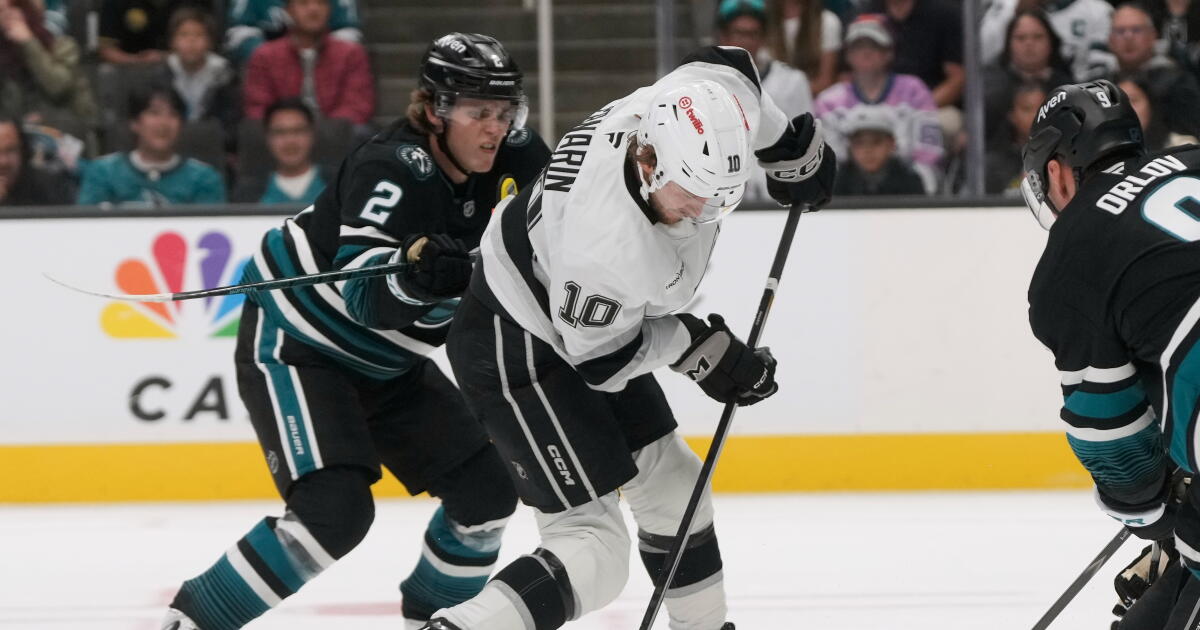
Rae Burrell scored 20 points and the Sparks ended a six-game losing streak with a 77-68 win over the Connecticut Sun on Saturday night.
Nneka Ogwumike, who announced Wednesday she will retire at the end of the season, had 11 points and 11 rebounds for the Sparks (13-24), her 131st career double-double. Erica Wheeler also had 11 points and Dearica Hamby had 10.
Saniya Rivers scored 14 points off the bench to lead the Sun (9-27), who were without Brittney Griner (knee) and Aaliyah Edwards (ankle). Leila Lacan added 13 points and Kennedy Burke 10.
The Sparks, which has given up an average of 93.6 points a game, held the league’s worst offense to 11 points below its average after surrendering 124 points to Atlanta on Thursday. The Sparks did that despite giving up 30 points on 25 turnovers.
A three-pointer from Wheeler at 6:12 of the fourth quarter produced a 77-55 lead but the Sun reeled off 13 straight for a single-digit deficit with less than two minutes to go but missed their last five shots.
The Sparks led 44-36 at halftime.
Connecticut hit four of 16 shots while the Sparks rebounded to make nine of 12 shots in the third quarter to boost their lead to 66-46.
Hamby was ejected early in the fourth quarter when she flung her right hand back while boxing out Raegan Beers, smacking her in the jaw. No foul was called as Beers went down, but as she went to the locker room the play was reviewed. Beers was given a loose ball foul while Hamby received a flagrant 2 foul for unnecessary and excessive contact.
Up next for the Sparks: Game three in a four-game home stand Monday against Atlanta.
Seven-time Grand Slam winner Venus Williams defeated 6-2, 6-2 by Emiliana Arango in the first round of Cincinnati Open.
Published On 15 Aug 202615 Aug 2026
Venus Williams’s losing streak in singles play has reached 13 matches.
The seven-time major champion was defeated 6-2, 6-2 by Emiliana Arango late on Friday in the first round of the Cincinnati Open.
Recommended Stories
list of 4 itemsend of list
The 46-year-old Williams received a wild-card entry to the WTA 1000 event. She has not won a singles match since July 2025.
Arango, a 25-year-old qualifier from Colombia ranked 95th, needed 1 hour, 5 minutes to defeat Williams on the grandstand court at Lindner Tennis Center.
Williams had her serve broken in the first game of the match and faced an uphill battle the rest of the way. Arango was 4 of 5 on converting break points and won 71 percent of her first-serve points.
Williams was unable to convert on her lone break opportunity and was only 41 percent on first-serve points.
“That kind of eased my nerves a little bit of having maybe a little bit of breathing room. And then I think I just did a good job of staying on it, trying to make her play as much as possible,” Arango said about getting ahead early.
Arango will face No 7 seed and defending Cincinnati champion Iga Swiatek in the second round.
Williams’s last singles victory came last year in Washington, when she defeated Peyton Stearns.
“I think that at all times I was really controlling the point, but unfortunately didn’t finish it the way I wanted to,” said Williams, who is making her 11th appearance in the tournament. “The encouraging part is that I’m controlling the shots, but I have to just get a little more consistent on that last part.”
Williams will remain in Cincinnati to play doubles with her sister, Serena, after they received a wild-card entry. They last played doubles together at the 2022 US Open.
The Williams sisters were slated to play doubles at Wimbledon before an injury to Serena. They will play Marta Kostyuk and Peyton Stearns in the first round.
The doubles portion of the tournament starts on Sunday.
“I’m excited and hope that we can both go into it fresh, on our toes and ready. I’ll be preparing for that,” Venus Williams said.
Venus is also slated to play mixed doubles at the US Open later this month with Alexander Bublik.
PHOENIX — Dodgers reliever Jack Dreyer let loose a shout, balling his hands into fists as he released the tension of the last several minutes — or, from a team perspective, over a week.
The Dodgers had just pulled off a 2-1 win against the Diamondbacks in the 10th inning, and, mercifully, snapped a seven-game losing streak. It was their longest such streak since July 2025. They haven’t had a losing streak longer than seven games since September 2017 (11).
“I think that was the most emotion I’ve ever showed,” said Dreyer, who picked up his first save of the season. “It was nice because I knew I wouldn’t go back out for the next inning. … The game was over. So kind of let the emotions take over for a little bit.”
Before this latest streak, the Dodgers had done an admirable job of not piling up losses. They hadn’t lost more than four straight games until this week. But the Dodgers were swept in two straight series, against the Boston Red Sox and the Chicago Cubs heading into the weekend against Arizona (62-56).
The Dodgers’ National League West lead over the second-place Diamondbacks moved up to 8½ games.
Many of the Dodgers’ recent problems still flared. The offense is slumping, and the back end of the bullpen has been shaky. But at least the streak was finally over.
The Dodgers’ offense has been all but silenced in two games against Arizona. A day after Merrill Kelly kept the Dodgers hitless through his first five innings, Arizona starter Brandon Pfaadt gave up only a pair of infield hits to Andy Pages through seven innings.
“I think each individual, there’s a different component,” Roberts said. “But I think collectively, we just gotta come together. We’re just better than this. As we always say, it’s not a try league. We gotta get it done. We gotta be better, and again, to score one or two runs to win, it’s just a hard quality of life. I understand hitting is hard. I did it, but we’ve got a lot of talent in the room.”
Dodgers starter Yoshinobu Yamamoto was nearly as effective, holding the Diamondbacks to three hits. But he wasn’t as efficient and exited with two outs in the sixth inning, his pitch count up to 107.
The game remained scoreless until Kyle Tucker, whose bat has been hot this road trip, hit a solo home run to right field off Diamondbacks reliever Jonathan Loáisiga in the eighth.
Dodgers reliever Kyle Hurt retired the first two batters in the eighth before giving up a single and back-to-back walks to load the bases. Tanner Scott replaced him and got out of the jam by inducing Waldschmidt to fly out.
In the ninth, Díaz, who gave up a walk-off home run Friday, blew it again, but he at least managed to keep the score tied.
Díaz gave up back-to-back triples to Geraldo Perdomo and Corbin Carroll to tie the score. He retired three of the next four batters, with an intentional walk in between, to send the game into extra innings.
“You saw once they scored the run, man on third base, nobody out, you saw the intensity pick up, the stuff picked up,” Roberts said. “The fastball got better. The slider got better. Even talking to him after the game, that’s how we have to be from the first pitch. That was the first game I saw this year where he had some real intensity.”
Tucker served as the Dodgers’ automatic runner on second base to start the 10th inning, and with two outs, he advanced to third base on a wild pitch, as Feduccia took first on a walk.
That put runners on the corners for Ohtani. He hit a sharp groundball to the right of Diamondbacks first baseman Tim Tawa, who made a diving stop. But the ball rolled away from him as he went to flip to first, giving Ohtani time to reach first and Tucker time to score the go-ahead run.
“I guess that was the game right there,” Tucker said. “So it was a great at-bat out of him and being able to get down the line was huge.”
Clinging to a narrow lead, the Dodgers turned to Dreyer. He struck out Tawa. And then he got James McCann to hit a soft grounder up the middle, but McCann beat second baseman Tommy Edman’s throw to first by a split second.
With runners on the corners, Waldschmidt hit a bouncing comebacker that Dreyer snagged and threw to second before Edman quickly threw to Freddie Freeman to end the game.
“It helps when you have some of the best defensive players in the game behind you,” Dreyer said. “I knew that all I needed to do was get the ball to Tommy and he would take care of the rest. I don’t know if I had too much velo on the throw to him, but once it got to him, he made the play.
“That was fun to watch.”
Dodgers star Shohei Ohtani hits an RBI single in the 10th inning against the Diamondbacks on Saturday.
(Rick Scuteri / Associated Press)
Ohtani plays catch
Fans consolidated in the right field stands as Ohtani warmed up by throwing a weighted plyo ball against the back wall of the visitor’s bullpen and then returned to the outfield to play catch.
It was the first time Ohtani, who threw on flat ground from about 90 feet, has been spotted playing catch before a game since July 22, when he threw a 31-pitch bullpen in Philadelphia. According to the team, he has been keeping his arm moving with plyo ball drills.
Ohtani declined to comment through a team representative.
“It’s sort of Shohei and the training staff driving it, more Shohei,” Roberts said of Ohtani’s throwing schedule. “So I don’t know if he’s going to come back out there [Sunday] and pick up a baseball, or if it’s going to be Monday, but I do think that him getting out there and playing catch is a step in the right direction.”
PHOENIX — Dodgers closer Edwin Díaz trudged toward the dugout as Arizona’s Ryan Waldschmidt celebrated with teammates after hitting a two-run, walk-off home run to seal a 4-3 win that sent the Dodgers to a season-worst seventh straight loss.
“We’ve just got to play better,” manager Dave Roberts said before the game. “I don’t think that the standings — obviously, they are important, they matter. But I just feel like with the talent that we have, we just got to play good baseball, and it’ll take care of itself. It always does.”
The Dodgers’ recent skid dropped their National League West lead into single digits for the first time in over a month. They are now only 7½ games ahead of the second-place Diamondbacks in the division.
They also now have the fourth-best record in the majors (69-47), falling behind the Brewers (72-44) and Braves (70-46) and Rays (69-46).
“A week ago, it looked a lot different,” Roberts said. “And another week from now, it could look even more different. So you’ve just got to put your head down and play baseball.”
They did, at least, have a better record than last season (67-49) at the 116-game mark. But the Dodgers would prefer to, unlike last year, at least earn a first-round bye, and ideally home-field advantage throughout the playoffs.
Their performance Friday sent them in the wrong direction.
The Dodgers went hitless against Diamondbacks starting pitcher Merrill Kelly for the first five innings. Kyle Tucker and Shohei Ohtani both drew walks, as the Dodgers’ only baserunners before the sixth — and Ohtani was thrown out attempting to steal second to end the third inning.
Finally, leading off the sixth, Tommy Edman — who three innings prior was robbed of a home run on a leaping grab by Diamondbacks right fielder Corbin Carroll — broke up Kelly’s no-hit bid with a sharp infield hit.
Kelly picked off Edman at first base, but Hunter Feduccia followed with a single of his own, the catcher’s first hit since rejoining the Dodgers at the trade deadline.
Ohtani and Andy Pages both drew walks to load the bases. And the Dodgers finally scored on a groundball fielder’s choice from Freddie Freeman. That single run was all they got out of the inning.
Dodgers starting pitcher Roki Sasaki held the Diamondbacks to two runs in six innings. He surrendered a solo homer to Arizona third baseman Nolan Arenado in the second and an RBI triple to Geraldo Perdomo in the fifth. But he only gave up two other hits.
With both starters out by the seventh (Kelly exited with two outs in the sixth because of cramping in his right leg), the Dodgers orchestrated a comeback and then gave it up.
Edman drove in the tying run, too, lining a single to left for the Dodgers’ third hit of the inning off Diamondbacks right-hander Taylor Clarke in the seventh. But the Dodgers failed to turn a bases-loaded situation into a crooked number when Ohtani grounded into a double play to end the inning.
The next inning, Pages gave the Dodgers the lead with a solo homer off Diamondbacks lefty Brandyn Garcia.
The Diamondbacks threatened against Dodgers setup man Tanner Scott. But he escaped a bases-loaded jam in the eighth by winning a 12-pitch at-bat against Arenado for the inning-ending strikeout.
Bubic joins the team
Trade-deadline acquisition Kris Bubic, who is rehabbing at the Dodgers’ Arizona complex, is taking advantage of the opportunity to be around the team this weekend at Chase Field.
“It’s been a whirlwind the last couple days,” Bubic said. “Obviously I had been with Kansas City the whole time since I was drafted. I’ve been there my whole big-league career. I’d been on the shelf for a little bit now, but to hear I was getting traded over here was pretty exciting.
“Obviously the roster speaks for itself. The success speaks for itself. The opportunity to be a part of this, to learn from these guys, all the coaches on the staff and whatnot, it’s going to be an exciting time. I’m really looking forward to getting started.”
Pitcher Kris Bubic throws during a game between the Kansas City Royals and Seattle Mariners on May 3.
(Lindsey Wasson / Associated Press)
Bubic initially landed on the injured list in mid-May with a low-grade flexor strain in his left forearm, he specified. While working back from that injury, he had setbacks with an impingement in his left shoulder.
Because he has an injury history with both his elbow (2023 Tommy John surgery) and shoulder (2025 rotator cuff strain), the Royals didn’t rush him back. Bubic said he had a cortisone injection on July 1 and then threw off a mound on Sunday.
“I’m kind of itching to get back going,” he said. “But I know talking with the staff here they’ve got a pretty good plan. I’m expected to come out of the ‘pen in some capacity. At this point, I’m looking forward to getting back on the field and helping this team down the stretch.”
Bubic said the Dodgers have already presented him with a couple mechanical tweaks. He hopes to begin a minor-league rehab assignment around the end of the month or beginning of September.
Homestand plan
The Dodgers plan to pitch two-time Cy Young winners in back-to-back games against the Royals when they return to Los Angeles next week.
On Monday, Tarik Skubal is scheduled to make his first home start at Dodger Stadium, and second with the Dodgers since being acquired in a trade with the Detroit Tigers. On Wednesday, Blake Snell is set to return from the IL for his second start of the season, his first since May.
Hi, and welcome to another edition of Dodgers Dugout. My name is Houston Mitchell. It’s too hot. I’m convinced that the Earth has been torn from its orbit and is hurtling toward the sun.
Are you a true-blue fan?
Get our Dodgers Dugout newsletter for insights, news and much more.
By continuing, you agree to our Terms of Service, which include arbitration and a class action waiver. You agree that we and our third-party vendors may collect and use your information, including through cookies, pixels and similar technologies, for the purposes set forth in our Privacy Policy such as personalizing your experience and ads.
Trade deadline review
The Dodgers made some acquisitions at the deadline, the big one beingTarik Skubal. Let’s take a look:
Acquired Skubal from the Tigers for minor leaguers Zyhir Hope, River Ryan and Brady Smith
Andrew Friedman recently told reporters, “There just aren’t that many star-level players in the game. Any time one is available, we’re always going to participate in those conversations.”
Participate he did, as the Dodgers got the top player available. Skubal won the last two AL Cy Young Awards when he went 18-4 with a 2.39 ERA in 2024 and 13-6 with a 2.21 ERA last season, leading the league in ERA both seasons. He also led in strikeouts in 2024 with 228. Last season he struck out 241. You can see all of his stats here.
Skubal was taken by Detroit out of Seattle University in the ninth round of the 2018 draft. He reached the majors in the COVID-shortened 2020 season, going 1-4 with a 5.63 ERA in eight starts. He has gotten better each season since until this season, where he is 7-6 with an ERA of “only” 2.81.
Skubal was born in Hayward, Calif., on Nov. 20, 1996. He was a freshman All-American for Seattle in 2015, then missed most of the 2016 and all of the 2017 season after having Tommy John surgery. He pitched again in 2018 and was drafted by Detroit.
After winning his second Cy Young last season, he set the arbitration record by getting $32 million for 2026 (the Tigers had countered with $19 million). On May 4 this season, he had surgery to remove loose bodies in his pitching elbow (the same surgery Edwin Díaz had). He came back on June 13 and since then he has gone 4-4 with a 2.88 ERA in 59.1 innings, giving up 43 hits and walking 10 while striking out 77. The Dodgers will be on the hook for about $10 million of his salary this season.
Was this a good trade? Well, for now, yes, as the Dodgers are a better team with Skubal than without him. Long term, it depends on a lot of things. Will he be a key factor if they win the title again? He’s a free agent after this season, will the Dodgers re-sign him? Will the three prospects the Dodgers gave up turn out to be good to great major leaguers?
In 1987, Detroit was battling for the AL East and pulled off a deadline deal, acquiring Doyle Alexander from the Atlanta Braves. Alexander went 9-0 with a 1.53 ERA for the Tigers, who won the division thanks in large part to that. So, a great trade, right?
Well, Alexander retired two years later, and the prospect the Tigers sent to the Braves turned out to be pretty good: John Smoltz.
Hope, 21, is an outfielder who has hit at every level of the minor leagues. He is hitting .291/.368/.525 at double-A this season. He is considered by all sources to be one of the top 100 prospects in baseball, ranked 63rd by Baseball America, 27th by MLB and 18th by Baseball Prospectus.
Ryan, who turns 28 this month, pitched for the Dodgers in 2024, with a 1.33 ERA in four starts. He has been hampered by injuries ever since. He had arm surgery in August 2024 that sidelined him for the 2025 season. He made eight starts for triple-A Oklahoma City this season, with a 4.46 ERA. He has great stuff, but his age and injury history indicates he might never get a real chance to show it.
Smith, 21, was drafted in the third round in 2023. He missed the 2024 season because of injuries. He made only nine starts with a 6.00 ERA last season and in 21 starts in Class A ball this season, he was 0-7 with a 4.36 ERA, striking out 113 in 74.1 innings.
Acquired Ben Rortvedt from the New York Mets for Chayce McDermott
Rortvedt is a familiar name to Dodgers fans, as he filled in admirably when needed for Will Smith last season and took the backup catcher job from Dalton Rushing. He hit only .224/.309/.327, but he seemed to always get key hits, or laid down a bunt when needed. And the pitching staff loved him. It was as if he had been a Dodgers catcher for years. Look at the team ERA by catcher last season:
Doesn’t it seem like Barnes has been off the team for a few seasons already?
McDermott has a career 12.00 ERA in 15 major league innings.
Acquired Hunter Feduccia and Jacob Kmatz from the Tampa Bay Rays for Jack Suwinski and $250,000 in international bonus pool money
The Dodgers acquired another old friend by getting Feduccia, who is also a catcher. He played in eight games for the Dodgers in 2024 and 2025 before he was traded to Tampa Bay for Rortvedt and pitcher Paul Gervase. Feduccia is one of those Dodger prospects who never panned out, as he is hitting .207/.297/.290 in 104 major league games. But, he knows the Dodger pitching staff and the Dodgers are better with Rortvedt/Feduccia than with Robinson/Eliezer Alfonzo.
The reason the Dodgers acquired two catchers is because of some bad news. Rushing has a torn UCL in his right elbow and more than likely won’t be able to play catcher again this season, though he may be able to serve as a right-handed pinch-hitter. With Rushing out, and Will Smith still sidelined by his neck injury, the Dodgers turned toward defense. Neither Rortvedt nor Feduccia have proven to be starting catchers, but they have been solid backups. The question is, who will get the most playing time the rest of the way? They both bat left-handed.
Acquired pitcher Kris Bubic from the Kansas City Royals for Carlos Duran
This reminds me of the trade for Danny Duffy at the 2021 deadline. Duffy was a good pitcher who was injured, but the Dodgers hoped he would return in time to help down the stretch during the 2021 season. He didn’t return. They signed him in the offseason hoping he would return from injury to help during the season. He didn’t return. He then retired.
Bubic was on the 60-day IL for the Royals, and is on that IL for the Dodgers. He was an All-Star last season for the Royals, finishing the season 8-7 with a 2.55 ERA in 20 starts (116 innings). He was 3-2 with a 4.11 ERA in nine starts this season before going on the IL because of shoulder soreness. The Dodgers hope he can return before the end of the month.
But let’s not hold our breath awaiting that, OK?
Duran, 25, had a 3.38 ERA in 42.2 innings at triple-A Oklahoma City.
Acquired reliever Seth Halvorsen from the Colorado Rockies for Nick Frasso and Landyn Vidourek
This trade happened on July 20, but we will include it. Halvorsen was, wait for it, on the 15-day IL for the Rockies because of shoulder inflammation. He is currently off the IL and has pitched 5.1 scoreless innings at Oklahoma City. He reaches 100 on the radar gun and has a 4.31 career ERA in 71 innings in the majors.
Frasso, 27, was selected in the fourth round by Toronto in the 2020 draft, was sent to the Dodgers for Mitch White in 2022 and never reached the majors with L.A. He had shoulder surgery before the 2024 season and sat out the season.
Vidourek, 22, an outfielder, was chosen by the Dodgers in the third round of the 2025 draft. He has power but strikes out a lot, fanning 141 times in 317 at-bats in the minors, where he is hitting .205/.357/.369.
So, there you have it. Your new Dodgers. The Dodgers are a better team today than they were before the deadline. It guarantees nothing though. They got Yu Darvish and Max Scherzer in previous years and did not win the title.
Next in line: Justin Wrobleski, Roki Sasaki, Eric Lauer, Emmet Sheehan.
Here’s what the other NL contenders did. I won’t comment, because this newsletter is long enough already and there’s still another item after this one, but if you click on each player’s name, you will be taken to their stat page at baseball-reference.com.
For full reports on all the trades across the majors, I suggest visiting mlbtraderumors.com.
What, me worry?
So, the Dodgers have lost six in a row and were swept in two consecutive series. Time to worry or panic?
To find the last time the Dodgers lost six in a row and were swept in consecutive series, you have to go all the way back to … July 2025. The Dodgers woke up on July 4 leading the NL West by nine games. They then proceeded to get swept twice:
lost to Houston, 18-1 lost to Houston, 6-4 lost to Houston, 5-1 lost to Milwaukee, 9-1 lost to Milwaukee, 3-1 lost to Milwaukee, 3-2
The then lost their first game against the Giants, 8-7. After that, they were in first place by only four games.
Then they won two in a row and lost three more in a row. They went 5-13 over one stretch that month and went 10-14 in July. They lost five in a row to start September. They ended up winning the division by three games, but did not get a first-round bye.
My memory fails me, what happened in the postseason last season?
If the Dodgers get a couple of major injuries and lose like 15 in a row, then we can begin to panic. But they are going to make the postseason, and anything can happen in the postseason. They could be swept in the first round, they could win it all again. It’s all part of the ride.
Have a comment or something you’d like to see in a future Dodgers newsletter? Email me at houston.mitchell@latimes.com. To get this newsletter in your inbox, click here.
Walbert Ureña pitched three-hit ball over six innings and Wade Meckler hit a two-run homer off Milwaukee ace Jacob Misiorowski as the Angels beat the Brewers 3-0 on Sunday.
Ureña (7-7) struck out seven and walked three as the Angels (43-69) broke a five-game losing streak. The rookie right-hander has a 2.54 ERA and a 2.25 ERA since May 1, a stretch in which he has given up one or fewer earned runs in 12 of 16 starts.
Angels reliever Ryan Zeferjahn replaced the injured Sam Bachman with a runner on second and one out in the eighth. He struck out Brice Turang, gave up an infield single to Jackson Chourio and struck out Garrett Mitchell with runners on first and third to end the inning.
Zeferjahn then struck out two of four batters in the ninth for his fourth save.
Misiorowski (11-5) gave up two hits in seven innings, striking out 10 and walking one. Misiorowski extended his franchise record of double-digit strikeout games to 10 while throwing 66 of his 83 pitches for strikes.
The game was a matchup of two of the hardest throwing starters in baseball. Misiorowski and Ureña each struck out the side on 10 pitches in the first and the pair combined to throw 10 pitches at 100 mph or more.
Vaughn Grissom hit a 91-mph slider to center for a leadoff single, and Meckler followed by driving a 95-mph cutter 388 feet to right for his third homer of the season and a 2-0 lead.
Misiorowski then retired 16 straight batters before issuing a two-out walk to Jo Adell in the seventh.
The Angels added an insurance run off Brewers left-hander DL Hall in the eighth when Denzer Guzman walked, took second on a groundout, third on a wild pitch and scored on Zach Neto’s two-out RBI infield single.
Up next: The Angels have not named a starter for when they open a series in Baltimore on Tuesday. The Orioles have not named a starter.
PORTLAND, Ore. — Dearica Hamby scored 23 points, Nneka Ogwumike had 20 of her 22 in the second half and the Sparks — after learning star teammate Kelsey Plum was traded — ended a six-game losing streak with a 106-101 win over the Portland Fire on Sunday.
Plum, sidelined since June 21 with a leg injury, was sent to the Phoenix Mercury late Saturday night. The Sparks are now 3-9 without Plum.
Ogwumike hit the go-ahead three-pointer with 1:25 to play, making it 98-96. Hamby followed with a layup off an Ogwumike assist. In the last 24 seconds, Ogwumike and Erica Wheeler went six for six from the foul line.
Wheeler, Ariel Atkins, Rae Burrell and reserve Jihyun Park all added 12 points for the Sparks (11-17). Hamby and Ogwumike both had 10 rebounds and Wheeler had eight assists.
Bridget Carleton hit seven three-pointers, scored 24 points and grabbed 11 rebounds for the Fire (11-19), who lost their fifth straight, four times allowing 100-plus points. Carla Leite added 21 points and eight assists and Megan DiLeo scored 19.
Portland took advantage of four offensive rebounds and six Los Angeles turnovers to lead 29-22 after one quarter. The lead reached 10 in the second quarter and the Fire were up 49-43 at the break.
Wheeler and Ogwumike had back-to-back three-pointers to give the Sparks their first lead since 10-8 at 65-64. Carleton’s three in the last minute pulled the Fire into a 72-72 tie entering the fourth quarter.
Up next for the Sparks: Play at Chicago on Wednesday.
Asian stock markets extended their sharp selloff on Wednesday as investor concerns over artificial intelligence (AI) valuations deepened ahead of a crucial round of earnings from major U.S. technology companies and the Federal Reserve’s latest monetary policy decision. The decline reflects growing skepticism over whether massive investments in AI infrastructure will generate sustainable profits, while renewed tensions in the Middle East added fresh inflationary risks through higher oil prices.
The market downturn comes after months of extraordinary gains driven by optimism surrounding AI, particularly among semiconductor manufacturers and technology giants. However, disappointing earnings signals and concerns over corporate cash flows are prompting investors to reassess whether the sector’s lofty valuations remain justified.
Asian Markets Extend AI Driven Selloff
Technology heavy markets across Asia led the global decline as semiconductor stocks came under intense pressure.
South Korea’s KOSPI plunged more than 11 percent, reaching its lowest level since April after suffering another double digit loss a day earlier. Taiwan’s benchmark index dropped 5 percent, while Japan’s Nikkei declined 2.6 percent. The broader MSCI Asia Pacific index excluding Japan also fell sharply, highlighting widespread investor caution across the region.
Stay ahead of the geopolitical week.
MD Briefing delivers expert analysis across five global fronts — the Indo-Pacific, energy, geoeconomics, European security, and the Middle East — every Monday morning. Free.
The weakness was concentrated in technology stocks that have largely fueled this year’s market rally through expectations of sustained AI demand.
Chip Stocks Face Growing Scrutiny
Semiconductor companies remained at the center of the selloff despite reporting robust financial results.
South Korean memory chip giant SK Hynix reported operating profits that increased more than sixfold compared with the previous year. Nevertheless, its shares fell 9 percent after investors judged the results against exceptionally high expectations.
Market participants are increasingly demanding stronger evidence that companies can convert enormous AI related capital expenditure into long term profitability. Investors are also seeking clearer commitments regarding shareholder returns and long term supply agreements before assigning premium valuations.
The reaction illustrates how market expectations have evolved from rewarding growth alone to demanding measurable financial returns.
Big Tech Earnings Become Critical Test
Attention has now shifted to earnings from Microsoft and Meta, which are expected to provide important insight into the financial sustainability of AI investments.
The results follow disappointing updates from Alphabet and Tesla, whose weaker cash flow performance raised concerns that rising AI spending may be placing increasing pressure on corporate finances.
Investors will closely examine whether major technology companies can demonstrate that billions of dollars invested in AI infrastructure are producing corresponding improvements in revenue growth and profitability.
Failure to provide convincing evidence could accelerate the ongoing market correction.
Oil Prices Rise as Middle East Tensions Return
Geopolitical developments added another layer of uncertainty after renewed military activity between the United States and Iran pushed energy prices higher.
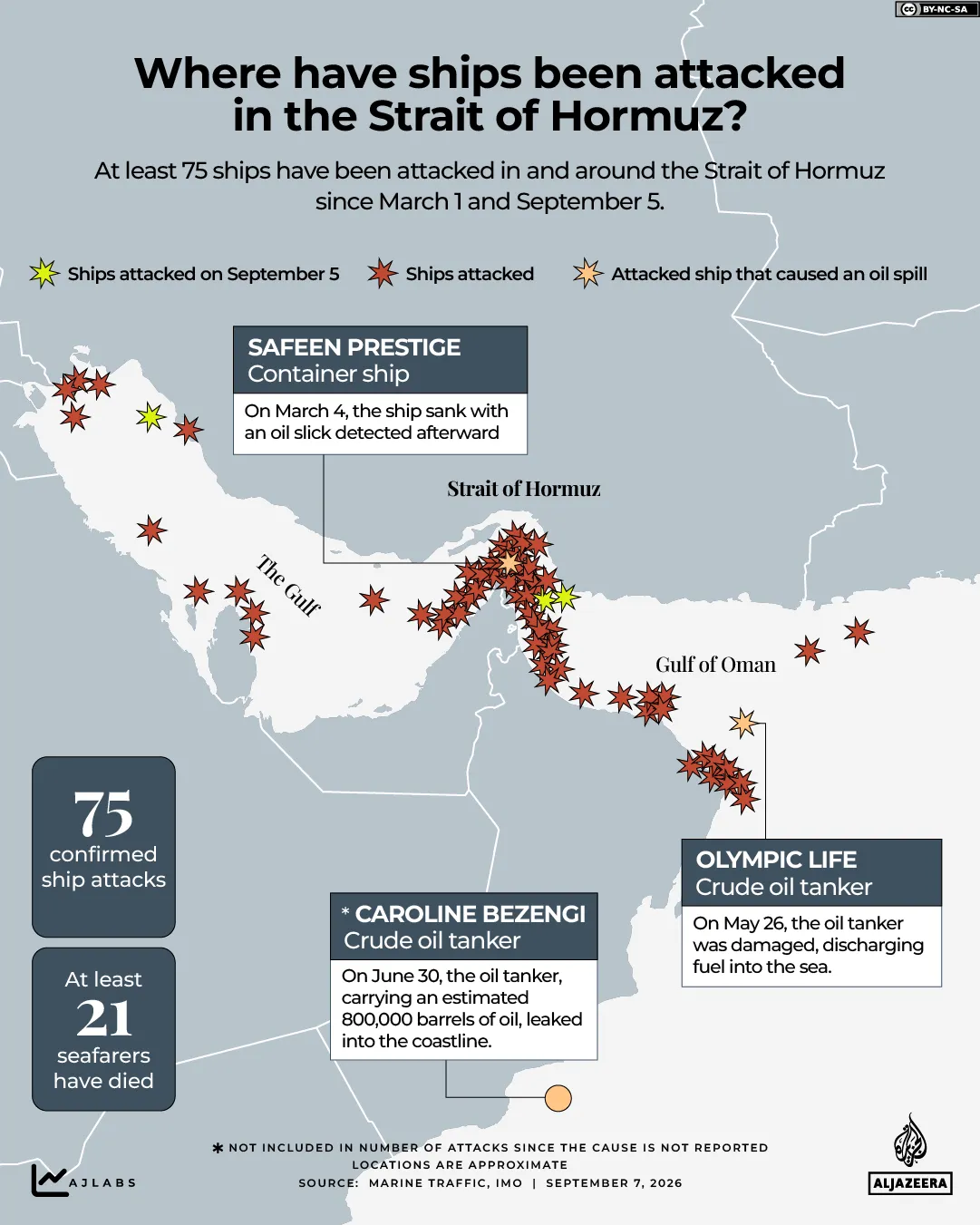
Brent crude rose more than 3 percent while West Texas Intermediate crude also gained over 3 percent following reports of Iranian ballistic missile launches and renewed concerns over the security of shipping through the Strait of Hormuz.
The waterway remains one of the world’s most strategically important energy corridors, and any disruption raises fears of tighter global oil supplies and renewed inflationary pressures.
Higher energy prices have complicated the outlook for financial markets by increasing uncertainty over future monetary policy.
Federal Reserve Decision in Focus
The Federal Reserve’s policy announcement has become increasingly significant as investors attempt to balance slowing market sentiment against persistent inflation risks.
Markets remain divided over whether the central bank will maintain current interest rates or opt for another increase. Rising oil prices have strengthened expectations among some analysts that policymakers may adopt a more cautious stance toward inflation.
A more hawkish outcome could place additional pressure on technology stocks, whose high valuations remain particularly sensitive to higher borrowing costs.
Analysis
The latest market correction suggests that the AI investment narrative is entering a more demanding phase. Investors are no longer rewarding technology companies solely for expanding AI infrastructure but increasingly expect tangible financial returns from unprecedented levels of capital expenditure.
At the same time, renewed geopolitical tensions in the Middle East have introduced fresh inflation risks through higher oil prices, complicating the Federal Reserve’s policy choices and adding further uncertainty to global financial markets. Higher interest rates typically reduce the attractiveness of high growth technology stocks by increasing financing costs and lowering future earnings valuations.
While the long term outlook for artificial intelligence remains strong, the market appears to be transitioning from optimism driven by expectations to a phase focused on profitability, efficiency, and sustainable returns. Companies that fail to demonstrate clear commercial benefits from their AI investments may continue to face heightened investor scrutiny, making upcoming earnings reports a defining test for the next phase of the global AI driven market cycle.
Prime Minister Benjamin Netanyahu has long presented his closeness to the United States – both politically and personally – as evidence of his indispensability to Israel.
Arriving with a camera-ready American accent after spending a large portion of his youth in the country, Netanyahu is said to have used his unique understanding of US politics to charm and cajole numerous presidents into maintaining their unflagging support of Israel and his personal political projects.
Recommended Stories
list of 4 itemsend of list
For a time it appeared as though US President Donald Trump was the most amenable of all past presidents to Israel and to Netanyahu, particularly after he became the first US leader to agree to participate in a joint war with Israel against Iran.
And yet, with that war stalling, Trump appearing more willing to make deals in the Middle East without Israeli input, and increasing criticism of Israel in the US, there is a sense in Israel that Netanyahu’s Trump card may not be as useful as it once was.
That has come at a bad time for Netanyahu, who faces an election at home in late October and an ongoing trial for corruption, as well as several unresolved conflicts in the region.
Netanyahu’s visit to Washington on Tuesday to meet Trump – his first since the war on Iran began – therefore is an opportunity for a refresh – and a photo opportunity to remind the Israeli public of his ties to the US president.
The optics
Strains in Netanyahu’s relationship with Trump have been growing since the start of the war on Iran, after reporting emerged that it was the Israeli prime minister who convinced the US president of the feasibility of the mission, and the potential for the Iranian state to be overthrown.
Concern has also grown within the US Congress over Netanyahu’s apparent indulgence of Israel’s increasingly violent settler movement – which included the extrajudicial detention of a US senator by settlers – alongside friction over Washington’s decision to consider selling F-35s to Israel’s regional rival Turkiye and agreeing a nuclear cooperation deal with Saudi Arabia.
“The real reason Netanyahu’s got this visit [to Washington] is purely cynical,” Alon Pinkas, a former Israeli ambassador and consul general in New York, told Al Jazeera. “He’s claimed that he’s flying all the way to the US to attend the wake of his apparently great friend [deceased Republican Senator] Lindsey Graham.”
Israeli Prime Minister Benjamin Netanyahu speaks to the media as he is welcomed by US President Donald Trump for meetings at the Mar-a-Lago club in Palm Beach, Florida in December [File: Jonathan Ernst/Reuters]
“Supposedly there’s an agenda, supposedly they’re going to talk about Iran, F-35s and Saudi Arabia’s potential nuclear deal,” said Pinkas.
“But really this is about two things: hoping to assure allies and critics within Israel that the relationship with Trump holds and, separately, hoping that Trump will again call for his pardon in the corruption trial,” he added, referring to Trump’s unorthodox intervention in Israel on Netanyahu’s behalf in November 2025.
However, while Netanyahu may be hoping that a good meeting with Trump may help him in the polls, he arrives at a time when his stock in the US is potentially at its lowest.
Netanyahu has received widespread criticism from figures on the American right, such as podcast host Tucker Carlson and the former Republican US Representative Marjorie Taylor Greene. Vice President JD Vance has also been critical of “some” Israelis, using an interview with US podcaster Joe Rogan to suggest that figures within the Israeli government were trying to derail the agreement he was brokering with Iran to end the war.
Analysts have suggested that the Trump-Netanyahu meeting will combine public flattery with private cynicism on the US president’s part. Asked about Netanyahu’s public resistance to the F-35 sale to Turkiye on board Air Force One on Monday, Trump told reporters, “Nobody tells me what we should be selling”.
President Trump used a press conference on board Air Force One on Monday to push back against Israeli concerns over the potential sale of fighter jets to Turkiye, telling reporters, ‘Nobody tells me what we should be selling’ [Evan Vucci/Reuters] Burnt bridges
“Netanyahu arrives in Washington at a time when even many around [Trump] are suspicious of him. He has become toxic in the US,” Ahron Bregman, an Israeli security analyst and senior teaching fellow in the Department for War Studies at King’s College London. “He is regarded in the US – rightly or wrongly – as the one who dragged Trump into a war of choice that has turned into a strategic catastrophe. Nobody, not even Trump, will let him pretend to be the cleverest guy in the room. Those days are gone.”
While few expect any overt signs of disharmony from the visit in public, Netanyahu’s ability to present himself as uniquely positioned to manage the country’s relationship with the US – a key factor in the upcoming election – may be limited.
“Netanyahu’s had a tremendous track record with the US, but he’s burned a lot of bridges,” Mitchell Barak, an Israeli pollster and a former Netanyahu aide in the 1990s, told Al Jazeera, adding that the criticism of Netanyahu was not isolated to figures within the nationalist wing of the Republican Party, but included Israel’s traditional allies within the party’s centre right.
“We’ve seen tension through Trump’s comments on the various F-35 sales, including most recently to Turkiye, as well as US criticism of Netanyahu at the start of the Iran war, so I’m not too sure if Trump’s going to be stumping for Netanyahu for all that much longer,” Barak said. “It could easily be that Trump declares Netanyahu was a great wartime leader, but that it was time for Israel to move on, before meeting with [other Israeli politicians] and endorsing a new prime minister for Israel.”
Ryan Johnson struck out five and gave up one run in five solid innings, Jorge Soler and Zach Neto delivered RBI hits and the Angels ended a four-game skid with a 3-2 win over the Detroit Tigers on Sunday.
Johnson (2-4) gave up two hits and walked three. The right-hander escaping a bases-loaded, two-out jam in the fifth when he struck out Dillon Dingler with an 82-mph sweeper. Samy Natera Jr., Chase Silseth and Sam Bachman worked scoreless innings of relief.
Ryan Zeferjahn, who gave up just two earned runs in 19 1/3 innings of his previous 18 games since June 1, gave up a homer to Riley Greene in the top of the ninth as Detroit closed within 3-2. But, Zeferjahn retired the next three batters and earned his third save.
Tigers reliever Drew Anderson (3-4) issued a pair of walks that set up the Angels’ tiebreaking rally in the fifth. Nolan Schanuel, who had three hits, singled to load the bases, and Soler followed with an RBI groundout for a 2-1 lead.
The Angels pushed the lead to 3-1 in the sixth when Oswald Peraza singled, stole second, took third on Tyler Heineman’s groundout and scored on Neto’s RBI single to right.
Detroit starter Casey Mize gave up one run and five hits in 3 1/3 innings, striking out five and walking one. He left after being struck on the left hand by a 109-mph comebacker off the bat of Jo Adell in the fourth inning.
Tigers shortstop Kevin McGonigle homered to leadoff the game. The Angels tied it at 1 in the second when Vaughn Grissom led off with a double, took third on Josh Lowe’s sacrifice bunt and scored on Peraza’s infield single.
ON the same day as the 2022 World Cup final, England lost one of its most beloved singers – Terry Hall of The Specials.
“Terry passed away right after the game,” recalls his bandmate and best buddy, Lynval Golding. “I was in Jamaica when I got the phone call to tell me he’d gone.”
The late Terry Hall formed The Specials in 1977 and became one of the defining voices of the 2 Tone movementCredit: RedfernsBandmate Lynval Golding says he was ‘blessed’ to work with Terry, one of England’s greatest lyricistsCredit: Getty
He says: “It was a fantastic game and I thought to myself, ‘Terry, that game was played for you’.”
Sign up for the Showbiz newsletter
Thank you!
While Lynval is a Chelsea fan, Terry supported Man United — but both had been following the Three Lions.
Four years on, as England’s 2026 campaign ends in defeat to Argentina, The Specials have released their final album, recorded in the summer of 2019 in their teenage stomping ground of Coventry.
Across 24 tracks, it is a reminder of a band that smashed racial and class divides — yet one that did it with horn-fuelled hooks primed for the dance floor.
Live From The Cathedral draws on a four-night homecoming stand in the ruined shell of the old St Michael’s Cathedral, bombed almost to oblivion in the Blitz.
It includes all The Specials’ favourites — Too Much Too Young, Rat Race, Nite Klub, Stereotype and Ghost Town among them.
There’s also room for songs from Encore, the band’s studio album released earlier in 2019, including Vote For Me, B.L.M., and a reworking of Fun Boy Three’s The Lunatics.
The Specials bassist Horace Panter says the band’s final album is ‘the last hurrah, the final full stop’Credit: RedfernsSinger Terry with Steve, Horace, Nikolaj and Lynval playing at the ruins Coventry Cathedral, 2019Credit: Getty
It ends with The Specials’ lilting cover of You’re Wondering Now with the Coventry crowd, given encouragement from Terry, chanting the chorus of, “You’re wondering now, what to do/Now you know, this is the end.”
As it has turned out, the album does mark the end of The Specials, the ska revivalists with punk attitude who formed in 1977 and captivated the nation as members of the 2 Tone movement alongside The Beat, Selecter and Madness.
And that’s why I’m speaking to the surviving core members, guitarist and occasional vocalist Lynval, who came to Britain as part of the Windrush generation, and bassist Horace Panter.
I’m supposed to be talking to them together — but then I didn’t take the World Cup into account.
Only when Horace and I are winding up our chat does Lynval join the video call.
“I just woke up. I was watching football all night!” he exclaims.
It’s the day after England beat Mexico and though Lynval lives near Seattle these days, he’s in London staying with family.
He adds: “Obviously every four years, football is the most important thing in our lives. I’ve got my England shirt!”
The Specials at Parson’s Nose chip shop in the EightiesCredit: GettyThe Specials perform live on stage during their 40th Anniversary Tour at Coventry Cathedral ruins on July 09, 2019Credit: Getty
Lynval is the extrovert who wears his heart firmly on his sleeve while Horace seems to be a calm and thoughtful character.
Hearing from these contrasting souls, one thing becomes abundantly clear. They think it’s all over.
“In 2021, I was handed a granddaughter which I wasn’t expecting.
“My son and his wife have moved up to live near us (not far from Warwick), so I’m involved in looking after her.
“I still play music — noisy blues rock with some buddies from Leamington and Coventry.
The Specials captivated the nation as members of the 2 Tone movement alongside The Beat, Selecter and MadnessCredit: GettyTerry died aged 63 on December 18, 2022 after a battle with pancreatic cancer, leaving The Specials and fans devastatedCredit: Getty
“I do other musical stuff and I’ve got this art career. I paint pictures.”
He sees Live From The Cathedral as a tribute to all those members of the 2 Tone family “who are no longer with us”, including Specials drummer John Bradbury, trombonist Rico Rodriguez and The Beat’s Ranking Roger.
“But it is more focused around Terry than anyone else,” he says.
“I was absolutely blessed to work with him, one of the best lyricists England has ever produced. He never got the credit he deserved — he was so damned good.”
Lynval vividly describes his heartbreak at discovering his close friend was seriously ill.
Terry had just got back from Los Angeles where he’d been writing songs for the next (and never to be released) Specials album and Lynval had flown over from Seattle for sessions.
He says: “The next day, I went to the studio and Nikolaj [Torp Larsen], our musical director, was there.
The Specials in 1980Credit: GettyThe Specials became one of Britain’s most influential bands, mixing dancefloor anthems with powerful songs about social issuesCredit: Alamy
“We listened to some of the music — one song had the feeling of Funky Kingston.
“I waited but Terry didn’t turn up. I was the only one he would let visit him at home in Islington so I got on the Underground, came off at the Angel, and walked right to his house.
“His wife Lindy opened the door. She looked a bit concerned and said, ‘Terry’s in bed’.
“We both had jet lag so I decided to leave him that way. I had my usual cup of mint tea and chatted with Lindy.”
Later that week, Lynval heard that Terry had been to hospital and received devastating test results.
He says: “I went to Coventry and hit a bottle of rum. I went into a black space — completely dark.”
Soon after his pilgrimage to the Midlands city where they had formed The Specials, Lynval rang Terry.
“Terry rarely talked to anyone on the phone but he knew we had something to discuss.
“He said, ‘I’m going to fight this’, and I said, ‘Terry, I’m going to be right by your side, fighting with you brother’.”
Lynval firmly believes he is “spiritually connected” to Terry and, by way of example, explains how he came to sing Moon River at his funeral.
“When Brad [John Bradbury] died in 2015, I sang Redemption Song as a tribute, with just cello, violin and viola.
“Terry’s wife asked me what I was going to do this time. I said, ‘I don’t think I have the strength to do anything’.”
But then, Lynval heard a radio playing Andy Williams’ definitive version of Moon River.
He says: “It was beautiful. I rang Lindy and said, ‘I will sing for Terry and I know what I’m going to do — Moon river, wider than a mile’.
“She started crying and said, ‘It was our wedding song and I played it to him on his deathbed, you’re a genius’, and I hadn’t known.”
So, along with Nikolaj and guitarist Steve Cradock, Lynval performed Moon River in the same crematorium as John Bradbury’s funeral.
He says: “When I sang that line, ‘Two drifters off to see the world’, I thought of Brad and Terry.”
The loss of two such important bandmates prompts Lynval to echo Horace’s sentiments that The Specials have run their course.
He says: “My book is always open, but not to do anything as The Specials ever again.
“I was so blessed to work with these musicians but I can’t play the guitar any more.
“My nerves were damaged after I was hit by a bus.
“I’ve passed my guitars and keyboards on to my 18-year-old great-nephew Jayden. He’s a jazzer and a Golding!”
I ask Horace for his thoughts on Terry and he talks of “a private person despite the fact that he could go out in front of four or five thousand people”.
He adds: “I would kill to go on Desert Island Discs but Terry was like, ‘No, I won’t do that’.
“But there was always something to laugh about with him. He could be very funny. We bonded over Northern working men’s club comedians and Spinal Tap.”
Now it’s time to return to those balmy summer nights in 2019 when Terry, Lynval, Horace, Nikolaj, Steve Cradock and the rest of the ace live Specials band performed those hometown gigs in Coventry.
Horace says: “It was a real coming together of people in Coventry and the ruins of the cathedral was a fantastic venue.
“Usually when we went to Coventry, we would play this big soulless concrete shed up by the football stadium.”
He adds: “I was still living there in 2019 so I would walk over the green to Empress House, catch a No13, which dropped me off at Pool Meadow. Then I’d cross the road, go up through the university, and I was at the cathedral. It was great.”
He remembers Coventry being “a tough place to live” back in the Seventies when The Specials got together, the other members who made the debut album besides Terry, Lynval, Horace and Brad being Jerry Dammers, Neville Staple and Roddy Radiation.
“By the time we came to prominence in 1979, there was an enormous amount of unemployment and disaffection in Coventry,” says Horace.
Although Dammers’ masterpiece Ghost Town could be about any downtrodden city with big social problems, it could, he suggests, also have been about their hometown.
He says: “Lynval suffered racism in some of the jobs he had. At night, he’d go out to the clubs and getting home could be quite an adventure.”
Though The Specials were associated with Rock Against Racism, Horace says: “We didn’t play many of the gigs because we were the working definition of white guys and black guys making music that works. It was unity in action.”
He draws my attention to the great Friday Night, Saturday Morning which The Specials perform on Live From The Cathedral and is dedicated by Terry to the fabled Parson’s Nose fish and chip shop in Coventry.
The song goes: “Hope the chip shop isn’t closed. Cos’ their pies are really nice. I’ll eat in the taxi queue. Standing in someone else’s spew.”
Horace says: “That was one of Terry’s first forays into songwriting and a really important song of ours. He gave it a very droll delivery.
“The Parson’s Nose was the chippy that stayed open late after you’d been to clubs like Mr George’s, La Chaumière or Tiffany’s. You’d go there for a steak and kidney pie and mushy peas.
“Nite Klub mentions Tiffany’s. The shows we did there were the apogee of 2-Toning in 1979.”
Lynval says: “I got chased in Coventry, I got stabbed in Coventry. It could be a running battle because of the racial problem.”
But he adds that he had “wonderful” Friday nights and Saturday mornings that ended up at The Parson’s Nose or the Chinese takeaway next door.
“We were youth, we were growing up and I really did ‘wish I had lipstick on my shirt instead of piss stains on my shoes’.”
Horace maintains that The Specials gave Coventry something to smile about and to be proud of in the late Seventies “and that was acknowledged during the gigs in 2019”.
So, I can’t help but ask, how did Horace get his stage name, Sir Horace Gentleman?
“That was Lynval’s fault,” he replies. “I was raised in Kettering, Northamptonshire, and had a very plummy accent.
“I was at art college and wasn’t working class by any stretch. And, of course, lots of people had reggae names like Prince Buster or Sir Coxsone.”
Horace says The Specials “owed as much a debt of gratitude to The Clash as we did to the Jamaican artists.
“We had the great good fortune to open for The Clash for three weeks in 1978 so we could sit side-stage every night and watch how those guys delivered and what they delivered.
“We thought, ‘Well, OK, if we’re going to be any good, we’ve got to be at least as good as these guys’. The Clash set the benchmark.”
But the final words are with Lynval, who has nothing but fond memories of his time in a very special band.
“I feel so honoured to have been in The Specials,” he says.
“It’s nearly 50 years since we first got together. What an achievement!
“And, hold on a minute, those songs are just as relevant today.”
Lynval leaves us with a quote from a song that Horace insisted they play live at every show because it served as a mission statement.
“Just because you’re a black boy. Just because you’re a white. It doesn’t mean you’ve got to hate him. It doesn’t mean you’ve got to fight.
“It doesn’t make it alright.”
THE SPECIALS
Live From The Cathedral
★★★★☆
The Specials Live From The Cathedral is out nowCredit: Supplied
For the first time in more than two weeks, the Sparks won a game.
Nneka Ogwumike scored 24 points with eight rebounds, Rae Burrell added 22 points and Dearica Hamby had 21 in what felt like a near must-win game against Indiana on Wednesday night to snap a three-game losing streak, 106-92.
“I think people were tired of how we were losing,” Ogwumike said. “Not just losing, but how we were losing, and we knew that there was more that we could give. … I think we all individually held ourselves accountable to be able to do more, to pour more into what we got going on. I took it upon myself to try my best to like, you know, play harder in possessions.”
The Fever committed 17 turnovers, which the Sparks (9-11) converted into 22 points, and All-Star Caitlin Clark scored her second-fewest points this season with just nine in limited minutes while returning from injury. Kelsey Mitchell scored 29 points for the Fever, but the Sparks seemed to have an offensive answer each time.
Indiana (12-9) was without star center Aliyah Boston (lower right leg), who Fever coach Stephanie White said would play in the second game of a back-to-back set Thursday in Phoenix. Clark, in and out of the lineup because of a back injury all season, never got going and was an abysmal minus-16.
Coming off an 18-point loss to Seattle at home on Monday, Ogwumike said that injured All-Star guard Kelsey Plum gave the team an inspired speech Tuesday.
“Everyone had a little bit of feedback that she gave, both encouragement and also points of improvement for each person, and I think it was received,” Ogwumike said. “It was received in a way that not only did we want to change how we, you know, approach today, but also to familiarize ourselves with sustaining the way that this feels moving forward.”
“KP lit a fire under our ass,” Burrell added.
All five Sparks starters scored in double digits, and the 106 points were the most the franchise has scored in a home game.
Caitlin Clark of the Indiana Fever talks with teammates during the second quarter.
(Katelyn Mulcahy / Getty Images)
“I’m happy we won, obviously, but I’m more happy with how we played,” coach Lynne Roberts said. “The response that we showed from just laying an egg on Monday to coming back and, you know, we talked about playing more connected, having a little more smarts out there, defensively emptying the tank, getting out and running and playing with pace.”
The Sparks rode a 16-2 run midway through the second quarter to lead by as many as eight before the half.
They didn’t slow down going into the third frame, opening with 18 points in the first five minutes to take a 13-point lead. Burrell and Kiana Williams hit consecutive threes late in the third after the Fever cut the lead to eight points, and it was never close again.
Plum (lower left leg) and center Cameron Brink (left ankle) remained out of the lineup, and the Sparks extended their bench to give significant minutes to Alissa Pili, Jihyun Park and Williams.
Pili, signed to a developmental deal this week, scored four points with five rebounds in her first WNBA action since last September because of a right ankle injury.
Wednesday’s win also snapped a three-game losing streak to the Fever dating to last season.
The Sparks will complete their three-game homestand against Chicago (7-14) on Friday.
“We wanted to play harder,” Ogwumike said. “We wanted to own each possession and to compete at every level for the full 40 minutes of play. It’s really that simple. I think when you put your heart into playing that hard, the schemes, the plays, the execution, it comes to fruition. And tonight, it felt good. It felt good emptying the tank.”
Since its opening in 1967, Pirates of the Caribbean has stood as an anchor at Disneyland, a statement piece that has defined the direction of the park.
And that remained true last week when Walt Disney Imagineering unveiled a new audio-animatronic pirate. It’s wow-inducing. It’s also narrative-wrecking. And it fundamentally shifts the vibe of the attraction’s early scenes.
The high-tech pirate, we can bet, is just a small preview of the park’s next-gen toys. Because when changes come to Disneyland, they often hit Pirates of the Caribbean first. Over a half-century ago, the robotic figures of Pirates were a symbol of Disneyland’s technological ambitions, dazzling audiences with characterized but lifelike movements. With the ride, Disneyland made it clear that as the world advances, so, too, would the park.
You’re reading Mr. Todd’s Wild Ride newsletter
Todd Martens’ newsletter delivers news and commentary on the past, present and future of theme parks, right from the theme park capital of the world — Southern California.
By continuing, you agree to our Terms of Service, which include arbitration and a class action waiver. You agree that we and our third-party vendors may collect and use your information, including through cookies, pixels and similar technologies, for the purposes set forth in our Privacy Policy such as personalizing your experience and ads.
As culture shifted and the lecherous buccaneers of the ride began to look more like symbols of sexual harassment, they would be forced to undergo some welcome personality adjustments. A redheaded victim of sex trafficking would transform into one of the ride’s most striking characters, and a number of rides from the Jungle Cruise to Splash Mountain would eventually undergo similar reassessment.
For Pirates of the Caribbean, after all, is the attraction that defined the Disneyland template. Its mastery is that it is a series of larger-than-life dioramas constructed around an abstracted narrative where themes of greed, lust and intemperance take precedence over a plot with a firm beginning, middle and end. And thus it made sense for Imagineering, the outfit of the company responsible for theme park experiences, to unveil its latest tech-driven master work on the ride.
A new animated pirate on Disneyland’s Pirates of the Caribbean shifts from living to dead using projection technology.
(Todd Martens / Los Angeles Times)
Reaction, however, has been less than enthused. Disneyland’s own social media accounts are flooded with pointed critiques, but even if we consider that social media tends to lead with gripes, some of the park’s most ardent fan sites have referred to the reimagined scene as a gutting. Why so much hullabaloo over a single robot? If we allow that Disneyland is a place that generations make pilgrimages to, then Pirates of the Caribbean is its most sacred temple. Handle with care.
Where once was a foreboding skeleton frozen in time atop a treasure and swords, there is now an animated figurine built with the latest in projection technology. The latter transitions from living to dead, caught in a perpetual loop with each glimpse of the cavern’s “cursed treasure,” which it continually lifts and drops. The pirate is placed after the ride’s two dips in a gold-filled room among the winding, mysterious underground chambers that help set its tone.
Dead pirates fill the caverns of Disneyland’s Pirates of the Caribbean.
(Todd Martens / Los Angeles Times)
Since the attraction’s opening, the only living beings in this portion were a lone seagull and maybe a stray sea critter or two. It is here where the mystique of Pirates of the Caribbean is set, and guests are placed in the active role of piecing together the time-shifting narrative. Story is hinted at rather than fed to us. We hear tales of the hexed fortunes found in the caves via ghostly narration, but see only its after-effects — skeletons locked in a chess battle or standing behind the wheel of a crumbling ship.
The centerpiece treasure room, where our new pirate is found, has long been a breathtaking scene. Previously, a now decayed body sat atop a mountain of wealth, an empty, soulless figure done in by selfish pride. It was disquieting, and a bit ghoulish. Stray, soft musical notes underscored the tragedy. Further on, a trapped pirate quietly transitions from living to dead via an old theatrical mirror illusion, and the boats float into a city filled with battles and buffoonery.
Gone is the subtlety. A somber tableau is now relatively loud, as our eyes no longer take in the full set but zero in on a bright and at times lively figurine. I cannot deny that it is an impressive piece of technology. On the multiple rides that I took Monday morning, I overheard two teens describe it as “pretty cool” and watched as a young child excitedly shouted to his mom and dad that the figure’s face was changing.
The caverns of Pirates of the Caribbean set a foreboding tone.
(Todd Martens / Los Angeles Times)
Such reactions are no doubt what Imagineering is hoping for. Part of the job of stewarding a classic attraction, after all, is ensuring it maintains an appeal to future generations. But I believe two things can be true. The new pirate may captivate some audiences and it can also stylistically and tonally clash with the attraction. This is the right tech, perhaps, for a more animated experience, one such as the in-development “Coco” ride coming to Disney California Adventure. Unfortunately, in Pirates it’s misplaced. Worse, it’s distracting, as we’re immediately drawn to its movement, grunts and quick-transitioning face.
I lament losing what was there. Projected figures, even the best of them, such as this one, are still media and can still gleam with light. And while the original Pirates of the Caribbean designs by Marc Davis were exaggerated, they were brought back to reality by Blaine Gibson, who sculpted them with bold, hardened features that made them at once heightened but believable. They may have been cartoonish, but they weren’t actual cartoons, and this figure is too much of a contrast, its comic-like excess feeling less relatable, less human. And that says nothing of its snort-like laughs, which reminded me too much of the huffs and puffs of the ride’s donkeys.
It also raises more story questions than it answers. Why, for instance, aren’t the other skeletons caught in a loop? Sometimes more is said by saying less, and this feller leans silly in a portion of the ride that calls for spooky. Ultimately, it just feels unnecessary, a symptom of our often exhausting, tech-obsessed, digital-drenched age where new, needless tools are shoved in our faces daily.
Thankfully, the rest of the attraction serves as a reminder that no computer wizardry can out-class old-school theater. Theme parks should evolve with the times, but sometimes it takes artful restraint to not mess with what’s already timeless.
This week in SoCal theme parks
Disney California Adventure turns Soarin’ Over California into Soarin’ Across America. The makeover will be unveiled July 2, just in time for the Fourth of July holiday and the celebration of America’s semiquincentennial. While Soarin’ Across America is already open at Florida’s Walt Disney World and I’ve written about the patriotic re-imagining, I’ve waited to see it in the flesh and will have impressions next week.
Fireworks! If you’re looking for them this weekend, our theme parks have got you covered. Disneyland, of course, has an annual Fourth of July show with patriotic music, and the park will be running “Disney’s Celebrate America! — A Fourth of July Concert in the Sky” Friday through Sunday. If you’re heading to Knott’s, be sure to check out the park’s free-to-visit Independence Hall, a replica of the Philadelphia landmark that will be offering guided tours Friday and Saturday, while Six Flags will feature fireworks Friday through Sunday. Universal Studios Hollywood will on Friday and Saturday debut a new Fourth of July-themed fireworks show.
Shattered glass on Fast & Furious: Hollywood Drift. Fans are eagerly awaiting the opening of Universal Studios Hollywood’s new “Fast & Furious”-inspired coaster, and word spread via social media recently that a panel of glass on one of the ride’s sound barriers had shattered. Universal declined to comment, but sources familiar with the ride characterized it as an “installation error” that shouldn’t delay the public launch of the ride, which is expected by mid-summer. I reached out to California’s Division of Occupational Safety and Health’s Amusement Ride & Tramway Unit (Cal/OSHA), which monitors the state’s theme park attractions. A spokesperson said the situation was looked into but did not warrant further evaluation.
Have a theme park tale to share? Whether it was a good day or less-than-perfect day, I would love to hear about it. Have a question? A tip? A fun photo from the parks to share? Email me at todd.martens@latimes.com. I may feature your note in an upcoming newsletter.
Ride on,
Todd Martens
P.S.
Visitors tie paper tags bearing wishes onto trees in the courtyard of the Broad as part of an exhibition dedicated to Yoko Ono.
(Kayla Bartkowski / Los Angeles Times)
Theme parks often are about the power of imagination, allowing us to play pretend in heightened, alternate worlds. And I had theme parks on my mind while I traversed the Broad’s excellent current exhibit dedicated to Yoko Ono.
What, perhaps you wonder, does Ono have to do with theme parks? “Yoko Ono: Music of the Mind” documents the entirety of the artist’s career, and much of her early work centers on play. Real, philosophical play, essentially the idea that through creativity, fantasy and a bit of silliness, we can all see the world differently.
Whether it was communicating with her audience while in a bag (1964’s “Bag Piece”), an antecedent to Meow Wolf’s “Experience Tube,” or offering instructions to count stars, tally our wrinkles, drop off peas on a morning walk, attach wishes to a tree or create fictional maps of our neighborhoods, much of Ono’s career was dedicated toward building community and connections through playfulness and imagination.
It’s freeing work, and a reminder that a little frivolity via participatory art — and that’s really what theme parks and so-called immersive entertainment provide — is a necessary ingredient for happiness.
SACRAMENTO — Angels outfielder Mike Trout is back on the injured list.
The team announced before Thursday night’s 5-0 loss to the Athletics that the 11-time All-Star was put on the 10-day IL due to a right hamstring strain. The Angels recalled infielder Christian Moore from Triple-A Salt Lake among a flurry of moves.
Injuries have hindered Trout for much of this decade. Since winning his third AL MVP award in 2019, Trout has played more than 82 games in a season just twice — 119 in 2022 and 130 in 2025.
The 34-year-old Trout had played in 74 of 75 games this year in a resurgent season. He’s batting .234 with an .866 OPS, 17 homers, 36 RBIs and seven steals.
He entered Thursday with an AL-leading 54 runs, a total that was tied for second in the majors behind Washington’s James Wood. Trout’s 66 walks also ranked second in the big leagues, behind the Athletics’ Nick Kurtz.
Trout had the second-highest vote count of any AL outfielder in the All-Star Game balloting totals that were released this week. He grew up near Philadelphia, where this year’s All-Star Game will take place next month.
The injury to Trout created an opportunity for Moore, who was hitting .333 with a .468 on-base percentage, nine homers, 45 RBIs and 10 steals in 51 games at Salt Lake while playing second base, third base and the outfield.
Moore hit .198 with a .284 on-base percentage, seven homers, 16 RBIs and three steals in 53 games with the Angels last season.
In other moves, the Angels recalled right-hander Ryan Johnson from double-A Rocket City, released left-hander Drew Pomeranz and optioned right-hander Brett Kerry and catcher Logan Porter to Salt Lake.
In Thursday’s game, Gage Jump gave up one hit over seven innings, and Shea Langeliers and Tyler Soderstrom hit back-to-back homers in a five-run first for the Athletics.
The first six A’s batters got hits off Johnson, who was recalled before the game.
On the 100th day of the US-Israeli war on Iran, Al Jazeera’s Mohamed Vall explains how Tehran’s patience has reached its limit with the continuous violations of the ‘ceasefire’. Iran fired missiles at Israel after Israel attacked Beirut on Sunday.
Anthropic is proposing that the world’s top artificial intelligence companies come up with a coordinated way to pause development of advanced AI systems, warning that the technology is improving so quickly that there’s a risk humans would lose control.
The company behind the Claude chatbot said in a blog post on Thursday that, as cutting-edge AI gets increasingly faster at carrying out tasks, “it would be good for the world to have the option to slow or temporarily pause” its development.
Anthropic said its internal research institute plans to explore the issue in collaboration with others and “take actions” to help build the systems for a credible slowdown or pause, without being more specific.
Anthropic rival OpenAI argued for a different approach in a report published on Wednesday, saying that “democratic governments — not private companies acting alone — must ultimately determine the rules, safeguards, and accountability mechanisms”.
“Our view is that decisions about the pace of AI innovation should not be left to any one lab, company, or special interest group,” it said.
AI models are getting faster, with rapid increases in how quickly they can carry out software tasks like coding on their own, Anthropic said in its post. Based on current trends and given enough computing power, an AI system could be able to design and develop its own successor, in what is known as “recursive self-improvement”.
Self-building AI would be a major technological milestone that would bring benefits in science, healthcare and other areas, Anthropic said, but it “also might increase the risks of humans losing control over AI systems”.
Some tech industry figures have long warned of such a scenario.
Anthropic’s post comes after a different warning this week from a team of researchers at the University of Toronto who showed how AI tools could be used to create a new kind of AI “worm” that adapts its hacking strategy as it spreads from device to device and takes over a vast computing network.
“I think it’s really important that people understand that it’s not just the biggest, most powerful language models that pose the security concerns,” lead researcher Nicolas Papernot said in an interview.
The authors of the Anthropic post, company cofounder Jack Clark and Marina Favaro, head of its research institute, said the pause would be used to enable “societal structures and alignment research” to keep up with AI advances. Alignment is industry shorthand for making sure the technology matches human values and intentions.
The proposed coordination would let advanced AI labs verify that global rivals have actually stopped or slowed their work, “and that a bad actor could not use the auspices of a coordinated slowdown to jump ahead in secret”.
The company said a coordinated global mechanism is needed because, without it, a slowdown in AI development could let the “least cautious” players catch up and add to pressure on companies and governments as they make tough choices about AI safety.
Fears that advanced AI systems may get out of human control and cause societal harm have risen as the technology becomes increasingly capable. Anthropic’s own Mythos model sent shockwaves through industries, including banking and software, earlier this year with its ability to find vulnerabilities in existing code.
But regulation has been slow, especially in the US, where most leading AI labs are based. A Trump administration executive order earlier this week put the onus on the labs themselves, asking them to voluntarily submit their most capable models for government cybersecurity testing before public release.
Safety focus
AI researchers have also urged a pause before, but have had little success. Elon Musk, who owns AI lab xAI, was among the backers of a 2023 push by the non-profit Future of Life Institute to halt AI development for six months to allow time for safety guardrails.
Anthropic has long positioned itself as a safety-focused AI lab. Earlier this year, it refused to let the US military use its models for domestic surveillance and fully autonomous weapons, prompting backlash from the government, which put it on a national security blacklist, set to take effect later in 2026.
Anthropic’s post comes as the company and ChatGPT-maker OpenAI race to sell shares on the stock market, in an IPO that could value Anthropic at nearly a trillion dollars.
Papernot notified Canadian cybersecurity authorities prior to releasing his report, which shows how researchers developed the worm in a laboratory by using an “open-source” AI tool that is easy for software developers to cheaply access and modify.
“In the past, cyber attackers would focus on targets that are very high value,” he said. “Banking systems, hospitals, electricity grids, water treatment systems, schools.”
Papernot agreed that there should be more collaboration between companies, government agencies and academic researchers to develop countermeasures as AI-powered hacking tools supercharge the search for computer vulnerabilities.
“That old laptop you have in your basement that you don’t check on regularly doesn’t seem like a very high-value target, but it can be used as a launch pad to attack these higher-value targets,” he said. “Anything connected to the internet is now at risk because of how low the cost has become to mount these cyberattacks.”
It’s always spectacular to see a big shot getting caught. Especially when he’s made a long career at the top of an European democracy under a mask of respectability. And, oh so suddenly, it turns out he’s made a fortune dealing with a Latin American dictatorship.
The sequence was— as people love to say today—worth of a Netflix series.
Hours before getting on another flight to Caracas, José Luis Rodríguez Zapatero decided to stay in Madrid once he knew he had just become the first former prime minister in the history of Spain’s 50-year-old democracy to be indicted for a crime. For those who turn on the phone in the morning across the Atlantic, when it is noon in Spain, the news of the indictment came as one bundle with the footage of Zapatero’s office being raided by an anti-corruption investigative unit of Spain’s National Police Corps, known as UDEF.
Zapatero was indicted by Audiencia National (an equivalent of the Supreme Court) for selling his influence to get a financial relief kit for an airline, Plus Ultra, the smallest of four Spanish carriers that received assistance from Madrid as a result of the demand-side shock during the pandemic. This company, with a fleet of seven aircrafts, was also the youngest of the lot, and had the particular feature of having inaugurated routes to Caracas in the annus horribilis of 2017, a time when international operators were withdrawing from the country en masse. As Armando.Info investigative reporter Roberto Deniz would reveal in December 2018, Plus Ultra’s majority stakeholders were from Venezuela.
Eight years later, Zapatero is being prosecuted over allegations of political influence peddling related to the €53 million bailout of Plus Ultra. He also faces charges of criminal conspiracy, document forgery and money laundering. The judge handling the case describes Zapatero as the head of “a stable and hierarchical influence‑peddling structure” meant to “obtain financial benefits as an intermediary, exerting influence over public bodies on behalf of third parties, mainly Plus Ultra.” At least six other individuals are under investigation, including Plus Ultra’s chairman, its CEO, and Alicante-based businessman Julio Martínez Martínez.
The UDEF report says Zapatero and Martínez were at the center of a structure of businesses and consulting firms meant to syphon money coming from China, Venezuela and Spain into his personal accounts.
This latter will be a key character in this story: Martínez Martínez is not only being accused of acting as Zapatero’s frontman in a number of entities that received payments linked to the Plus Ultra (et al) scheme. His own personal records, such as notebook annotations UDEF just made public, suggest he was fully aware of Zapatero’s business and political dealings with the Maduro regime. That evidence seems to point at both opaque trade deals (over Venezuelan light crude, gold, fuel, asphalt, which were the subject of US sanctions until recently) Martínez and Zapatero may have promoted, and knowledge about a number of high-profile political prisoners released this year. The son-in-law of Edmundo González, security expert Rocío San Miguel and opposition moderate Enrique Márquez (who has publicly praised Zapatero) appear mentioned. Martínez´s notes also provide previously undisclosed details about the contents of a constitutional reform Maduro toyed with, but never brought about after stealing the presidential vote in 2024.
All of this adds to the investigations about shady business in the pandemic that involved Spanish businessman Víctor de Aldama, former Transport Minister and PSOE Organization Secretary José Luis Ábalos, and his close advisor Koldo García. The trio famously met Delcy Rodríguez in the tarmac of the Madrid international airport, for a purported conversation over the sale of Venezuelan gold lingots, despite her being the subject of EU sanctions and therefore unable to step on European soil. These three Spaniards (with Ábalos and Koldo being amongst the closest collaborators of Pedro Sánchez in his primary campaign and early government) are the main actors in a series of corruption scandals that have been getting closer to the Spanish head of government, a darling of the International Left whose reputation has been boosted by a knack for antagonizing Donald Trump. But the former aides of Perro Sanxe have been arrested without bail and indicted (and will soon face a sentencing hearing). His brother is facing trial. His wife has also been indicted and is on the verge of facing trial. And now it looks like his political mentor will also face a lengthy process before Spanish justice.
Just after the Zapatero news broke in Spain, predictable reactions began to come across the political spectrum: bloodthirst at the Right, accusations of conspiracy at the Left. Then, the judge made public the 88-page file, fed with a probe that began in 2024, and the ambiance turned in a second. Many allies of the graft-plagued socialist government admitted that the accusations are solid, the evidence overwhelming, and the outlook quite bleak for Zapatero. The conspiracy theory that this was lawfare against the Sánchez government faded away. Spain’s paper of record, El País, traditionally aligned with Zapatero’s party PSOE, wrote a stern op-ed saying that the Sánchez government was forced to investigate this properly to prevent the “enemies of democracy” in the Far Right from charging against the democratic system. “Full cooperation with the judiciary, full respect for the presumption of innocence, and all my support for President Zapatero,” Sánchez said today.
As you may have noticed, authorities have released more evidence this week. Spanish media ranging from the State-owned, left-leaning broadcaster RTVE to the investigative El Confidencial are carving out a map of the Zapatero network of sociedades mercantiles. While not all of these companies are under investigation, together they received an estimated €2.6 million between 2020 and 2025 from Chinese capital and entities under investigation.
The investigation will likely reveal more details about the dealings between the chavista regime, Zapatero and other politicians and businesspeople close to the Sanchista government.
The UDEF report says Zapatero and Martínez were at the center of a structure of businesses and consulting firms (under not-at-all pretentious names like Inteligencia Prospectiva and Análisis Relevante) meant to syphon money coming from China, Venezuela and Spain into his personal accounts. Money that looks, in many cases, like kickbacks. For instance, Whathefav, a social media agency owned by his two daughters, got a payment of half a million euros for creating a website and a promotional video for Inteligencia Prospectiva SL, which is owned by Guillemo and Domingo Amaro Chacón. These two are Spanish-Venezuelan citizens who happen to be the sons of a businessman involved in a case of insurance fraud with PDVSA. Inteligencia Prospectiva reported losses, but was paying juicy bills to other businesses of the same network, like Whathefav.
UDEF also cites evidence of conversations between Domingo Amaro Chacón and Julio Martínez Martínez, from 2021 to 2024, discussing a deal with Minerven (coded as “comercialización de amarillo”), nickel reserves in Venezuela, a major tourism development project on La Tortuga Island, and what seems like efforts to promote the opening of the UAE embassy in Caracas (coded as “the desert guys”). All of this may have something to do with UDEF’s suggestion (reviewed here by The Objective) alleging that the Plus Ultra case might be linked to a money-laundering operation involving proceeds from the Venezuelan CLAP food-box scheme, as well as the shipment of 5-8 tons of gold from Caracas to Dubai.
Yes, it’s a lot. And we’re not even getting into other grim details, like reports that Whathefav received a €100,000 payment from the company behind VenApp, which you’ll remember as the mobile app Maduro promoted in the past two years to encourage chavistas to snitch on dissidents.
“I told you so…”
Until that day, Zapatero was able to sell to the Spanish people that he had been in Venezuela not just as a negotiator helping take people out of jail, but as a peacemaker trying to prevent the country from falling into a civil war. Apparently through his good heart and blue eyes.
Suddenly, Spain has discovered that a former president, adored among socialists for his term’s achievements like the disbandment of terrorist group ETA, who left Moncloa Palace with no scandals on his shoulders, and who kept enough prestige to back the rise of Sánchez, is an international operator that used his connections and knowledge to make at least 2.6 million euros in ways that spill way beyond the disputable boundaries of legal lobbying.
Once again, Venezuelans raised their eyes to the sky and whispered with resignation. That “yes, moron, we have known this for years” feeling we are so familiar with.
This case should remind the EU that post-Maduro Venezuela still harbors kleptocratic networks embedded well within European jurisdictions.
For Venezuelan media, and we dare to say a great deal of the public, Zapatero has been known for years as a loyal operator of the chavista regime who works at the expense of the people to help Maduro, and now the Rodríguez siblings, to preserve power. In doing so, he has kept the boardgame tilted against the opposition. The statesmanship that many Spaniards attribute to Zapatero has served only to defend Maduro’s interests during several negotiation rounds with international presence, and to corner the opposition into disadvantageous arrangements by presenting himself as an arbiter when, in fact, he’s no more than an able messenger of Miraflores. Former political prisoners like Lorent Saleh have recalled how Zapatero pressured their families to keep quiet about torture and abuse endured in prison. All that work, of course, has been handsomely rewarded.
We saw his shadow in the humiliation of president-elect Edmundo González Urrutia, in the Spanish ambassador’s house in Caracas, during his last hours in Venezuela in August 2024. Edmundo was pressured by Delcy and Jorge Rodríguez to sign a self-incriminating letter as a condition for being allowed to leave for Spain. After that, the Rodríguez siblings and Zapatero have actively endorsed each other: one of the Spaniard’s last visits to Caracas saw him declaring next to Jorge and other National Assembly lawmakers as a key international sponsor of the 2026 amnesty law, which Delcy recently discontinued. One of those lawmakers, fake opposition politician Timoteo Zambrano, is another close friend and ally of Zapatero. The latter’s influence looks so significant that Delcy just appointed Zambrano as the Venezuelan ambassador in Madrid.
Bad for Delcy, good for María Corina
The investigation will likely reveal more details about the dealings between the chavista regime, Zapatero and other politicians and businesspeople close to the Sanchista government. It will all depend on what prosecutors can find and prove, but it’s fair to say that a wave of scandals and a thickening of corruption dossiers of this kind could make any democratic government in the world collapse (though with Sánchez, in the end, we’re talking about a man Spanish voters know for surviving all kinds of reputational crises).
The Spanish government was among the first to recognize Delcy Rodríguez as head of state. As early as January, its top diplomat said he would request that the EU lifts sanctions on Delcy. Just a few weeks ago, the same official confirmed that Caracas would resume talks with the IMF. The Spanish Foreign Ministry used to be run by Josep Borrell, a socialist from the non-Zapaterista faction (the more moderate, Felipista wing) of the ruling PSOE, who has become a vocal critic of both the Maduro dictatorship and Zapatero. But Madrid’s latest efforts to normalize relations with Delcy haven’t gone unnoticed, perhaps encouraged by the Trump administration, and also by Maria Corina Machado’s close ties with the Spanish Right.
With such accusations against a key enabler of this bilateral relationship, the image of normalcy (and common sense) both Sánchez and Delcy are trying to project should take a hit. This case should remind the EU that post-Maduro Venezuela still harbors kleptocratic networks embedded well within European jurisdictions.
We should note this is not a problem where Delcy can turn to the Trump administration for help. Not only because Trump despises Sánchez, but because Homeland Security reportedly gave leads to Spain’s National Police in the Plus Ultra case, in cooperation through the American embassy in Madrid.
A big winner in this case is María Corina Machado, who recently held a massive rally in Madrid’s main square that few Spanish politicians could have matched. Machado was lambasted by Foreign Minister José Luis Albares for refusing to meet Sánchez or other leftwing leaders during her Madrid visit. Throughout her trip, when asked by journalists about this decision, Machado did not name Sánchez but thanked the Spanish government for receiving Venezuelan migrants over the years, while also stressing her utmost respect for Spanish institutions. It is false that Machado only met with the right-wing opposition: she appeared publicly with former PM Felipe González, a historic figure of Spanish social democracy and a key leader of the country’s famous Transition.
Machado may now be feeling some relief about how the whole Spanish saga is unfolding (both Zapatero and Machado have acknowledged they have never spoken to each other).
In another era, she might have summed it up with one of her classic phrases: se los dije.