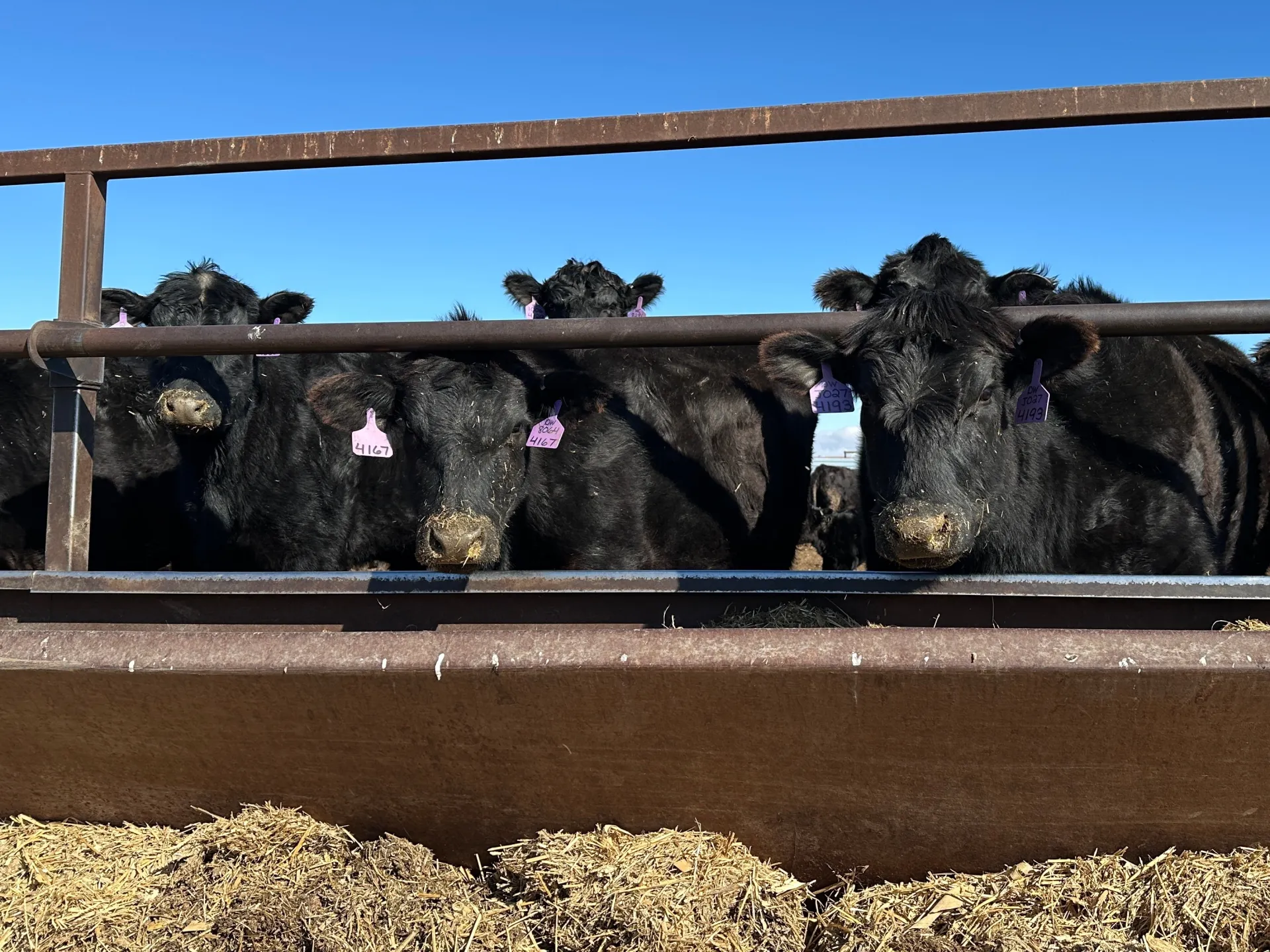
Beef prices are soaring in China. Across the Pacific Ocean in the United States, cattle farmers are complaining that their businesses are becoming increasingly unsustainable. And in India, poultry rearers are slashing their production targets because they cannot afford feed.
More than 90 percent of the world’s population eats meat in one form or another — and a looming meat crisis threatens to affect what they buy at the market, what they cook at home, and what’s served on the table.
At the heart of this is a chain of decisions and uncertainties that consumers rarely see. A cow has to be raised for years before it can become beef. Chickens need feed, much of it tied to global grain and soya bean markets. Farmers need land, water and weather conditions that allow them to keep animals alive and productive.
When any link in this chain is disrupted, a spiralling crisis ensues.
So what is putting the pressure on meat production, and what does it mean for billions of people around the world?
Declining cattle stocks in Brazil, US and China
Brazil, the US and China are the world’s three biggest beef producers, together supplying more than half of the world’s beef. But their cattle herds are shrinking at the same time.
According to a March estimate by the US Department of Agriculture (USDA), Brazil’s total herd this year is estimated at 177.4 million cattle — a nearly 8 percent drop from 192.5 million in 2024.
Over in the US, cattle numbers are at a historic low.
The USDA counted 86.2 million cattle and calves on farms on January 1, 2026. The number of beef cows — the females needed to produce future calves — was 27.6 million, down 1 percent from a year earlier. The 2025 calf crop was also down 2 percent.
In China, the USDA estimated a cattle head count of 94 million in January 2026, down 14 percent from 105 million in January 2024.
In all three cases, beef production is also projected to be down in 2026.
The USDA predicts a 2 percent decline in Brazil’s beef production and a 5 percent fall in exports. As for the US, beef production in 2026 is likely to be 4 percent lower than last year. China’s total beef supply this year is projected to be 12 percent lower than 2024.
The decline in domestic production, coupled with shrinking supplies that can be imported, has sent prices soaring in China — the world’s largest beef consumer and importer.
What’s driving down cattle herds and beef production?
The reasons are many, and they vary from country to country.
Brazil counts China and the European Union as two major markets for its beef exports. But both have imposed import restrictions that have disincentivised Brazilian beef manufacturers. That is partly responsible for the country’s decreased cattle head count, according to an analysis by Augusto Neto at S&P Global, the market intelligence firm.
Additionally, Brazil is currently in what is known as a cattle reversion cycle — when rearers reduce the slaughter of animals and instead try to preserve their female stock to help rebuild their herd — according to the USDA.
In the US, droughts have hit 60 percent of the country’s cattle-rearing area, according to a report by Sampad Nandy of S&P Global. With grazing areas decreasing, feed costs have risen.
Three major organisations, representing breeders in the states of Texas, Oklahoma and Kansas, issued a joint statement this week arguing that Immigration and Customs Enforcement (ICE) raids were disrupting their already strained operations. The meat industry depends heavily on immigrant workers.
If beef prices are rising, shouldn’t rearers want to produce more beef?
In theory, yes. But in practice, high prices do not automatically mean that more cattle can be produced quickly.
Cattle production is constrained by biological supply cycles, Kenneth Foster, professor of agricultural economics at Purdue University, told Al Jazeera. It can take a couple of years for a producer who receives a signal from the market to expand production and actually see the resulting animals enter the beef supply. The quickest way to rebuild a herd is to keep female cattle that might otherwise have been sold and use them for breeding. That is what Brazil is now doing.
But that creates a difficult economic calculation. A producer can sell an animal today at a high price, or keep it for breeding and wait for the next generation. That means carrying the costs and risks of keeping the animal while waiting for it to reproduce.
The result is a market in which strong demand and limited supply can persist even when prices are already high.
The USDA expects the cattle herd to begin rebuilding in the US, but the process is gradual.
The US and Brazil cases illustrate one of the central problems facing meat production: sometimes the constraint is not technology, land or money.
It is time.
Europe’s move from beef to poultry
Meanwhile, Europe presents a different picture. The continent is witnessing a structural change in what consumers are eating.
The EU produced about 42.7 million tonnes of meat in 2025. But EU meat production is projected to decline by about 3 percent between 2025 and 2035, with beef production projected to fall by 10 percent and pork by 7 percent. Poultry is the exception: production is projected to rise by 5 percent.
This shift is also visible in consumption.
Consumption of EU beef and pigmeat is projected to decline through 2035, while poultry consumption is expected to increase by 9 percent.
Beef and pork require longer production cycles and face different economic and environmental pressures. Poultry, by contrast, can respond much more quickly to changes in demand because chickens reach market weight within weeks rather than years.
That difference is becoming increasingly important. The OECD-FAO Agricultural Outlook expects poultry to be the fastest-growing major meat category globally over the next decade, helped by its relatively low cost and short production cycle.
Europe is therefore becoming an example of how a meat system can adapt without simply producing more of everything. Some forms of meat become harder or more expensive to produce, while others expand to fill part of the space.
Poultry has problems too — as India shows
Yet the poultry industry faces its own challenges, with India offering an example.
In June, a large section of India’s poultry industry announced plans to cut production by 25 percent after soya meal prices rose by more than 40 percent in a month.
The decision was announced by the All India Poultry Breeders’ Association after producers faced sharply higher feed costs and a seasonal decline in demand. Producers also began culling parent breeder stocks — birds needed to produce future generations of poultry.
Soya meal is an important protein source in animal feed. When its price rises sharply, poultry producers face a choice: absorb higher costs, raise prices, or reduce the number of birds they produce.
In India’s case, producers chose to cut production.
The consequences extended beyond individual farms. The Reuters news agency reported in May that Indian soya meal prices had risen 41 percent in one month to a four-year high of 66,000 rupees ($687.5) per tonne. India subsequently cancelled 25,000 tonnes of soya meal export contracts and began turning to soya bean imports from African countries.
The takeaway: a shock in one part of the agricultural system can move quickly through the meat supply chain globally.
As farmers try to protect their livelihoods and families try to keep food on the table, changing climates, rising prices, shifting dietary preferences and growing trade barriers are together reshaping the future of meat — and what we eat.