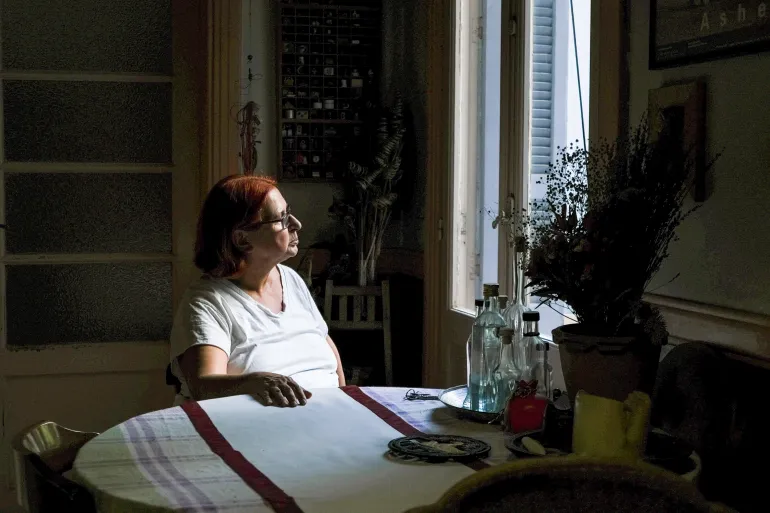
Athens, Greece – Tonia Katerini, a 69-year-old architect, leaned into her computer, scrolling through the property contracts that she said are remaking her neighbourhood.
Across Exarchia, the Athens district long known for its radical left-wing politics, flats are being bought up and turned into short-term rentals, pushing out the people who live there.
For months, Katerini and a group of neighbours have been digitally mapping foreign purchases using public records, marking them with red dots.
She zoomed out from her street on the map; it was a sea of red.
The balcony doors of her flat, where she has lived since 1986, were open and noise from the cafes below drifted in past the plants and stacks of architectural plans.
Her group says much of the money behind the rentals is Israeli; by their count, more than half of the area’s new company-run hotels and rentals .
In a neighbourhood where Palestinian flags hang from balconies and solidarity slogans cover the walls, that has caused friction.
On her own cobbled street, where the noise of arriving tourists rolling their suitcases wakes her in the morning, Israeli investors have bought two buildings, she said. The flat below hers belongs to one such company.
“They are nice guys we have downstairs,” she said. “It’s an Israeli company.”
Tonia Katerini in her flat in Exharchia in Athens [Nils Adler/Al Jazeera]
A few streets away, a residential building is streaked with black paint.
“Airbnbs leave us homeless,” reads one slogan across its facade. “Zionists not welcome,” reads another.
Such buildings are easy to spot. Instead of residents’ names, the buzzer panels show only numbers and a keypad by the door releases keys for Airbnb guests.
Across the neighbourhood, activists have splattered keypads and facades with red paint.
They say short-term rentals are driving an aggressive gentrification that is pricing out locals and erasing the area’s identity.
Foreign money has poured into Greek property in recent years: non-residents invested a record 2.75 billion euros ($3.2bn) in Greek real estate in 2024, according to the Bank of Greece, before easing last year.
No official figures break down foreign buyers in Athens by nationality. But an annual survey of completed sales by the agency network RE/MAX Hellas found that Israelis were the largest group of foreign buyers in Attica, the region around the capital, ahead of buyers from Turkiye and Lebanon, reported the Greek weekly To Vima.
Exarchia’s political activism runs deep. In 1973, students at the nearby Athens Polytechnic rose up against the US-backed military government, which fell the following year.
In 2008, police shot dead Alexandros Grigoropoulos, a 15-year-old Greek student, in Exarchia, provoking protests that spread across the country. It came, Katerini said, like “fire on dry land”.
As Greece’s debt crisis deepened, that anger on the streets helped propel the left-wing Syriza party to power in 2015.
A protester confronts riot police in Athens, December 7, 2008 [John Kolesidis/Reuters]
‘Tenants displaced, apartment blocks emptied’
Chrysoulla Papageorgiou, a schoolteacher who has lived in Exarchia for 24 years, is a familiar face on its streets. Earnest and straight-talking, the 46-year-old remembers it as “a neighbourhood of solidarity”.
The change came slowly, then quickened. At first, small owners rented out a spare room. After the COVID-19 pandemic, companies began buying entire blocks.
“Overnight, tenants were displaced and apartment blocks emptied,” she said.
Bars opened, spilling tables and chairs across pavements on streets that had once been quiet.
Rents rose and migrants and low-income families, many living in basements and on the lower floors, were the first to go. Schools lost pupils and old bookshops, traditional cafes and grocers closed.
For years, Exarchia residents sheltered refugees in occupied buildings. Sitting on prime real estate, they were among the first buildings police emptied and then sold, Papageorgiou said.
“Half were squats,” she said. “Now we have only one.”
That last building is draped in painted sheets declaring solidarity with the families inside. Neighbours help make sure the children get to school.
The last building in Exarchia where migrants and refugees without housing can stay [Nils Adler/Al Jazeera]
Since 2022, Exarchia Square, long the heart of the neighbourhood’s protests, has been a fenced-off construction site for a new metro station that many residents fought against. Riot police, Papageorgiou added, are now a daily presence.
The aim, she believed, is to turn central Athens into somewhere “purely touristic”.
In recent years, buyers have been “almost only Israeli”.
Riot police walk through Exarchia [File: Nils Adler/Al Jazeera]
Near the square hangs a large Palestinian flag. Tourists sometimes scrawl anti-Palestinian messages on its white stripe, and activists paint it white again.
Foreign buyers, Katerini said, see Greece as a safer place for their money than Israel itself, and in Athens “the government is very friendly with Israel”. In August, Athens signed a missile deal with Israel worth $3.5bn.
‘A very good opportunity’ for investors
Vagelis Lazaridis, a stocky real estate agent who heads a branch of the Athens-Attica Real Estate Agents’ Association, talks about his trade with passion. He said the reasons for the investments were purely practical.
Exarchia “was a run-down area” which made it “a very good opportunity”, he said.
It is beside the centre, close to the metro and to universities full of students from abroad. Unlike Plaka, beneath the Acropolis, it has few building restrictions.
Once a handful of buyers arrive, he said, others follow.
One of the many slogans criticising short-term rentals in Exarchia, Athens, Greece [File: Nils Adler/Al Jazeera]
Greece to become ‘far less appealing’ for Israeli buyers
The government is now trying to cool the market.
Prime Minister Kyriakos Mitsotakis announced last month that the transfer tax for homebuyers from outside the European Union would rise from 3 percent to 15 percent from next July.
“The party is over in Greece,” The Jerusalem Post wrote in a recent report. “The country, which in recent years has become a preferred destination for Israelis seeking real estate investments at reasonable prices and with attractive yields, is about to become far less appealing.”
Lazaridis said agents’ associations oppose the plan, which has yet to become law. It “may not take effect, or may be postponed”, he said.
Agents expect some non-EU buyers to speed up purchases before the deadline, reported the Greek news site in.gr.
A ‘tourists go home’ poster in Exarchia, October 10 2026 [Nils Adler/Al Jazeera]
‘Fewer Airbnbs’
Not everyone in the trade sees an unstoppable tide.
Iryna Rondyak, who is originally from Ukraine, runs her own estate agency near Exarchia. She said that when Israeli buyers began arriving about a decade ago, they made up about 60 percent of her foreign clients, many buying whole office buildings to turn into hotels.
Until around 2024, foreigners accounted for about 70 percent of her sales, she said.
This year, it is about 30 percent, as state-backed mortgages for young Greeks, under a scheme called “Spiti mou” (My Home), attract local buyers back.
Iryna Rondyak in her office in Athens, October 10, 2026 [Nils Adler/Al Jazeera]
She credits new rules for the turnaround.
No new short-term rental licences are being issued in central Athens, including Exarchia, and in September the freeze was extended to the end of 2027, reported To Vima.
Properties bought under Greece’s “golden visa” residency scheme can now only be let long-term. While a cheaper route into the scheme, at 250,000 euros ($280,000), rewards investors who convert empty office buildings into flats.
“Anyone living in Greece couldn’t find a home in the centre. Everything was on Airbnb,” she said. “Now there are far fewer.”
It is “a little better,” she said, but “the problem still exists”.
Rents remain high, at 10 to 15 euros ($12 to $17) per square metre, even in the southern suburbs, she said. Many flats sit empty because owners find renting them out is not worth the tax bill.
A building in Exarchia converted into Airbnb rentals has been pelted with paint by activists, October 10, 2026 [Nils Adler/Al Jazeera]
Residents are less convinced.
The rental freeze is temporary, they say, and investors with enough money can still find ways in. Nor does it undo what has already happened: many of the neighbourhood’s buildings are already short-term rentals.
Back in Exarchia, Papageorgiou counts herself lucky.
Her landlady, whose family has lived in the area for generations, refuses to raise the rent as an “act of resistance”.
Papageorgiou said jokingly that her landlady’s accountant has told her she is ruining the market.
Going into Week 8 of the high school football season, there are still 23 teams unbeaten in the Southern Section and City Section.
The three City teams are Cleveland, Granada Hills Kennedy and Marshall.
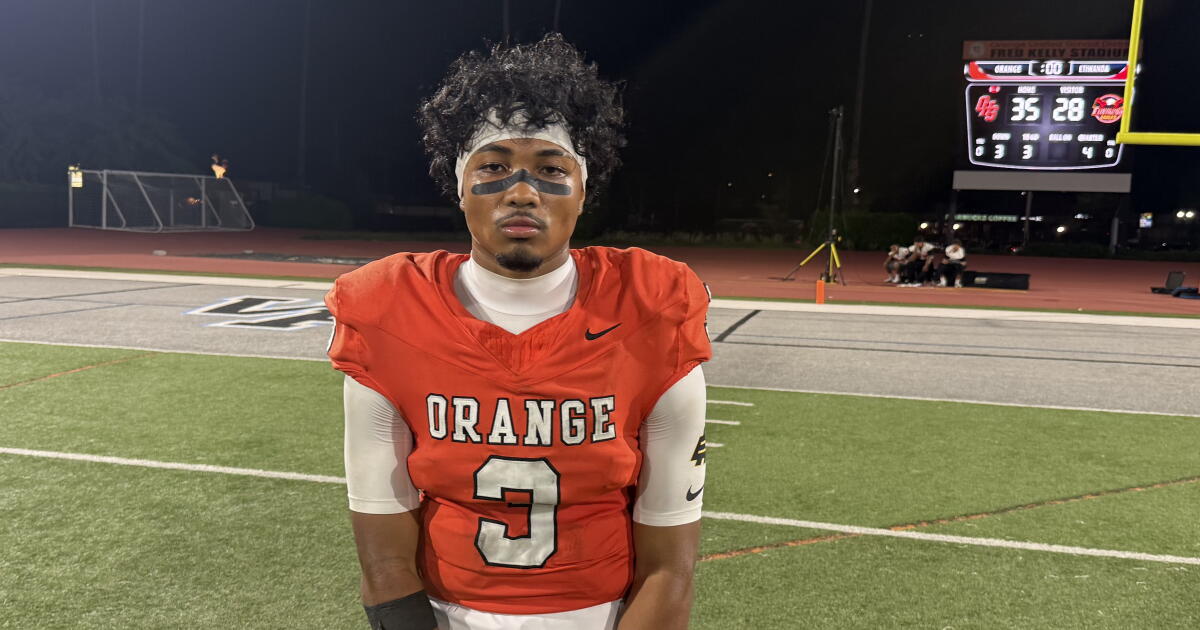
There are 20 in the Southern Section: Santa Margarita, Sierra Canyon, San Clemente, Corona del Mar, Sherman Oaks Notre Dame, San Jacinto, Huntington Beach, Orange, Charter Oak, Mary Star, Bonita, Desert Christian, Los Altos, Nordhoff, San Marino, Nogales, Viewpoint, Royal, St. Bernard and Rancho Alamitos.
There are tough league games ahead, starting on Friday with Santa Margarita at St. John Bosco and Bishop Amat at Sherman Oaks Notre Dame.
Sierra Canyon (7-0) remains the most likely to go 10-0, with Mission League games still remaining against Chaminade, Sherman Oaks Notre Dame and Bishop Amat.
This is a daily look at the positive happenings in high school sports. To submit any news, please email eric.sondheimer@latimes.com.
In a new memoir, Joe Manganiello is getting candid about the condition that nearly killed him and the measures he took in search of healing.
The upcoming book, “Bloodlines,” which hits bookstores and online retailers Oct. 13, follows Manganiello’s career in Hollywood from “True Blood” werewolf to “Magic Mike” hunk, his seven-year marriage and subsequent divorce from “Modern Family” star Sofía Vergara and his battle with a mystery autoimmune condition that he says nearly killed him.
The 2010s were off to a stellar start for Manganiello. He was landing notable parts in buzzy projects and fell in love with television’s Colombian Jessica Rabbit, but shortly after the couple said “I do,” the actor’s rise abruptly switched course because of health issues that left doctors stumped.
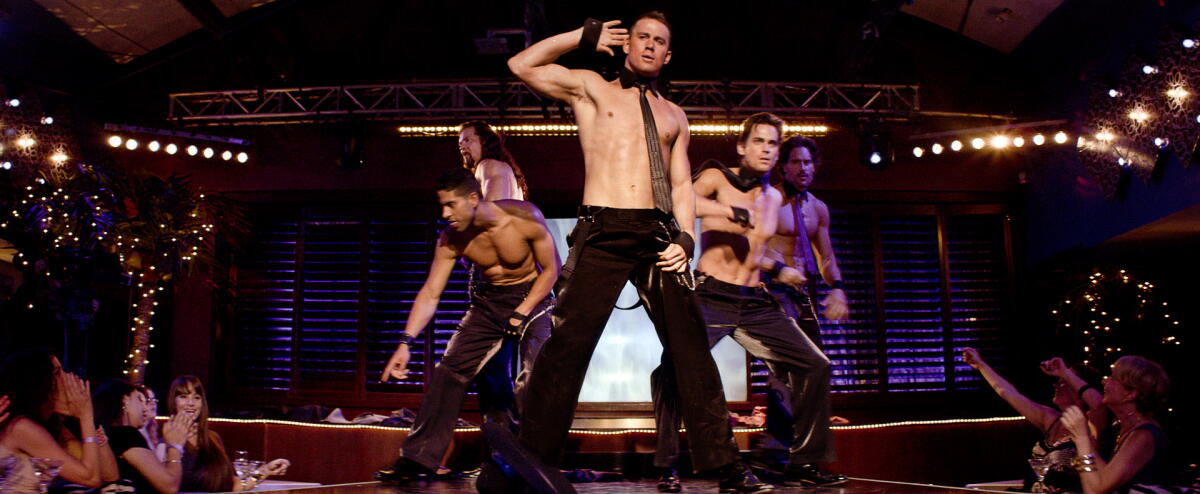
Adam Rodriguez, onstage from left, Kevin Nash, Channing Tatum, Matt Bomer and Joe Manganiello in “Magic Mike.”
(Warner Bros. Pictures)
“I was getting sicker and sicker,” he told People. Manganiello detailed debilitating abdominal pain, fevers, rashes, headaches, fatigue and ulcers in his digestive tract that caused bleeding and led to countless colonoscopies. In 2016, he was rolled into an emergency “major organ amputation” in which doctors removed a portion of his intestines and sent him home 60 pounds lighter than his normal weight, with a colostomy bag in tow.
“It happened to me, and it’s the truth, and I have all the scars to prove it,” Manganiello told the outlet. Doctors attempted to treat the actor with prescriptions used for patients with Crohn’s and ulcerative colitis, but nothing worked. An autoimmune disease seemed to be the culprit, he said, but such “conditions are a dumping ground for things [doctors] don’t understand. They start running you through this gauntlet of drugs.”
Manganiello said that, as a result of the illness, his marriage fell apart, he gave away his gun to protect himself from suicidal impulses, and he took in an itty-bitty Chihuahua named Bubbles.
He also started to pursue alternative treatment, which included a trip to Cuba, where he licked the pituitary gland in a goat’s skull, an esoteric ritual used to attempt a factory reset on a person’s immune system. When that didn’t cure him, he turned to a Santa Monica shaman who believed generational trauma caused the actor’s ailments.
“Whatever chains there were to the past suffering of my ancestors, they were completely broken,” he said. “There’s not an ounce of fear in me about moving forward with my life.”
Manganiello revealed he’s since had reconstructive surgery on his digestive tract and is seemingly cured.
“I can’t believe I’m alive,” he said. “I feel like I was reborn.”
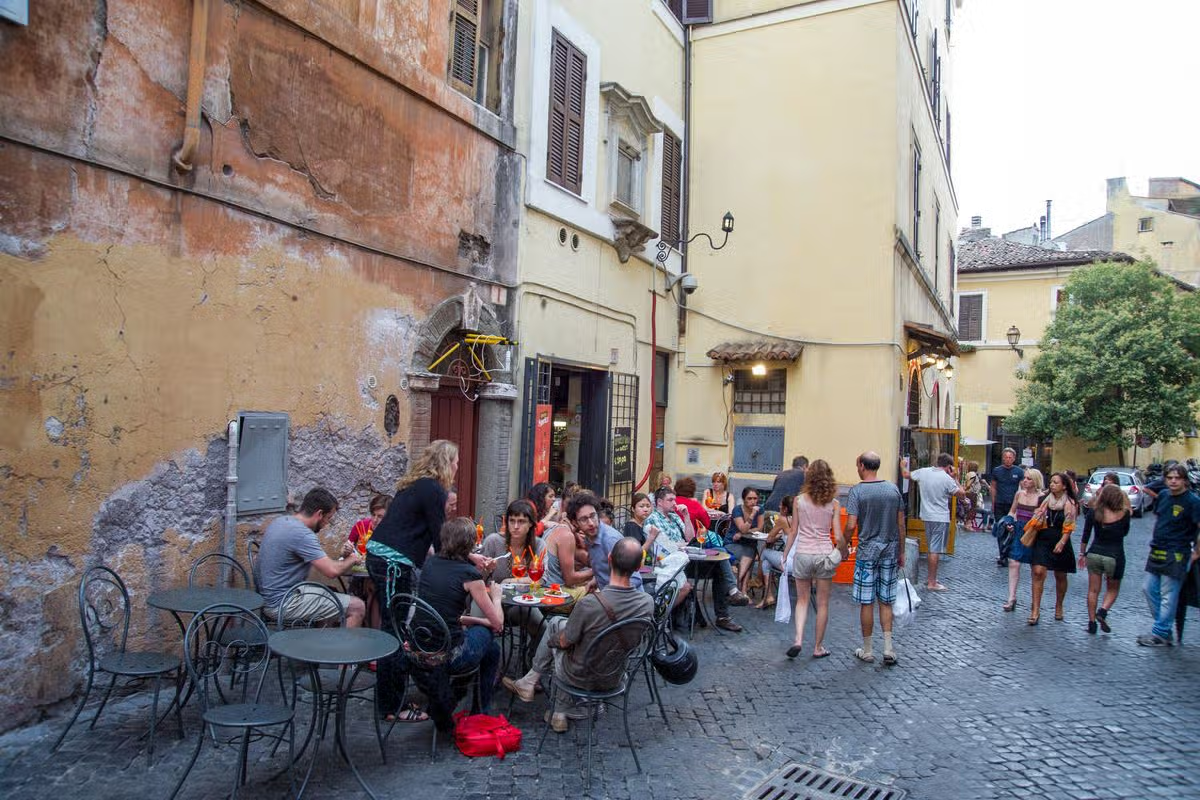
Locals in Rome’s Trastevere district complain that tourists have been making noise in the early hours, leading one frustrated 74-year-old to resort to extreme measures
Trastevere neighbourhood in Rome
A frustrated Italian local has admitted to dousing rowdy, “drunk” British tourists with buckets of water after they disturbed her in the night. Locals in Rome’s Trastevere district complain that UK and US tourists have been making noise beneath apartments in the early hours, leading one 74-year-old to resort to extreme measures.
Rome has long been a popular holiday destination, drawing in millions of visitors each year. Tourists flock to the Italian capital to soak up the city’s Roman history and art, and enjoy its nightlife and world-famous cuisine.
With the swathes of tourists comes a downside, though: some allegedly get “extremely drunk” and cause a nuisance in the middle of the night. Local Simonetta Marcellini told The i Paper that she keeps buckets of water by her window.
She said: “At first I’m polite, and I point out to them that it is the early hours of the morning and that people will be sleeping. The moment they start arguing back and insulting me, I pour water on them.”
Simonetta, a former radiographer born in the area, has grown frustrated with the changes she’s witnessed. She claims there has been a marked decline in the quality of restaurants, and businesses have been replaced by bars and sandwich shops.
Meanwhile, Rome was inundated with 22.9 million visitors last year, a figure said to be more than seven times the local population. Simonetta decided she’d had enough when she spotted tourists urinating against her building.
She claims that life has “gotten much worse” in relation to tourism since the Covid pandemic. “Regulations are fewer and our complaints from years ago were underestimated.
“So a phenomenon that could have been controlled was practically left unchecked and we’ve arrived today with all the reckless partying.”
It comes after British holidaymakers were warned they could face a 500 euro fine in “some Italian towns”. The Foreign, Commonwealth and Development Office (FCDO) plays a crucial role in keeping Brits informed when travelling.
In its travel advice section for Italy, the FCDO warns that “some Italian towns and cities have specific laws, and you could be fined for breaking them”.
Some of the acts include eating and drinking near certain churches, historic monuments and public buildings. It’s also important to remember that entering or bathing in many public fountains is prohibited – including in Rome.
On the sun-kissed island of Capri (situated off Italy’s Amalfi Coast), a rule is in place regardingdisposable plastic. Visitors are banned from bringing items such as plastic bags, cutlery, cups, trays, or straws onto the island.
Further FCDO guidance reads: “Illegal traders operate on the streets of all major Italian cities. It is illegal to buy items from unlicensed street traders. If you do, you could be stopped by the local police and fined.
“It’s illegal to remove sand, shells or pebbles from coastal areas in Italy. You could face a large fine for doing so. It’s also illegal to collect various species of flowers, plants and herbs from mountain and wooded areas.
“For more information, check with the regional authorities of the area you’re visiting.”
In 2002, 91-year-old Edwin Hiles was murdered in his Oxfordshire home and the way police tracked down his killer changed forensic investigations forever and led them straight to the killer
Edwin Hiles was murdered in 2002 and it changed the way police use forensic investigations
Frail 91-year-old Edwin Hiles was brutally murdered in his Oxfordshire home by a former local slaughterman who cut his phone line so he couldn’t call for help.
Paul Weedon, 24 – who worked in the ‘gut room’ of Mutchmeats’ slaughterhouse in Witney, Oxfordshire – stabbed the pensioner in the throat in 2002 after trying to rob the widower when he refused to give him money for rent.
Mr Hiles’ body was found in the front downstairs living room of his semi-detached home by a neighbour who had called in to see him. But there was no sign of the killer.
Mr Hiles was known in his community for his small-scale money lending to those in hard times and detectives immediately linked his murder to his generosity and that he may have had cash at his house
What followed changed British forensic science forever. In order to catch the killer, investigators pioneered a breakthrough technique known as “fibre-taping” for the first time in the UK – linking the victim’s body directly to bloodstained clothes Weedon had stashed in a nearby woodland close to where he was living in Chipping Norton.
Rather than just gathering loose fibres to see if the two people interacted, investigators used a complete, grid-indexed tape on both the killer’s clothing and Mr Hiles’ body to reconstruct their positions during the attack.
During the trial in 2003, Weedon had changed his story multiple times, even claiming to have seen drug dealers kill the elderly widow, according to the Oxford Mail. He also claimed he had been deliberately framed by an acquaintance who had had dealings with Mr Hiles.
But later on, he then said he stabbed Mr Hiles in the throat after the pensioner came at him with a kitchen knife to stop the robbery. In mitigation, Julian Baughan, defending, said: “This wasn’t pre-planned. It was intended possibly as an application for a loan which turned into a robbery which went wrong.”
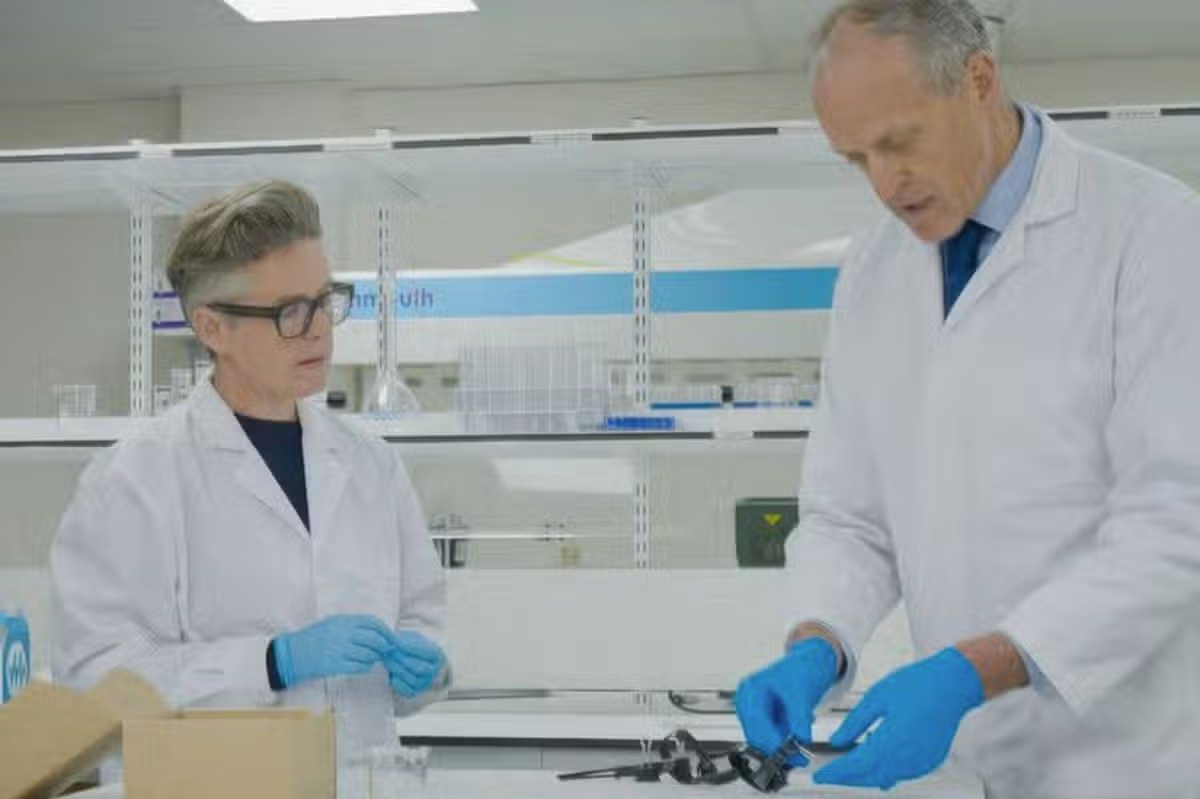
The breakthrough forensic testing from 2003 will be shown and explained on the brand new documentary series UK Forensic Breakthroughs on the True Crime channel. Spanning across 10 episodes, each instalment will focus on its own murder case where scientific breakthroughs and microscopic evidence secured justice for grieving families.
Forensic scientist Jo Millington will give exclusive access to the experts behind the investigations, including the case of Edwin Hiles, which is set to air on September 27. Jo Millington has been a forensic scientist for over 30 years, even working behind the scenes on BBC’s Silent Witness.
Speaking of the new documentary, Jo Millington said UK Forensic Breakthroughs stands out from other crime shows and explained: “The first difference is that it puts forensic science at the heart of the show, which normally sits on the periphery in the shadow.
“Over a 10 part series, we’re using the programme to kind of assure a spotlight on forensic science. And more importantly, the scientists that do forensic science, every single day.”
Jo explained how forensic evidence isn’t just about fingerprints and bloodstains. Speaking to the Mirror, she said: “Forensic science is based on the principle that every contact leaves a trace and that’s exactly what people do when they commit a crime. Every interaction, every step has the potential to leave material in the crime scene or take it away.
“The challenge sometimes is finding the evidence in the first place, but once forensic scientists do find it then they can start to interpret it and put it into the context of an investigation.
“The evaluation of the science is really important. For example, finding my DNA in a place where I live or work is unlikely to unlock a case, but if investigators find my fingerprint in the blood of the person that has been injured, then that is like a timestamp.
“It tells you I was there when the person was bleeding – that contextual evaluation is vital – and in that particular example, I would have questions to answer.”
As well as shining a light on the forensic science work, Jo aims to tackle one common misconception about her job. She added: “The thing about forensic science is it’s mostly a process – things need to happen in a particular order in line with a particular method and the results need to be checked and double checked by people who are trained and competent.
“The chain between the evidence that is collected from a crime scene and the scientific findings that are presented to the court, and the jury, needs to be water-tight. That level of diligence and checks takes a longtime.”
TRUE CRIME is available on Sky, Virgin Media, Freeview, Freesat and Freely as well as for streaming via TRUE CRIME UK (FAST), accessible on platforms including Prime Video, Rakuten TV, Pluto TV, Plex, LG Channels, Samsung TV Plus, ITVX and 5.
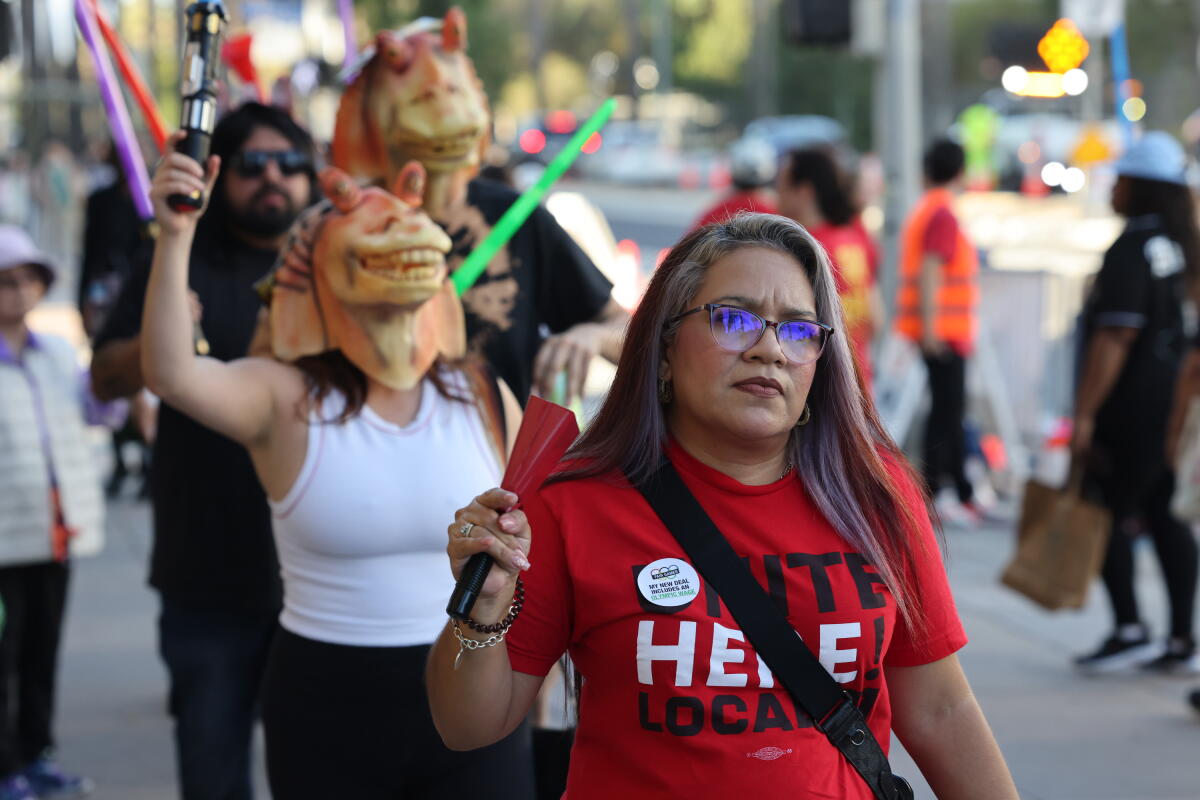
Days before the Lucas Museum of Narrative Art officially opens, protesters from the Fair Games Coalition — wearing Jedi robes and Jar Jar Binks masks and carrying lightsabers — rallied together outside the new museum.
Dozens of people from the group fighting for better worker protections during major sporting events were loudly blowing horns, banging drums and chanting, “Sí se puede,” directly across from Exposition Park’s newest museum. The group was at the museum’s private opening party Saturday night to take a stance against museum co-founder Mellody Hobson‘s recent resignation from the Los Angeles Olympics organizing committee, LA28.
“We launched the campaign with some real, reasonable demands,” said Jessica Durrum, the director of the Fair Games Coalition, for the Los Angeles Alliance for a New Economy. “If the Olympics are coming to town, we want to make sure there are lasting benefits for our communities.”
The Fair Games Coalition, which is made up of over 80 organizations, formed to fight for better labor deals during major events like the Super Bowl and the Olympic and Paralympic Games. Some of the unions in the coalition include United Teachers Los Angeles, National Union of Healthcare Workers, United Food and Commercial Workers Local 770, United Farm Workers and various community groups.
Ahead of these events, the group is asking that employers provide union and living wage jobs, funding for 50,000 units of housing for working families, a moratorium on short-term rentals and protections for immigrant workers.
Gladys Avyla marches in a Fair Games Coalition protest outside the Lucas Museum of Narrative Art.
(Jonathan Alcorn / For The Times)
Gladys Avyla, a member of Unite Here Local 11, has worked as a cleaner at the W Hotel in Hollywood for the last 14 years. Several years ago she had to move to Victorville when her rent in L.A. got too high. Avyla said that with these major sporting events coming through town she’s worried the cost of living will continue to rise as her work gets busier and busier.
“Rent is very high, and everything is expensive. It’s hard living here. We need a wage increase for the Olympics because everything costs so much,” Avyla said in Spanish. “We need help for all workers. We’re human beings, but, honestly, we aren’t treated like human beings.”
Hobson, who co-founded the billion-dollar museum alongside her husband, George Lucas, resigned from LA28 earlier this week. She reportedly stepped down from the position due to the demands of running the Lucas Museum.
But the Fair Games Coalition claims she responded to their requests to meet and discuss their concerns by resigning. The 35-person board led by Casey Wasserman, who was recently under heat for his ties to Jeffrey Epstein and Ghislaine Maxwell, is meant to help plan and execute the upcoming Olympic Games.
“That’s how you hide your head in the sand. But we’re not giving up. She still has clout and still has a lot of power in the city of Los Angeles with the Olympic Committee,” said the Rev. Gary Bernard Williams from St. Mark United Methodist Church, a member of the coalition. “There’s going to be a lot of money flowing at the top. Very little money will be trickling down to the workers who need it the most.”
Demonstrators at a Fair Games Coalition protest at the Lucas Museum of Narrative Art.
(Jonathan Alcorn / For The Times)
LA28 and the Lucas Museum did not immediately respond to a request for comment.
During this year’s World Cup, where several games were hosted in L.A., Unite Here Local 11, the union which represents workers including dishwashers, concession workers, bartenders and servers and SoFi Stadium’s food-service operator Legends Global, came to a tentative agreement days before the first match. Pastor Bridie Roberts, who works as the community organizing director at Unite Here Local 11, said having the Fair Games Coalition’s support was helpful during the negotiations.
“Our members face serious, critical decisions every single day about how to make ends meet and they work with some of the biggest tourism companies in the world that will profit in the billions of these games,” said Roberts. “We feel that the games have potential to bring real outcomes for working people, but only if we fight for them.”