Supporters cheer new L.A. County Measure ER sales tax
Supporters of a new Los Angeles County half-cent sales tax rallied Wednesday to celebrate what they framed as a historic win for the region’s cash-strapped healthcare system.
After a rocky election night that showed the tax lagging, supporters claimed victory Tuesday after the latest vote tally pushed Measure ER further over the 50% margin needed to pass. The measure would impose a new half-cent sales tax countywide, with the proceeds going toward local hospitals and clinics hit by federal funding cuts.
Jim Mangia, the chief executive of St. John’s Community Health who helped craft the measure, summed up the campaign as “grueling and expensive.”
“We had to ask an already overtaxed community — in the midst of runaway inflation and [an] affordability crisis — to tax themselves yet again,” he told a crowd of supporters Wednesday.
L.A. County already has a sales tax of 9.75%, and some cities add their own on top. Measure ER passing would raise the countywide sales tax to 10.25%, with some individual cities having a sales tax of more than 11%, according to the California Department of Tax and Fee Administration.
Despite a recent winning streak for sales taxes in L.A. County, some political observers had forecast doom for the measure, which came at a time of skyrocketing gas prices and cost-weary voters.
The largely informal opposition had consisted mainly of local cities that warned another sales tax would disproportionately burden the poorest residents and force shoppers across the county border in hopes of finding lower costs. Some city leaders had also dinged the county for misusing homelessness money generated from a previous sales tax and argued this new pot of dollars would be handled no better.
But supporters were able to eke out a narrow victory, according to the latest election returns, by emphasizing looming hospital closures and the temporary nature of the tax, which is set to sunset in five years.
“It’s a lifesaver to carry us through the storm we’re all in,” said county Supervisor Holly Mitchell, who led the push within the Board of Supervisors to get the measure on the ballot.
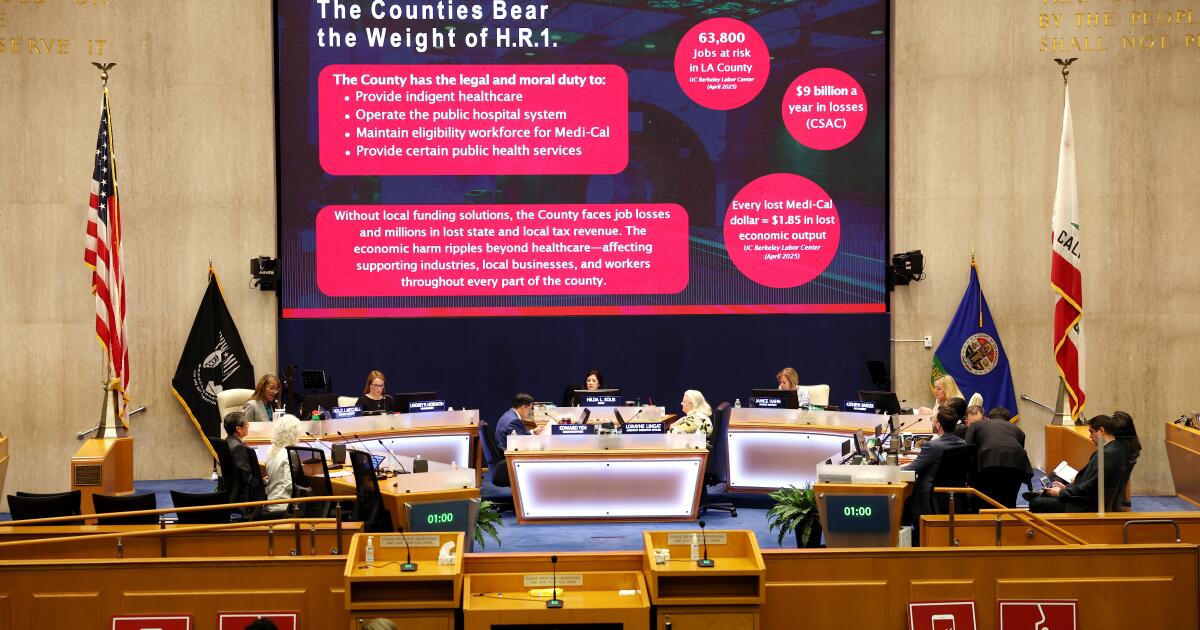
County leaders in February voted 4-1 to put the tax on the ballot after federal legislation threatened to pull health insurance from the poorest residents, leaving the already cash-strapped county to foot the bill for their care. Officials say cuts in the One Big Beautiful Bill Act are expected to slash more than $2 billion from the county’s budget for health services over the next three years.
“It’s disgusting what’s going to happen to our residents,” said Supervisor Hilda Solis, who championed the measure alongside Mitchell.
The tax, which begins Oct. 1, comes at a time of budget-tightening for the county amid rising labor costs and a $4-billion sex abuse settlement that is set to be paid out over the next five years.
Officials estimate the tax will bring in about $1 billion per year, which will go to clinics, hospitals and Planned Parenthood services that supporters say are at risk of closure without a new source of cash.
A similar proposed healthcare sales tax in Contra Costa County, meant to generate $150 million a year, was soundly rejected with about 57% of voters opposing the measure, according to votes tallied as of Wednesday.