
Iran war live: US warns peace deal with Tehran is extremely difficult
Rubio tells US media that reaching a peace deal with Tehran is extremely difficult while Hormuz attacks continue.
Source link
Rubio tells US media that reaching a peace deal with Tehran is extremely difficult while Hormuz attacks continue.
Source link
Iran’s Foreign Minister Abbas Araghchi says Israeli Prime Minister Benjamin Netanyahu seeks more war before elections.


Published On 18 Oct 202618 Oct 2026
Share
Protests are sweeping France as anger over conditions in schools meets frustration with high living costs and a government accused of doing little to address problems facing people.


Published On 18 Oct 202618 Oct 2026
Share
Fires reported on three tankers in Strait of Hormuz and Sea of Oman, as masked settlers attack European politicians in occupied West Bank.


Published On 18 Oct 202618 Oct 2026
Share
Follow updates, including toss and team news, from our live text commentary stream of the series decider.

Published On 17 Oct 202617 Oct 2026
Share
The UK Foreign Office says it advises against “all but essential travel” to Saudi Arabia, after attacks by Yemen’s Houthis on the country.


Published On 17 Oct 202617 Oct 2026
Share
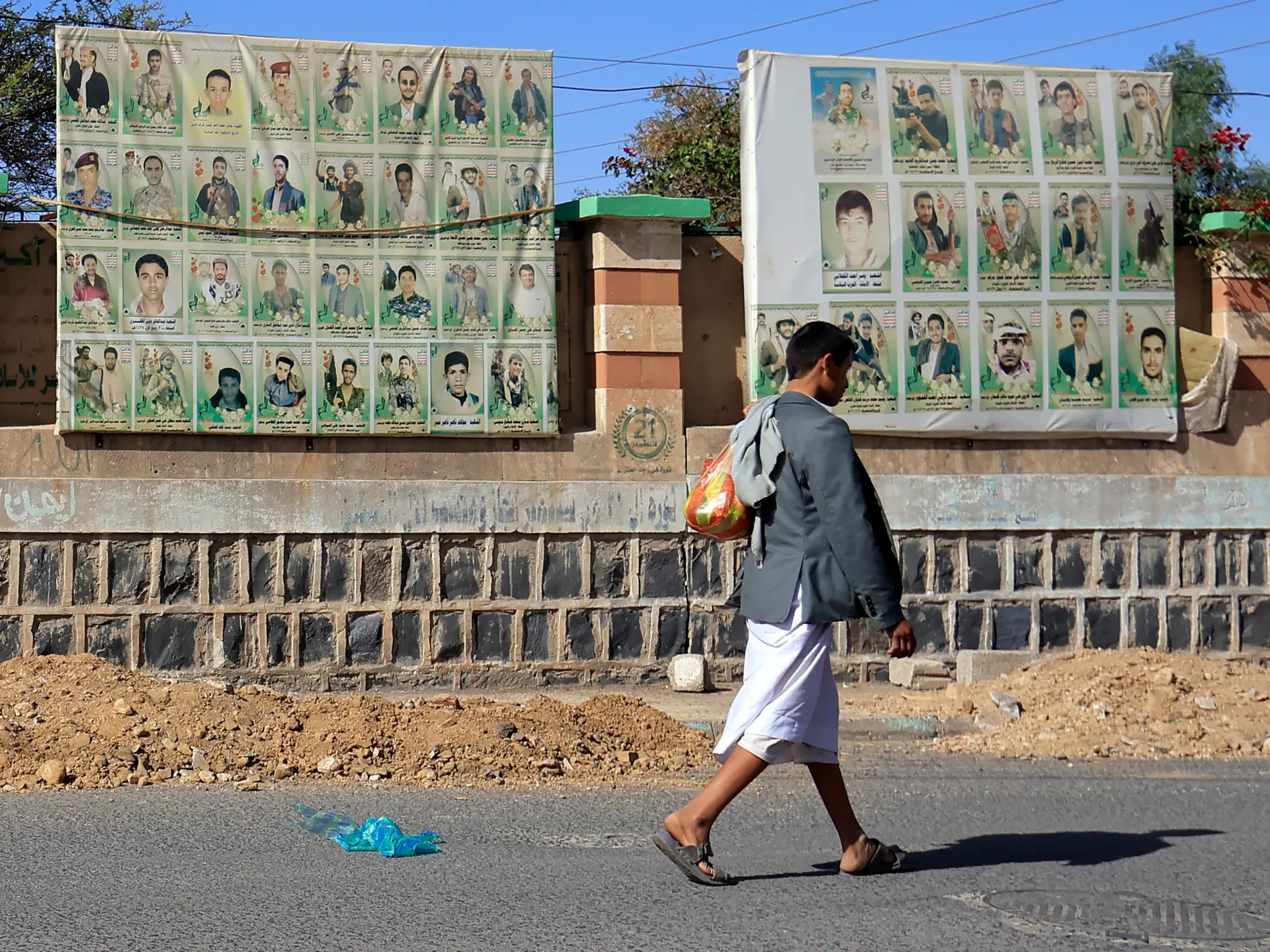
Saudi Arabia calls Houthi attacks 'full-fledged war crimes' while the US warns of possible attacks on Saudi airports.
Source link

If you’re one of the (very rare) people who haven’t seen the first few episodes of the Celebrity Traitors, here’s what happened at the end of the last episode…

(Image: BBC)
The three Traitors – James Acaster, Maya Jama and Hannah Fry – had a big decision to make. They chose to play a fatal game of Hide and Seek with four of the Faithfuls. They were allowed to put themselves amongst the four but chose not to, hoping suspicion might fall on one of their chosen Faithfuls and they can safely slip under the radar…
They chose four stars – Leigh-Anne, Ross, Rob and Romesh – and will ‘kill’ one. However, they don’t know that Leigh-Anne has a special key which protects her from being murdered…
Oil prices gain as Houthi strikes hit Saudi Aramco and Tehran vows new tactics against shipping in Hormuz.
Published On 15 Oct 202615 Oct 2026
Share
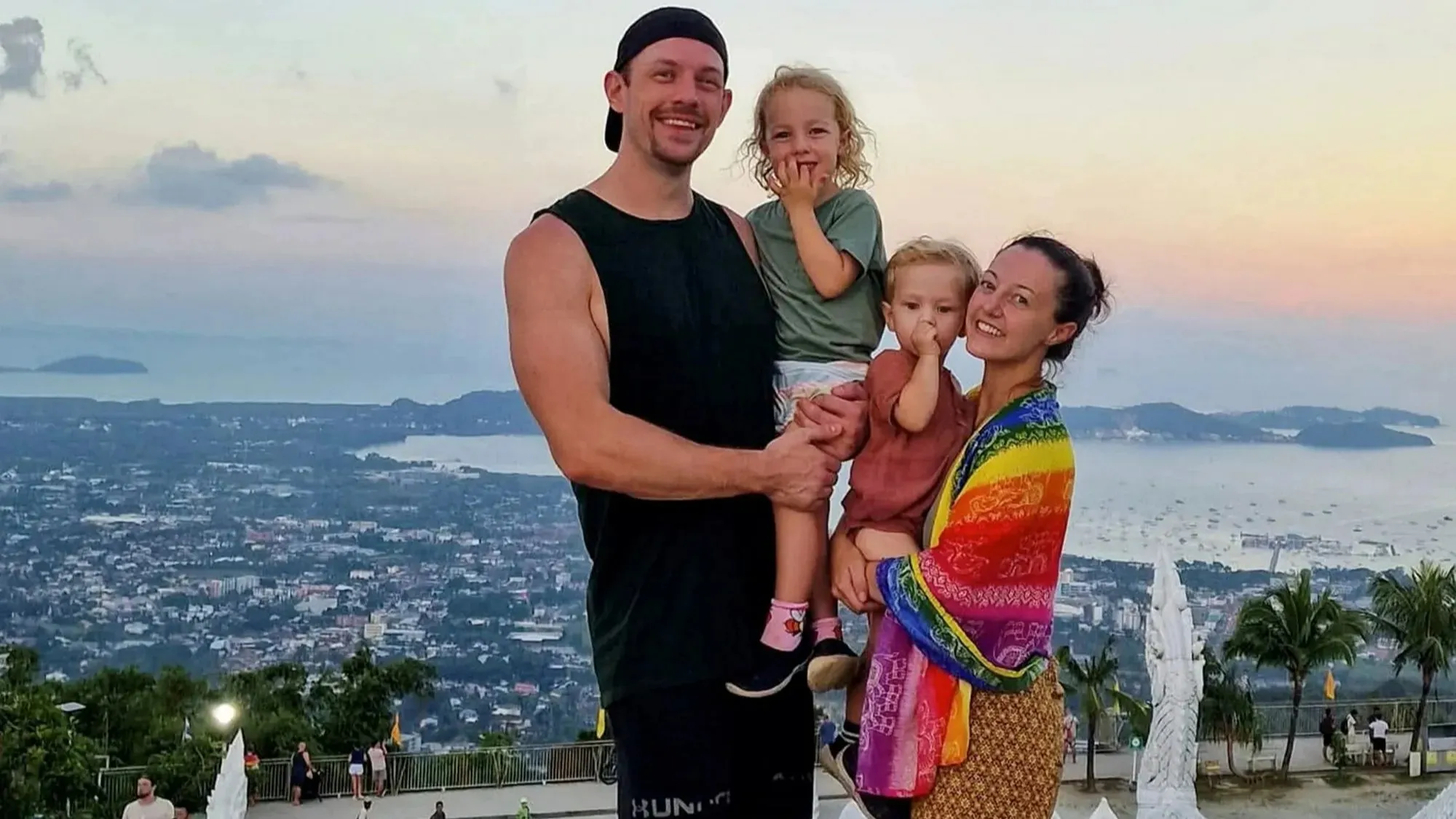

MANY parents usually spend years saving up for family holidays abroad.
But one savvy couple has managed to swap life in the UK for a full-time travel adventure – all while saving £36,000.
Back in 2023, Ruth and Steven Rowe made a decision which shocked a lot of people after “selling everything they owned” and buying a one-way ticket to Sri Lanka.
They have been globe-trotting ever since on a budget of just £30 a day, and have turned the world into a classroom for their two children Aurora, five, and Atlas, four.
Ruth, 35, and Steven, 36, said they had always dreamed of travelling full-time and, as the moment approached to put the children into a nursery, they felt the time was right.
Ruth said: “We knew those early years were precious and we wanted more time together as a family before school routines took over.”
They flogged all their belongings on Facebook Marketplace or via car boot sales and set off from the village of Eardisley, Herefordshire, with just two suitcases of clothes and a few toys.
The family has already been to 17 different countries, ticking off bucket-list destinations such as Costa Rica, Guatemala, Ecuador, and Indonesia.
They stay four weeks at a time in Airbnbs and have also visited the likes of Thailand, Malaysia, Cyprus, the USA, Colombia, and Peru – all while saving around £12,000 a year.
They currently have no plans to return and want to continue world-schooling in exotic locations – while spending around £2,000 a month, compared to £3,000 back in the UK, as a result of their rent and outgoings being less.
Ruth and Steven had been renting a barn conversion and had both children during the Covid-19 pandemic.
They had travelled extensively before having kids but couldn’t shake the feeling that there was still so much of the world they wanted the children to experience.
Ruth added: “We wanted more time with them as we know those early years are precious, so we thought, why not just do it? So we did.
“Selling everything was an exhilarating experience.
“Our car, furniture and most of our possessions all went through Facebook Marketplace and car boot sales.
“We kept only a handful of memory boxes filled with special items from the children’s early years and a few clothes.
“We set off at the start with two big suitcases, a medium and a small one – and a stroller.
“And since then we’ve downsized to just two suitcases – it is really surprising how little you really need.
“Possessions don’t make you happy, life experiences do.”
They arrived in Sri Lanka with no return ticket and no real plan beyond seeing where life took them.
Ruth added: “And we’re still travelling now. We’ve been travelling full-time ever since, slow-exploring the world as a family, while my husband runs his coaching business remotely and we embrace world-schooling on the road.
“It’s been beautiful, chaotic, challenging and incredibly freeing.”
The couple also support themselves financially via Steven’s online coaching business – which he can still run wherever they are in the world.
However, Steven revealed the lifestyle isn’t always glamorous.
He added: “We use Airbnbs mainly but I’ve been working out of little cupboards in some places – it has been challenging at times but we’re in a fortunate position.
“We aim to live off around £30 a day and we stay in places for a month at a time so I can work Monday to Friday.
“But it can vary greatly; a two-bed apartment in one country can be £800 but a smaller one in another country £1,300.”
The couple say their children are now educated through “life experiences” – be it picking up Spanish in Latin America or learning about volcanoes while hiking in Peru.
And they say giving the kids no screen time whatsoever on their travels has helped them to become more patient and creative.
Ruth added: “They are also learning counting through things like paying a tuk-tuk driver in different currencies and the first time Aurora ever wrote her name it was in sand on a beach with a stick.
“We give them no screen time at all – which I think has taught them patience on their travels and to be more creative when they are bored sitting on a bus.
“They thought the TV back home was a radio as we’d only use it for Spotify and we think that’s allowed their imagination to flourish.
“I have just seen their confidence grow so much, and of course there’s no way of really telling how they would have been at home, but they are just so open and talk to anyone – young and old.
“I will sit down and teach them some reading and phonics and writing – but we’re not rigid with it and it’s still very much about learning through playing.
“It wasn’t a case of we hated the UK – we just love the world. But I was never a fan of the cold and rain so that is something I don’t miss.
“Also, we’ve found children aren’t treated like nuisances like you find in some restaurants in the UK.
“They are welcomed in and looked after, lots of places have playgrounds too to keep them entertained; that was a big difference to the UK too.
“Sri Lanka is just the most welcoming place we’ve ever been – people would invite us to eat in their homes and absolutely loved the kids.
“Costa Rica is beautiful with all the wildlife and jungle, Guatemala is underrated – it is also an incredible place and one of our favourites.”
Ruth was also not a fan of the cold and wet British weather – but admits she misses British chocolate.
She added: “The only thing I miss is friends and family – and also British chocolate.”
Steven also believes the lifestyle has been transformational for the children.
He said: “These positive environments have brought such positive developments so far in our children. Atlas was swimming independently at two.
“This way they get one-to-one without being part of the larger school system, which we have no issue with, we just see the benefits from doing it this way.
“We make sure the children are at the centre of what we do, we always research kids’ clubs and activities wherever we stay.
“They are loving learning about all the wildlife too – we had iguanas and sloths outside our doors in Costa Rica.
“Aurora had surf lessons in Bali and will be sandboarding in the Peruvian desert; it’s magical for them.
“The children have most enjoyed all the swimming they’ve been able to do and all the wildlife has been a massive enjoyment for them too.”
Follow the couple’s travels on Instagram.
Sri Lanka
Indonesia
Thailand
Malaysia
Cyprus
USA
Guatemala
Costa Rica
Colombia
Ecuador
Peru
Bolivia
Brazil
India
Nepal
Portugal
Morocco
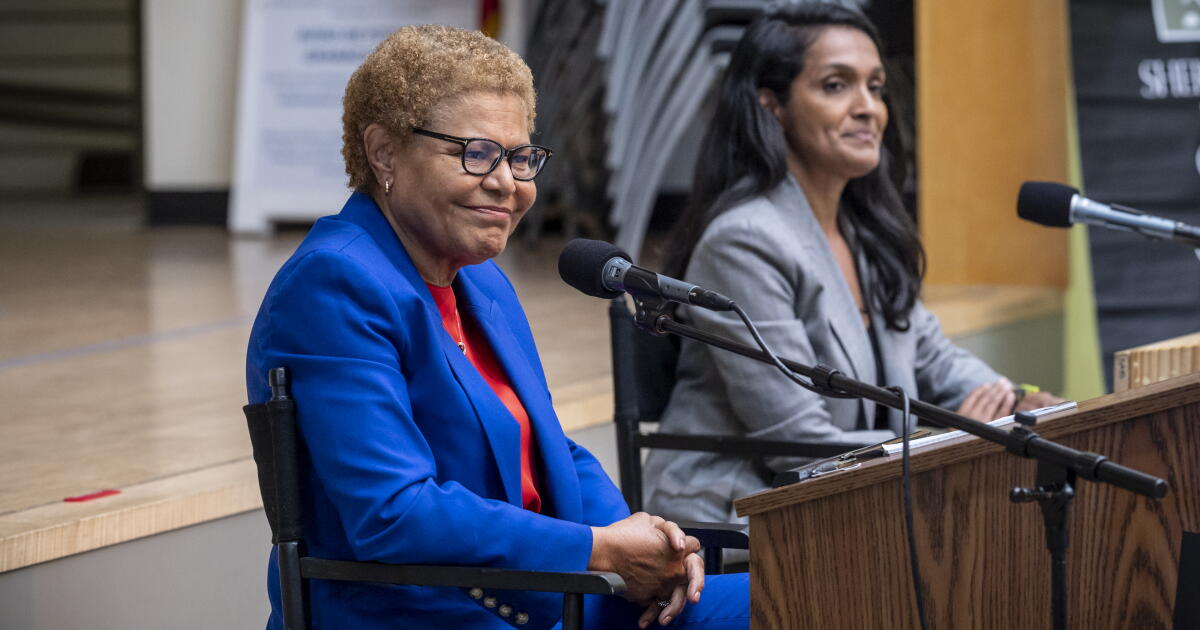
Times columnists Gustavo Arellano, Steve Lopez and Lorraine Ali are chatting about Tuesday night’s Los Angeles mayoral debate between Mayor Karen Bass and Councilmember Nithya Raman. Follow along in real time:
Ali: The stakes are high for both contenders, yet I wonder how many Angelenos will be watching.
It’s surprising the number of otherwise politically aware folks who had no idea the debate was taking place tonight until I mentioned it. Then they were irked to find it airing on network TV: “Who still has cable?!” Apparently, venturing onto Telemundo or NBC’s live feed is a bridge too far. But it shouldn’t be.
Raman is still a mystery to many, even though she’s polling ahead. Tonight, she needs to definitively show who she is beyond The Candidate Who Is Not Karen Bass. Bass has to defend her record, of course, but also contend with the electorate’s insatiable need for change — even if they know very little about what that change may bring.
As for the rest of us? Tune in! The future of L.A. requires your attention.
Lopez: Picking up on Gustavo’s framing of the debate as Round 3, we’re talking about two pugilists who used to fight for the same club, more or less, and now enter the ring looking to take each other out. So it’s personal, and could indeed get nasty.
Raman’s job in the debate is a little easier, in some ways. Though I don’t put much stock in polls, she’s ahead on points by virtue of Bass’ high negative rating alone. And yet, think of the pressure on Raman to seal the deal.
If the challenger doesn’t prevail tonight and go on to win the election next month, she could be setting herself up for a lonely political future, having alienated more than a few former allies in her quest to evict the mayor from City Hall.
For Bass, the stakes are just as high. A 21-year political career is on the line.
I hope that along with the punches and counter-punches, we get some inspiration, too, and a workable game plan for making a great but troubled city a better place to call home, even if the Dodgers end up breaking our hearts.
Arellano: Will the Third Bass-Raman debate be a classic — or a dud?
Ali-Frazier. Morales-Barrera. Liddell-Couture. Trilogies are hallowed in the worlds of boxing and mixed-martial arts as case studies of evenly matched rivals to wallop each other in the first two matches, creating the setting for a final showdown and chance at eternal bragging rights — and usually, a title.
Will tonight’s bout between L.A. mayoral candidates Karen Bass and Nithya Raman, scheduled to air at 7 p.m. on KNBC, rise to those rarified levels?
The makings of a classic are there. Bass was the wily incumbent during her primary face-off with Raman who let fellow mayoral candidate Spencer Pratt land most of the attacks against their shared opponent. That left Raman uttering loopy word salads when she wasn’t crying conspiracy between the two. But the council member nevertheless made it into the general election against Bass, and dominated their second debate, hosted in August by the Sherman Oaks Homeowners Assn.
All of a sudden, Bass was a staggering champion lunging at a revived Raman, who swung and stung and ducked the way only a hungry up-and-comer can.
The two go into their rubber match each promoting polls that they claim show voters back them, while letting proxies launch attack ads that promise to get uglier and more ubiquitous as Election Day nears. Expect Bass at tonight’s debate to try and assert her dominance early with equal part offense against Raman and defense of her record. Expect Raman, whom City Hall opponents have long trashed as conflict-averse, to focus on a message of possibility and positivity while holding her ground and striking back — and hard — when necessary.
Will tonight cement the Bass-Raman trilogy as an electoral classic — or end it on a deflating note? One thing’s for sure: the two need to leave everything on the debate stage if either wants to win and get that much closer to become L.A.’s Madam Mayor.
US President Donald Trump has accused Houthi rebels of targeting Saudi infrastructure to inflate energy prices before the US midterm elections.
Published On 14 Oct 202614 Oct 2026
Share
Saudi-led coalition spokesperson Turki al-Maliki says forces intercepted and destroyed two Houthi ballistic missiles targeting Khamis Mushait airbase.
Published On 13 Oct 202613 Oct 2026
Share
Main opposition Congress party announces rally to the top court to demand removal of the chief election commissioner.


Published On 12 Oct 202612 Oct 2026
Share

Iran says US has accepted some of its peace terms but calls the response ‘inadequate’, as one person is killed in a new attack on Riyadh airport.
Published On 12 Oct 202612 Oct 2026
Share

Follow updates from the clash at Anfield, including the build-up, analysis and live text commentary of the game.
Source link

Follow updates with build-up and team news from our live text commentary as Bruno Fernandes headlines.
Source link
Cockroach Janta Party founder Abhijeet Dipke and other leaders detained before protest to demand election chief’s resignation.

Published On 10 Oct 202610 Oct 2026
Share
Iran’s IRGC says it struck a “giant LPG gas carrier named NV Sunshine” that was “attempting to pass through the illegal route” south of the Strait of Hormuz.

Published On 10 Oct 202610 Oct 2026
Share

FORGET kid-friendly Halloween events of pumpkin picking and trick or treating… this is the ULTIMATE nightmare zone.
This October marks 30 years since Tulleys Shocktober Fest first launched at Tulleys Farm near Three Bridges in Surrey.
If you are wondering what on earth a ‘Shocktober Fest’ is, it is exactly what it sounds like; a festival packed full of heart-stopping scares and 100 per cent adrenaline.
Tulleys Shocktober Fest is Europe’s largest scream park with 12 scare mazes full of live actors waiting to make you jump with real chainsaws (don’t worry, the chains have been removed), decaying dolls and a whole load of literal smoke and mirrors.
Be warned: it is strictly not for the faint-hearted.
The haunts have varying levels of scariness but I took no notice, deciding to enter The Chop Shop first.
Read more on travel inspo
It felt like stepping straight into a morgue, with the temperature plunging the second I crossed the threshold.
The stench of oil and grease lingered in the air. Before I knew it I was standing in a garage beside a mangled car.
Out of the dark, a human-pig creature lunged at me with a chainsaw, squawking into my ear and setting the tone for the rest of my night.
Electrick Circus was next and certainly one to avoid if you have coulrophobia (an intense fear of clowns).
With sparks flying and sinister tricks lurking in the dingy corners, the abandoned circus was more like a scene ripped from a horror movie with Sparky the clown leading an army of dead clowns to make my stomach lurch.
Meanwhile, the award-winning Doom Town was the real-life version of Shaun of the Dead, complete with a zombie-infested Greggs takeaway where a worker chased me out when I was bold enough to ask for a sausage roll.
The Village Coven of 13 sent my pulse through the roof.
The maze felt endlessly long, kicking-off in a pitch black room filled with thick smoke.
For what felt like hours, I stumbled disorientated in the dark desperately hoping to find the exit and not accidentally grab something more sinister.
The maze then spills outside to an eerie cemetery where witches lurk in the shadows, chanting spells over your shoulder.
One stalked me right up to a closed door but what awaited me on the other side was far worse.
Stepping through the gateway, I thought I had entered a furnace.
Mimicking witches being burnt at the stake, the room was scorching, thick with smoke and crawling with dark figures ready to scream down my neck.
I felt lucky to escape in one piece.
Other highlights include the award-winning Wasteland Penitentiary – an abandoned prison haunted by escaped inmates – alongside new scare mazes; Appleton Sawmill, Appleton Farm and The Cellar Returns.
All bring different scares, thrills and blood-curdling screams but for the ultimate test of your bravery though, try Hell-elements.
You’re hooded and forced to navigate through total darkness with only a small rope to guide you.
Deprived of my sight, I felt like the jump scares hit ten times harder.
The maze plays on the four elements: chilly wind breeze past your neck, suffocating heat takes your breath away, damp mist sends a shiver down your spine and the scent of fresh earth overwhelms your senses.
Not being able to see the scare actors felt like a blessing in disguise until one breathed wetly on my collarbone.
Outside the mazes you aren’t safe either and if you arrive thinking you can avoid frights, then you are VERY naive.
Around the entire attraction, scare actors roam ready to pounce on you at every unsuspecting moment.
The production is staggering with the attention to detail being Hollywood-level from the cinematic sounds and flicking lights to minute cracks down brick walls and huge cauldrons with roaring fire.
There’s thrill rides too and a new show called House of Hades for when you need a break from the haunts, with transfixing fire stunts and daredevil performers – it is tantalising, thrilling and super sexy.
You won’t go hungry either as there are food vendors around the entire grounds from huge chicken burgers to tasty pasta dishes – though you’ll have to fork out extra cash for these.
There are loads of bars as well, with alcoholic drinks reasonably priced.
Imagine all your worst nightmares in one place and that’s what you’ll get out of Tulleys Shocktober Fest… I couldn’t think of a better way to test my bravery this spooky season.
There are a variety of different tickets available with the most popular being the XScream Pass costing between £46.95 to £69.95pp, depending when you visit.
It includes unlimited access to all haunts, park entry, street theatre, live music, food courts and free car parking.
Or you can get an XScream Pass with a number of fast tracks included.
For three fast tracks, it costs between £66.95 to £89.95, for six between £86.95 to £109.95 and for one for each maze (12 total) it costs between £126.95 to £149.95.
With previous visitors noting that queues can be as long as two hours for a single maze on some nights, I would definitely recommend purchasing a ticket with at least three fast tracks included.
The dates further away from Halloween are likely to have less wait times at each haunt, which is worth bearing in mind too.
The attraction is for teens and adults, though I think this one should certainly be left for those brave enough and with a healthy heart.
The nearest train station is Three Bridges, which is less than half an hour from central London.
You’ll then need to jump in a taxi for five to 10 minutes to get to the farm.
And be warned, all that screaming may leave you without your voice the next day…

Like many buff-bodied Traitors hunks before him… Tom Daley… Freddie Fraser… James Blunt stepped up to take on the pensive shower cutaway scene in this year’s series.
Viewers were left in hysterics by James’ take – nipples out, thoughtfully scrubbing himself in a very awkward manner and donning a shower cap – all while puzzling over whether he’d be next for murder.
Fans took to X to share their excitement at the scenes.
“Not James Blunt in the shower!!!” cried one.
Others soon chimed in:
“James Blunt with a shower cap and huge brush was just not on my 2026 bingo card.”
“Can only assume that James Blunt is taking his first ever shower and is more of a bath man.”
“All of these shower scenes from previous seasons have nothing on James Blunt and his haircap and scrubber.”
Fans are hoping it doesn’t mean the end for the British Army Captain. In last year’s Celebrity edition, poor Tom Daley was murdered hours after he stripped off.
If we’ve learned anything it’s that you can be too squeaky clean when it comes to the Traitors.

(Image: BBC)
If I ever need to humble myself — if my head inflates with grand visions of becoming the next Steve Lopez or Bill Plaschke — I pull up the transcript of the secret recording that upended Los Angeles politics after The Times broke the story exactly four years ago.
It’s like a modern-day version of “Ozymandias,” except far more vulgar, nowhere near as poetic and a better warning against hubris than anything Shelley could have penned.
“The thing for us is to exercise our power,” said then-City Councilmember Gil Cedillo, about halfway through an hourlong conversation he was having with three of the city’s most powerful political figures.
Oh, did they ever — and nowhere near the way they intended.
Nury Martinez and Ron Herrera, the president of the City Council and head of the Los Angeles County Federation of Labor, respectively, quickly resigned for their roles in the racist, homophobic drivel on the recording. Cedillo — who was finishing out his term — and Councilmember Kevin de León refused to step down, besmirching their well-earned reputations as progressive lions.
The L.A. they sought to create — where Latinos ascend at the expense of the Black community, and anyone who gets in the way is crushed — never came to be. And the recording that exposed their machinations ultimately destroyed the type of ethnic politicking that made the careers of too many self-serving power grabbers, including this quartet.
The transcript of their back-and-forth now reads as prophecy — and we’re far better for it.
Much of the discussion, which happened in October 2021 at the headquarters of the L.A. County Federation of Labor, was devoted to whining that L.A.’s Latino-majority council districts, and some cities elsewhere in the county, were represented by Black leaders instead of Latinos, even as Latino residents far outnumbered Black ones.
“F—, the way I see it, all of the seats are Latino,” said Herrera, who hailed the rise of a “little Latino caucus of our … own” that he felt should reign permanently.
He and the others predicted a future in which vengeful Black politicians would try to sabotage future Latino leaders on their way out of office, creating “poor Latino districts with nothing,” as Martinez put it.
She was referring to redistricting proposals that would chop off assets like the Coliseum and Exposition Park from South L.A.’s District 9 — the most Latino district in the city, represented by a Black council member, Curren Price.
“So they f— a future Latino for CD 9,” De León whined. “That’s how arrogant, just how arrogant it is.”
That’s not what ended up happening.

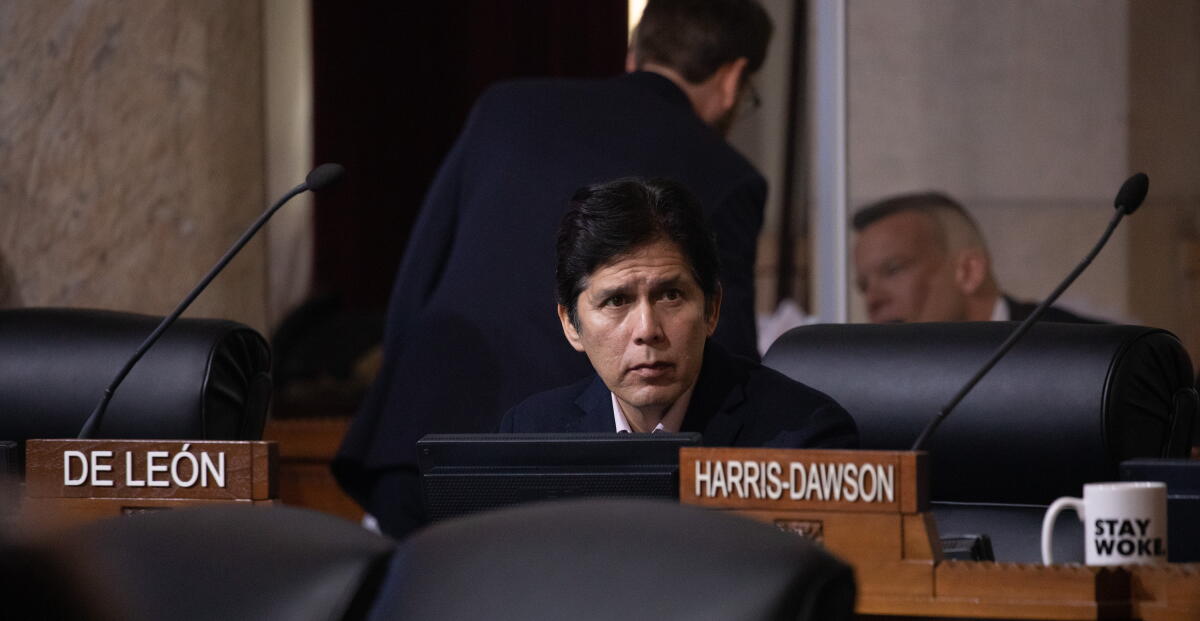
Los Angeles City Councilmember Kevin de León at a council meeting in December 2022 after a two-month absence following his role in that year’s audio leak scandal.
(Myung J. Chun / Los Angeles Times)
District 9 didn’t lose any assets. Black leaders saw the writing on the wall and didn’t run a serious Black candidate to replace the termed-out Price this year. That created space for two Latinos — Estuardo Mazariegos and Jose Ugarte — to make it to the general election. No matter which candidate wins in November, the City Council will have fewer than three Black members for the first time in 63 years.
Both Mazariegos and Ugarte say that the anti-Black scheming of the audio leak villains inspired them to run campaigns focusing on Black and Latino residents as one constituency, reflecting how life is actually lived in South L.A., not how Latinos from elsewhere in the city imagine it to be.
Mazariegos attended the first City Council meeting after The Times dropped the audio leak bombshell in October 2022. He remembers Cedillo peeking at the angry audience and temporarily returning to the council’s back room.
“No community should have to lose power for another to gain it,” said Mazariegos, who would become the first Central American immigrant to serve on the council if he were to win. “Our power grows when we build it together.”
Ugarte, formerly one of Price’s top aides, agreed. He argued that the best way to lead in South L.A. as a Latino council member is “with respect for those who came before us, the humility to listen to those doing the work today, and the understanding that District 9 is strongest when [Black and Latino residents] move forward together.”
Born in Oaxaca, Ugarte would become L.A.’s first Indigenous council member if he wins. That would be a rich coda to the audio leak, considering that Oaxacans received some of the nastiest insults. Martinez described them as “ little short dark people” who were feos — ugly. Cedillo joked that they were “little ones,” while Herrera cracked that they were “indios.”
Who’s laughing now?
The Feos Four also spent time kvetching about Nithya Raman, who was finishing her first year on the council. In 2020, she had upset an incumbent to become the first democratic socialist council member.
At the time of the recording, rivals were trying to diminish Raman’s power by drawing boundaries that would put her district “in the blender and chop [it] up, left and right,” as De León described it.
“She’s not our ally,” Cedillo said. “She’s not going to help us. Her district is not a district we can count on.”
Give credit to Cedillo and his pendejo pals: They were already seeing Raman and other democratic socialists as an emerging force, even while downplaying the DSA’s chances. De León said that Raman’s politics were “about just her as an individual.” Herrera dismissed Hugo Soto-Martínez, then a no-name union organizer aiming to unseat Councilmember Mitch O’Farrell, as a “kid.” Nury Martinez blithely mispronounced Eunisses Hernandez’s name while cackling about the first-time candidate’s challenge to Cedillo.
If Cedillo and De León weren’t so convinced of their own political immortality, they could have helped check the DSA’s rise that has so vexed L.A.’s liberal leaders. Instead, Hernandez beat Cedillo in a shocking upset in 2022, while Soto-Martínez won in the fall. And fellow democratic socialist Ysabel Jurado took out De León in 2024. Those triumphs paved the path for DSA-LA-backed candidate Marissa Roy to make a strong run for city attorney this year. Mazariegos is also endorsed by DSA-LA, which is backing Raman for mayor against incumbent Karen Bass.

Then-Councilmember Gil Cedillo at the Los Angeles City Council meeting on Oct. 11, 2022, two days after the release of explosive audio involving him led to protesters demanding his resignation.
(Gary Coronado / Los Angeles Times)
The group should send Cedillo and De León bouquets of red roses as gracias for assisting their ascendancy. All of us owe the foursome a thanks for hastening the demise of the old Latino political machines that birthed them and kept the city stuck in tribalism for too long.
Now, Latino politicians must run on their bona fides for all Angelenos, instead of just their latinidad. Soto-Martínez and Hernandez won reelection outright in the June primary because their constituents appreciated their sewer socialism approach, focusing on quality of life issues instead of ideological revolution. Meanwhile, Chicanosauruses are wheezing with diminished power as they urge Latinos to back Bass. The message doesn’t seem to be landing: A recent Berkeley IGS/Times poll found that 45% of Latino voters favored Raman to Bass’ 21%, with 34% undecided.
Gone are the days when Latino voters blindly believed Latino leaders. Why bother, after Martinez and her crew proved the folly of ethnic politics?
Near the start of the recording, Martinez complained that voters and the media always seemed to forgive Black politicians caught up in scandal, while Latinos didn’t get the same treatment.
“They’re never done,” she complained. “They never close a chapter on us.”
L.A. did close the chapter. Now, the Feos Four’s only legacy is “that colossal wreck” of their conversation, to quote the finale of “Ozymandias,” left to rot forever.

