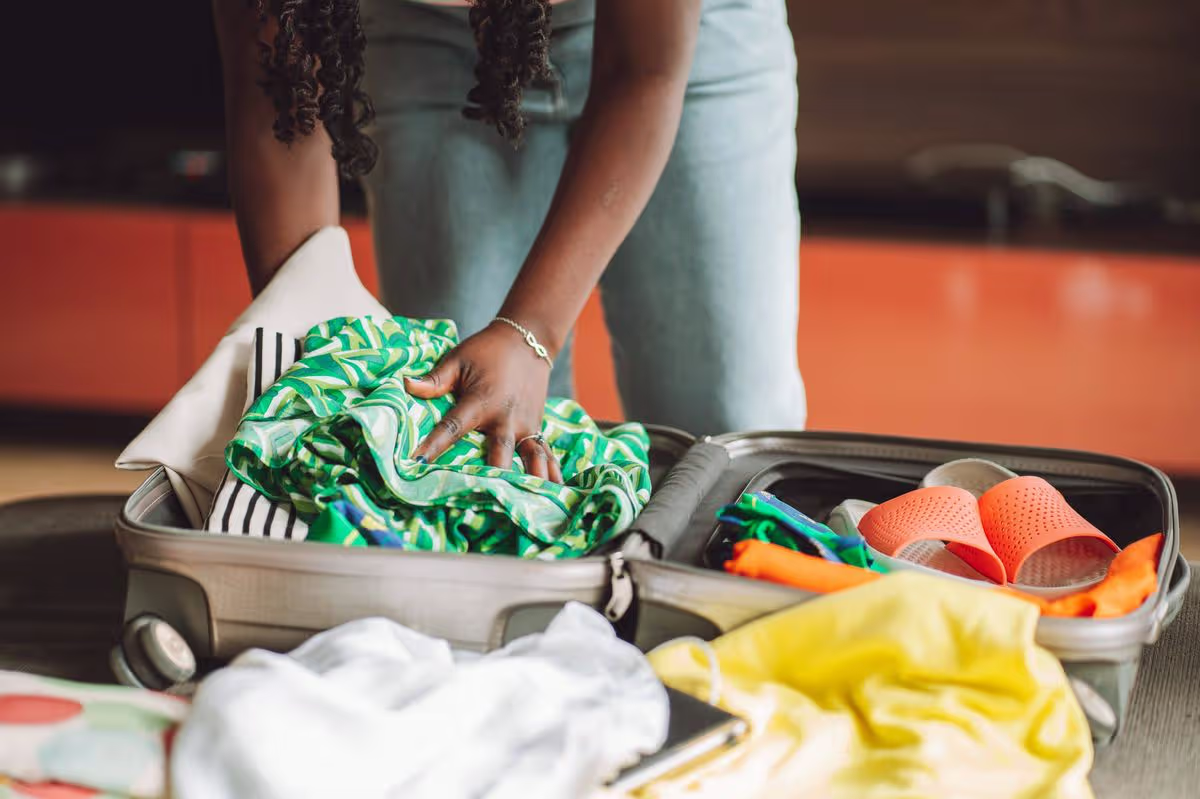
While it may not be at the top of your packing list, health experts tell passengers to pack a tennis ball in their hand luggage when flying long-haul for one reason
11:04, 26 Feb 2026Updated 11:09, 26 Feb 2026
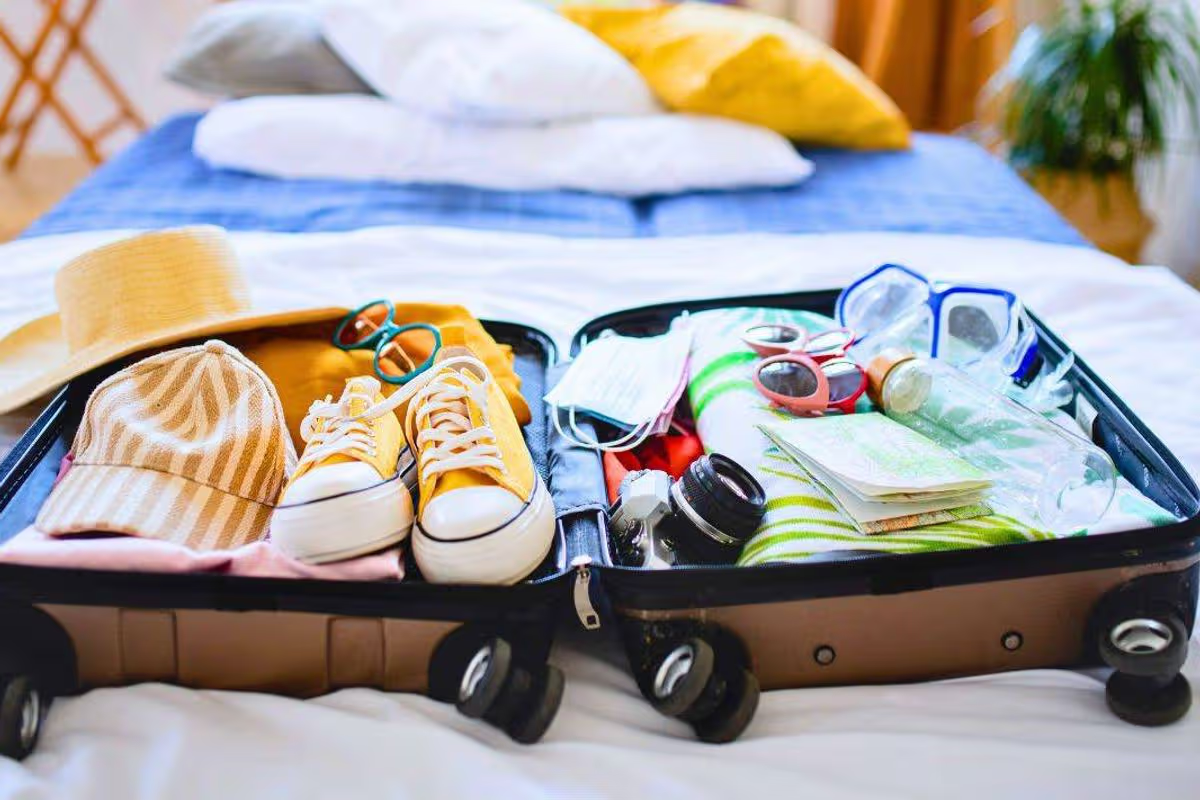
It’s a small and light addition that can significantly improve your journey(Image: Olga Rolenko via Getty Images)
Packing a tennis ball isn’t to cure mid-flight boredom, it’s actually for something much more important.
If you’re already packing your bags for a holiday, or starting to think about where to jet off to in the summer, make sure you remember to pack a tennis ball.
According to health experts, they can help avoid stiffness or aches while in the air, as well as helping to enhance circulation. They can be used by gently applying pressure and rolling it up and down the thighs, legs, or even shoulders mid flight.
If you’re prone to feeling a bit groggy and sore after a flight, this handy trick might just do the job – and it won’t take up too much room in your carry on bag either.
Osteopath Tracy Hannigan urged all passengers to pack one and said: “A tennis ball is small and light and can help you to apply soothing pressure to points you might otherwise not be able to reach,” as reported by Metro, and added: “‘A tennis ball is small and light and can help you to apply soothing pressure to points you might otherwise not be able to reach.”
If you do struggle with stiffness, the expert also recommended stretching regularly to help, noting that the side of the neck can be extended by “turning the chin towards the armpit and gently applying pressure to stretch the opposite side of the neck.”
She said you can also stretch your lower back in your plane seat by crossing your legs and leaning forward as if you’re “trying to reach down to the crossed-over foot with your elbow.”
Another of Tracy’s hacks is to use a hand towel and put the tennis ball in the middle of it and “roll it like a sausage” so when you apply pressure with the ball, it’s “easier to position” and will also help to keep it in position.
Flight attendant Cher, who has been working on aircrafts for five years, has also shared some of her own travel hacks, including urging people to put important items in carry-on baggage rather than checked suitcases. She even recommends these essentials be kept in the personal bag that sits at your feet.
She warned: “It is not uncommon for somebody to mistake your carry on as theirs and take it off. I have seen this dozens of times.” Cher advises packing underwear, a toothbrush, toiletries or “anything you couldn’t go a couple days without” in this bag. She noted: “The best thing in aviation is to basically prepare for the worst.
“Flight attendant bags are marked up to the nines with custom tags so we can identify them as ours. I would recommend doing something on your bag that will prevent somebody else from confusing it as theirs.
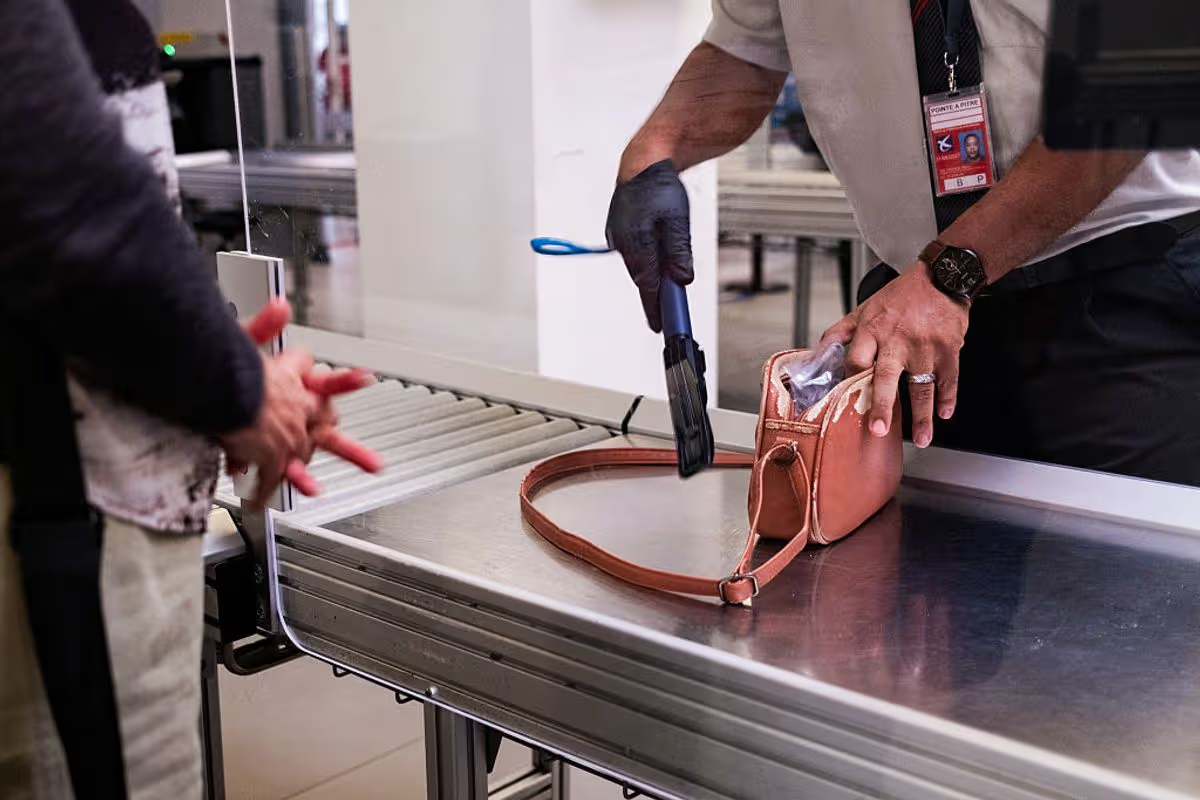
Holidaygoers returning home need to be careful about what they bring back
Travellers are banned from bringing meat and dairy from Europe to Great Britain (stock image)(Image: Getty )
With the February half-term still underway for many regions across the country, plenty of families will be eagerly packing their bags for some much-needed winter sun. For anyone keen to bring back goodies for their friends and relatives, there are certain rules they need to follow to avoid being stopped at UK airports.
In a recent warning by the Department for Environment, Food and Rural Affairs (DEFRA), the government agency urged holiday-goers to be mindful of what they try to bring back home. In a post on Facebook, a statement reads: “Travelling back from a half term trip abroad?
“To protect UK farmers and animals from diseases like Foot and Mouth, meat and dairy products can’t be brought into Great Britain. Check the rules before travelling.”
There are numerous guidelines on the Gov.uk website regarding bringing food into Great Britain, including rules on meat, dairy, fish, fruit, vegetables, nuts, seeds, and pet food. You can bring the following into Great Britain from any country without any restrictions:
bread, but not sandwiches filled with meat or dairy products
cakes without fresh cream
biscuits
chocolate and confectionery, but not those made with a lot of unprocessed dairy ingredients
pasta and noodles, but not if mixed or filled with meat or meat products
packaged soup, stocks and flavourings
processed and packaged plant products, such as packaged salads and frozen plant material
food supplements containing small amounts of an animal product, such as fish oil capsules
The rules on bringing meat, dairy, fish and other animal products depend on the country you’re bringing it from. From the EU, Switzerland, Norway, Iceland, Liechtenstein, the Faroe Islands and Greenland, you can bring in the following for personal use:
fish
poultry, for example, chicken, duck, goose and any other products made from these meats
other animal products, for example, eggs and honey
Due to recent and ongoing outbreaks of animal diseases in the EU, there are rules about bringing in most meats and all dairy products. You are allowed to bring in a maximum of 2kg per person of powdered baby milk, baby food, or special food required for medical reasons. You can only bring these items if they don’t need to be kept cold before using, and they must be in branded, unopened packages (unless you are currently using them).
There are restrictions on meat, dairy and animal products for human consumption. You cannot bring in any of the following:
cheese, milk and dairy products like butter and yoghurt
pork
beef
lamb
mutton
goat
venison
other products made from these meats, for example sausages
If you’re bringing food from a country outside the EU, Switzerland, Norway, Iceland, Liechtenstein, the Faroe Islands and Greenland, the following rules apply. You cannot bring in:
meat or meat products
milk or milk-based products, except powdered infant milk, infant food or special food needed for medical reasons
You can bring in up to 2kg per person of:
honey
powdered infant milk, infant food, or special food (including pet food) needed for medical reasons – you can only bring it in if it does not need to be refrigerated before use, and is in branded, unopened packaging (unless in current use)
live mussels or oysters
snails – these must be preserved or shelled, cooked and prepared
frogs’ legs – these must be the back (hind) part of the frog with the skin and internal organs removed
insect protein
You can bring in up to 20kg per person in total of fish, including:
fresh fish – must be gutted
fish products
processed fish – must be dried, cooked, cured or smoked
The rules on bringing fruit, vegetables, nuts and seeds depend on the country you’re bringing it from. From the EU, Switzerland or Liechtenstein, you can bring in the following for personal use:
fruit
vegetables
nuts and seeds
From other countries outside the EU you cannot bring in most fruit or vegetables unless you have a ‘phytosanitary’ (plant health) certificate for them. You can get a certificate from the plant health authorities in the country you’re leaving. You can only bring in the following without a phytosanitary certificate:
pineapple
kiwi
coconut
citrus fruits, such as oranges, lemons, limes and grapefruit
kumquat
persimmon
durian
curry leaves
banana and plantain
mango
dates
passion fruit
guava
processed and packaged plant products, such as packaged salads or frozen plant material
peeled and processed nuts or nut butters
certain grains, such as rice
Pet food
The rules on bringing pet food depend on the country you’re bringing it from. From the EU, Switzerland, Norway, Iceland, Liechtenstein, the Faroe Islands and Greenland. You cannot bring in pet food if it contains meat or other animal products from pig, cow, sheep, goat or deer.
You can bring in pet food made with other ingredients (for example, chicken) if it is commercially packaged with the manufacturer’s name and address. You can bring up to 2kg per person. From countries outside the EU you cannot bring in pet food, unless your pet needs it for health-related reasons.
You can bring in up to 2kg per person of pet food needed for health-related reasons, from any country. The pet food must:
not need to be refrigerated before use
be in branded, unopened packaging (unless it is currently in use)
Your pet must be travelling with you. You should have evidence that the pet food is needed for health-related reasons, such as a letter from your vet. Contact the Animal and Plant Health Agency (APHA) if you want to bring in more than 2kg of health-related pet food per person.
You’ll need to provide:
details of why you cannot buy the specific pet food in Great Britain
a letter from your vet confirming your pet needs this specific food
Check if you need a CITES permit
You may need to apply for a permit or certificate if you’re bringing any food or animal products protected by the Convention on International Trade in Endangered Species of Wild Fauna and Flora (CITES) into Great Britain. This includes foods such as caviar and eel fillets and beauty products containing caviar extract. Check if you need a CITES permit.
A travel expert who has visited over 60 countries has shared that an everyday item most people pack for their holidays is weighing them down
Holidaymakers should remove 1 common item from their suitcase to travel lighter and easier(Image: Getty)
February is a dreary month, with never-ending grey skies, and many of us begin browsing holiday offers to find somewhere more appealing to visit in the summer. However, people often overlook how stressful packing can be, and there is nothing worse than lugging a heavy suitcase whilst rushing around to catch a flight or train.
Amanda Williams, a travel expert and founder of Dangerous Business, has visited over 60 countries, and the biggest mistake to make whilst travelling is packing too many pairs of jeans. She said: “You may have learned this the hard way already, but actual denim is HEAVY, bulky, and slow to dry if you have to wash it on the road. If you’re going to pack jeans on a trip, I recommend only taking one or two pairs max, along with some non-denim pants or bottoms.”
Jeans are a dependable everyday staple at home, which often makes them seem like a sensible choice for a holiday.
However, denim is a thick fabric that does not fold easily, so even a few pairs of jeans can take up a lot of space and add considerable weight to a suitcase.
They are also uncomfortable in warm weather or when sitting for extended periods, making them unsuitable for most summer destinations, reports the Express.
Most people only wear jeans once or twice whilst on holiday, and it will be more practical in the long run to pack just one pair if you are going somewhere warm. Instead, consider packing lightweight trousers that dry swiftly, such as chinos, shorts, dresses, skirts or even jeggings, as it will make lugging a suitcase considerably easier.
It’s also preferable to avoid packing a different outfit for every day, and instead select pieces that can be combined and coordinated to conserve space.
Amanda said: “My rule is usually four bottoms, five to seven tops, two layering pieces (like cardigans), and two to three dresses. Add in accessories like jewellery or maybe a scarf, and you can get a lot of outfits out of that amount of clothing!”
Only pack items you’re sure you’ll use, as travellers often squander space bringing things like hiking boots when they’ve made no firm plans to go mountain climbing.
Similarly, avoid packing gym clothes unless you regularly exercise at home, as you’re unlikely to feel inspired to work out whilst unwinding on holiday.
It may seem straightforward, but investing time to evaluate how practical each garment will be whilst travelling can save suitcase space and prevent exceeding luggage weight restrictions.