License

Trump Administration Issues License to Expand US Influence over Venezuelan Oil Sector

Chevron, Eni, Repsol, and Shell have struck energy agreements under the favorable conditions of the recent legislative reform. (Reuters)

Caracas, March 20, 2026 (venezuelanalysis.com) – The US Treasury Department has issued a new sanctions waiver as the Trump administration seeks to deepen US control over Venezuela’s oil sector.

General License 52 (GL52), published on Wednesday, authorizes US entities to engage in transactions with Venezuelan state oil company PDVSA under conditions that limit Venezuelan sovereignty.

An updated FAQ from the Treasury’s Office of Foreign Assets Control clarified that the exemption allows US companies to engage in activities related to the exportation of Venezuelan-origin oil products, export diluents and inputs to Venezuela as well as enter into new contracts for oil and gas production.

However, in line with recent US licenses, GL52 mandates that all tax, royalty, and dividend payments be made into US Treasury-controlled accounts.

Following the January 3 US military strikes and kidnapping of Venezuelan President Nicolás Maduro, the Trump administration has taken control over Venezuelan crude exports while imposing conditions favorable to Western energy conglomerates.

Thus far, Washington has returned US $500 million out of an initial January deal worth $2 billion. US authorities have also confirmed Venezuelan imports of US-manufactured medicines and medical equipment. Trump officials had vowed that US energy revenues could only be used for purchases from US suppliers and that Caracas would need to submit a “budget request” to access its funds.

The White House issued GL52 amid soaring energy prices caused by the US and Israeli war against Iran. Tehran has responded to massive bombings by targeting US military assets in the region and closing the strategic Strait of Hormuz.

Last week, the US Treasury amended licenses to allow US imports of fertilizers from Venezuela, as well as repair works in the South American country’s electric grid. Venezuela’s electrical infrastructure remains in a precarious state after years of US sanctions, and expanded power capacity is a precondition for recovery of the oil industry.

Despite the broadened waivers for corporations hand-picked by the White House to engage with Venezuela, PDVSA and its subsidiaries remain under financial sanctions, while third-country firms risk secondary sanctions should they enter into agreements without a US Treasury special license.

In late January, Venezuelan authorities approved a pro-business overhaul of the country’s Hydrocarbon Law, granting private companies reduced fiscal responsibilities, increased control over production and exports, and the possibility of taking disputes to international arbitration bodies.

Chevron and Shell, with US Treasury approval, were the first companies to take advantage of the new incentives. Chevron’s Petropiar joint venture with PDVSA was granted a new 500 square-kilometer bloc to drill for extra-heavy crude in the Orinoco Oil Belt, while Shell is set to take over light and medium crude and natural gas operations in the eastern state of Monagas.

Last week, European energy giants Eni and Repsol, who were also given the inside track by the White House, announced an agreement with the Venezuelan government for the development of the Cardón IV offshore natural gas project.

Eni and Repsol each own 50 percent stakes in Cardón IV, which has been in operation since 2009. Neither firm nor Caracas offered details on the renewed agreement, though both enterprises had lobbied for improved conditions and mechanisms to recoup accumulated debt due to US sanctions.

According to Bloomberg, ONGC Videsh (India), Maha Capital AB (Sweden), and J&F Investimentos (Brazil) are among the companies likely to receive special licenses for involvement in Venezuela’s oil sector as Washington seeks to counter rising crude prices. Nevertheless, analysts stress that the Venezuelan oil industry does not have the capacity to significantly ramp up output in the near future.

On March 11, the Trump administration formally recognized Acting President Delcy Rodríguez as Venezuela’s “sole authority,” days after Venezuela and the US reestablished diplomatic ties following a seven-year hiatus.

On Monday, Rodríguez appointed new executive boards for PDVSA’s US-based affiliates, including refiner CITGO. Asdrúbal Chávez, who held multiple roles in both PDVSA and CITGO since the 2000s, was picked as president of CITGO and its parent company, PDV Holding. At the time of writing, US authorities have not commented on the proposed new leadership for the companies, which had been run by the US-backed opposition since 2019.

CITGO is currently in the closing stages of a court-mandated auction that will see Venezuela lose ownership of its most prized foreign asset to address creditor claims against the country. The sale to Amber Energy, a subsidiary of vulture fund Elliott Management, is pending authorization from the US Treasury Department.

Edited by Lucas Koerner in Fusagasugá, Colombia.

Source link

U.S. eases Venezuela oil sanctions as Trump seeks to boost world oil supply during Iran war

U.S. companies will be allowed to do business with Venezuela’s state-owned oil and gas company after the Treasury Department eased sanctions, with some limitations, on Wednesday as the Trump administration looks for ways to boost world oil supplies during the Iran war.

The Treasury issued a broad authorization allowing Petróleos de Venezuela S.A, or PDVSA, to directly sell Venezuelan oil to U.S. companies and on global markets, a massive shift after Washington for years had largely blocked dealings with Venezuela’s government and its oil sector.

Separately, the White House said President Trump would waive, for 60 days, Jones Act requirements for goods shipped between U.S. ports to be moved on U.S.-flagged vessels. The 1920s law, designed to protect the American shipbuilding sector, is often blamed for making gas more expensive.

The moves highlight the increased pressure that the Republican administration is under to ease soaring oil prices as the United States, along with Israel, wages a war with Iran without a foreseeable end date. Global oil prices have since spiked as Iran halted traffic through the narrow Strait of Hormuz, where one-fifth of the world’s oil typically passes through from the Persian Gulf to customers worldwide.

The Treasury’s license is designed to incentivize new investment in Venezuela’s energy sector and is intended to benefit both the U.S and Venezuela, while increasing the global oil supply, a Treasury official told the Associated Press. The official was not authorized to discuss the matter publicly and spoke on condition of anonymity.

Since the ouster and arrest of Nicolás Maduro as Venezuela’s president during a U.S. military operation in January, Trump has said the U.S. would effectively “run” Venezuela and sell its oil.

The U.S. license provides targeted relief from sanctions, but does not lift the penalties altogether. The license allows companies that existed before Jan. 29, 2025, to buy Venezuelan oil and engage in transactions that would normally be banned under American sanctions, reopening trade for a major oil producer to global markets.

There are some limits.

Payments cannot go directly to sanctioned Venezuelan entities such as PDVSA, but must be sent instead to a special U.S.-controlled account. In other words, the U.S. will allow the oil trade but will control the cash flow.

Additionally, deals involving Russia, Iran, North Korea, Cuba and some Chinese entities will not be allowed. Transactions involving Venezuelan debt or bonds will not be allowed.

The license is expected to give a massive boost to Venezuela’s oil-dependent economy and help encourage companies that have been apprehensive to invest. The decision is part of the Trump administration’s phased-in plan to turn around Venezuela. But critics of the acting Venezuelan government argue that the move rewards Venezuela’s leadership — all loyal to Maduro and the ruling party — while repression, corruption and human rights abuses continue.

Many public sector workers survive on roughly $160 per month, while the average private sector employee earned about $237 last year, when the annual inflation rate soared to 475%, according to Venezuela’s central bank, and sent the cost of food beyond what many can afford.

Venezuela sits atop the world’s largest oil reserves and used them to power what was once Latin America’s strongest economy. But corruption, mismanagement and U.S. economic sanctions saw production steadily decline from the 3.5 million barrels per day pumped in 1999, when Maduro’s mentor, Hugo Chávez, took power, to less than 400,000 barrels per day in 2020.

A year earlier, the Treasury Department under the first Trump administration locked Venezuela out of world oil markets when it sanctioned PDVSA as part of a policy punishing Maduro’s government for corrupt, anti-democratic and criminal activities. That forced the government to sell its remaining oil output at a discount — about 40% below market prices — to buyers such as China and in other Asian markets. Venezuela even started accepting payments in Russian rubles, bartered goods or cryptocurrency.

The new license does not allow payments in gold or cryptocurrency, including the petro, which was a crypto token issued by the Venezuelan government in 2018.

Meantime, White House press secretary Karoline Leavitt said the Jones Act waiver would help “mitigate the short-term disruptions to the oil market” during the Iran war and would “allow vital resources like oil, natural gas, fertilizer, and coal to flow freely to U.S. ports.”

Hussein and Cano write for the Associated Press. Cano reported from Caracas, Venezuela. AP writer Seung Min Kim contributed to this report.

Source link

Why the FCC is unlikely to pull TV licenses over Iran news coverage

Federal Communications Commission Chairman Brendan Carr is using his bully pulpit to push back against coverage of the U.S. military action in Iran that his boss President Trump doesn’t like, marking an extraordinary escalation in his clashes with the media.

On Saturday, Carr posted a message on X suggesting TV stations could lose their government licenses to use the public airwaves if they “don’t operate in the public interest.”

Underneath his statement, Carr shared a social media post from Trump, who complained about the New York Times and Wall Street Journal stories on the five refueling tankers were hit during an Iranian missile strike on the Prince Sultan Air Base in Saudi Arabia.

Carr seized on Trump’s missive to issue a warning to TV outlets, which are frequently threatened by the president when he is angry at their coverage.

It’s the latest attempt by the FCC chair to apply pressure on media companies that irritate Trump with critical coverage of his administration.

Since becoming FCC chairman last year, Carr has repeatedly threatened to use the levers of power he has to punish TV and radio stations when they get in Trump’s crosshairs. His behavior has alarmed free speech advocates.

“Broadcasters that are running hoaxes and news distortions — also known as the fake news — have a chance now to correct course before their license renewals come up,” Carr wrote, without providing evidence to back up his claims. “The law is clear. Broadcasters must operate in the public interest, and they will lose their licenses if they do not.”

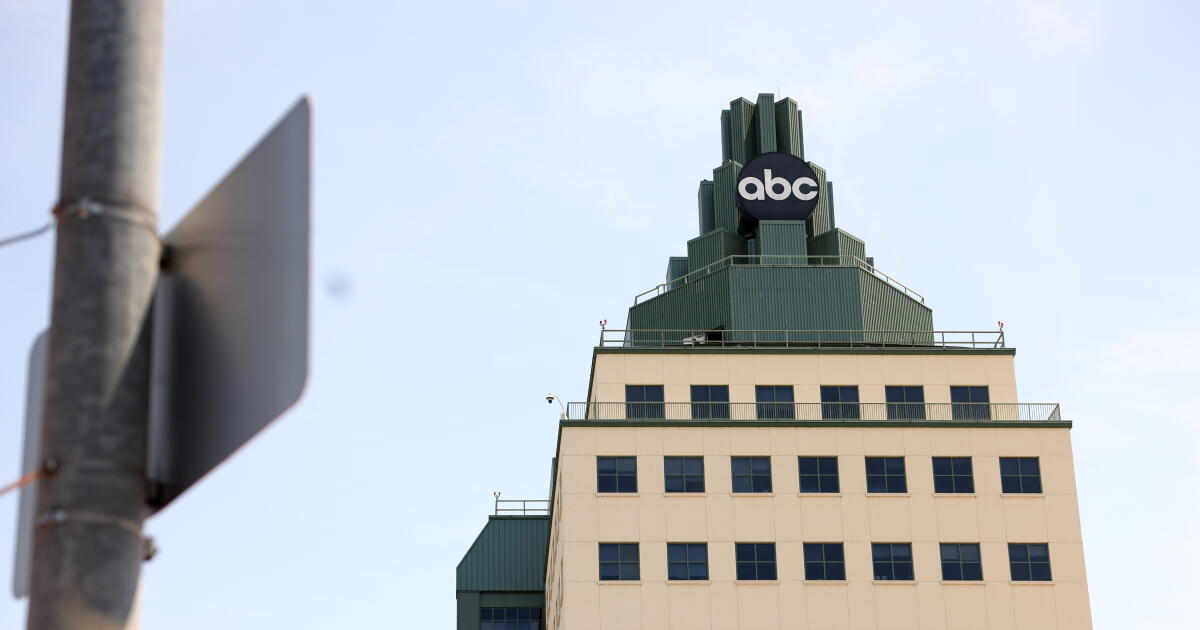
Carr’s threats are based on his assertions that said he wants to enforce the FCC’s public interest obligation for broadcasters that use the airwaves. He made similar remarks in the fall, which prompted two major TV station groups to keep ABC’s “Jimmy Kimmel Live!” off the air for a week due to remarks the host made regarding slain right-wing activist Charlie Kirk.

Trump and Defense Secretary Pete Hegseth have repeatedly attacked news organizations for any reporting that doesn’t say the war in Iran is anything but a rousing success.

On Friday, Hegseth said took aim at CNN and said “the sooner David Ellison takes over that network the better.”

Ellison, the chief executive of Paramount who, along with his father, has forged strong ties to the White House, will have control over CNN in addition to CBS if the company’s deal to acquire the news outlet’s parent Warner Bros. Discovery is completed.

Carr made the appointment of an ombudsman for CBS News a condition to approve Ellison’s Skydance Partners deal to acquire Paramount last year. Paramount also drew scrutiny over its controversial decision to pay $16 million to settle Trump’s legal salvo against “60 Minutes” over the editing of an interview with his 2024 opponent, then-Vice President Kamala Harris. Most legal analysts viewed the case as frivolous.

The FCC has no jurisdiction over CNN, which is why most of Carr’s barbs are aimed at ABC, CBS and NBC, which air on local TV stations. He once wrote on X, “More Americans trust gas station sushi than the legacy national media.”

Trump said in a social media post Sunday that he was “thrilled” with Carr’s remarks and would support his efforts to go after what he called “Highly Unpatriotic ‘News’ Organizations.”

“They get Billions of Dollars of FREE American Airwaves, and use it to perpetuate LIES, both in News and almost all of their Shows, including the Late Night Morons, who get gigantic Salaries for horrible ratings,” Trump wrote.

Andrew Jay Schwartzman, a Washington-based public interest communications attorney, believes Carr’s conduct and threats violate the 1st Amendment, adding that any serious attempt to revoke licenses would be tied up in legal challenges.

“Even if he started to try to deny a license renewal as quickly as he could, Brendan Carr would be long gone before that case would be over,” Schwartzman said. “The law intentionally sets out a very steep burden for the FCC to deny a license renewal; the process takes many years, during which time the licensee continues to operate normally under ‘continuing operating authority.’”

Carr’s remarks Saturday drew immediate blowback from Democrats and 1st Amendment advocates, noting the FCC’s role does not include policing the free press.

“Once again, this FCC pretends it has the power to control news coverage,” FCC Commissioner Anna Gomez said Monday in a statement. “In reality, the FCC has vanishingly little power over national news networks. It licenses local broadcast stations, not networks, and no licenses are up for renewal until 2028.”

Calif. Gov. Gavin Newsom weighed in as well, posting, “If Trump doesn’t like your coverage of the war, his FCC will pull your broadcast license. That is flagrantly unconstitutional.”

Sen. Ron Johnson (R-Wis.), usually a reliable voice of support for the Trump administration, expressed his concerns over Carr’s remarks.

“I’m a big supporter of the 1st Amendment,” Johnson told Fox News on Sunday. “I do not like the heavy hand of government no matter who’s wielding it. I’d rather the federal government stay out of the private sector as much as possible.”

Gomez added that while attempts to pull licenses border on folly, Carr’s threats and attacks on the media can create a chilling effect and erode the public’s confidence in the press.

“Over the past year, this FCC has attacked the media as part of a years-long campaign by this Administration and its allies to discredit factual, independent coverage while blaming the press for growing public distrust,” Gomez said. “Meanwhile, it is the FCC’s own credibility and public trust that are rapidly eroding.”

Trump is not the first president to target TV station licenses in response to negative news coverage. At the height of the Watergate scandal in the 1970s, Richard Nixon’s allies attempted to challenge the TV licenses for three stations owned at the time by the Washington Post.

The effort didn’t get far.

The last Los Angeles outlet to lose its broadcast license was KHJ in 1987, when the station was part of RKO General, a media company owned by the General Tire and Rubber Co. The case was related to corporate malfeasance and not broadcast content on the stations.

The process to revoke the RKO licenses took seven years from the moment the FCC voted in favor of the move.

“Since then, only small mom-and-pop radio stations have been litigated,” Schwartzman said. “The cases nearly always involve lying to the government, felony convictions or failure to pay regulatory fees. In one recent case, a small owner convicted of tax evasion still kept his license.”

There would be other logistical hurdles to the FCC making good on Carr’s threats.

As Gomez noted, Carr’s FCC only has regulatory control over the TV stations that carry the network signals. If stations were drop network programming for any reason, they could violate their affiliation contracts and lose the right to carry NFL football and other content that delivers big ratings and revenue.

Sinclair Broadcast Group wanted Kimmel to apologize to Kirk‘s family and contribute to his organization Turning Point USA before putting the host’s late night show on the air.

That did not happen and “Jimmy Kimmel Live!” returned to Sinclair’s stations anyway.

Source link