liberals

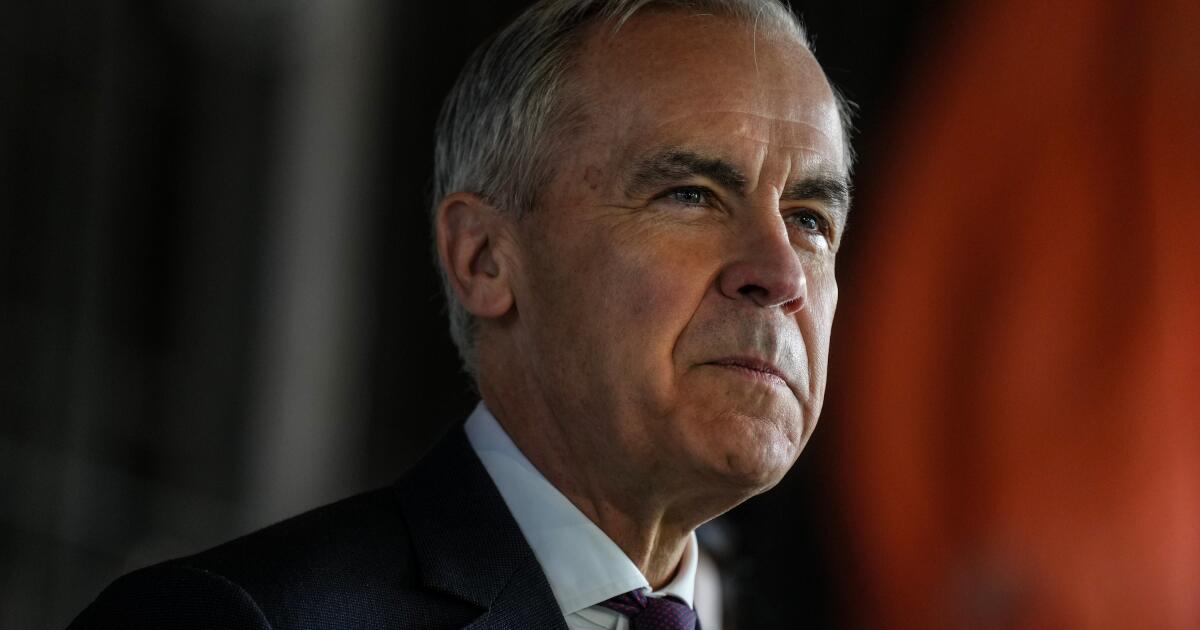
Canadian Prime Minister Mark Carney attracts yet another Conservative lawmaker to his Liberal Party

Canadian Prime Minister Mark Carney has attracted another opposition Conservative lawmaker to the Liberal party, further assuring that he will soon have a majority government.

Ontario Member of Parliament Marilyn Gladu alluded to President Trump’s threats to Canada’s sovereignty and economy for her decision to defect to Carney’s governing Liberals. Trump has talked about making Canada the 51st state and has applied punishing tariffs on certain key sectors.

“The past year has been like no other Canada has ever faced,” Gladu said in a statement Wednesday. “I’ve heard from constituents that you want serious leadership and a real plan to build a stronger and more independent Canadian economy.”

Gladu is the fifth Member of Parliament to defect to Carney and the fourth Conservative.

“She is going to be a great member of our team,” Carney said outside his office. “This all comes at a time when the country as a whole is uniting.”

The floor crossing puts the Liberals closer to having a majority government and being able to pass any bill without opposition party support.

With another lawmaker decamping from the Conservatives, the Liberals would have 171 Members of Parliament in the House of Commons. They need 172 to secure a majority government, which would allow them to unilaterally pass any bill.

Carney has called special elections for three districts for Monday that would give the Liberals a majority government if his party wins one of them.

The prime minister announced March 8 that votes will be cast April 13 in the Toronto-area districts of Scarborough Southwest and University-Rosedale, which are considered safe seats for the Liberals, and in the Montreal-area riding of Terrebonne, which is considered a toss-up.

The three other Conservative Members of Parliament who defected from their party to join the Liberals in recent months were Chris d’Entremont, Michael Ma and Matt Jeneroux.

Jeneroux referenced Carney’s speech at the World Economic Forum in Davos as helping his decision. In the speech, Carney condemned economic coercion by great powers against smaller countries and received widespread praise and attention for his remarks, upstaging Trump at the gathering.

Carney has moved the Liberals to the center since replacing Justin Trudeau as prime minister in 2025 and winning national elections

The defection is another blow to Conservative leader Pierre Poilievre, who lost the last national election last year and even his own seat in Parliament. He has since rejoined the House of Commons.

Poilievre won a party leadership review earlier this year but continues to have problems controlling his lawmakers.

Gillies writes for the Associated Press.

Source link

Slovenia’s governing liberals face right-wing populists in tight election | Elections News

Voters choosing between incumbent PM Robert Golob and pro-Trump Janez Jansa, with neither likely to win parliamentary majority.

Slovenians are voting in a tight parliamentary election, as incumbent liberal Prime Minister Robert Golob takes on right-wing populist Janez Jansa, who is eyeing a comeback.

Polls opened at 7am local time (06:00 GMT) on Sunday and will close at 7pm (18:00 GMT), with exit poll results to be released after voting.

Recommended Stories

list of 4 itemsend of list

A return of Jansa, an admirer of United States President Donald Trump, could see the former Yugoslav nation, a European Union member of two million people, take an illiberal turn again after four years of centre-left rule under 59-year-old Golob.

Neither is likely to win a parliamentary majority in the vote, which could be decided by smaller coalition partners.

Latest opinion polls confirm Jansa’s Slovenian Democratic Party (SDS) and Golob’s Freedom Movement (GS) are set for a close race after an eleventh-hour campaign drama involving allegations of foreign meddling and corruption.

Slovenia's Prime Minister Robert Golob (L) and Slovenia's opposition leader and nationalist former Prime Minister Janez Jansa attend the last televised political debate ahead of the parliamentary elections in Ljubljana on March 20, 2026.
Golob, left, and Jansa at the last televised debate ahead of the election, in Ljubljana, March 20, 2026 [AFP]

The last government of three-time premier Jansa, who is pro-Israel and an ally of nationalist Hungarian Prime Minister Viktor Orban, saw mass protests and EU criticism over rule-of-law concerns.

Under Golob, a political newcomer when he took over from Jansa in 2022, Slovenia legalised same-sex marriage and became one of the few EU countries to describe Israel’s war in Gaza as genocide.

Analysts say Jansa, 67, has a devoted voter base, and the lower the turnout, the higher the chances of him winning the election.

At stake is the domestic and foreign agenda of Slovenia, where the outgoing government focused on social and health reforms but delivered mixed results, resulting in a fall in popularity for Golob’s governing coalition.

Jansa has promised to introduce tax breaks for businesses and cut funding for civil society, welfare and media.

Slovenia, an Alpine country with a developed industrial base, emerged stronger from the collapse of Yugoslavia than other states such as Serbia or Bosnia and Herzegovina, which have been held back by war, economic sanctions and political infighting.

Jansa would also likely change Golob’s foreign policy under which Slovenia was one of the few European countries that recognised an independent Palestinian state and last year imposed an arms embargo on Israel.

Source link