letlow

With Sen. Cassidy’s primary defeat, Trump’s revenge campaign continues

President Trump succeeded in his effort to defeat Sen. Bill Cassidy in Louisiana’s Republican primary, a signal of the enduring strength of the president’s hold on his party despite an unpopular war and soaring gas prices.

Cassidy was one of seven Republican senators in 2021 who voted to convict Trump on the impeachment charge of inciting an insurrection on Jan. 6 that year. He placed last in a three-way race Saturday against U.S. Rep. Julia Letlow, who was endorsed by Trump, and state Treasurer John Fleming.

“His disloyalty to the man who got him elected is now a part of legend, and it’s nice to see that his political career is OVER!” Trump said of Cassidy on social media late Saturday.

With 92.3% of ballots tallied, Letlow had 44.8% of the vote and Fleming had 28.3%. Cassidy trailed with 24.7%.

Letlow and Fleming will advance to a runoff next month. Whoever wins that contest is virtually assured victory in November in deep-red Louisiana. In his last reelection in 2020, just months before his vote to convict Trump, Cassidy won 59% of the vote.

In a primary season where Trump is crusading to vanquish members of his party with whom he’s been at odds, the Louisiana race comes just days before the president tries to oust another Republican foe, Rep. Thomas Massie of Kentucky. But Trump has opted so far to stay out of a hard-fought Texas GOP runoff later this month between incumbent Sen. John Cornyn, a traditional conservative, and state Atty. Gen. Ken Paxton, who is more politically aligned with the president’s MAGA movement.

Massie, who faces a primary that has become the most expensive of its kind, said Sunday on ABC’s “This Week” that’s he’s confident he will prevail Tuesday despite a string of social media insults from the president and fundraising by Trump allies such as billionaires Miriam Adelson and Paul Singer.

“I think it’s going to help my fundraising,” Massie said. “People don’t like this.”

With state polls showing Massie with a slight lead, the congressman said, “that’s why the president is losing sleep and tweeting about me.”

Trump’s success in defeating Cassidy left the Louisiana senator defiant: “Let me just set the record straight. Our country is not about one individual, it is about the welfare of all Americans and it is about our Constitution.”

“If someone doesn’t understand that and attempts to control others through using the levers of power, they’re about serving themselves, they’re not about serving us,” he added.

Trump has attacked Cassidy for his 2021 vote and his opposition to some aspects of his agenda, particularly vaccine and other health policies pushed by Health Secretary Robert F. Kennedy Jr. During Kennedy’s Senate confirmation hearings last year, Cassidy, who is a doctor, expressed deep skepticism about the nominee’s anti-vaccine views, but ultimately voted to confirm him.

Trump recently blamed Cassidy for thwarting the nomination of wellness influencer Casey Means as surgeon general. Means is a longtime ally of Kennedy’s, and Cassidy had also questioned her stance on vaccinations.

On Saturday morning, Trump continued his attacks, calling Cassidy a “a disloyal disaster” on social media. He later congratulated Letlow on her first-place finish.

In his concession speech, Cassidy said: “I find that people of character and integrity don’t spend their time attacking people on the internet.”

Despite the president’s opposition to his candidacy, Cassidy had run ads featuring images of Trump, praising top White House issues that the senator had supported including the president’s massive tax package enacted last year, while casting Letlow as insufficiently conservative.

The outcome also notches a high-profile win for Kennedy’s political operation, which supported Letlow and opposed Cassidy in the race. The two men have repeatedly clashed over nominations and the department’s changes to vaccine policy. With certainty of his departure when his term ends in January, Cassidy could make the health secretary’s job even more difficult as he finishes out his term with an eye to his legacy and priorities.

Cassidy’s departure will also leave a leadership vacuum for the GOP atop the Senate Health Committee next year. The panel oversees health agencies and confirmations for key leadership positions at the agencies, and Cassidy brought his medical expertise to the role. He has built a reputation as a healthcare policy wonk willing to work across the aisle.

Only two other Republican senators who broke with Trump in his 2021 impeachment trial, Susan Collins of Maine and Lisa Murkowski of Alaska, remain in the Senate. Collins, who represents a state Trump lost in 2024, has largely avoided the president’s wrath while she fights for her political life in one of the most competitive races of the midterms. Murkowski won reelection in 2022.

“You can disagree with President Trump, but if you try to destroy him you’re going to lose because this is the party of Donald Trump,” South Carolina Sen. Lindsey Graham said Sunday on NBC’s “Meet the Press.”

“There’s no room in this party to destroy his agenda or to destroy him or his family as a Republican,” Graham said. “It’s just a reality.”

Cohrs Zhang writes for Bloomberg. Bloomberg writers Tony Czuczka and Se Young Lee contributed to this report.
Source link

Sen. Cassidy ousted in Louisiana GOP primary, as two rivals advance to runoff

Sen. Bill Cassidy, a Republican who has occasionally asserted his independence from President Trump, failed to advance in Saturday’s GOP primary runoff in Louisiana, as a Trump-backed foe and another candidate finished in the top two spots.

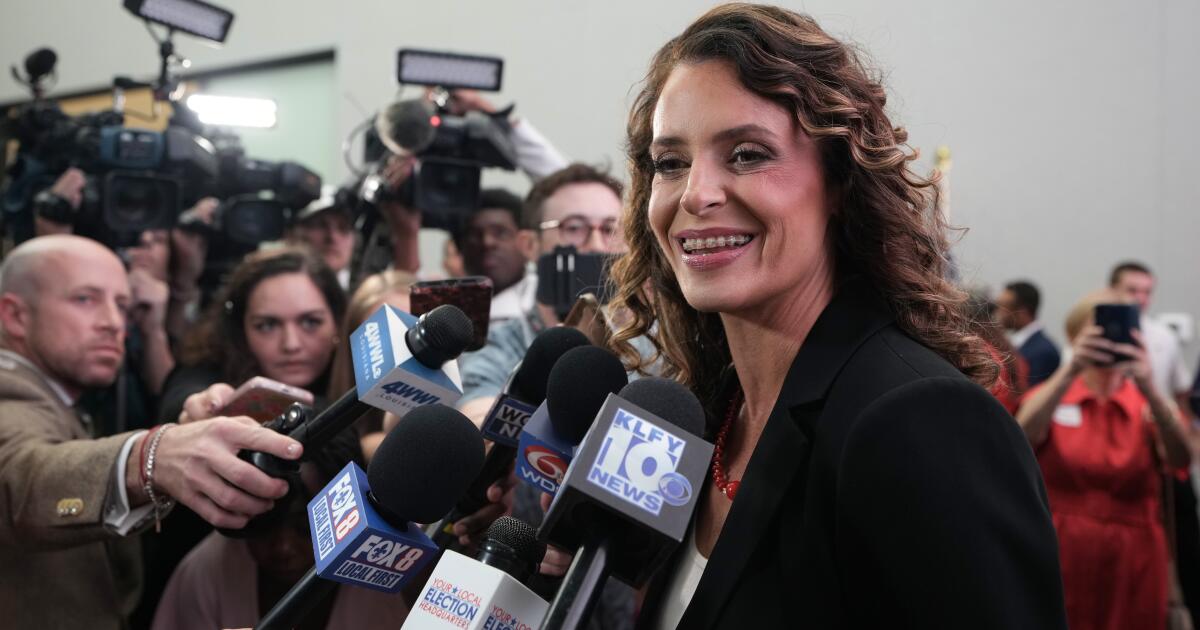
U.S. Rep. Julia Letlow won the most votes, capitalizing on the power of Trump’s endorsement in his latest attempt to purge his party of people he views as disloyal. State Treasurer John Fleming came in second to join her in the next round of voting.

Trump supported Letlow over Cassidy, one of seven Republican senators who voted to convict him during his second impeachment trial over the attack on the U.S. Capitol on Jan. 6, 2021. Cassidy, a doctor, has also clashed with Health Secretary Robert F. Kennedy Jr. over vaccine policy, even though he provided crucial support to help Kennedy get confirmed.

By receiving less than 50% of the vote, Letlow and Fleming, a former U.S. House member and Trump administration official, were unable to avoid the runoff, which will take place June 27. The winner will almost certainly take the November general election because of the state’s Republican leanings.

The Louisiana primary comes in the middle of a month of campaigns by Trump to exact retribution on politicians he views as having crossed him. On May 5 he helped dislodge five of seven Indiana state senators who rejected his partisan gerrymander plan.

Next Tuesday, U.S. Rep. Thomas Massie of Kentucky will face a Trump-backed challenger, Ed Gallrein, in another Republican primary. Massie angered Trump by opposing his signature tax legislation over concerns about the national debt, pushing for the release of the Jeffrey Epstein files and opposing his decision to go to war with Iran.

The president leveled insults at Cassidy on Saturday morning, calling him “a disloyal disaster” and “a terrible guy” on social media. In the evening he followed up with: “Congratulations to Congresswoman Julia Letlow on a fantastic race, beating an Incumbent Senator by Record Setting Numbers.”

Jeanelle Chachere, a 66-year-old nurse, said she considers Cassidy “a phony” and voted for Letlow solely because Trump endorsed her.

“I’m going by what he says, because I like what he does,” she said.

Election changes stir concern

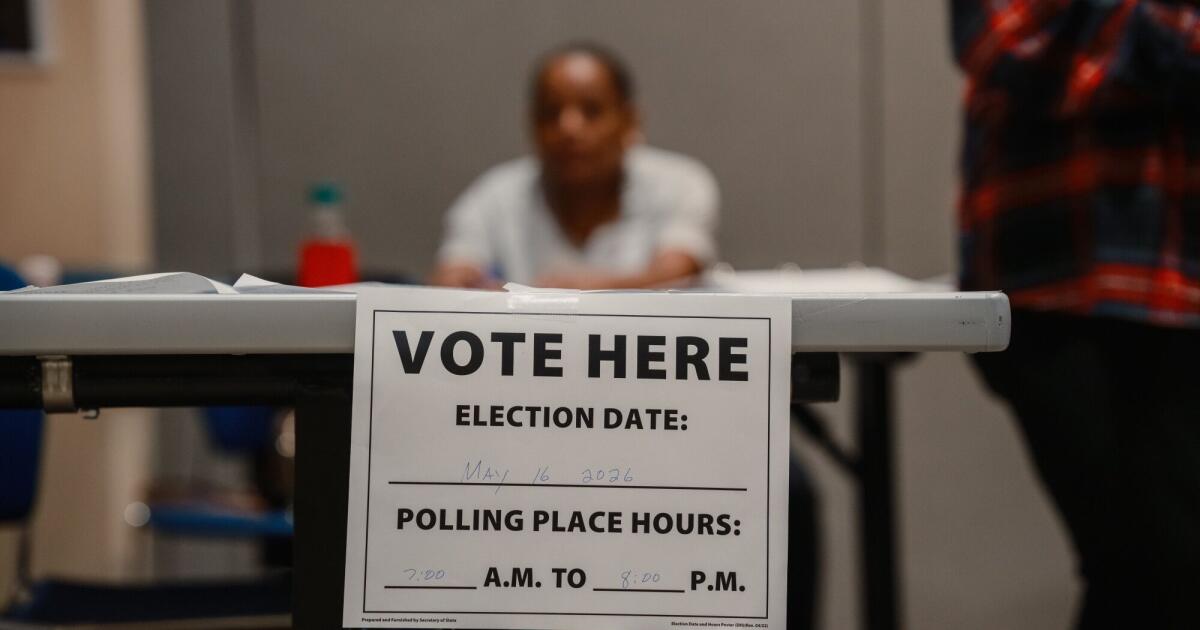
The election was scrambled by a recent U.S. Supreme Court decision focused on Louisiana gutting a part of the Voting Rights Act that affects how congressional maps are drawn. Although the Senate primary is moving forward, Louisiana leaders decided to delay House primaries until a future date to allow them to redo district lines ahead of time, a shift that threatened to cause confusion for voters Saturday.

Mary-Patricia Wray, who has consulted for Republican and Democratic candidates in Louisiana, said before the vote that the change could weigh against Cassidy by dampening turnout among voters who are less fervently pro-Trump.

“Suspending the congressional primaries hurts Cassidy,” she said. “Some people believe the Senate primary is canceled.”

Cassidy also complained that a new primary system enacted last year confused voters by requiring them to ask for a partisan ballot instead of the all-party primary previously in place. He said some called his office to say they had been unable to vote for him.

“The process that was set up was destined to be confusing,” Cassidy told reporters Friday.

Dadrius Lanus, executive director of the state Democratic Party, said his team fielded hundreds of calls from voters statewide who said the changes undermined their ability vote as they planned.

“A lot of the information should have gotten to voters well in advance,” Lanus said. “It’s literally been a whirlwind of confusion.”

A costly primary

Cassidy waged an aggressive campaign to convince voters he should not be counted out. Wray was among the political consultants who, as election day neared, gave the senator a chance of pulling off an upset.

The senator’s campaign was expected to have spent roughly $9.6 million on advertising through May 16, according to the ad-tracking firm AdImpact. And Louisiana Freedom Fund, a super PAC supporting him, was on track to spend $12.3 million.

By comparison, Letlow’s campaign, which launched Jan. 20, spent roughly $3.9 million, while a super PAC backing her, the Accountability Project, spent about $6 million.

Fleming’s campaign spent about $1.5 million.

Cassidy and Louisiana Freedom Fund ran ads attacking Letlow within days of her entering the race for supporting diversity, equity and inclusion initiatives, which Trump has tried to root out of the federal government.

Letlow, a college administrator before her election to the House, said she supported DEI while interviewing for the position of president of University of Louisiana-Monroe in 2020.

The ads, an attempt to characterize Letlow as a progressive trying to pass as a conservative, were one way Cassidy tried to flip the script in a race where he was on the outs with Trump.

Trump’s campaign

The senator’s vote in favor of convicting Trump after his 2021 impeachment has shadowed Cassidy throughout his second Senate term.

John Martin, a 68-year-old retired engineer in south Louisiana, said he would vote for Letlow because he was still upset by Cassidy’s decision. He waved a flier from Letlow’s campaign showing her standing alongside the president.

“I know a lot more about Cassidy than I do about her,” Martin said. “But if she’s endorsed by Trump, I’m going to believe that.”

Cassidy steered clear of Trump’s ire last year, supporting Kennedy to lead the Department of Health and Human Services despite his public reservations about the nominee’s anti-vaccine views.

Mark Workman, a 75-year-old retired infectious disease physician in the New Orleans suburbs, said he backs Fleming. Had Cassidy “stood up and blocked RFK,” Workman said, he would have supported the senator for taking a strong and courageous stance.

“He had the ability to stop him,” Workman said, “and he was too weak to do that.”

As chair of the Senate Health Committee, Cassidy has been more publicly critical of Kennedy, including over funding cuts for vaccine development.

Trump blamed Cassidy for the failed nomination of his second choice for surgeon general, Casey Means, who raised doubts about vaccinating newborns for hepatitis B, a practice Cassidy supports. Trump withdrew the Means nomination and decried Cassidy.

Challenger waited for Trump’s backing

Letlow considered running last year but only entered the race after Trump announced his endorsement in January.

By that time Fleming, who was elected state treasurer in 2023, was already in the race as a Trump devotee. But Landry was looking for a better-known challenger, and he suggested Letlow to the president.

Letlow had an unconventional and tragic entry into politics.

In 2020, while she was a college administrator, her husband, Luke, was elected to the U.S. House but died of COVID-19 before he could be sworn in. Letlow ran for and won the seat in a March 2021 special election and was reelected in 2022 and 2024.

Beaumont and Brook write for the Associated Press and reported from Des Moines and Baton Rouge, respectively

Source link