Lebanons

Israel strikes southern suburbs of Lebanon’s capital Beirut | Israel attacks Lebanon

NewsFeed

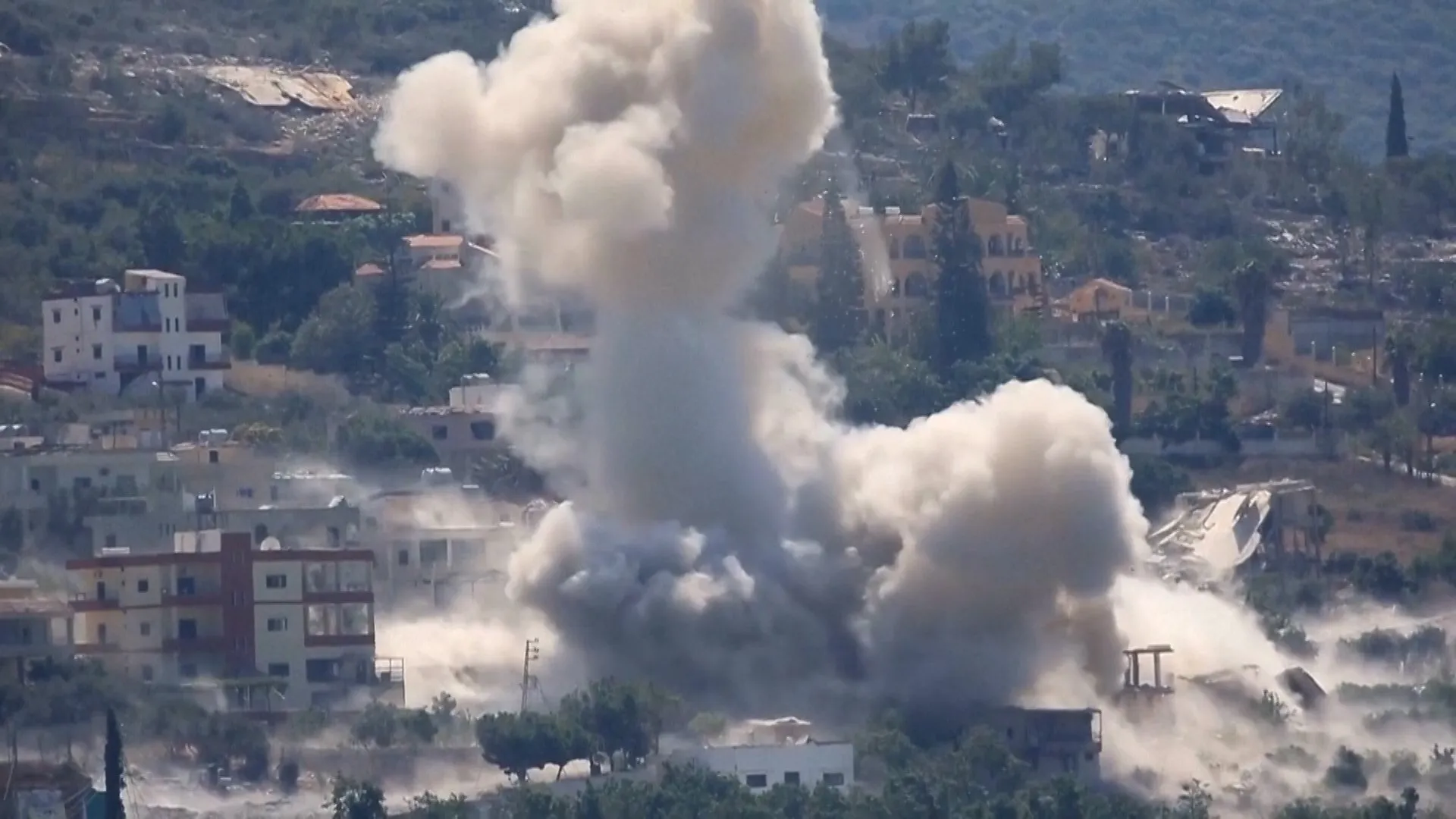
Videos show the aftermath of an Israeli attack on Beirut’s southern suburbs, with multiple explosions reported. Israel says it targeted Hezbollah headquarters, while Lebanese media says residential apartments were hit. The attack comes just days after US President Donald Trump told Benjamin Netanyahu that Beirut was off limits as Washington pursues a deal with Iran.

Source link

Lebanon’s latest truce: What is different from the April agreement? | Israel attacks Lebanon News

Israel and the Lebanese government have agreed to implement a new US-mediated ceasefire, the Trump administration has said, despite Israel’s defence minister insisting the military will continue operations in Lebanon.

Furthermore, while Lebanese President Joseph Aoun said on Thursday that the ceasefire would come into force within 24 hours of approval by all concerned parties, Hezbollah leader Naim Qassem has dismissed the deal, labelling it a “surrender and defeat”.

Recommended Stories

list of 4 itemsend of list

The Trump administration announcement comes just weeks after a previous agreement to cease hostilities was supposedly reached on April 16. Since then, however, more than 600 people have been killed in Israeli strikes across Lebanon while Israel has expanded its military presence in the south of the country, now occupying about one-fifth of the country.

The renewed diplomatic push also comes as Washington pursues parallel shuttle negotiations with Iran. Tehran, a close ally of Hezbollah, has made a ceasefire in Lebanon a condition for any broader agreement to end the war with the US and has repeatedly called for Israel to withdraw from southern Lebanon.

Iran’s position was underlined when Quds Force commander Esmail Qaani said the baseline demand in Lebanon is for Israeli forces to withdraw to the positions they held before the start of the US-Israel war on Iran at the end of February – a demand that is not explicitly reflected in the agreement.

Iran and Hezbollah’s responses to the US announcement, coupled with Israel’s insistence that military operations will continue, have cast serious doubt on its viability. Critics of Israel’s war on Lebanon also point to the April truce, which they say has completely failed to halt Israeli attacks or Israel’s occupation of the south of the country.

What has been announced?

According to the Trump administration, Israel and Lebanon have agreed to implement a ceasefire contingent on a “complete cessation” of Hezbollah fire and the evacuation of its fighters from the area south of the Litani River.

The agreement also calls for the creation of “pilot zones” where Lebanese Armed Forces would take exclusive control “to the exclusion of all non-state actors”. The stated aim is to move towards a wider political and security agreement, including the dismantling of non-state armed groups and preventing their re-emergence.

But Hezbollah was not party to the talks and has already rejected the agreement. Lebanon was represented by government diplomats, even though the Lebanese army is not a party to this conflict.

According to the wording of the agreement, the parties are due to reconvene during the week of June 22 to continue diplomatic and security talks, with the US facilitating communications in the meantime. It remains unclear if that stage of the agreement will ever be reached.

INTERACTIVE - Israel south lebanon bint jbeil map-1777363494
[Al Jazeera]

What was agreed in April?

The April agreement used different language, saying Israel and Lebanon would implement a “cessation of hostilities” from April 16, and never actually used the word ceasefire.

It also included a clause allowing Israel to “take all necessary measures in self-defence, at any time, against planned, imminent or ongoing attacks”.

That clause does not appear in the new text, which could be interpreted as a small concession. That was until Israel Katz said Israel would continue its military operations in Lebanon regardless.

The latest agreement also repeats Israel’s longstanding demand that Hezbollah withdraw from south of the Litani River.

Meanwhile, there is one major glaring omission. While the text focuses heavily on Hezbollah’s withdrawal from parts of southern Lebanon, it does not mention Israel’s withdrawal from southern Lebanon.

Lebanese journalist and analyst Souhayb Jawhar told Al Jazeera the agreement is defined as much by what it leaves out as by what it includes.

The text, he said, focuses on Hezbollah’s obligations and those of the Lebanese state: removing armed elements from south of the Litani and creating zones where the Lebanese army holds exclusive control.

“This point alone explains much of the scepticism within Hezbollah and its political environment,” Jawhar told Al Jazeera. “From the party’s perspective, any agreement should include a clear ceasefire, an Israeli withdrawal, and a framework for addressing outstanding issues, rather than becoming a document focused primarily on restructuring Lebanon’s internal security landscape.”

INTERACTIVE - LEBANON YELLOW LINE_MAY31_2026_3-1780440840

What else is different this time?

Other points of contention regarding the new agreement are the “pilot zones”, which appear to go beyond stopping the fighting and instead test a new security model in southern Lebanon – one that could eventually be expanded elsewhere, analysts say.

“This is why many observers see these zones as the beginning of a gradual transition from a security environment in which Hezbollah played the dominant role to one in which the Lebanese state and its armed forces become the sole security authority,” Jawhar said.

He added that the fate of the agreement may depend less on Lebanon-Israel talks than on the US-Iran track. If Washington and Tehran reach a wider understanding, the ceasefire in Lebanon will have a stronger chance of holding because both sides will have an interest in stabilising the Lebanese front.

“If those negotiations stall or collapse, Lebanon could quickly return to being one of the main arenas of pressure and confrontation between the two sides,” Jawhar added.

What is the situation in Lebanon now?

Southern Lebanon remained under heavy military pressure on Thursday, with Israeli strikes on Kafra and al-Mansouri in the southwest of the country. In the Bekaa Valley, one person was killed and four others wounded in an Israeli strike on Sohmor, according to Lebanon’s state-run National News Agency (NNA).

A separate strike hit Tell al-Aqareb, while further raids targeted Haddatha, Tibnin, Haris, and Harin. The NNA also reported more Israeli strikes across southern Lebanon as drones flew at low altitude over Beirut. In Maaroub, one person was killed and another wounded when Israeli forces targeted a motorcycle.

Israeli warplanes also struck towns and villages across the south, including Zawtar al-Sharqiya, Zawtar al-Gharbiya, Shoukin, Barachit, Srifa, Zibdin, Haris and Deir Zahrani. Jets and drones have also been flying over the south for much of the morning, including a drone seen at extremely low altitude over Tyre.

Lebanon’s Civil Defence authorities have warned people not to return south, citing the continued danger to civilian life in towns and villages across southern Lebanon.

More than 3,000 people have been killed, and more than one million have been forced from their homes since Israel renewed its assault on Lebanon in early March.

Source link

Israeli soldiers reach Nabatieh, one of southern Lebanon’s biggest cities | Israel attacks Lebanon News

Israel’s military has advanced beyond Lebanon’s Litani River for the first time since 2006.

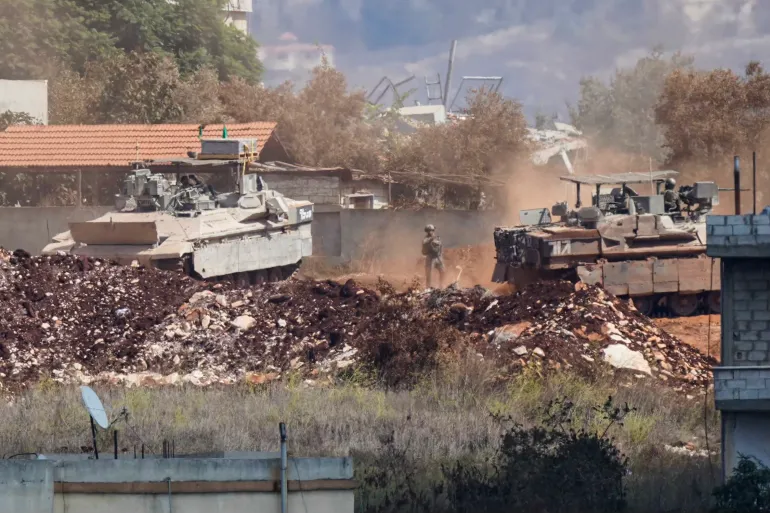
Israel’s military has advanced beyond the Litani River in southern Lebanon for the first time since 2006 and appear poised to encircle the major city of Nabatieh.

Senior Lebanese military sources on Saturday told the Turkish state news agency Anadolu that Israeli forces had crossed the Litani River, which Israel has declared the perimeter of its unofficial buffer zone.

Recommended Stories

list of 3 itemsend of list

Israeli forces are now on the outskirts of Nabatieh, a city that is key to southern Lebanon’s economy and a cultural hub for the region. If the Shia-majority city were to fall, it would mark a significant development in the war on Lebanon, which began in October 2023 and subsequent official ceasefire.

Nabatieh is viewed by many Lebanese as a symbol of resistance due to its historic role on the frontline of Israeli assaults.

Reporting from the southern city of Tyre, Al Jazeera’s Obaida Hitto said Israel was expanding its air campaign in southern Lebanon and encircling Nabatieh in preparation for a potential assault on the city.

“It looks like Israel is trying to make this final push to encircle Nabatieh, breaking through the second and third lines of defence of Hezbollah and isolating the western Bekaa Valley from the south of the country,” Hitto said.

Israel has issued evacuation orders for at least 10 villages in southern Lebanon, as it expands its invasion, despite being engaged in ongoing peace talks with Lebanese officials.

The Israeli army’s Arabic spokesperson, Avichay Adraee, instructed residents in several Lebanese villages to evacuate immediately, warning they could be killed if they remained.

The order came the day after officials from both countries met in Washington to discuss a permanent end to the war. It began in early March when Iran-backed Hezbollah began attacking Israel following the assassination of Iran’s Supreme Leader, Ali Khamenei.

Hitto said people fleeing their homes have few options, with more than 20 percent of the population — around 1.2 million people — displaced by fighting.

“Those options are turning into basically people living with relatives if they have that option, or people living in makeshift camps in public parks and public spaces. I’ve seen many families living in their vehicles for long periods of time,” Hitto said.

“Some of these families have been continuously displaced since 2023,” Hitto added.

The latest forced displacement orders are a further test to the nominal “ceasefire” in place since mid-April and repeatedly violated by Israel. It justifies its actions by saying it is targeting Hezbollah as part of efforts to disarm the group.

On Friday, at least 14 people were killed in Israeli air raids in southern Lebanon.

Lebanese officials are working to disarm Hezbollah, but the task has proved extremely difficult.

Lebanese and Israeli officials are currently engaged in negotiations to end the war, marking the first time the two sides have spoken directly in decades.

The talks are being facilitated by the United States, and a new round is expected in Washington next week.

Lebanon’s President, Joseph Aoun, held talks with Prime Minister Nawaf Salam on Saturday to discuss the security situation and  ongoing negotiations with Israel. According to the state-run National News Agency, they agreed to intensify efforts to end the war, which has triggered a humanitarian crisis.

Aoun also spoke by phone with US Secretary of State Marco Rubio and stressed the importance of Israel respecting the current ceasefire.

Source link

Netanyahu says Israeli forces have crossed Lebanon’s Litani River | Israel attacks Lebanon

NewsFeed

Israeli Prime Minister Benjamin Netanyahu said Israeli forces had crossed the Litani River in southern Lebanon and were operating in Beirut and the Bekaa Valley, in what he described as a “tactical victory”. This comes after Netanyahu said he ordered the Israeli military to take control of 70% of the Gaza Strip.

Source link

South Lebanon’s agriculture falls victim to Israeli attacks

A United Nations Interim Force in Lebanon soldier stands guard as farmers harvest olives in the village of Odaisseh, located close to the Blue Line border with Israel, in southern Lebanon, in October. File Photo by Wael Hamzeh/EPA

BEIRUT, Lebanon, May 22 (UPI) — Lebanon’s agriculture sector emerged as another victim of Israel’s widespread attacks across southern Lebanon, damaging vast areas of farmland, displacing the majority of the region’s farmers and threatening the country’s food security, economic resilience and cultural identity.

The sector, which is key to Lebanon’s economy and plays a vital role in sustaining rural communities and preserving cultural traditions, had not yet recovered from the impacts of the 2023-2024 war between Hezbollah and Israel when it was again hit by resumed hostilities in March.

The fresh escalation severely disrupted farming activities, with an estimated 22.5% of agricultural areas (56,264 hectares) damaged, including farms and greenhouses, and nearly 80% of farmers (more than 6,593) displaced and unable to access their land due to Israeli military activities, according to an updated report released by the Lebanese Ministry of Agriculture on May 5.

The report indicated that the most affected crops in the south are bananas (95%), citrus trees (97%), olives (91%) and small-scale farming, which accounts for 80% of Lebanon’s total agricultural area.

Moreover, more than 1.8 million heads of livestock (cows, goats, sheep and poultry), 29,121 beehives, and 2,030 tons of fish have been lost.

Nizar Hani, the minister of agriculture, said the sector suffered its biggest losses compared with previous wars, adding that agricultural losses have doubled since the March 2 escalation to about $1.5 billion, out of an estimated total war damage that exceeds $20 billion.

Hani said Israel is establishing a buffer zone in southern Lebanon “empty of any life, where no one can pass through, hide or live,” through destruction of entire villages, properties, orchards and olive trees.

He said southern Lebanon produces 70% of the country’s citrus fruits and 90% of its bananas, supplying the local market and exporting to neighboring countries such as Syria, Jordan and Iraq.

And he told UPI that the heavy agricultural losses, inflation, and resulting job losses had a direct impact on food security, with 24% of people living in Lebanon — including Syrian displaced persons, Palestinian refugees and others — requiring immediate assistance.

According to an analysis by the Agriculture Ministry, in collaboration with the U.N.’s Food and Agriculture Organization and the World Food Programme, 1.24 million people were expected to face food insecurity between April and August 2026, marking a significant increase from the November 2025-March 2026 period, when an estimated 874,000 people experienced acute food insecurity.

Nora Ourabah Haddad, the Food and Agriculture Organization representative in Lebanon, warned that damage to irrigation systems, productive infrastructure, livestock systems and agricultural supply chains is further weakening local production capacity.

Haddad referred to substantial declines in the production of milk, meat, eggs and honey after 1,600 farms were affected and more than 1.8 million animals killed during the war.

She said the scale of the damage is “extremely serious” and extends far beyond the affected agricultural land that included some of the country’s most productive farming areas.

“What is at stake today is Lebanon’s capacity to sustain local food production, protect rural livelihoods and preserve the resilience of its agrifood systems at a time when the country is already heavily dependent on food imports and facing severe economic pressures,” she told UPI in an interview.

Haddad said food prices rose by 8.4% in the first quarter of 2026, while transport costs increased by 21%, adding that higher fuel and logistics costs expected to continue to drive up prices.

This time, farmers fear prolonged displacement after being forced to leave their land and homes under Israeli evacuation orders in early March — as many were preparing for the planting season.

Hussein Salameh, head of an agriculture cooperative in the Bint Jbeil-Marjeyoun area, recalled how they fled without having time to take any belongings, move their cows away or release them.

Salameh, an inhabitant of the village of Aitaroun, said the displaced farmers mostly feel “frustrated and abandoned” after exhausting their savings on working their land and repairing their damaged homes when they first returned after the Nov. 27, 2024, cease-fire.

He noted that Hezbollah did not provide them then with any financial assistance, saying it no longer had the funds to do so.

Unlike other displaced employees or skilled workers who could still find work in their areas of refuge, they have lost their only source of livelihood away from their land, he said.

“This is a big tragedy. … Farmers have only their land to live on and survive,” he told UPI.

The fear is that when farmers remain separated from their land, livestock and livelihoods for extended periods, many gradually lose the ability to sustain themselves and may eventually abandon agriculture altogether, Haddad warned.

Helping farmers protect what remains of their livelihoods by providing emergency agricultural support and restoring the country’s agricultural capacity before losses become “irreversible” were emerging priorities for the Food and Agriculture Organization, she said.

However, soil contamination presents another major concern after Lebanon and international rights groups accused Israel of unlawfully using white phosphorus and the herbicide glyphosate during its attacks on southern Lebanon, destroying crops and damaging beehives and livestock.

“This is an international environmental crime,” Hani said, adding that Israel “sprayed everything with glyphosate.”

The destruction and uprooting of old olive trees — some of which have been cultivated and preserved across generations, and in some cases for centuries — was equally painful.

“It is the loss of a living heritage … olive trees are deeply connected to family history, local traditions, food culture and rural economies,” Haddad said, adding that their destruction carries not only economic consequences, but also profound social and cultural impacts on farming communities.

Restoration is possible, but it requires time as newly planted trees require many years before becoming fully productive.

“Some of these ancient olive trees may also contain unique genetic heritage that has adapted to local environmental conditions over centuries, making parts of this loss potentially irreversible from a biodiversity perspective,” Haddad said.

Even if hostilities were to stop today, recovery in southern Lebanon’s agriculture sector would not be immediate and would require extensive international funding and support.

Farmers would also need time to recover from the “deep psychological impact” of being uprooted from their land, after their “cultural and environmental values” were destroyed, according to Hani.

To Salameh, Israel was not just targeting Hezbollah but carrying out what he described as “collective punishment” against everyone living in the south, including those opposed to the Iran-backed group.

“Would such collective punishment ensure security for Israel? Would that bring peace?” he asked.

Source link

Civilians or Hezbollah: Who did Israel hit on Lebanon’s ‘Black Wednesday’? | Israel attacks Lebanon News

Beirut, Lebanon – On April 8, Ahmad Hamdi, 22, was sitting on his couch at home in Beirut’s Tallet el Khayat neighbourhood, hours after Israel had launched more than 100 attacks in under 10 minutes across Lebanon.

Then he heard the “indescribable sound” of a rocket. Ahmad jumped off the couch as the glass in his building shattered around him before more rockets hit.

Recommended Stories

list of 3 itemsend of list

Clouds of dust obscured the view from his apartment on the fourth floor. When they dispersed, he saw the building directly facing his had been reduced to a pile of rubble.

He looked back at the couch he had been sitting on. At some point between the second and fourth explosion, shards of shrapnel had hit the couch exactly where his chest had been when the first rocket struck.

“When you think of Tallet el Khayat, you feel it is safe and secure,” Ahmad told Al Jazeera. “No one would expect something like that would happen.”

Indiscriminate attacks

April 8 has become known in Lebanon as Black Wednesday. Israel’s attacks on that day killed at least 357 people across the country. Israel claimed it killed 250 Hezbollah operatives. The exact breakdown of civilians and combatants is still not known, but numerous sources looking into the day’s casualties told Al Jazeera that the attacks appeared to be indiscriminate at best and in some cases may have amounted to the direct targeting of civilians. United Nations experts have described Israel’s attacks on April 8 as “indiscriminate”.

“The method in which the attacks happened in the middle of the day with dozens of strikes all at one time without warning and when civilians were present shows recklessness in Israeli military conduct,” Ramzi Kaiss, Lebanon researcher at Human Rights Watch, told Al Jazeera.

On March 2, Israel intensified its war on Lebanon for the second time in under two years. Earlier that day, Hezbollah had responded to near-daily Israeli attacks on Lebanon for the first time since December 2024 in response to the United States and Israel’s assassination of Iran’s Ayatollah Ali Khamenei.

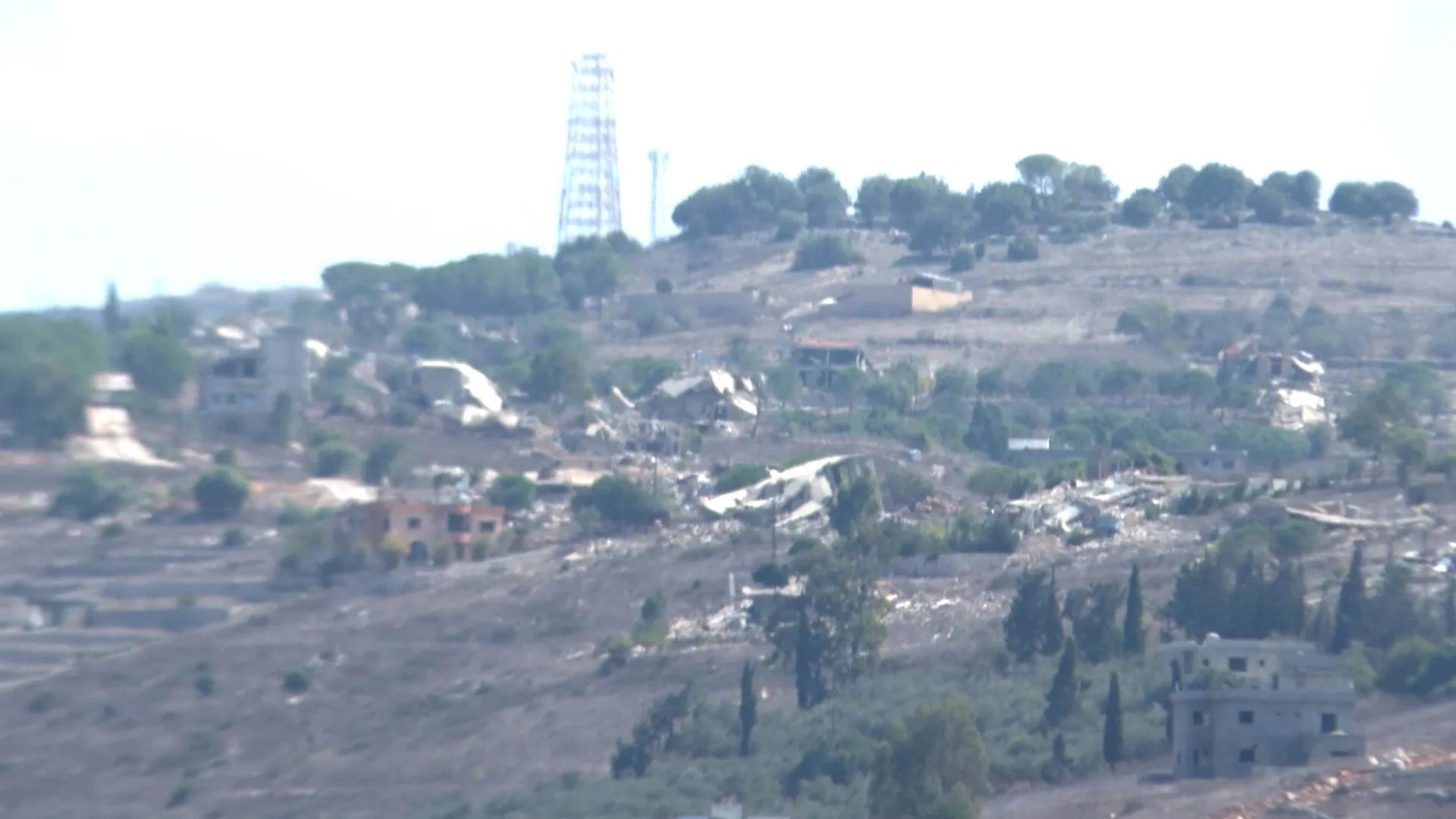
Israel also invaded southern Lebanon, where it has gone about systematically destroying towns and villages in what experts – and Israeli officials – said is an effort to create an uninhabitable “buffer zone” along its border.

“Part of [Israel’s] military strategy is to create a buffer zone and no man’s land,” Bassel Doueik, the Lebanon researcher for the Armed Conflict Location & Event Data (ACLED) conflict monitor, told Al Jazeera. “What Israel is doing in southern Lebanon is creating a multilayered buffer zone inside Lebanese territory and that is why they are demolishing houses in towns along the border.”

Israel has not stopped attacking Lebanon since October 2023 and has violated a November 2024 ceasefire more than 10,000 times, according to the UN. Most of its attacks have been in southern Lebanon and the Bekaa Valley in the east.

Doubts about Israel’s claims

Israel conducted 100 air strikes and dropped more than 160 bombs across Lebanon on April 8, according to ACLED.

Israel claimed the attacks targeted Hezbollah headquarters, command-and-control sites, military formations and assets of its air force unit and elite Radwan Force.

Hezbollah discontinued the practice of providing the circumstances of its fighters’ deaths in September 2024. The Lebanese group does conduct some public funerals for fighters killed during the battles in southern Lebanon, but it is difficult to ascertain the exact number of those killed, making it hard to prove or disprove Israel’s claims.

But groups investigating the April 8 attacks said the available information casts doubt on the Israeli narrative. Analysts with ACLED said they are still confirming casualties but early indications showed that only a few victims were known Hezbollah members.

“One hundred one women and children were killed on April 8,” Ghida Frangieh, a Lebanese lawyer and researcher with Legal Agenda, a Beirut-based nonprofit research and advocacy organisation, told Al Jazeera. “For this number of 250 to be correct, it means every man killed must have been a Hezbollah combatant. This is not true as we were able to document several civilian men killed during these attacks.”

Lebanese media reported on a number of those killed by Israel on April 8, including employees of local restaurants, teachers, a poet, journalists, Lebanese soldiers and a member of a Druze-majority political party.

In some cases, Israeli attacks wiped out several members of the same family. Seven members of the Nasreddine family were reportedly killed on April 8 in Hermel in northeastern Lebanon. And three generations of the displaced Hawi family, including three children, were killed in the Jnah neighbourhood bordering Beirut.

Israel ’emboldened to continue’ violations of international law

Even if Hezbollah targets were present at all of the sites struck during the April 8 attacks, researchers said the attacks should still be considered indiscriminate. And while there still may be a discrepancy over the exact numbers of Hezbollah members vs civilians killed, international humanitarian law places the burden of proof on the attacking army.

“International humanitarian law is clear: Armed forces must distinguish at all times between civilians and military objectives,” Reina Wehbi, Amnesty International’s Lebanon campaigner, told Al Jazeera. “Even when there is a legitimate military target and in order to avoid indiscriminate, disproportionate or other unlawful attacks, parties must respect the principle of precaution and do everything feasible to verify that targets are military objectives, to assess the proportionality of attacks and to halt attacks if it becomes apparent they are wrongly directed or disproportionate.”

Over the past two and a half years, Israel has regularly violated the laws of war in Lebanon and in Gaza by indiscriminately attacking civilians, targeting paramedics and journalists, and using white phosphorus. Still, experts said there is little chance Israel will be held accountable.

“For the Israeli military, there is no deterrence to committing violations in Lebanon,” Kaiss of Human Rights Watch said. “After the crimes of humanity against Gaza, countries could have immediately suspended arms sales, the transit of arms through airports, placed targeted sanctions on officials, and the US and others could have suspended arms sales, but none of that happened.”

Kaiss said Lebanon could also give jurisdiction to the International Criminal Court (ICC), of which it is not currently a member, to investigate and prosecute Israel’s crimes in Lebanon. The ICC has already issued arrest warrants for Israeli Prime Minister Benjamin Netanyahu and former Defence Minister Yoav Gallant on charges of war crimes and crimes against humanity in Gaza.

Attacks on Beirut have temporarily halted since US President Donald Trump announced a ceasefire in Lebanon on April 16. But the war rages on in southern Lebanon with Israel continuing to kill civilians, including rescue workers. Israel and Lebanon have started to engage in direct negotiations despite Hezbollah’s objections in what the Lebanese state hopes will bring an end to Israel’s attacks and occupation of southern Lebanon.

But on the ground, there has been little deterrence or accountability for Israel’s crimes against civilians.

“This hasn’t happened in the last two years, so the Israeli military on the ground feels emboldened to continue,” Kaiss said.

Source link

Trump says Israel and Lebanon’s leaders will speak on Thursday | Israel attacks Lebanon News

DEVELOPING STORY,

US president says the leaders of the two countries will speak for the first time in 34 years on Thursday.

United States President Donald Trump says the leaders of Israel and Lebanon will speak for the first time in 34 years on Thursday.

The announcement on Wednesday came a day after Israel and Lebanon’s envoys to the US held direct talks in Washington, DC, to discuss an end to Israeli attacks on its neighbour.

Recommended Stories

list of 4 itemsend of list

“Trying to get a little breathing room between Israel and Lebanon,” Trump wrote on his Truth Social platform.

“It has been a long time since the two leaders have spoken, like 34 years. It will happen tomorrow. Nice!”

The US president did not specify who will be involved in the talks.

Lebanon was drawn into the US and Israel’s war on Iran on March 2 after Tehran-aligned Hezbollah resumed attacks on Israel.

Hezbollah said the attacks were in retaliation for Israel’s killing of Iran’s Supreme Leader Ayatollah Ali Khamenei on the first day of the war, on February 28, as well as Israel’s near-daily violations of a ceasefire it agreed to in Lebanon in November 2024.

Israeli attacks since March 2 have killed more than 2,000 people in Lebanon and displaced more than 1.2 million others. The Israeli military has also launched a ground invasion in southern Lebanon, seeking to seize more territory and create what it calls a “buffer zone”.

Israeli Prime Minister Benjamin Netanyahu on Wednesday ordered the military to expand the invasion in southern Lebanon towards the east.

He said that Israel was pursuing negotiations with the Lebanese government alongside its military campaign against Hezbollah in hopes of disarming the armed group and achieving a “sustainable peace” with its northern neighbour.

The Lebanese government, which is not a party to the conflict between Israel and Hezbollah, is seeking a ceasefire and a withdrawal of Israeli troops from southern Lebanon.


Source link