leader

Bangladesh’s Jamaat leader Shafiqur Rahman: The man everyone wants to meet | Bangladesh Election 2026

Dhaka, Bangladesh – On Wednesday evening in Dhaka, Shafiqur Rahman, the emir (chief) of the Bangladesh Jamaat-e-Islami, unveiled an ambitious election manifesto. A key promise: If his party wins the country’s February 12 election, it would lay the ground for Bangladesh to quadruple its gross domestic product (GDP) to $2 trillion by 2040.

Addressing politicians and diplomats, the 67-year-old Rahman pledged investment in technology-driven agriculture, manufacturing, information technology, education and healthcare, alongside higher foreign investment and increased public spending.

Recommended Stories

list of 4 itemsend of list

Economists in Dhaka have cast doubt on whether sweeping promises can be financed, describing the manifesto as heavy on slogans but short on detail. But for Jamaat’s leadership, the manifesto is less about fiscal arithmetic than signalling intent, say analysts.

For years, critics have tried to portray Jamaat, Bangladesh’s largest Islamist party, as driven too much by religious doctrine to be able to govern a young, diverse, forward-looking population. The manifesto, by contrast, presents a party long excluded from power as a credible alternative – and as a force that sees no contradiction between its religious foundations and the modern future that Bangladeshis aspire to.

His audience was telling too.

Until recently, Bangladesh’s business elites and foreign diplomats either kept their distance from Jamaat or engaged with it discreetly. Now, they are doing so openly.

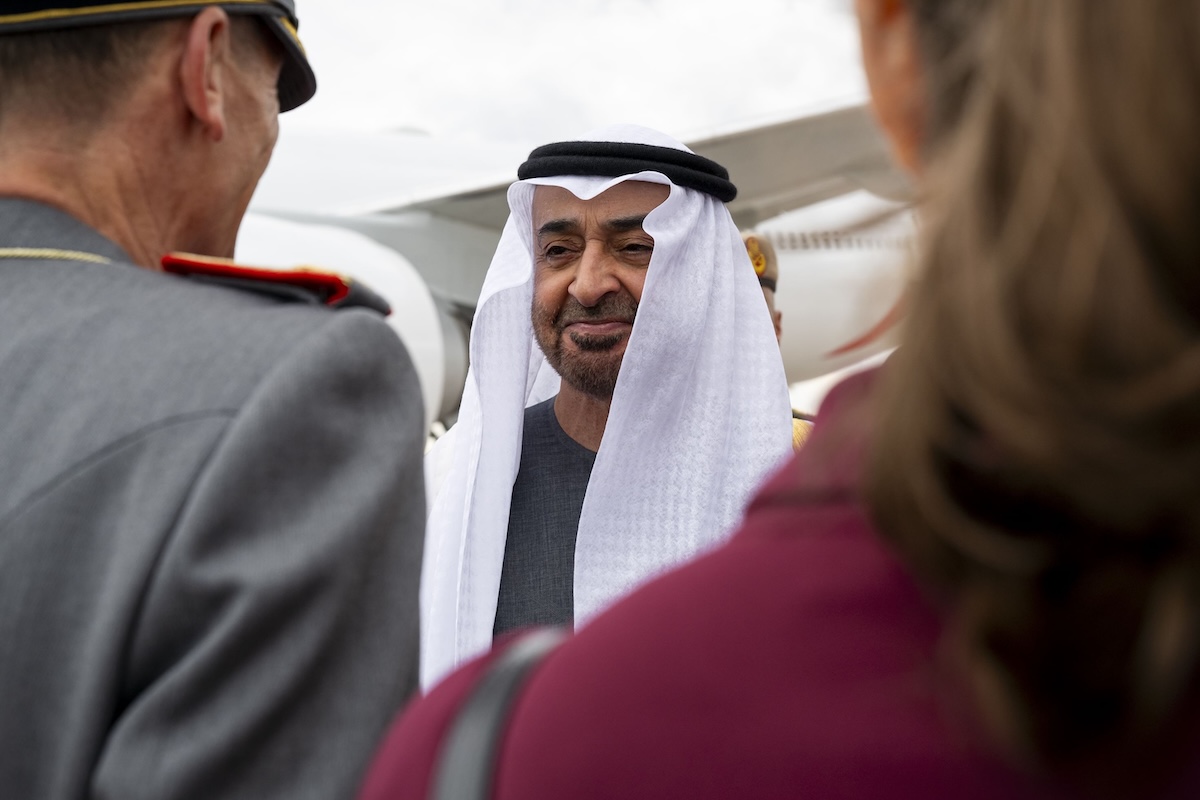
Over the past few months, European, Western, and even Indian diplomats have sought meetings with Rahman, a figure who, until not long ago, was seen by many internationally as almost politically untouchable.

For a leader whose party has been banned twice, including by ousted Prime Minister Sheikh Hasina’s administration, the coming election is raising a question few would have dared to ask even a year ago: Could Shafiqur Rahman become Bangladesh’s next prime minister?

Shafiqur  Rahman, Ameer (President) Jamaat-e-Islami, poses for a photograph after an interview with Reuters, in Dhaka, Bangladesh, December 31, 2025. REUTERS/Kazi Salahuddin
Rahman poses for a photograph after an interview with Reuters news agency in Dhaka, on December 31, 2025 [Kazi Salahuddin/Reuters]

‘I will fight for the people’

The shift in how Jamaat and its leader are being viewed is at least partly to do with a political vacuum that has opened up in Bangladesh.

The July 2024 uprising that ousted Sheikh Hasina did more than end her long rule. It upended the country’s political order, hollowing out the familiar duopoly that for decades defined Bangladeshi politics – the rivalry between Hasina’s Awami League and the Bangladesh Nationalist Party (BNP).

With the Awami League effectively barred from the political field and the BNP the only big party left standing, a vacuum emerged. Many initially assumed it would be filled by the student-led National Citizen Party (NCP). Instead, Jamaat – long pushed to the margins – moved to occupy the space.

As Bangladesh heads towards a high-stakes election in less than two weeks, Jamaat has now emerged as one of the country’s two most prominent political forces. Some pre-election polls now place it in direct competition with the BNP.

At the centre of that transformation is Rahman, according to Ahsanul Mahboob Zubair, Jamaat’s assistant secretary-general and a longtime associate of the party chief.

Zubair, who worked closely with Rahman when he led Jamaat in the country’s Sylhet region, said the resurgence is the result of years of grassroots social work and political survival under repression.

Rahman, a soft-spoken former government doctor, took over as Jamaat’s chief in 2019, at a time when the party was banned under Hasina. In December 2022, he was arrested in the middle of the night on charges of supporting militancy and was released only after 15 months when he secured bail.

In March 2025, months after the student-led protest had overthrown Hasina and an interim government under Nobel laureate Muhammad Yunus had taken office, Rahman’s name was dropped from the list of accused in the case.

Since then, his carefully calibrated, emotional public appearances have drawn wide attention.

At a massive rally in Dhaka last July, Rahman collapsed twice on stage due to heat-related illness but returned to finish his speech, defying doctors’ advice.

“As long as Allah grants me life, I will fight for the people,” he told the crowd, barely sitting on the stage, supported by the doctors. “If Jamaat is elected, we will be servants, not owners. No minister will take plots or tax-free cars. There will be no extortion, no corruption. I want to tell the youth clearly – we are with you.”

Bangladesh Jamaat-e-Islami leader Shafiqur Rahman waves a their party flag during an election campaign in Dhaka, Bangladesh, Jan. 22, 2026. (AP Photo/Mahmud Hossain Opu)
Rahman waves his party flag during an election campaign in Dhaka, January 22, 2026 [Mahmud Hossain Opu/AP Photo]

Reinventing Jamaat’s image

Supporters describe Shafiqur Rahman as approachable and morally grounded – a leader who prefers disaster zones to drawing rooms, and projects calm in a country exhausted by confrontation.

Now in his third term as chief, Rahman commands firm authority inside the party.

“He is a good and pious man. Everyone in the party trusts him,” said Lokman Hossain, a Jamaat supporter in Dhaka. He said that over the past year and a half, the party has reached far more people than before, with Rahman’s appeal beyond Jamaat’s traditional base playing a central role.

Rahman’s challenge, however, is no longer purely electoral – it is reputational.

As new supporters drift towards Jamaat, he is attempting to reframe how the party is seen: less as an Islamic force defined by doctrine and history, and more as a vehicle for clean governance, discipline and change.

Whether this reinvention is substantive or merely cosmetic will define both Rahman’s leadership and Jamaat’s future, say analysts.

Any attempt to recast Jamaat’s public image, however, runs up against the unresolved legacy of 1971. For decades, the party’s role during Bangladesh’s war of independence – when it sided with Pakistan – and the subsequent trials and executions of several senior leaders have shaped perceptions of Jamaat at home and abroad.

Rahman has approached that history with caution. He has avoided detailed admissions but has recently acknowledged what he calls Jamaat’s “past mistakes”, asking forgiveness if the party caused harm.

The language marks a subtle shift from outright denial, while stopping short of naming specific actions or responsibilities. Supporters say this reflects political realism rather than evasion – an attempt to move the party beyond its dark chapter. Critics, by contrast, see the ambiguity as deliberate, arguing it softens Jamaat’s image without confronting the substance of its past.

“He knows what those mistakes were,” said Saleh Uddin Ahmed, a United States-based Bangladeshi academic and political analyst. “But stating them explicitly would destabilise his leadership inside the party.”

Ahmed nonetheless considers Rahman more moderate than Jamaat’s previous leaders, noting his relative willingness to discuss unresolved historical questions and address issues such as women’s rights – topics the party long avoided. “This opening up is also happening because of increased public and media scrutiny,” Ahmed said. “People are asking questions now, and Jamaat has to respond.”

Jamaat’s effort to reach voters beyond its traditional base and reassure foreign audiences, while retaining the loyalty of its conservative supporters, has created a persistent tension – one that has often resulted in dual messaging.

That balancing act has been evident in public statements by senior leaders. Abdullah Md Taher, one of Rahman’s closest aides, in an interview with Al Jazeera, said Jamaat is a moderate party, adding that it would not impose or strictly adhere to Islamic law.

The party has also, for the first time in its history, nominated a Hindu candidate.

Yet when addressing conservative supporters, the party continues to emphasise its Islamic identity, with some backers encouraging votes for Jamaat as an act of religious merit – a practice the rival BNP has criticised as the misuse of religious sentiment.

The strategy appears to have helped Jamaat re-enter political conversations that were once closed to it. At the same time, it has sharpened doubts about how far Rahman is willing – or able – to go in reinterpreting the party’s past and ideology as he courts a broader electorate.

Those limits are most visible in Jamaat’s stance on women and leadership. They came into sharp focus during his Al Jazeera interview in which Shafiqur Rahman said it was not possible for a woman to hold the party’s top position – a remark that reignited longstanding criticism of Jamaat’s gender politics, despite its attempts to project a more inclusive image.

“Allah has made everyone with a distinct nature. A man cannot bear a child or breastfeed,” Rahman said. “There are physical limitations that cannot be denied. When a mother gives birth, how will she carry out these responsibilities? It is not possible.”

Critics argue that the stance exposes the limits of Jamaat’s claims of moderation.

Mubashar Hasan, an adjunct researcher at the Humanitarian and Development Research Initiative at Western Sydney University in Australia and author of Narratives of Bangladesh, also questioned Jamaat’s internal culture, noting that even female leaders who publicly endorse such views operate within a male-dominated hierarchy. He was referring to the party’s large number of female supporters and members, including women within its Majlis-e-Shura, the highest decision-making body. “It reflects a structure where women follow what men say in that party,” he said.

The criticism carries particular weight given the movement that helped reopen political space for Jamaat itself. The July 2024 uprising against Hasina, analysts note, saw extensive participation by women, often at the front lines of protest. “Women were part of that movement as much as men, if not more,” Hasan said. “Undermining them now gives Jamaat a deeply problematic outlook.”

Political historians argue this is not a new contradiction but a longstanding one. Since contesting elections under its own symbol in 1986, Jamaat has never fielded a woman candidate for a general parliamentary seat, relying instead on reserved quotas.

“This isn’t a temporary position or a tactical lapse,” said political historian and author Mohiuddin Ahmad.“It reflects the party’s ideological structure, and that structure has not fundamentally changed.”

Head of Bangladesh's interim government Muhammad Yunus, center, with Bangladesh Jamaat-e-Islami party leader Ameer Shafiqur Rahman, inaugurate the July Uprising Memorial Museum, once the official residence of Bangladesh's ousted Prime Minister Sheikh Hasina, in Dhaka, Bangladesh, Tuesday, Jan. 20, 2026. (AP Photo/Mahmud Hossain Opu)
Rahman (left) with the head of Bangladesh’s interim government, Muhammad Yunus, at the inauguration of a museum to commemorate the student uprising that overthrew Hasina, on January 20, 2026 [Mahmud Hossain Opu/AP Photo]

The ‘grandfather’ expanding Jamaat’s reach

Yet among Jamaat supporters – particularly younger ones – the issue is often filtered through loyalty to Rahman himself rather than doctrine.

During his recent nationwide campaign, young supporters can frequently be heard calling Shafiqur Rahman “dadu” – grandfather. White-bearded, soft-spoken and visibly attentive to supporters, Rahman fits the image.

“He connects with young people through his words,” said Abdullah Al Maruf, a Gen Z law student from Chattogram and a Jamaat supporter. “There is something about his recent work that feels like the relationship between a grandfather and his grandchildren. Where BNP leaders often belittle young people, Shafiqur speaks to them with respect.”

Maruf added that Rahman’s appeal extends beyond Jamaat’s traditional base. “Outside the usual Jamaat circle, he is more popular than previous Jamaat leaders,” he said.

Zubair, Jamaat’s assistant secretary-general, described the party’s outreach beyond traditional voters – such as the decision to nominate a Hindu candidate – not as a tactical move but one rooted in Jamaat’s constitutional framework rather than political expediency.

“Our constitution allows any Bangladeshi, regardless of religion, to be part of the party if they support our political, economic and social policies,” he said. “Supporting our religious doctrine is not a requirement for political participation.”

Jamaat leaders argue the move reflects a broader effort to shift the party’s public image – from one defined primarily by theology to one centred on governance and accountability. “We are emphasising corruption-free politics, discipline and public service,” Zubair said. “People have seen our leaders stand with them during floods, during COVID, and during the July uprising. That is why support is growing.”

Krishna Nandi, the party’s Hindu candidate from the city of Khulna, agrees. “When families fall into poverty, Jamaat-linked welfare networks step in without asking about religion or political loyalty. This culture of service explains why many citizens see Jamaat not as a party of slogans but as a party of discipline, structure and responsibility,” Nandi wrote for Al Jazeera.

The Jamaat’s outreach has also extended well beyond domestic audiences. Zubair said the party’s leadership has held meetings with Indian diplomats in Dhaka who paid a courtesy visit to Shafiqur when he was ill. Jamaat figures were invited to India’s 77th Republic Day reception at the Indian High Commission last month – an unprecedented step.

European and Western diplomats, he added, have also sought engagements with Rahman in recent months. That shift has been mirrored in Washington. In a leaked audio recording reported by The Washington Post, a US diplomat was quoted as saying American officials wanted to “be friends” with the Jamaat, asking journalists whether members of the party’s influential student wing might be willing to appear in their programmes.

As Jamaat’s international engagement expands – and as it emerges as a serious electoral force alongside frontrunner BNP – many general supporters express confidence in Rahman’s leadership.

“He is a patriot,” said Abul Kalam, a voter in Rahman’s Dhaka constituency. “Whether as prime minister or opposition leader, he will lead us well.”

What lies next for the party is unclear. But analysts say that irrespective of the outcome of the elections, Rahman’s stature within Jamaat – and beyond, in Bangladesh – appears resolute.

“Shafiqur Rahman is an experienced politician and is frequently in the headlines,” Ahmad, the political historian, said. “His political thinking is not yet fully clear, but his grip over the party is evident.”

Source link

California Democrats help lead fight vs. Trump immigration crackdown

California Democrats have assumed leading roles in their party’s counter-offensive to the Trump administration’s massive immigration crackdown — seizing on a growing sense, shared by some Republicans, that the campaign has gotten so out of hand that the political winds have shifted heavily in their favor.

They stalled Department of Homeland Security funding in the Senate and pushed the impeachment of Secretary Kristi Noem in the House. They strategized against a threatened move by President Trump to invoke the Insurrection Act and challenged administration policies and street tactics in federal court. And they have shown up in Minneapolis to express outrage and demanded Department of Justice records following two fatal shootings of U.S. citizens there.

The push comes at an extremely tense moment, as Minneapolis and the nation reel from the fatal weekend shooting of Alex Pretti, and served as an impetus for a spending deal reached late Thursday between Senate Democrats and the White House to avert another partial government shutdown. The compromise would allow lawmakers to fund large parts of the federal government while giving them more time to negotiate new restrictions for immigration agents.

“This is probably one of the few windows on immigration specifically where Democrats find themselves on offense,” said Mike Madrid, a California Republican political consultant. “It is a rare and extraordinary moment.”

Both of the state’s Democratic senators, Adam Schiff and Alex Padilla, came out in staunch opposition to the latest Homeland Security funding measure in Congress, vowing to block it unless the administration scales back its street operations and reins in masked agents who have killed Americans in multiple shootings, clashed with protestors and provoked communities with aggressive tactics.

Under the agreement reached Thursday, the Department of Homeland Security will be funded for two weeks — a period of time that in theory will allow lawmakers to negotiate guardrails for the federal agency. The measure still will need to be approved by the House, though it is not clear when they will hold a vote — meaning a short shutdown still could occur even if the Senate deal is accepted.

Padilla negotiated with the White House to separate the controversial measures in question — to provide $64.4 billion for Homeland Security and $10 billion specifically for U.S. Immigration and Customs Enforcement — from a broader spending package that also funds the Pentagon, the State Department and health, education and transportation agencies.

Senate Democrats vowed to not give more money to federal immigration agencies, including ICE and Customs and Border Protection, unless Republicans agree to require agents to wear body cameras, take off masks during operations and stop making arrests and searching homes without judicial warrants. All Senate Democrats and seven Senate Republicans blocked passage of the broader spending package earlier Thursday.

“Anything short of meaningful, enforceable reforms for Trump’s out-of-control ICE and CBP is a non-starter,” Padilla said in a statement after the earlier vote. “We need real oversight, accountability and enforcement for both the agents on the ground and the leaders giving them their orders. I will not vote for anything less.”

Neither Padilla nor Schiff immediately responded to requests for comment on the deal late Thursday.

Even if Democrats block Homeland Security funding after the two-week deal expires, immigration operations would not stop. That’s because ICE received $75 billion under the One Big Beautiful Bill Act last year — part of an unprecedented $178 billion provided to Homeland Security through the mega-bill.

Trump said Thursday he was working “in a very bipartisan way” to reach a compromise on the funding package. “Hopefully we won’t have a shutdown, we are working on that right now,” he said. “I think we are getting close. I don’t think Democrats want to see it either.”

The administration has eased its tone and admitted mistakes in its immigration enforcement campaign since Pretti’s killing, but hasn’t backed down completely or paused operations in Minneapolis, as critics demanded.

This week Padilla and Schiff joined other Democrats on the Senate Judiciary Committee in calling on the Justice Department to open a civil rights investigation into the fatal shooting of Renee Nicole Good by immigration agents in Minneapolis. In a letter addressed to Assistant Atty. Gen. for Civil Rights Harmeet Dhillon, they questioned her office’s decision to forgo an investigation, saying it reflected a trend of “ignoring the enforcement of civil rights laws in favor of carrying out President Trump’s political agenda.”

Dhillon did not respond to a request for comment. Deputy Atty. Gen. Todd Blanche said there is “currently no basis” for such an investigation.

Schiff also has been busy preparing his party for any move by Trump to invoke the Insurrection Act, which would give the president broad authority to deploy military troops into American cities. Trump has threatened to take that move, which would mark a dramatic escalation of his immigration campaign.

A spokesperson confirmed to The Times that Schiff briefed fellow Democrats during a caucus lunch Wednesday on potential strategies for combating such a move.

“President Trump and his allies have been clear and intentional in laying the groundwork to invoke the Insurrection Act without justification and could exploit the very chaos that he has fueled in places like Minneapolis as the pretext to do so,” Schiff said in a statement. “Whether he does so in connection with immigration enforcement or to intimidate voters during the midterm elections, we must not be caught flat-footed if he takes such an extreme step to deploy troops to police our streets.”

Meanwhile, Rep. Robert Garcia of Long Beach, the ranking Democrat on the House Oversight Committee, announced he will serve as one of three Democrats leading an impeachment inquiry into Noem, whom Democrats have blasted for allowing and excusing violence by agents in Minneapolis and other cities.

Garcia called the shootings of Good and Pretti “horrific and shocking,” so much so that even some Republicans are acknowledging the “severity of what happened” — creating an opening for Noem’s impeachment.

“It’s unacceptable what’s happening right now, and Noem is at the top of this agency that’s completely rogue,” he said Thursday. “People are being killed on the streets.”

Rep. Ro Khanna (D-Fremont) went to Minneapolis this week to talk to residents and protesters about the administration’s presence in their city, which he denounced as unconstitutional and violent.

California Atty. Gen. Rob Bonta has gone after a slew of Trump immigration policies both in California and across the country — including by backing a lawsuit challenging immigration deployments in the Twin Cities, and joining in a letter to U.S. Atty. Gen. Pam Bondi denouncing the administration’s attempts to “exploit the situation in Minnesota” by demanding local leaders turn over state voter data in exchange for federal agents leaving.

California’s leaders are far from alone in pressing hard for big changes.

Cardinal Joseph Tobin, the head of the Archdiocese of Newark (N.J.) and a top ally of Pope Leo XIV, sharply criticized immigration enforcement this week, calling ICE a “lawless organization” and backing the interruption of funding to the agency. On Thursday the NAACP and other prominent civil rights organizations sent a letter to Senate Minority Leader Chuck Schumer (D-N.Y.) arguing that ICE should be “fully dissolved” and that Homeland Security funding should be blocked until a slate of “immediate and enforceable restrictions” are placed on its operations.

Madrid, the Republican consultant, said California’s leaders have a clear reason to push for policies that protect immigrants, given the state is home to 1 in 4 foreign-born Americans and immigration is “tied into the fabric of California.”

And at a moment when Trump and other administration officials clearly realize “how far out of touch and how damaging” their immigration policies have become politically, he said, California’s leaders have a real opportunity to push their own agenda forward — especially if it includes clear, concrete solutions to end the recent “egregious, extra-constitutional violation of rights” that many Americans find so objectionable.

However, Madrid warned that Democrats wasted a similar opportunity after the unrest around the killing of George Floyd by calling to “defund the police,” which was politically unpopular, and could fall into a similar pitfall if they push for abolishing ICE.

“You’ve got a moment here where you can either fix [ICE], or lean into the political moment and say ‘abolish it,’” he said. “The question becomes, can Democrats run offense? Or will they do what they too often have done with this issue, which is snatch defeat from the jaws of victory?”

Source link

Exiled leader Hasina denounces upcoming Bangladesh polls after party ban | Elections News

Ousted premier says the exclusion of her Awami League party “deepens resentment” on Muhammad Yunus’s interim government.

Bangladesh’s toppled leader Sheikh Hasina has denounced her country’s election next month after her party was barred from participating in the polls, raising fears of wider political division and possible unrest.

In a message published by The Associated Press news agency on Thursday, Hasina said “a government born of exclusion cannot unite a divided nation.”

Recommended Stories

list of 3 itemsend of list

Hasina, who was sentenced to death in absentia for her crackdown on a student uprising in 2024 that killed hundreds of people and led to the fall of her 15-year government, has been sharpening her critique of the interim government of Nobel Peace winner Muhammad Yunus in recent days, as the election that will shape the nation’s next chapter looms.

“Each time political participation is denied to a significant portion of the population, it deepens resentment, delegitimises institutions and creates the conditions for future instability,” the former leader, who is living in exile in India, warned in her email to the AP.

She also claimed that the current Bangladesh government deliberately disenfranchised millions of her supporters by excluding her party – the former governing Awami League – from the election.

More than 127 million people in Bangladesh are eligible to vote in the February 12 election, widely seen as the country’s most consequential in decades and the first since Hasina’s removal from power after the mass uprising.

Yunus’s government is overseeing the process, with voters also weighing a proposed constitutional referendum on sweeping political reforms.

Campaigning started last week, with rallies in the capital, Dhaka, and elsewhere.

Yunus returned to Bangladesh and took over three days after Hasina fled to India on August 5, 2024, following weeks of violent unrest.

He has promised a free and fair election, but critics question whether the process will meet democratic standards and whether it will be genuinely inclusive after the ban on Hasina’s Awami League.

There are also concerns over security and uncertainty surrounding the referendum, which could bring about major changes to the constitution.

Yunus’s office said in a statement to the AP that security forces will ensure an orderly election and will not allow anyone to influence the outcome through coercion or violence. International observers and human rights groups have been invited to monitor the process, the statement added.

Tarique Rahman, the son of former prime minister and Hasina rival, Khaleda Zia, returned to Bangladesh after his mother’s death in December.

Rahman, the acting chairman of Khaleda’s Bangladesh Nationalist Party, is a strong candidate to win the forthcoming election.

On Friday, Hasina made her first public speech since her ouster, telling a packed press club in Delhi that Bangladesh “will never experience free and fair elections” under Yunus’s watch.

Her remarks on Friday were broadcast online and streamed live to more than 100,000 of her supporters.

The statement was criticised by Bangladesh’s Ministry of Foreign Affairs, which issued a statement saying it was “surprised” and “shocked” that India had allowed her to make a public address.

Bangladesh has been asking India to extradite Hasina, but New Delhi has yet to comment on the request.

India’s past support for Hasina has frayed relations between the South Asian neighbours since her overthrow.

Source link

PPP leader discharged after hunger strike as Han expulsion timing unclear

People Power Party floor leader Song Eon-seok speaks at a general meeting of lawmakers at the National Assembly in Seoul on Monday. Photo by Asia Today

Jan. 26 (Asia Today) — People Power Party leader Jang Dong-hyuk was discharged from a hospital Monday after four days of treatment following an eight-day hunger strike, but party officials said the timing of major pending decisions, including a motion to expel former party leader Han Dong-hoon, remains uncertain.

The conservative People Power Party said Jang has expressed a strong desire to return to party duties soon, but medical staff advised he needs rest and recovery. The party said Jang will continue examinations and outpatient treatment after leaving the hospital.

Jang was taken from the National Assembly hunger strike site on a stretcher Thursday and hospitalized. He had staged the hunger strike from Jan. 15 to Jan. 22, urging the Democratic Party to accept what the party calls “dual special prosecutors” to investigate allegations tied to the Unification Church and a separate nomination-related bribery case.

At a general meeting of lawmakers Monday, People Power Party floor leader Song Eon-seok called for unity as the party prepares to resume its campaign as the main opposition force. Song said the special prosecutor bills are needed to ensure “black money” does not take root, arguing no one should be exempt from scrutiny.

Even if Jang returns to party work as early as Wednesday, party leaders said it is unclear when the expulsion motion involving Han will be submitted as an agenda item. Chief spokesperson Park Sung-hoon told reporters that the motion was not on Monday’s agenda and said its timing has not been decided.

Park said the period to request a retrial in Han’s disciplinary case has passed and that Han did not submit a defense during that window, leaving the next step dependent on Jang’s decision.

Park added that Jang’s condition appears more serious than initially expected, citing cardiopulmonary symptoms and low oxygen saturation. He said further examinations, including cardiac testing, were scheduled Monday and that the disciplinary motion could be handled as early as Monday.

— Reported by Asia Today; translated by UPI

© Asia Today. Unauthorized reproduction or redistribution prohibited.

Original Korean report: https://www.asiatoday.co.kr/kn/view.php?key=20260127010012299

Source link