Ruemmler’s resignation comes after emails revealed her links to the late sex offender.
Published On 13 Feb 202613 Feb 2026
Share
The top lawyer at Goldman Sachs, Kathy Ruemmler, has announced that she will resign following revelations of her links to the late financier and sex offender Jeffrey Epstein.
Ruemmler’s resignation comes after the United States Department of Justice’s latest release of investigative files about Epstein showed that she had received gifts from Epstein, offered him advice on managing his reputation, and likened him to an older brother.
Recommended Stories
list of 4 itemsend of list
Goldman Sachs CEO David Solomon confirmed Ruemmler’s resignation in a statement on Thursday, saying that he respected her decision.
“Throughout her tenure, Kathy has been an extraordinary general counsel, and we are grateful for her contributions and sound advice on a wide range of consequential legal matters for the firm,” Solomon said in a statement provided to Al Jazeera.
“As one of the most accomplished professionals in her field, Kathy has also been a mentor and friend to many of our people, and she will be missed,” he said.
In an interview with the Financial Times on Thursday, Ruemmler, who previously served as White House counsel under US President Barack Obama, said that she would step down as chief legal officer and general counsel at the end of June.
Ruemmler told the newspaper that media attention on her relationship with Epstein, who died in prison in 2019 while awaiting trial on sex trafficking charges, had become a “distraction”.
She had previously expressed regret for knowing Epstein, and denied providing the financier with legal representation or advocating on his behalf to any third party.
Ruemmler is just the latest in a slew of high-profile and powerful figures to exit prominent roles or face legal scrutiny in connection with the Epstein case.
British Prime Minister Keir Starmer on Thursday announced the resignation of his cabinet secretary, Chris Wormald, in his latest effort to quell controversy surrounding his appointment of Peter Mandelson, Britain’s former ambassador to the US, whose ties to Epstein have prompted a police investigation into suspected misconduct in public office.
Also on Thursday, police in Norway searched properties belonging to former Prime Minister Thorbjorn Jagland as part of a corruption probe focused on the politician’s associations with Epstein.
Saab with Maduro and Rodríguez during a government event in December 2025. (EFE)
Caracas, February 6, 2026 (venezuelanalysis.com) – Luigi Giuliano, attorney for former Venezuelan diplomat and Industry Minister Alex Saab, has denied reports that his client was arrested in Caracas on Wednesday.
“It is simply not true that he has been arrested,” Giuliano told Reuters, adding that Saab hoped to meet with Venezuelan Acting President Delcy Rodríguez “for clarification.”
Colombian outlet Caracol claimed on Wednesday afternoon that Saab and prominent Venezuelan businessman Raúl Gorrín had been detained by Venezuela’s intelligence agency, the SEBIN.
An anonymous US official confirmed the arrest to Reuters, while other sources alleged that Saab and Gorrín were brought in for questioning concerning US money laundering charges as part of law enforcement cooperation between Caracas and Washington.
The two countries have expedited diplomatic rapprochement in the wake of the US’ January 3 bombings and kidnapping of President Nicolás Maduro. The Trump White House has sought to coerce the Rodríguez acting administration, including by administering Venezuelan crude exports.
Venezuelan officials have yet to issue any official statement concerning the two high-profile figures, whose whereabouts are presently unknown.
National Assembly President Jorge Rodríguez stated on Wednesday that he had no information about the case. On Thursday, Attorney General Tarek William Saab initially denied the arrest reports before stating instead that he had no knowledge of the matter.
Alex Saab and Gorrín have made no public statements since Wednesday. Saab’s wife, Camilla Fabbri, who heads the government’s “Return to the Homeland” repatriation program, posted on social media about the arrival of a deportation flight from the US on Friday, but offered no comment on her husband’s rumored arrest.
A Colombian-born businessman, Saab became a key ally and diplomatic envoy of the Maduro government for his role in securing imports amid US sanctions. He was arrested in 2020 on US orders during a stop in Cape Verde and was extradited to the US following a long legal battle.
Venezuelan authorities, alongside lawyers and activists, launched a sustained campaign to denounce Saab’s arrest in violation of his diplomatic immunity and demand his release. He spent more than three years in prison, facing money laundering conspiracy charges, before Caracas secured his freedom as part of a prisoner exchange deal with the Biden administration in December 2023.
Saab was appointed industry minister by Maduro in October 2024 and was replaced by Luis Villegas in January under the acting Rodríguez administration.
For his part, Gorrín has been blacklisted by the US Treasury’s Office of Foreign Assets Control (OFAC) and charged by the US Justice Department with corruption and money laundering.
Gorrín is the owner of La Vitalicia insurance and the private TV broadcaster Globovisión.
WASHINGTON — A government lawyer who told a judge that her job “sucks” during a court hearing stemming from the Trump administration’s immigration enforcement surge in Minnesota has been removed from her Justice Department post, according to a person familiar with the matter.
Julie Le had been working for the Justice Department on a detail, but the U.S. attorney in Minnesota ended her assignment after her comments in court on Tuesday, the person said. The person spoke on the condition of anonymity to discuss a personnel matter. She had been working for U.S. Immigration and Customs Enforcement before the temporary assignment.
At a hearing Tuesday in St. Paul, Minn., for several immigration cases, Le told U.S. District Judge Jerry Blackwell that she wishes he could hold her in contempt of court “so that I can have a full 24 hours of sleep.”
“What do you want me to do? The system sucks. This job sucks. And I am trying every breath that I have so that I can get you what you need,” Le said, according to a transcript.
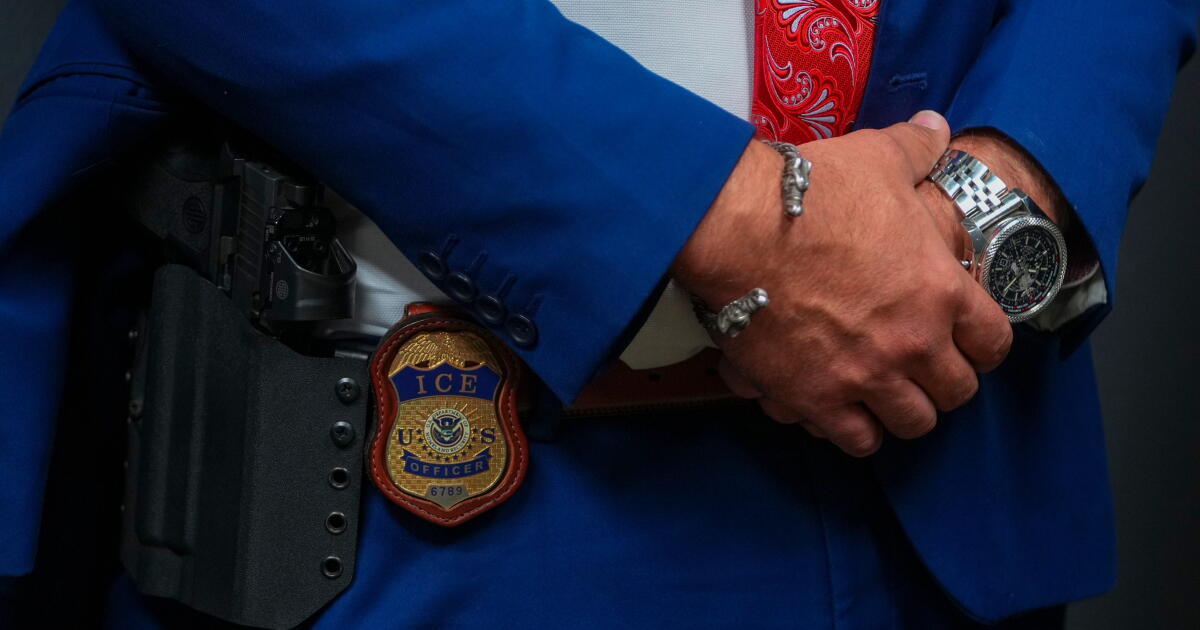
Le’s extraordinary remarks reflect the intense strain that has been placed on the federal court system since President Trump returned to the White House a year ago with a promise to carry out mass deportations. ICE officials have said the surge in Minnesota has become its largest-ever immigration operation since ramping up in early January.
Several prosecutors have left the U.S. attorney’s office in Minnesota amid frustration with the immigration enforcement surge and the Justice Department’s response to fatal shootings of two civilians by federal agents. Le was assigned at least 88 cases in less than a month, according to online court records.
Blackwell told Le that the volume of cases isn’t an excuse for disregarding court orders. He expressed concern that people arrested in immigration enforcement operations are routinely jailed for days after judges have ordered their release from custody.
“And I hear the concerns about all the energy that this is causing the DOJ to expend, but, with respect, some of it is of your own making by not complying with orders,” the judge told Le.
Le said she was working for the Department of Homeland Security as an ICE attorney in immigration court before she “stupidly” volunteered to work the detail in Minnesota. Le told the judge that she wasn’t properly trained for the assignment. She said she wanted to resign from the job but couldn’t get a replacement.
“Fixing a system, a broken system, I don’t have a magic button to do it. I don’t have the power or the voice to do it,” she said.
Le and spokespeople for DHS, ICE and the U.S. attorney’s office in Minnesota didn’t immediately respond to emails seeking comment.
Kira Kelley, an attorney who represented two petitioners at the hearing, said the flood of immigration petitions is necessary because of “so many people being detained without any semblance of a lawful basis.”
“And there’s no indication here that any new systems or bolded e-mails or any instructions to ICE are going to fix any of this,” she added.
Kunzelman and Richer write for the Associated Press.
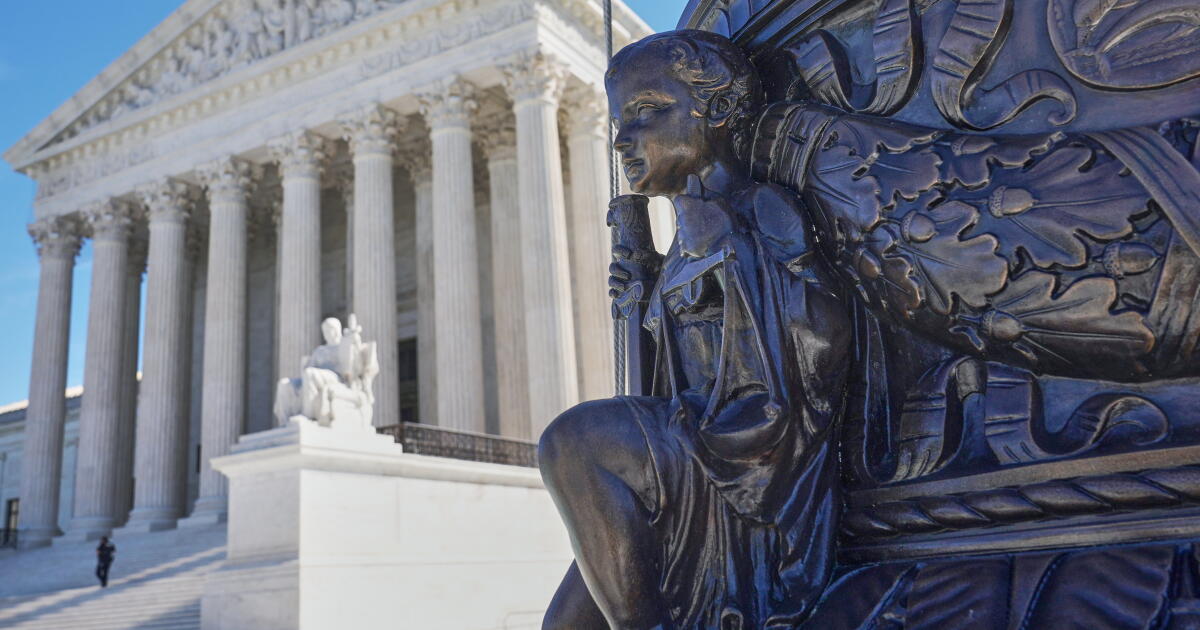
WASHINGTON — The Supreme Court ruled Wednesday that California this fall may use its new election map, which is expected to send five more Democrats to Congress.
With no dissents, the justices rejected emergency appeals from California Republicans and President Trump’s lawyers, who claimed the map was a racial gerrymander to benefit Latinos, not a partisan effort to bolster Democrats.
Trump’s lawyers supported the California Republicans and filed a Supreme Court brief asserting that “California’s recent redistricting is tainted by an unconstitutional racial gerrymander.”
They pointed to statements from Paul Mitchell, who led the effort to redraw the districts, that he hoped to “bolster” Latino representatives in the Central Valley.
In response, the state’s attorneys told the court the GOP claims defied the public’s understanding of the mid-decade redistricting and contradicted the facts regarding the racial and ethnic makeup of the districts.
Gov. Gavin Newsom proposed re-drawing the state’s 52 congressional districts to “fight back against Trump’s power grab in Texas.”
He said that if Texas was going to redraw its districts to benefit Republicans so as to keep control of the House of Representatives, California should do the same to benefit Democrats.
The voters approved the change in November.
While the new map has five more Democratic-leaning districts, the state’s attorneys said it did not increase the number with a Latino majority.
“Before Proposition 50, there were 16 Latino-majority districts. After Proposition 50, there is the same number. The average Latino share of the voting-age population also declined in those 16 districts,” they wrote.
It would be “strange for California to undertake a mid-decade restricting effort with the predominant purpose of benefiting Latino voters and then enact a new map that contains an identical number of Latino-majority districts,” they said.
Trump’s lawyers pointed to the 13th Congressional District in Merced County and said its lines were drawn to benefit Latinos.
The state’s attorneys said that too was incorrect. “The Latino voting-age population [in District 13] decreased after Proposition 50’s enactment,” they said.
Three judges in Los Angeles heard evidence from both sides and upheld the new map in a 2-1 decision.
“We find that the evidence of any racial motivation driving redistricting is exceptionally weak, while the evidence of partisan motivations is overwhelming,” said U.S. District Judges Josephine Staton and Wesley Hsu.
In the past, the Supreme Court has said the Constitution does not bar state lawmakers from drawing election districts for political or partisan reasons, but it does forbid doing so based on the race of the voters.
In December, the court ruled for Texas Republicans and overturned a 2-1 decision that had blocked the use of its new election map. The court’s conservatives agreed with Texas lawmakers who said they acted out of partisan motives, not with the aim of denying representation to Latino and Black voters.
“The impetus for the adoption of the Texas map (like the map subsequently adopted in California) was partisan advantage pure and simple,” Justice Samuel A. Alito Jr. wrote in a concurring opinion.
California’s lawyers quoted Alito in supporting their map.
Oakland civil rights attorney James Cook has been on the ground in Minnesota for months figuring out answers to these question as he goes.
A fast-talking Minneapolis native who still lives in the Twin Cities part time, Cook is one of a handful of attorneys who have dropped everything to aid (for free) those caught up in the federal crackdown — protesters, immigrants and detained citizens — too many of whom have found themselves facing deportation, arrest or even been disappeared, at least for a time.
Civil rights attorney James Cook in the rear view mirror as he makes phone calls in his car in Minneapolis.
(Caroline Yang/For The Times)
“They are leaders that are on the ground really helping people through this process,” Minnesota school board member Chauntyll Allen told me.
She’s one of the protesters arrested inside a local church, charged with conspiracy to deprive others of their constitutional rights by Pam Bondi’s politicized Department of Justice, which also Friday arrested journalist Don Lemon for the same incident. Cook is one of the lawyers now representing Allen.
“It shows us that the judicial arm, or some of the judicial arm of our democracy, is willing to step up and ensure that our democracy stands strong,” Allen said of Cook and others like him.
While it’s the images of clashes in the streets that captivate media and audiences, it’s lawyers like Cook who are fighting an existential battle in the background to preserve the rule of law in a place where it is increasing opaque, to put it gently.
The legal work behind detentions has largely been an overlooked battlefield that will likely rage on years after ICE departs the streets, leaving in its wake hundreds if not thousands of long-and-winding court cases.
Beyond the personal fates they will determine, the outcome of the civil litigation Cook and others are spearheading will likely force whatever transparency and accountability can be pulled from these chaotic and troubling times.
It’s time-consuming and complicated work vital not just to people, but history.
Or, as Cook puts it, “I’ll be 10 years older when all this s— resolves.”
Federal agents stand guard against a growing wall of protesters on Jan. 24 in Minneapolis, just hours after Alex Pretti was shot by federal agents.
(Caroline Yang/For The Times)
Cook told me this while on his way to the Bishop Henry Whipple Federal Building where some detainees are being held, maybe. It’s hard to find out. A few years ago, when immigration enforcement in Minnesota ramped up under the first Trump term, activists tried to get the name of the building changed, arguing Whipple, the first Protestant Episcopal bishop in the state, had been an advocate of the marginalized and wouldn’t want his name associated with what the feds were up to.
Cook is well aware that the guns carried by the federal agents are not for show, even without the Boss’ new ballad. Just a few days ago, one of the first times he drove his beat-up truck up to the gate, the federal guards at Whipple pointed their guns at him.
“I’m like, ‘Hey, I’m going to take my keys out of the ignition, drop them on the ground. So please don’t shoot,’” he said.
They lowered the guns, but Cook was scared, a feeling that doesn’t come easy.
Long before his law degree, when he was a punk-rock loving teen in the 1980s, fresh out of Southwest High, the public school not too far from Whipple, a former coach convinced him to give up college dreams and instead pursue a shot at making the first Muay Thai kickboxing team at the Olympics.
The martial art ended up not making it as an official Olympic sport, but the experience launched Cook into a professional boxing and kickboxing career that took him to competitions around the world, and taught him fear is not a reason to back down.
But, “Father Time is undefeated,” Cook said. “I got older and I started losing fights, and I was like, all right, time to get back to life.”
That eventually led him to obtaining a law degree in San Francisco, where after an intern stint as a public defender, he decided he wanted to be a trial attorney, fighting in court.
Civil rights attorney James Cook has been doing pro bono immigration work since the crackdown began in Minneapolis.
(Caroline Yang/For The Times)
He started cold-calling John Burris, another Bay Area lawyer who is an icon of civil rights and police misconduct cases. Burris, who has been called the “Godfather of Police Litigation,” was involved in the “Oakland Riders” case in 2000, when officers were discovered to have planted evidence. He also represented Rodney King, the family of Oscar Grant, and the family of Joseph Mann among many others.
But Burris, a boxing fan, didn’t respond to Cook’s calls until the young lawyer offered him free tickets to one of his fights, which he was still doing on the side.
“And then immediately I got a call back,” Cook said.
Burris said Cook’s history as a fighter intrigued him, but “I did say to James, you can’t be a fighter and lawyer. You can’t get punched in your head all the time.”
Cook did not take this advice.
Still, Burris said, “It was his persistence that I admired, because the type of work we’re involved in, you need people who are dedicated, who have some real commitment to the work, and he showed that kind of consistency and dedication.”
Cook’s been working with Burris more than 20 years now, but until recently, the labyrinth of the immigration system wasn’t his area of expertise. It’s been a crash course for him, he said, on the often arcane laws that govern who gets to stay in America and who doesn’t.
It’s also been a crash course on what a civil rights emergency looks like. Along with his work looking for locked-up immigrants, Cook spends a lot of time on the streets at protests, helping people understand their rights — and limitations — and seeing first hand what is happening.
“If you ever wondered what you would have done in Germany, now is the time,” he said. “Now is the time to do something. People are being interned.”
In the hours after Pretti was shot, Cook was at the location of the shooting, in the middle of the tear gas, offering legal help to anyone who needed it and bearing witness to conduct that will almost certainly face scrutiny one day, even if government leaders condone it now.
Law enforcement officers launch tear gas canisters as they work to push the crowd back and expand their perimeter in Minneapolis on Jan. 24.
(Caroline Yang/For The Times)
“The way the officers chase people down, protesters who were really just protesting lawfully and were beaten and pepper sprayed and gassed — all those are civil rights violations,” Burris said. “And so the law is the guardrails. So there has to be lawyers who are prepared to protect those guardrails and to stand as centurions, as I refer to us.”
Cook has tried to calm protesters, he told me, and prevent clashes. But people are mad, and resolute. His greatest fear is summer — when warm weather could bring even larger crowds if enforcement is still ongoing. He’s worried that the actions of the federal agents will spill over into anger at local cops enforcing local laws, leading to even more chaos.
“I’ve always supported cops as long as they do their job correctly,” Cook said.
For now, he’s taking it one day at a time, one case at a time, one name at a time.
Protesters raise an inverted American flag as law enforcement officers launch tear gas canisters in Minneapolis after Alex Pretti was killed by federal agents.
(Caroline Yang/For The Times)
Tuesday, Cook passed through the armed checkpoint at Whipple carrying a list of about seven people, folks who have been picked up by federal agents for one reason or another, or reasons unknown, and now cannot be located. They are not in the public online system that is meant to track detainees, and family and friends have not heard from them.
If he’s lucky, Cook will get information on one or two, that they are indeed inside, or maybe at a detention center in Texas, where many have been sent. But there will be more whose location remains unknown. He’ll make calls, fill out forms and come back tomorrow. And the tomorrow after that.
“This is what we do,” he said. “I’m always in it for the long run. I mean, you know, shoot, yeah, that’s kind of the way it works.”