lawsuit

Georgia case could determine if schools can get damages from transfers

Are top-drawer college football teams and their name, image and likeness collectives simply trying to protect themselves from willy-nilly transfers or are they bullying players to stay put with threats of lawsuits?

Adding liquidated damage fee clauses to NIL contracts became all the rage in 2025, a year that will be remembered as the first time players have been paid directly by schools. But some experts say such fees cannot be used as a cudgel to punish players that break a contract and transfer.

It’s no surprise that the issue has resulted in a lawsuit — make that two lawsuits — before the calendar flipped to 2026.

Less than a month after Georgia filed a lawsuit against defensive end Damon Wilson II to obtain $390,000 in damages because he transferred to Missouri, Wilson went to court himself, claiming Georgia is misusing the liquidated damages clause to “punish Wilson for entering the portal.”

Wilson’s countersuit in Boone County, Mo., says he was among a small group of Bulldog stars pressured into signing the contract Dec. 21, 2024. The lawsuit also claims that Wilson was misused as an elite pass rusher, that the Georgia defensive scheme called for him to drop back into pass coverage. Wilson, who will be a senior next fall, led Missouri with nine sacks this season.

Georgia paid Wilson $30,000, the first monthly installment of his $500,000 NIL deal, before he entered the transfer portal on Jan. 6, four days after Georgia lost to Notre Dame in a College Football Playoffs quarterfinal.

Bulldogs brass was not pleased. Wilson alleges in his lawsuit that Georgia dragged its feet in putting his name in the portal and spread misinformation to other schools about him and his contractual obligations.

“When the University of Georgia Athletic Association enters binding agreements with student-athletes, we honor our commitments and expect student-athletes to do the same,” Georgia spokesperson Steven Drummond said in a statement after the school filed the lawsuit.

Wilson’s countersuit turned that comment on its head, claiming it injured his reputation because it implies he was dishonest. He is seeking unspecified damages in addition to not owing the Bulldogs anything. Georgia’s lawsuit asked that the dispute be resolved through arbitration.

A liquidated damage fee is a predetermined amount of money written into a contract that one party pays the other for specific breaches. The fee is intended to provide a fair estimate of anticipated losses when actual damages are difficult to calculate, and cannot be used to punish one party for breaking the contract.

Wilson’s case could have far-reaching implications because it is the first that could determine whether schools can enforce liquidated damage clauses. While it could be understandable that schools want to protect themselves from players transferring soon after receiving NIL money, legal experts say liquidated damage fees might not be the proper way to do so.

Source link

California crypto firm accused of inflating Katy Perry NFTs and fraud

Four years ago, California startup Theta Labs’ cryptocurrency was soaring, and its future appeared bright when it landed a partnership with pop star Katy Perry.

The Bay Area company had built a marketplace for digital collectibles known as nonfungible tokens, or NFTs, and had teamed up with Perry to launch NFTs tied to her Las Vegas concert residency. Its THETA token jumped by more than 500% in early 2021, reaching a peak of more than $15, making it one of the world’s most valuable cryptocurrencies. Later in the year, the spotlight shone on the company when it announced the Perry partnership.

“I can’t wait to dive in with the Theta team on all the exciting and memorable creative pieces, so my fans can own a special moment of my residency,” Perry said in a June 2021 news release.

Today, like many cryptocurrencies, THETA is 95% off its 2021 peak. It took a hit this week after former executives accused it of manipulating markets to dupe consumers into buying its products. On Tuesday, it was trading at less than 30 cents.

Two former executives from Theta Labs sued the startup, alleging in separate lawsuits that the company and its chief executive, Mitch Liu, engaged in fraud and manipulated the cryptocurrency market for his benefit. Liu retaliated against them after the employees refused to engage in deceptive business practices and raised concerns, the lawsuits say.

Some of the alleged misconduct involved placing fake bids on Perry’s NFTs, engaging in token “pump and dump” schemes and using celebrity endorsements and “misleading” partnerships with high-profile companies such as Google to deceive the public, according to the December lawsuits filed in Los Angeles Superior Court.

Perry is not accused of any wrongdoing in the suit, and Theta denies the charges.

The lawsuits against Theta Labs are the latest controversy to rattle an industry beset by scandals.

Cryptocurrency exchange FTX collapsed, and its founder, Samuel Bankman-Fried, was sentenced to 25 years in prison in 2024 after being found guilty of multiple fraud charges. Binance founder and former Chief Executive Changpeng Zhao also got prison time after he pleaded guilty to violating money laundering laws, but President Trump pardoned him this year.

The U.S. Securities and Exchange Commission previously charged celebrities such as Kim Kardashian, Lindsay Lohan, Jake Paul and Ne-Yo for promoting crypto without disclosing they were paid to do so.

Theta Labs created a network that rewarded people with cryptocurrency for contributing spare bandwidth and computing power to enhance video streaming and lower content delivery costs. The company describes Theta Network as a “blockchain-powered decentralized cloud for AI, media and entertainment.” The network has two tokens: THETA, used to secure the network, and TFUEL, used to pay users for services and power operations.

The whistleblowers suing Theta Labs are Jerry Kowal, its former head of content, and Andrea Berry, previously the company’s head of business development.

“Liu used Theta Labs as his personal trading vehicle, perpetrating fraud, self-dealing, and market manipulation,” said Mark Mermelstein, Kowal’s attorney, in a statement. “His calculated ‘pump-and-dump’ schemes repeatedly wiped out employee and investor value. This suit is about demanding accountability and proving no one is above the law.”

Theta, Liu and its parent company, Sliver VR Technologies, deny the allegations and “intend to prove with evidence the fallacy of the stories being told in the lawsuits,” according to Kronenberger Rosenfeld, the law firm representing the defendants. The lawsuits are an attempt to paint the company in a negative light in hopes of securing a settlement, a lawyer for the firm said.

Kowal has sued his former employers before. In 2014, he accused Netflix of spreading false claims that he stole confidential information and Amazon of wrongful termination.

The latest lawsuits allege that Liu profited from buying and selling THETA tokens using insider knowledge about partnerships with celebrities, studios and others in the entertainment industry.

“Liu’s true motive in pursuing such partnerships was not to develop a sustainable content business but to generate publicity that could be used to artificially inflate token prices for Liu’s personal gain,” Kowal’s lawsuit says.

Kowal worked for Theta from 2020 to 2025.

In 2020, Liu traded and sold tokens knowing that the company would close a content licensing deal with MGM Studios, according to the lawsuit. After the deal’s announcement, THETA token’s market capitalization increased by more than $50 million in just 24 hours, the lawsuit says.

When NFTs started to take off in 2021, Kowal closed deals with high-profile partners such as Perry, Fremantle Media and Resorts World Las Vegas for the startup’s NFT marketplace.

As part of the deal with Perry, the singer received $8.5 million and additional warrants for the right to license her image and likeness for the NFTs.

To inflate the price and demand for these digital collectibles, Liu allegedly made bids on NFTs and directed employees to do the same. This led to people overpaying for the Perry NFTs.

Representatives for Perry didn’t immediately respond to a request for comment.

Multiple examples of alleged manipulation are outlined in the lawsuits. In one instance from 2022, the startup launched a new token called TDROP that employees also received as part of a bonus.

Liu gained control of 43% of the supply of the cryptocurrency, according to Kowal’s lawsuit. When the TDROP token reached a high, he then sold the token, and its price collapsed by more than 90% within months.

Berry’s lawsuit also alleges that Theta Labs announced “misleading” or fake partnerships with high-profile companies such as Google and entities including NASA to pump up the value of the THETA token. Theta paid for Google Cloud products but claimed it was a partner when it was a Google customer, according to the lawsuit.

Source link

California, other states sue to protect federal consumer agency

California joined 21 other states and the District of Columbia Monday in a lawsuit that seeks to prevent the federal Consumer Financial Protection Bureau from being defunded and closed by the Trump administration.

The legal action filed in U.S. District Court in Eugene, Ore. accuses Acting Director Russell Vought of trying to illegally withhold funds from the agency by unlawfully interpreting its funding statute. Also named as defendants are the agency itself and the Federal Reserve’s Board of Governors.

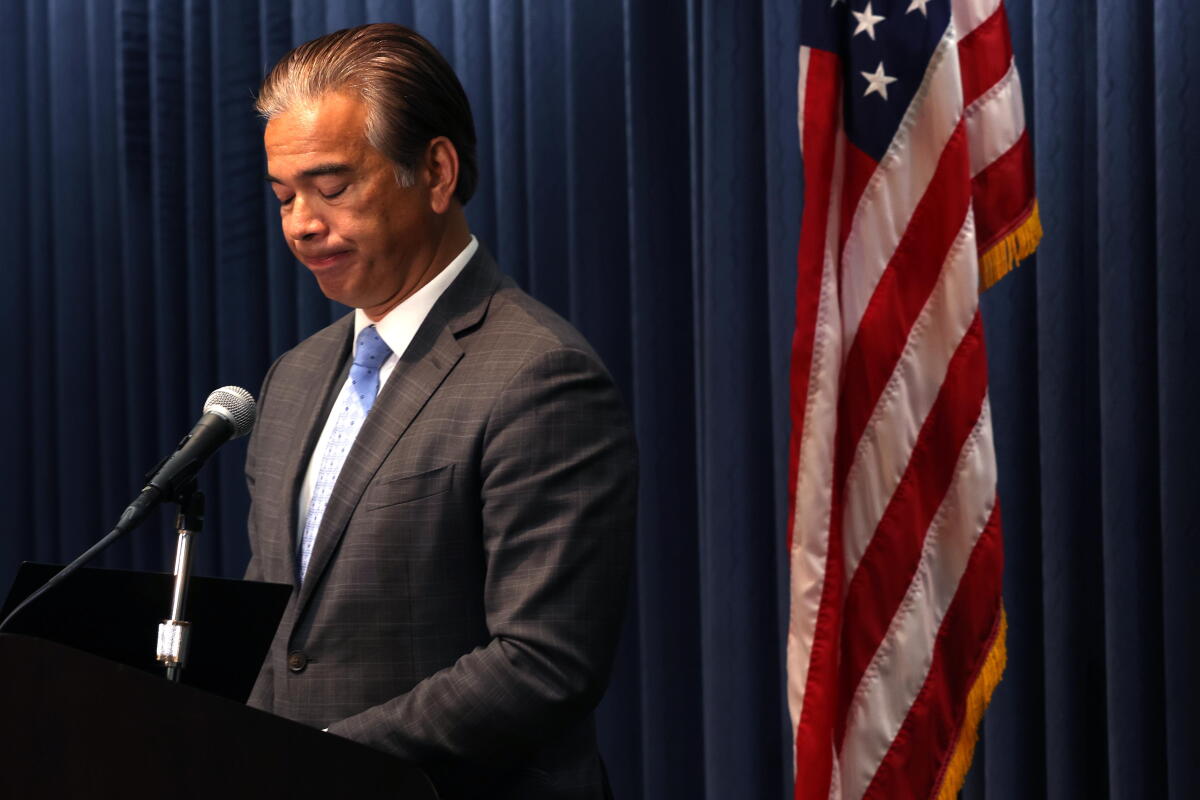
“For California, the CFPB has been an invaluable enforcement partner, working hand-in-hand with our office to protect pocketbooks and stop unfair business practices. But once again, the Trump administration is trying to weaken and ultimately dismantle the CFPB,” California Attorney General Rob Bonta said, in a press conference to announce the 41-page legal action.

The agency did not immediately respond to a request for comment.

Established by Congress in 2010 after the subprime mortgage abuses that gave rise to the financial crisis, the agency is funded by the Federal Reserve as a method of insulating it from political pressure.

The Dodd-Frank Act statute requires the agency’s director to petition for a reasonable amount of funding to carry out the CFPB’s duties from the “combined earnings” of the Federal Reserve System.

Prior to this year that was interpreted to mean the Federal Reserve’s gross revenue. But an opinion from the Department of Justice claims that should be interpreted to mean the Federal Reserve’s profits, of which it has none since it has been operating at a loss since 2022. The lawsuit alleges the interpretation is bogus.

“Defendant Russell T. Vought has worked tirelessly to terminate the CFPB’s operations by any means necessary — denying Plaintiffs access to CFPB resources to which they are statutorily entitled. In this action, Plaintiffs challenge Defendant Vought’s most recent effort to do so,” the federal lawsuit states.

The complaint alleges the agency will run out of cash by next month if the policy is not reversed. Bonta said he and other attorney generals have not decided whether they will seek a restraining order or temporary injunction to change the new funding policy.

Prior to the second Trump administraition, the CPFB boasted of returning nearly $21 billion to consumers nationwide through enforcement actions, including against Wells Fargo in San Francisco over a scandal involving the creation of accounts never sought by customers.

Other big cases have been brought against student loan servicer Navient for mishandling payments and other issues, as well as Toyota Motor Credit for charging higher interest rates to Black and Asian customers.

However, this year the agency has dropped notable cases. It terminated early a consent order reached with Citibank over allegations it discriminated against customers with Armenian surnames in Los Angeles County.

It also dropped a lawsuit against Zelle that accused Wells Fargo, JP Morgan Chase, Bank of America and other banks of rushing the payments app into service, leading to $870 million in fraud-related losses by users. The app denied the allegations.

Monday’s lawsuit also notes that the agency is critical for states to carry out their own consumer protection mission and its closure would deprive them of their statutorily guaranteed access to a database run by the CFPB that tracks millions of consumer complaints, as well as to other data.

Vought was a chief architect of Project 2025, a Heritage Foundation blueprint to reduce the size and power of the federal bureaucracy during a second Trump admistration. In February, he ordered the agency to stop nearly all its work and has been seeking to drastically downsize it since.

The lawsuit filed Monday is the latest legal effort to keep the agency in business.

A lawsuit filed in February by National Treasury Employees Union and consumer groups accuses the Trump administration and Vought of attempting to unconstitutionally abolish the agency, created by an act of Congress.

“It is deflating, and it is unfortunate that Congress is not defending the power of the purse,” said Colorado Attorney General Philip Weiser, during Monday’s press conference.

“At other times, Congress vigilantly safeguarded its authority, but because of political polarization and fear of criticizing this President, the Congress is not doing it,” he said.

Source link

School districts keep public in the dark about big sex abuse payouts

The Visalia Unified School District’s public board meeting in March was a festive and upbeat affair with a performance by a student chamber music group and a commendation for a high school cheer squad.

When the seven-member board went into closed session, the agenda was decidedly grimmer: Six former students were suing the district over sexual abuse they said they suffered decades earlier at the hands of a kindergarten teacher.

Out of public view, the board unanimously approved a $3-million settlement with provisions intended to keep the community in the dark forever.

Under the terms of the agreement, the women, their lawyers and families were prohibited from disclosing any aspect of the deal, including the amount they were paid.

“The Parties agree that they will respond to any inquiries they may receive from any third parties regarding the lawsuit by stating only that ‘the matter has been resolved’ without any further elaboration, discussion or disclosure,” the settlement instructed.

It was Visalia’s fifth secret settlement in the last three years, one of a flurry that districts are quietly approving statewide.

A Times investigation found that California’s public schools, faced with a historic surge of sex abuse lawsuits, are increasingly using nondisclosure agreements and other tactics that celebrities and big corporations rely upon to protect their reputation.

At least 25 districts have resolved suits or other claims in ways that hinder taxpayers from learning about the allegations, the cost of settling them or both, The Times found. These hidden settlements total more than $53 million. Legal experts say that these settlements may be in violation of state law, and that some should be investigated by the state attorney general.

While shielding the names and identifying details of sex abuse victims is widely accepted, courts have repeatedly said the public has a right to know allegations leveled against government employees and the money spent to compensate accusers.

Lawmakers in California have also largely banned the use of confidentiality provisions for settlements involving sexual assault and harassment, on the belief that transparency helps victims heal and leads to public accountability.

“There’s very significant problems with government agencies acting like private companies and requesting or insisting on these kinds of nondisclosure or non-disparagement clauses in settlement agreements,” said David Loy, legal director of the First Amendment Coalition, based in San Rafael. “Because at the end of the day, the government works for the people and the people have a very compelling interest in knowing about claims and allegations of misconduct.”

California’s school districts are now grappling with a deluge of sex abuse cases resulting from a 2019 law that changed the statute of limitations for childhood sexual abuse and created a new window — from 2020 to 2022 — in which anyone could file a lawsuit for past alleged abuse.

The Times identified more than 1,000 lawsuits against school districts filed since 2020, with more than 750 filed due to the new law. Some lawsuits allege abuse as far back as the 1950s. Most cases are still making their way through the courts, but more than 330 have settled for roughly $700 million, with $435 million paid out for claims related to the new law. The state projects that local education agencies will ultimately pay out between $2 billion and $3 billion once cases work through the court system. Much of this is taking place outside the public eye.

Sex abuse cases against California school districts

The Times reached out to more than 930 school districts in California and submitted public records requests seeking information about all sexual misconduct suits and claims filed against districts and copies of settlement agreements for all sexual misconduct suits since Jan. 1, 2020. Click on the expand icon to see details for settled cases including court documents and settlement agreements.


Case information is up to date as of March 1, 2025, although some cases may have since settled and are not reflected. Palos Verdes Peninsula Unified School District refused to turn over any records. Los Angeles Unified only provided a list of AB218 cases as of June 2024, and settlements executed through January 2025.
See something missing or incorrect? Contact matt.hamilton@latimes.com.

Gabrielle LaMarr LeMeeLOS ANGELES TIMES

In Visalia, confidentiality clauses negotiated by district lawyers acknowledged the public’s right to obtain the information — and then attempted to make sure they never would. Four agreements specifically barred former students receiving secret payouts from “directly or indirectly” encouraging others to file a request under the state Public Records Act — the method The Times used to review copies of agreements referenced in this story.

A spokesperson for Visalia Unified declined an interview request, and the school district did not answer written questions.

a Anaheim Union High School District sign

Anaheim Union High School District paid three men, who said they had been abused by a junior high teacher, $3.3 million in 2023.

(Robert Gauthier / Los Angeles Times)

Several districts attempted to prevent allegations from becoming public by paying off accusers before they filed lawsuits that would have detailed the claims of sex abuse for anyone to see.

Anaheim Union High School District paid a trio of men who said they had been abused by a junior high teacher $3.3 million in 2023 after their attorney sent the district a draft of a lawsuit he said he was prepared to file in Superior Court.

The terms of the payout two years ago required that the men and their lawyers “not seek publicity relating to the facts and circumstances giving rise” to their claims, and indeed, the settlements have not been previously reported.

John Bautista, a spokesperson for Anaheim Union, said in a statement that the district and its insurer settled the draft lawsuits after going through discovery in a related case and “did not want to incur additional expenses of filing a lawsuit.”

“Nothing in the agreement would prevent the claimant/plaintiff from speaking with the press concerning the facts of the case if the press contacted [them],” Bautista said.

At least one district paid an accuser before anything was put in writing, records show. Victor Elementary School District in the High Desert negotiated a $350,000 settlement with one former student after his lawyer relayed abuse allegations in a phone call. Asked by The Times for a document describing the claimed misconduct, a district official said no such records existed.

Some districts suggest the confidentiality restrictions are needed to avoid a “snowball effect” of further litigation.

San Diego Unified, hit by more than a dozen lawsuits over alleged sex abuse since 2020, has settled four for a total of $2.44 million, each with a confidentiality clause that, at a minimum, prevents the accuser or her lawyer from disclosing the settlement amount. One of the settlements blocks the accuser from discussing the matter with anyone except her lawyer or financial advisor or in response to a subpoena.

San Diego officials acknowledged that confidentiality is ultimately limited — the documents can be disclosed via public records requests — but the district proceeded with pursuing restrictions on the accusers and their representatives.

“The purpose is to keep plaintiffs’ lawyers from using these settlements as marketing tools,” said James Canning, a spokesman for San Diego Unified.

Connie Leyva gets high-fives from supporters

Former state Sen. Connie Leyva, seen here while in the Legislature in 2019, said she was taken aback by school districts using confidentiality provisions. “That sounds illegal,” Leyva said.

(Rich Pedroncelli / Associated Press)

Efforts to curb the use of secret settlements gained momentum in the 1980s, with growing public awareness of how confidentiality agreements had kept the public in the dark about environmental or health hazards, such as asbestos.

In 2016, California prohibited settlement agreements that block the disclosure of factual information about sexual abuse or any sex offense that could be prosecuted as a felony.

In the wake of the #MeToo movement, lawmakers in 2018 passed the STAND Act, which prohibits nondisclosure agreements in sexual harassment, discrimination and other sexual assault cases that don’t rise to felony prosecution. Three years later, the Silenced No More Act widened the prohibition on nondisclosure agreements to include any harassment case. The law still gives victims the option to protect their identity.

The lead sponsor of both bills, former state Sen. Connie Leyva, said she was taken aback by school districts using confidentiality provisions.

“That sounds illegal,” said Leyva, now the executive director of public radio and TV station KVCR. “We did not speak specifically about children or about schools, but it shouldn’t be happening.” She added, “Our bill was meant to apply to everyone everywhere.”

Several settlement agreements obtained by The Times included caveats by stating they were “confidential to the extent allowed by law,” or contained similar carve-outs. Experts said such provisos still have the effect of muzzling a victim’s speech and hindering public accountability.

“While it’s possible that these work-arounds don’t violate the letter of the STAND Act, they certainly violate its spirit,” said Nora Freeman Engstrom, a professor at Stanford Law School, who co-authored a study on the effect of the STAND Act in L.A. courts.

Southern Kern Unified School District agreed to pay $600,000 to a former student who alleged sex abuse and included an acknowledgment of the STAND Act in the agreement. Still, the settlement bars the former student, Corey Neufer, from “actively” publicizing the deal.

Reached by phone, Neufer said that although he deliberately chose to sue under his own name, rather than as John Doe, he was told that the confidentiality provision was standard and necessary for the final settlement.

“That was one of the stipulations — that I don’t speak about it or give any details,” said Neufer, who indicated the confidentiality was far broader than the text of his settlement suggests. “My lawyer instructed me to not talk about the case.”

The STAND Act allows for plaintiffs or claimants to put language in a settlement agreement that shields their identity and disclosure of any facts that could lead to their identity. However, if a public official or government agency — such as a school district — is part of the settlement, that language cannot be included.

Of the dozens of settlements reviewed by The Times, two specifically noted that the accuser wanted confidentiality to shield their identity.

Several had restrictions that appeared to exceed the STAND Act, such as a 2024 settlement for $787,500 paid by Ceres Unified to a custodian who said she was sexually harassed by a colleague. The signed agreement states that the settlement, its terms and any belief that the district or its employees engaged in unlawful behavior were all confidential. If asked, the custodian could only say, “The matter has been resolved.”

David Viss, an assistant superintendent at Ceres Unified, said in an email that the agreement complied with the law: “We believe the settlement agreement is consistent with the STAND Act.”

The overwhelming majority of sex abuse cases filed against school districts reach a settlement. For districts, a settlement can be more cost-effective than mounting a legal defense through a jury trial, and unlike a panel of jurors, a settlement provides a level of fiscal certainty. At times, the decision to settle is driven less by school board members than an insurance company or liability coverage provider.

John Manly, whose law firm specializes in childhood sex abuse, said school districts and their insurance providers frequently ask for confidentiality and non-disparagement clauses when negotiating a payout.

Lawyer John Manly at his law offices in Irvine

Lawyer John Manly, seen at his law offices in Irvine in 2023, has represented sex abuse survivors for more than 20 years. He says that confidentiality agreements “benefit one person, which is the perpetrator, and those who enable them.”

(Allen J. Schaben / Los Angeles Times)

“We get these requests all the time, and we decline,” Manly said. “Confidentiality agreements benefit one person, which is the perpetrator, and those who enable them.”

At Los Angeles Unified School District, scores of people accused former San Fernando High School wrestling coach Terry Gillard of abuse. In 2022, LAUSD agreed to pay 23 accusers a total of $52 million to settle molestation and abuse claims — a settlement negotiated by Manly’s law firm.

A year later, LAUSD agreed to pay three other women who alleged abuse by Gillard a total of $7.5 million.

Although those represented by Manly’s team did not have a confidentiality or non-disparagement agreement in their settlement, LAUSD sought an extensive confidentiality agreement for the payout to the three other women, curtailing discussion of the settlement and underlying abuse claims.

That settlement barred their lawyer from making any sort of statement — or encouraging others to make a statement — about the compensation deal, and barred comments that could “defame, disparage or in any way criticize” LAUSD, its employees and leaders.

Only the women, their lawyer, “immediate family” and “tax professional” could know about the settlement, according to the agreement.

“If asked about the status of this dispute, plaintiffs counsel may only state, ‘they have voluntarily and fully resolved their claims against the Los Angeles Unified School District,’ or words to that effect,” declares the settlement agreement.

The lawyer for the women, Anthony DeMarco, did not respond to messages seeking comment.

Manly said the State Bar of California should investigate lawyers on both sides who agree to language that they know conflicts with state law. And he called on Atty. Gen. Rob Bonta to investigate school districts that continue to lock victims into such restrictive agreements.

“It’s wrong. It’s bad for the community and it’s bad for the victim. The lawyers that do it — defense and plaintiff — should be ashamed of themselves.”

L.A. Unified, which has added confidentiality provisions in at least seven settlements since 2020, defended its practices as a way to amicably resolve litigation, according to a statement from a spokesperson.

“These settlement agreements keep the settlement details, such as the amount, confidential. They do not prohibit the disclosure of the facts behind the claims,” the LAUSD spokesperson said.

State Attorney General Rob Bonta stands before a mic

Some legal experts want Atty. Gen. Rob Bonta to investigate school districts that continue to lock victims into restrictive nondisclosure agreements.

(Genaro Molina / Los Angeles Times)

While several districts use secrecy provisions in settlement agreements to hide the details of sex abuse cases, others, like Visalia Unified, also are able to keep payouts quiet by approving them in closed session at regular school board meetings.

In 2021, the president of the board of Wasco Union High School District received a letter from a lawyer based in Iowa who represented a former Wasco student. The lawyer said his client had been sexually abused nearly a decade earlier by her former coach and teacher, and accused her then-principal, Kevin Tallon, among others, of not taking appropriate steps when confronted with evidence of abuse.

Tallon, now Wasco’s superintendent, was named as a defendant in the draft lawsuit, and the lawyer included a copy. He gave the district 14 business days to respond.

“If I do not hear back from you, I will proceed with the lawsuit,” wrote the lawyer, Thomas Burke.

The letter touched off a negotiation that culminated at the Wasco school board’s final meeting of 2021. The meeting’s agenda for the closed session was circumspect: “Conference with Legal Counsel — Settlement Agreement.” But behind closed doors, the board voted 5 to 0 to approve a settlement, according to meeting minutes, ensuring that there would probably never be a public airing of the allegations against the teacher or superintendent. The meeting minutes reflect only that a settlement was approved — not the amount or nature of the abuse accusations. The district paid $475,000 in the settlement, a sum that The Times obtained via records request.

Tallon, the superintendent who was named in the draft lawsuit, declined an interview but provided written responses to questions. He said the district and its staff “fulfilled its duties diligently and with integrity,” and said the settlement was approved in a way that adhered to the Brown Act, the state’s open meeting law.

“The settlement was not intended to conceal allegations; it was meant to responsibly limit risk and bring closure to a sensitive situation,” Tallon said in the statement.

Legal experts agreed that Wasco’s school board complied with the Brown Act — thereby exposing that law’s limits and potential loopholes. Since the threat of litigation did not result in a filed case or formal claim, the board could treat it as “anticipated litigation” and discuss it in closed session, away from the public. And since settlement offers — like any contract negotiation — are not final until agreed upon, they too can be approved in closed session, away from the public.

Loy, the legal director of the First Amendment Coalition, said the Brown Act could be amended to proactively require public agencies to ultimately disclose the details and amounts of settlements. School districts, he added, could also opt to be more open, without being compelled to by state lawmakers.

“Agencies owe a duty to the public to be more proactive and more transparent, even than the bare minimum letter of the law might allow them to get away with,” Loy said.

The lack of transparency also coincides with a crisis in local news, which has resulted in far less coverage of city halls, courthouses and school boards from the Imperial Valley to the shores of Eureka.

At one time, newspapers big and small had reporters at school board meetings who probably would have noticed settlements on the agenda and submitted records requests to reveal them.

With local media absent, agencies have quietly approved settlements in closed session, with no watchdog to suss out the underlying facts.

“Diligent people or reporters know to do that: Please give me copies of every settlement approved this week or this month,” said Loy, the First Amendment Coalition’s legal director. “But that requires an extra step.”

Source link

Riley Keough allegedly donated eggs to John Travolta and Kelly Preston

New documents in a lawsuit against Priscilla Presley’s son include claims that Elvis Presley’s granddaughter Riley Keough is the biological parent of John Travolta and the late Kelly Preston’s youngest child, Benjamin.

Priscilla Presley’s former business partner Brigitte Kruse and associate Kevin Fialko filed an amended complaint against Navarone Garcia in Los Angeles County Superior Court on Tuesday. Included in the allegations are claims that the “Daisy Jones & the Six” actor, daughter of the late Lisa Marie Presley, gave her eggs to Travolta and Preston in exchange for “an old Jaguar” and “between $10,000 – $20,000.”

According to the complaint, “the entire Presley family clamored for control of the estate and for pay-outs” immediately after Lisa Marie Presley’s death in 2023. Among those who allegedly approached Kruse was Lisa Marie’s ex-husband Michael Lockwood, with whom she shared twin daughters Harper and Finley Lockwood. Kruse and Fialko were allegedly tasked with acting as negotiators and mediators amid the “family chaos.”

The document details how Lockwood said Travolta and Preston had “previously used Lisa Marie’s eggs to get pregnant” because Preston “had been unable to bear her own children.” It was unclear whether Presley’s eggs produced a child. Preston died in 2020 at age 57 after a two-year battle with breast cancer.

Lockwood also allegedly said the couple had approached the Presley family again “in or around 2010” but Travolta “no longer wanted to use Lisa Marie’s eggs because they did not want ‘eggs with heroin’ on them.” According to the filing, a deal was “orchestrated” in which “Riley Keough gave her eggs to Travolta so that Kelly could give birth to their son, Ben Travolta” and “Riley was given an old Jaguar and paid between $10,000 – $20,000 for the deal.”

Included in the filing is an image of a handwritten note that features the words “Kelly Preston carried baby,” “medical bills paid” and “old Jaguar 1990s-ish,” as well as a screenshot of messages presumably exchanged with Priscilla Presley that describe Ben Travolta as her “beautiful great-grandson.”

Lockwood further allegedly claimed that “the entire arrangement required a ‘sign off’ from the Church of Scientology, which heavily involved Priscilla’s oversight.” According to the document, Lockwood “demanded” the information be used “to orchestrate a settlement for him and his daughters,” whom he said were “financially destitute.”

Kruse and Fialko’s amended complaint against Garcia alleges that he “threw a tantrum, demanding [they] keep Riley’s and Travolta’s son out of the press, since Priscilla [had] promised him that he would be the only male musician in the family and would now be the ‘king.’” The document also claims “Priscilla’s love for Navarone was, and always has been, incestuous.”

The filing is the latest in the legal feud involving Presley and her former business partner. Presley previously filed a lawsuit against Kruse and her associates alleging fraud and elder abuse. Kruse and Fialko, meanwhile, are suing Presley for fraud and breach of contract.

“After losing motion after motion in this case, and unsuccessfully seeking to have Presley’s counsel of record, Marty Singer, disqualified from representing her in this matter, Brigitte Kruse, Kevin Fialko, and their co-conspirators have demonstrated that there is no bar too low, no ethical line that they are unwilling to cross in an effort to cause further pain to Priscilla Presley and her family,” Presley’s attorneys Singer and Wayne Harman said in a statement to TMZ.

“In a completely improper effort to exert undue pressure on Presley to retract her legitimate, truthful claims, Kruse and her co-conspirators have also sued Presley’s son, cousin, and assistant,” the statement continued. “These recent outrageous allegations have absolutely nothing to do with the claims in this case. The conduct of Kruse, Fialko, and their new lawyers (they are on their fourth set of attorneys) is shameful, and it absolutely will be addressed in court.”

Representatives for Keough did not respond immediately Thursday to The Times’ request for comment.

Source link

NASCAR settles antitrust lawsuit involving Michael Jordan

The antitrust lawsuit against NASCAR by two of its racing teams — including one co-owned by NBA legend Michael Jordan — was settled Thursday, with the motorsports behemoth agreeing to grant all of its teams the permanent charters they had been seeking.

The lawsuit was filed Oct. 2, 2024, in the Western District of North Carolina by 23XI Racing — which is owned by Jordan, three-time Daytona 500 winner Denny Hamlin and Jordan’s longtime business advisor Curtis Polk — and Front Row Motorsports, which is owned by entrepreneur Bob Jenkins.

The sides had failed in previous attempts to settle leading up to the trial, which was entering its ninth day before a surprise joint announcement by NASCAR and the two racing teams. The teams had referred to the organization and the France family, which has privately owned NASCAR since its start in 1948, as “monopolistic bullies” in their lawsuit.

“NASCAR, 23XI Racing and Front Row Motorsports are pleased to announce a mutually agreed-upon resolution that delivers long-term stability and creates the conditions for meaningful growth for all teams in a more competitive environment,” the parties said in a statement.

“This resolution reflects our shared commitment to maintaining a fair and equitable framework for long-term participation in America’s premier motorsport, one that supports teams, partners and stakeholders while ensuring fans enjoy uninterrupted access to the best racing in the world. The agreement allows all parties to move forward with a unified focus on advancing stock car racing and delivering exceptional competition for our fans.”

The lawsuit had sought “permanent injunctive relief to end NASCAR’s exclusionary practices and restore competition in the relevant market,” as well as a large sum to cover legal fees and financial losses.

While the terms of the settlement were not revealed, the parties said in their statement that NASCAR had agreed to “issue an amendment to existing charter holders detailing the updated terms for signature, which will include a form of ‘evergreen’ charters, subject to mutual agreement.”

23XI and Front Row were the only two racing teams that did not sign new charter agreements with NASCAR in September 2024. They will receive their combined six charters back for 2026.

Jordan, Hamlin, Polk and Jenkins stood with NASCAR chairman Jim France, who was a co-defendent in the lawsuit, on the courthouse steps Thursday afternoon as the parties tried to put the bitterness of the case behind them.

“Like two competitors, obviously we tried to get as much done in each other’s favor,” Jordan told reporters. “I’ve said this from Day 1: The only way this sport is going to grow is we have to find some synergy between the two entities. I think we’ve gotten to that point, unfortunately it took 16 months to get here, but I think level heads have gotten us to this point where we can actually work together and grow this sport.”

France added that now “we can get back to focusing on what we really love, and that’s racing, and we spent a lot of time not really focused on that so much as we needed to be. I feel like we made a very good decision here together and we have a big opportunity to continue growing the sport.”

The Associated Press contributed to this report.

Source link