lawmakers

Lawmakers return to Washington facing Venezuela concerns, shutdown threat

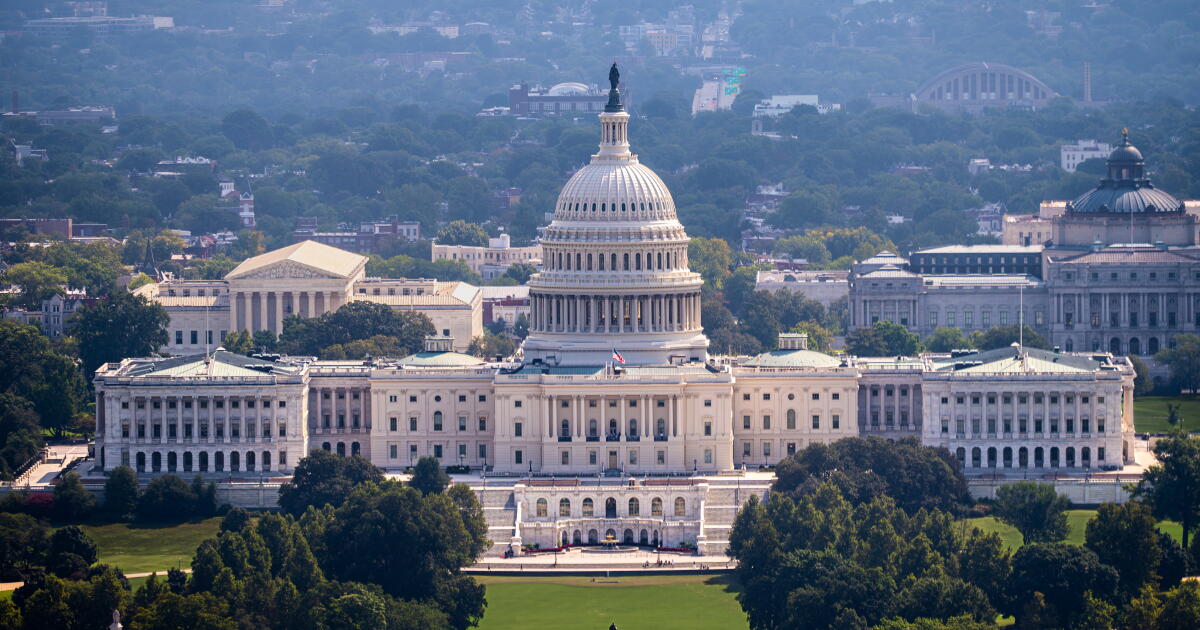
Lawmakers are returning to Washington this week confronting the fallout from the stunning capture of Venezuelan President Nicolás Maduro — and familiar complaints about the Trump administration deciding to bypass Congress on military operations that have led to this moment.

Democratic leaders are demanding the administration immediately brief Congress. Republican leaders indicated over the weekend those plans are being scheduled, but some lawmakers expressed frustration Sunday that the details have been slow to arrive.

President Trump told the nation Saturday that the United States intends to “run” Venezuela and take control over the country’s oil operations now that Maduro has been captured and brought to New York to stand trial in a criminal case centered on narco-terrorism charges.

The administration did not brief Congress ahead of the actions, leaving Democrats and some Republicans expressing public frustration with the decision to sideline Congress.

“Congress should have been informed about the operation earlier and needs to be involved as this situation evolves,” Sen. Susan Collins (R-Maine) said in a social media post Saturday.

Appearing on the Sunday news shows, Senate Minority Leader Chuck Schumer and House Minority Leader Hakeem Jeffries, both of New York, ticked through a growing list of unknowns — and laid out plans for their party to try and reassert Congress’ authority over acts of war.

“The problem here is that there are so many unanswered questions,” Schumer said on ABC’s “This Week.” “How long do they intend to be there? How many troops do we need after one day? After one week? After one year? How much is it going to cost and what are the boundaries?”

Jeffries told NBC’s “Meet the Press” that he was worried about Trump running Venezuela, saying he has “done a terrible job running the United States of America” and should be focused on the job at home.

In the coming days, Jeffries said Democrats will prioritize legislative action to try and put a check on the administration, “to ensure that no further military steps occur absent explicit congressional approval.”

As discussions over Venezuela loom, lawmakers also face major decisions on how to address rising costs of healthcare, prevent another government shutdown and deal with the Trump administration’s handling of the Epstein files.

Much of the unfinished business reflects a Congress that opted to punt some of its toughest and most politically divisive decisions into the new year, a move that could slow negotiations as lawmakers may be reluctant to give the other side high-profile policy wins in the lead-up to the 2026 midterm elections.

First and foremost, Congress faces the monumental task of averting yet another government shutdown — just two months after the longest shutdown in U.S. history ended. Lawmakers have until Jan. 30 to pass spending bills needed to keep the federal government open. Both chambers are scheduled to be in session for three weeks before the shutdown deadline — with the House slated to be out of session the week immediately before.

Lawmakers were able to resolve key funding disputes late last year, including funding for Supplemental Nutrition Assistance Program benefits, also known as food stamps, and other government programs. But disagreements over healthcare spending remain a major sticking point in budget negotiations, intensified now that millions of Americans are facing higher healthcare costs after lawmakers allowed Affordable Care Act tax credits to expire on Thursday.

“We can still find a solution to this,” said Rep. Kevin Kiley (R-Rocklin), who has proposed legislation to extend the tax credits for two years. “We need to come up with ways to make people whole. That needs to be a top priority as soon as we get back.”

Despite that urgency, Republican efforts to be the author of broad healthcare reforms have gotten little traction.

Underscoring the political pressure over the issue, four moderate House Republicans late last year defied party leadership and joined House Democrats to force a floor vote on a three-year extension of the subsidies. That vote is expected to take place in the coming weeks. Even if the House effort succeeds, its prospects remain dim in the Senate, where Republicans last month blocked a three-year extension.

Meanwhile, President Trump is proposing giving more money directly to people for their healthcare, rather than to insurance companies. A White House official said the administration is also pursuing reforms to lower the cost of prescription drugs.

Trump said last month that he plans to summon a group of healthcare executives to Washington early in the year to pressure them to lower costs.

“I’m going to call in the insurance companies that are making so much money, and they have to make less, a lot less,” Trump said during an Oval Office announcement. “I’m going to see if they get their price down, to put it very bluntly. And I think that is a very big statement.”

There is an expectation that Trump’s increasing hostility to insurance companies will play a role in any Republican healthcare reform proposal. If Congress does not act, the president is expected to leverage the “bully pulpit” to pressure drug and insurance companies to lower healthcare prices for consumers through executive action, said Nick Iarossi, a Trump fundraiser.

“The president is locked in on the affordability message and I believe anything he can accomplish unilaterally without Congress he will do to provide relief to consumers,” Iarossi said.

While lawmakers negotiate government funding and healthcare policy, the continuing Epstein saga is expected to take up significant bandwidth.

Democrats and a few Republicans have been unhappy with the Department of Justice’s decision to heavily redact or withhold documents from a legally mandated release of files related to its investigation of Jeffrey Epstein, a convicted sex offender who died in a Manhattan jail awaiting trial on sex trafficking charges.

Some are weighing options for holding Atty. Gen. Pam Bondi accountable.

Rep. Ro Khanna (D-Fremont), who co-sponsored the law that mandated the release with Rep. Thomas Massie (R-Ky.), said he and Massie will bring contempt charges against Bondi in an attempt to force her to comply with the law.

“The survivors and the public demand transparency and justice,” Khanna said in a statement.

Under a law passed by Congress and signed by Trump, the Justice Department was required to release all Epstein files by Dec. 19, and released about 100,000 pages on that day. In the days that followed, the Justice Department said more than 5.2 million documents have been discovered and need to be reviewed.

“We have lawyers working around the clock to review and make the legally required redactions to protect victims, and we will release the documents as soon as possible,” the Justice Department said in a social media post on Dec. 24. “Due to the mass volume of material, this process may take a few more weeks.”

Rep. Robert Garcia, the top Democrat on the House Oversight Committee, told MS NOW last week that pressure to address the matter will come to a head in the new year when lawmakers are back at work.

“When we get back to Congress here in this next week, we’re going to find out really quick if Republicans are serious about actually putting away and taking on pedophiles and some of the worst people and traffickers in modern history, or if they’re going to bend the knee to Donald Trump,” said Garcia, of Long Beach.

Source link

Lawmakers weigh impeachment articles for Bondi over Epstein file omissions

Lawmakers unhappy with Justice Department decisions to heavily redact or withhold documents from a legally mandated release of files related to Jeffrey Epstein threatened Saturday to launch impeachment proceedings against those responsible, including Pam Bondi, the U.S. attorney general.

Democrats and Republicans alike criticized the omissions, while Democrats also accused the Justice Department of intentionally scrubbing the release of at least one image of President Trump, with Senate Minority Leader Chuck Schumer (D-N.Y.) suggesting it could portend “one of the biggest coverups in American history.”

Trump administration officials have said the release fully complied with the law, and that its redactions were crafted only to protect victims of Epstein, a disgraced financier and convicted sex offender accused of abusing hundreds of women and girls before his death in 2019.

Rep. Ro Khanna (D-Fremont), an author of the Epstein Files Transparency Act, which required the release of the investigative trove, blasted Bondi in a social media video, accusing her of denying the existence of many of the records for months, only to push out “an incomplete release with too many redactions” in response to — and in violation of — the new law.

Khanna said he and the bill’s co-sponsor, Rep. Thomas Massie (R-Ky.), were “exploring all options” for responding and forcing more disclosures, including by pursuing “the impeachment of people at Justice,” asking courts to hold officials blocking the release in contempt, and “referring for prosecution those who are obstructing justice.”

“We will work with the survivors to demand the full release of these files,” Khanna said.

He later added in a CNN interview that he and Massie were drafting articles of impeachment against Bondi, though they had not decided whether to bring them forward.

Massie, in his own social media post, said Khanna was correct in rejecting the Friday release as insufficient, saying it “grossly fails to comply with both the spirit and the letter of the law.”

The lawmakers’ view that the Justice Department’s document dump failed to comply with the law echoed similar complaints across the political spectrum Saturday, as the full scope of redactions and other withholdings came into focus.

The frustration had already sharply escalated late Friday, after Fox News Digital reported that the names and identifiers of not just victims but of “politically exposed individuals and government officials” had been redacted from the records — which would violate the law, and which Justice Department officials denied.

Among the critics was Rep. Marjorie Taylor Greene (R-Ga.), who cited the Fox reporting in an exasperated post late Friday to X.

“The whole point was NOT to protect the ‘politically exposed individuals and government officials.’ That’s exactly what MAGA has always wanted, that’s what drain the swamp actually means. It means expose them all, the rich powerful elites who are corrupt and commit crimes, NOT redact their names and protect them,” Greene wrote.

Senior Justice Department officials later called in to Fox News to dispute the report. But the removal of a file published in the Friday evening release, capturing a desk in Epstein’s home with a drawer filled of photos of Trump, reinforced bipartisan concerns that references to the president had been illegally withheld.

In a release of documents from the Epstein family estate by the House Oversight Committee this fall, Trump’s name was featured over 1,000 times — more than any other public figure.

“If they’re taking this down, just imagine how much more they’re trying to hide,” Schumer wrote on X. “This could be one of the biggest coverups in American history.”

Several victims also said the release was insufficient. “It’s really kind of another slap in the face,” Alicia Arden, who went to the police to report that Epstein had abused her in 1997, told CNN. “I wanted all the files to come out, like they said that they were going to.”

Trump, who signed the act into law after having worked to block it from getting a vote, was conspicuously quiet on the matter. In a long speech in North Carolina on Friday night, he did not mention it.

However, White House officials and Justice Department leaders strongly pushed back against the notion that the release was somehow incomplete or out of compliance with the law, or that the names of politicians had been redacted.

“The only redactions being applied to the documents are those required by law — full stop,” said Deputy Atty. Gen. Todd Blanche. “Consistent with the statute and applicable laws, we are not redacting the names of individuals or politicians unless they are a victim.”

Other Republicans defended the administration. Rep. James Comer (R-Ky.), chair of the House Oversight Committee, said the administration “is delivering unprecedented transparency in the Epstein case and will continue releasing documents.”

Epstein died in a Manhattan jail awaiting trial on sex trafficking charges. He’d been convicted in 2008 of procuring a child for prostitution in Florida, but served only 13 months in custody in what many condemned as a sweetheart plea deal for a well-connected and rich defendant.

Epstein’s crimes have attracted massive attention, including among many within Trump’s own political base, in part because of unanswered questions surrounding which of his many powerful friends may have also been implicated in crimes against children. Some of those questions have swirled around Trump, who was friends with Epstein for years before the two had what the president has described as a falling out.

Evidence has emerged in recent months that suggests Trump may have had knowledge of Epstein’s crimes during their friendship.

Epstein wrote in a 2019 email, released by the House Oversight Committee, that Trump “knew about the girls.” In a 2011 email to Ghislaine Maxwell, who was convicted of conspiring with Epstein to help him sexually abuse girls, Epstein wrote that “the dog that hasn’t barked is trump. [Victim] spent hours at my house with him … he has never once been mentioned.”

Trump has ardently denied any wrongdoing.

The records released Friday contained few if any major new revelations, but did include a complaint against Epstein filed with the FBI back in 1996 — which the FBI did little with, substantiating longstanding fears among Epstein’s victims that his crimes could have been stopped years earlier.

Sen. Adam Schiff (D-Calif.), one of the president’s most consistent critics, wrote on X that Bondi should appear before the Senate Judiciary Committee to explain under oath the extensive redactions and omissions, which he called a “willful violation of the law.”

“The Trump Justice Department has had months to keep their promise to release all of the Epstein Files,” Schiff wrote. “Epstein’s survivors and the American people need answers now.”

Source link

Jack Smith tells lawmakers his team developed ‘proof beyond a reasonable doubt’ against Trump

Former Justice Department special counsel Jack Smith told lawmakers in a closed-door interview on Wednesday that his team of investigators “developed proof beyond a reasonable doubt” that President Donald Trump had criminally conspired to overturn the results of the 2020 election, according to portions of his opening statement obtained by The Associated Press.

He also said investigators had accrued “powerful evidence” that Trump broke the law by hoarding classified documents from his first term as president at his Mar-a-Lago estate in Palm Beach, Florida, and by obstructing government efforts to recover the records.

“I made my decisions in the investigation without regard to President Trump’s political association, activities, beliefs, or candidacy in the 2024 election,” Smith said. “We took actions based on what the facts and the law required — the very lesson I learned early in my career as a prosecutor.”

He said that if asked whether he would “prosecute a former president based on the same facts today, I would do so regardless of whether the president was a Republican or Democrat.”

The private deposition before the House Judiciary Committee gives Smith his first chance to face questions, albeit behind closed doors, about a pair of investigations into Trump that resulted in since-abandoned criminal charges between the Republican president’s first and second terms in office. Smith was subpoenaed earlier this month to provide both testimony and documents as part of a Republican investigation into the Trump probes during the Biden administration.

The former special counsel cooperated with the congressional demand despite having volunteered more than a month earlier to answer questions publicly before the committee, an overture his lawyers say was rebuffed by Republicans.

“Testifying before this committee, Jack is showing tremendous courage in light of the remarkable and unprecedented retribution campaign against him by this administration and this White House,” one of Smith’s lawyers, Lanny Breuer, told reporters Wednesday. “Let’s be clear: Jack Smith is a career prosecutor, who conducted this investigation based on the facts and based on the law and nothing more.”

Trump told reporters at the White House that he supported the idea of an open hearing, saying: “I’d rather see him testify publicly. There’s no way he can answer the questions.”

Smith is expected to discuss both of his investigations of Trump but will not answer questions that call for grand jury materials, which are restricted by law, according to a person familiar with the investigation who insisted on anonymity to discuss the interview. He is also expected to correct what he regards as mischaracterizations from Republicans about his work, including about his team’s use of cellphone records belonging to certain GOP lawmakers, the person said.

Smith was appointed in 2022 to oversee the Justice Department investigations into Trump’s efforts to overturn his 2020 presidential election loss to Democrat Joe Biden and his hoarding of classified documents at Mar-a-Lago. Smith’s team filed charges in both investigations.

Smith abandoned the cases after Trump was elected to the White House again last year, citing Justice Department legal opinions that say a sitting president cannot be indicted.

Republicans who control Congress have sought interviews with at least some individual members of Smith’s team.

In recent weeks they have seized on revelations that the team, as part of its investigation, had analyzed the phone records of select GOP lawmakers from on and around Jan. 6, 2021, when pro-Trump rioters stormed the U.S. Capitol to try to halt the certification of Trump’s election loss to Biden. The phone records reviewed by prosecutors included details only about the incoming and outgoing phone numbers and the length of the call but not the contents of the conversation.

Tucker and Mascaro write for the Associated Press.

Source link