Law and Crime

Accused D.C. pipe-bomber enters not guilty plea in federal court

Accused Capitol riot pipe-bomber Brian Cole Jr. in federal court on Friday pleaded not guilty to charges accusing him of planting two pipe bombs outside of respective political party headquarters in Washington, D.C., on January 5, 2021. File Photo by Bonnie Cash/UPI | License Photo

Jan. 9 (UPI) — Brian Cole Jr. pleaded not guilty Friday to federal charges accusing him of placing pipe bombs outside political party headquarters ahead of the Jan. 6, 2021, Capitol protest.

Cole entered his plea during an arraignment hearing in the U.S. District Court for the District of Columbia. He faces charges of interstate transportation of explosives, malicious attempt to use explosives and related federal charges.

Cole, 30, allegedly placed a pipe bomb near the entrances of the Republican National Committee and Democratic National Committee headquarters in Washington, D.C., on the night of Jan. 5, 2021, but neither exploded.

Federal prosecutors said he admitted to placing the explosive devices and that he hoped they would explode and generate news coverage.

Cole said the 2020 election was stolen from voters and that he blamed both political parties because they are the ones in charge of the nation’s politics.

Prosecutors said Cole bought materials to make the bombs over several months ahead of the Capitol protest, and investigators used cellular tower data, credit card records and a license plate reader to identify him.

His attorney said Cole has been peaceful, was diagnosed with autism and the pipe bombs were incapable of exploding, CNN reported.

Cole is a resident of Woodbridge, Va., where he lives with other family members inside his mother’s house that is about 30 miles from the capital.

He was employed by a bail bond business and was arrested at his mother’s home on Dec. 4.

A federal grand jury indicted him on the charges for which he was arraigned on Friday.

He has another court hearing scheduled on Jan. 28 to determine if he should remain in detention or be allowed to post bail and be released from custody while the case is argued in court.

Source link

2 dead, 6 wounded in a shooting outside Salt Lake City church

Jan. 8 (UPI) — Salt Lake City police are searching early Thursday for suspects after two people were killed and six others wounded in a shooting outside a church where a funeral was taking place Wednesday evening.

No suspects are in custody, and authorities said they are following leads and won’t stop until those responsible have been apprehended.

“Our officers are working hard, and we will work until we bring these individuals to justice,” Salt Lake City Police Chief Brian Redd told reporters during a press conference.

“We are confident we will bring these individuals to justice.”

Authorities said that the shooting occurred outside The Church of Jesus Christ of Latter-day Saints following an altercation in the parking lot on Redwood Road.

Police are investigating if there were more than one shooter involved, and Redd said they do not believe that the shooting targeted the church.

“It’s probably too early to say it’s gang related, but yes, our gang detectives are here and we are definitely looking at that angle,” he said.

Of the wounded, three were in critical condition, according to a Salt Lake City Police Department statement on X.

Dozens of people were attending the funeral when the shots rang out, and they are currently being interviewed, Redd said.

Salt Lake City Mayor Erin Mendenhall said the shooting should never have happened.

“This should never have happened at a place of worship. It should not have happened at a celebration of life that was occurring inside of the church tonight,” she said.

“Our condolences continue to grow and we know that this impacts not only those victims and their families, the community that was at the church, but the entire community here in Salt Lake City on the West Side.

A spokesman for The Church of Jesus Christ of Latter-day Saints said in a statement to local media that they were aware of the shooting and were cooperating with law enforcement.

According to The Gun Violence Archive, which tallies gun violence in the United States, the incident was the 9th mass shooting to take place in the country so far this year.

There were 406 mass shootings, which involved four or more victims, for all of 2025.


Source link

Judge orders Lindsey Halligan to explain use of U.S. attorney title

U.S. District Judge David Novak ordered Lindsey Halligan to give an explanation of her continued use of the U.S. attorney title within seven days on Tuesday. File Photo by Al Drago/EPA

Jan. 7 (UPI) — President Donald Trump‘s first pick to serve as the U.S. attorney for the Eastern District of Virginia has been ordered to explain why she is still using the title despite her appointment being ruled unlawful.

U.S. District Judge David Novak ordered Lindsey Halligan to give an explanation of her continued use of the U.S. attorney title within seven days. Novak said her use of the title, including in court documents, may amount to false or misleading statements.

False and misleading statements in a court of law can result in punishment, including charges of perjury, fines and imprisonment.

Halligan, a Trump loyalist, was the president’s original pick to serve in the Eastern District of Virginia last year. A federal judge determined that the Department of Justice illegally appointed Halligan and barred her from assuming the role.

U.S. District Judge Cameron Currie ruled in November that Halligan was never eligible to hold the position of U.S. attorney for the Eastern District of Virginia. Her appointment had circumvented the standard appointment process, including a Senate confirmation. She also has no experience as a prosecutor.

Despite the ruling, the Justice Department has kept Halligan in office.

On Tuesday, Novak said that Halligan and the department cannot continue to ignore the ruling.

“It remains the binding precedent in this district and is not subject to being ignored,” Novak said in his order.

Erik Siebert, the acting U.S. attorney for the Eastern District of Virginia prior to Halligan’s appointment, resigned in September after refusing to prosecute New York Attorney General Letitia James.

After her appointment, Halligan filed charges against James and former FBI Director James Comey, who investigated Trump’s ties to Russia during Trump’s first term.

Both cases were dismissed when Currie ruled that Halligan was not qualified for the U.S. attorney role.

President Donald Trump holds a signed executive order reclassifying marijuana from a schedule I to a schedule III controlled substance in the Oval Office of the White House on Thursday. Photo by Aaron Schwartz/UPI | License Photo

Source link

DOJ sues Arizona, Connecticut for refusing to hand over voter rolls

Jan. 7 (UPI) — The Justice Department has sued Arizona and Connecticut for refusing to hand over their full voter registration lists, making them the 22nd and 23rd states to be targeted by the Trump administration in its litigious campaign over voter data ahead of the midterm elections.

The lawsuits were filed Tuesday, with Attorney General Pam Bondi arguing she is charged by Congress to ensure that states have proper and effective voter registration and voter list maintenance programs.

She also threatened that she has the Civil Rights Act of 1960 to demand the statewide voter registration lists.

“Accurate voter rolls are the foundation of election integrity, and any state that fails to meet this basic obligation of transparency can expect to see us in court,” she said in a statement.

The Justice Department has sent demands for the voter registration rolls to at least 40 states and the District of Columbia, according to the Brennan Center for Justice.

All states except North Dakota require citizens to register with election officials, with the information forming voter registration rolls.

The demands for these rolls, which include private and sensitive information, have raised concerns among both voting-rights groups, who say the Trump administration may try to undermine elections, and immigration advocates worried the rolls could be shared with the Department of Homeland Security.

The Trump administration has argued that it needs the lists to ensure election integrity, including that non-citizens are not voting. President Donald Trump continues to falsely claim that the 2020 election, which he lost to Joe Biden, was stolen from him.

The lawsuits overwhelming target Democratic-led states, and the effort comes ahead of November’s midterm elections, which Trump has increasingly become involved with.

Jesus Osete, principal deputy assistant attorney general for civil rights, posted the lawsuit naming Arizona as a defendant on X, saying the Democratic-led state “didn’t respond” to the Justice Department requests for the voter rolls.

Arizona Secretary of State Adrian Fontes responded to Osete with a video statement, saying they have responded to every Justice Department request, and that he will not break state and federal law to share unredacted voter data with the federal government.

“I would recommend that Mr. Osete read those correspondence and we will see you apparently in court,” he said.

“Pound sand.”

Source link

Trump warns Republicans: Lose the House and ‘I’ll get impeached’

Jan. 6 (UPI) — President Donald Trump warned House Republicans on Tuesday that if they fail to hold on to the chamber in November’s midterm elections, the Democrats will impeach him.

“You got to win the midterms because if we don’t win the midterms, it’s just going to be, I mean — they’ll find a reason to impeach me. I’ll get impeached,” Trump told a few dozen GOP lawmakers in attendance at the Kennedy Center in Washington, D.C., for a House Republican policy retreat.

Trump has repeatedly expressed concern over the future of the GOP’s slim majority of the House ahead of next fall’s midterm elections, as the president’s party has historically suffered losses in the midterms and his first year back in office has been marked by divisive policies and rhetoric.

This summer, GOP-controlled Texas, under pressure from Trump, redrew its congressional district maps to secure more Republican seats in November — setting off gerrymander redistricting efforts by both parties in states they hold majorities.

Democrats and civil rights and voting advocacy groups have accused Trump of trying to undermine the election to hold on to the House, which the GOP currently maintains a 218-213 majority.

In his sprawling 90-minute speech, Trump attempted to project an image of confidence ahead of the election, stating the GOP House is among the most successful in history, while simultaneously expressing befuddlement that the electorate may vote to return the chamber to the Democrats.

“I wish you could explain to me what the hell’s going on with the mind of the public because we have the right policy. They don’t. They have horrible policy. They do stick together. They’re violent. They’re vicious, you know,” Trump said, referring to the Democrats. “They’re vicious people and they stick together like glue.”

Trump was twice impeached during his first term in office: In 2019, on accusations of threatening to withhold Congressionally approved military aid for Ukraine unless President Volodymyr Zelensky investigated the son of his political rival, Joe Biden; and in the wake of the Jan. 6, 2021, insurrection attempt of the Capitol.

He was acquitted both times.

Trump critics and Democrats have suggested since early in his second term that impeachment could be pursued over a range of presidential actions they say are unconstitutional, with some actions being questioned by legal experts and advocacy groups as violations of international law and potential war crimes.

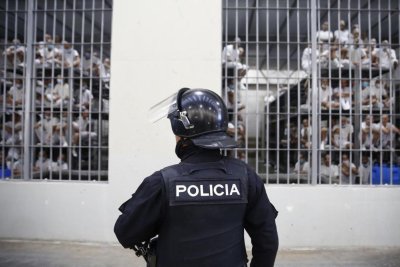
Trump has attracted the most criticism over his immigration polices, which have seen migrants sent to a Salvadoran prison, as well as his anti-drug military actions that have seen more than 100 people killed in international waters. The United Nations high commissioner for human rights, Volker Turk, has said there is “no justification in international law” for the military strikes.

On Saturday, the U.S. military seized Venezuelan President Nicolas Maduro in what the Trump administration has called a law enforcement action, though it has raised questions domestically and internationally over the legality of the operation.

U.N. Secretary-General Antonio Guterres on Monday told the Security Council that he is “deeply concerned that the rules of international law have not been respected with regard to the 3 January military action.”

Trump has followed the operation by threatening to do the same to the leaders of Colombia and Cuba.

“The leaders who pay homage to him and show themselves to be servile to U.S. President Trump in an attempt to win his favor only humiliate themselves,” Chilean President Gabriel Boric Font said in a statement earlier Tuesday.

“Trump (and his administration) not only permanently violates International Law, but human dignity itself.”

The abduction of Maduro has amplified Democratic concerns and talk of impeachment.

“Today, many Democrats have understandably questioned whether impeachment is possible again under the current reality. I am reconsidering that view,” Rep. Maxine Waters, D-Calif., ranking member of the House Financial Services Committee, said in a statement on Saturday following the military operation.

“Even if Republicans refuse to act, Democrats cannot remain silent or passive in the face of actions this extreme from this administration.”

Waters continued: “What we are witnessing is an unprecedented escalation of an unlawful invasion, the detention of foreign leaders and a president openly asserting power far beyond what the Constitution allows. Democrats must take a firm stand against this abuse of authority. We cannot normalize it. We cannot excuse it.”

President Donald Trump holds a signed executive order reclassifying marijuana from a schedule I to a schedule III controlled substance in the Oval Office of the White House on Thursday. Photo by Aaron Schwartz/UPI | License Photo

Source link

Attorney blames ‘mental health issue’ for vandalism of Vice President JD Vance’s home

William DeFoor, 26, damaged Vice President JD Vance’s family home in Cincinnati early Monday morning due to mental health issues and not politics, his attorney said. Photo Courtesy of the Hamilton County Sheriff’s Office

Jan. 6 (UPI) — The man accused of vandalizing Vice President JD Vance’s home in Cincinnati has a history of mental health issues, his defense attorney said in court Tuesday.

William DeFoor, 26, was arrested and is accused of vandalizing the Vance home at 12:15 a.m. EST on Monday while the vice president and second lady Usha Vance were in Washington, D.C.

DeFoor’s attorney, Paul Laufman, made the mental health claim during his client’s arraignment hearing in Hamilton County Municipal Court on Tuesday.

Laufman said the vandalism was not politically motivated, and Judge Janaya Trotter Bratton ordered DeFoor to post an $11,000 bond to be released from custody.

DeFoor writes “peaceful” prose in his poems, and his using a hammer to damage a vehicle driven by a federal agent watching Vance’s home and then several windows on the home were not intended as a political statement, Laufman told the court.

“I just don’t think there’s anything political going on,” Laufman said.

DeFoor is accused of felony damage, criminal trespass, criminal damage and obstructing official business.

He has a history of mental health-related cases heard by the Hamilton County Mental Health Court and has been arrested multiple times for vandalism.

When DeFoor arrived outside of Vance’s home, he tried to break the windows of a Secret Service vehicle that was blocking the driveway, according to a criminal complaint filed by FBI Assistant Special Agent Gavin Hartsell.

A Secret Service agent and Cincinnati police announced their presence and ordered DeFoor to “stop and drop the weapon” he was holding, Hartsell wrote.

“DeFoor ignored all commands and began to use a hammer to break glass windows,” located on the front of Vance’s home, he said.

Hartsell described the windows as “large, historic windows” that contained “enhanced security assets” owned by the federal government. He estimated the cost of damage at $28,000.

Vance on Monday said a “crazy person tried to break in by hammering the windows” on his family’s home and thanked the Secret Service and Cincinnati police for quickly responding to the matter in a social media post.

Source link

Brits to X: Stop allowing Grok to digitally undress women and girls

Jan. 6 (UPI) — British Technology Secretary Liz Kendall said Elon Musk must deal with “appalling and unacceptable” images of women without their consent generated by the platform’s Grok artificial intelligence service.

The Grok bot service has been digitally undressing women and putting them in sexualized situations without their consent.

Kendall called it “absolutely appalling.”

“We cannot and will not allow the proliferation of these demeaning and degrading images, which are disproportionately aimed at women and girls,” she said. “Make no mistake, the [United Kingdom] will not tolerate the endless proliferation of disgusting and abusive material online. We must all come together to stamp it out.”

X said in a statement: “We take action against illegal content on X, including Child Sexual Abuse Material, by removing it, permanently suspending accounts, and working with local governments and law enforcement as necessary.”

X user Daisy Dixon told the BBC that she found sexualized images of herself made by Grok.

She noticed that everyday pictures she had posted of herself on the platform were changed to undress her or sexualize her. It made her feel shocked, humiliated and afraid for her safety, she said.

“Myself and many other women on X continue to report the inappropriate AI images/videos we are being sent daily, but X continues to reply that there has been no violation of X rules,” she said. “I just hope Kendall’s words turn into concrete enforcement soon — I don’t want to open my X app any more as I’m frightened about what I might see.”

Jessaline Caine told The Guardian that the government’s action is “spineless.” Caine, a survivor of child sexual abuse, said that as of Tuesday morning, Grok was still obeying requests to change an image of her at age 3 to put her in a string bikini. ChatGPT and Gemini rejected the same requests.

“Other platforms have these safeguards so why does Grok allow the creation of these images?” Caine asked. “The images I’ve seen are so vile and degrading. The government has been very reactive. These AI tools need better regulation.”

Thomas Regnier, spokesperson for tech sovereignty at the European Commission told the BBC Newshour that the Commission is taking it very seriously.

“We don’t want this in the European Union … it’s appalling, it’s disgusting,” he said.

“The Wild West is over in Europe. All companies have the obligation to put their own house in order — and this starts by being responsible and removing illegal content that is being generated by your AI tool.”

It’s illegal to create or share non-consensual intimate images or CSAM, including AI deepfakes. Fake images of people in bikinis may also qualify.

Online child safety campaigner Beeban Kidron said AI-generated images of children in bikinis may not be CSAM but they disrespect children’s privacy and agency.

“We cannot live in a world in which a kid can’t post a picture of winning a race unless they are willing to be sexualized and humiliated,” The Guardian reported she said.

Source link

Petro calls on Colombians to defend sovereignty amid Trump threats

Colombian President Gustavo Petro called for a nationwide mobilization Wednesday and urged citizens to “defend sovereignty,” in response to statements by U.S. President Donald Trump that left open the possibility of military intervention. Photo by Carlos Ortega/EPA

Jan. 6 (UPI) — Colombian President Gustavo Petro has called for a nationwide mobilization Wednesday and urged citizens to “defend sovereignty,” responding to statements by the U.S. President Donald Trump that in Colombia have been widely interpreted as threats of intervention and direct attacks against the head of state.

The call, posted by Petro on X and echoed by government officials and political allies, urges rallies in public squares across the country starting at 4 p.m. local time, with the main protest planned for Bogota’s Plaza de Bolivar, the historic square that houses Colombia’s main government institutions. Petro said he will address the crowd.

The escalation follows remarks by Trump in which he referred to Petro in disparaging terms, accused him of backing drug production and left open the possibility of military action, according to reports by Colombian media.

In recent comments, Trump said a military operation against Colombia “sounds good,” following a U.S. military incursion in Venezuela. He also accused Petro of links to drug trafficking and said Colombia is “very sick.”

Petro publicly rejected the accusations and framed the dispute as a matter of national sovereignty. He said he would carefully assess the scope of Trump’s words before issuing a broader response but insisted that dialogue should be “the first path” and defended the legitimacy of his government.

“Although I have not been a soldier, I know about war and clandestinity. I swore not to touch a weapon again after the 1989 peace pact, but for the homeland, I would take up arms again, which I do not want,” Petro wrote, referring to the agreement that led to the demobilization of the M-19 guerrilla movement in which he once participated.

“I am not illegitimate, nor am I a drug trafficker. I own only my family home, which I am still paying for with my salary. My bank statements have been made public. No one has been able to say I have spent more than my salary. I am not greedy,” he added.

Separately, Colombia’s Foreign Ministry issued a statement after remarks attributed to Trump on Sunday and said it rejects what it considers unacceptable interference in matters of sovereignty and bilateral relations.

Vice President Francia Marquez joined those describing Trump’s statements as “threats” and called on Colombians to defend national sovereignty, according to local radio reports.

Demonstrations planned for Wednesday are expected in cities including Bogota, Medellin, Cali, Bucaramanga, Cartagena and Santa Marta, with calls to gather in central squares.

Petro described the protests as “peaceful” and urged Colombians to fly the national flag at their homes and bring it to public squares, El Espectador reported. He warned of the risks of military escalation and reiterated that the armed forces must follow their constitutional mandate to defend sovereignty.

The episode unfolds amid regional upheaval linked to Venezuela’s crisis and rising diplomatic tensions in Latin America.

According to daily El Tiempo, the situation has pushed Petro’s government to return to street mobilization as a political tool while Bogota seeks to manage relations with Washington without losing internal control.

Source link

Cuba faces new challenge after Maduro’s fall

People attend an event held at the Anti-Imperialist Tribune in support of Venezuela in Havana on Saturday. Cuban President Miguel Diaz-Canel condemned the United States’ attack on Venezuela and the capture of President Nicolas Maduro and his wife, Cilia Flores. Photo by Ernesto Mastrascusa/EPA

BUESNOS AIRES, Jan. 6 (UPI) — Cuba is navigating another delicate moment in its recent history after the capture of Venezuelan President Nicolás Maduro by U.S. forces Saturday.

The operation that removed him from Caracas and left him facing a court in New York killed 32 Cuban soldiers, part of Maduro’s praetorian guard, and abruptly dismantled the island’s main economic lifeline.

The blow comes amid an energy and health crisis already considered the worst in decades — and one that could now deepen rapidly.

For more than 20 years, the alliance with Venezuela served as a strategic pillar for the Cuban government. The exchange of subsidized oil for medical and security services allowed Havana to sustain its economy after the Soviet collapse and cushion the impact of the U.S. embargo.

Maduro’s fall and the prospect of a regime change in Caracas directly disrupt that balance and place Cuba in a position of heightened economic and political vulnerability.

In the days after the Venezuelan leader’s arrest, the Cuban government responded with a mix of public gestures of support, internal political mobilization and tighter security.

On Saturday, President Miguel Díaz-Canel led a protest outside the U.S. Embassy in Havana, where he said Cuba was prepared to defend its alliance with Venezuela “even at a very high cost.”

The next day, the government decreed two days of national mourning in response to events in Venezuela. Senior officials dominated state television broadcasts to reinforce the idea of a “shared homeland” and a historic resistance to adversity.

The official narrative sought to counter statements by U.S. President Donald Trump, who publicly warned that allies of chavismo would face direct consequences.

Speaking about the island nation just 90 miles from Key West, Fla., Trump said, “Cuba is ready to fall … going down for the count,” while aboard Air Force One on Sunday.

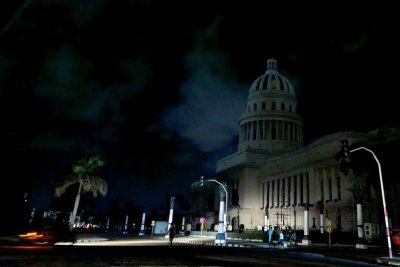
On Monday, according to diplomatic sources, Cuban authorities stepped up surveillance at strategic facilities and convened emergency meetings. At the same time, reports of prolonged blackouts multiplied across several provinces — a concrete sign of the fragility of the energy system, as Venezuelan assistance could disappear or be sharply reduced within weeks.

Cuba’s energy crisis stems from a combination of obsolete infrastructure, chronic lack of maintenance and fuel shortages.

Most electricity generation depends on decades-old thermoelectric plants that are frequently offline due to breakdowns. Limited alternative capacity forces the state to rely on floating plants and diesel generators, whose operation depends on imports the country cannot secure due to a lack of hard currency or the loss of free supplies from traditional allies such as Venezuela.

Venezuelan lawyer and former prosecutor Zair Mundaray told UPI that for decades, Cuba depended entirely on Venezuelan oil, and that the collapse of Petróleos de Venezuela, S.A., Venezuela’s state‑owned oil and gas company, which started around 2014, broke that anchor. That left the island exposed to more frequent blackouts and a deeper economic downturn.

“In that vacuum, Mexico’s assistance emerged,” Mundaray said.

Press reports indicate that during the peak years of cooperation with Cuba, Caracas sent between 90,000 and 120,000 barrels per day. Since 2023, the Mexican state has shipped hundreds of thousands of barrels of crude and diesel to Cuba in operations valued at more than $300 million.

For economic historian Leandro Morgenfeld at the University of Buenos Aires, one of the objectives of U.S. intervention in Venezuela is to deepen Cuba’s isolation.

“The United States sees the Western Hemisphere as its exclusive domain. It will not accept the presence of extra-hemispheric forces and is willing to remove governments if it believes its interests or national security are at risk,” Morgenfeld said.

From that perspective, he added, the goal goes beyond Venezuela and seeks to dismantle the political and economic ties that sustain adversarial governments in the region, including Cuba.

“That is why they want to cut the political and economic link with Venezuela and further suffocate the island. Despite the blockade, they aim to intensify financial pressure to achieve what they have pursued for decades: the fall of the Cuban revolutionary government,” he said.

Morgenfeld said concern in Havana is real and deep. Cuba has faced a complex economic situation for years, marked by sanctions, lack of hard currency and low productivity.

“It is no longer, as in other times, an economy with easy sources of financing. If chavismo were to fall, the impact on Cuba would be very severe, economically and politically,” he said, while noting that a full regime change in Venezuela has not yet occurred.

From another angle, Colombian political scientist Christian Arias Barona said it is premature to anticipate an immediate collapse of the Cuban model.

He told UPI that as long as Delcy Rodríguez remains in power and U.S. hostility does not intensify, an abrupt shift is unlikely.

“Cuba would not face a drastic alteration in its economy or international relations, especially in its ties with Venezuela, from which it receives significant assistance, particularly in energy,” Arias Barona said. “Nor would its links with Russia and China be immediately affected.”

He recalled that Cuba’s recent history reflects an ability to adapt to adverse scenarios. Since the 1959 revolution, the island has faced what he described as constant “aggressions and hostilities” from the United States, including the ongoing economic embargo.

“That experience has allowed it to develop mechanisms of political and diplomatic survival,” he said.

Arias Barona also noted that the U.N. General Assembly has repeatedly voted against the U.S. embargo on Cuba, calling it a unilateral measure without backing in international law.

However, he said the United States, as a permanent member of the Security Council, has maintained its position and secured occasional support, including from Israel and, in recent votes, Argentina, Ecuador and Paraguay.

“What we are seeing today is a situation that increases Cuba’s vulnerability,” he said.

Sociologist Luis Wainer, also an academic at the University of Buenos Aires, agreed it is too early to project definitive scenarios.

“We do not know whether there will be a change in the political and economic model, how such a transition would look or even whether a transition will exist,” he told UPI.

“We are at a moment of negotiations, where what will be defined is who manages to impose the conditions,” he said.

Wainer said strong interest exists in framing this moment as a return to the Special Period, the severe economic and social crisis that began in 1991 after the collapse of the Soviet Union, Cuba’s main ally and supplier, and resulted in extreme shortages of fuel, food and medicine.

“There is a tendency to think Cuba will return to that scenario, but Cuban experience itself shows the country has developed creative responses to sustain itself without surrendering sovereignty,” he said.

Those responses include selective openings to new trade schemes, agreements with strategic sectors in other countries and the promotion of activities such as international tourism.

In that context, he highlighted the political and economic impact of Latin America’s leftward shift following Hugo Chávez’s electoral victory in 1998.

“That progressive cycle was a key lifeline for Cuba,” Wainer said. “It enabled regional integration, political cooperation and economic agreements that were fundamental for the island, especially with Venezuela.”

Source link

French court: 10 guilty of cyberbullying Brigitte Macron

Ten people were convicted in Paris Monday for cyber-bullying France’s first lady Brigitte Macron. File Photo by Teresa Suarez/EPA

Jan. 5 (UPI) — A Paris court found 10 people guilty of cyberbullying France’s first lady Brigitte Macron, wife of President Emmanuel Macron.

They were accused of spreading false claims about her gender and making “malicious remarks” about the 24-year age gap between the Macrons.

The false claims are from a 2017 conspiracy theory that Brigitte Macron was a transgender woman. The allegation was amplified in the United States, pushed by right-wing media personality Candace Owens. The Macrons have also filed a lawsuit in the United States against Owens.

All but one of the defendants in France were given suspended sentences of up to eight months. The other person was jailed for not showing up to court. Some also had their social media accounts suspended.

The judge said the defendants acted with a clear desire to harm Brigitte Macron with comments that were degrading and insulting.

“The most important things are the prevention courses and the suspension of some of the accounts” of the perpetrators, Jean Ennochi, Brigitte Macron’s lawyer, said.

Two of the defendants had been found guilty of slander in 2024 for claiming that the first lady had never existed. Natacha Rey, a self-proclaimed journalist, and Amandine Roy, who claims to be a psychic, said Macron’s brother Jean-Michel Trogneux had changed gender and began using Brigitte Macron’s name.

Their convictions were overturned on appeal because claiming that she is transgender isn’t an “attack on her honor.”

The Macrons are appealing the ruling.

Brigitte Macron’s daughter Tiphaine Auzière, 41, told the court that the false claims had damaged her mother’s quality of life. She said Brigitte Macron worried every day about the clothes she wore and how she stood.

Auzière said the social media posts had caused a “deterioration of her health” and a “deterioration of her quality of life.”

“Not a day or week goes by when someone does not talk about this to her … What is very hard for her are the repercussions on her family … Her grandchildren hear what is being said: ‘Your grandmother is lying’ or ‘Your grandmother is your grandfather.’ This affects her a lot. She does not know how to stop it. … She’s not elected, she has not sought anything, and she is permanently subjected to these attacks. I — as a daughter, a woman and a mother — would not wish her life on anyone,” Auzière said.

Trogneux, 80, lives in Amiens, where he grew up with Brigitte Macron and their siblings.

Clouds turn shades of red and orange when the sun sets behind One World Trade Center and the Manhattan skyline in New York City on November 5, 2025. Photo by John Angelillo/UPI | License Photo

Source link

South American countries tighten migration controls after Venezuela crisis

A member of the Colombian Army stands guard at the Simon Bolivar International Bridge in Cucuta, Colombia, on Sunday. The bridge is the main crossing point between Colombia and Venezuela, and it remains open after Venezuelan President Nicolas Maduro and his wife, Cilia Flores, were captured by the United States military action on Saturday and flown to New York to stand trial. Photo by Mario Caicedo/EPA

Jan. 5 (UPI) — Several South American countries announced new migration controls and border security measures in response to Venezuela’s political crisis following a United States operation that detained Venezuelan President Nicolás Maduro and his wife, Cilia Flores, and transferred them to New York to face drug-related charges.

While Colombia said it will keep its border crossings with Venezuela open and ruled out closures, Argentina, Peru, Ecuador and Paraguay announced restrictions on the entry of people linked to the Venezuelan government amid regional uncertainty and diplomatic coordination.

Colombian Vice Foreign Minister Mauricio Jaramillo said keeping the border open is strategic given cross-border migration and commercial flows along some 1,370 miles of shared frontier.

“Colombia has no interest in closing the border. It is essential that it remain open,” Jaramillo said, adding that Migration Colombia activated a permanent monitoring plan to oversee the situation without disrupting the regular movement of people and goods.

At the same time, President Gustavo Petro ordered tighter security along the border through the deployment of more than 30,000 public security personnel, including military and police forces, as a preventive measure against possible disturbances to public order.

Argentina, Peru, Ecuador and Paraguay separately announced new migration controls and entry restrictions targeting government officials, military personnel and others linked to the Venezuelan government.

In Ecuador, the Foreign Ministry said it will apply migration restrictions to public officials, members of the armed forces and security services, business figures, and other people associated with the government of Nicolás Maduro, citing national security concerns.

Authorities said asylum and refugee protections will not be misused and must comply with principles and procedures established under national and international law.

In Argentina, National Security Minister Alejandra Monteoliva said the National Migration Directorate will impose limits on the entry of people connected to the Venezuelan government, including officials, members of the armed forces, business figures and sanctioned individuals, to prevent what she described as regime collaborators from using the country as a refuge or protective platform.

“Argentina will not grant protection to collaborators of the Maduro regime,” the ministry said in a statement. President Javier Milei welcomed the fall of the Venezuelan leader and voiced support for a political transition process in Venezuela.

In Peru, the Interior Ministry announced the immediate implementation of migration controls through the National Superintendency of Migration, in coordination with the National Police.

The measures target Venezuelan citizens linked to the Caribbean nation’s government who appear on international sanctions lists, particularly those issued by the United States, to prevent Peru from being used to evade judicial proceedings.

“Notified. Those who oppressed their country for years are not welcome,” interim President Jose Jeri said in a post on social media platform X.

In Paraguay, the National Migration Directorate said it adopted control and restriction measures, with support from state security agencies, to block the entry of people linked to the Venezuelan government or with alleged ties to drug trafficking, narcoterrorism or pending criminal cases.

Authorities said they will evaluate international cooperation mechanisms and database cross-checks to verify individuals’ links to the Venezuelan government.

Source link

Trial begins for Uvalde officer over failure to respond to school shooting

1 of 2 | Mourners gather at a memorial of flowers at Robb Elementary School in Uvalde, Texas, on May 30. A mass shooting days before left 19 children and two adults dead at the elementary school. File Photo by Jon Farina/UPI | License Photo

Jan. 5 (UPI) — The trial of former Uvalde school police officer Adrian Gonzales is underway Monday, four years after 19 students and two teachers were killed in a shooting at a Texas elementary school.

The jury selection process will begin the trial proceedings for Gonzales in Corpus Christi, Texas. He faces 29 felony charges, one for each of the 19 fourth-grade victims and 10 surviving students of the shooting on May 24, 2022.

Gonzales is accused of putting the children at Robb Elementary School in Uvalde, Texas, in “imminent danger” when he failed to respond to an active shooting. He was one of the first officers on the scene, the prosecution says.

It took the nearly 400 officers who responded in various capacities 77 minutes to engage the shooter, 18-year-old Salvador Rolando Ramos. Ramos was armed with an AR-15-style rifle.

State and federal investigators reviewed bodycam footage, 911 calls and eyewitness accounts before determining that a series of failures in the law enforcement response contributed to the incident.

The jury is expected to view bodycam footage and hear from investigators and survivors during Gonzales’ trial.

The site of the trial was moved by a judge in October after his attorneys argued it would be unlikely to fill an impartial jury in Uvalde.

Gonzales is one of two law enforcement officers facing criminal charges related to their response to the shooting. Pedro Arredondo, former police chief of the Uvalde Consolidated Independent School District Police Department, faces 10 counts of abandoning and endangering children.

Source link

Venezuela: Delcy Rodriguez sworn in as president, Maduro due in court

Heavily armed federal law enforcement officers on guard Sunday outside the Metropolitan Detention Center in Brooklyn, where Venezuelan President Nicolas Maduro and first lady Cilia Flores are being held after being seized from the presidential palace in Caracas at the weekend. Photo by Olga Fedorova/EPA

Jan. 5 (UPI) — U.S. President Donald Trump issued a warning to Venezuela’s new president, Delcy Rodriguez, to “do what’s right,” or face a similar or worse fate than President Nicolas Maduro, who is in a U.S. prison after being seized by U.S. Special Forces over the weekend.

“If she doesn’t do what’s right, she is going to pay a very big price, probably bigger than Maduro,” Trump told The Atlantic, adding that regime change remained on the table, saying that it was preferable to the present state of affairs and the situation “can’t get any worse.”

Rodriguez, who was due to be sworn in as president in Caracas at 7 a.m. EST with the support of the country’s military and the supreme court, has said she is willing to cooperate with the United States after initially condemning the arrest of Maduro and his wife, Cilia Flores, and demanding their release.

“We invite the U.S. government to collaborate with us on an agenda of cooperation orientated towards shared development within the framework of international law,” she told her cabinet at her first meeting in charge on Sunday.

Trump said U.S. Secretary of State Marco Rubio had spoken with Rodriguez and that she was “essentially willing to do what we think is necessary to make Venezuela great again.”

Amid conflicting messaging, it was unclear if that was Trump’s meaning when he said in his news conference Saturday announcing the military operation that the United States was “going to run the country until such time as we can do a safe, proper and judicious transition.”

“We’re going to be running it with a group, and we’re going to make sure it’s run properly,” Trump said.

Rubio clarified Sunday that Trump was talking about exerting control from outside the country to bring about major policy shifts.

He said sanctions were one of the tools at the administration’s disposal to ensure the cooperation of the acting leadership, saying in an American broadcast TV interview that a blockade on Venezuela’s oil exports, being enforced by the U.S. military, would remain in place.

“We continue with that quarantine and we expect to see that there will be changes not just in the way the oil industry is run for the benefit of the people, but also so that they stop the drug trafficking, so that we no longer have these gang problems, so that they kick the [Columbian insurgent groups] FARC and the ELN out, and that they no longer cozy up to Hizballah and Iran in our own hemisphere,” Rubio said.

Meanwhile, Maduro was due to make his first appearance in Federal Court in New York later Monday, where he and Flores will be read a 25-page indictment accusing the pair of accumulating vast wealth from a narco-terrorism conspiracy.

They also face three related charges of cocaine importation conspiracy, possession of machine guns and destructive devices, and conspiracy to possess machine guns and destructive devices.

They are due to be transferred from the Metropolitan Detention Center in Brooklyn, which houses defendants accused of regular crimes, to the U.S. District Court for the Southern District of New York in White Plains, N.Y., to appear at 12 p.m. EST.

Clouds turn shades of red and orange when the sun sets behind One World Trade Center and the Manhattan skyline in New York City on November 5, 2025. Photo by John Angelillo/UPI | License Photo

Source link

All 40 deceased victims of Swiss bar fire identified

Authorities on Sunday said all 40 victims of the Le Constellation bar fire on New Year’s Eve have been identified. Photo by Jean-Christophe Bott/EPA

Jan. 5 (UPI) — All 40 victims of a Swiss bar fire that erupted New Year’s Eve have been identified, according to police, who continue to investigate the deadly blaze.

Forty people were killed and 119 were injured in the fire at the Le Constellation bar in Crans-Montana in the Swiss Alps early Thursday.

Valais Cantonal Police announced in a statement Sunday that an additional 16 victims of the fire have been identified, meaning all deceased have been named.

The victims identified Sunday range in age from 14 to 33, with the youngest being a boy from France.

Among the deceased were nine minors, including four aged 15, two girls from Switzerland, one girl from Italy and a boy with French, Israeli and British citizenship. Two 16-year-olds, both Italian, one boy and one girl; and two 17-year-olds, one Belgian girl and a French boy, were also identified Sunday.

The adults were from France, Switzerland and Portugal. One victim identified Sunday was a dual Swiss-French national.

Of all 40 victims, 20 were minors: two 14-year-olds, six 15-year-olds, nine 16-year-olds and three 17-year-olds.

The oldest adult victim was 39.

Police have opened a criminal investigation into the fire and have charged two managers of the bar with negligent homicide, negligent bodily harm and negligent arson.

The two suspects have not been detained as they do not pose a flight risk and there is no suspicion that they intend to evade the criminal proceedings, authorities said Sunday.

“The investigation is continuing in order to determine any other potential criminal liabilities,” Valais Cantonal Police said in a separate Sunday update on the investigation.

Preliminary evidence indicates that the fire was caused by pyrotechnic devices called “fountains” that produce sparks and flames. They are designed to be placed on the ground or held by hand.

Uncorroborated video of the fire published online shows fire spreading across the bar’s ceiling, apparently lit by the fountain devices that had been attached to the mouths of alcohol bottles that were being paraded around the facility as part of bottle service.

Witnesses told police that the fire spread rapidly, generating a lot of smoke and intense heat.

“Everything is said to have happened quickly,” Valais Cantonal Police said.

According to authorities, the next phase of the investigation will focus on whether the facility was in compliance with local laws and fire safety regulations over materials used in the building, the existence and condition of emergency exits and the presence of firefighting equipment.

Source link

IBA: U.S. intervention in Venezuela ‘raises serious’ questions under international law

Jan. 4 (UPI) — The International Bar Association on Sunday expressed concerns over the United States military intervention in Venezuela, stating it “raises serious questions under international law.”

The United States removed Venezuela’s authoritarian president, Nicolas Maduro, and arrested his wife on Saturday in a clandestine military operation following months of speculation amid a U.S. military build in the region.

The Trump administration has framed its military action as a law enforcement operation as Maduro was indicted in the United States on narco-terrorism and drug conspiracy charges in 2020.

While Maduro’s claim to the presidency has been challenged for years following widely disregarded elections, his arrest in Venezuela by the United States has drawn allegations, including from ally France, that his detainment is illegal under international law.

In a statement emailed to UPI on Sunday night, the International Bar Association, the world’s largest association of lawyers, said it “expresses concern” over the U.S. military action in the South American country, while citing the United Nations Charter, which prohibits intervention in matters within domestic jurisdiction, the threat or use of force against the territorial integrity or political independence of any state.

“Measures or policies aimed at coercing political change in another state, when undertaken outside internationally recognized legal frameworks, are inconsistent with these obligations and risk normalizing conduct that international law was designed to prevent,” the IBA said.

“Even in the face of ongoing reprehensible conduct by state leaders, adherence to international law remains essential to preserving the integrity of the rules-based international order.”

Maduro is a long-time foe of U.S. President Donald Trump, who tried to oust the South American leader during his first term.

During his reign as Venezuela’s leader, Maduro has been accused of committing human rights violations against his own people, millions of whom have left the country over the last decade.

The IBA said it is aware of the allegations and conduct of Maduro’s regime that have led to widespread suffering and that they warrant “robust scrutiny and accountability both under domestic and international law, pursued through lawful mechanisms, including international or independent domestic judicial processes.”

“The IBA encourages a democratic transition in Venezuela that respects the rule of law,” it said.

Source link

Rubio on Venezuela: U.S. troops off shore are leverage, election talk is premature

Jan. 4 (UPI) — Secretary of State Marco Rubio said in interviews on Sunday that it is “premature” to discuss elections in Venezuela because higher priorities, including reinvigorating the country’s oil industry, must be addressed first.

In interviews with ABC, CBS and NBC, Rubio said that the United States will continue to strike drug boats and detain oil tankers as the Trump administration moves to stabilize and “run” Venezuela after the apprehension of Venezuelan President Nicolas Maduro on Saturday.

The Trump administration plans to keep its “quarantine” of Venezuelan oil in place as it pressures the remainders of Maduro’s government to end their cooperation with South American drug gangs, as well as stop selling oil to the United States’ adversaries, Rubio said.

“As we move forward here, we’ll set the conditions so that we no longer have in our hemisphere a Venezuela that’s the crossroads for many of our adversaries around the world, including Iran and Hezbollah,” Rubio said on ABC News’ “This Week.”

Rubio added that Venezuela would also no longer be “a narcotrafficking paradise for all those drugs coming out of Colombia … and toward the United States.”

Offshore armada is ‘leverage’

In a press conference on Saturday, Trump told reporters that there was a second strike planned in the case that Venezuelan forces responded to Maduro’s capture or the plan was not successful, but U.S. military commanders decided against launching it.

Trump noted Saturday, and Rubio reiterated on Sunday, that the roughly 15,000 troops offshore of Venezuela spread across more than a dozen warships would remain in the Caribbean.

Their objectives, he told CBS’ “Face The Nation,” are striking drug trafficking boats, apprehending tankers suspected to be carrying sanctioned Venezuelan oil and using the armada, as Trump has referred to it, of U.S. military ships offshore to encourage the remaining members of Maduro’s administration to comply with U.S. demands.

“What’s going to happen here is that we have a quarantine on their oil,” Rubio said. “That the means that their economy will not be able to move forward until the conditions that are in the national interest of the United States and of the Venezuelan people are met.”

“So, that leverage remains,” he added. “That leverage is ongoing. And we expect that it’s going to lead to results here.”

No elections yet

Although the Trump administration “cares about elections, we care about democracy, we care about all of that,” the priority is the U.S.’ goals of stopping the flow of drugs into the United States and U.S. “safety, security, well-being and prosperity,” Rubio told NBC News’ “Meet The Press.”

At this point, he said, considering new elections in Venezuela “is premature at this point” as Trump has tasked Rubio with “running policy” in the South American country.

In the next several months, Rubio said that the main priorities are to end entanglements between the Venezuelan government and drug gangs, as well as to prevent Iran, Russia, China and Cuba, among other nations, from investing in the country and gaining a foothold in the Western Hemisphere.

Maduro and his wife, who are in a jail in New York City awaiting trial, along with four other people in the Venezuelan government who were not arrested in Saturday’s raid, have been indicted for allegedly working with Colombian drug gangs and rebel groups to assist them in trafficking cocaine.

The quarantine on ships transporting Venezuelan oil is linked to Trump’s goal of sending U.S. oil companies to inspect and reinvigorate Venezuela’s ailing oil industry, while keeping the oil in the Americas.

While noting that the United States, which is a net oil exporter, does not need the oil, he questioned why Iran, Russia or China should need Venezuelan oil considering all three are nowhere near South America.

“They’re not even in this continent,” Rubio said. “This is where we live, and we’re not going to allow the Western Hemisphere to be a base of operations for adversaries, competitors and rivals of the United States.”

Source link

Wisconsin judge Hannah Dugan resigns after ICE obstruction conviction

Jan. 3 (UPI) — Former Milwaukee County (Wisc.) Judge Hannah Dugan resigned on Saturday following her federal felony conviction for obstruction of law enforcement in April.

Dugan, 66, submitted her resignation letter to Wisconsin Gov. Tony Evers on Saturday and said it is effective immediately.

“Behind the bench, I have presided over thousands and thousands of cases — with a commitment to treat all persons with dignity and respect, to act justly, deliberatively and consistently, and to maintain a courtroom with the decorum and safety the public deserves,” Dugan said in the resignation letter.

She said that she is the “subject of unprecedented federal legal proceedings” that “present immense and complex challenges that threaten the independence of our judiciary.”

A federal jury found her guilty of obstruction last month for her effort to help an “undocumented immigrant” from Mexico elude Immigration and Customs Enforcement agents when they arrived at the county courthouse to arrest him.

Dugan is appealing her conviction, but she is resigning amid a potential impeachment effort by Wisconsin Assembly Republicans.

“The Wisconsin citizens that I cherish deserve to start the year with a judge on the bench in Milwaukee County Branch 31 rather than have the fate of that court rest in a partisan fight in the state legislature,” she told Evers.

Dugan served on the bench for nine years, and Evers’ spokesperson, Britt Cudaback said the governor acknowledged receiving the letter of resignation on Saturday and won’t delay in filling the vacant bench seat.

Source link

Prosecutors unseal narco-terrorism indictment against Maduros and others

Venezuelan President Nicolas Maduro, right, and Venezuelan first lady Cilia Flores, left, are accused of narco-trafficking and related crimes in a federal indictment unsealed Saturday in the U.S. District Court for Southern New York. Photo by Miguel Gutierrez/EPA-EFE

Jan. 3 (UPI) — Venezuelan President Nicolas Maduro and his wife, Cilia Flores, are indicted on federal charges accusing them of narco-terrorism conspiracy and three related charges.

They also are accused of cocaine importation conspiracy, possession of machine guns and destructive devices, and conspiracy to possess machine guns and destructive devices in a federal grand jury indictment in the U.S. District Court for Southern New York.

“For over 25 years, leaders of Venezuela have abused their positions of public trust and corrupted once-legitimate institutions to import tons of cocaine into the United States,” said Jay Clayton, U.S. Attorney for Southern New York, in the federal indictment.

Maduro “is at the forefront of that corruption and has partnered with his co-conspirators to use his illegally obtained authority and the institutions he corroded to transport thousands of tons of cocaine into the United States,” Clayton said.

He said Maduro has “tarnished every public office he has held” by engaging in narco-trafficking while protected by Venezuelan law enforcement since at least 1999.

Clayton accuses Maduro of partnering with criminal organizations, including the Sinaloa and Zetas cartels in Mexico and Tren de Aragua in Venezuela, and Colombian Marxist rebel groups Fuerzas Armadas Revolucionarias de Colombia aka FARC and Ejercito de Liberacion Nacional aka ELN to engage in narco-trafficking.

He said Maduro provided drug traffickers with diplomatic passports and diplomatic cover for planes used by money launderers to retrieve drug proceeds from Mexico and fly them to Venezuela.

Maduro “now sits atop a corrupt, illegitimate government that for decades has leveraged government power to protect and promote illegal activity, including drug trafficking,” Clayton argued.

He said Maduro illegitimately claimed to have won the 2018 Venezuelan election for president after succeeding former President Hugo Chavez, who died in 2013, while Maduro was vice president.

Maduro also falsely claimed to have won Venezuela’s 2024 election and never has been a legitimately elected president, according to Clayton.

Maduro’s wife, Flores, also been a highly placed politician in Venezuela and was president of the National Assembly and attorney general before marrying Maduro in 2013.

Both are accused of participating in, perpetuating and protecting a “culture of corruption in which powerful Venezuelan elites enrich themselves through drug trafficking and the protection of their partner drug traffickers,” Clayton said.

Venezuela has been a safe haven for drug traffickers who paid for protection and support corrupt Venezuelan officials and military members, who enable them to operate outside the reach of Colombian law enforcement and armed forces that receive anti-narcotics help from the United States.

They ship processed cocaine from Venezuela to the United States “via transshipment points in the Caribbean and Central America, such as Honduras, Guatemala and Mexico,” Clayton said.

State Department officials estimate between 200 and 250 tons of cocaine are trafficked through Venezuela every year.

“The defendants, together and with others, engaged in a relentless campaign of cocaine trafficking” and distributed “thousands of tons of cocaine to the United States,” according to Clayton.

The Maduro’s son, Nicolas Ernesto Maduro Guerra aka Nicolasito aka The Prince also is among four other defendants named in a 25-page federal indictment that was unsealed on Saturday.

None of the other four indicted are in U.S. custody as of Saturday.

Also indicted is Hector Rusthenford Guerrero Flores aka Nino Guerrero who is the alleged leader of the Tren de Aragua gang that originated in Venezuela.

Diosdado Cabello Rondon, Venezuela’s minister of Interior, Justice and Peace of Venezuela, and Ramon Rodriguez Chacin, who formerly held the same position and is a former naval officer and government liaison with cocaine-producing Marxist FARC rebels in Colombia, also are named in the indictment.

Maduro and his wife likely will be arraigned in federal court next week.

Source link

Minnesota officials say child care centers were ‘operating as expected’

Jan. 3 (UPI) — Nine child care centers shown in a viral video alleging fraud were inspected and operating normally, Minnesota officials said on Friday.

Officials with Minnesota’s Department of Children, Youth and Families in a news release said state inspections of the daycare centers showed those that were open had children inside of them and were operating as expected.

“Children were present at all sites except for one — that site was not yet open for families for the day when inspectors arrived,” DCYF officials said.

They did not indicate if the inspections provided advanced notice to the respective daycares, and the news release referenced does not appear on the department’s webpage for news releases.

The most recent news release available is dated for Oct. 27, 2025, and department officials did not immediately respond to a UPI request for comment and access to the cited news release.

DCYF officials also provided information on the nine child care centers and the amounts they received through the state’s Child Care Assistance Program during the 2025 fiscal year that ended on Sept. 30.

The Future Leaders Early Learning Center received $3.68 million, followed by Minnesota Best Child Care Center, $3.4 million, and Minnesota Child Care Center, $2.67 million. All three are located in Minneapolis.

Quality Learning Center received $1.9 million, Mini Child Care Center $1.6 million, and Sweet Angel Child Care $1.54 million.

The Tayo Daycare received $1.09 million, ABC Learning Center $1.04 million and Super Kids Daycare Center $471,787.

The DCYF said the Mako Child Care Center closed in 2022.

The agency said investigators are taking a closer look at four of the nine daycare centers listed but did not identify which ones.

The DCYF released the information on the nine child care centers featured in the YouTube video posted by Nick Shirley that was titled: “I Investigated Minnesota’s Billion Dollar Fraud Scandal.”

The 42-minute video had more than 3.1 million views eight days after it was posted to the social media site.

The video spurred the Health and Human Services Department halt all funding to Minnesota child care centers pending a federal review.

The FBI and Department of Homeland Security investigate fraud claims.

“The onus is on the state to provide additional verification,” Andrew Nixon, HHS deputy assistant secretary for media relations, told CNN.

Minnesota officials have until Friday to provide the Trump administration with information verifying the names of children enrolled at the respective child care centers and their parents.

HHS officials also are requiring supporting evidence from day care centers that receive federal funding in all states to better ensure no fraud is occurring.

Source link

Judge denies pretrial release for alleged D.C. pipe bomber

Jan. 2 (UPI) — A Washington, D.C., federal magistrate judge ruled Friday that a man who allegedly set pipe bombs outside of political party headquarters on Jan. 5, 2021, must stay behind bars before his trial.

Brian Cole Jr., 30, faces charges of transporting an explosive device and attempted malicious destruction by means of explosive materials. The charges have a maximum sentence of 30 years.

He allegedly placed two bombs in front of the Democratic National Committee and Republican National Committee headquarters, though the bombs never detonated. He was arrested Dec. 4 and hasn’t entered a plea.

Assistant U.S. Attorney Charles Jones filed a request on Dec. 30 to keep Cole in jail while he awaits trial. Cole’s attorneys wanted him released into the custody of his grandmother.

Judge Matthew Sharbaugh wrote in his ruling filed on Friday: “Although home incarceration and a GPS monitor would provide some check against Mr. Cole’s ability to carry out any menacing or dangerous conduct in the community, the Court is simply not satisfied these conditions rise to the necessary level.

“This is particularly true based on the severity of the potential danger Mr. Cole is alleged to pose, given his alleged persistent acquisition and retention of so-called ‘bombmaking parts,’ and given his reported penchant and capacity to create explosive devices and deploy them in public settings.

“If the plan had succeeded, the results could have been devastating: creating a greater sense of terror on the eve of a high-security Congressional proceeding, causing serious property damage in the heart of Washington, D.C., grievously injuring DNC or RNC staff and other innocent bystanders, or worse,” Sharbaugh wrote.

Sharbaugh announced Dec. 30 that Cole was indicted on the two charges but that he has not yet accepted the indictment because the Justice Department’s move seeking federal charges from a local grand jury is part of an ongoing debate in the courts. That case is pending in the federal appeals court.

According to a court filing, Cole told investigators that he disliked both political parties and was “watching everything, just everything getting worse.”

He believed the allegation that the 2020 election was stolen.

“If people feel that their votes are like just being thrown away, then … at the very least someone should address it,” Cole said, according to the filing.

“According to the defendant, he was not really thinking about how people would react when the bombs detonated, although he hoped there would be news about it,” the filing said.

“The defendant stated that he had not tested the devices before planting them. He claimed that when he learned that the devices did not detonate, he was ‘pretty relieved,’ and asserted that he placed the devices at night because he did not want to kill people.

“The defendant denied that his actions were directed toward Congress or related to the proceedings scheduled to take place on January 6,” the filing said.

Cole is from Woodbridge, Va., where he lives with his mother and other family members.

The case baffled law enforcement for almost five years. The pipe bombs were made of 1-inch galvanized pipes, 8 inches long with end caps, homemade black powder, wires, metal clips and a kitchen timer. The FBI has said the bombs were viable and could have hurt people nearby if they had detonated. The bombs sat for 15 hours before being discovered.

Supporters of President Donald Trump riot against the Electoral College vote count on January 6, 2021, in protest of Trump’s loss to President-elect Joe Biden, prompting a lockdown of the Capitol Building. Photo by Leigh Vogel/UPI | License Photo

Source link

U.S. captures Venezuela’s president Nicolas Maduro

The United States early Saturday morning staged a mission to apprehend Venezuelan President Nicolás Maduro, pictured in November, and his wife, both of whom have been indicated in the United States for narco-terrorism. File Photo by Venezuelan President Office/UPI | License Photo

Jan. 3 (UPI) — The United States early Saturday morning staged a daring “large strike against Venezuela,” during which the country’s president, Nicolas Maduro, was captured and flown out of the country.
President Donald Trump announced on Truth Social that Maduro and Maduro’s wife had been captured, with the New York Times reporting that they were flown by helicopter to the USS Iwo Jima and that both will eventually face charges in the Southern District of New York.

“The United States of America has successfully carried out a large scale strike against Venezuela and its leader, President Nicolas Maduro, who h as been, along with his wife, captured and flown out of the country,” Trump said in the Truth Social post. “This operation was done in conjunction with U.S law enforcement.”

Trump said that a news conference will be held at 11 a.m. EST from Mar-a-Lago, his golf club in Florida.

This is a developing story. Please check back for updates.
President Donald Trump holds a signed executive order reclassifying marijuana from a schedule I to a schedule III controlled substance in the Oval Office of the White House on Thursday. Photo by Aaron Schwartz/UPI | License Photo

Source link

Venezuelan President Nicolás Maduro denies drug trafficking

Jan. 2 (UPI) — Venezuelan President Nicolás Maduro said claims that his government engages in drug trafficking are lies, and he is willing to meet with President Donald Trump amid rising tensions.

Maduro on Thursday accused the Trump administration of knowingly making false claims of drug trafficking, including recent comments by Trump saying Venezuela’s alleged drug trafficking is akin to using weapons of mass destruction

“Since they cannot accuse me, since they cannot accuse Venezuela of having weapons of mass destruction, since they cannot accuse us of having nuclear rockets, of preparing a nuclear weapon, of having chemical weapons, they invented an accusation that the United States knows is as false as that accusation of weapons of mass destruction, which led them to an eternal war,” Maduro said while referencing the Iraq War.

The Venezuelan president offered to work with U.S. officials to oppose drug trafficking and repeated his prior offers to meet with Trump to discuss the U.S. military targeting alleged drug vessels, seizing oil tankers and blockading Venezuelan ports.

“The U.S. government knows, because we’ve told many of their spokespeople that, if they want to seriously discuss an agreement to combat drug trafficking, we’re ready,” he said in a taped interview on Venezuela’s state-owned channel teleSUR.

The Venezuelan president also suggested his country and the United States could work together to enable U.S. firms to invest in Venezuela’s oil industry “whenever they want it, wherever they want it and however they want it.”

Maduro refused to comment on a recently reported U.S. strike on an alleged drug-processing facility located among docks on Venezuela’s Caribbean coastline.

The CIA also has refused to comment on the strike, which Trump announced on Monday and said “knocked out” a drug facility on Saturday night.

The president in October announced he authorized the CIA to undertake operations in Venezuela but did not say what kind.

The Defense Department also sent a carrier strike group to the Caribbean to stop alleged drug-trafficking fast boats from transporting drugs intended for the United States and Europe and more recently to blockade Venezuelan ports amid seizures of sanctioned vessels.

The White House has said the strikes on the alleged drug boats are intended to stop South American drug cartels from sending drugs to the United States, which has some U.S. officials questioning the legality of such strikes.

The U.S. Southern Command announced two more boat strikes that killed five in international waters on New Year’s Eve.

The United States began striking the alleged drug boats in September and has sunk at least 36 and killed at least 115.

Most of the drug boat strikes, 23, have occurred in the eastern Pacific Ocean and away from Venezuela, while 11 others occurred in the Caribbean Sea, with another two in undisclosed locations.

The United States also has placed a $50 million bounty on Maduro and recently sanctioned some of his family members for their alleged roles in drug trafficking.

Trump also has accused Maduro of intentionally sending criminals and others to the United States during the Biden administration, including members of the Venezuela-based Tren de Aragua gang that he has designated as a foreign terrorist organization.

Source link