This peaceful South Lakes village offers a quieter alternative with River Brathay access, kayaking, Loughrigg walks, and family activities
Isobel Pankhurst Audience Writer
03:11, 08 Mar 2026
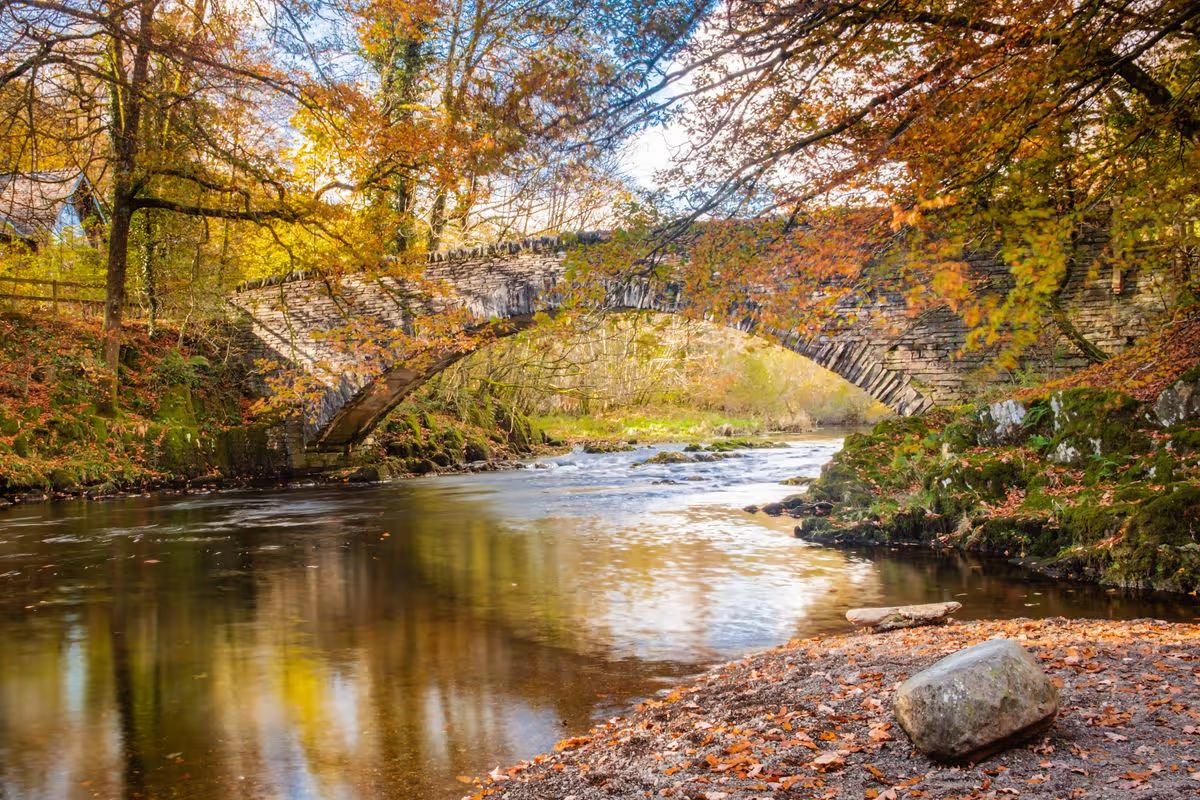
This little-known village is something of a hidden gem(Image: ALBAimagery via Getty Images)
Millions flock to the Lake District annually seeking respite from the chaos of daily life. Yet, countless holidaymakers gravitate towards the crowded hotspots of Windermere, Kendal, and Ambleside, which means their walks may prove less tranquil than anticipated, whilst they overlook some of the more hidden corners that the national park boasts.
One such secret treasure nestled in the South Lakes region is Clappersgate, a tranquil village situated on the fringes of Ambleside. Jerry Rebbeck, a regional specialist at Wheelwrights Holiday Cottages, has championed the settlement’s appeal, suggesting it as an ideal base for those exploring the vicinity.
He said: “Clappersgate has great access to the River Brathay, making it a great spot for adventurous visitors who want to paddleboard or kayak towards Waterhead or further onto Windermere.
“If you are not the adventurous type, you can enjoy the majestic riverside setting, taking in the views with a tipple of your choice or a book in a more secluded area.”
For those who prefer rambling, there are excellent routes directly from Clappersgate leading up to the Loughrigg Circular, which offers stunning panoramas across Windermere, and serves as an ideal lower-altitude trek when weather obscures the loftier peaks.
Despite being a compact settlement, Clappersgate brims with heritage, boasting numerous period buildings, including the remarkable Clappersgate Bridge.
The Grade II listed bridge, dating back to the 17th century, is a favourite spot for walkers in the area, owing to its views over the river and surrounding greenery.
Jerry added: “Clappersgate also has convenient access to nearby indoor activities, making it a brilliant place for families to stay in case of those unexpected rainy days, including the Lake District Aquarium and a neo-gothic Wray Castle.
“There are lovely historic houses and holiday cottages in Clappersgate for those wishing to stay in the area.
“The village is tucked away from the crowds, yet within easy reach of numerous landmarks and boasts stunning scenery – offering the perfect balance between relaxation and exploring the Lakes.”
The stunning sister villages offer an idyllic escape for anyone looking to avoid the Lake District crowds – without compromising on scenery, wildlife or history.
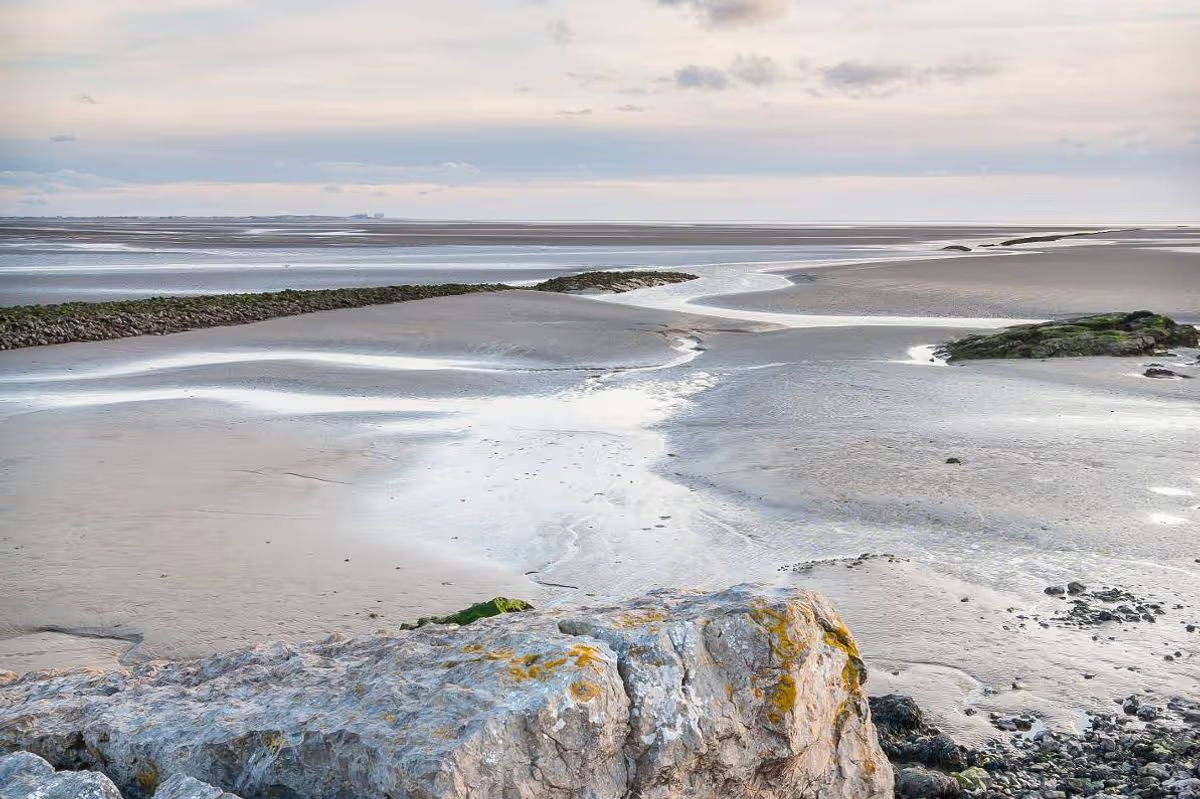
They’re home to some of the ‘finest views in the country’(Image: Getty Images/iStockphoto)
Whilst the Lake District remains a beloved choice amongst British holidaymakers, it becomes swamped with visitor numbers during the UK’s beautiful summer season, frequently leading to extortionate costs for lodging, meals and beverages.
For those still wanting to experience a Lake District-style getaway as warmer weather returns – without breaking the bank and whilst steering clear of the crowds, naturally – we’ve discovered the ideal option for you.
Two delightful neighbouring villages straddling the Lancashire-Cumbria boundary tick all the boxes, offering remarkable wildlife, stunning vistas and superb lakeside rambles. These historic settlements are tucked away along Morecambe Bay’s shoreline within an area classified as a National Landscape (the smallest of the lot), thanks to their flourishing natural variety and abundant plant and animal life.
In fact, they appeared in The Sunday Times’ Best Places to Live Guide in 2021, with judges commenting: “These twin villages on the Kent estuary have some of the finest views in the country as well as an energetic, kind-hearted community.”
The settlements of Arnside and Silverdale create a distinctive corner of North-West England’s countryside, teeming with uncommon and beautiful wildlife, reports Lancs Live.
Best Lancashire holiday cottage deals
This article contains affiliate links, we will receive a commission on any sales we generate from it. Learn more
Lancashire is known for its wide open skies, stunning landscapes and lively coastal resorts. Sykes Cottages has a wide range of self catering accommodation across the county from £42 a night.
Positioned on Morecambe Bay’s coastline, Arnside is an enchanting village located within Cumbrian territory with a vibrant community spirit. The settlement’s Victorian seafront and sweeping railway viaduct spanning the Kent estuary stand as two of its most notable landmarks.
Silverdale, meanwhile, is the Lancashire component of this duo, boasting charming whitewashed properties, abundant historical landmarks, and spectacular wooded trails leading to magnificent views of the Bay.
One of Britain’s largest ever ‘Viking Hoard’ was unearthed near Silverdale, thought to date back to 900 AD.
The Arnside and Silverdale Area of Outstanding Natural Beauty (AONB) spans just 75 square kilometres – yet it’s more abundant in terms of heritage and biodiversity than most other locations across the UK.
Things to do in Arnside and Silverdale
Limestone grasslands, coastal rock and salt marshes and verdant woodlands surrounded by low-lying limestone hills make this protected region the ideal breeding ground for marshland birds and rare butterflies.
A visit to RSPB Leighton Moss and Morecambe Bay Nature Reserve in Silverdale provides perfect opportunities to explore the area’s rich biodiversity, particularly its distinctive birdlife.
Leighton Moss hosts the North-West’s largest reed bed, drawing over 100 species of birds throughout the year, including the rare marsh harriers, bearded tits, and bitterns.
Furthermore, otters can frequently be seen playing at dusk in the beautiful meres of Leighton Moss, which also function as a breeding ground for these mammals.
A trek to Arnside Knott should certainly be on the agenda, with the popular hill and its magnificent summit viewpoint offering panoramic vistas of the Irish Sea surrounding Morecambe Bay, the Lake District fells, and the Kent estuary. Arnside Knott is regarded as the finest location in the entire UK for spotting rare butterflies, particularly during June and July, with uncommon species such as the high brown fritillary and the Scotch argus discovered there.
The Arnside Knot Circular Walk proves popular amongst walkers.
Close to Beetham, The Fairy Steps are a children’s favourite, whilst Gait Barrows National Nature Reserve near Carnforth serves as an excellent destination to experience limestone pavement.
The Elizabethan manor, Levens Hall, features an exceptional yew topiary garden and shouldn’t be overlooked, whilst the Giant’s Seat at Jenny Brown’s Point near Silverdale offers the ideal vantage point to absorb the spectacular views.
Leighton Hall, the historic residence of the Gillow family, represents another essential attraction near Silverdale. The family continues to reside there throughout the year and its highlights include the “famous collection of Gillow furniture and objets d’art, the gardens, and woodland walk”.
The award-winning Grade II Listed Building showcases impressive architecture and offers visitors (particularly history enthusiasts) an opportunity to explore and uncover the captivating history of this ancient Lancashire family.
Arnside Tower, also referred to as Pele Tower, is a late-medieval tower house constructed during the latter half of the 15th century. Built from limestone rubble, the tower originally stood five storeys tall but suffered a devastating fire in 1602.
Following restoration work, the structure remained operational and today its surviving features offer a fascinating destination for history enthusiasts.
Whilst visiting Arnside, some excellent dining and drinking establishments include: The Albion, Ye Olde Fighting Cocks, JJ Crossfield’s Cafe and Bar Arnside and The Old Bakehouse Arnside. In Silverdale, visitors can visit The Woodlands Hotel, The Royal Silverdale, and The Wolfhouse for an enjoyable experience.
It would be an oversight not to mention the breathtaking Silverdale Cove in this compilation of essential Silverdale and Arnside attractions.
Silverdale Cove is a gradually descending, stony inlet scattered with areas of sand and shingle. Surrounded by historic woodland and imposing limestone cliffs, the whole location possesses a distinctly untamed and unspoilt character.
Visitors should be aware that the bay is notorious for its rapidly changing tides and soft mud, so caution and vigilance are essential whilst exploring.
The cove is primarily suited for walking and observing the local wildlife rather than engaging in traditional seaside pursuits like swimming and snorkelling.
Stunningly picturesque coastal routes and forested pathways link Silverdale Cove to other natural landmarks in the vicinity such as Jenny Brown’s Point and Arnside Knott, and the sunsets are reportedly spectacular.
Ensure our latest headlines always appear at the top of your Google Search by making us a Preferred Source. Click here to activate or add us as your Preferred Source in your Google search settings.