Manchester United beaten 2-0 at Atletico Madrid, but defender Lisandro Martinez slams club’s failure to invest in team.
Published On 13 Oct 202613 Oct 2026
Manchester United defender Lisandro Martinez blasted the club’s board for a perceived lack of investment this summer, after the team were beaten by Atletico Madrid in the Champions League on Tuesday.
United are winless in five games across all competitions after the 2-0 defeat in the Spanish capital and have made their worst start to a league season in 40 years.
Recommended Stories
list of 4 itemsend of list
“Really poor,” Martinez told Amazon Prime when asked about the team’s performance against Atletico.
“I have to control myself a lot but sometimes is a reflection… [or] mirror of how our club is at the moment.”
Martinez said he “100 percent” expected more investment in the squad over the summer after United finished third in the Premier League last season and returned to Europe’s top competition.
“I expect more from our technical director [Jason Wilcox], I have to be honest, as players we have to do more, but it is also important when you make a strong squad to be ready for these kind of nights,” he continued.
Martinez said last season the club had “created the base to create an amazing team”, but they did not follow through.
Pressure is mounting on coach Michael Carrick after five games without a win, but Martinez suggested sacking the Englishman was not the way forward.
“You can’t keep changing, changing, changing the manager. What about other areas? I can’t say more,” said Martinez.
“Tonight it is easy to say the coach [is to blame], easy to say the players, but also we have to see other areas.”
Red Devils minority owner Jim Ratcliffe was at the stadium to watch the league-phase defeat by last season’s semi-finalists.
Man United spent around 140 million pounds ($185m) this summer on midfielders Carlos Baleba, Youri Tielemans and Andrey Santos, but fans were upset the club did not reinforce other positions, including left-back and striker.
Speaking to reporters after the game, Carrick said he had not heard Martinez’s comments and so could not judge them.
“I think it’s a little bit on the emotions of the game as well, of coming here and being disappointed not to get something from the game,” said the coach.
Former Manchester United and England striker Wayne Rooney said Martinez’s criticism was excessive.
“I think he’s maybe gone a bit too far, and that should have stayed internal,” Rooney told Amazon Prime.
“You can clearly see that he cares and he wants the club to invest more money in more players, and to do that he’s probably one of the players who’ll be out the door if I’m being honest.”
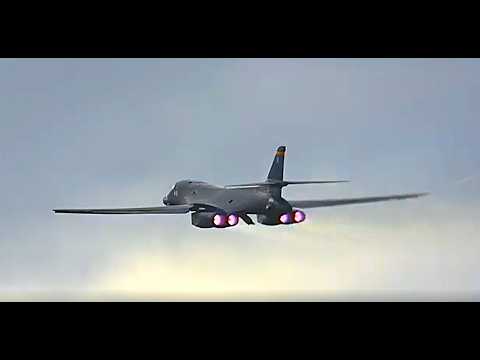
Before the hasty and unexpected departure of the bombers on Sunday, B-1s had been deployed to RAF Fairford continuously since March, initially in support of Operation Epic Fury against Iran. A contingent of B-52s had also conducted strikes on Iran from Fairford, but left back in July. The base is a major operational hub for the U.S. military in the United Kingdom, and regularly hosts strategic aircraft, including bombers and U-2 spy planes.
B-1s first mission to Iran out of RAF Fairford UK
Dan Rivers, U.S. correspondent for ITV News in the United Kingdom, was among the first to report on Monday that the B-1’s quick departure had been prompted by concerns about a potential Spiderweb-like drone attack ordered by Iran, citing an unnamed source. Other outlets have subsequently reported similar details, all sourced to anonymous U.S. and British officials.
“They didn’t fly out by accident,” U.S. President Donald Trump told reporters during a gaggle at the White House on Monday when asked about why the B-1s had left Fairford. “There were some threats.”
“I can’t tell you that, but if they did, they’ll suffer greatly,” Trump added in response to a separate question about whether Iran might have managed to get weaponized drones into the United Kingdom.
“What you saw there was the Secretary of War [Pete Hegseth], out of an abundance of caution, trying to protect our guys,” U.S. Vice President J.D. Vance said during a separate press engagement on Monday. “We do feel, with some confidence, that the Iranians are – they’re trying to do what the Iranian state has done for 49 years, which is engage in acts of terrorism against the United States, and a lot of other people, as well. So, we are being extremely cautious.”
Another satellite image offering an overall view of RAF Fairford. Google Earth
“We’ve documented what happened [near Fairford] last week. I wouldn’t just directly tie that to the move that was made,” U.S. Secretary of State and National Security Advisor Marco Rubio also told members of the press on Monday. “The only reason why you guys are focused on how many planes are at Fairford is because of the threat that happened last week.”
“We have confidence in the security of all of our bases, because all of our bases are [sic] theoretically could be threatened at any moment,” he added.
LIVE: UK police gives update on explosive-related arrests near air base used by US
Rubio’s comments notwithstanding, the remarks from Trump and Vance make clear that there was some recent threat intelligence that contributed to the decision to pull the bombers from Fairford. There are still many questions about the exact nature of the potential attacks, and how imminent, or not, the danger may have been.
Regardless, as mentioned, the prospect of a near-field drone attack on a base like Fairford carried out by actors in close proximity is extremely plausible, and the barrier to entry to such an operation is relatively low. Spiderweb may have thrust this reality into the public consciousness in dramatic fashion, but the danger well predates that operation, and even the start of Russia’s all-out invasion of Ukraine in 2022.
TWZ has been highlighting exactly these kinds of threats in the course of a decade or so now of regular reporting on drone incursions over U.S. and foreign military facilities and critical infrastructure, as well as American naval vessels operating offshore. Langley Air Force Base in Virginia and Barksdale Air Force Base in Louisiana, some of America’s most strategic airbases domestically, are among the facilities that have had to grapple with this in the past. After the Langley incident, in particular, it had become clear to the larger public what we had been reporting for many years, that the United States does not control the airspace over even its most critical military installations.
New footage of yet another act of Russian terrorism on EU soil, showing the drone loaded with explosives on the tarmac at Leipzig/Halle Airport, just meters from a Ukrainian Antonov An-124 cargo aircraft.
— SPRAVDI — Stratcom Centre (@StratcomCentre) August 5, 2026
A drone attack on Fairford would also not necessarily have had to come from somewhere very close by. Longer-range one-way attack drones are steadily proliferating, and can be launched using a variety of methods from positions on the ground, as well as vessels at sea. TWZ explored the very real threat of sea-based drone attacks, including ones conducted covertly, and Iran’s specific ability to carry them out globally, following the leak of an FBI alert back in March.
The proliferation of lower-end one-way-attack drones has ‘democratized’ precision-guided attacks, even for non-state actors. The fielding of automated targeting capabilities, driven by developments in artificial intelligence and machine learning, is also becoming more and more widespread. That technology will soon enable these weapons to find and strike even moving targets on their own. Even without anyone at the controls and without the drone putting out any detectable radio emissions, very effective precision attacks can still be launched at static targets, like known parking areas for aircraft at airbases, just by using basic map coordinates or Google Earth. It’s also worth pointing out here that the definition of a stand-off attack is becoming increasingly blurry, with even quadcopter-type drones capable of flying miles away to conduct a kamikaze attack on a target based on a set of GPS coordinates.
Ukrainian Saker UAV with AI capabilities. The video shows the process of target recognition. It has reportedly already been put to use several times against Russian targets. pic.twitter.com/NVNJyxUjGP
Overall, it is an indisputable fact that aircraft sitting exposed on a flightline are particularly vulnerable to drone attacks, as well as other threats. This is something U.S. military officials have acknowledged themselves. Fairford, where B-1s and other bombers have no option but to park out in the open in well-established areas that are plainly visible from outside the base’s immediate perimeter, is indicative of how American military aircraft are generally positioned on the ground abroad and at home.
As we wrote all the way back in 2017:
“Similar swarming strikes could be unleashed behind the front lines as well, with hugely expensive and low density/high demand combat aircraft being especially vulnerable to this sort of tactic—something General James Holmes alluded to inadvertently while speaking to the Air Force Association, stating:
‘Imagine a world where somebody flies a couple hundred of those and flies one down the intake of my F-22s with just a small weapon on it.’
Actually, it would be even easier to just strike the jets as they sit idle and vulnerable on the flight line. One swarm could see a whole squadron of tightly packed fighters destroyed without even having a chance to fight back.“
This picture of a B-1 at Fairford on March 7 shows how bombers and other aircraft are typically parked at the base. The line of photographers along the fence line also underscores how close those parking spots are to the base’s immediate perimeter. JUSTIN TALLIS / AFP via Getty Images
“I’m not a big fan of hardening infrastructure,” Gen. Kenneth Wilsbach said at a roundtable at the Air and Space Forces Association’s main annual symposium in 2023, offering a prime example of this viewpoint. “The reason is because of the advent of precision-guided weapons … you saw what we did to the Iraqi Air Force and their hardened aircraft shelters. They’re not so hard when you put a 2,000-pound bomb right through the roof.”
Wilsbach was commander of Pacific Air Forces (PACAF) at the time. He subsequently became head of ACC and is now Chief of Staff of the Air Force, the service’s top officer.
“I think that I don’t want to spend a lot of money on hardening shelters. Unless you’re going to send something 100 feet or more underground, we can blow it up, and so can they,” Wilsbach said in an interview with Breaking Defense in July of this year when asked explicitly if his position changed. “So, the economics of building a shelter that is impervious to a strike doesn’t work.”
U.S. Air Force Chief of Staff Gen. Ken Wilsbach speaks during an all-call with personnel at RAF Mildenhall, another base in the United Kingdom, on July 13, 2026. USAF
“I think the economics favor defending your airspace, defending your ground space with systems that can defeat the incoming rounds, versus building a shelter,” he added. “Some people would argue, well, you should do both. Well, that’s even more expensive. And the other thing is, the shelter doesn’t go anywhere.”
It is fair to point out that typical above-ground hardened aircraft shelters are not invulnerable, especially to attacks involving ballistic, cruise, and certain air-launched threats. There are also substantial cost and other factors to consider when it comes to any major military construction effort.
That being said, having more hardened infrastructure also imposes costs and complexities on opponents, who have to dedicate more advanced and costly munitions and other resources to ensure targets are neutralized. Shelters have the knock-on benefit of complicating the targeting process for an enemy by obscuring where aircraft are or are not positioned, to begin with. An opponent has to treat shelters like they are full even if they are empty.
When thinking about hardened aircraft shelters, stereotypical Cold War-era reinforced concrete structures typically come to mind. However, they do not all have to be built to a one-size-fits-all standard with the same degree of hardening across the board to be useful. Shorter-range drone attacks are typically carried out by platforms carrying small explosive charges or that are designed to drop small bomblets. Even longer-range one-way-attack drones generally have smaller warheads than traditional missiles, they also hit with less kinetic energy.
A US Air Force F-16 fighter sits inside a traditional hardened aircraft shelter. USAF
A structure that shields against smaller blasts and shrapnel, also including from cluster munitions that can be readily scattered across wide areas, is one that then has to be addressed by more capable weapons. This could even include mobile or otherwise temporary shelters that offer sufficient concealment and protection.
This picture shows what the Air Force described as a “prototype portable camouflage, concealment, and deception hangar” in use during Exercise Hoodoo Sea in 2023. Air National Guard The prototype portable hangar intended to support camouflage, concealment, and deception efforts in use during an Air National Guard-led exercise in 2023. Air National Guard
Eliminating, or at least substantially mitigating, the lowest rung of threats creates a dilemma for opponents, who then have to decide whether it is even worthwhile to attempt certain types of attacks. There is clear value in narrowing the available options for the enemy and pushing them toward having to expend higher-end, more expensive munitions, that are available in smaller quantities, and that traditional active defenses may be better optimized to handle. As an example, it may be more viable to shoot down a small barrage of incoming cruise missiles than a swarm of dozens of drones.
There are magazine and stockpile depth issues at play here, too. This is something that has also been brought front and center by the conflict with Iran, which has fueled already long-standing concerns about the sufficiency of stockpiles of air defense interceptors, other critical munitions, and the capacity to replenish them quickly. This is something the British government, among others, is also grappling with, as you can read more about in our separate reporting here.
Furthermore, losses of aircraft on the ground are not without their own costs, which are even more lopsided if an opponent can simply use lower-cost weaponized drones. U.S. bombers are particularly expensive and prized assets that are in short supply compared to the level of demand, as seen during the height of combat operations earlier this year against Iran. When it comes to B-1s, specifically, there are only 45 of them left in service today. A dozen of them being knocked out in one go would have major repercussions strategically. Losing even one would also be a propaganda coup for whoever might be responsible.
How many shelters can we build for the upgrade cost of one Zumwalt class DDG that will probably be parted out in 10 years anyway?
On top of all this, the U.S. military simply will not always have the luxury of being able to rapidly relocate aircraft in response to threats. Moving a dozen bombers on short notice takes massive resources. It is not just aircraft that have to be repositioned, but supporting personnel and assets, as well as weapons and fuel. Having to shift to alternate locations could easily have negative impacts on tempo and other aspects of operations, especially in the midst of actual conflict. RAF Fairford is one of only a few bases globally that can support bomber operations for a prolonged period.
“There is value in some light protection against small, unmanned threats,” Gen. Wilsbach also told Breaking Defense in July. “Some of them — just nets that are up that keep a small, few-$100 drone from getting next to a $2 billion aircraft. That actually works, [and is] really cheap.”
A graphic included a contracting notice put out by authorities at Langley Air Force Base in 2024 showing how sunshade-type shelters at the base might be equipped with anti-drone nets. USAF
“It’s not either or,” Wilsbach said in a separate interview with Air & Space Forces Magazine in July. “The net keeps the small UAS [uncrewed aerial system] from getting close to an aircraft that you’re trying to protect… That’s a very inexpensive way to give you some modicum of protection without killing your checkbook on really exquisite defensive systems.”
In spite of these institutional developments, action to implement such recommendations on a broad basis has continued to lag. There still does not appear to be any major department-wide push to build new hardened aircraft shelters or other fortified structures at facilities globally. The U.S. Air Force does have a certain number of hardened aircraft shelters at bases now, especially in the Pacific and Europe.
This is all despite a very visible trend in the construction of new aircraft shelters and other hardened infrastructure elsewhere around the globe, including in China, Russia, North Korea, and Iran. Even before Operation Spiderweb, Russia had already initiated a large-scale effort to build new hardened shelters at various bases, especially on the occupied Crimean Peninsula, in the face of expanding Ukrainian drone and missile attacks. This effort has now extended to building the huge hardened shelters for the country’s bomber force, something the country has never done before.
“It is inappropriate to discuss matters of intelligence, and we will not discuss specific force protection measures,” a U.S. Air Force spokesperson told TWZ yesterday when asked about the reports that Iranian drone threats prompted the recent removal of the B-1s from Fairford. “The Department will continue to assess the threat environment surrounding our installations and take appropriate actions to protect our people, our platforms and the bases where our forces operate from.”
We still do not know exactly how serious or imminent any recent threat to the B-1s at Fairford was that contributed to their hasty departure. Regardless, the reports of concerns about potential drone attacks remain very plausible. The reality here is that a dozen bombers were yanked from a forward operating location in Europe without an adversary ever having to fire a shot. This is a problem set that is only growing, especially as lessons and expertise on low-end weaponized drones from the war in Ukraine are spreading around the globe.
A B-1 bomber seen parked out in the open at RAF Fairford on March 15, 2026. Matthew Horwood/Getty Images
Erecting new aircraft shelters and other hardened infrastructure would not be a full solution to those threats by themselves. At the same time, they would be a valuable added layer of defense, and a passive one that would have a huge logistical footprint to operate once the initial investment is made. The lack of movement to better fortify American airbases globally is only becoming more and more glaring, and it remains to be seen if real action will not occur until lessons are learned in a most unfortunate way.
Readers of the Los Angeles Times Sports section give their thoughts on USC’s loss to Oregon, and the horrific late hit, the Dodgers playoff chances and more.
Those Yankees had a Hall of Fame closer. In 1998, Mariano Rivera got the final four outs of the clincher. In 1999, he got the final four outs. In 2000, he got the final three outs.
These Dodgers? Their closer? Your guess is as good as theirs.
“I do not know,” said Andrew Friedman, the Dodgers’ president of baseball operations.
This might be a good time to know, no? The regular season is over. The postseason is upon us.
“I feel very confident that we’re going to be going into October with arguably the deepest and best pitching staff that we’ve had,” he said. “Exactly what their roles will be and how things will be ordered, I don’t know right now.”
Perhaps the Dodgers are overthinking this. They have done that before.
Tanner Scott converted 25 of 29 save opportunities this season, including saves Friday and Saturday.
But the strongest hitters on the Dodgers’ possible division series opponents are left-handed — Matt Olson, Drake Baldwin and Michael Harris II on the Atlanta Braves; Bryce Harper and Kyle Schwarber on the Philadelphia Phillies — and the Dodgers may not hesitate to use the left-handed Scott against those guys in the seventh or eighth inning.
In theory, these Dodgers have three candidates as closer: Scott, their marquee closer signing for 2025 and actual closer for most of 2026; Edwin Díaz, their marquee closer signing for 2026; and Roki Sasaki, their accidental closer last October.
Yet Friedman said he could envision scenarios where Evan Phillips could close, or even Brock Stewart, or perhaps Alex Vesia against a run of left-handed hitters. The Dodgers hope to activate Edgardo Henriquez for the playoffs. The starters could close, too, especially a well-rested Tyler Glasnow early in the first round.
“We’ve got a number of guys that we really trust,” Friedman said. “Depending on who we’re playing, how deep our starter goes, there are a lot of factors that would go into it. But, more than who will be that pitcher on the mound, is the fact that we have so many candidates we feel really good about.”
That the Dodgers have improvised an October relief corps, transformed a rookie starter into a postseason closer and run bullpen games in elimination games might lead you to conclude Friedman does not really believe in the concept of a designated closer. In a world where “high leverage” is the trendy jargon, maybe a closer is more of an anachronism than a necessity.
That the Dodgers invested $72 million in Scott and $69 million in Díaz in consecutive winters would lead you to conclude Friedman does indeed believe in the concept of a designated closer. In fact, he does.
“I think it’s extremely helpful,” he said.
The Dodgers do not hold splashy news conferences to introduce closer candidates. When the Dodgers introduced Díaz last December, Friedman proudly introduced the three-time All-Star as the closer.
“For us, we have a high bar,” Friedman said then. “To name someone the closer, you have to be one of the best. You have to be elite and dominant at what you do.”
Díaz’s season went awry, limited to 18⅔ innings after elbow surgery and then a neck injury. But in five September appearances since his activation from the injured list, he gave up no runs and one hit in five innings, striking out nine of the 17 batters he faced. (In the same span, Scott has given up no runs and two hits in five innings, striking out nine of the 19 batters he faced.)
Dodgers reliever Edwin Díaz high-fives teammates in the dugout after pitching against the San Diego Padres on Sept. 22.
(Gina Ferazzi / Los Angeles Times)
“What we’ve seen out of Díaz recently has been really encouraging,” Dodgers manager Dave Roberts said. “What that ultimately means, we don’t know yet.
“Of course, if you have a reliever who is really hot in October, that can be extremely valuable. It doesn’t mean you use him exclusively in the ninth. But, by and large, that’s how you would use him.”
Roberts saluted Díaz for working hard to get back to an uncertain assignment.
“I’m really proud of Edwin, given the deal he signed, to work it out, to go to the minors, to come back and pitch in whatever role we ask of him, that shows a lot of character,” Roberts said.
“He could have mailed this year in. That’s something that has not gone unnoticed. And we’ll see how October plays out.”
The Dodgers could be forgiven for believing it will all work out in the end. Their final pitcher in each of the World Series clinchers under Friedman, all starters: Julio Urías in 2020, Walker Buehler in 2024, Yoshinobu Yamamoto in 2025.
The pitchers to record a postseason save in those championship seasons: Kenley Jansen, Joe Kelly, Brusdar Graterol, Blake Treinen and Urias in 2020; Alex Vesia, Treinen and Buehler in 2024; Glasnow, Sasaki and Treinen in 2025.
The organizational flexibility can lead to some uncomfortable discussions within the clubhouse, as Roberts and coaches keep the relievers updated on the latest plan for how they might be used.
“It is tricky,” Roberts said. “These are constant conversations. They are ever-evolving. They are ongoing.”
If all goes right for the Dodgers, those conversations will be ongoing for another month.