Labor

Adelmo Becerra: ‘It Is Essential to Defend Labor Rights Against Regressive Reform’

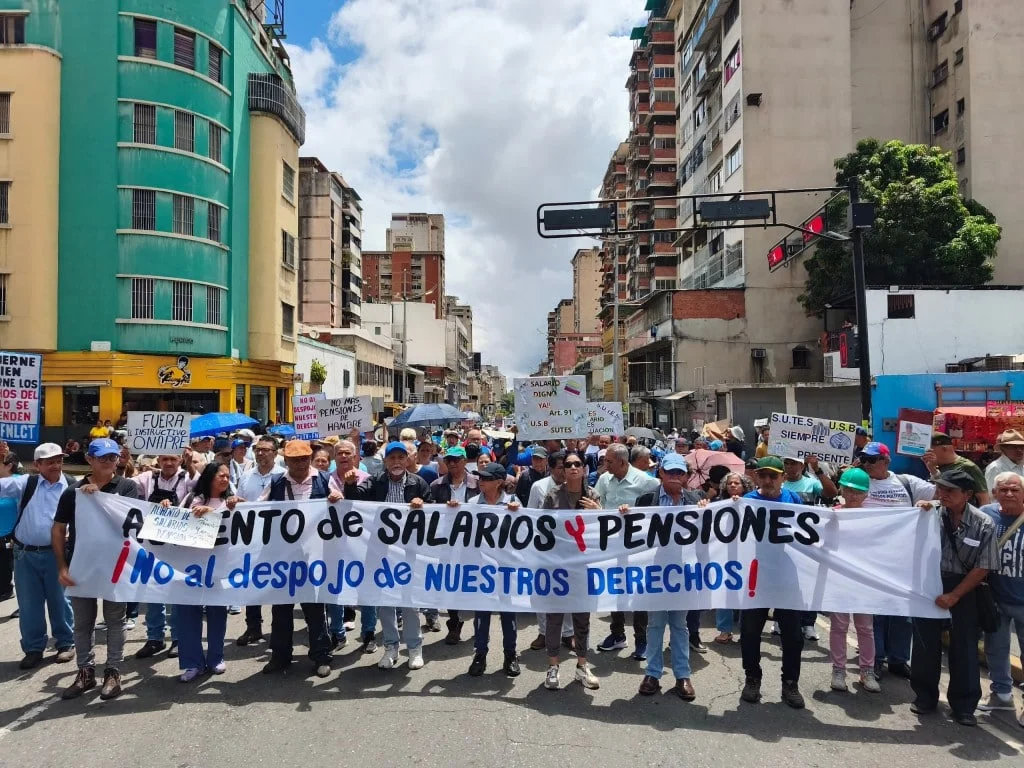
Becerra argues that there are economic conditions for a gradual restoration of the minimum wage. (Venezuelanalysis)

Adelmo Becerra is a Venezuelan trade union representative from the National Institute for Training and Socialist Education (INCES) and also a member of David Hernández Oduber Revolutionary Current (CREDAHO). In the past, he worked as an instructor at INCES and as a worker in the steel industry in Ciudad Guayana. In this interview, Becerra discusses the Venezuelan government’s recent labor policies under US sanctions, the growing labor reform prospects, and the present struggles and challenges facing the working class.

On May 1, the Venezuelan government raised non-wage bonuses while maintaining the minimum wage frozen. What was your reaction to these announcements? How do you place them in the context of recent labor policies in Venezuela?

The announcements represent a continuity of the labor policies of recent years. There had been expectations for restoration of the minimum wage in the short term. According to Article 91 of the Constitution, it must be adjusted once a year. Naturally, it would be a partial and limited restoration. But it is important to place the announcements in the context of various processes currently unfolding in the labor sphere.

In Venezuela, the Social Dialogue Forum, a body coordinated by the International Labour Organization (ILO), has been in place since 2021. Several trade union federations participate in this forum, including the Independent Trade Union Alliance of Venezuela (ASI), to which the INCES union belongs, the Venezuelan Workers’ Confederation (CTV), the Bolivarian Socialist Workers’ Federation (CBST), as well as government representatives. The Social Dialogue Forum is not binding, but Venezuela has ratified conventions, including Convention 26, which establishes consultations with trade union organizations for setting the minimum wage. However, a mechanism for establishing it has not yet been agreed upon.

At the same time, the government led by Acting President Delcy Rodríguez has established the National Dialogue for Labor Consensus, which includes the CTV, ASI, and CBST labor federations, along with representatives from business associations FEDECÁMARAS and FEDEINDUSTRIA, and government officials.

Then there is the struggle on the streets that has unfolded in the country in recent years. I would single out the August 2018 Program for Growth, Recovery, and Economic Prosperity as a starting point. This program produced two instruments that have denied wage and labor rights established in collective bargaining agreements, even disregarding the Constitution and labor legislation. I am referring to Memorandum 2792, from October 2018, which sets out the broad guidelines regarding the suspension of collective bargaining rights. And then there is the 2021 ONAPRE Directive, which addresses its specific application. Both instruments remain in force, and their repeal has been a constant demand in the workers’ struggles.

So, back to May 1, there was no restoration of the minimum wage. However, the announcements stem from agreements reached at the National Dialogue for Labor Consensus. And the signed minutes refer to a “wage consultation process” that will begin in May. This indicates that the issue of the minimum wage is far from settled. Similarly, the agreements “urge” the private sector to establish this same US $240 income floor, specifying that it may be through “non-wage bonuses,” although in reality there are no mechanisms to enforce it.

But the minimum wage is not an isolated issue. We have heard spokespersons from both the government and the private sector speak of labor reform. Just in recent days, in a meeting of the Social Dialogue Forum, one of the agreements was to “coordinate consultations of labor-related laws with the National Assembly.”

Adelmo Becerra during a rally in 2023. (Frenpodes)

Let us take a closer look at the issue of bonuses versus wages. What are the consequences of this “bonus-ization” policy?

The main impact is on workers’ entitlements, specifically in the form of social benefits. These benefits accumulate over the course of the employment relationship, and their primary function is to recognize seniority so that it can be taken into account when paying out benefits.

But there is also another concept: retroactivity. This means that benefits are paid based on the final salary. Thus, when an employment relationship ends at a private company, the benefits paid as compensation are calculated based on the final wage and the duration of the employment. The same applies to those retiring from the public sector, or from a private company that offers a retirement plan –which is very rare in Venezuela.

This issue is very important because it has been at the center of the historical Venezuelan working-class struggles following the oil-led industrialization and the 1936 Labor Law. Social benefits allowed Venezuelan families to have assets, purchase homes or other property, and also served as a safety net in contexts of unemployment or economic crisis. This safety net no longer exists today because the minimum wage has been effectively eliminated.

Then there are other important factors, such as social security contributions, which fund the Venezuelan Social Security Institute (IVSS). This is a universal solidarity-based system in which both employers and employees contribute, and it serves as the economic foundation for old-age pensions and other IVSS social support initiatives, such as in healthcare. So, this system is also in crisis because contributions are computed based on wages.

The result is that for the private sector, both social security contributions and severance pay are practically free right now, and that in turn affects job stability.

Speaking specifically about INCES, which is a state-run training institute, what is the current employment situation like? Do the staff work full-time?

According to data recently provided to us by the authorities, there are approximately 11,500 people on the payroll, 6,800 of them active workers, and the rest are retirees. The vast majority receive only the “economic war” and bonuses, now set at $200 and $40 a month, respectively. Through our collective bargaining agreement, retirees also receive the food bonus, which is not the case in general in the public sector.

In recent years, as a union, we have held discussions with INCES authorities and the Ministry of Labor –which oversees the institute –to ease the requirement that people come to work every day while we try to secure better conditions. Simply put, if their income isn’t enough, they should have the option of trying to find a second or third job. With the recent increases in bonuses, the authorities are putting more pressure on workers to return to full-time work, but it’s complicated.

We are still in that struggle to improve conditions, even though we have not even been able to make progress on a memorandum of understanding to improve the socioeconomic clauses of the current collective bargaining agreement. But that’s the priority.

Turning now to the private sector, you have participated in the Observatory for Labor Dignity, which has investigated current working conditions in Venezuela. In general terms, why the focus on the private sector? And what is the reality of that world?

The first reason is that unionization rates in the private sector have historically always been very low in our country. At its peak, in the 1970s, it reached 30%, and today it is likely below 15% –and that is being optimistic. We must take into account the massive migration of recent years. It is a very low unionization rate, and in sectors such as retail or services, there are practically no unions.

Consequently, the level of job insecurity and vulnerability is much higher, especially given the government’s policy of restraining official workplace inspections based on tacit agreements with the private sector under the pretext of “promoting employment.”

One issue that came up repeatedly was the lack of maternity protection which was one of the advances of the 2012 Labor Law. Right now, in the companies we investigated, such as [department store chain] Traki or [textile distributor] El Castillo, no woman wants to get pregnant because that would mean immediately losing their job. Not only that, but it would also make it impossible to get a reference letter or a recommendation for another job.

It is important to stress that the approach to undermine or marginalize collective bargaining agreements was not limited to the public sector. The private sector also adopted it. Under the guise of “protecting jobs”–claiming that companies would go bankrupt otherwise –many employers sent workers home on minimum wage, with some being called back to work at the employer’s discretion.

Given the context of crisis and precariousness, under US economic sanctions, that has persisted for several years now, is the impact on workers’ awareness noticeable?

Indeed, there is a very acute lack of awareness regarding labor rights. The new generation of workers is entering the workforce with virtually no knowledge of the rights they hold by law, in part because they have never had access to them.

So, issues like employment contracts, pay stubs, or even working hours themselves are a problem. It is very common to have 10, 12, or even 14-hour workdays, or for the two days off per week not to be upheld. At Traki, this is usually respected, although the two days are not necessarily consecutive. In El Castillo, the average is one and a half days. In El Castillo, there is also a practice of having workers sign their contract and a resignation letter at the same time, which is obviously illegal.

Another characteristic is high turnover. Fixed-term contracts have become the norm. Although after several contracts the law grants the right to continued employment, this is practically nonexistent. The vast majority of people move around a great deal between jobs. This is, of course, made possible by the fact that benefits are nearly non-existent and it is extremely cheap to dismiss a worker, which in turn keeps people in a much more precarious situation.

But there is an important factor to consider: the shift in subjectivity –and this, of course, is not a phenomenon unique to Venezuela. A few days ago, I watched an interview with a North American researcher who found that for young people in the US a job at Starbucks seems like a good opportunity –better than average. Here, in some of the testimonies we collected, young people expressed satisfaction with working at the Traki department stores. They earn some $250 a month, work 9- or 10-hour shifts –while conditions elsewhere are worse –have two days off a week, and would like to stay there. Therefore, the notion of work with rights has also eroded. Issues like overtime pay, not to mention social security, become irrelevant due to the precariousness of the present. The employment relationship, which includes rights and mechanisms to protect them, is beginning to be viewed simply as a commercial transaction.

Former President Hugo Chávez wrote “social justice” as he enacted the 2012 Labor Law. (Archive)

Labor reform talks are underway. Government spokespeople talk about “updating” the law following the impact of US sanctions, while private sector spokespeople are also voicing their demands. What is currently at stake?

I think there are several aspects to consider. We are clearly witnessing an aggressive campaign being waged by the media, along with well-known economists and influencers, to impose a narrative that any wage increase will cause inflation. As such, the only way to raise wages is to reduce employers’ responsibilities and eliminate the retroactive nature of labor benefits.

The 2012 Labor Law reinstated the calculation of benefits based on the last salary. This had been modified, amid much controversy, during the Caldera administration in the 1990s. Still, unlike proposals we see now, retroactivity was not completely eliminated. There is a proposal to let workers choose between receiving benefits immediately or accumulating them, which completely distorts the concept and takes advantage of current economic difficulties. If wages are insufficient, workers obviously prefer to collect as much as they can right away. Even if the current $240 minimum income was turned into salaries, this would represent less than 50% of the food basket for a family, according to different estimates.

I believe it is essential to reject the narrative promoted by groups like Fedecámaras, to reject the premise that we must give up our rights and historic achievements because there are no conditions to sustain them. For starters, there is a lack of transparency and information. We do not even have reliable information on the size of the economically active population. The last census was in 2011, and following the massive migration over the past decade, we do not know what the current picture looks like.

According to 2021 data from the National Institute of Statistics (INE), there were roughly 4 million workers in the formal private sector, just over 3 million in the public sector, and around 5 million pensioners. Therefore, with that precise data, and with transparent information on revenues, it would be possible to quantify whether or not there are resources. Because GDP was heavily hit by the US blockade but has been growing—according to the Central Bank, for 20 consecutive quarters –but the last adjustment to the minimum wage, to $30 per month, was in March 2022.

Another piece of data we lack is the distribution of surpluses among the workforce, private capital, and the state. According to research by former Minister Víctor Álvarez, the labor share reached 40% by 2010. Currently, according to estimates by researcher Carlos Dürich, that figure may be around 20%, which is what is typically observed in African countries with high levels of poverty and inequality.

We need all that data if we want to discuss what is possible or not, and how the wealth that is generated will be distributed. This is especially true in this context, where, outrageously, the US controls Venezuela’s oil sales. Now the Central Bank will be subject to external auditing, but the public still lacks information. So there is a second layer of opacity there.

In summary, under the present conditions, with an unfavorable correlation of forces and foreign control over the Venezuelan economy, it is not possible to restore the minimum wage and have it cover living costs, as established in Article 91 of the Constitution. Nevertheless, economists and trade union federations have argued that there are conditions for a partial restoration.

In this complex context, both domestically and internationally, what is the path forward for the workers’ struggle in the country?

For me, there is one fundamental factor –one that has been evident in recent years –and that is social pressure. Workers are the only force that has exerted pressure on the government, and to some extent on the private sector as well, particularly since 2022. In 2023, the government placated the protests by introducing the “economic war” bonus. The minimum wage had been devalued to $5 at the beginning of the year, and 15 days later the government set the bonus at $25, and then in May at $70. Even if it happens through non-wage bonuses, it is a struggle with the bourgeoisie over the country’s income.

The May 1 increase, again via bonuses, is also a response to pressure from the streets. We will now see what happens with the wage consultations and labor reform plans. The challenge is to sustain the actions and protests over time. But that sustainability depends on unity.

venezuela trade unions minimum wagevenezuela trade unions minimum wage
Labor organizations have demanded an increase of the minimum wage. (Archive)

And what are the challenges to building unity around the labor agenda? A few weeks ago, we witnessed an absurd demonstration by certain union factions asking for support at the US Embassy.

Precisely. On May 1, there was a unified demonstration that likely drew 3,000 to 4,000 people in Caracas, along with smaller marches in other parts of the country. Various labor federations were present, ranging from the more left-wing ones like the CUTV to those social-democratic or Christian-democratic like the CTV or ASI.

On March 12, we also had a united mobilization, but since then the forces have split. And that weakens us because it reduces our impact; the business leaders rub their hands together.

This division has partly to do with issues of leadership and protagonism, and with the fact that not all federations understand that we must play on two chessboards at this moment: on one hand, the negotiating tables, and on the other, applying pressure in the streets.

But the division is also due to a particular factor: a group called the Coalición Sindical, whose main focus is not so much labor or wages, but politics. It serves as the vehicle within the labor movement for María Corina Machado’s political faction, which is obviously trying to capitalize on labor issues for its own agenda. This group has no interest in joint actions to secure better conditions –even if only partial –for the working class; rather, its priority is to stoke conflict.

That is why we see actions such as demonstrations in front of the US Embassy, calling on Trump to intervene. But right now, the priority for the US is stability, so it can advance its energy and mining interests. It views social pressure as something the Venezuelan government must handle on its own.

In short, it is essential at this moment to have a united force with a specific agenda: to fight for the restoration of wages, for the reopening of collective bargaining negotiations, for the release of unjustly imprisoned workers and trade unionists, and to defend labor rights against regressive reform efforts.


Source link

Column: What the audience has learned since the first ‘Devil Wears Prada’

Each of us has a shortlist of movies we find ourselves rewatching, movies we will finish even if they’re half-over when we tune in. Even if it’s being streamed with commercials. Even if it’s playing on a 19-inch black-and-white television with no sound in a crowded dive bar.

For the past 20 years, “The Devil Wears Prada” has been one of those films for me and other Americans who entered the workforce just in time to say goodbye to pensions and hello to increases in student loan debt. Generation X had the highest homeownership rate relative to their age, so when the housing bubble popped in 2008, it hit Gen X the hardest. And yet this same group of workers is also shouldering the care of aging parents and adult children. According to Pew Research, more than half of 40-year-olds (“elder millennials”) and more than a third of 50-year-olds fall into this category, doing so with shrinking financial margins because wages have lagged behind the cost of living our entire adult lives.

While the current No. 1 movie at the box office — the biopic chronicling Michael Jackson’s rise from Gary, Ind., in 1966 to headlining stadiums in 1988 — may evoke a sense of nostalgia for Gen X, the sequel to “Devil” (which opens in theaters Friday) feels more like a peer review.

Twenty years ago, when we last saw our protagonist, Andrea Sachs, she had decided to leave her big corporate job because success in that environment required her to be someone she didn’t like or respect. As young professionals, seeing a fictional character like Sachs leave a toxic work environment felt like a satisfying conclusion in 2006. However, over the decades, you learn work/life balance is an oxymoron and characteristics such as integrity and loyalty are often valued but rarely useful on a spreadsheet.

Don’t get me wrong — I love the campy humor, the fashion and soundtrack of the first “Devil.” However, the thing that elevated the Oscar-nominated film to its cultlike status is the same thing that lifted similarly edgy coming-of-age stories such as “The Graduate” in 1967, “American Graffiti” in 1973 and “Fast Times at Ridgemont High” in 1982: truth. Despite the fantasy elements of beautiful and talented people dressed in clothing designed by the upper echelon of the fashion industry, “Devil” has a sequel because what Sachs was experiencing felt real. Many of us have been there — behind on rent, desperately trying to build a career, navigating friends and romance.

The line the character Nigel told an overwhelmed Sachs in the original — “let me know when your whole life goes up in smoke … means it’s time for a promotion” — was more than a humorous quip. It was also foreshadowing for the young professionals in the audience who had not yet learned that being good at your job, or even great, wasn’t enough to keep it.

We know that all too well now. Just this week, the Wall Street Journal reported corporate layoffs in the first quarter of 2026 surpassed 200,000. Of course, it wasn’t always like this.

According to the Economic Policy Institute, in the immediate three decades after World War II, workers saw their hourly compensation in line with the country’s productivity growth. That’s because during the height of the Cold War — when employers offered employees pensions and union participation was at its peak — corporate America was incentivized to offer labor a larger share of the profits as a way to counteract communism. However, when the Soviet Union fell in the early 1990s, so did the motivation from domestic CEOs to share profits with workers. The split between capital and labor began measurably in 1970, and the gap has only increased since.

Twenty years ago — before the 2008 recession, the pandemic and the nearly $1-trillion price tag stemming from the Afghanistan war — it was believable a young professional like Sachs would walk away from a good corporate job for the sake of her integrity. However, given how fraught the current work environment feels, with the shadow of artificial intelligence looming over entry-level positions across multiple disciplines, would we find Sachs’ actions believable today? Or laudable? Or would we demand that she compromise her principles because it’s pragmatic to let go of the idealism of youth? Time has forced many of us to begrudgingly accept that possibility. Our younger selves might not approve, but our older selves know that’s how most people survive long enough in their careers to have a sequel.

YouTube: @LZGrandersonShow

Source link

Lee vows zero compromise on workplace safety in Labor Day address

South Korean President Lee Jae Myung delivers an address at an event commemorating Labor Day at Cheong Wa Dae on Friday. Photo by Yonhap

President Lee Jae Myung on Friday pledged unwavering commitment to workplace safety in his address to mark Labor Day at Cheong Wa Dae.

“I will neither compromise nor make concessions on workplace safety,” he said, vowing to build a “normal” country where no worker ever has to risk their life at work.

“Safeguarding workers is the most basic responsibility of any nation and any business,” he said.

The president also pushed back against the notion that worker welfare and business growth are incompatible, stressing the two are mutually dependent.

“We can only move forward by breaking free from the outdated thinking that being pro-business means being anti-worker,” he said. “Growth has a future only when labor stands behind it” he said.

Amid growing concerns that artificial intelligence (AI) threatens jobs, the president sought to reassure the public that the government prioritizes people over productivity.

“As technologies advance, the prevailing view is that machines powered by artificial intelligence will largely replace human labor,” he said. “But it is not right to ask workers to sacrifice themselves in the name of productivity,” he said, adding that growth that leaves workers behind is not growth at all.

Lee called workers “the backbone of our economy,” who keep things running on the ground and drive the spending that fuels growth.

It marked the first time a Labor Day event has been held at Cheong Wa Dae. The event brought together some 130 participants, including key figures from labor, management and government, as well as workers from diverse occupations, to mark the occasion.

It also marked the first time two major umbrella labor unions — the Federation of Korean Trade Unions and the Korean Confederation of Trade Unions — that are said to hold different political views both took part in such an event.

South Korea had initially observed Labor Day on May 1 before it was renamed “Workers’ Day” in 1963. The government restored the name to Labor Day last year and designated it as a national holiday earlier this year, allowing all workers to take the day off.

In celebration of Labor Day, a variety of events took place across the country, highlighting the value of work and its role in improving quality of life and driving economic growth.

Copyright (c) Yonhap News Agency prohibits its content from being redistributed or reprinted without consent, and forbids the content from being learned and used by artificial intelligence systems.

Source link

Samsung faces setback in AI memory race amid labor tensions

Samsung Electronics union members hold placards with the words ‘Abolish upper limit’ during a protest outside the company’s semiconductor plant in Pyeongtaek, South Korea, 23 April 2026. The union has announced plans to launch an 18-day general strike from 21 May to 07 June, which could result in losses for the company of up to 30 trillion won (17.34 billion euros). Photo by HAN MYUNG-GU / EPA

April 26 (Asia Today) — South Korea’s race for dominance in high-bandwidth memory, a key component for artificial intelligence chips, is diverging as SK hynix consolidates its lead while Samsung Electronics faces mounting labor tensions.

Industry analysts say the competition is increasingly defined not just by technology, but by timing – with early execution and customer alignment proving decisive in securing long-term market share.

SK hynix recently received a corporate innovation award from the Institute of Electrical and Electronics Engineers, recognizing its leadership in developing and mass-producing successive generations of HBM chips. The company has capitalized on surging demand driven by AI computing, strengthening partnerships with major global clients.

SK hynix is rapidly expanding sales of its HBM3E products while simultaneously preparing for next-generation HBM4, supplying samples to key customers and advancing toward mass production. Analysts say early validation and supply relationships formed at this stage are likely to shape long-term market positioning.

In contrast, Samsung is attempting to close the gap through its own HBM4 development but faces internal challenges. Labor disputes over performance-based bonuses have escalated, with unions warning of a general strike. Industry observers say the tensions could affect not only production but also research, development and customer engagement.

HBM products require close collaboration with customers on customized designs and process validation, making speed of initial response a critical factor. Delays in testing or supply can lead to lost contracts, while early entry into supply chains often results in long-term partnerships.

Analysts warn that Samsung’s internal disruptions could weaken its ability to respond during what they describe as a “golden time” in the rapidly expanding AI semiconductor market. If supply stability and development pace falter, customers may shift toward multi-vendor strategies, potentially solidifying SK hynix’s advantage.

Experts also point to structural issues behind repeated labor disputes, including disagreements over performance-based compensation. They suggest moving beyond short-term negotiations toward a more transparent system based on objective metrics such as return on invested capital, total shareholder return and economic value added.

Such reforms, they say, could help prevent prolonged conflicts and support the company’s competitiveness in a fast-moving global market.

— Reported by Asia Today; translated by UPI

© Asia Today. Unauthorized reproduction or redistribution prohibited.

Original Korean report: https://www.asiatoday.co.kr/kn/view.php?key=20260427010008233

Source link

Hiltzik: A not-so-fond farewell to Lori Chavez-DeRemer

Lori Chavez-DeRemer seemed at first to be a good Trump hire as Labor secretary. Wow, were we wrong

It has long become clear that those of us who saw a glimmer of hope in President Trump’s appointment of Lori Chavez-DeRemer as secretary of Labor got snowed.

It wasn’t just, or even chiefly, the miasma of sleaze and corruption that seemed to surround her wherever she went. Or her slavish sucking up to Trump in public, notably at a Cabinet meeting in which she pleaded with Trump to send his immigration goons into Portland, Ore., to “crack down.” (“Thank you for what you’re doing with your agents on ICE,” she said at the August 2025 session.) Fun fact: She had represented a Portland suburb as a Republican for a single House term.

No. It was the gulf between the expectations, even among Democrats, that she might be a decent pick for the job, and the reality.

We fought against sweatshopsWe took on big co. rporations that were cheating their employees. We kept workers safe.

— Former Labor Secretary Robert Reich, recalling his departments accomplishments under Bill Clinton

After all, she had been one of only three Republicans in the House to vote in favor of the so-called PRO Act, which would significantly strengthen collective bargaining rights. (The measure passed the House in 2019 and 2021 but hasn’t gotten out of committee in the current Congress.)

As I reported after her nomination, labor activists and pro-labor politicians made encouraging noises about her. Among them was Sen. Elizabeth Warren (D-Mass.): “It’s a big deal that one of the few Republican lawmakers who have endorsed the PRO Act could lead the Department of Labor,” Warren said. “If Chavez-DeRemer commits as Labor secretary to strengthen labor unions and promote worker power, she’s a strong candidate for the job.”

Get the latest from Michael Hiltzik

Commentary on economics and more from a Pulitzer Prize winner.

She received an explicit endorsement from Randi Weingarten, president of the American Federation of Teachers. “Her record suggests real support of workers & their right to unionize,” Weingarten tweeted. “I hope it means the Trump admin will actually respect collective bargaining and workers’ voices from Teamsters to teachers.”

The betting was that Chavez-DeRemer would be, at the very least, an upgrade from Trump’s previous appointee as Labor secretary during his first term. That was Eugene Scalia, son of the late Supreme Court justice, who had been a lawyer for big corporations fighting unions and resisting workplace regulations.

The most commonly expressed doubt about Chavez-DeRemer was whether she would have the fortitude to maintain a pro-labor stance in the face of the open hostility to workers displayed by Trump and the rest of his administration.

Within months, the answer was clear, and it was no. In May, she ceased enforcing a Biden administration rule that had discouraged businesses from designating their workers as independent contractors, depriving those workers of the legal protections and wage and hour benefits they would have received as employees.

The budget she submitted to Congress last year would slash her agency’s discretionary funding by more than 35%, to $8.6 billion from $13.2 billion, and cut its workforce by nearly 4,000 full-time workers, or more than 26%. In July she announced a plan to rescind 63 regulations that had been designed to help workers.

With language that sounded cribbed from the MAGA playbook, she said her goal is to “eliminate unnecessary regulations that stifle growth and limit opportunity.” Most of the regulations facing the guillotine related to worker health and safety protections.

Brief as it was, Chavez-DeRemer’s tenure wasn’t the first time that the Department of Labor was ill-served by its management. Republican presidents have displayed a decades-long tendency to fill the top spot with political cronies or pro-business activists masquerading as worker advocates, or worse.

Frances Perkins, Franklin Roosevelt’s Labor secretary, recalled having to clean up the agency — not just morally and ethically, but with broom and bucket, when she took over from William Nuckles Doak, Herbert Hoover’s appointee.

The Labor Department was located in a converted apartment building, its interior dark and foreboding, its shadowy corners occupied by silent, hulking men whom Perkins mentally labeled “cigar in the corner of the mouth types. Stale ashtrays and spittoons were everywhere, along with wastebaskets surrounded by mounds of misaimed and crumpled papers. (Its current Washington quarters are in the Frances Perkins Building.)

Doak didn’t seem inclined to leave the premises. Perkins got rid of him by sending him to lunch and packing up his personal effects while he was out.

Perkins’ first step as secretary was to disband an anti-immigrant squad that shook down foreign-born laborers for cash and helped employers harass labor organizers. She set a high standard for the agency, pushing forward legislation establishing the 40-hour workweek and the National Labor Relations Board — and also creating Social Security.

Many of Perkins’ Democratic successors have watched sadly as their efforts have been undone with a change in administrations. Robert Reich, who served under Bill Clinton (and is now an emeritus professor of public policy at UC Berkeley and an assiduous blogger), wrote Tuesday of having loved the agency’s mission: “to protect and raise the standard of living of working Americans.”

With Reich at Labor, the Clinton administration raised the federal minimum wage in 1997 from $3.35 an hour, where it had been stuck since 1980, to $5.15 (albeit still a cheeseparing $10.69 in today’s buying power). “We fought against sweatshops,” Reich recalled. “We took on big corporations that were cheating their employees. We kept workers safe.”

That the agency has been “treated like crap is an insult to generations of hardworking DOL employees, to American workers, to America,” Reich wrote.

Under Trump, the Department of Labor has become just another pro-business front pretending to advocate for workers. Genuine labor advocates are infuriated by its decline, which has proceeded under Republican and Democratic administrations alike.

The budget for its all-important wage and hour division, which enforces laws governing the minimum wage, overtime and prohibitions on child labor, has shrunk by 26% over a decade, according to David Weil, who headed the division under Obama and whose appointment by Biden to head the division was derailed by opposition from Big Business.

“There were 1,050 investigators working for the agency when I had the honor to lead it in the Obama administration,” Weil, who is a professor of social policy and management at Brandeis University, wrote last year. “It has barely over one-half that number now. The agency had 63 times more investigators per workplace in 1939 than in 2024.”

Trump poses as a pro-worker force, but his policies are atrocious for the laboring class. His Labor Department “walked away from a rule that expanded overtime protections to millions of workers,” Weil observed.

“While Congress’s ‘big beautiful bill’ boasts its worker-friendly removal of taxes on overtime, that provision benefits only a small slice of workers and revoking the overtime regulation further reduces the number of workers eligible for overtime protections when working long hours,” he wrote. “Or take the administration’s attack on low-paid workers whose employers hold federal contracts, by rescinding a $15 minimum wage for contractors covered by a Biden-era executive order, which benefited construction workers, purportedly a key Trump constituency.”

The Labor Department plays a role not only in regulating current workplace conditions but looking ahead at the “long-term prospects of our labor markets,” Weil told me Tuesday. “For example, the discussion of ‘affordability’ is rooted not only in rapidly rising price levels but also the low level of long-term earnings growth. Equally, our beliefs about the future prospects of employment and opportunity for college-educated workers are being upended by the potential impacts of AI.”

He added, “Questions like these require that the Labor Department be led by serious and knowledgeable individuals who place the interests of workers as their focus. So far, this administration has shown contempt for this mission,” as is shown by the decline and fall of Chavez-DeRemer.

Sometimes, the departure of an underperforming executive or official presages improvements ahead. That hasn’t been the pattern under Trump, and sadly, it’s not likely to happen at Labor.

Source link

Trump’s Labor Secretary Lori Chavez-DeRemer latest to leave administration | Donald Trump News

Chavez-DeRemer is the third high-profile female official to leave the Trump administration after recent departures of Kristi Noem and Pam Bondi.

US Secretary of Labour Lori Chavez-DeRemer will be leaving her post in the administration of President Donald Trump, the White House has said.

Chavez-DeRemer is the third woman to leave the Trump administration since March, when the president fired Homeland Security Secretary Kristi Noem in the wake of federal immigration raids in Minnesota that led to the deaths of two protesters. Trump also ousted Attorney General Pam Bondi earlier this month.

Recommended Stories

list of 4 itemsend of list

Chavez-DeRemer has done a “phenomenal job” protecting American workers and is set to “take a position in the private sector”, White House Director of Communications Steven Cheung said in a post on X late on Monday, announcing the labour secretary’s departure.

“Keith Sonderling will take on the role of Acting Secretary of Labor,” Cheung added, referring to the current deputy labour secretary.

While Cheung did not give a reason for Chavez-DeRemer’s departure, the New York Post reported in January that she was under investigation for “pursuing an ‘inappropriate’ relationship with a subordinate” and drinking in her office during the work day.

Al Jazeera was unable to independently verify the allegations.

From the beginning of her tenure, Chavez-DeRemer had some notable differences with other members of Trump’s inner circle.

She had voiced support for the pro-union Protecting the Right to Organize Act (PRO Act), earning support for her nomination from some Democrats.

Her appointment was also seen as favoured by Sean O’Brien, the president of the International Brotherhood of Teamsters, who notably spoke in support of Trump’s re-election campaign at the Republican National Convention in July 2024.

However, as the labour secretary, Chavez-DeRemer’s positions have more closely aligned with the Trump administration’s overall anti-regulatory policies, according to US media outlets. During her tenure as secretary, the Labor Department stalled on responding to calls for limits on silica exposure from Appalachian coal miners suffering from the occupational black lung disease.

Chavez-DeRemer is not the first top official to leave the Labor Department during Trump’s second term.

In August 2025, Trump fired the director of the Bureau of Labor Statistics (BLS), Erika McEntarfer, who was appointed by previous President Joe Biden, after a report showed that hiring had slowed in July and was worse in May and June than had previously been reported.

Chavez-DeRemer had supported the president’s move at the time.

“I support the President’s decision to replace Biden’s Commissioner and ensure the American People can trust the important and influential data coming from BLS,” Chavez-DeRemer said in a post on X following McEntarfer’s removal.

Source link

Labor Secretary Lori Chavez-DeRemer is leaving Trump’s Cabinet after abuse of power allegations

Labor Secretary Lori Chavez-DeRemer is out of President Trump’s Cabinet, the White House said Monday, after multiple allegations of abusing her position’s power, including having an affair with a subordinate and drinking alcohol on the job.

Chavez-DeRemer is the third Trump Cabinet member to leave her post after Trump fired his embattled Homeland Security Secretary Kristi Noem in March and ousted Atty. Gen. Pam Bondi earlier this month.

Unlike other recent Cabinet departures, Chavez-DeRemer’s exit was announced by a White House aide, not by the president on his social media account.

“Labor Secretary Lori Chavez-DeRemer will be leaving the Administration to take a position in the private sector,” White House communications director Steven Cheung said on the social media site X. “She has done a phenomenal job in her role by protecting American workers, enacting fair labor practices, and helping Americans gain additional skills to improve their lives.”

He said Keith Sonderling, the current deputy labor secretary, would become acting labor secretary in her place. The news outlet NOTUS was the first to report Chavez-DeRemer’s resignation.

Labor chief, family members faced multiple allegations

Chavez-DeRamer’s departure follows reports that began surfacing in January that she was under a series of investigations.

A New York Times report last Wednesday revealed that the Labor Department’s inspector general was reviewing material showing Chavez-DeRemer and her top aides and family members routinely sent personal messages and requests to young staff members.

Chavez-DeRemer’s husband and father exchanged text messages with young female staff members, according to the newspaper. Some of the staffers were instructed by the secretary and her former deputy chief of staff to “pay attention” to her family, people familiar with the investigation told the Times.

Those messages were uncovered as part of a broader investigation of Chavez-DeRamer’s leadership that began after the New York Post reported in January that a complaint filed with the Labor Department’s inspector general accused Chavez-DeRemer of a relationship with the subordinate.

She also faced allegations that she drank alcohol on the job, and that she tasked aides to plan official trips for primarily personal reasons.

Both the White House and the Labor Department initially said the reports of wrongdoing were baseless. But the official denials became less full-throated as more allegations emerged — and when Chavez-DeRemer might be out of a job became something of an open question in Washington.

At least four Labor Department officials have already been forced from their jobs as the investigation progressed, including Chavez-DeRemer’s former chief of staff and deputy chief of staff, as well as a member of her security detail, with whom she was accused of having the affair, the New York Times reported.

She enjoyed union support — rare for a Republican

Confirmed to Trump’s Cabinet in a 67-32 vote in March 2025, Chavez-DeRemer is a former House GOP lawmaker who had represented a swing district in Oregon. She enjoyed unusual support from unions as a Republican but lost reelection in November 2024.

In her single term in Congress, Chavez-DeRemer backed legislation that would make it easier to unionize on a federal level, as well as a separate bill aimed at protecting Social Security benefits for public-sector employees.

Some prominent labor unions, including the International Brotherhood of Teamsters, backed Chavez-DeRemer, who is a daughter of a Teamster, for Labor secretary. Trump’s decision to pick her was viewed by some political observers as a way to appeal to voters who are members of or affiliated with labor organizations.

But other powerful labor leaders were skeptical when she was tapped for the job, unconvinced that Chavez-DeRemer would pursue a union-friendly agenda as a part of the incoming GOP administration. In her Senate confirmation hearing, some senators questioned whether she would be able to uphold that reputation in an administration that fired thousands of federal employees.

She was a key figure in Trump’s deregulatory push

Aside from reports of wrongdoing in recent months, Chavez-DeRemer had been one of Trump’s more lower-profile Cabinet picks but took key steps to advance the administration’s deregulatory agenda during her tenure.

For instance, the Labor Department last year moved to rewrite or repeal more than 60 workplace regulations it saw as obsolete. The rollbacks included minimum wage requirements for home healthcare workers and people with disabilities, and rules governing exposure to harmful substances and safety procedures at mines. The effort drew condemnation from union leaders and workplace safety experts.

The proposed changes also included eliminating a requirement that employers provide adequate lighting for construction sites and seat belts for agriculture workers in most employer-provided transportation.

During Chavez-DeRemer’s tenure, the Trump administration canceled millions of dollars in international grants that a Labor Department division administered to combat child labor and slave labor around the world, ending their work that had helped reduce the number of child laborers worldwide by 78 million over the last two decades.

The Labor Department has a broad mandate as it relates to the U.S. workforce, including reporting the U.S. unemployment rate, regulating workplace health and safety standards, investigating minimum wage, child labor and overtime pay disputes, and applying laws on union organizing and unlawful terminations.

Kim writes for the Associated Press. AP writers Cathy Bussewitz in New York and Will Weissert in Washington contributed to this report.

Source link

Over 1,000 bargaining requests filed under new labor law

Members of the South Korean Confederation of Trade Unions (KCTU) shout slogans and hold up banners reading ‘Let’s fight for the basic rights of the Workers’ at a rally against the government’s labor policy in Seoul, South Korea, 10 March 2026. File. Photo by JEON HEON-KYUN / EPA

April 10 (Asia Today) — More than 1,000 subcontractor unions have requested collective bargaining with primary contractors in the first month since South Korea’s revised labor law took effect, though relatively few negotiations have begun.

According to the Ministry of Employment and Labor, 1,011 subcontractor unions representing 145,860 workers filed bargaining requests with 372 primary companies as of Wednesday.

In the private sector, 616 unions sought talks with 216 companies, while 395 unions in the public sector filed requests with 156 organizations.

Despite the surge in requests, only 33 companies – about 8.9% – have formally announced the start of negotiations, and just 19 completed the process confirming bargaining parties. Handong Global University is the only case so far where formal talks have begun, holding an initial meeting with a subcontractor union Wednesday.

Officials said the process remains in an early stage, as companies and unions work through procedures such as determining employer status and separating bargaining units.

A total of 170 complaints were filed with the labor commission over companies failing to publicly acknowledge bargaining requests. Of those, 110 were withdrawn and 54 remain under review. In six completed cases, authorities recognized the primary contractor as the employer.

Applications to divide bargaining units have also increased, with 117 filed so far. Thirteen were approved and six rejected. Cases involving Korea Electric Power Corp. and major bank call centers were approved by job function, while other cases were split by union affiliation.

The ministry said the rulings show bargaining structures are not being fragmented indefinitely, countering concerns from businesses.

The government described the current phase as part of establishing a new bargaining framework between contractors and subcontractors.

However, business groups warned the law could increase the burden of negotiating with multiple unions and potentially extend into management decisions. Labor groups, meanwhile, criticized delays by companies in initiating the process.

Even within labor circles, there has been a cautious approach as both sides monitor early rulings and precedents.

Labor Minister Kim Young-hoon said the revised law is intended to institutionalize dialogue between contractors and subcontractors.

“Legal procedures such as bargaining requests and unit separation are part of building a stable framework for dialogue,” he said, adding that the government will continue to support the law’s implementation.

— Reported by Asia Today; translated by UPI

© Asia Today. Unauthorized reproduction or redistribution prohibited.

Original Korean report: https://www.asiatoday.co.kr/kn/view.php?key=20260410010003225

Source link

Venezuela: Rodríguez Announces Labor, Pension, Tax Reforms

Caracas, April 9, 2026 (venezuelanalysis.com) – Venezuelan Acting President Delcy Rodríguez announced a series of upcoming reforms concerning Venezuela’s labor, tax, and pension frameworks during a press conference on Wednesday, April 8. 

Addressing her cabinet at Miraflores Presidential Palace, Rodríguez unveiled the creation of a commission made up of representatives from the state, business sector, active workers, and pensioners to “review labor conditions, address precariousness, and strengthen the social security system.”

Rodríguez acknowledged deficiencies in areas such as working hours, vacation benefits, and pensions, arguing that the present social security system is not sustainable due to insufficient contributions from active workers and the private sector.

The acting president disclosed an upcoming increase to workers’ incomes on May 1, but did not specify if it would come in the form of an adjusted minimum wage or non-wage bonuses. Rodríguez warned that salary adjustments must be “responsible” so that they do not trigger inflation.

Venezuelan authorities have discussed the prospect of reforming the 2012 Labor Law for several months, installing several dialogue commissions and public debates.

The existing labor law, approved by former President Hugo Chávez, prohibits unfair dismissal and outsourcing, enshrines the world’s third-longest maternity leave, guarantees the right to work for both women and people with disabilities, and extends retirement pensions to all workers, including full-time mothers and the self-employed. However, trade unions have pointed out that state institutions and the Labor Ministry have reduced their enforcement of the law in recent years.

Rodríguez’s public broadcast came hours before workers and unions staged a mobilization in Caracas demanding higher wages, improved working conditions, and the repeal of statutes that suspended several collective bargaining rights. In recent protests, workers have called for an end to the government’s bonus-based wage policy and the restoration of collective bargaining agreements.

Venezuela’s minimum wage has remained unchanged since March 2022 at 130 bolívares per month—equivalent at the time to around US $30 but presently worth approximately $0.27 at the official exchange rate.

With the economy heavily constrained by US sanctions, the Venezuelan government relied on non-wage bonuses—paid in bolívares but pegged at a fixed US dollar amount. A recent increase took the so-called Economic War Bonus, paid to public sector employees, to $150 a month. Coupled to a $40 food bonus, it brought the floor income to $190.

Public sector retirees and pensioners receive $130 and $60 Economic War bonuses, and do not access the food bonus.

For their part, business sector representatives have demanded changes to the labor law that reduce costs for employers before any adjustment to the minimum wage. Amid ongoing discussions with the International Labour Organization (ILO), private sector organizations proposed modifying Article 122 of the Labor Law, which establishes that severance payments are calculated based on the last salary earned by the worker.

Tax reform and state asset review

Rodríguez also announced the immediate convening of a National Economic Council tasked with designing a more “efficient” tax model aimed at making Venezuela “more competitive.”

“I hope that this council can produce a new tax model that can generate consensus among the different economic sectors in the country,” the Venezuelan leader stressed. 

She further enacted the Law on Streamlining and Optimization of Administrative Procedures, previously approved by the National Assembly, which seeks to modernize public administration by reducing bureaucracy and incorporating digital tools. According to Rodríguez, the law grants the executive authority to eliminate procedures, shorten timelines, and improve coordination between institutions.

In addition, she ordered the creation of a mixed commission to evaluate which state-owned assets have “strategic” importance, potentially opening some to private investment. However, she clarified that the hydrocarbons sector will remain under state control. The Cisneros group, one of Venezuela’s largest conglomerates, recently announced plans to raise funds ahead of an “expected wave of privatizations.”

The Venezuelan acting administration’s wholesale reform plans follow a recent pro-business overhaul of the Hydrocarbon Law in late January. The South American country’s National Assembly is likewise close to approving a new Mining Law with the goal of attracting foreign investment for extractive activities.

On Wednesday, Rodríguez additionally called for reforms to the country’s housing laws, claiming that there are half a million “frozen” properties presently that could be incorporated into the real estate market.

The acting president’s final announcement was a nationwide “pilgrimage” scheduled from April 19, Venezuela’s Independence Day, to May 1 to demand the lifting of US unilateral coercive measures against the Caribbean nation. While the Trump administration has issued selective and restrictive licenses to favor the participation of Western companies in the Venezuelan oil and mining sectors, wide-reaching sanctions remain in place.

Edited by Ricardo Vaz in Caracas.

Source link

Labor Ministry probes factory after foreign worker injured by air gun

Illustration generated using ChatGPT. Image by Asia Today

April 7 (Asia Today) — South Korea’s Labor Ministry launched a joint inspection Tuesday after a foreign worker was seriously injured at a manufacturing plant in Hwaseong, where a high-pressure air gun was allegedly used, causing internal organ damage.

The Ministry of Employment and Labor said it began a combined labor and occupational safety inspection of the facility following media reports of the incident.

Authorities plan to examine whether the worker was subjected to assault or workplace harassment, as well as possible violations of labor laws, including unpaid wages. The probe will also review compliance with safety regulations under the Industrial Safety and Health Act.

Officials said they will investigate whether the company attempted to conceal the workplace injury or failed to implement required safety measures.

If serious violations are confirmed – including abuse, harassment or major industrial safety breaches – the ministry said it will pursue strict measures such as revoking or restricting employment permits and seeking criminal prosecution.

The victim filed for workers’ compensation benefits Tuesday with the Korea Workers’ Compensation and Welfare Service, and the ministry said it will ensure the claim is processed promptly.

Separately, the ministry has been conducting broader inspections this month targeting workplaces employing large numbers of foreign workers. The inspections focus on sites suspected of labor violations, including those with frequent worker turnover, prior complaints, or records of serious accidents.

As part of the inspections, authorities are conducting surveys and interviews with foreign workers to assess workplace conditions, including potential abuse or harassment.

Labor Minister Kim Young-hoon said all workers, regardless of nationality or immigration status, are entitled to safety and dignity.

“We sincerely apologize to the injured worker and colleagues who witnessed the incident,” Kim said. “We will thoroughly investigate the case and take strict action against any violations of the law.”

— Reported by Asia Today; translated by UPI

© Asia Today. Unauthorized reproduction or redistribution prohibited.

Original Korean report: https://www.asiatoday.co.kr/kn/view.php?key=20260407010002131

Source link

Labor group urges worker-focused shift in industry policy

1 of 2 | Yang Kyung-soo, leader of the Korean Confederation of Trade Unions, speaks during a rally in front of the presidential office Cheong Wa Dae to express their objection to the US-Israel war with Iran and South Korea’s dispatch of troops to the conflict, in Seoul, South Korea, 25 March 2026. File. Photo by YONHAP / EPA

April 3 (Asia Today) — South Korea’s largest labor group on Thursday called on the government to adopt a more worker-centered approach in shaping industrial and trade policies, emphasizing job security amid economic and technological changes.

The Korean Confederation of Trade Unions made the request during a meeting with Industry Minister Kim Jeong-kwan at its headquarters in central Seoul.

The group said employment stability must be a key consideration in industrial policymaking and trade negotiations, particularly as industries undergo restructuring driven by artificial intelligence and face overlapping challenges from climate change, global trade tensions and economic uncertainty.

The meeting was organized to raise the need for labor-focused policy and to establish a framework for ongoing communication and cooperation with the government.

Union officials, including Chairman Yang Kyung-soo, Vice Chairman Jeon Ho-il and other senior staff, attended the session, along with ministry officials responsible for industrial and manufacturing policy.

Yang said industrial and trade policies are directly tied to workers’ livelihoods and warned that policies focused primarily on corporate competitiveness could shift economic burdens onto labor.

“Government agencies must rethink their view of labor,” he said. “Labor is not a cost but the foundation that sustains industry.”

He added that industrial transitions should not come at the expense of workers and called for what he described as a “just transition” that protects jobs and working conditions.

The union said it would continue engaging with the government to push for broader changes aimed at placing workers at the center of economic policy decisions.

— Reported by Asia Today; translated by UPI

© Asia Today. Unauthorized reproduction or redistribution prohibited.

Original Korean report: https://www.asiatoday.co.kr/kn/view.php?key=20260403010001087

Source link

Andrew Friedman on looming labor battle and ‘noise’ around the Dodgers

Dodgers president of baseball operations Andrew Friedman went into the offseason expecting outfielder Kyle Tucker to sign elsewhere.

Sure, Friedman was confident in what the Dodgers could provide on and off the field to the 29-year-old four-time All-Star. And Tucker was a rare hitter who could actually elevate an already star-powered Dodgers lineup. But with the team unwilling to offer a super long-term deal, their chances at landing the best free-agent hitter available this past offseason felt “incredibly low.”

“I can’t remember a time where a player has taken a shorter-term, higher-AAV deal when they’ve had an actual long-term contract on the table,” Friedman said Wednesday.

The Dodgers, however, had already pulled off a bigger surprise when closer Edwin Díaz chose them over returning to the Mets this past December.

The team’s pitch, which included a conversation with the Dodgers’ director of family programs Patricia Romero, discussions about preparation and player resources, and a championship track record, helped land both top-tier free agents.

Of course it didn’t hurt that though Tucker’s contract was only four years, it was worth $240 million. Taking deferrals into account, the net-present day value set an MLB record at about $57 million per year.

The Dodgers’ aggressive offseason, coming off consecutive World Series titles, once again makes them the favorite entering the 2026 season.

They wrap up their Cactus League schedule this week, as World Baseball Classic participants trickle back into camp, and baseball operations leadership make final opening day roster decisions.

Before Friedman headed back to Los Angeles, he spoke with The Times on a range of topics. Here’s part of that conversion, edited for length and clarity.

Q: When it comes to the WBC, there’s variance on how supportive teams are. You have Shohei Ohtani participating as a position player, Yoshinobu Yamamoto pitching after an extra-short offseason, Kiké Hernández supporting Puerto Rico in person while rehabbing. How have you landed in being highly flexible?

Friedman: Obviously everything is case by case. But in a vacuum, we are incredibly supportive of the World Baseball Classic and what it does for our game worldwide. We saw it in ‘23, we saw it this past year, with just how important this is to the players, the staff, the fans — and just how exciting it is for baseball.

So that part’s easy. Now you layer on our situation, us trying to win a World Series. For position players, it’s easier to justify. For pitchers, it’s way harder. Throwing at that intensity in March is really, really challenging. And so we feel like our role is to work with each of our players and have conversations and share our thoughts, listen to their thoughts, and then answers kind of fall out of that.

Q: It’s such a cliche to say you can never have too much pitching, but with this group, are you close?

Friedman: I’ve learned my lesson to never say that we have enough pitching. But I do feel like we are breaking camp with the most talented one through 20 arms — which gets at, obviously, who we’ll break with, and then depth behind it — that we’ve ever had.

Q: Between Díaz, who’s part of that equation, and Tucker, you signed two players this offseason who you didn’t necessarily expect to land. What does that say about this organization and what you’ve done the last few years?

Friedman: Our biggest, most overarching goal is to be a destination spot, where our own players don’t want to leave, where players on other teams are looking longingly, because we feel like championships fall out of that. By having the right environment, having the right culture, that helps your star players want to stay, it helps in the recruitment of others. So we’re way better at it today than we were five years ago. But it’s like a living organism that we have to continue to foster and nurture and develop. And we hope we’re way better at it five years from now.

Q: On that note, the Dodgers are very much caught in the middle of CBA posturing with the current agreement expiring this year. You hear a lot of players saying the Dodgers are doing it the right way and other teams could be doing something similar. On the other hand, the league appears to be floating a salary cap, and plenty of fans are accusing the Dodgers of “ruining baseball.” What’s it been like to see those conflicting narratives?

Friedman: Obviously see it, come across it, hear it quite a bit. But we’re just not that focused on it. We’re a really healthy organization, and the partnership we have with our fans is our guiding light. And we’re doing everything we can to put a team out there that our fans really connect with, and that they feel that partnership with all that they pour into us, and don’t really think about it in any other terms.

And so obviously, there’s a lot of narratives that get extrapolated from that. But our sole focus is on ourselves and the partnership we have with our fans and the rest of it to us, it’s kind of just noise.

Q: You guys raised the bar years ago to, “We’re going to be in the postseason every year.” But there were clear frustrations from the fan base when that wasn’t consistently leading to championships. Is it fair to say that this continued push is almost a response to that frustration?

Friedman: Each year we’ve poured everything we have into winning. And in October, you need a really talented roster, and you need some good fortune. And there’s years where we haven’t been as talented as we wanted to be, whether it’s injuries or lack of performance. There’s years we’ve had really bad fortune, there’s years we’ve had good fortune. And a lot of that is the game, and it’s what I both love and hate about it.

I wouldn’t say our mindset is all that different. But obviously, when you’re in a moment in time with an incredibly talented roster, I think the mindset is, ‘Don’t sit back on your heels, be aggressive, and don’t be nonchalant about the opportunity that we have in front of us.’ And so it’s more the idea of pressing an advantage and being aggressive on that front.

Q: I’m sure when you were pursuing Ohtani, you looked into the revenue ramifications of signing him. Has this been about what you expected? Has it exceeded your expectations?

Friedman: Oh, it’s far exceeded. I don’t think the human brain could have comprehended it correctly. It’s been a perfect storm on a lot of levels, and something that has definitely far exceeded our expectations.”

Q: A three-peat seems to be the goal. Is there such a thing as a successful season without winning a championship, or has this team gotten to a point where you really have to win a World Series in order to claim success?

Friedman: Everything for us, all of our energy and focus, is on doing everything we can to win a championship this year. And our first goal is to win the division and be in position to have a bye. Last year, we added to the degree of difficulty [by winning the division but having to play in the wild-card round] in a way that I’d like to avoid this year.

So that’s the first goal. And then obviously that puts you in the best position to accomplish our ultimate goal, which is winning a World Series. So that’s what all of our energy and focus is on.

And, obviously, if we win the World Series this year, it will be a three-peat. But it’s not how my brain processes it. We’ve won back-to-back, and those are in the bank. And now it’s, do everything we can to win this year, and it’s its own unique, disparate year.

Source link

Labor union rallies behind Korea Zinc before key shareholder battle

A smelter of Korea Zinc. The company is scheduled to hold a high-stakes shareholders’ meeting Tuesday. Photo by Korea Zinc

SEOUL, March 20 (UPI) — Korea Zinc’s incumbent management and its major shareholder, Young Poong, are locked in a fierce showdown ahead of a regular shareholders’ meeting Tuesday.

The world’s largest non-ferrous metal producer said Friday that it posted record sales and profits last year, which led to high dividends and other shareholder-friendly policies.

Citing the strong performance, Korea Zinc has called for the leadership continuity, as the 2026 shareholders’ meeting would select at least five board members out of 15 seats. The term of Chairman Yun B. Choi is also set to expire.

“We believe that our continued efforts to improve corporate governance and expand shareholder returns have laid the foundation to steadily grow our business and operate our organization in a stable manner,” the firm said in a statement.

But, Young Poong argued that proxy advisers and the National Pension Service, another key Korea Zinc shareholder, have effectively supported its position by opposing the reappointment of Choi as an inside director.

According to Young Poong, such decisions suggest that “this is no longer merely a management control dispute, but judgment over potential structural flaws in corporate governance and failures of oversight.”

Since early 2025, Korea Zinc has been fighting to repel an aggressive takeover bid from Young Poong, which has teamed up with the country’s leading private equity firm, MBK Partners.

The battle came to a head at the March 2025 shareholders’ meeting, and another high-stakes clash is looming at this month’s gathering.

Each side reportedly controls roughly 40% of the voting shares, while NPS holds a 5.2% stake.

Meanwhile, the labor union at Korea Zinc expressed strong support for the current board, urging the NPS to immediately reverse its decision.

“We will fight to the end to prevent the dark hand of speculative capital from tainting our sacred workplace at this shareholders’ meeting,” the union said in a statement.

“If our warning is ignored and the company is undermined, we will mobilize all possible means, including a general strike, to wage an all-out struggle,” it said.

Source link

WNBA, players reach a labor deal. Here’s what needs to happen next

p]:text-cms-story-body-color-text clearfix”>

Storm forward Nneka Ogwumike talks with teammates during a huddle before a game in June 2025.

Seattle Storm forward Nneka Ogwumike (3), president of the WNBA players’ union, said for the first time, player salaries will be tied to a meaningful share of league revenue.

(Lindsey Wasson / Associated Press)

The league and players association have not made the terms public yet, but the salary cap will start at $7 million, up from $1.5 million in 2025, and the supermax will start at $1.4 million, up from $249,244 in 2025, a person with knowledge of negotiations not authorized to discuss them publicly told The Times. ESPN was the first to report the figures.

The total salary cap will jump by around 4.64 times the previous amount. The super maximum salary will be elevated by 5.61 times the previous amount. It means the top players will be eligible for larger raises than the league’s middle class.

The average salary will be $600,000, a bump from the previous average of $120,000, and the minimum salary will be more than $300,000, up from $66,079.

“For the first time, player salaries are tied to a truly meaningful share of league revenue, driving exponential growth in the salary cap, increasing average compensation beyond half a million dollars and raising the standard across facilities, staffing and support,” union president Nneka Ogwumike told reporters.

The main sticking point during negotiations was revenue sharing, and that number will be around 20% for the entirety of the multi-year deal. The league had previously offered 15.5%, a source told The Times, and players went down from their 40% ask to around 26% at the end of February, and then reached the agreement around 20% on Wednesday morning. The Athletic first reported the shift in revenue sharing figures.

Players had been negotiating for a percentage of overall revenue without factoring in expenses while the WNBA was seeking sharing tied to net revenue, mirroring the NBA’s structure that deducts expenses before sharing 50% of profits. The players secured a gross revenue deal, which gives them a cut of WNBA revenue without factoring in expenses, a person with knowledge of the deal not authorized to discuss it publicly told The Times.

“This deal is going to be transformational, and you’ll see all the details hopefully soon,” WNBPA vice president Breanna Stewart told reporters on Wednesday. “But it’s gonna build and help create a system where everybody is getting exactly what they deserve and more from on the court and off the court aspects.”

Source link

Contributor: War abroad, injustices at home and a theme running through it all

As the U.S. wades even deeper into the conflict with Iran, some Democratic and progressive political figures are trying to figure out how to connect the public’s wariness about war with concerns about affordability and the widespread reaction against President Trump’s xenophobic immigration policies.

If you’re looking for a template to do it well, one can be found in the words and actions of a political figure who recently passed away: the Rev. Jesse Jackson.

For while attention after his death has rightfully focused on Jackson’s long involvement with the civil rights movement, the more telling lesson for this moment is how his presidential campaigns connected a concern for addressing domestic disenfranchisement with a resolute stance against U.S. military adventures — a message that built on and echoed the Rev. Martin Luther King Jr.’s landmark 1967 speech against the Vietnam War, economic exploitation and racial injustice.

Jackson’s candidacies in 1984 and 1988 emerged at a moment when the social compacts forged by the labor, civil rights and women’s movements of the 20th century were being systematically undone. Deindustrialization was hollowing out working-class communities. Reaganism was consolidating power around tax cuts for the wealthy, deregulation and attacks on unions. A new corporate consensus was hardening — one that increasingly shaped both major parties — prioritizing financial elites while disciplining labor and shrinking the public sphere.

Sound familiar?

Jackson refused to accept that such a right-wing and corporate realignment was inevitable. His Rainbow Coalition was far more ambitious than a candidate-centered campaign. It was an attempt to build an organized, multiracial, cross-class political front capable of contesting the direction of the country itself.

The Rainbow brought together constituencies that conventional political wisdom said could not unite — Black voters in the South, industrial workers in the Midwest, family farmers in crisis, Latino and Native organizers, Arab American activists, peace advocates, labor insurgents and progressive whites.

Jackson’s platform did not treat these groups as symbolic additions to a coalition; it linked their material interests. Farmers facing foreclosure were not an afterthought — the farm crisis was up front. Deindustrialized workers were not rhetorical props — trade, jobs and industrial policy were central. Civil rights were braided together with economic justice.

And crucially, Jackson insisted, as King had, that economic populism could not be separated from anti-militarism.

At the height of the Cold War, amid Reagan’s military buildup and interventionist doctrine, Jackson argued that bloated Pentagon budgets were not abstract line items. They were resources diverted from schools, healthcare, housing and jobs. He connected the violence of abandonment at home to the violence of intervention abroad — and his campaign called for redirecting military spending toward human needs and for diplomacy over escalation.

When Jackson thundered that we should “choose the human race over the nuclear race,” this was not a simple turn of phrase. It was integral to the Rainbow’s moral and economic logic. A government that prioritizes war over welfare, weapons over workers, cannot sustain democratic life.

That clarity feels especially salient today, as the United States continues to pursue military interventions and proxy conflicts whose legality and human cost are deeply contested. Once again, defense budgets swell while public goods strain. Once again, dissent against war is treated as disloyalty. Jackson rejected that false choice decades ago. He understood that militarism abroad reinforces inequality and immorality at home.

Jackson’s 1988 campaign captured millions of votes, won primaries and caucuses across the country and forced issues into the Democratic Party that party elites preferred to sideline. He demonstrated that a progressive program grounded in the lived experiences of ordinary people — rural collapse, urban disinvestment, plant closures, racial injustice and war — could assemble a national constituency.

Unfortunately, after Jackson’s last campaign, the Rainbow’s experiment in independent organizational life was folded too tightly into the mainstream Democratic Party. While that seemed a strategy to achieve a broader front, it meant that the progressive anchor was unmoored — and the effort dissolved before it could truly mature.

But the lessons of that era may be more relevant than ever.

Today, we again confront an ever-ascendant rightward turn buttressed by concentrated corporate power and normalized militarism. As in Jackson’s day, some leaders seek to deflect our attention, blaming economic challenges on the proximate “other” — in his era, Black women taking welfare, in our era, immigrants taking jobs — rather than those with power.

Jackson understood that defeating reactionary politics required isolating it — not only morally, but structurally — by assembling a coalition larger than the right’s base and rooted in shared material demands. He understood that hope had to be organized and that peace had to be part of prosperity. His campaigns showed that racial justice, labor rights, rural survival, gender equality and anti-war politics were not competing claims but interlocking ones.

Protest has surged in the United States, particularly after the excesses in Minnesota. But protest alone does not prevent consolidation. Nor do narrow electoral bargains that leave the underlying corporate and military consensus intact.

At a time when both parties remain deeply entangled with corporate and defense interests, remembering the promise of the Rainbow is not nostalgia. It is instruction.

Rishi Awatramani is a postdoctoral scholar in sociology at USC, where Manuel Pastor is a professor of sociology and the director of the Equity Research Institute.

Source link