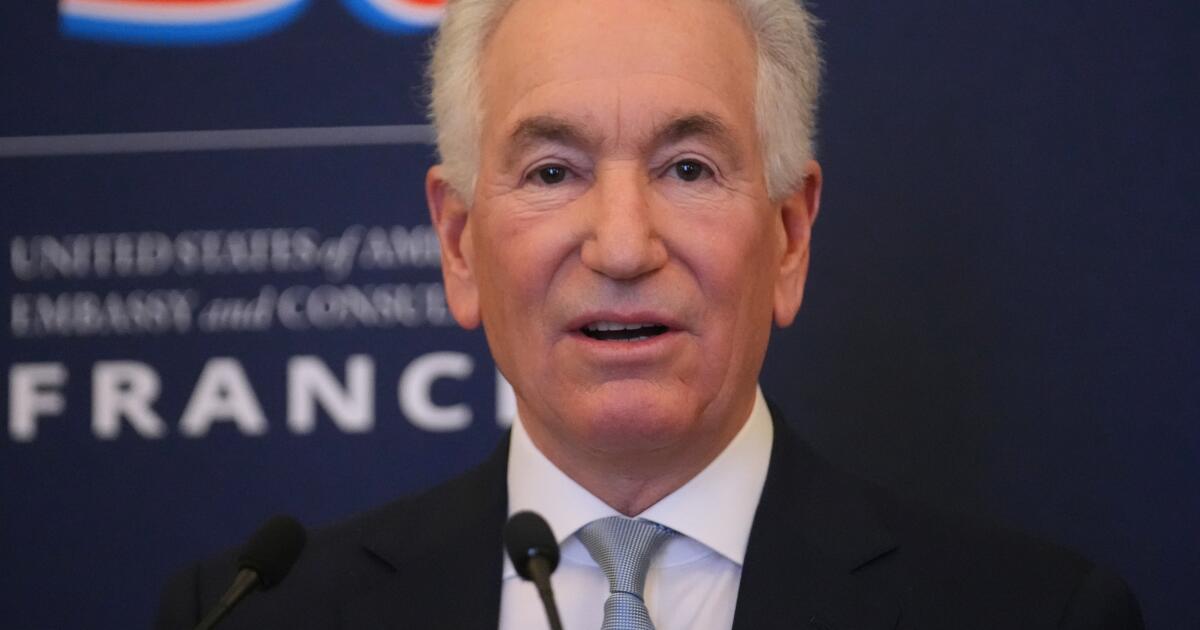
Kushner

Trump is leaning on son-in-law Jared Kushner for difficult diplomacy

As the dawn rose on President Trump’s second term, one key figure from his first administration stood back, content to focus on his personal business interests and not retake a formal government role.

Now, nearly a year into Trump 2.0, Trump’s son-in-law Jared Kushner has been drawn back into the foreign policy fold and is taking a greater role in delicate peace negotiations. Talks had initially been led almost solo by special envoy Steve Witkoff, a real estate mogul who had no government experience before this year.

The shift reflects a sense among Trump’s inner circle that Kushner, who has diplomatic experience, complements Witkoff’s negotiating style and can bridge seemingly intractable differences to close a deal, according to several current and former administration officials who, like others, spoke on condition of anonymity to discuss the internal deliberations.

That role was on display this weekend as Kushner and Witkoff took part in a blitz of diplomacy in Miami.

On Sunday, they concluded two days of talks with Russian negotiator Kirill Dmitriev in Miami on the latest proposals to end Russia’s war in Ukraine.

The talks with Dmitriev came after they met on Friday in Florida with the Ukrainian negotiating team, led by Rustem Umerov, as well as senior British, French and German national security officials. The Ukrainians and European officials stuck around Florida for more talks with U.S. government officials facilitated by Trump’s envoys.

Witkoff and Kushner also squeezed in meetings on Friday with Turkish and Qatari officials to discuss the fragile truce between Israel and Hamas in Gaza as they look to implement the second phase of Trump’s ceasefire plan.

Kushner and Witkoff employ contrasting styles

Witkoff, a longtime pal of Trump’s, is seen by some inside the administration as an oversize character who has traveled the world for diplomatic negotiations on his private jet and does not miss an opportunity to publicly praise the president for his foreign policy acumen, the officials say.

Kushner has his own complicated business interests in the Middle East and a sometimes transactional outlook to diplomacy that has distressed some officials in European capitals, a Western diplomat said.

Still, Kushner is seen as a more credible negotiator than Witkoff, who is viewed by many Ukrainian and European officials as overly deferential to Russian interests during the war that began with Moscow’s invasion in February 2022, the diplomat said.

“Kushner has a bit more of a track record from the first administration,” said Ian Kelly, a retired career diplomat and former U.S. ambassador to Georgia who now teaches diplomacy at Northwestern University. Kelly stressed, however, that the jury is still out on Kushner’s intervention.

Trump views Kushner as a “trusted family member and talented adviser” who has played a pivotal role in some of his biggest foreign policy successes, said White House deputy press secretary Anna Kelly.

Trump and Witkoff “often seek Mr. Kushner’s input given his experience with complex negotiations, and Mr. Kushner has been generous in lending his valuable expertise when asked,” Kelly added.

State Department spokesman Tommy Pigott called Kushner “a world-class negotiator.” Pigott noted that Secretary of State Marco Rubio is grateful for Kushner’s “willingness to serve our country and help President Trump solve some of the world’s most complex challenges.”

In an interview with CBS’ “60 Minutes” in October, Kushner spoke about his unconventional approach to diplomacy.

“I was trained in foreign policy really in President Trump’s first term by seeing an outsider president come into Washington with a different school of foreign policy than had been brought in place for the 20 or 30 years prior,” he said.

But some Democrats and government oversight groups have expressed skepticism about Kushner’s role in shaping the administration policies in the Middle East while he manages billions of dollars in investments, including from Saudi Arabia and Qatar’s sovereign wealth funds through his firm, Affinity Partners.

Similarly, Witkoff has faced scrutiny for his and his family’s deep business ties to Gulf nations. Witkoff last year partnered with members of Trump’s family to launch a cryptocurrency company, World Liberty Financial, which received a $2 billion investment from a United Arab Emirates-controlled wealth fund.

“What people call conflicts of interests, Steve and I call experience and trusted relationships that we have throughout the world,” said Kushner, who is not drawing a salary from the White House for his advisory role.

White House counsel David Warrington said in a statement that Kushner’s efforts for Trump “are undertaken in full compliance with the law.”

“Given that Jared Kushner was a critical part of the efforts leading to the historic Abraham Accords and other diplomatic successes in the first Trump Administration, the President asked Mr. Kushner to be available as the President engages in similar efforts to bring peace to the world,” Warrington said in a statement, referring to Trump’s first-term effort that normalized relations between Israel and several Arab nations. “Mr. Kushner has agreed to do so in his capacity as a private citizen.”

Kelly and other veterans of U.S. diplomatic encounters with the Russians over many years are also skeptical about Kushner’s ability to secure a Russia-Ukraine deal because Witkoff technically remains in the lead.

“I don’t see that the Witkoff approach is going to work,” Kelly said. “He doesn’t really read the Russians well. He misunderstands what they say and reports the misunderstandings back to Washington and the Europeans.”

“They seem to have this idea that the magic key is money: investment and development,” Kelly said. “But these guys don’t care about that, they are not real estate guys except in the sense that they want the land, period.”

Kushner was out of the spotlight until he wasn’t

For the first half of the year, Kushner stayed out of the spotlight, even as he pushed, unsuccessfully in some cases, to install some former associates — those with whom he worked on negotiating the Abraham Accords — into powerful roles in the new administration, according to the current and former administration officials.

Kushner had told Trump and others that while he would not be joining the second-term White House, he stood ready to offer his counsel if it was desired. That is a role he also played on a few occasions during the Biden years as the Democratic administration tried, without success, to expand the Abraham Accords.

Although Kushner remained an informal sounding board for Trump and top advisers, he resisted getting directly involved, even as the president expanded his peacemaking pursuits, until it became clear to him and others that the job might be too much for Witkoff to seal on his own, the officials said.

As Trump’s efforts to forge an agreement to end the Israel-Hamas war in Gaza faltered over the summer, Kushner came in, trading on his experience and contacts in negotiating the Abraham Accords to help Witkoff push Trump’s plan over the finish line.

Agreed to in late September after frantic talks surrounding the annual U.N. General Assembly, the 20-point plan is still a work in progress, but its implementation is being coordinated by Kushner and numerous members of his Abraham Accords team.

“We always bring Jared when we want to get that deal closed,” Trump told Israel’s parliament, the Knesset, shortly after the agreement. “We need that brain on occasion.”

As soon as the Gaza plan was finalized, Kushner said he was returning to his family and day job in Miami, where he heads a multibillion-dollar private equity firm. His involvement in high-stakes peacemaking was only temporary, Kushner said, joking that his wife, Ivanka, might change the locks if he did not get home soon.

“I’m gonna try to help set it up, and then I’m gonna hopefully go back to my normal life,” Kushner said in October.

But within weeks of shepherding the Gaza ceasefire, Trump turned again to his fixer-in-law to dive into the Russia-Ukraine negotiations. They had been deadlocked for months despite persistent efforts by the White House to lure both Russian President Vladimir Putin and Ukraine’s Volodymyr Zelensky into an agreement.

Trump hinted then that he would continue to lean on Kushner when the stakes are highest, just as he has done.

Lee and Madhani write for the Associated Press.

Source link

Ukraine: European leaders meet Zelensky, Witkoff, Kushner in Berlin

German President Frank-Walter Steinmeier (R) welcomes Ukrainian President Volodymyr Zelensky (L) at Bellevue Palace in Berlin on Monday ahead of three way talks between European, American and Ukrainian delegations on efforts to hammer out a peace deal that is acceptable to all sides. Photo by Hannibal Hanschke/EPA

Dec. 15 (UPI) — British Prime Minister Keir Starmer and German Chancellor Friedrich Merz were set to meet with Ukrainian President Volodymyr Zelensky and U.S. officials in Berlin on Monday in an effort to reach a consensus on what any peace deal with Russia should look like.

The European leaders, along with French President Emmanuel Macron, who has yet to confirm his attendance, will seek to negotiate an alternative to the U.S.-Russia plan currently on the table with a stronger deal for Ukraine with better protections for its security.

The talks will also attempt to keep afloat an EU-brokered agreement to loan Ukraine some of the $246.7 billion of Russia’s assets frozen in European banks and other institutions to help it defend itself and take “forward peace talks from a position of strength,” amid mounting opposition to the plan.

The meeting follows five hours of talks on Sunday between Zelensky and U.S. Special Envoy Steve Witkoff and President Donald Trump‘s son-in-law, Jared Kushner, at the Federal Chancellery that Witkoff said were productive and would resume on Monday.

“Representatives held in-depth discussions regarding the 20-point plan for peace, economic agendas, and more. A lot of progress was made, and they will meet again tomorrow morning,” Witkoff posted on X on Sunday evening.

Zelensky was reported to have dropped demands for NATO membership, if it was what was required to end the war, in exchange for a bilateral defense agreement with the United States similar to an Article 5-like guarantee, along with other guarantees from Ukraine’s European partners.

Article 5 is a cast-iron guarantee, a collective defense principle enshrined in NATO’s constitution under which an armed attack on one member is considered an attack on all members and triggers an obligation for each member to come to its defense.

Following the initial discussions on Monday, Merz’s spokesman confirmed the group would be widened to include “numerous European heads of state and government, as well as the leaders of the EU and NATO.”

The diplomatic focus will shift to Brussels on Thursday when the leaders of all 27 EU nations converge on the Belgian capital for a meeting of the European Council with Ukraine and European security topping the agenda.

Council President Antonio Costa said the summit would address how best to continue defending Europe’s interests and how to “strengthen Ukraine’s negotiating position,” a key element of which necessitated “increased pressure on Russia.”

Costa said that having already committed to providing for Ukraine’s urgent financial needs for 2026-2027, including funding for its military and defense, it was now time to decide how to implement it and that leaders must keep talking on Thursday until an agreement was reached.

Earlier this month, European Commission President Ursula von der Leyen unveiled two options — both controversial — to provide Ukraine with $105.8 billion of the $158.6 it is estimated it will need in the two years through 2027 to keep the country running and being able to continue fighting Russia.

The so-called “reparations loan” option involving using frozen Russian assets only requires a two-thirds majority of EU states to vote for it. The second option under which the EU would use its budget to go borrow on the international capital markets is more problematic because it could be blocked by a single state.

Hungary and Slovakia have indicated they are opposed to either route, while Belgium, home to Euroclear, the clearing house where the majority of Russia’s frozen assets are held, has expressed strong worries that it could be taken to court by Russia were the frozen assets tapped or that it may scare off foreign investors.

Russia has protested that appropriating its assets amounts to theft but the EU says that is not the case because there was nothing to preclude Russia from reclaiming the funds in future — after it has paid war reparations to Ukraine.

Ukraine is set to run out of money early in the New Year.

South Africans honor Nelson Mandela

Large crowds gather outside Nelson Mandela’s former home in the Johannesburg suburb of Houghton to pay their respects on December 7, 2013. Mandela, former South African president and a global icon of the anti-apartheid movement, died on December 5 at age 95 after complications from a recurring lung infection. Photo by Charlie Shoemaker/UPI | License Photo

Source link

Paramount’s $78-billion bid for Warner includes Kushner backing

Paramount is refusing to accept defeat in the Warner Bros. Discovery auction, launching a $78-billion hostile takeover of its rival Monday after being spurned last week in the bidding.

The move comes four days after Warner’s board unanimously selected Netflix as the winner.

Paramount has beefed up its offer with backing from Middle Eastern sovereign wealth funds, including Saudi Arabia, a Chinese firm and President Trump’s son-in-law Jared Kushner’s investment firm Affinity Partners, according to a Monday regulatory filing.

The presence of a member of the president’s family in a proposed corporate takeover, which includes news channel CNN and the historic Warner Bros. properties, immediately complicates an already fraught regulatory picture.

Last week, Netflix had offered $72 billion — or $27.75 a share — for a big chunk of the company: Warner Bros. film and television studios, which hold the rights to Batman, Bugs Bunny and Harry Potter, the expansive lot in Burbank and HBO and HBO Max. Additionally, Netflix would take on more than $10 billion in Warner Bros. debt for a total deal value of $82.7 billion.

Paramount, backed by billionaire Larry Ellison’s family, had entered the final week of the auction with a $25 a share, all-cash offer for all of Warner Bros. Discovery, according to people involved in the auction who were not authorized to comment. In the final hours, Paramount upped its offer to $30 per share — but still came away empty-handed.

Paramount confirmed Monday that it submitted its $30-per-share offer just a few hours before Netflix was announced as the winner.

“We never heard back,” Paramount Chairman and Chief Executive David Ellison told CNBC on Monday morning. “We’re really here to finish what we started.”

Despite the decision by Netflix and Warner Bros. Discovery to pursue a deal, Paramount is directly appealing to shareholders to vote on their offer in what is commonly known as a hostile takeover.

Historically, hostile takeover bids are difficult to pull off, but there have been some notable exceptions, including Elon Musk’s $44-billion acquisition of the company formerly known as Twitter in 2022. Two decades ago, Comcast failed in a hostile takeover bid for Walt Disney Co.

Warner Bros. Discovery said Monday that its board would “carefully review and consider Paramount Skydance’s offer in accordance with the terms of Warner Bros. Discovery’s agreement with Netflix.”

Warner’s board remains supportive of Netflix’s bid, the company said. Shareholders will receive recommendations from the Warner board within 10 business days. The company has long wanted the auction to be wrapped up by Christmas.

“Warner Bros. Discovery stockholders are advised not to take any action at this time with respect to Paramount Skydance’s proposal,” the company said in a statement.

Paramount began its pursuit of Warner in mid-September. It is now bypassing Warner’s board, management and bankers and appealing directly to shareholders in a hostile takeover effort. In a statement, Paramount said its bid was a “superior alternative” to Netflix’s, which will face a rigorous and lengthy antitrust review.

Netflix co-Chief Executive Ted Sarandos said Paramount’s move was “entirely expected.”

“We have a deal done and we are incredibly happy with the deal,” Sarandos said at a UBS conference, adding that he believes Netflix’s takeover of the historic company would be great for shareholders, consumers and Hollywood workers. “We’re superconfident we’re going to get it across the line and finish.”

Already, the biggest weakness in Netflix’s deal was concern that the tech company may not be able to win regulatory approval. The company has more than 300 million streaming subscribers worldwide, and adding HBO Max would more than double the number of subscribers for competing video-on-demand subscription services.

In a statement, Paramount called Netflix’s offer “inferior,” one that would expose Warner shareholders “to a protracted multi-jurisdictional regulatory clearance process with an uncertain outcome.” Paramount has long counted on its warm relationship with President Trump to smooth the regulatory process, at least in the U.S.

Warner Bros. Discovery continues to believe that Netflix submitted the best offer.

Netflix is not buying Warner’s basic cable channels, including CNN, TBS, Food Network and TLC, and Warner figures it can spin off those assets into a separate company, Discovery Global, that would be worth about $3 to $4 a share.

When adding the Discovery Global value with Netflix’s price of $27.75 a share, Warner believes that its shareholders will come away with more than $31 a share for the company — more than what Paramount has offered.

Netflix offered a cash and stock deal. On Friday, the company said it would take a year to 18 months to gain the necessary regulatory approvals. Paramount is banking on investors being concerned about a possible regulatory fallout with the Netflix deal.

“Look, we’re sitting on Wall Street, where cash is still king,” Ellison told CNBC. “We are offering shareholders $17.6 billion more cash than the deal that they currently have signed up on Netflix. We believe when [Warner shareholders] see what is currently in our offer, that that’s what they’ll vote for.”

Since mid-September, Paramount has submitted six bids for all of Warner Bros. Discovery.

Trump said Sunday that Netflix’s deal to buy Warner Bros. Discovery “could be a problem” because of the size of the streaming service’s combined market share. Trump said he “would be involved” in his administration’s decision whether to approve any deal.

Paramount said its $30 per share, all-cash offer represents a 139% premium to Warner’s $12.54 stock price on Sept. 10, the day before Paramount’s pursuit was leaked in the media. With the absorption of Warner’s cable channels and its heavy debt load, the Paramount deal would have an enterprise value of $108.4 billion.

That’s roughly what AT&T paid to buy the company, then called Time Warner Inc., in 2018 after spending nearly two years fighting in court with the first Trump administration.

A federal judge finally cleared the way for AT&T’s takeover, but after three years the phone company wanted to flee Hollywood and made a deal with Discovery’s David Zaslav, allowing his smaller company to take over in 2022.

“The Trump card is the best card Paramount-Skydance has but it could backfire in multiple directions,” New Street Research media analyst Blair Levin said Monday in a note to investors. “As they say in Hollywood, ‘stay tuned.’”

Warner and Netflix could claim that Trump’s Justice Department, if it seeks to intervene, was trying to squash their deal simply because of politics. The inclusion of Kushner in the deal also could open the door to conflict-of-interest arguments.

“Courts, and the public, in the past, have regarded Presidential involvement in antitrust challenges as problematic,” Levin wrote in his note.

Paramount’s 11th-hour offer for Warner contained “opaque” details about its financing, a person involved in the auction who was not authorized to speak publicly told The Times over the weekend. The fuzzy nature of Paramount’s backers gave the Warner board pause in contrast to the Netflix offer, which spelled out its financing, the person said.

In a Securities & Exchange Commission filing Monday, Paramount disclosed that Larry Ellison’s family has provided an $11.8-billion commitment. An additional $24 billion would come from three sovereign wealth funds from Saudi Arabia, Qatar and Abu Dhabi.

The controversial Chinese tech firm Tencent would provide an additional $1 billion, Paramount said. It said RedBird Capital Partners, an investor in Paramount, and Kushner’s Affinity Partners would also provide an undisclosed level of debt financing.

When asked about his son-in-law’s involvement in the Paramount bid, Trump told reporters at the White House: “I don’t know. I’ve never spoken with him about that. He’s really trying to work on Gaza.”

Should Paramount prevail, it would confront a heavy debt load that would bring more layoffs in an industry already reeling from downsizing. “As with Netflix, Paramount’s expected hostile bid for WBD raises significant concerns for our members and the industry,” a spokesperson for the Directors Guild of America said in a statement.

Just like with the AT&T deal for Time Warner, the Trump administration may not have the final say. If the U.S. Justice Department sues to block the Netflix deal, the matter will go before a federal judge.

However, Paramount hired Trump’s former antitrust regulator — Makan Delrahim — in the hope of steering a successful regulatory review. Delrahim joined Paramount in October as its chief legal officer.

“We believe our offer will create a stronger Hollywood. It is in the best interests of the creative community, consumers and the movie theater industry,” David Ellison said in a statement. “We believe they will benefit from the enhanced competition, higher content spend and theatrical release output, and a greater number of movies in theaters as a result of our proposed transaction.”

Paramount’s tender offer is set to expire Jan. 8, 2026, unless it’s extended.

Shares of Warner Bros. jumped 4.4% on Monday to $27.23. Paramount gained 9% to $14.57 a share while Netflix lost 3.4% to $96.79.

Times staff writers Wendy Lee and Stephen Battaglio contributed to this report.

Source link