
kirk

The Repair Shop’s Will Kirk chokes up as he tells guest ‘you’re going to make me cry’

The Repair Shop expert was left fighting back tears after an emotional restoration on the BBC show.

The Repair Shop expert Will Kirk couldn’t hide his emotion as a guest left him feeling choked up.

The woodwork restorer, who has become a fan-favourite on the BBC programme, admitted he was ‘going to cry’ after an emotional restoration.

During Wednesday’s (July 8) episode of the BBC hit show, Will and expert shoe restorer Dean Westmoreland were joined by Barbara Dennison and granddaughter Giovanna.

The duo came into the workshop looking for the experts help to restore a pair of baby shoes holding precious memories of wartime heroism.

The shoes belonged to Barbara and her late father Norman William gave them to her. He was gifted the shoes in Holland in 1945, during the Second World War after saving a little girl.

During a heartfelt moment, Barbara explained: “He was going down the street in Holland and there was a little girl playing in the street. Some shooting started and he grabbed this little girl and jumped into a cellar.

“When the shooting finished, he took her back to her mum and dad. The family must have been really grateful because he saved her. They must have been talking and he told them that he had a little girl, then they brought him these little shoes.”

Pointing at the shoes, she added: “Shortly after that his jeep got blown up but they survived , which is a miracle in itself.”

Dean knew he had a huge task on his hand as he admitted that he was feeling “nervous”. While getting stuck into the restoration, he said: “They’re so delicate and so small that I’m a little bit nervous about handling them.

“Unfortunately, I can’t scale my hands down to get in and do all this fine micro-detail work. The lining on this one is actually, almost all of it has come away. The leather is quite stiff, it’s quite dry so I’m going to have to think about how to hydrate this leather.”

Despite the huge challenge ahead, Dean managed to restore the item and Barbara was left in tears after reuniting with her precious shoes.

Joining Dean and Will back in the workshop, Barbara was tearful as she said: “Oh that’s lovely. Look it’s all stitched on. Oh Dean, thank you.”

She continued: “You’ve done exactly what I wanted. Each crack is just a wonderful memory of my dad and all my kids.”

The moment left Will emotional as he turned to Barbara and Giovanna and admitted: “You’re going to make me cry.”

Barbara was grateful to Dean for all his hard work as she added: “I can’t thank you enough.”

You can catch up on The Repair Shop on BBC iPlayer.

Source link

Locked Capitol doors and more cash for security are the new normal after Minnesota assassination

Nearly a year after the assassination of a Minnesota legislative leader, lawmakers across the U.S. have worked to fortify security in state capitols and improve safeguards when officials are in their communities.

The changes have followed a rise in political violence nationwide that included the stunning assassination last June of Rep. Melissa Hortman, the top Democratic leader in the Minnesota House, and the September killing of conservative activist Charlie Kirk, who was speaking at a college in Utah.

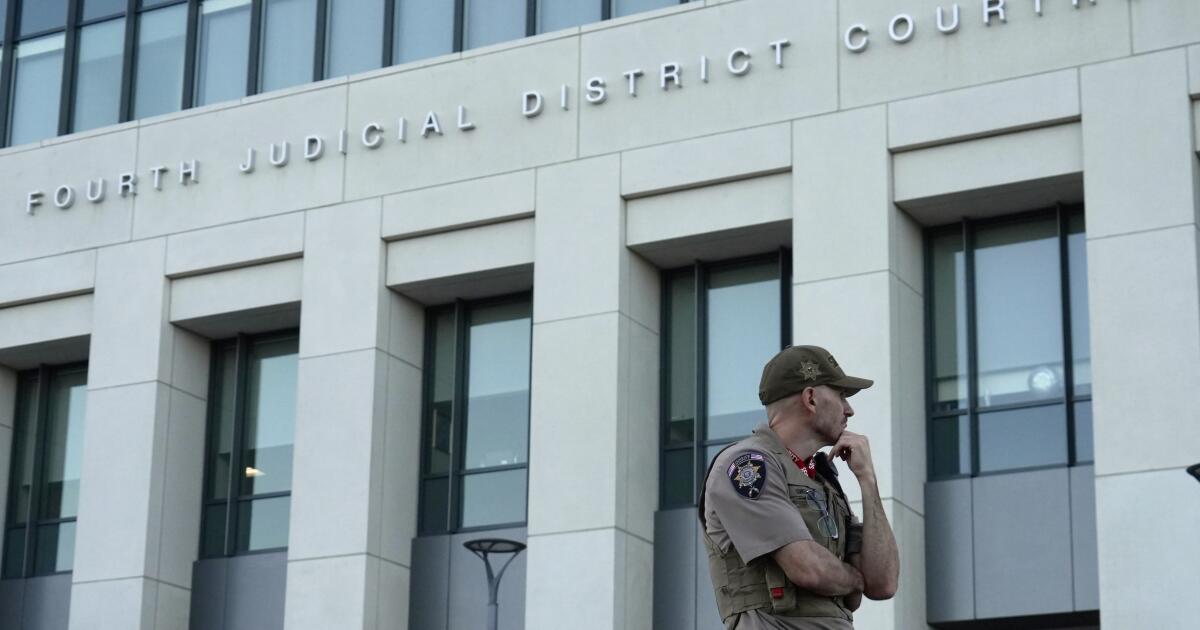
In Minnesota, most doors at the state Capitol are now locked, and people entering must go through weapons detectors. People entering the visitors’ galleries to watch floor debates must go through a second set of detectors.

“It’s important for us to be able to not have our government fall apart if our legislators are under threat,” said Minnesota Rep. Julie Green, a Democrat who sits directly across the aisle from Hortman’s old desk, which remains empty except for fresh roses, her portrait and a speaker’s gavel. “It’s a complicated, complex, very emotional issue, as you can imagine.”

High-profile attacks have stoked lawmakers’ fears

In addition to the killings of Hortman and Kirk, violence targeting political figures in the U.S. in the last few years has included an arson attack last year at the home of Democratic Pennsylvania Gov. Josh Shapiro; an assassination attempt on then-candidate Donald Trump at a Pennsylvania rally in 2024; and a hammer attack on the husband of Democratic then-House Speaker Nancy Pelosi at their California home in 2022.

Twenty-five states, including Minnesota, now formally allow candidates to use campaign funds for personal security. Most made the change after the killings of Kirk and Hortman. Eleven states have laws permitting it, while others have approved it through rules or other mechanisms, according to the National Conference of State Legislatures and the VoteMama Foundation.

This year alone, Alabama, Oregon, Nebraska and Utah enacted laws allowing campaign funds for security. Bills to legalize it are pending in about a dozen other states.

It’s not just happening at the state level. Security spending for congressional and presidential campaigns has jumped fivefold over the past decade. Federal political committees spent more than $40 million on expenses labeled as security during the 2023-24 campaign cycle, according to an April report from the nonpartisan Public Service Alliance.

Weapons detectors are just one response

Metal detectors — one of the most visible signs of concerns about political violence — were installed at Alaska’s Capitol last year. Democratic Rep. Sara Hannan said the change was due to “increased risk of violence in our public institutions.” Lawmakers approved them before Hortman was killed.

But some states have balked at making it harder to access the halls of power. Wisconsin Assembly Speaker Robin Vos, a Republican who knew Hortman, resisted efforts to install metal detectors in his state, saying he didn’t want to “fortify” the Capitol. Wisconsin’s is one of 11 state capitols that don’t have metal detectors, a state audit found.

Minnesota lawmakers are also considering creating a special unit within the State Patrol, which oversees Capitol security, that would provide protection for legislators, the state attorney general, secretary of state, state auditor, and Supreme Court justices.

One lead author is Democratic Sen. John Hoffman, who survived being shot nine times the night Hortman was killed. Prosecutors say the gunman, disguised as a police officer, began his rampage by shooting Hoffman and his wife, then stopped at the residences of two other lawmakers who weren’t home. He then went to Hortman’s home, where he killed the representative and her husband, and wounded their dog so severely that he had to be euthanized.

At a hearing Tuesday, Hoffman called his measure “a necessary response” that would “keep elected officials and Supreme Court justices safe and dedicate the resources necessary and hopefully stop future tragedies from happening.”

Numerous states have also taken action to protect lawmakers’ personal information. North Dakota lawmakers on Wednesday discussed a bill draft for next year that would make confidential the home addresses of candidates and public officials upon request.

The NCSL in February created a $1.5-million fund to reimburse legislatures for expenses related to lawmakers’ personal safety and security while they’re away from their statehouses. More than 30 states have applied or are preparing to, NCSL spokesperson Katie Ziegler said.

Karnowski and Bauer write for the Associated Press. Bauer reported from Madison, Wis. AP writers Becky Bohrer in Juneau, Alaska, and Jack Dura in Bismarck, N.D., contributed to this report.

Source link