South Korea says US-North Korea talks possible, rules out Hormuz deployment | Donald Trump News
South Korea will continue efforts to facilitate talks between Washington and Pyongyang.
Published On 18 Sep 2026
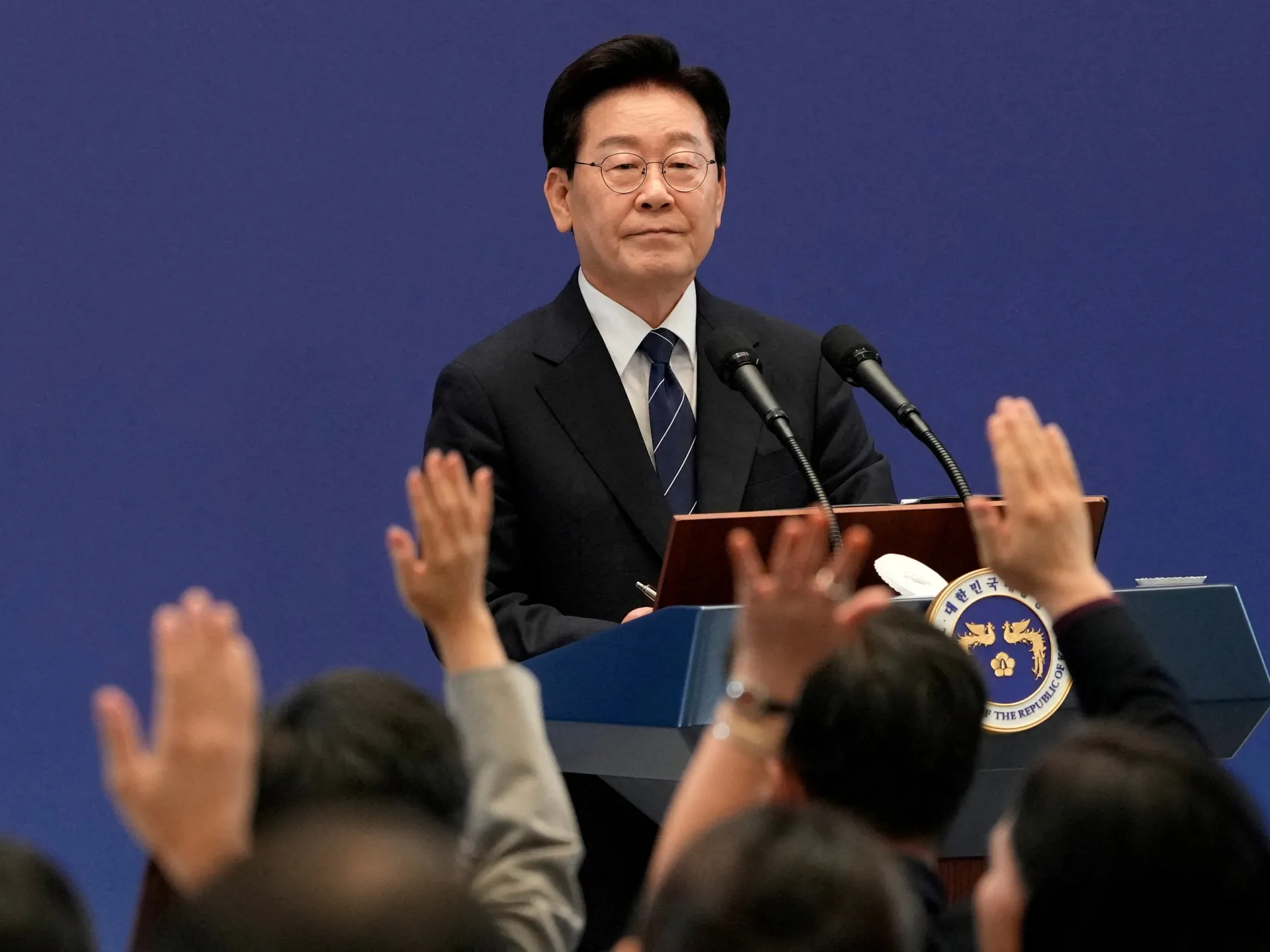
South Korean President Lee Jae Myung said on Friday that United States President Donald Trump wants dialogue with Pyongyang and confirmed Seoul will not be deploying troops to intervene militarily in the Iran war.
“Trump clearly wants dialogue with North Korea,” Lee said on Friday.
Recommended Stories
list of 3 itemsend of list
He added that while such talks are uncertain, they are not impossible.
South Korea was continuing “preliminary coordination efforts” to facilitate dialogue between North Korea and the US.
“The resumption of North Korea-US dialogue would be far easier than resuming inter-Korean dialogue,” he said, according to South Korean news agency Yonhap.
Trump, seeking to revive the bond he claims to have forged with North Korean leader Kim Jong Un in his first term, said he plans to meet Kim later this year.
The US president said it was important to “get along” with Kim, adding that Pyongyang now had 57 “very powerful” nuclear weapons.
Seoul has assessed that Pyongyang has about 80-120 nuclear warheads.
North Korea, which has secured critical backing from Russia in recent years, did not clearly respond to Trump.
Inter-Korean relations reached a high in 2018 but deteriorated after talks between Kim and Trump collapsed in February 2019.
On Thursday, a court in Seoul ordered North Korea to pay roughly $32.5m for blowing up the Inter-Korean Liaison Office building in 2020. The office was intended to improve relations on the peninsula but was destroyed amid rising tensions between the neighbours.
South Korea is working to strengthen relations with other regional partners. The first-ever presidential summit between Seoul and five Central Asian states was held on Wednesday, aiming to establish deeper economic engagement with the Russian-allied countries.
South Korea will not dispatch troops
Despite growing pressure from the US, Lee reiterated three times that South Korea will not deploy troops to the Strait of Hormuz.
“Let it be clear. There will be no dispatch of troops that will lead to involvement in a conflict. There will be no engagement or involvement in war,” Lee said.
The South Korean government found itself at odds with large parts of Korean society as protests broke out in recent weeks opposing a potential deployment of South Korean military assets to the Strait of Hormuz.
Lee added that South Korea will “carry out the minimum necessary activities” to protect its own merchant ships and oil shipping routes.

![US General Xavier T. Brunson, commander of the ROK/US Combined Forces Command (CFC), the United States Forces Korea (USFK) and the United Nations Command (UNC), shakes hands with a US Army soldier during a US-South Korea joint river-crossing exercise, which is a part of the annual Freedom Shield joint military training, near the demilitarised zone separating South and North Korea, in Yeoncheon, South Korea [Kim Soo-hyeon/Reuters]](https://i0.wp.com/www.aljazeera.com/wp-content/uploads/2026/09/2026-03-14T101408Z_1688914085_RC254KAMA6O8_RTRMADP_3_SOUTHKOREA-USA-MILITARY-1788746327.jpg?w=640&ssl=1)
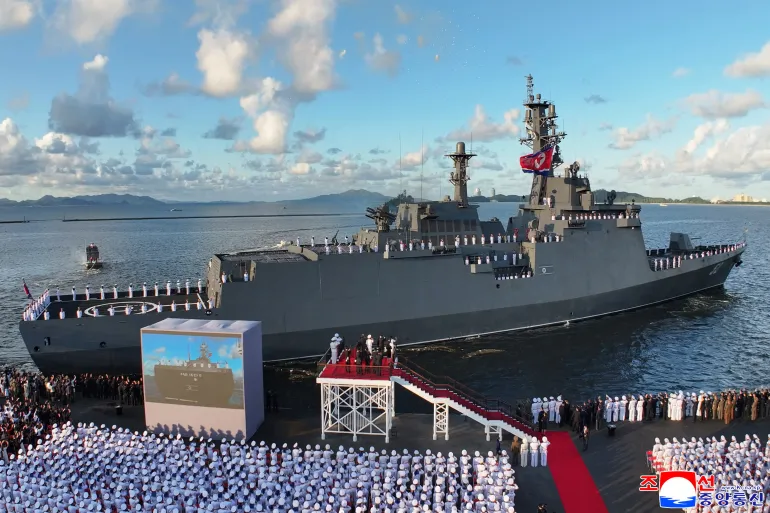
![The commissioning ceremony of the destroyer "Kang Kon", at Wonsan Port, North Korea, September 6, 2026, in this picture released by North Korea's official Korean Central News Agency [KCNA/Reuters]](https://i0.wp.com/occasionaldigest.com/wp-content/uploads/2026/09/2026-09-06T221129Z_337993451_RC2XDNAY9M33_RTRMADP_3_NORTHKOREA-WARSHIP-1788736575.jpg?w=640&ssl=1)