Khameneis

U.S. is in the dark on Mojtaba Khamenei’s views on the bomb

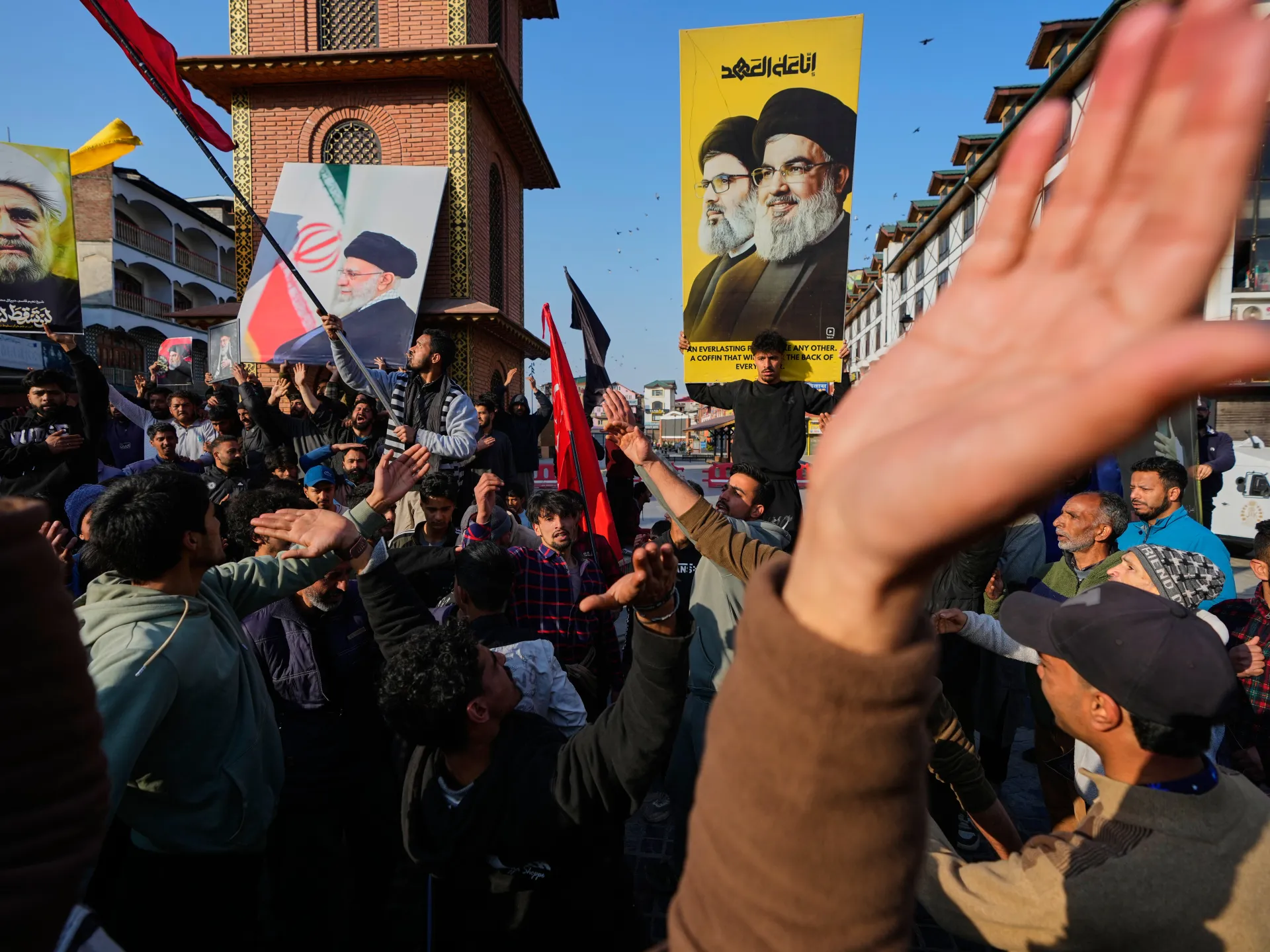
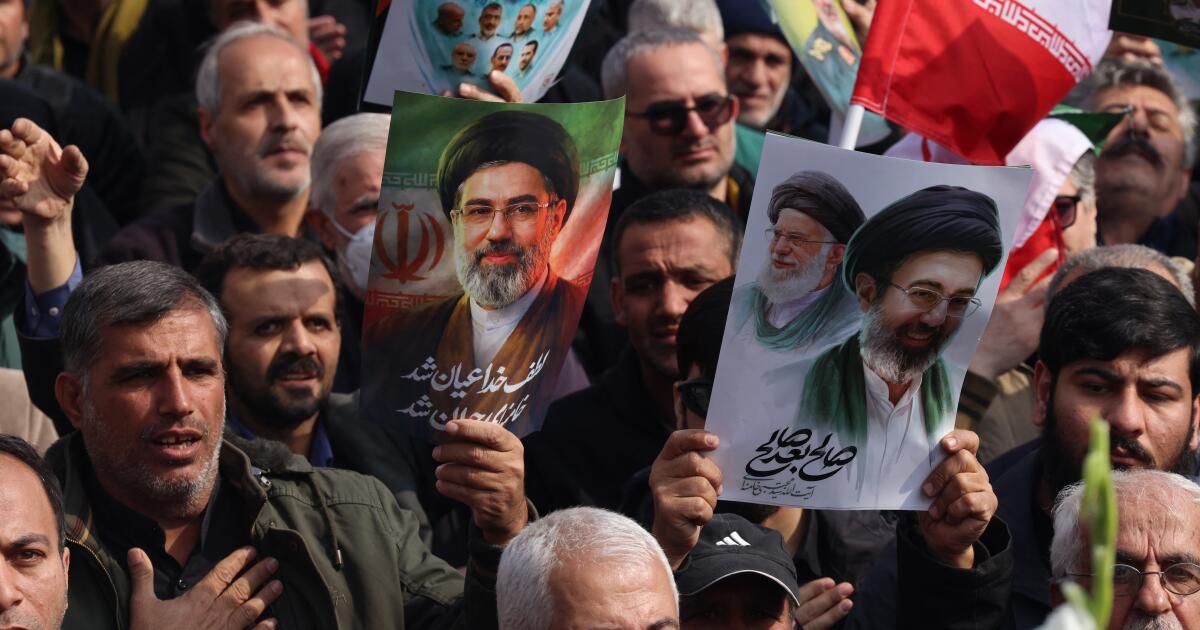
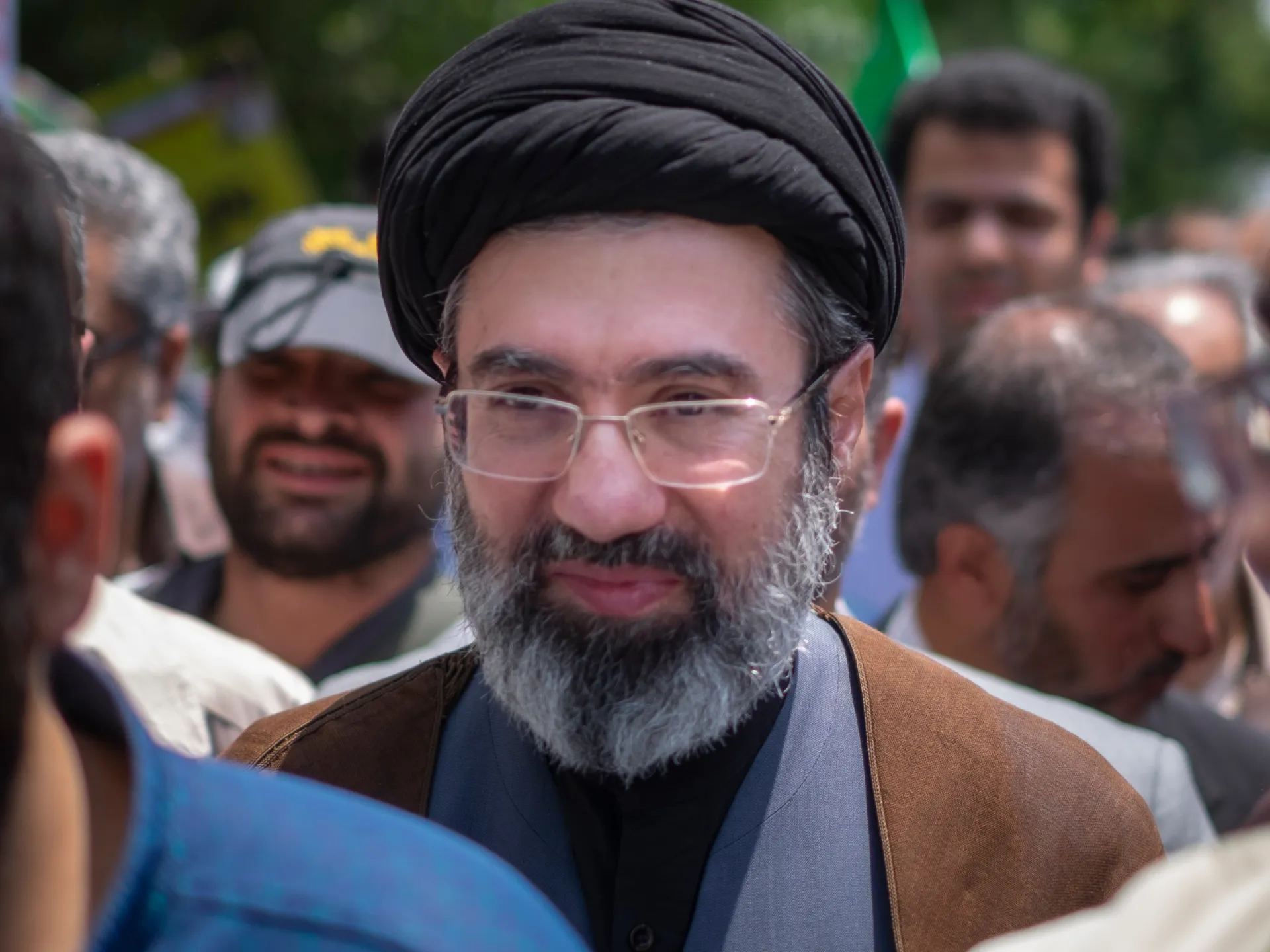
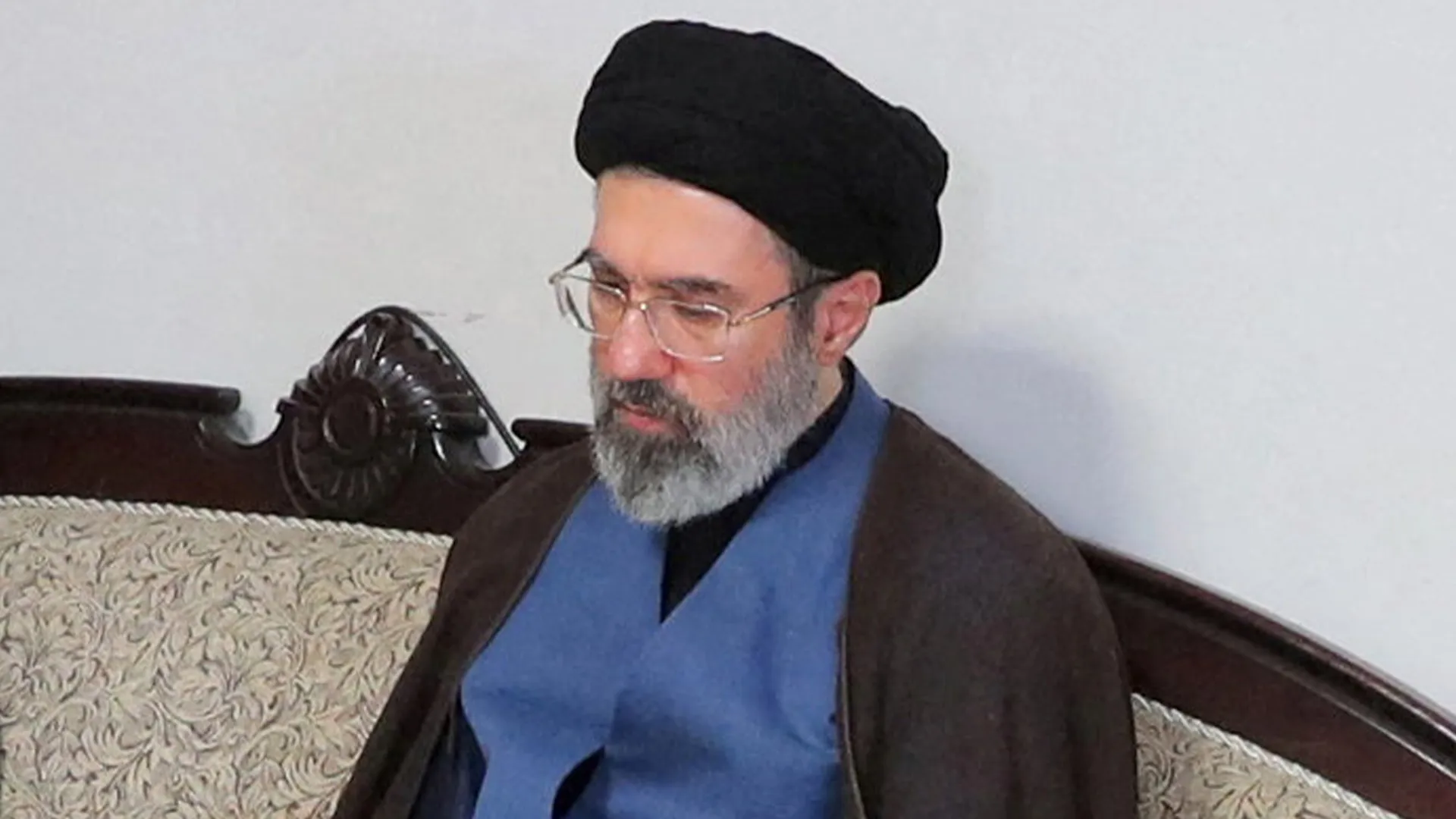
Days after he was named Iran’s next supreme leader, and over a week since U.S. and Israeli bombing wiped out much of his family, Mojtaba Khamenei issued his first statement on Thursday demanding vengeance against the alliance over the war it unleashed.

He called on Iranian forces to continue thwarting vital shipping traffic through the Strait of Hormuz. He vowed to open new fronts against the United States and Israel. And he warned that Gulf states hosting U.S. bases would remain targets of Iranian attack.

Yet, what concerned the White House most was what the new supreme leader didn’t say.

Khamenei made no mention of a strategic endeavor that had brought the Islamic Republic to war: Its nuclear program, suspected for decades of harboring military dimensions.

The omission was not lost on officials in the Trump administration, who told The Times they are largely in the dark over the new supreme leader’s stance on whether Iran should break out to build a nuclear weapon.

Khamenei’s deep alliance with the Islamic Revolutionary Guard Corps, which has advocated for weaponization in the past, has raised concern that the new leader will depart from his father’s long-standing position against building a bomb.

U.S. intelligence assessments long held that the late ayatollah, Ali Khamenei, had adopted a strategy of remaining at the threshold of developing a nuclear weapon while avoiding the costs and risks of actually building one. In 2003, as the United States invaded Iraq over false claims that Saddam Hussein possessed weapons of mass destruction, Khamenei issued a religious edict — a fatwa — declaring nuclear weapons to be forbidden under Islam.

That doctrine is now in doubt, with the new supreme leader wounded and stewing underground over the U.S. assault that has devastated Iran’s military and killed his father, his mother and his sister, among other family members.

Concern among U.S. officials comes as Trump has expressed interest in ending the war “very soon,” even though a stockpile of uranium — a key ingredient in the construction of nuclear weapons — remains buried but accessible to Iranian authorities.

Defense officials are skeptical that the nuclear program can be fully dismantled without sending in a substantial U.S. ground force, an escalation that Trump has sought to avoid. But ending the war with Iran’s nuclear infrastructure partially intact could have devastating repercussions. The U.S.-Israeli campaign could force the new Iranian leader to conclude that regime survival requires a nuclear deterrent, one official said.

“Even if President Trump declares victory tomorrow, and points to the damage done to Iran’s conventional military, the fact of the matter is you have a more hardline regime in place with the key ingredients for a nuclear weapon,” said Eric Brewer, deputy vice president of the nuclear materials security program at the Nuclear Threat Initiative, who noted that Tehran still has a stockpile of 60% enriched uranium — close to weapons grade — and advanced centrifuges to take it over the finish line.

“What’s the plan for day after,” Brewer added, “as Iran starts to build back, and potentially seeks nuclear weapons?”

Patrick Clawson, director of the Iran program at the Washington Institute for Near East Policy, said that Mojtaba Khamenei’s position on the nuclear program has been a stubborn mystery. Reports spreading on social media that he opposed the Joint Comprehensive Plan of Action, a nuclear deal brokered among world powers and Iran during the Obama administration, are unsubstantiated, he said.

“While Mojtaba often advised his father on domestic issues, there is much less information about his position on foreign affairs, other than opposition to Israel,” Clawson said. “I have never seen any indications he took a position about the JCPOA.”

President Trump has outlined the destruction of Iran’s nuclear capabilities as a major goal. But in closed door briefings to Congress, defense officials have been less emphatic, according to Democratic lawmakers.

On Tuesday, shortly after Khamenei was named to succeed his father, Defense Secretary Pete Hegseth warned him to disavow continued nuclear work in an exchange with reporters.

“He would be wise to heed the words of our president, which is to not pursue nuclear weapons,” Hegseth said, “and come out and state as such.”
Source link

Iran names Khamenei’s son as new supreme leader after father’s killing | US-Israel war on Iran News

Iran has named Mojtaba Khamenei as its new supreme leader, just over a week after the assassination of his father, Ayatollah Ali Khamenei, in joint United States-Israeli strikes that have plunged the entire region into a sprawling war.

The 56-year-old, who will now be charged with leading the Islamic Republic through the biggest crisis in its 47-year history, was named by clerics as his father’s successor on Sunday.

Key leaders, Iran’s powerful Islamic Revolutionary Guard Corps (IRGC), and the armed forces were quick to pledge their backing to the new leader.

Ali Larijani, secretary of the Supreme National Security Council, who has been tasked with steering Iran’s security strategy since the US and Israel launched their all-out offensive, called for unity around the new supreme leader.

Parliament Speaker Mohammad Bagher Ghalibaf welcomed the choice, saying that following the new supreme leader was a “religious and national duty”.

Mojtaba Khamenei has never run for office or been subjected to a public vote, but has for decades been a highly influential figure in the inner circle of the supreme leader, cultivating deep ties to the IRGC.

In recent years, Khamenei has increasingly been touted as a top potential replacement for his father. His selection could be a sign that more hardline factions in Iran’s establishment retain power, and could indicate that the government has little desire to agree to a deal or negotiations in the short term as the war enters its second week.

Al Jazeera’s Ali Hashem described Khamenei as his “father’s gatekeeper”.

“He adopts the positions of his father with respect to the United States, with respect to Israel. So we are expecting a confrontational leader. We’re not expecting any moderation,” he said.

“However, if this war comes to an end and he is still alive, and he is able to continue running the country, there is going to be big potential… to find new routes for Iran,” Hashem said.

Rami Khouri, a distinguished public policy fellow at the American University of Beirut, said Khamenei’s appointment signals “continuity” and that it remains to be seen whether the new supreme leader will push for negotiations to end the war.

Either way, he said, the appointment was “an act of defiance”. Iran is “telling the Americans and Israelis, ‘You wanted to get rid of our system? Well … this is a more radical person than his father who was assassinated,’” he said.

Heidari Alekasir, a member of the Assembly of Experts that was tasked with choosing the supreme leader, said the candidate had been picked based on the late Khamenei’s advice that Iran’s top leader should “be hated by the enemy” instead of praised by it.

“Even the Great Satan [US] has mentioned his name,” the senior cleric said in reference to US President Donald Trump’s earlier statement that Mojtaba Khamenei would be an “unacceptable” choice for him to lead Iran.

Israel’s military had previously warned any successor that “we will not hesitate to target you”.

On Sunday, Trump again promised to exert influence over who is selected as Iran’s next supreme leader, saying that, without Washington’s approval, whoever is picked for the role is “not going to last long”.

The selection of Khamenei’s son is certain to enrage Trump.

Supreme leader not decided by ‘Epstein’s gang’

The 88-member Assembly of Experts said on Sunday that it “did not hesitate for a minute” in choosing a new supreme leader, despite “the brutal aggression of the criminal America and the evil Zionist regime”.

Earlier, the clerical body had indicated it had reached a majority consensus on its choice, without naming who it was, with one member saying, “The path of ⁠Imam Khomeini and ⁠the path of the martyr Imam Khamenei has been ⁠chosen. The name of ⁠Khamenei will continue.”

Mojtaba Khamenei studied under conservative clerics in the seminaries of Qom, the heart of Shia theological learning, and holds the clerical rank of hojjatoleslam, a mid-level clerical ranking.

Ali Khamenei, who led Iran for 37 years, succeeding Ayatollah Ruhollah Khomeini, who had led the 1979 revolution, was killed in a US-Israeli strike on Tehran on February 28, at the outset of the war, which has now unleashed chaos throughout the Middle East.

The ⁠Israeli ⁠military has already threatened to kill any replacement for Khamenei, while Trump said the war may only end once Iran’s military and leaders have been wiped out.

“He’s going to have to get approval from us,” Trump told ABC News. “If he doesn’t get approval from us, he’s not going to last long,” Trump said on Sunday of any new supreme leader.

Iranian officials have rejected Trump’s push to be involved in the selection of the next leader, insisting that only Iranians can decide the future of their country.

On Friday, Iranian Parliament Speaker Mohammad Bagher Qalibaf appeared to ridicule the US president’s demands.

“The fate of dear Iran, which is more precious than life, will be determined solely by the proud Iranian nation, not by [Jeffrey] Epstein’s gang,” Ghalibaf wrote on X, referring to the late sex offender who had ties to rich and powerful figures in the US.

Dark skies

As clerics selected the new supreme leader, a dark haze hung over Tehran after Israel struck five oil facilities in and around the capital city overnight, setting them ablaze and filling the skies with acrid smoke.

As the war extended into its ninth day, the IRGC said they had enough supplies to continue their drone and missile attacks across the Middle East for up to six months.

IRGC spokesman Ali Mohammad Naini said Iran had so far used only first- and second-generation missiles, but would use “advanced and less-used long-range missiles” in the coming days.

Trump again refused to rule out sending American ground troops into Iran, but continued to insist that the war was all but won, despite the ongoing Iranian missile and drone strikes.

Analysts warn there is no clear path to ending the conflict, which US and Israeli officials say could last a month or longer.

Source link

Iran names Ayatollah Khamenei’s son as new leader after father’s killing | US-Israel war on Iran

NewsFeed

Iranian state television has announced that the Assembly of Experts has chosen Mojtaba Khamenei as supreme leader after a “decisive vote”. He’s the son of Ayatollah Ali Khamenei who was killed by the United States on February 28.

Source link

Analysis: Khamenei’s killing leaves Iran’s ‘axis’ in disarray | Hezbollah

The killing of Iranian Supreme Leader Ali Khamenei in a United States-Israeli air campaign has sent shockwaves through the Middle East, decapitating the leadership of the “axis of resistance” at its most critical moment.

For decades, this network of groups allied with Iran was Tehran’s forward line of defence. But today, with its commander-in-chief dead and its logistical arteries cut, the alliance looks less like a unified war machine and more like a series of isolated islands.

Recommended Stories

list of 4 itemsend of list

Hassan Ahmadian, a professor at the University of Tehran, warned that the era of strategic patience is over and the Iranian government is now prepared to “burn everything” in response to the attacks.

While Tehran promised to retaliate against the US and Israel “with a force they have never experienced before”, the reaction from its key proxies in Lebanon, Yemen and Iraq revealed a deep hesitation driven by local existential threats that may outweigh their ideological loyalty to a fallen leader.

Hezbollah: Walking between raindrops

In Beirut, the response from Hezbollah, long considered the crown jewel among Iran’s regional allies, has been cautiously calibrated.

After Sunday’s announcement of Khamenei’s death, the group issued a statement condemning the attack as the “height of criminality”. However, Al Jazeera correspondent in Beirut Mazen Ibrahim noted that the language used was defensive, not offensive.

“If one dismantles the linguistic structure of the statement, the complexity of Hezbollah’s position becomes clear,” Ibrahim said. “The secretary-general spoke of ‘confronting aggression’, which refers to a defensive posture. … He did not explicitly threaten to attack Israel or launch revenge operations.”

This caution is rooted in a new strategic reality. Since the collapse of Bashar al-Assad’s government in Syria in late 2024, the “land bridge” that supplied Hezbollah has been severed. Ali Akbar Dareini, a Tehran-based researcher, noted that this loss “cut the ground link with Lebanon”, leaving the group physically isolated.

Now with top leaders of Iran’s Islamic Revolutionary Guard Corps (IRGC) killed alongside Khamenei, Hezbollah appears paralysed – caught between a battered domestic front in Lebanon and a vacuum of orders from Tehran.

The Houthis: Solidarity meets survival

In Yemen, the Houthis face an even more volatile calculus.

In his first televised address after the strikes on Iran began on Saturday, the group’s leader, Abdel-Malik al-Houthi, declared his forces “fully prepared for any developments”. Yet his rhetoric notably emphasised that “Iran is strong” and “its response will be decisive,” a phrasing that analysts interpreted as an attempt to deflect the immediate burden of war away from the Houthis.

The Houthis are under immense pressure. While they have successfully disrupted Red Sea shipping and fired missiles at Tel Aviv, they now face a renewed threat at home.

The internationally recognised Yemeni government, having won a power struggle against southern separatists, has sensed a shift in momentum. Defence Minister Taher al-Aqili recently declared: “The index of operations is heading towards the capital, Sanaa,” which the Houthis control. The statement signalled a potential ground offensive to retake Houthi territory.

This places the Houthis in a bind. While Houthi negotiator Mohammed Abdulsalam recently met with Iranian official Ali Larijani in Muscat, Oman, to discuss “unity of the arenas”, the reality on the ground is different. Engaging in a war for Iran could leave the Houthis’ home front exposed to government forces backed by regional rivals.

“Expanding the circle of targeting will only result in expanding the circle of confrontation,” the Houthi-affiliated Supreme Political Council warned in a statement that threatened escalation but also implicitly acknowledged the high cost of a wider war.

Iraq: The internal time bomb

Perhaps nowhere is the dilemma more acute than in Iraq, where the lines between the state and the “resistance” are dangerously blurred.

Iran-aligned militias, many of which operate under the state-sanctioned Popular Mobilisation Forces, are now caught in a direct standoff with the US. Tensions have simmered since late 2024 when Ibrahim Al-Sumaidaie, an adviser to Iraq’s prime minister, revealed that Washington had threatened to dismantle these groups by force, a warning that led to his resignation under pressure from militia leaders.

Today, that threat looms larger than ever. Unlike Hezbollah or the Houthis, these groups are technically part of the Iraqi security apparatus. A retaliation from Iraqi soil would not just risk a militia war but also a direct conflict between the US and the Iraqi state.

With the IRGC commanders who once mediated these tensions now dead, the “restraining hand” is gone. Isolated militia leaders may now decide to strike US bases of their own accord, dragging Baghdad into a war the government has desperately tried to avoid.

Resistance without a head

Khamenei’s assassination has essentially shattered the command-and-control structure of the “axis of resistance”.

The network was built on three pillars: the ideological authority of the supreme leader, the logistical coordination of the IRGC and the geographic connection through Syria. Today, all three are broken.

“The most important damage to Iran’s security interests is the severing of the ground link,” Dareini said. With Khamenei gone, the “spiritual link” is also severed.

What remains is a fragmented landscape. In Lebanon, Hezbollah is too exhausted to open a northern front. In Yemen, the Houthis face a potential domestic offensive. In Iraq, militias risk collapsing the state they live in.

When the dust settles in Tehran, the region will face a dangerous unpredictability. The “axis of resistance” is no longer a coordinated army. It is a collection of angry, heavily armed militias, each calculating its own survival in a world where the orders from Tehran have suddenly stopped coming.

Source link

Iran forms interim council to oversee transition after Khamenei’s killing | Israel-Iran conflict News

Ayatollah Alireza Arafi, member of a constitutional watchdog, appointed to temporary council, along with Iranian president and chief justice.

Iran has announced the formation of a three-member transitional council to handle the state duties following the killing of Supreme Leader Ayatollah Ali Khamenei.

Ayatollah Alireza Arafi, member of a powerful constitutional watchdog, was appointed on Sunday to the temporary council, whose other two members are President Masoud Pezeshkian and Supreme Court Chief Justice Gholam-Hossein Mohseni-Ejei.

Recommended Stories

list of 4 itemsend of list

The 67-year-old cleric, who is a member of the Guardian Council that must later choose a supreme leader, was confirmed to the council by the Expediency Council, a powerful arbitration body.

According to Article 111 of the Iranian Constitution, the transitional council will govern the country until an 88-member panel called the Assembly of Experts chooses a new supreme leader after almost 37 years of rule by Khamenei.

His killing on Saturday by the joint United States and Israeli forces has raised crucial questions about Iran’s future.

Although the leadership council will govern in the interim, the Assembly of Experts “must, as soon as possible,” pick a new supreme leader, according to the Iranian constitution.

The Islamic Revolutionary Guard Corps (IRGC) and Iran’s security chief Ali Larijani are also expected to play pivotal roles in the transitional council, but it remains to be seen where the balance of power lies.

The commander-in-chief of the IRGC was also killed in the US-Israeli attack on Saturday – the second such killing in less than a year – and the next leader of the elite military and economic force is yet to be announced.

IRGC-linked Telegram channels are citing deputy chief Ahmad Vahidi, who was appointed to the position by Khamenei two months ago, as a likely candidate.

Earlier on Sunday, Larijani accused the US and Israel of trying to plunder and break apart Iran and warned “secessionist groups” within Iran of a harsh response if they attempt action, state media said.

“The brave soldiers and the great nation of Iran will teach an unforgettable lesson to the international oppressors,” he said.

A former parliamentary speaker and senior policy adviser, Larijani was appointed to advise Khamenei on strategy in nuclear talks with US President Donald Trump’s administration.

Source link