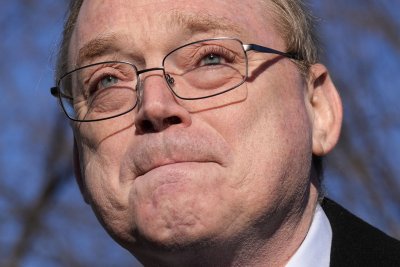
WASHINGTON — As progressives seek to place a new tax on billionaires on California’s November ballot, a Republican congressman is moving in the opposite direction — proposing federal legislation that would block states from taxing the assets of former residents.
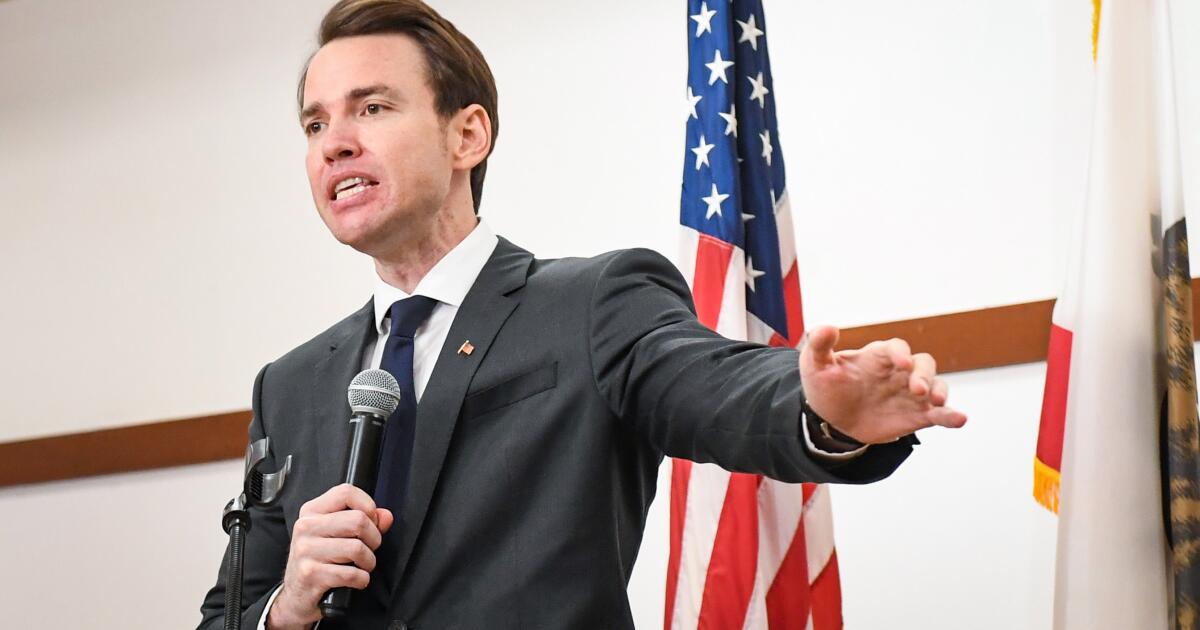
Rep. Kevin Kiley (R-Rocklin), who faces a tough re-election challenge under California’s redrawn congressional maps, says he will introduce the “Keep Jobs in California Act of 2026” on Friday. The measure would prohibit any state from levying taxes retroactively on individuals who no longer live there.
The proposed legislation adds another layer to what has already been a fiery debate over California’s approach to taxing the ultra-wealthy. It has created divisions among Democrats and has placed Los Angeles at the center of a broader political fight, with Bernie Sanders set to hold a rally on Wednesday night in support of the wealth tax.
Kiley said he drafted the bill in reaction to reports that several of California’s most prominent billionaires — including Meta Chief Executive Mark Zuckerberg and Google co-founders Larry Page and Sergey Brin — are planning to leave the state in anticipation of the wealth tax being enacted.
“California’s proposed wealth tax is an unprecedented attempt to chase down people who have already left as a result of the state’s poor policies,” Kiley said in a statement Wednesday. “Many of our state’s leading job creators are leaving preemptively.”
Kiley said it would be “fundamentally unfair” to retroactively impose taxes on former residents.
“California already has the highest income tax of any state in the country, the highest gas tax, the highest overall tax burden,” Kiley said in a House floor speech earlier this month. “But a wealth tax is something unique because a wealth tax is not merely the taxation of earned income, it is the confiscation of assets.”
The fate of Kiley’s proposal is just as uncertain as his future in Congress. His 5th Congressional District, which hugs the Nevada border, has been sliced up into six districts under California’s voter-approved Proposition 50, and he has not yet picked one to run in for re-election.
The Billionaire Tax Act, which backers are pushing to get on the November ballot, would charge California’s 200-plus billionaires a onetime 5% tax on their net worth in order to backfill billions of dollars in Republican-led cuts to federal healthcare funding for middle-class and low-income residents. It is being proposed by the Service Employees International Union-United Healthcare Workers West.
In his floor speech, Kiley worried that the tax, if approved, could cause the state’s economy to collapse.
“What’s especially threatening about this is that our state’s tax structure is essentially a house of cards,” Kiley said. “You have a system that is incredibly volatile, where top 1% of earners account for 50% of the tax revenue.”
But supporters of the wealth tax argue the measure is one of the few ways that can help the state seek new revenue as it faces economic uncertainty.
Sanders, an independent from Vermont who caucuses with the Democrats, is urging Californians to back the measure, which he says would “provide the necessary funding to prevent more than 3 million working-class Californians from losing the healthcare they currently have — and would help prevent the closures of California hospitals and emergency rooms.”
“It should be common sense that the billionaires pay just slightly more so that entire communities can preserve access to life-saving medical care,” Sanders said in a statement earlier this month. “Our country needs access to hospitals and emergency rooms, not more tax breaks for billionaires.”
Other Democrats are not so sure.
Gov. Gavin Newsom, who is eyeing a presidential bid in 2028, has opposed the measure. He has warned a state-by-state approach to taxing the wealthy could stifle innovation and entrepreneurship.
Some of he wealthiest people in the world are also taking steps to defeat the measure.
Brin is donating $20 million to a California political drive to prevent the wealth tax from becoming law, according to a disclosure reviewed by the New York Times. Peter Thiel, the co-founder of PayPal and the chairman of Palantir, has also donated millions to a committee working to defeat the proposed measure, the New York Times reported.
Feb. 18 (UPI) — White House economic adviser Kevin Hassett on Wednesday said that employees at the New York Federal Reserve should face punishment for publishing “the worst paper I’ve ever seen in the history of the Federal Reserve System.
The research published Feb. 12 concluded that most of President Donald Trump‘s tariffs are being paid by U.S. businesses and consumers. The authors said 90% of the costs are being passed on, though it acknowledged that the effect had dropped slightly as the year went on.
In an appearance on CNBC’s Squawk Box, Hassett, the director of the National Economic Council, called it an “embarrassment” and said of the four authors, “the people associated with this paper should presumably be disciplined.”
He argued that tariffs are responsible for a higher standard of living.
“Prices have gone down. Inflation is down over time,” Hassett said. “Import prices dropped a lot in the first half of the year and then leveled off, and [inflation-adjusted] wages were up $1,400 on average last year, which means that consumers were made better off by the tariffs. And consumers couldn’t have been made better off by the tariffs if this New York Fed analysis was correct.”
Harvard Business School, Yale’s Budget Lab, the Kiel Institute for the World Economy and the Congressional Budget Office have published similar findings, Politico reported.
“Our results imply that U.S. import prices for goods subject to the average tariff increased by 11% … more than those for goods not subject to tariffs,” the paper, written by Mary Amiti, Chris Flanagan, Sebastian Heise and David E. Weinstein, said. “U.S. firms and consumers continue to bear the bulk of the economic burden of the high tariffs imposed in 2025.”
Hassett was on Trump’s short list for Fed chair, but Kevin Warsh was chosen.
MILAN — Kings left wing Kevin Fiala sustained a leg injury and was taken off the ice on a stretcher late in Switzerland’s game against Canada at the Milan-Cortina Olympics on Friday.
Fiala went down when he collided with Tom Wilson with just less than three minutes left in Canada’s 5-1 victory.
Fiala backed into a hit on Wilson near the boards, their legs got tangled and both players fell to the ice. Fiala couldn’t get up and after a stoppage in play medical personnel attended to him.
Fiala was placed face down on a stretcher and his left leg appeared to be in an air cast as he was wheeled out.
“I haven’t seen him yet. I think he went to the hospital. Obviously it doesn’t look very good,” Swiss coach Patrick Fischer said. “Tough moment for Kevin and the whole team, obviously.”
No penalty was assessed on the play.
“It was an accident,” Fischer said.
The 29-year-old Fiala is in his 12th NHL season and fourth with the Kings. He has 40 points in 56 games this season.
“In pleading guilty, Tillman admitted that he intentionally set the fire in order to ‘make a point to the United States government,’” the U.S. Attorney’s Office for the Northern District of California said in a statement.
It remains unclear what point Tillman was trying to make.
Tillman was accused of backing his vehicle through the front door of the post office during the early morning on July 20 and setting the vehicle ablaze after exiting it. Tillman had loaded the vehicle with fire logs and doused it with lighter fluid, the U.S. Attorney’s Office said. The fire quickly spread to the post office, completely destroying the lobby. No one was injured.
U.S. Postal Inspector Shannon Roark said in July that Tillman told officers at the scene that he had livestreamed the incident on YouTube.
Tillman is in federal custody and is scheduled to be sentenced at an April 27 hearing. He faces a minimum of five years in prison and a maximum of 20 years, as well as a $250,000 fine.
In the aftermath of the Sept. 11, 2001, terrorist attacks on the United States, Pat Tillman walked away from a three-year, $3.6-million contract offer from the Arizona Cardinals and enlisted in the Army, along with his younger brother, Kevin.
On April 22, 2004, Pat Tillman was killed by friendly fire in the province of Khost, Afghanistan. He was 27.
Following the post office fire last year, Kevin Tillman released a statement.
“Our family is aware that my brother Richard has been arrested. First and foremost, we are relieved that no one was physically harmed,” Kevin Tillman said. “ … To be clear, it’s no secret that Richard has been battling severe mental health issues for many years. He has been livestreaming, what I’ll call, his altered self on social media for anyone to witness.
“Unfortunately, securing the proper care and support for him has proven incredibly difficult — or rather, impossible. As a result, none of this is as shocking as it should be.”
New Delhi, India – The latest release of documents related to the US Justice Department investigation into the crimes of convicted sex offender Jeffrey Epstein has set off political infernos around the globe for featuring the names of world leaders.
The tranche of files, which includes more than three million pages of documents, was released on Friday. This is the largest release since US President Donald Trump’s administration passed a law last year to force the release of the documents.
Epstein was convicted in 2008 of sex offences but avoided federal charges – which could have seen him face life in prison – by doing a deal with prosecutors. Instead, he received an 18-month prison sentence, which allowed him to go on “work release” to his office for 12 hours a day, six days a week. He was released on probation after 13 months.
In 2019, he was arrested again on charges including the sex trafficking of minors. But he died by suicide in a Manhattan jail cell in 2019 before his trial could commence.
With this latest disclosure of documents and emails linked to the cases against him, yet more has been revealed about the disgraced financier’s sexual abuse of young girls and his interactions with wealthy and powerful figures from the United Kingdom, Australia, Norway, Slovakia and India.
Simply being named in Epstein documents or emails does not mean a person is guilty of criminal wrongdoing, and, so far, no charges have been brought against individuals named in connection with the sex offender.
However, the new documents show communications between high-profile figures in the US, including Trump, former President Bill Clinton, and business tycoons such as Bill Gates and Elon Musk.
Here is what we know about some of the powerful men (and one woman) from other countries who have featured in these documents.
Demonstrator Gary Rush holds a sign before a news conference on the Epstein files in front of the US Capitol, November 18, 2025, in Washington, DC, the United States [AP Photo/Mariam Zuhaib]
Narendra Modi, Indian prime minister
Documents released on Friday reveal conversations between Anil Ambani, the billionaire chairman of Reliance Group who is close to Prime Minister Narendra Modi, and Epstein. All the conversations took place in the years following Epstein’s first conviction for sex offences in 2008.
The two emailed each other about a range of issues, from sizing up incoming US ambassadors to India to setting up meetings for Modi with top US officials.
Ambani is the elder brother of India’s richest man, Mukesh Ambani, who is also close to PM Modi.
Anil Ambani, chairman of India’s Reliance Communications, attends a news conference in Mumbai, India, June 2, 2017 [Shailesh Andrade/Reuters]
On March 16, 2017, two months after Trump was sworn in for his first term as president of the US, Ambani sent an iMessage to Epstein, saying “Leadership” was asking for his help to connect with senior figures in Trump’s circle, including Jared Kushner and Steve Bannon.
Ambani also asked for advice from Epstein about a possible visit by Modi to meet Trump “in may (sic)”, before setting up a call in the messages.
In another iMessage exchange two weeks later, on March 29, Epstein wrote to Ambani: “Discussions re israel strategy dominating modi dates (sic).” Two days later, Ambani informed Epstein that Modi would visit Israel in July and asked the disgraced financier: “who do u know fir track 2”.
On June 26, Modi met Trump in Washington on his first visit since Trump became president.
Then, on July 6, 2017, Modi became the first-ever Indian prime minister to visit Israel. He snubbed the Palestinian Authority, prompting condemnation from Palestinian officials.
That year, New Delhi became the largest buyer of Israeli weapons, amounting to $715m worth of purchases. The defence partnership between the two countries has since continued despite Israel’s genocidal war in Gaza.
This marked a sharp change from India’s history of advocating for the Palestinian cause. It only opened up formal diplomatic ties with Israel in 1992. Before that, Indian citizens had been barred by India from travelling to Israel since the country’s creation in 1948.
After Modi’s visit on July 6, Epstein emailed an unidentified individual he referred to as “Jabor Y”, saying: “The Indian Prime minister modi took advice. and danced and sang in israel for the benefit of the US president. they had met a few weeks ago.. IT WORKED. !”
Indian Prime Minister Narendra Modi shakes hands with Israeli Prime Minister Benjamin Netanyahu as they wave to the crowd during a reception for the Indian community in Tel Aviv, July 5, 2017 [Ammar Awad/Reuters]
Ambani Reliance Defence Ltd also entered a joint venture with an Israeli state defence group last year in a deal valued at $10bn over a decade.
Shortly after Modi’s visit to Israel, Larry Summers, former Harvard University president and former secretary of the US Treasury, asked Epstein if he still thought Trump was a better president than rival candidate Hillary Clinton would have been. Epstein responded affirmatively, stating, “yes, defintley India israel. for example great and all his doing (sic).”
In another conversation revealed in the latest document drop, Epstein offered to arrange a meeting between Modi and former White House chief strategist Steve Bannon just hours after Modi had won a thumping majority in the Indian national election in 2019.
In an iMessage to Bannon on May 19, 2019, Epstein wrote, “modi sending someone to see me on thurs,” referring to Ambani.
That Thursday, May 23, Epstein met Ambani in New York and his calendar for that day shows no other meeting scheduled.
After the meeting with Ambani, Epstein wrote to Bannon: “really interesting modi meeting. He won [the 2019 parliamentary elections] with HUGE mandate. His guy said that no one in wash speaks to him however his main enemy is CHINA! And their proxy in the region pakistan. They will host the g20 in 22.. Totally buys into your vision.”
Epstein then messaged Ambani: “I think mr modi might enjoy meeting steve bannon, you all share the china problem.” And Ambani wrote back: “sure.”
Epstein then wrote back to Bannon: “modi on board.”
It is not immediately clear if Ambani was authorised to approve such decisions on behalf of the Indian government. There is no public record either of a meeting between Bannon and Indian officials that summer.
Hardeep Singh Puri, Indian politician
Another major Indian name featured in the Epstein files is Hardeep Singh Puri, who retired from the Indian Foreign Service to join Modi’s Bharatiya Janata Party in 2014.
In the documents are email exchanges between Puri and Epstein that began in June 2014, with the sex offender writing to Puri about Reid Hoffman, co-founder of LinkedIn, and arranging a visit by Hoffman to India.
Following an exchange of emails, Puri wrote a detailed pitch for investment opportunities in India to Epstein and Hoffman, laying out economic plans in India under the newly elected Modi government, and urging Hoffman to visit. Documents also show Puri met Epstein at his Manhattan townhouse on at least three occasions: February 4, 2015; January 6, 2016; and May 19, 2017.
Puri told Indian media on Sunday that his visits and interactions with Epstein were strictly business-related.
In December 2014, Puri wrote to Epstein again by email. “Please let me know when you are back from your exotic island,” he wrote, asking to set up a meeting in which Puri could give Epstein some books to “excite an interest in India”.
US House of Representatives Oversight Committee Democrats/Handout
How has the Indian government responded?
India has dismissed the references to Modi in the Epstein files.
“Beyond the fact of the prime minister’s official visit to Israel in July 2017, the rest of the allusions in the email are little more than trashy ruminations by a convicted criminal, which deserve to be dismissed with the utmost contempt,” External Affairs Ministry Spokesperson Randhir Jaiswal said on Saturday.
However, the opposition, led by the Congress Party, has demanded answers about the latest disclosures – particularly those relating to Israel relations.
The Congress Party’s general secretary in charge of organisation, KC Venugopal, wrote in a post on X: “The reports of the new batch of Epstein Files are a huge wake-up call about the kind of monsters who have access to PM Modi, and how susceptible he is to foreign manipulation. The Congress demands that the Prime Minister personally come clean on these disturbing disclosures that raise serious questions.”
Former Australian Prime Minister Kevin Rudd, left, attends the Munich Security Conference in Munich, Germany, February 16, 2018 [Michaela Rehle/Reuters]
Kevin Rudd, former Australian prime minister
Australian diplomat Kevin Rudd, who served as the country’s prime minister from 2007 to 2010 and again in 2013, has also been named in the Epstein files.
Rudd’s name appeared on Epstein’s daily meeting schedule for June 8, 2014, at 4:30pm. On that day, Epstein flew to New York from his private island, Little Saint James in the US Virgin Islands, for several meetings, including with Rudd.
Rudd, who is currently serving as Australia’s ambassador to the US, claims he did not visit Epstein and denies any friendship with him.
But the newly released files show that two days before the scheduled appointment, Epstein emailed his assistant, Lesley Groff, on June 6, 2014 to ask for non-vegetarian food to be made available at the upcoming Sunday lunch “as now kevin rudd is also coming”. Rudd was not in government at the time.
Just seconds later, Epstein follows up in another email to Groff: “Kevin Rudd might also stop by former prime minister austrailia [sic].”
US President Donald Trump shakes hands with the United Kingdom’s ambassador to the United States, Peter Mandelson, after announcing a trade deal with the UK, in the Oval Office at the White House in Washington, DC, the US, May 8, 2025 [Leah Millis/Reuters]
Peter Mandelson, UK politician
The name of Peter Mandelson, a former UK cabinet minister and life peer, had appeared in tranches of Epstein files previously made public. But he resigned from his membership of the UK’s ruling Labour Party on Sunday after yet more links to Epstein surfaced in the latest dump.
Mandelson was sacked as the UK’s ambassador to the US last year over his connections to Epstein.
The latest documents reveal that Epstein made $75,000 in payments to Mandelson in three separate transactions in 2003 and 2004.
In his resignation letter to Labour’s general secretary, Mandelson wrote: “I have been further linked this weekend to the understandable furore surrounding Jeffrey Epstein and I feel regretful and sorry about this.”
He said he had “no recollection” of the payments, however.
The latest documents also show that Mandelson discussed with Epstein by email a campaign against Rudd’s proposed mining tax, which would have taxed “super profits” reaped by mining companies at 40 percent, while Rudd was still prime minister.
Norway’s Crown Prince Haakon, Princess Ingrid Alexandra, and Crown Princess Mette-Marit attend the Nobel Peace Prize award ceremony in Oslo, Norway, on December 10, 2025 [Ole Berg-Rusten/NTB/via Reuters]
Mette-Marit, Norway’s crown princess
The latest disclosures from the US Justice Department have embroiled Norway’s crown princess, Mette-Marit, in the Epstein scandal, as they reveal her years of extensive contact with the sex offender.
Mette-Marit, who is married to Crown Prince Haakon, the heir apparent to the Norwegian throne, appears nearly 1,000 times in the Epstein files, with scores of emails sent between the two.
In the emails, Mette-Marit told Epstein, “you tickle my brain”, and called him “soft hearted” and “such a sweetheart”. In another, she thanked Epstein for flowers he had sent when she was feeling unwell, signing off with “Love, Mm”.
In 2012, Mette-Marit told Epstein he was “very charming” and asked if it was “inappropriate for a mother to suggest two naked women carrying a surfboard for my 15 yr old sons wallpaper?”
The revelations come at a tricky time for Norway’s royal family, with Mette-Marit’s son, Marius Borg Hoiby – who was born before her marriage to Crown Prince Haakon – set to go on trial for rape later this week. Hoiby has been accused of 38 crimes, including the rapes of four women as well as assault and drug offences.
Jeffrey Epstein and Miroslav Lajcak, a Slovak politician, diplomat, and former president of the United Nations General Assembly, appear together in this undated image from Epstein’s estate released by Democrats on the US House of Representatives Oversight Committee on December 18, 2025 [House Oversight Committee Democrats/Handout via Reuters]
Miroslav Lajcak, Slovakian national security adviser
The new tranche of Espstein files has also prompted the resignation of Slovakia’s national security adviser, Miroslav Lajcak.
Photos and emails released with the documents reveal that he met with Epstein several years after the sex offender was released from jail and exchanged text messages about women in 2018 during his second spell as foreign minister.
On Sunday, Slovakia’s Prime Minister Robert Fico accepted Lajcak’s resignation, and wrote on Facebook that the government was losing “an incredible source of experience and knowledge in foreign policy”, adding that the former minister had “categorically denied and rejected” the allegations made against him.
United States President Donald Trump has nominated former Federal Reserve Governor Kevin Warsh to head the US central bank when current Federal Reserve Chair Jerome Powell’s term ends in May.
The announcement on Friday caps a months-long, highly publicised search for a new chair of the Federal Reserve, widely regarded as one of the most influential economic officials in the world.
Recommended Stories
list of 3 itemsend of list
It comes amid Trump’s public pressure campaign on Powell, whom he appointed during his first term but has repeatedly condemned for not cutting interest rates at the pace the president would like.
“I have known Kevin for a long period of time, and have no doubt that he will go down as one of the GREAT Fed Chairmen, maybe the best,” Trump posted on his Truth Social site. “On top of everything else, he is ‘central casting,’ and he will never let you down.”
The statement referenced the apparent compromise Warsh represents. The 55-year-old is known to be in Trump’s orbit and has recently called for lower interest rates, although he is expected to stop short of the more aggressive easing associated with some other potential candidates for the job.
Still, he is expected to face a punishing Senate confirmation hearing, with US lawmakers likely to be particularly critical given Trump’s public comments and the Department of Justice’s decision earlier this month to open a criminal probe into Powell.
Critics, including Powell, have said Trump’s actions seek to undermine the Federal Reserve’s independence and pressure the agency to set monetary policy aligned with the president’s wishes.
What does the Federal Reserve do?
The Federal Reserve has long been seen as a stabilising force in global financial markets, due in part to its perceived independence from politics.
The Federal Reserve is tasked with combating inflation in the United States while also supporting maximum employment. It is also the nation’s top banking regulator.
The agency’s rate decisions over time influence borrowing costs throughout the economy, including for mortgages, car loans and credit cards.
In a statement, Senator Elizabeth Warren, the top Democrat on the US Senate Banking Committee, said, “This nomination is the latest step in Trump’s attempt to seize control of the Fed.”
She pointed to the investigation into Powell, as well as Trump’s effort to push out Fed Governor Lisa Cook, which is currently being challenged before the US Supreme Court.
“No Republican purporting to care about Fed independence should agree to move forward with this nomination until Trump drops his witch-hunt,” Warren said.
Republican Senator Thom Tillis, meanwhile, said he would not vote to confirm any nominee until the Department of Justice probe into Powell is ended.
“Protecting the independence of the Federal Reserve from political interference or legal intimidation is non-negotiable,” he said in a statement.
Still, some Republicans welcomed the nomination.
“No one is better suited to steer the Fed and refocus our central bank on its core statutory mandate,” Republican Senator Bill Hagerty said in a statement.
If Warsh is confirmed, it remains unclear if Powell would immediately step down or finish out his term. Traditionally, Federal Reserve Chairs step aside as soon as their replacement is appointed, but the political situation has led to speculation Powell could stay on as long as possible.
Who is Warsh?
Warsh is currently a fellow at the right-leaning Hoover Institution and a lecturer at the Stanford Graduate School of Business.
He was a member of the Federal Reserve’s board from 2006 to 2011 and became the youngest Federal Reserve Governor in history when he was appointed at age 35.
He was an economic aide in George W Bush’s Republican administration and was an investment banker at Morgan Stanley. His father-in-law is Ronald Lauder, heir to the Estee Lauder cosmetics fortune and a longtime donor and confidant of Trump’s.
Warsh has historically supported higher interest rates to control inflation, but has more recently argued for lower rates.
He has been a vocal critic of current Federal Reserve leadership, calling for “regime change” and criticising Powell for engaging on issues like climate change, which Warsh has said are outside the role’s mandate.
Reporting from Washington, DC, Al Jazeera’s Kimberly Halkett said Warsh’s experience means his appointment will likely be well received by the markets.
“The consensus is that in the short term, yes, this is a nominee who will do what the president has asked,” she said.
“But what he could do long term as chair of the board is very similar, ironically, to what Jerome Powell, the current board chair, is doing right now,” she said.
“That is having independence – making decisions based on economic data and not necessarily on political whims of a president.”
WASHINGTON — President Donald Trump said Friday that he will nominate former Federal Reserve official Kevin Warsh to be the next chair of the Fed, a pick likely to result in sharp changes to the powerful agency that could bring it closer to the White House and reduce its longtime independence from day-to-day politics.
Warsh would replace current chair Jerome Powell when his term expires in May. Trump chose Powell to lead the Fed in 2017 but this year has relentlessly assailed him for not cutting interest rates quickly enough.
“I have known Kevin for a long period of time, and have no doubt that he will go down as one of the GREAT Fed Chairmen, maybe the best,” Trump posted on his Truth Social site. “On top of everything else, he is ‘central casting,’ and he will never let you down.”
The appointment, which requires Senate confirmation, amounts to a return trip for Warsh, 55, who was a member of the Fed’s board from 2006 to 2011. He was the youngest governor in history when he was appointed at age 35. He is currently a fellow at the right-leaning Hoover Institution and a lecturer at the Stanford Graduate School of Business.
In some ways, Warsh is an unlikely choice for the Republican president because he has long been a hawk in Fed parlance, or someone who typically supports higher interest rates to control inflation. Trump has said the Fed’s key rate should be as low as 1%, far below its current level of about 3.6%, a stance few economists endorse.
During his time as governor, Warsh objected to some of the low-interest rate policies that the Fed pursued during and after the 2008-09 Great Recession. He also often expressed concern at that time that inflation would soon accelerate, even though it remained at rock-bottom levels for many years after that recession ended.
But more recently, however, in speeches and opinion columns, Warsh has said he supports lower rates.
Controlling the Fed
Warsh’s appointment would be a major step toward Trump asserting more control over the Fed, one of the few remaining independent federal agencies. While all presidents influence Fed policy through appointments, Trump’s rhetorical attacks on the central bank have raised concerns about its status as an independent institution.
The announcement comes after an extended and unusually public search that underscored the importance of the decision to Trump and the potential impact it could have on the economy. The chair of the Federal Reserve is one of the most powerful economic officials in the world, tasked with combating inflation in the United States while also supporting maximum employment. The Fed is also the nation’s top banking regulator.
The Fed’s rate decisions, over time, influence borrowing costs throughout the economy, including for mortgages, car loans and credit cards.
For now, Warsh would fill a seat on the Fed’s governing board that was temporarily occupied by Stephen Miran, a White House adviser who Trump appointed in September. Once on the board, Trump could then elevate Warsh to the chair position when Powell’s term ends in May.
Trump’s economic policies
Since Trump’s reelection, Warsh has expressed support for the president’s economic policies, despite a history as a more conventional, pro-free trade Republican.
In a January 2025 column in The Wall Street Journal, Warsh wrote that “the Trump administration’s strong deregulatory policies, if implemented, would be disinflationary. Cutbacks in government spending — inspired by the Department of Government Efficiency — would also materially reduce inflationary pressures.” Lower inflation would allow the Fed to deliver the rate cuts the president wants.
Since his first term, Trump has broken with several decades of precedent under which presidents have avoided publicly calling for rate cuts, out of respect for the Fed’s status as an independent agency.
Trump has also sought to exert more control over the Fed. In August he tried to fire Lisa Cook, one of seven governors on the Fed’s board, in an effort to secure a majority of the board. He has appointed three other members, including two in his first term.
Cook, however, sued to keep her job, and the Supreme Court, in a hearing last week, appeared inclined to let her keep her job while her suit is resolved.
Economic research has found that independent central banks have better track records of controlling inflation. Elected officials, like Trump, often demand lower interest rates to juice growth and hiring, which can fuel higher prices.
Trump had said he would appoint a Fed chair who will cut interest rates, which he says will reduce the borrowing costs of the federal government’s huge $38 trillion debt pile. Trump also wants lower rates to boost moribund home sales, which have been held back partly by higher mortgage costs. Yet the Fed doesn’t directly set longer-term interest rates for things like home and car purchases.
Potential challenges and pushback
If confirmed by the Senate, Warsh would face challenges in pushing interest rates much lower. The chair is just one member of the Fed’s 19-person rate-setting committee, with 12 of those officials voting on each rate decision. The committee is already split between those worried about persistent inflation, who’d like to keep rates unchanged, and those who think that recent upticks in unemployment point to a stumbling economy that needs lower interest rates to bolster hiring.
Financial markets could also push back. If the Fed cuts its short-term rate too aggressively and is seen as doing so for political reasons, then Wall Street investors could sell Treasury bonds out of fear that inflation would rise. Such sales would push up longer-term interest rates, including mortgage rates, and backfire on Warsh.
Trump considered appointing Warsh as Fed chair during his first term, though ultimately he went with Powell. Warsh’s father-in-law is Ronald Lauder, heir to the Estee Lauder cosmetics fortune and a longtime donor and confidant of Trump’s.
Who is Warsh?
Prior to serving on the Fed’s board in 2006, Warsh was an economic aide in George W. Bush’s Republican administration and was an investment banker at Morgan Stanley.
Warsh worked closely with then-Chair Ben Bernanke in 2008-09 during the central bank’s efforts to combat the financial crisis and the Great Recession. Bernanke later wrote in his memoirs that Warsh was “one of my closest advisers and confidants” and added that his “political and markets savvy and many contacts on Wall Street would prove invaluable.”
Warsh, however, raised concerns in 2008, as the economy tumbled into a deep recession, that further interest rate cuts by the Fed could spur inflation. Yet even after the Fed cut its rate to nearly zero, inflation stayed low.
And he objected in meetings in 2011 to the Fed’s decision to purchase $600 billion of Treasury bonds, an effort to lower long-term interest rates, though he ultimately voted in favor of the decision at Bernanke’s behest.
In recent months, Warsh has become much more critical of the Fed, calling for “regime change” and assailing Powell for engaging on issues like climate change and diversity, equity and inclusion, which Warsh said are outside the Fed’s mandate.
His more critical approach suggests that if he does ascend to the position of chair, it would amount to a sharp transition at the Fed.
In a July interview on CNBC, Warsh said Fed policy “has been broken for quite a long time.”
“The central bank that sits there today is radically different than the central bank I joined in 2006,” he added. By allowing inflation to surge in 2021-22, the Fed “brought about the greatest mistake in macroeconomic policy in 45 years, that divided the country.”