Kent News

Traditional village feels like stepping back in time with fairytale castle and cobbled streets

Located an hour from London, this National Trust village features half-timbered Tudor buildings and a grand castle with world treasures

Venture just an hour from London to discover this fairytale village, transporting you backwards through time as its period buildings recreate a world from centuries past that has largely vanished today.

Chiddingstone stands as one of Britain’s finest preserved Tudor villages, making it an exceptional discovery for heritage enthusiasts and anyone seeking respite from life’s relentless pace.

The settlement is largely owned and maintained by the National Trust, helping safeguard its centuries-old structures and character which consistently attract inquisitive travellers.

This Kent village is cherished for its unmistakably English charm and period architecture, featuring half-timbered properties with stone-hung gables and red-tiled roofs. What’s more, it boasts an impressive castle and a bustling high street, perfect for leisurely wandering.

Best UK holiday cottage deals

This article contains affiliate links, we will receive a commission on any sales we generate from it. Learn more
Sykes Cottages

From £27 per night

Sykes Cottages

See the deals

Sykes Cottages offers a wide range of handpicked holiday homes across the UK and Ireland, from cosy countryside retreats to stunning coastal escapes. Prices start from £27 per night

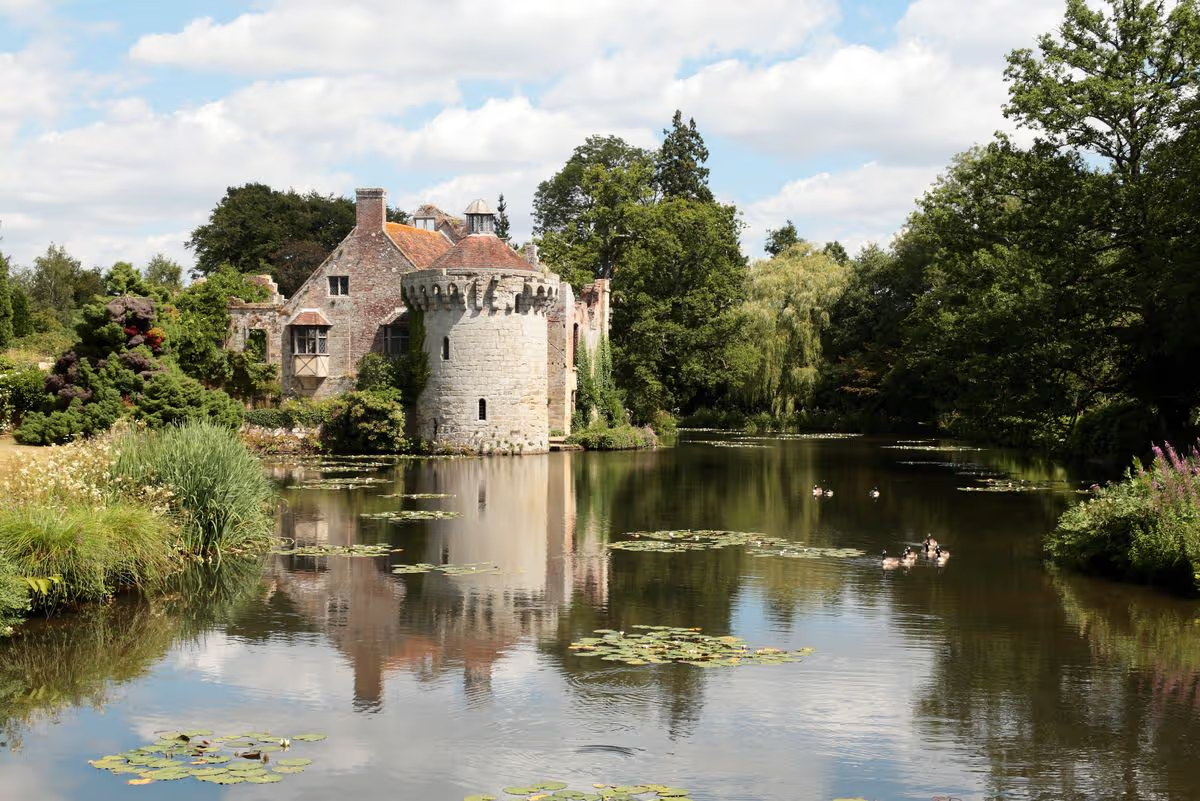
The castle

Whilst the castle’s exterior presents stunning architecture, typical of what you’d anticipate seeing across England, its interior offers quite the juxtaposition.

What renders the structure so distinctive is its museum, which houses collections from across the globe spanning different eras and civilisations – Japanese, Egyptian, Stuart and Jacobite and Buddhist. Everything is accessible to visitors between March and October, allowing them to experience an entire world under one roof.

Beyond its impressive collections, the venue itself is steeped in history and magnificence, as guests explore the corridors of a 16th-century residence. Within, they can admire the Great Hall, discover a Victorian kitchen, library, and servant’s hall, and delve into its fascinating past in the Streatfeild room.

Henry Streatfeild was the figure who dramatically transformed the property during the 1800s, moving away from its Tudor design to mirror that of a mediaeval fortress.

Though, it was collector Denys Eyre Bower whose stewardship of the castle witnessed it evolve into a cultural landmark, sharing his passion with visitors worldwide.

One guest commented on TripAdvisor: “What a lovely property, from the massive holdings on display throughout the home to the acres of relaxing grounds. The reception gal was quite informative upon our arrival as to the layout for our self-guided tour as well as answering our questions post-tour. Don’t miss this gem.”

This year, guests can purchase a day ticket and enjoy complimentary returns for an entire year. Current door prices are £15.25 for an adult and £10.50 for a child, with reduced rates available for those who book online beforehand.

High street and village

With its genuine half-timber Tudor structures and cobbled walkways, wandering along the high street of Chiddingstone Road feels like stepping back through the centuries. Notable highlights include a café, shop and the 15th-century pub.

The historic Chiddingstone Stores and post office, which dates back to 1453, is situated within a traditional Tudor building and continues to function as such today.

Similarly unchanged is the village pub, known as the Castle Inn, boasting a welcoming atmosphere and superb beer garden.

It retains its Grade II*-listed status with numerous original features intact, including delightful fireplaces, tiled floors, oak panelling and bars. One visitor described their experience at the Castle Inn as ‘atmospheric’.

They commented: “If you’re looking for a traditional, friendly, country pub, this is it. Clean and friendly, with everything you need on your doorstep that goes with a village pub. Highly recommend.”

The village name, Chiddingstone, is believed to originate from the enormous sandstone located outside the settlement. Whilst unconfirmed, the ‘Chidding Stone’ is thought to mark where it all started, with several folklore tales surrounding its origins.

Source link

I visited an up-and-coming seaside town with 50 independent shops and a unique railway

Over the holiday period, I travelled to explore what this upcoming seaside town had to offer

Nestled along the British coastline, one “emerging” seaside destination is discreetly transforming itself into the perfect coastal getaway. Boasting over 50 independent retailers dotting its charming streets, it presents a welcome change from identical high streets dominated by familiar chain stores.

The town’s artistic flair complements its historical appeal. From mouth-watering bakeries, trendy bars and eateries to unusual boutiques, each street corner feels distinctly local and brimming with character. Here’s what I uncovered during my visit to the sandy coastal town of Folkestone in Kent.

The beach

Folkestone features six beaches, but the one that captivated me most was the sheltered Sunny Sands. This spot was utterly stunning and serene. My highlight was perched on the brick wall above, observing the freezing turquoise waves rolling in.

Numerous visitors had their amiable dogs wandering freely, bounding across the sand and along the shoreline, and it was such a liberating scene to observe. The temperature was bitterly cold, and the breeze was battering my face, but it was worthwhile spending every moment there in tranquillity.

There was something oddly meditative about the sea, particularly in Folkestone. Well-known seaside destinations like Brighton don’t quite deliver that same sense of calm and peacefulness.

High street full of Independent shops

I thoroughly enjoyed discovering the town, with its undulating hills offering views reminiscent of the South of France, complete with palm trees and vibrant buildings. Yet what truly captured my heart was witnessing what the locals had to offer.

Folkestone boasts a thriving high street packed with a variety of local independent businesses, from clothing boutiques and game shops to traditional pubs and cafés. This area is known as the Creative Quarter, “a true symbol of the regeneration of the town,” said Folkstone and Hythe.

The town is surprisingly artistic and wonderfully eccentric. The quarter is said to hold an “inspiring community of designers, filmmakers, musicians, web developers and artists around the 115 studios and offices and over 50 shops, as well as around 80 flats, making the area a playground for creative and digital businesses.”

I ended up departing with second-hand bags and jewellery, anime and comic book merchandise (who would have thought?), along with charming trinkets to adorn my room.

The unique railway

Sitting at the heart of the harbour is an elongated, disused railway station, which proved both intriguing and thoroughly enjoyable to stroll across. According to Folkestone Harbour Seafront, the station platforms form part of the restoration of the Harbour Arm and its heritage structures.

The former Folkestone Harbour station launched in 1850, with a steep branch line descending from the main station to the harbour, connecting trains with ferries to Boulogne and Calais.

Following the abolition of duty-free shopping in 1999, the ferry operation from Folkestone ceased in September 2000, eliminating the primary purpose for the harbour branch line’s existence.

The arrival of the nearby Channel Tunnel also diminished the requirement for the conventional ferry-to-train connection, resulting in the line being formally closed in 2014. The station was subsequently cordoned off and deteriorated.

Nevertheless, the station was later restored and reopened in spring 2018. The platforms, where passengers once waited for trains, are now sheltered areas to relax, sit, and enjoy the scenery.

Discussing the transformation of the station, a spokesperson for the company said: “When the Folkestone Harbour & Seafront Development Company took possession of the harbour buildings, it was clear that very little of the original 1850 station structure remained.

“Even though the physical structure lacked authenticity, we realised that the existence of a station on the Harbour Arm had been integral to the successful development of Folkestone. It was interlaced with layers of history, making it an important piece of the town’s story.”

London-inspired attractions

After we strolled along the platform, we followed the signpost, which directed us to the “Goods Yard.” There, we discovered what resembled a compact version of London’s Boxpark.

This came as a welcome discovery, as throughout most of our stay, we’d been mingling with locals who appeared to be pensioners, but the Goods Yard attracted predominantly younger people, teenagers and families.

Similar to London, the venue featured a large screen showing family-friendly films and was surrounded by numerous restaurants and drinking establishments.

The dining options include Little Rock and Rocksalt, which provide locally caught seafood alongside coastal panoramas. Fresh fish cuisine can also be found at Chummys.

According to FolkeLife, Plamil Foods manufactures plant-based milks and vegan chocolate, whilst El Cortador delivers Spanish tapas. For beverages, craft beer is available at Brewing Brothers, whereas the Potting Shed provides vibrant atmospheres.

My top dining recommendation

During my time there, the finest experience I had was undoubtedly the cuisine. Beyond the harbour area, my preferred dining destination is the Blackmarket on Tontine Street.

This neighbourhood establishment serves mouth-watering burgers, chicken wings and alcoholic drinks, occasionally hosting live musical performances.

The interior design was remarkable, showcasing an eclectic collection of photographs, art pieces, text, banners, and emblems. It’s incredibly contemporary, yet accommodates visitors of every age and character.

I selected a burger topped with blue cheese, chorizo and crispy onions, which I still fantasise about today. I polished off the soy honey garlic-glazed wings within moments.

While chatting with proprietor Nathan Roberts, he explained they source locally, partnering with one of the town’s few remaining butchers. The menu gets refreshed every couple of months, guaranteeing fresh offerings on each return trip.

Discussing Folkestone’s prospects, Nathan commented: “It’s definitely somewhere to watch, there’s a lot going on, a lot of moves being made. I’d say in the next 10 years, Folkestone will be on the map, especially for people in the city. It’s going to be somewhere to keep an eye on; it’s only going to get better around here.”

Source link

Seaside town that feels like the Med is cheap £14 train from London

Just under two hours away from London with Mediterranean-style beaches, this getaway won’t break the bank

Britain is approaching the final stretch of winter, with warmer weather hopefully just around the corner.

Whilst you might assume a lovely getaway requires jetting off overseas, the UK boasts plenty of stunning destinations perfect for a weekend retreat – and this seaside gem stands out as the finest of them all.

This picturesque town sits less than two hours from London, with train tickets starting at just £14, making it wonderfully budget-friendly. It offers Mediterranean-style beauty featuring sandy shores, clifftop rambles and mouth-watering cuisine, yet retains quintessential British character through its Victorian promenades and harbour.

The beautiful spot in question is Broadstairs in Kent, is dubbed the jewel of Thanet.

Ensure our latest stories always appear at the top of your Google Search by making us a Preferred Source. Click here to activate or add us as your Preferred Source in your Google search settings.

This sheltered coastal resort brims with sandy beaches, clifftop trails, independent cafés and seafood establishments, all conveniently accessible from its Victorian promenades and harbour.

For those who enjoy exploring on foot, there’s Viking Bay – a stunning horseshoe-shaped beach bordered by pastel-coloured huts.

Visitors can catch waves at Joss Bay, or traverse clifftop paths across Botany Bay for breathtaking vistas over the Channel.

If you’re after a more urban-style escape, there’s an abundance of independent retailers and dining spots to discover.

Independent cafés and seasonal eateries nestle alongside traditional fish-and-chip shops and family-owned institutions like Morelli’s Gelato, which dates back to the 1950s.

The town also boasts renowned literary connections. Charles Dickens spent his summers here at Bleak House.

This delightful coastal town brims with character, and the beauty of it is you won’t need to shell out hundreds of pounds or mess about with passports to experience it — eimply jump on a train and discover what’s on offer.

Pete Walls, Co-Founder of Split My Fare, remarked: “Broadstairs shows that you don’t need to go abroad for that coastal escape because clean beaches, local culture and atmospheric streets are right on our doorstep, and the train makes it easy to get there.”

Source link

UK seaside lido that was turned into a car park could be about to become a lido again

The historic venue was paved over to provide beach parking, but a bold plan could see the lido revitalised for year-round swimming could “bring new life to the town” according to a local organisation

In 1935, the Marina Bathing Pool opened in a stunning seafront location, offering locals and tourists the chance to take a dip in fresh seawater. Over the years, it brought in huge crowds, especially at weekends when families would flock to the area to cool off, take a dive, or even learn to sail in the boating pool. Its was part of a complex that even had a space for dancing and a roller rink.

But despite its beautiful Art Deco architecture, the lido, like so many others eventually closed down and the site was abandoned. In the 1970s, it was paved over to create a car park, in a twist worthy of a Joni Mitchell song.

However, the council owned car park is now being considered by Thanet District Council for disposal, and an enthusiastic non-profit organisation is hoping to take it over, potentially bringing back the lido for year-round outdoor swimming.

Non-profit organisation Heritage Lab Ramsgate said its in “early discussions” with a developer to create an outdoor swimming complex at the site, which it hopes would “help re-establish Ramsgate as a distinctive coastal destination”.

A spokesperson for Heritage Lab Ramsgate said: “Thanet has a thriving sea and open-water swimming culture, with people of all ages swimming year-round for wellbeing, connection and community. Outdoor swimming is no longer niche – it’s part of a wider shift in how people travel and spend time at the coast.

“When combined with elements such as saunas, cafés and social spaces, an outdoor pool can become something more than a place to swim — it can be a year-round destination that locals and visitors return to again and again.

“The former Marina Bathing Pool site offers a rare opportunity to reinstate a high-quality outdoor swimming facility in a location that has been associated with leisure and seaside holidays since the mid-1930s.”

A Facebook post showing potential plans for the site received a number of positive comments, with one saying: “Brilliant idea- kudos to the person/persons who conceived this project. It makes perfect sense to restore what once was a vital part of the town.” Others shared fond memories of the original lido, and one commenter said: “Used to spend all day in the old marina pool when it was there. Mum never saw us from 0900 until about 1730.”

However, one comment questioned the feasibility of the project, asking: “But would people use it? Did it originally close for lack of use? Like when people try to reopen village pubs and it struggles and struggles, many different landlords come and go eventually they close again. Not all but most. Personally I’d like to see this happen but I doubt I’d actually use it. Good luck I say.”

A report is due to be submitted to Thanet District Council ahead of a February 26 meeting recommending a marketing exercise which will invite proposals from a range of parties who may be interested in the site. The council previously explored transforming the site for leisure use.

READ MORE: Disney Wish cruise ship to sail from UK in 2027 – I’ve been onboard and it’s unrealREAD MORE: I stayed at the UK’s lowest-rated budget hotel – one paid-for feature stunned me

A spokesperson for Heritage Lab Ramsgate added: “If a scheme were to progress, it would need to be developed responsibly and in close consultation with local residents, with careful attention paid to affordability, accessibility and ensuring the benefits are widely shared.”

The non-profit has also nominated the site to be designated an Asset of Community Value (ACV), which prevents the asset owner from selling it for up to five years, unless the nominating group has a chance to bid for it. Giving the car park ACV status will also give locals more of an opportunity to formally have their say over what happens to the site.

Have a story you want to share? Email us at webtravel@reachplc.com

Source link