Feb. 13 (UPI) — A restructuring of the Department of Health and Human Services will see two top people leave ahead of the midterm elections, unnamed officials familiar with the decision told media outlets Friday.
HHS Deputy Secretary Jim O’Neill and General Counsel Mike Stuart are expected to soon leave the agency, sources have reported to Axios, Politico and CNN.
“They are being offered jobs within the administration but will not be remaining in their current positions,” one source told Politico.
O’Neill is the second-in-command behind HHS Secretary Robert F. Kennedy Jr. and is the interim leader of the Centers for Disease Control and Prevention in Atlanta. He has boosted anti-vax messaging, allegations of Medicaid fraud and the United States leaving the World Health Organization.
On Thursday, Kennedy announced that Chris Klomp, deputy administrator of the Centers for Medicare and Medicaid Services, would become chief counselor in charge of overseeing all Health and Human Services Department operations. Before joining the administration, he was a health tech executive and venture capitalist.
Kennedy also promoted Kyle Diamantas, deputy commissioner for human foods, and Grace Graham, deputy commissioner for policy, legislation and international affairs, to senior counselors for the Food and Drug Administration. They will also keep their current positions. John Brooks will also be a senior counselor at Centers for Medicare and Medicaid Services while keeping his job as chief policy and regulatory officer.
The moves are intended to focus attention on Make America Healthy Again policies, like dietary guidelines changes, eliminating artificial food dyes and improving healthcare affordability.
“What basically happened was that HHS Secretary Kennedy, and also the White House, realized that we want to be most efficiently and most effectively implementing that policy and moving the needle on these issues that we see as very clear and unambiguous wins for us,” the White House official told Politico. “And obviously the polling and such is very clear on these topics as well.”
President Donald Trump speaks alongside Administrator of the Environmental Protection Agency Lee Zeldin in the Roosevelt Room of the White House on Thursday. The Trump administration has announced the finalization of rules that revoke the EPA’s ability to regulate climate pollution by ending the endangerment finding that determined six greenhouse gases could be categorized as dangerous to human health. Photo by Will Oliver/UPI | License Photo
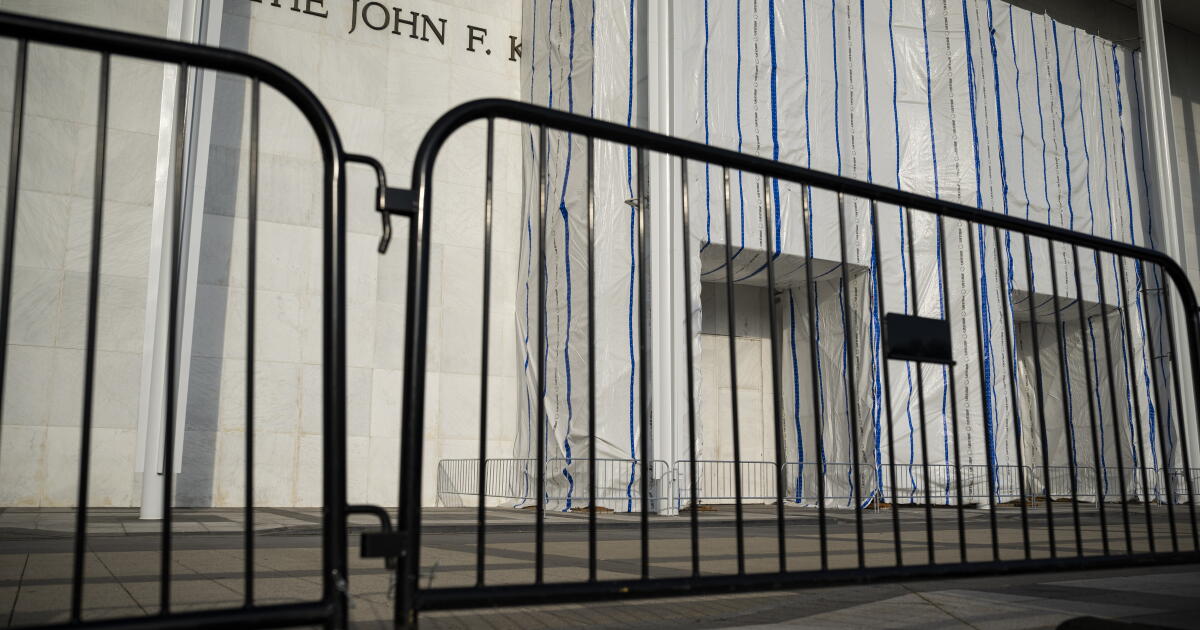
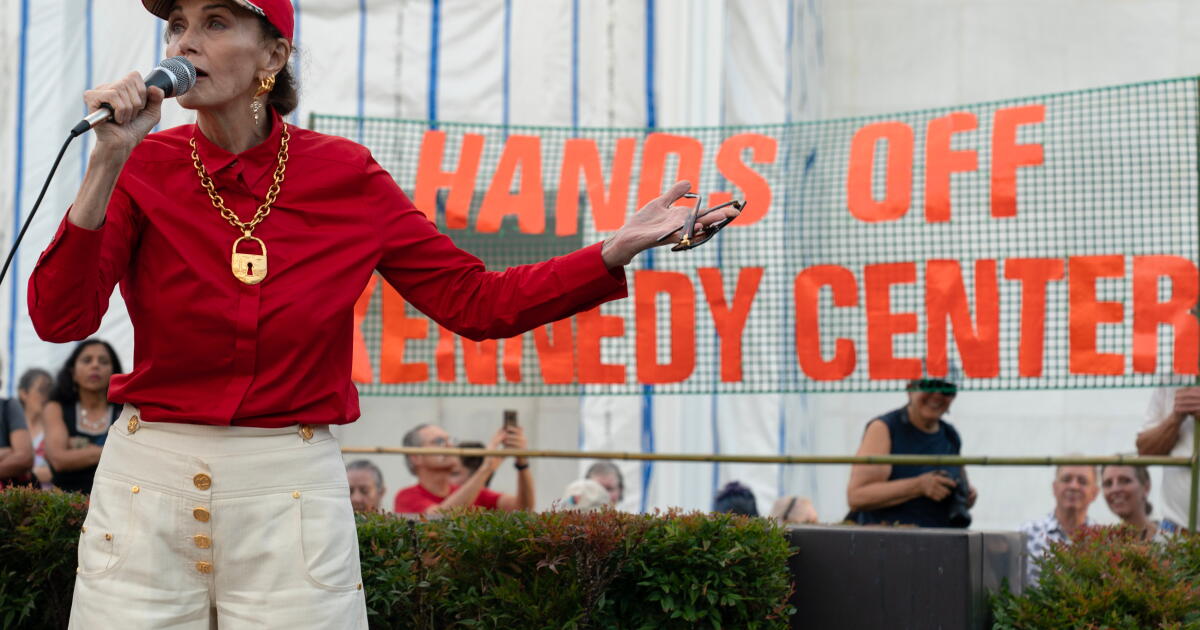
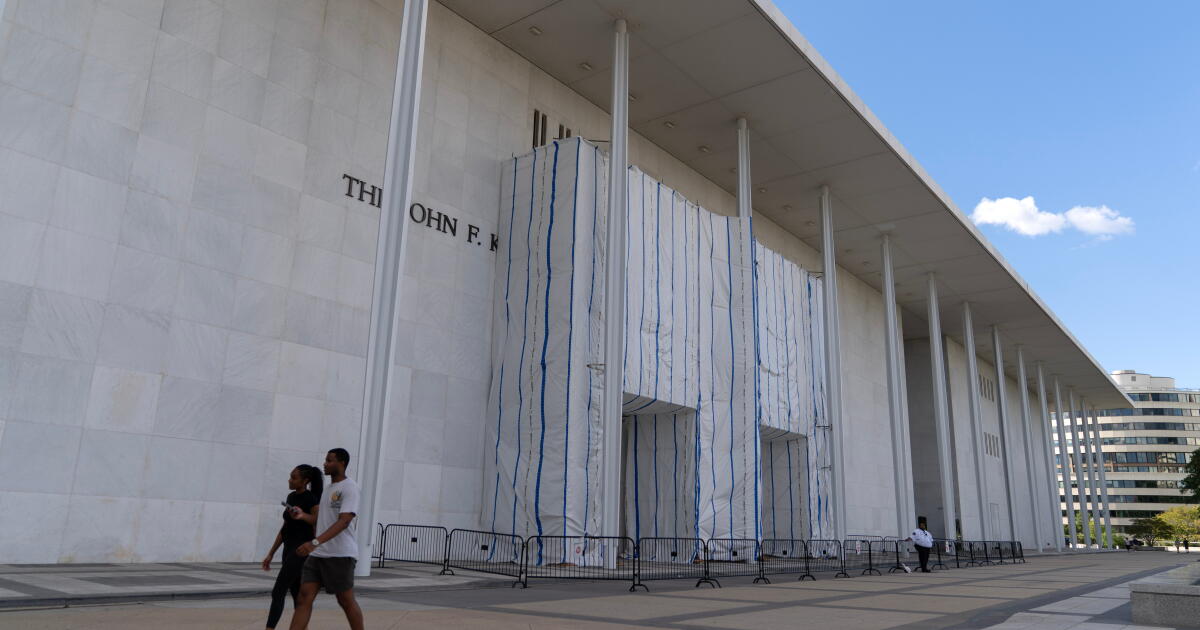
Just five days after Philip Glass, one of the world’s most famous and revered living composers, canceled the world premiere of his “Lincoln” symphony at the Kennedy Center, President Trump announced he would close the nation’s premier arts center for two years for major renovations.
The arts world — already spinning from the sweeping changes to the venue that began almost a year ago when Trump fired the board and installed himself as chairman — was gobsmacked by the shocking news. And although the president said in a social media post that the closure was about building a “World Class Bastion of Arts, Music, and Entertainment, far better than it has ever been before,” speculation abounded that the unexpected move was more about saving face.
Embarrassment could have been a factor in the rash decision, but Trump is not a man who appears to be afflicted by that particular emotion, which takes its cue from a certain amount of self-awareness and humility. For this reason, I am venturing another guess about the president’s motive for pulling the rug out from under the storied venue: retribution.
If ungrateful artists don’t want to play at the Kennedy Center, the Kennedy Center will no longer be around for them to use. Take that.
The Kennedy Center was supposed to mark a vainglorious Trump’s ascendance to the pinnacle of cultural cachet, but instead the culturati shunned and humiliated him — refusing to join his party. New York City high society did the same before he was president. It was a pattern both familiar and painful. So Trump, like the man-child he is, took his ball and went home.
In this case, that ball happens to be the complex that serves as the symbolic seat of the nation’s vibrant, messy, questioning, deeply political and hugely alive arts and culture scene. To lose access to this beating heart — and all that it represents — is a grievous loss for our national identity. Its meaning was enshrined in President Kennedy’s vision for the center, and written on its walls, as the realization of a country, “which commands respect throughout the world not only for its strength but for its civilization as well.”
Like many of Trump’s controversial construction projects, the wholesale re-imagining of the Kennedy Center will likely face immediate and lengthy pushback in court. This could mean that it never gets done, and the center remains closed indefinitely. Or we could wake up tomorrow to news that bulldozers have arrived onsite and have begun the process of razing architect Edward Durell Stone’s historic 1971 building — as happened with the East Wing of the White House.
Roma Daravi, the center’s vice president of public relations, wrote in an email that the renovations would include, “Repairing and, where necessary, replacing elements on the exterior of the building to ensure the long-term preservation and integrity of the structure,” as well as getting the building up to code and making fixes to the center’s “HVAC, plumbing, electrical, fire protection, vertical transportation systems, and technical stage systems,” as well as improving parking. She also wrote that the center, which hosts 2 million visitors annually, is working closely with the National Symphony Orchestra, and will “continue to support them with funding at the same level as recent years.”
Nonetheless, the most frightening thing about this new era under Trump is that anything is possible, and we sometimes don’t know exactly what that means until it is far too late.
I’m Arts Editor Jessica Gelt, and here’s your arts and culture news for the week.
On our radar
Yunchan Lim performs next weekend with the L.A. Philharmonic.
(LA Phil)
Dudamel Conducts Beethoven and Lorenz Playwright Jeremy O. Harris reconceptualizes Johann Wolfgang von Goethe’s play “Egmont,” with narration by actor Cate Blanchett and maestro Gustavo Dudamel leading the Los Angeles Philharmonic in Beethoven’s complete incidental music. The evening begins with the world premiere of Ricardo Lorenz’s “Humboldt’s Nature,” inspired by the South American travels of philosopher and naturalist Alexander von Humboldt, followed by 2022 Van Cliburn winner Yunchan Lim performing Robert Schumann’s “Piano Concerto in A minor, Op. 54.” 8 p.m. Thursday; 11 a.m. Feb. 13; 8 p.m. Feb. 14; 2 p.m. Feb. 15. Walt Disney Concert Hall, 111 S. Grand Ave., downtown L.A. laphil.com/events
A scan of the face Nes-Hor, an ancient Egyptian priest whose mummy is featured in “Mummies of the World: The Exhibition” at the California ScienceCenter.
(California ScienceCenter)
Mummies of the World The scientific study of naturally and intentionally preserved corpses illuminates the lives of ancient people, past cultures and the present in this exhibition that includes more than 30 real-life mummies. 10 a.m.-5 p.m., through Sept. 7. California ScienceCenter, 700 Exposition Park Drive. californiasciencecenter.org
Ann Noble as “Richard III” at A Noise Within.
(Daniel Reichert)
Richard lll Guillermo Cienfuegos directs this fast-paced reinterpretation of William Shakespeare’s history play, reset in 1970s Britain with Ann Noble in the title role as one of the most fascinating villains ever. Sunday through March 8. A Noise Within, 3352 E. Foothill Blvd., Pasadena. anoisewithin.org
You’re reading Essential Arts
The week ahead: A curated calendar
FRIDAY The Abduction from the Seraglio Pacific Opera Project performs its “Star Trek”-themed parody of Mozart’s in L.A. for the first time in a decade. 7:30 p.m. Friday and Saturday; and 3 p.m. Sunday. Thorne Auditorium, Occidental College, 1600 Campus Road. pacificoperaproject.com
Thomas Adès and Yuja Wang Composer Adès leads the L.A. Phil in Tchaikovsky’s “Francesca da Rimini , Op. 32,” the U.S. premiere of William Marsey’s “Man With Limp Wrist” and Adès own work “Aquifer”; and pianist Wang performs Prokofiev’s “Piano Concerto No. 2 in G minor, Op. 16.” 8 p.m. Friday; 2 p.m. Saturday and Sunday. Walt Disney Concert Hall, 111 S. Grand Ave., downtown L.A. laphil.com
Rickie Lee Jones performs Friday and Saturday at the Wallis.
(Amy Harris / invision/ap)
Rickie Lee Jones The singer, musician and songwriter brings her genre-defying vocals, crisscrossing rock, R&B, pop, soul and jazz, to the Wallis for two shows. 7:30 p.m. Friday and Saturday. The Wallis, 9390 N. Santa Monica Blvd., Beverly Hills. thewallis.org
Laguna Beach Music Festival Violinist Stefan Jackiw is joined by Kevin Ahfat on piano, the Parker Quartet and story artist Xai Yaj for a program featuring Beethoven and Janáček on Friday; and on Saturday, Jackiw, Ahfat and the Parker Quartet, along with clarinetist Yoonah Kim and musicians from the Colburn School perform works by American composers Florence Price, Leonard Bernstein, Eric Nathan and Aaron Copland, conducted by Steven Schick. 8 p.m. Friday; 7 p.m. Saturday. Laguna Playhouse, 606 Laguna Canyon Road, Laguna Beach. philharmonicsociety.org
SATURDAY asses.masses Patrick Blenkarn and Milton Lim’s immersive, eight-hour video game experience — with intermissions, refreshments and a meal included — involves unemployed donkeys demanding that humans surrender their machines and give the animals back their jobs. 1 p.m. Saturday. UCLA Nimoy Theater, 1262 Westwood Blvd. cap.ucla.edu
Chicano Camera Culture: A Photographic History, 1966 to 2026 The exhibition examines Chicana/o/x lens-based image-making through 150 works by nearly 50 artists. Through Sept. 6. The Cheech, 3581 Mission Inn Ave., Riverside; through July 5. Riverside Art Museum, 3425 Mission Inn Ave. riversideartmuseum.org
Katie Holmes stars in “Hedda Gabler” at the Old Globe Theatre in San Diego.
(Jan Welters)
Hedda Gabler Katie Holmes headlines this new version of Henrik Ibsen’s classic drama adapted by Erin Cressida Wilson and directed by Barry Edelstein. Through March 15. Old Globe Theatre, 1363 Old Globe Way, San Diego. theoldglobe.org
Just Me – Pico Union This concert by the award-winning ensemble Tonality, led by founder and Artistic Director Alexander Lloyd Blake, honors and shares the stories of transgender and non-binary individuals. 7 p.m. Saturday. The Pico Union Project, 1153 Valencia St., Los Angeles. ourtonality.org
Mandy Patinkin in Concert: Being Alive The stage-and-screen star, accompanied by Adam Ben-David on piano, performs Broadway and classic American tunes written by Irving Berlin, Stephen Sondheim, Cole Porter and Harry Chapin. 8 p.m. Saturday. Carpenter Center, 6200 E. Atherton St., Long Beach. carpenterarts.org
The orchestral collective Wild Up performs Saturday at the Broad.
(Ian Byers-Gamber)
Wild Up The orchestral collective presents “The Great Learning, Paragraphs 2 and 7” by Cornelius Cardew, a community collaboration with 30 pre-appointed non-musicians. 8 and 10 p.m. Saturday. The Broad, 221 S. Grand Ave., downtown L.A. thebroad.org
SUNDAY From Fugue to Fantasia: Debussy, Mozart, and More Colburn alum and violinist Blake Pouliot is joined by Jonathan Brown on viola and percussionist Matthew Howard. 4 p.m. Sunday. Thayer Hall, Colburn School, 200 S. Grand Ave., downtown L.A. colburnschool.edu
MONDAY American International Paderewski Piano Competition Twenty-five young professional pianists vie for a $10,000 grand prize named for Ignacy Jan Paderewski, a celebrated European concert pianist and composer, who helped lead Poland’s battle for independence after World War I and later served as the nation’s prime minister. 1 p.m. Monday-Wednesday; 11 a.m. Feb. 13 and 5 p.m. Feb. 14. Murphy Recital Hall, Loyola Marymount University, 1955 Ignatian Circle. paderewskimusicsociety.org
Right in the Eye Jean-François Alcoléa, Fabrice Favriou and Thomas Desmartis play more than 50 instruments in this live concert, designed by Alcoléa, that serves as a soundtrack for 12 silent shorts by pioneering filmmaker Georges Méliès. 7 p.m. Monday. USC Cinematic Arts, Norris Cinema Theatre at the Frank Sinatra Hall, 3507 Trousdale Parkway. https://cinema.usc.edu/events/event.cfm?id=72935
TUESDAY House on Fire The new music trio of Andrew Anderson, Wells Leng and Richard An perform a program of works for pianos, keyboards and other instruments by Tristan Perich, Erin Rogers, Matthias Kranebitter, Yifeng Yvonne Yuan, Erich Barganier, and group members An and Leng 8 p.m. Tuesday. 2220 Arts + Archives, 2220 Beverly Blvd. pianospheres.org
sex, lies and videotape The Los Angeles Film Critics Assn. presents a screening of Steven Soderbergh’s breakout 1989 indie starring James Spader, Andie MacDowell, Peter Gallagher and Laura San Giacomo with Giacomo in conversation with critic Lael Loewenstein. 7:30 p.m. Tuesday. Egyptian Theatre, 6712 Hollywood Blvd. egyptiantheatre.com
WEDNESDAY Amadeus A new production of Peter Shaffer’s music-infused drama stars Jefferson Mays as Salieri, Sam Clemmett as Mozart and Lauren Worsham as Constanze, with Tony Award winner Darko Tresnjak directing. The Pasadena Conservatory of Music will offer 10-minute Micro Mozart Concerts before every performance Wednesday through March 8. Pasadena Playhouse, 39 S. El Molina Ave. pasadenaplayhouse.org
Yefim Bronfman The pianist performs works by Schumann, Brahms, Debussy and Beethoven in a Colburn Celebrity Recital. 8 p.m. Wednesday. Walt Disney Concert Hall, 111 S. Grand Ave., downtown L.A. laphil.com
Here Lies Love Snehal Desai directs an all-new production of the musical about former First Lady of the Philippines Imelda Marcos, with concept, music and lyrics by David Byrne and music by Fatboy Slim and choreography by William Carlos Angulo. Through March 22. Mark Taper Forum, 135 N. Grand Ave., downtown L.A. centertheatregroup.org
THURSDAY Intersect Palm Springs Arts + Design Fair Collectors, designers and curators convene in the Coachella Valley to present new work and share ideas with one another and the public. 4-6 p.m. VIP only and 6-8 p.m.Thursday; 11 a.m.-6 p.m. Feb. 13-15; 11 a.m.-5 p.m. ; Feb. 16. Palm Springs Convention Center, 277 N. Avenida Caballeros. intersectpalmsprings.com
Culture news and the SoCal scene
More on the Kennedy Center Times classical music critic Mark Swed weighed in on the Kennedy Center’s closure with a deeply knowledgeable piece about the history of the storied venue, and how it has always been a place marked, and sometimes marred, by politics — just never in this way. “The Kennedy Center proved political from Day 1. Leonard Bernstein was commissioned to write a theatrical piece for the center’s opening in 1971, which turned out to be an irreverent ‘Mass’ — musically, liturgically, culturally and, most assuredly, politically. Most of all it was an unmistakable protest against the Vietnam War. In his own protest, President Nixon stayed home,” Swed writes.
Many nights at the opera Meanwhile, arts and entertainment writer Malia Mendez penned a lovely piece announcing L.A. Opera’s 2026-27 season — the first under its new music director, Domingo Hindoyan, who takes over after longtime leader James Conlon steps down. Fun fact: Hindoyan and soon-to-depart Los Angeles Philharmonic music director Gustavo Dudamel have been friends since their days together in Venezuela’s world-renowned youth orchestra El Sistema.
Mark your calendar On Thursday, Malia scored another exclusive, reporting on LACMA’s announcement that the David Geffen Galleries, the pinnacle of a two-decade campus transformation, will officially open April 19. Museum members will have two weeks of priority access to the galleries, with general admission beginning May 4. It was nearly a decade ago that business magnate David Geffen made a record-high $150-million donation toward the construction of a new museum building to be designed by Pritzker Prize-winning architect Peter Zumthor. The $720-million structure will serve as the new home for LACMA’s permanent collection with 90 exhibition galleries organized thematically rather than by medium or chronology. “It’s kind of a worldview,” LACMA Director and Chief Executive Michael Govan told The Times. “It’s big enough that it can hold the world.”
Will Swenson stars as “Sweeney Todd” at the La Mirada Theatre for the Performing Arts.
(Jason Niedle / TETHOS)
A bloody good time Comedian, musical theater star and “Seinfeld” alum Jason Alexander directed a revival of “Sweeney Todd: The Demon Barber of Fleet Street” at La Mirada Theatre for the Performing Arts, and Times theater critic Charles McNulty was there to catch it. “Alexander’s production of ‘Sweeney Todd’ has breadth and heft, but also intimacy and lightness,” McNulty writes in his review.
New Hammer hires Exciting staffing news arrives from the Hammer Museum at UCLA, which announced two new leadership appointments: Michael Wellen has been named the museum’s new chief curator; and Regan Pro is being brought on in the newly created role of chief of learning, engagement, and research, taking the lead on public programs and community partnerships, as well as K-12, family, and university initiatives. Both new hires will report to museum director Zoë Ryan. Wellen arrives from London’s Tate Modern where he is currently senior curator of international art; and Pro is a longtime arts leader and educator who most recently served as the deputy director of public programs and social impact at the Lucas Museum of Narrative Art.
Alexander Shelley has been named music director of Pacific Symphony.
(Curtis Perry)
Taking the baton Pacific Symphony announced its 2026-27 Classical Series, marking the orchestra’s 48th season, and its first under the leadership of its new artistic and music director, Alexander Shelley. The season’s two opening programs will celebrate the 20th anniversary of the Renée and Henry Segerstrom Concert Hall, and the 40th anniversary of Segerstrom Center for the Arts. The opening night celebration in September features violinist Joshua Bell, after which Shelley will guide the season through a series of classic works, beginning with Mahler’s Second Symphony. A season highlight will be a program called America 250, which celebrates the country’s semiquincentennial and includes work by Leonard Bernstein, Igor Stravinsky and Aaron Copland. Also on the calendar: John Adams’ Pulitzer Prize-winning opera, “Nixon in China,” and a two-week Beethoven Revolution Festival.
Last Tuesday, Philip Glass withdrew the delayed premiere in June of his latest symphony, No. 15. Originally meant to celebrate the 50th anniversary of the John F. Kennedy Center for the Performing Arts in 2022, it is a portrait of Abraham Lincoln, but the composer decided the values of the current Kennedy Center were “in direct conflict to the message of the symphony,” which is inspired by Lincoln’s 1838 Lyceum Address.
In rebuke to Glass, Kennedy Center spokesperson Roma Daravi’s quick response was: “We have no place for politics in the arts.”
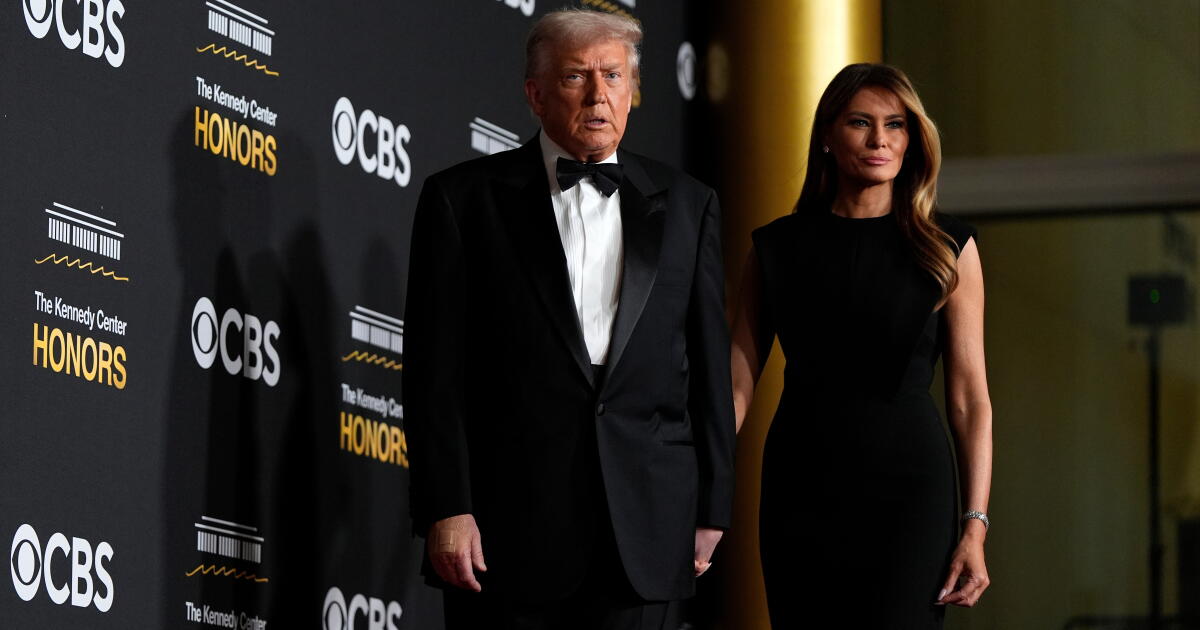
Two nights later, the chairman of the Kennedy Center board (who also happens to be president of the United States) hosted at the “no place for politics” center a bevy of Republican politicians and donors for the gala premiere of “Melania,” a documentary about and produced by his wife, the first lady.
Three days after that, the president, with no warning to Congress (which administers the Kennedy Center), center staff or the public, announced on his social media platform that he would close the facility July 4 for two years to undertake a major renovation. This may get the center off the hook for putting together a new season, what with all its departures (voluntary and not) of competent artistic directors, but it also means the center’s one remaining major institution, and its crown jewel, the National Symphony, is suddenly homeless.
The fact is, the Kennedy Center has always been political. The same goes for orchestras. And Lincoln’s seeming role as a symphonic football is nothing new, either.
But political doesn’t — or, at least, once didn’t — necessarily imply partisan. In March 1981, two months into his presidency, Ronald Reagan turned up at the Kennedy Center for the premiere of a new production of Lillian Hellman‘s “The Little Foxes,” and was photographed happily congratulating a smiling Elizabeth Taylor backstage. Also present was the gruff playwright.
Hellman, who had been a member of the Communist Party and was called up in front of the House Un-American Activities Committee in 1952, and Reagan, an avid anti-Communist, couldn’t have had much use for each other politically. But there they were, soaking up art and glamour (if maybe not in that order) together. It was also in 1952 and thanks to Sen. Joseph McCarthy’s Communist witch hunts that the first inklings of a national performing arts center in Washington, D.C. developed.
Aaron Copland’s “Lincoln Portrait,” for speaker and orchestra, written in 1942 in the wake of the Pearl Harbor attack, had been slated for a performance at Dwight D. Eisenhower’s inauguration in 1952. Complaints about Copland’s leftist leanings pressured Eisenhower to cancel the performance, but left inklings in Ike’s mind that the nation needed a performing arts center in Washington, D.C. In 1955, he instituted a District of Columbia Auditorium Commission and that led to the National Cultural Center Act of 1958.
Bipartisan support became a no-brainer. Kennedy was an enthusiast and, in his presidency, both First Lady Jacqueline Kennedy and former First Lady Mamie Eisenhower worked together to support the cultural center. In 1963, just days before his assassination, JFK hosted a White House fundraiser for the center. A year later, President Lyndon B. Johnson broke ground for what was to become “a living memorial to John F. Kennedy” with the gold-plated spade that President Taft had used for the Lincoln Memorial.
President Lyndon B. Johnson lifts a shovel full of dirt during ground-breaking ceremonies for the John F. Kennedy Center for the Performing Arts in 1964 while members of the Kennedy family look on.
(Bettmann Archive / Getty Images)
The Kennedy Center proved political from Day 1. Leonard Bernstein was commissioned to write a theatrical piece for the center’s opening in 1971, which turned out to be an irreverent “Mass” — musically, liturgically, culturally and, most assuredly, politically. Most of all it was an unmistakably protest against the Vietnam War. In his own protest, President Nixon stayed home.
“Mass” was ridiculed by critics and sophisticates. And so was the Kennedy Center in its monstrosity. But the composition ultimately came to be seen as a precursor of musical Postmodernism and possibly Bernstein’s greatest work, a monument in its own right. The Brutalist monumentalism of the Kennedy Center also grew over time to be loved, increasingly bringing cachet to a diverse nation’s artistic needs.
All of that has, however, been called into question by a new administration noisily remaking the center as partisan and politicizing even renovation and Lincoln.
You don’t take on renovation of a single concert hall overnight, let alone an entire performance center with several theaters, including a major concert hall and opera house. This requires architects and acousticians deeply schooled in theaters, and each has its own acoustical needs. You touch anything, and it will affect the sound. Both the opera house and concert hall could use acoustical work, but that is a very big deal. If this sudden renovation comes as a surprise to staff, that means there have been no consultations, no proposals, no models, no feedback. Best to add to the budget some hundreds of millions of dollars to fix mistakes.
Before even considering anything else, a space has to be found for the National Symphony. It is possible to create temporary structures or renovate existing buildings into acoustical wonders, as architect Frank Gehry and acoustician Yasuhisa Toyota have proved. In Munich, the temporary Isarphilharmonie, which has Toyota acoustics, is so successful that some are saying the city doesn’t need a new concert hall after all.
So, given the timing of this precipitous announcement, it is hard to believe that something isn’t also going on with attitudes toward Lincoln and Glass’ displeasure with the Kennedy Center administration. For what it’s worth, Presidents Ford, Carter, George H.W. Bush, Clinton and Obama have all narrated Copland’s “Lincoln Portrait.”
Lincoln has been central to Glass’ work for more than four decades. The composer first used Lincoln in Act V (known as “The Rome Section”) of Robert Wilson’s 12-hour opera, “the CIVIL warS: a tree is best measured when it is down” (a prescient title for current Kennedy Center thinking), which had been intended for the 1984 Olympic Arts Festival in L.A. but was never produced here for lack of funds.
Lincoln shows up in Glass’ 2007 opera, “Appomattox,” commissioned by San Francisco Opera and later revised and expanded for Washington National Opera in 2015. The opera offers a look at how the Civil War ended with high-minded statesmanship. The first act of Glass’ 2013 opera, “The Perfect American,” about the last days of Walt Disney, ends with a flashback of Walt, who idolized Lincoln, visiting Disneyland and getting into an argument about slavery with the animatronic Lincoln, which gets so worked up it attacks Walt.
Politics are rarely far away from orchestral or operatic life. At a recent appearance of the Chicago Symphony at the Soraya, Italian conductor Riccardo Muti followed an impressively grand performance of Brahms’ Fourth Symphony by telling the audience how the arts keep us honest and played as an encore the overture to Verdi’s “Nabucco,” as an example of how an opera could motivate public support for Garibaldi’s nationalist movement. Garibaldi also makes an appearance with Lincoln in the Glass/Wilson “Rome Section.”
A few days later at the Renée and Henry Segerstrom Concert Hall, the thrilling Orquesta Sinfónica de Minería from Mexico City revealed an inspiring model of Latin American cooperation. On the program was Cuban composer Paquito D’Rivera’s “Concerto Venezolano,” featuring the fearless improvising Venezuelan trumpet soloist Pacho Flores. The concerto also featured solos on the Venezuelan cuatro by Héctor Molina, but his name was only announced last minute, due to current travel uncertainty.
One of the greatest recordings of Shostakovich’s Fifth Symphony, his grab-you-by-the-gut answer to Stalin and celebration of Russia, is by the National Symphony under Mstislav Rostropovich, recorded in 1994 at the Kennedy Center. Stalin saw the symphony as his deification. Rostropovich exuded, in the Kennedy Center aura, the expression of an overwhelmingly triumphant celebration of the end of the Soviet repression. You can take the symphony and the opera out of the Kennedy Center, but you can’t take the essence of the Kennedy Center, the living memorial to the ideal of something larger than political ego, out of the symphony and opera.
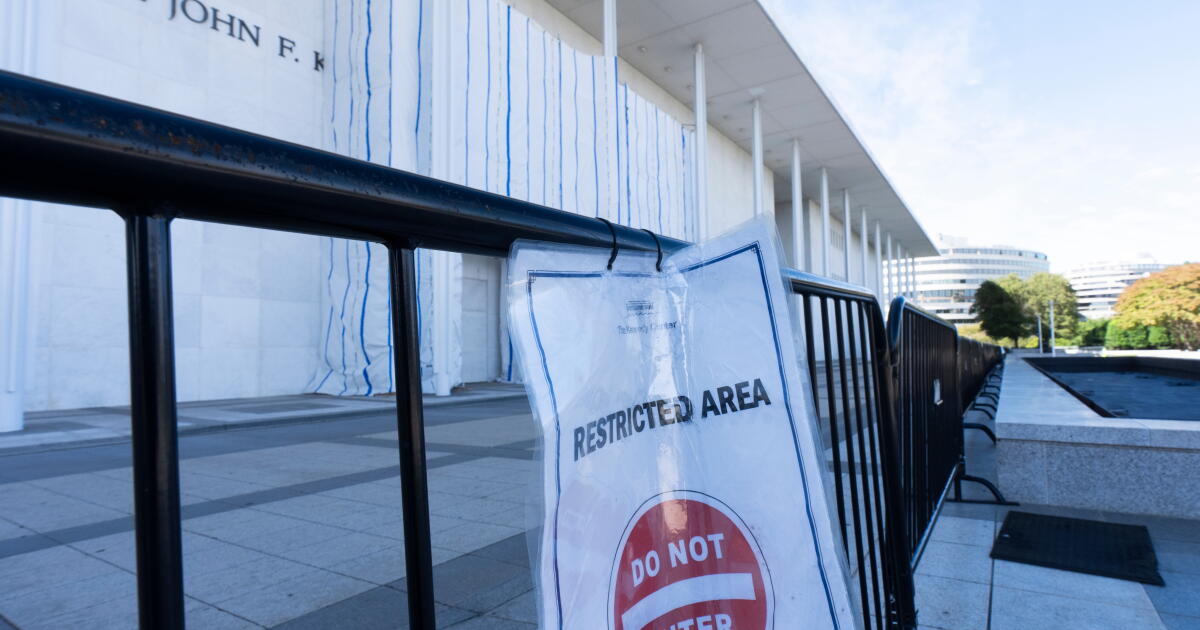
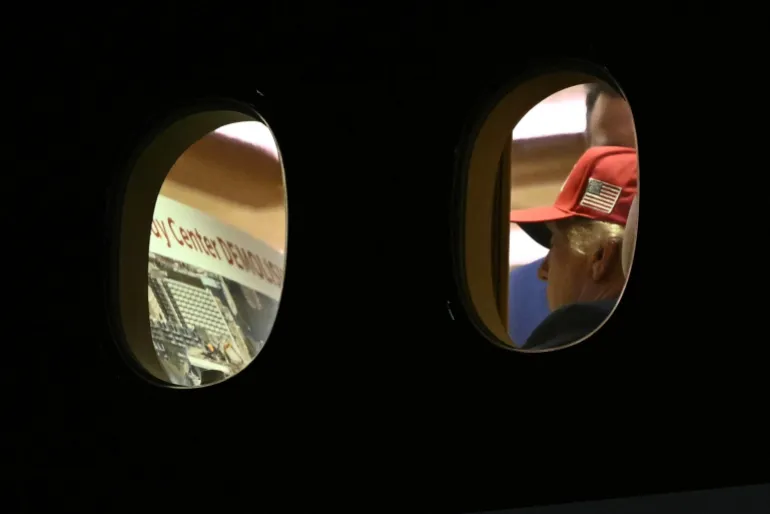
WASHINGTON — President Trump said Sunday that he will move to close Washington’s Kennedy Center for the Performing Arts for two years starting in July for construction, his latest proposal to upend the storied venue since returning to the White House.
Trump’s announcement on social media follows a wave of cancellations by leading performers, musicians and groups since the president ousted the previous leadership and added his name to the building. Trump made no mention in his post of the recent cancellations.
His proposal, announced days after the premiere of “Melania,” a documentary about the first lady, was shown at the center, is subject to approval by the board of the Kennedy Center, which has been stocked with his handpicked allies. Trump chairs the center’s board of trustees.
“This important decision, based on input from many Highly Respected Experts, will take a tired, broken, and dilapidated Center, one that has been in bad condition, both financially and structurally for many years, and turn it into a World Class Bastion of Arts, Music, and Entertainment,” Trump wrote in his post.
Neither Trump nor Kennedy Center President Ric Grenell, a Trump ally, have provided evidence to back up their claims about the building being in disrepair, and in October, Trump had pledged the center would remain open during renovations. In Sunday’s announcement, he said the center will close July 4, when he said the construction would begin.
“Our goal has always been to not only save and permanently preserve the Center, but to make it the finest Arts Institution in the world,” Grenell said in a post, citing funds Congress approved for repairs.
“This will be a brief closure,” Grenell said. “It desperately needs this renovation and temporarily closing the Center just makes sense — it will enable us to better invest our resources, think bigger and make the historic renovations more comprehensive. It also means we will be finished faster.”
The sudden decision to close and reconstruct the Kennedy Center is certain to spark blowback as Trump revamps the popular venue. The building began as a national cultural center and Congress renamed it as a “living memorial” to President Kennedy — a champion of the arts during his administration — in 1964, in the aftermath of his assassination.
Opened in 1971, it serves as a public showcase year-round for the arts, including the National Symphony Orchestra.
Since Trump returned to the White House, the Kennedy Center is one of many Washington landmarks that he has sought to overhaul in his second term. He demolished the East Wing of the White House and launched a massive $400-million ballroom project, is actively pursuing building a triumphal arch on the other side the Arlington Bridge from the Lincoln Memorial, and has plans for Washington Dulles International Airport.
Leading performing arts groups have pulled out of appearances at the Kennedy Center, most recently composer Philip Glass, who announced his decision to withdraw his Symphony No. 15 “Lincoln” because he said the values of the center today are in “direct conflict” with the message of the piece.
Last month, the Washington National Opera announced that it will move performances away from the Kennedy Center in another high-profile departure after Trump’s takeover of the U.S. capital’s leading performing arts venue.
The head of artistic programming for the center abruptly left his post last week, less than two weeks after being named to the job.
A spokesperson for the Kennedy Center could not immediately be reached and did not respond to an emailed request for comment.
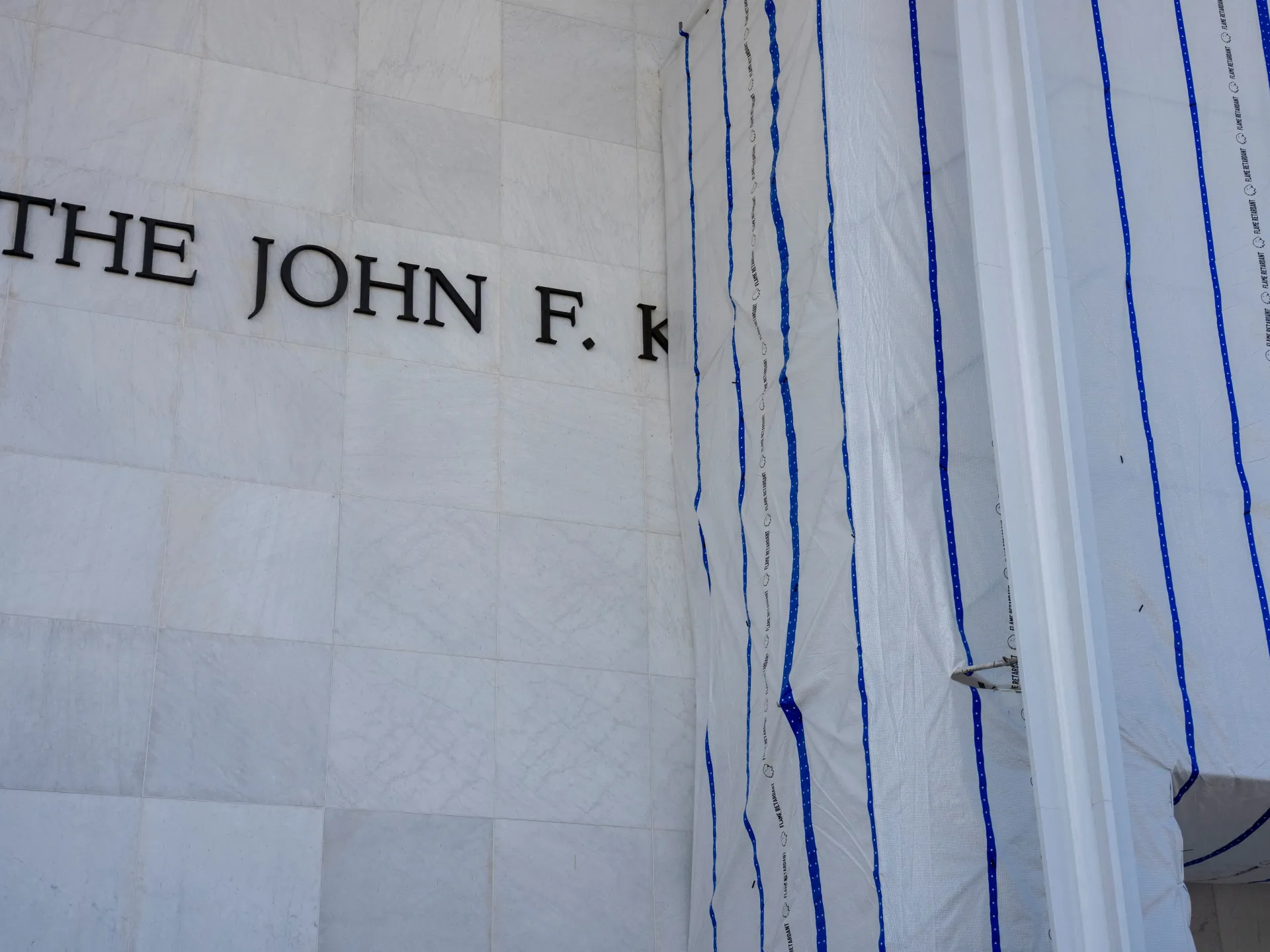
Late last year, as Trump announced his plan to rename the building — adding his name to the building’s main front ahead of that of Kennedy — he drew sharp opposition from members of Congress, and some Kennedy family members.
Kerry Kennedy, a niece of John F. Kennedy, said in a social post on X at the time that she will remove Trump’s name herself with a pickax when his term ends.
Another family member, Maria Shriver, said at the time that it is “beyond comprehension that this sitting president has sought to rename this great memorial dedicated to President Kennedy,” her uncle. “It is beyond wild that he would think adding his name in front of President Kennedy’s name is acceptable. It is not.”
Late Sunday evening, Shriver posted a new comment mimicking Trump’s own voice and style, and suggesting the closure of the venue was meant to deflect from the cancellations.
She said that “entertainers are canceling left and right” and the president has determined that “since the name change no one wants to perform there any longer.”
Trump has decided, she said, it’s best “to close this center down and rebuild a new center” that will bear his name. She asked, “Right?”
One lawmaker, Rep. Joyce Beatty, an Ohio Democrat and ex-officio trustee of the center’s board, sued in December, arguing that “only Congress has the authority to rename the Kennedy Center.”
Price and Mascaro write for the Associated Press. AP writer Darlene Superville contributed to this report.
United States President Donald Trump has announced plans to close the John F Kennedy Memorial Center for the Performing Arts for two years for renovations starting in July.
Trump’s announcement on Sunday follows a wave of cancellations by leading performers, musicians and groups since the president ousted the previous leadership and added his name to the building.
Recommended Stories
list of 3 itemsend of list
Trump made no mention in his post of the recent cancellations.
“I have determined that the fastest way to bring The Trump Kennedy Center to the highest level of Success, Beauty, and Grandeur, is to cease Entertainment Operations for an approximately two year period of time,” he said in a post on his Truth Social platform.
“The temporary closure will produce a much faster and higher quality result!”
The closure will start on July 4, to coincide with the 250th Independence Day celebration.
The decision, Trump said, will be subject to approval of the board, which he handpicked upon taking over as chairman.
The president added that the facility’s various entertainment events – concerts, operas, musicals, ballet performances, and interactive arts – would impede and slow the construction and renovation operations, and that a full temporary closure would be necessary.
“The Trump Kennedy Center, if temporarily closed for Construction, Revitalization, and Complete Rebuilding, can be, without question, the finest Performing Arts Facility of its kind, anywhere in the World,” he said.
“America will be very proud of its new and beautiful Landmark for many generations to come.”
There was no immediate comment from the Kennedy Center.
The complex began as a national cultural centre, but was renamed by Congress as a “living memorial” to former President John F Kennedy in 1964, in the aftermath of his assassination.
Opened in 1971, it operates year-round as a public showcase for the arts, including the National Symphony Orchestra.
After Trump took over as chairman of the centre’s board, several entertainers and performers withdrew their performances in protest of the president’s policies.
Among them were the producers of the award-winning musical Hamilton, and international operatic soprano Renee Fleming.
The Washington National Opera recently announced that it would leave the Kennedy Center, its home since the centre’s opening.
Renowned composer Philip Glass also announced on Wednesday the withdrawal of a symphony orchestra performance for Abraham Lincoln, saying that “the values” of the centre “today” are in “direct conflict” with the message of his piece.
Trump had criticised some of the programmes of the once non-partisan centre as too “woke”.
In recent days, the Kennedy Center hosted the premiere of First Lady Melania Trump’s documentary, which saw a record weekend at the box office, but drew mostly negative reviews from film critics.
The extent of the “complete rebuilding” mentioned by Trump is unclear, but he has described the structure as dilapidated and needing a facelift.
In a post on X, Maria Kennedy Shriver, a niece of the slain former president, criticised Trump’s decision without naming him. She suggested that the closure and renovation were made to distract Americans, as “no one wants to perform there any longer”.
Trump’s rebuilding plans for the centre follow a series of measures to reshape US historical and cultural institutions.
He demolished the East Wing of the White House and launched a massive $400m ballroom project, is actively pursuing the building of a triumphal arch on the other side Arlington Bridge from the Lincoln Memorial, and has plans for the Washington Dulles international airport.
Weekly insights and analysis on the latest developments in military technology, strategy, and foreign policy.
The future USS John F. Kennedy, the second Ford class aircraft carrier for the U.S. Navy, has begun its initial sea trials. The Navy is slated to take delivery of the ship in 2027 after years of delays.
Huntington Ingalls Industries (HII) announced that Kennedy, also known by the hull number CVN-79, had left port in Newport News, Virginia, earlier today to start initial sea trials.
“These trials will test important ship systems and components at sea for the first time,” HII wrote in posts on social media. “This huge milestone is the result of the selfless teamwork and unwavering commitment by our incredible shipbuilders, suppliers and ship’s force crew. We wish them a safe and successful time at sea!”
The future USS John F. Kennedy seen leaving Newport News, Virginia, earlier today. HII
The extent to which Kennedy has been fitted out is unclear, but the carrier is set to be delivered with some notable differences from the first-in-class USS Gerald R. Ford (CVN-78). This most notably includes an AN/SPY-6(V)3 radar, also known as the fixed-face version of Raytheon’s Enterprise Air Surveillance Radar (EASR), in place of Ford‘s Dual Band Radar (DBR). The DBR has proven immensely troublesome over the years, as you can read more about here. Pictures that HII released today show a number of differences between Kennedy‘s island and the one on Ford, due at least in part to the radar change.
A side-by-side comparison for the islands on the future USS John F. Kennedy, at left, and the USS Gerald R. Ford, at right. HII/USNA graphic showing elements of the AN/SPY-6(V)3 radar installation for the Ford class. Raytheon
Ford has suffered from a laundry list of other issues over the years, and HII and the Navy have working to leverage those lessons learned in work on all of the future ships in the class.
The Navy ordered the new Kennedy in 2013, and it was laid down at HII’s Newport News Shipbuilding division in 2015. The ship was launched four years later, at which time the goal was for it to be delivered in 2022. The Navy had originally pursued a dual-phase delivery schedule for the carrier, in which it would arrive initially still lacking certain capabilities. A Congressional demand for the carrier to be able to support F-35C Joint Strike Fighters at the time of delivery contributed to an initial slip in that schedule to 2024. At the time of writing, Ford has yet to set sail on an operational cruise with F-35Cs aboard.
The Navy subsequently shifted the timetable for Kennedy again from 2024 to 2025, ostensibly to complete work that normally would be done during a Post Shakedown Availability (PSA) after delivery. Last year, the service revealed that it pushed the delivery schedule further to the right, to March 2027. The Government Accountability Office (GAO), a Congressional watchdog, separately reported that the Navy might not have the carrier in hand until July 2027.
Another picture of the future USS John F. Kennedy taken today. HII
“The CVN 79 delivery date shifted from July 2025 to March 2027 (preliminary acceptance TBD) to support completion of Advanced Arresting Gear (AAG) certification and continued Advanced Weapons Elevator (AWE) work,” according to the Navy’s Fiscal Year 2026 budget request, which it began releasing in June 2025.
“Construction challenges affected CVN 79 and CVN 80 [the future USS Enterprise] delivery schedules. Continuing delays to Advanced Weapons Elevators construction put CVN 79’s July 2025 delivery at risk, according to program officials,” GAO said in its report, which came out that same month. “They said that, while this construction improved since CVN 78, they may postpone noncritical work like painting until after delivery to avoid delay.”
Problems with the AWEs on Fordbecame a particular cause celebre during President Donald Trump’s first term office, but the Navy said it had effectively mitigated those issues by 2021. The AWEs are critical to the carrier’s operation, being used to move aircraft munitions and other stores between the ship’s magazines and the flight deck.
Watch the Advanced Weapons Elevators on the aircraft carrier Gerald R. Ford
“Program officials attributed this delay [in work on CVN 79 and CVN 80] to construction material availability and persistent shipyard workforce issues that the program is working to mitigate with revised schedules and worker incentives,” GAO’s June 2025 report also noted. “The program reported it has not assessed the carrier industrial base for potential manufacturing risks but officials said that they plan to leverage other industrial base initiatives. This includes those related to submarines and within the Navy’s new Maritime Industrial Base program office.”
It’s not immediately clear how much all of this has added to Kennedy‘s price tag. Back in 2018, the Congressional Research Service (CRS) pegged Kennedy‘s cost at around $11.3 billion. A new CRS report published in December 2025 said the ship’s estimated acquisition cost had grown to $13.196 billion, citing Navy budget documents, but it is unclear if that accounts in any way for inflation. The Navy continues to estimate that future ships in the Ford class will cost even more, with CVN-81, the future USS Doris Miller, still expected to come in at around $15 billion. The Navy expects to acquire six more Ford class carriers, two of which have already been given names, the future USS William J. Clinton (CVN-82) and USS George W. Bush (CVN-83).
Acquiring more Ford class carriers is a critical priority for the Navy, which has been looking to start retiring its aging Nimitz class carriers for years now. If the Navy decommissions the USS Nimitz this year as planned, the total size of the service’s carrier force will drop to 10 hulls until Kennedy arrives. There is a standing legal requirement for the Navy to have no less than 12 carriers in service, which is reflective of the high demand for these ships, especially in times of crisis.
A look at the future USS John F. Kennedy‘s bow end as it departs on its initial sea trials. HII
“I think the Ford, from its capability perspective, would be an invaluable option for any military thing the president wants to do,” Chief of Naval Operations Adm. Daryl Caudle told TWZ and other outlets on the sidelines of the Surface Navy Association’s (SNA) annual symposium. “But if it requires an extension, it’s going to get some pushback from the CNO. And I will see if there is something else I can do.”
“To the financial and readiness aspects, we have maintenance agreements and contracts that have been made with yards that are going to repair the ships that are in that strike group, including the carrier itself,” Caudle noted. “And so when those are tied to a specific time, the yard is expecting it to be there. All that is highly disruptive.”
As an aside, CVN-79 is expected to be the first Ford class carrier homeported on the West Coast. Ford‘s homeport is Norfolk, Virginia, on the East Coast.
The Navy is now at least one step closer to taking delivery of the future USS John F. Kennedy.
World-renowned composer Philip Glass abruptly canceled June’s world premiere of Symphony No. 15 “Lincoln” at the Kennedy Center, saying its message does not align with the vision for the venue under the Trump administration.
“Symphony No. 15 is a portrait of Abraham Lincoln, and the values of the Kennedy Center today are in direct conflict with the message of the Symphony. Therefore, I feel an obligation to withdraw this Symphony premiere from the Kennedy Center under its current leadership,” Glass wrote Tuesday in a letter to the board that was shared with The Times.
“We have no place for politics in the arts, and those calling for boycotts based on politics are making the wrong decision,” Roma Daravi, vice president of media relations at the Kennedy Center, said in response.
President Trump has served as board chair since early last year when he fired the existing board and appointed former ambassador to Germany, Richard Grenell, as president. The newly installed board promptly installed Trump in his current position. The president’s pursuit of a deeply conservative agenda for the arts unleashed unprecedented chaos at the nation’s premiere performing arts center, resulting in massive upheaval and wave after wave of prominent artist cancellations.
The news that Glass was calling off his appearance also caught off guard the National Symphony Orchestra. The NSO commissioned the symphony in 2022 for the Kennedy Center’s 50th anniversary, and Glass was late to deliver. The symphony was scheduled to be performed with the NSO on June 12 and 13.
“We have great admiration for Philip Glass and were surprised to learn about his decision at the same time as the press,” Jean Davidson, the orchestra’s executive director, said in an email.
The news comes amid a growing chorus of high-profile cancellations that have occurred since the center’s board voted last month to rename the venue the Trump-Kennedy Center, and quickly added the president’s name above that of Kennedy’s on the exterior of the building.
Jazz drummer Chuck Redd pulled out of a Christmas Eve show and the jazz group the Cookers canceled two New Year’s Eve performances. Banjo player Béla Fleck also stepped away from concerts with the NSO and “Wicked” composer Stephen Schwartz said he no longer plans to host a May 15 gala at the center.
The arts world was rocked by the news earlier this month that the Washington National Opera’s board approved a resolution to leave the venue it has occupied since 1971. Kennedy Center leadership, including Grenell, quickly shot back that it was the board that asked the WNO to depart.
“We have spent millions of dollars to support the Washington Opera’s exclusivity and yet they were still millions of dollars in the hole — and getting worse,” Grenell wrote on social media.
Most recently, the center’s website announced that soprano Renée Fleming would no longer perform in two scheduled shows. “A scheduling conflict” was the reason cited, but speculation about the opera star’s departure swirled as the center’s artistic losses mounted amid widely reported plummeting ticket sales.
During the recent upheaval, arts watchers have begun wondering about the future of the NSO, which, along with the recently departed WNO, represents the twin pillars of artistic programming at the center.
According to Daravi, the NSO isn’t pulling out of the venue.
“The relationship is strong, and we have a wonderful season here with Maestro [Gianandrea Noseda] in his 10th year leading the NSO,” Daravi wrote in an email last week, noting the “record-breaking success at the recent Gala benefiting the NSO which launched the new season. The event raised $3.45 million, marking an all-time fundraising record for the organization.”
On Monday Trump sought to boost his financial management of the venue in a Truth Social post that read, “People don’t realize that the Trump Kennedy Center suffered massive deficits for many years and, like everything else, I merely came in to save it, and, if possible, make it far better that ever before!”
The center’s calendar is looking increasingly sclerotic as big names continue to defect, with the NSO providing much-needed padding as it moves on in the face of unending change.