This is the April 14, 2021, edition of the Essential Politics newsletter. Like what you’re reading? Sign up to get it in your inbox three times a week.
Former President Trump‘s banishment from Twitter has had a calming effect on the country that even some of his sharpest critics did not foresee.
Yet political discourse on social media has not fundamentally changed. It remains nasty and brutish at times.
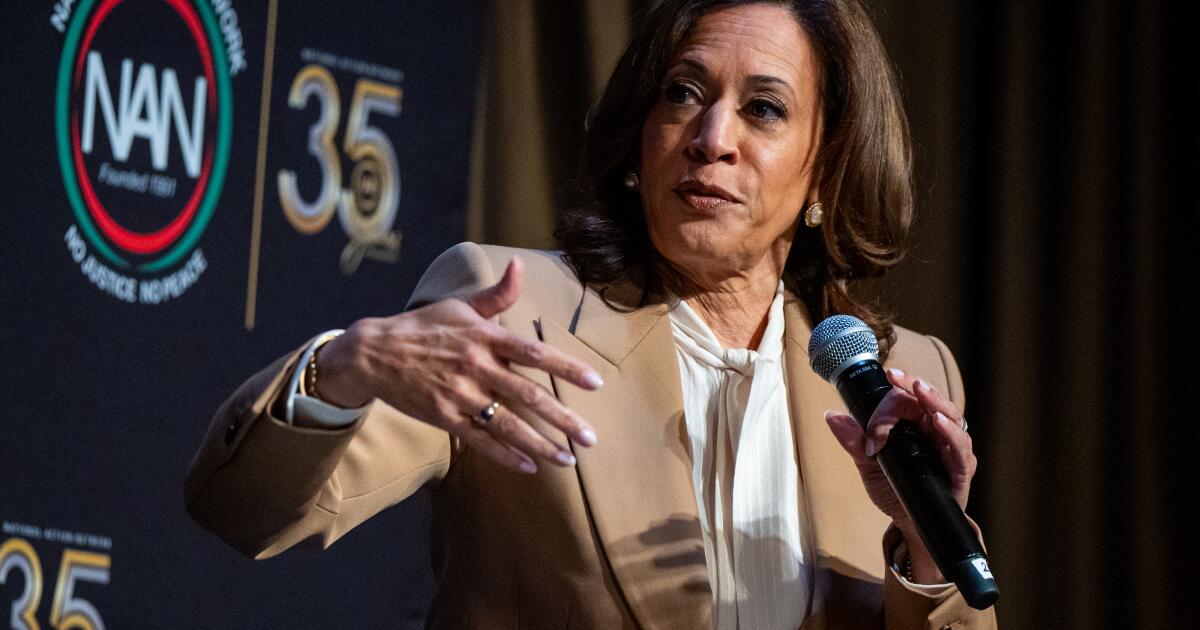
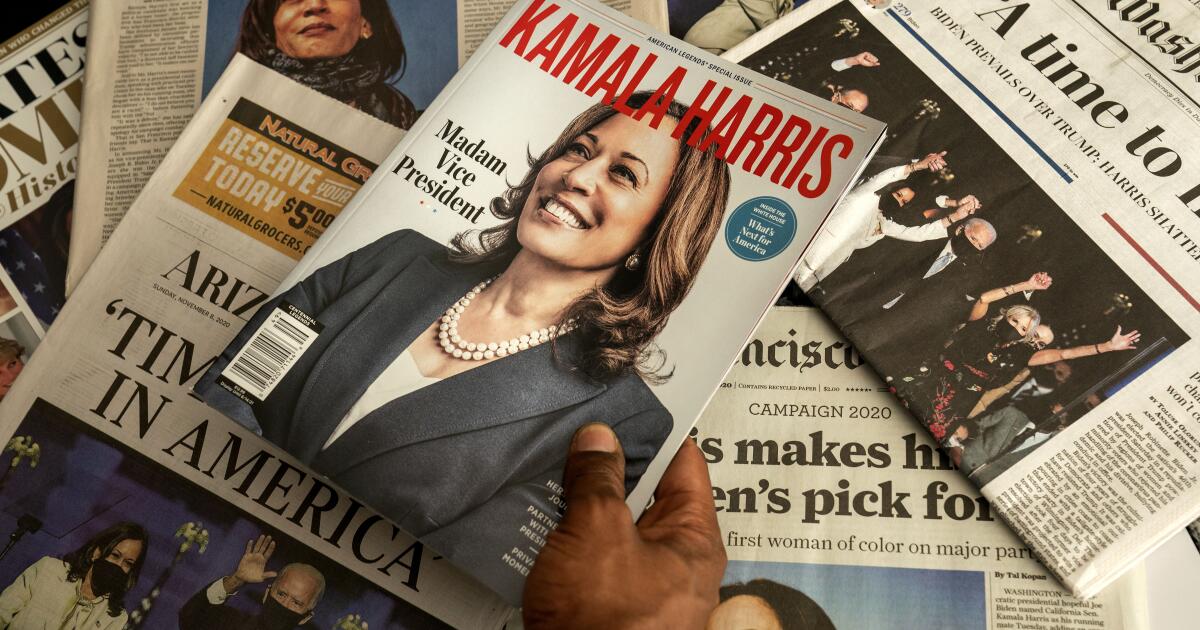
Good morning and welcome to Essential Politics, Kamala Harris edition. This week, I’ll talk about my takeaways from reporting on the vice president’s biggest online cheerleaders, the KHive, a loose-knit network of supporters who say they are responding to the toxicity of social media by fighting back when it comes to Harris. Their critics say they are part of the problem.
Get our L.A. Times Politics newsletter
The latest news, analysis and insights from our politics team.
By continuing, you agree to our Terms of Service, which include arbitration and a class action waiver. You agree that we and our third-party vendors may collect and use your information, including through cookies, pixels and similar technologies, for the purposes set forth in our Privacy Policy such as personalizing your experience and ads.
KHive and the political questions it raises.
The story about the KHive, published online last week and in print on Sunday, told of the comradery, celebration and mutual sense of purpose its members find, mostly on Twitter, where they defend Harris against what they see as an unfair standard applied to political women of color. The Harris fans’ biggest fights, with fellow liberals, have gotten personal at times. Some members have had their accounts suspended by Twitter.
I hope you will read the story, because they are an interesting group of people. A few broader political points are worth considering as you do:
These kinds of online groups will be an important force in 2024 and beyond.
Ashley Bryant, a Democratic strategist who specializes in digital politics, told me she sees the early fights among the KHive, Bernie Bros (the nickname for Bernie Sanders’ progressive fans) and other groups as a precursor to the party’s next presidential nomination fight.
That could come in 2024 or 2028, depending on whether President Biden runs for reelection. Hard-core partisans are getting a head start.
Republicans have their social-media fights as well. But Trump’s still-dominant presence in the party, combined with his Twitter ban, has given the Republican version of this battle a different flavor.
Many in the NeverTrump faction seem to have given up on the Republican Party, while the post-Trump crowd of potential presidential aspirants and their followers is paralyzed by Trump’s hold on the party’s base. This week, for example, former United Nations Ambassador Nikki Haley backtracked on her prior comments disavowing Trump, telling reporters she would support him if he chose to run in 2024.
But I thought Twitter isn’t real life!
This is an important point. The Biden team’s motto, both when he was a candidate and now that he’s president, is that Twitter is not real life. By that they mean that some of the strongest opinions shared by the partisans and pundits who dominate the platform do not often reflect the broad swath of voters who decide primaries and general elections.
That posture helped Team Biden avoid overreacting to criticism or praise shared on Twitter. And the contrast with Trump, who exhausted Americans with his constant provocative presence online and in the news, appears to be playing a big part in Biden’s relative popularity. Politico published a smart story on Biden’s lower-volume media strategy this week, summarizing his approach as “First, do no self-harm.”
One important caveat: Online debates may not be the driving force in public opinion, but they can stoke debate in Congress. For example, the fight over whether to abolish the filibuster in the Senate — which requires many bills to garner a supermajority of 60 votes to pass — has been much hotter online than it is with the general public, though a change in that relatively obscure practice could have significant policy implications for the country.
Notwithstanding Biden’s relatively low-key online persona, Harris has courted the in-your-face KHive. And it’s easy to see why. Its members provide a sense of passionate support, something she lacked in her 2020 presidential primary run. Some members I spoke with spend 20 hours or more online each week. Others said they are active offline in volunteering for her and the Democratic Party.
But such occasionally confrontational groups also pose risks for her, if she becomes too reactive to online debates or gets dragged into some of the more personal and provocative squabbles among partisans.
Democrats are content right now but still divided.
There is also risk for the Democratic Party. Online, Sanders and Harris boosters accuse each other of all manner of attacks, including a practice known as doxxing, in which a target’s personal information is posted online.
Among many, anger lingers from the 2016 nomination contest between Hillary Clinton and Sanders — when Clinton supporters blamed the other side for costing her the election by resisting her candidacy, and Sanders supporters accused Clinton proxies of controlling the party apparatus to stymie Sanders. Some of the Clinton supporters are now behind Harris.
If Democrats want to hold on to the White House and Congress, they need to hash out policy debates but stay unified.
“I don’t have a crystal ball, I don’t know what 2024 could potentially look like,” Bryant said. “But you don’t want voters not even being willing to open their eyes to another candidate just because they’re aligned to one that may not get the nomination.”
Enjoying this newsletter? Consider subscribing to the Los Angeles Times
Your support helps us deliver the news that matters most. Become a subscriber.
The latest from the White House
— From David S. Cloud and Tracy Wilkinson: Biden is planning to withdraw all remaining troops from Afghanistan and will complete the pullout before Sept. 11, the 20th anniversary of the terrorist attacks that sparked the United States’ longest war, according to a senior U.S. official.
— Biden began to fill the top posts at the Homeland Security Department on Monday. Its ranks were hollowed out by his predecessor amid politicization and record vacancies. Almost all the appointees have California ties, reports Molly O’Toole.
— Lifting kids out of poverty could be Biden’s legacy. Yet the future of his policies remains uncertain as the administration’s ambitions run into spending limits, writes David Lauter.
— Biden spoke Tuesday morning with Russian President Vladimir Putin, warning him against aggressive moves toward Ukraine but also inviting him to a summit meeting, Lauter and Wilkinson write.
— Biden will address a joint session of Congress for the first time on April 28 after receiving an invitation from Speaker of the House Nancy Pelosi.
The view from Washington
— Congress has a very short window to reverse regulatory actions approved by President Trump’s administration before he left office. Sarah D. Wire writes that at least two are expected to get Senate votes in the coming weeks. Also from Wire: Can Biden really cancel student debt? Here’s where the debate stands.
— The Supreme Court is set to decide soon whether conservative Christians can refuse to work with same-sex couples in a city-funded foster care program. David G. Savage writes that it’s the latest clash at the high court between religious liberty and marriage equality.
— Democrats and Republicans on Capitol Hill are negotiating a modest bill designed to help law enforcement combat the rise in hate crimes targeting Asian Americans, a rare moment of potential bipartisan compromise on legislation, Jennifer Haberkorn reports.
The view from California
— In 2020, demonstrators began ditching traditional protest venues to instead chant, fulminate and sit-in outside the front doors of officials’ homes. Sacramento has begun to push back, with officials saying “no more,” reports James Rainey.
— There have been hundreds of attempts to break up California. Those forces are driving the effort to recall Gov. Gavin Newsom, writes columnist Mark Z. Barabak.
— And speaking of the recall effort: a colorful cast of hopefuls who want to replace the Democratic leader has started to emerge, including former porn star Mary Carey and Los Angeles billboard icon Angelyne. Both ran in the 2003 recall election to replace then-Gov. Gray Davis, writes Faith E. Pinho.
— A far-reaching proposal to outlaw hydraulic fracturing and ban oil and gas wells from operating near homes, schools and healthcare facilities failed in the California Legislature on Tuesday, writes Phil Willon.
— From John Myers: California law enforcement officers could lose their certification based on the decisions of a panel that includes victims of police misconduct under legislation that moved forward Tuesday in the Legislature. Lawmakers also supported an expansive ban on policing techniques that obstruct a person’s breathing.