Jordan

Jordan Graham: Former Birmingham winger in hospital after serious road traffic accident

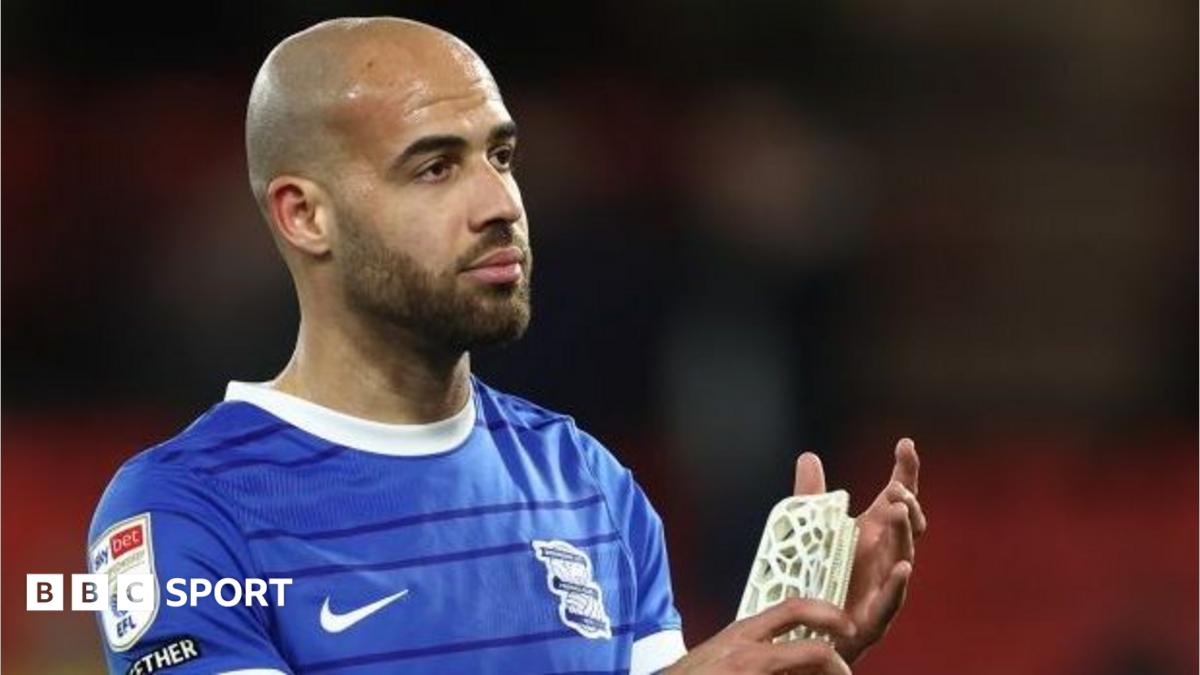
Former Birmingham City winger Jordan Graham is in hospital after being involved in a “serious road traffic accident”.

A statement issued by the Professional Footballers’ Association, external (PFA), on behalf of Graham’s family, said the 31-year-old was “receiving specialist treatment” after the incident earlier this month.

Graham played 49 times in the Championship for Birmingham between 2021 and 2023 after joining from Gillingham.

An Aston Villa academy product, he also played 17 times for Wolves and had loan spells with Ipswich Town, Bradford City, Oxford United and Fulham.

In total, he has made 188 career appearances but has not played since leaving Leyton Orient in 2025.

“His family are incredibly grateful for the care he is receiving,” the PFA statement added.

“They respectfully ask for privacy and that people refrain from contacting them directly while they focus entirely on Jordan and his recovery.

“Further information will only be provided when appropriate.”

A statement from Gillingham said: “Everyone at the club is thinking of Jordan and his family at this time.

“We wish him a full and swift recovery.”

Orient added: “We’re all with you JG.”

Source link

Arab News | Pope Leo ‘satisfied’ with preparations for bimillennial of Jesus Christ’s baptism, says Jordanian priest

LONDON: Pope Leo XIV expressed satisfaction with Jordan’s preparations for the 2,000th anniversary of Jesus Christ’s baptism in the Jordan River, according to a Jordanian priest on Wednesday.

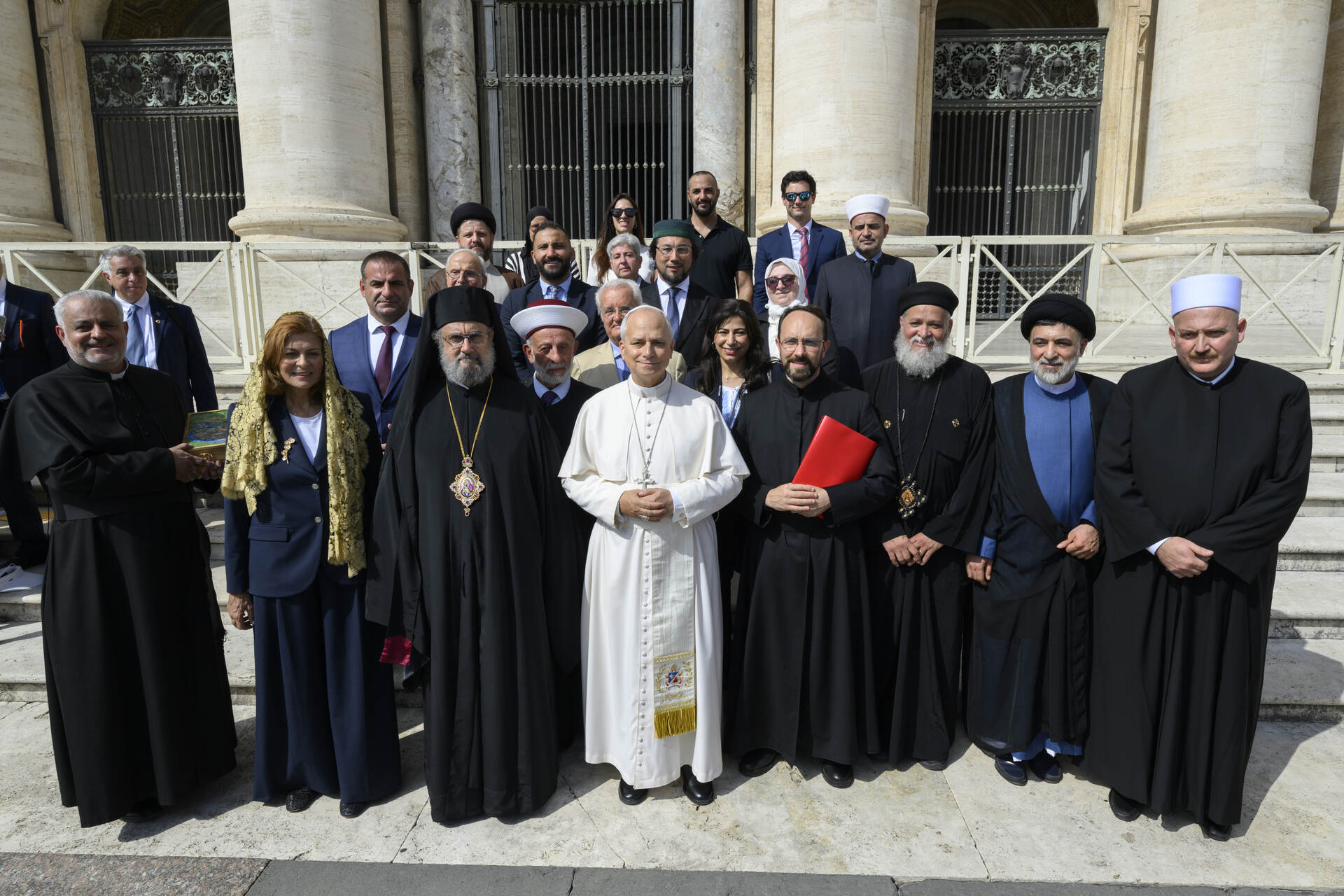
Fr Rifat Bader, director of the Catholic Center for Studies and Media in Jordan, described the meeting with the pope in Rome last week to the Jordan News Agency as taking place in a “friendly and spiritual atmosphere.”

The Jordanian priest returned this week from a two-day religious dialogue platformed at the Vatican. The Interreligious Platform for Dialogue and Cooperation in the Arab World, affiliated with the International Dialogue Center, held its meetings early this month. The Jordanian delegation included Sheikh Omar Rousan of the department of fatwas.

The 2,000th anniversary of the revered event is scheduled for 2030 and will take place at Christ’s baptismal site, also known as Bethany Beyond the Jordan, a UNESCO World Heritage site that attracts Christian pilgrims and other visitors.

Jordan is home to many important Christian sites, including Mount Nebo in the Madaba governorate, where the Bible says Moses saw the Promised Land before he died.


Source link

Arab News | Jordan’s crown prince reviews preparations for 2,000th anniversary of Jesus’ baptism

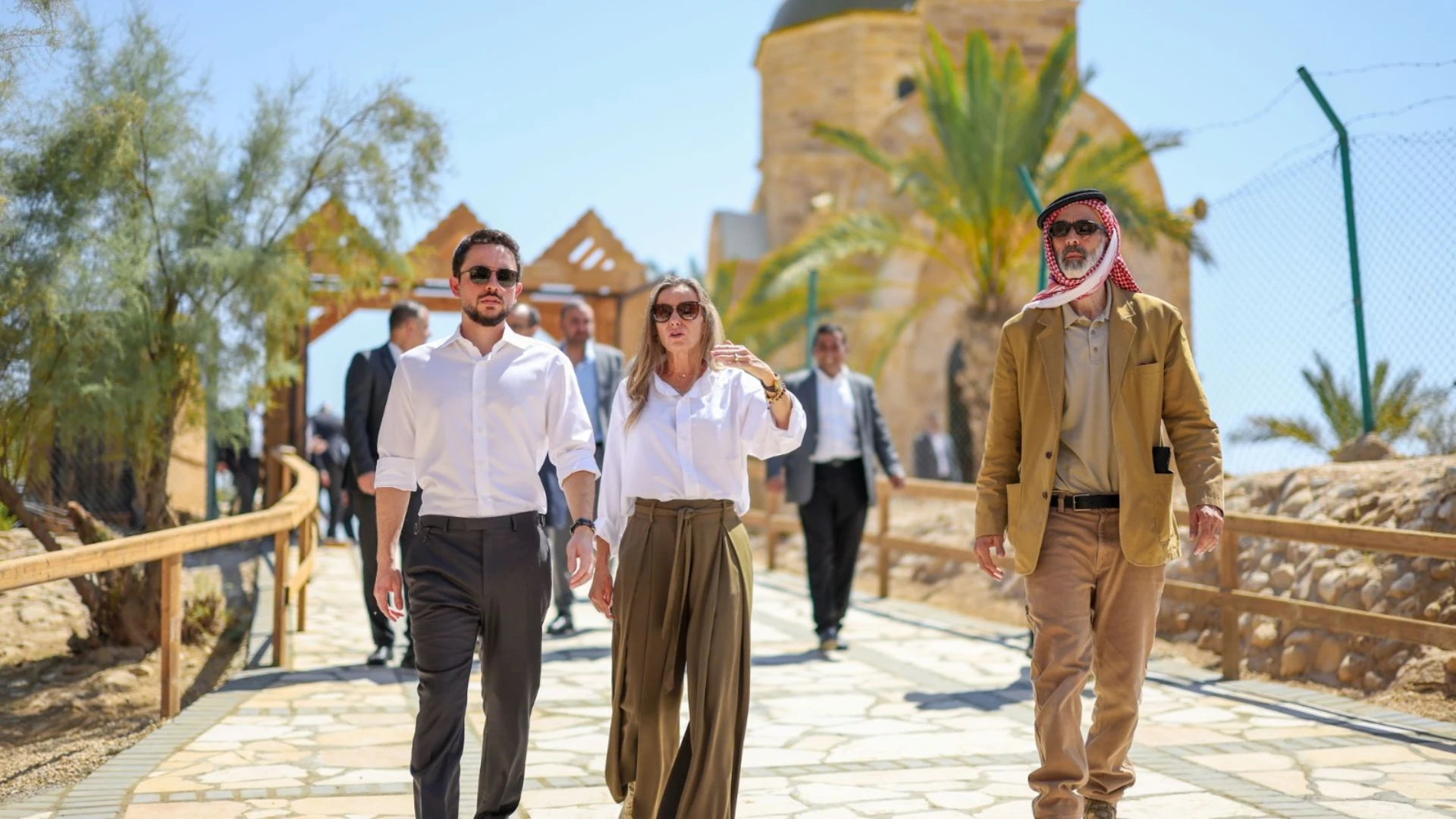
LONDON: Jordan’s Crown Prince Hussein bin Abdullah Al-Hashimi on Monday visited the baptismal site of Jesus, also known as Bethany Beyond the Jordan, to review preparations for the 2,000th anniversary of the historical event, which will take place in 2030.

He issued directives to enhance the site for the Christian pilgrims and other visitors who will visit the UNESCO World Heritage site to mark the bimillennial celebrations, the Jordan News Agency reported.

He said the upcoming occasion reaffirmed Jordan’s status as a premier destination for Christian pilgrimage. He emphasized the importance of efforts to promote the site of Jesus’ baptism, in coordination with the Ministry of Tourism and Antiquities and the Jordan Tourism Board.

During the visit, the crown prince met Prince Ghazi bin Mohammed, chairperson of the board of trustees for the Baptism Site Commission, and his wife, Princess Miriam.

Jordanian Ministry of Tourism officials recently met Palestinian counterparts to discuss collaboration in the field of religious tourism ahead of the 2030 bimillennial celebrations.

Both Jordan and Palestine are home to important Christian holy sites, including Mount Nebo in Jordan’s Madaba governorate, where the Bible says Moses saw the Promised Land before he died, and, in the West Bank, the Church of the Nativity in Bethlehem, and the Church of the Holy Sepulcher in East Jerusalem, which includes the traditional sites of Jesus’ crucifixion and resurrection tomb.

The crown prince was also joined on his tour of the baptismal site by the minister of tourism and antiquities, Imad Hijazin, the director of the Office of the Crown Prince, Zaid Baqain, and the director general of the Baptism Site Commission, Abdullah Bawareed.


Source link

‘The Terrors of Jordan Mendoza’ review: A disturbingly funny sketch show

Premiering Sunday at midnight on Adult Swim, a most appropriate and maybe the only possible space, “The Terrors of Jordan Mendoza” is, as its creator describes it in a prologue, “a ‘Twilight Zone’ sketch show,” which is just what I would have said after watching eight of its 13 11-minute episodes, had he not said it first. Emphasizing its Asian bonafides — Mendoza is Filipino American — he adds, “It would be almost racist if you didn’t do it.”

Mendoza, who stars in, directs and, with David Machajewski, writes the show, has said that some of the ideas come from actual dreams — the “terrors” in the titles are nightmares — though if my own dream life is anything to go by, the jokes are more clever and the narratives at once weirder and more cohesive. At various times it recalls the eeriness of David Lynch or the non sequitur logic of Luis Bunuel, and it has something of the flavor of “The Vince Staples Show,” which also went to some strange places in its too-short life.

Sketches, of varying lengths, build a central idea out in every direction, and a little farther than you might expect. We meet a therapist obsessed with Wendy’s. Batman, convinced that he has adult ADHD because an online quiz told him so (“I know a lot of people claim they have ADHD,” he tells Alfred, “but in my case I think I really do … I’m creative but easily overwhelmed, organized but at the same time not”). A dying man (Steve Buscemi) is obsessed with getting his last words right; a prisoner is sentenced to “15 hugs and kisses” from the “nearest judge.” A bank robber holding hostages demands to be “a famous snake … and if you can’t get on board with that then everyone in here is going to die.” In a horror movie pastiche, Mendoza is dogged by middle-aged white men compelled to tell him that their wife is Asian, which does sound like something from personal experience.

Wherever the comedy goes, it’s played straight and with intensity, as is the terror. The show can be genuinely disturbing and genuinely funny. (Two things can be true at once.) There’s also a scene in which Mendoza, playing a character convinced he’s a Harry Potter wizard, runs into a brick wall he thinks he’ll pass through, and, there’s nothing more liable to make me laugh than that, unless it’s someone hitting their head on a low door frame or suddenly falling over for any number of non-fatal reasons.

Mendoza, who is in his mid-30s, has a string of writing and acting credits, including writing for “Dave,” Dave Burd’s comedy about a suburban Jew from Philadelphia who believes himself destined for rap greatness, and parts in Julio Torres’ “Problemista” and “Fantasmas,” which are located in the same hemisphere of alternative comedy. He has the Rolodex of a well-connected person; the guest list is impressively loaded for someone making his first show.

The great Martha Kelly (from “Baskets”) plays a masseuse who exteriorizes her client’s pain, and in another sketch, she’s a woman sitting in on a confirmation class in order to learn where Jesus might be “lodging” when he returns. (She has a plan.) Kate Berlant invites Mendoza to what turns out to be a one-woman poetry slam, held in secret to avoid the Slammers Union (“They’re like the Sopranos, only violent”). Chris Parnell, Randall Park, Wanda Sykes, Thomas Lennon, Clea DuVall, Lake Bell, Toby Huss, Mark Maron, Fred Armisen and Gregg Turkington (from the world of “On Cinema at the Cinema”) all muck in.

You should know from the above whether this might be your sort of thing. (It won’t be everyone’s, but it’s definitely up my dark, crooked alley.) But, really, it’s even better than these descriptions might lead you to guess, elevated by the first-class production, assured performances (Mendoza is himself very good) and everyone’s commitment to whatever bit is up at the time. The devilishness is in the details.

Source link

The 10 barely-visited holiday destinations which need MORE tourists from tiny Greek islands to Latvian beach cities

THE holiday destinations without the crowds that want MORE tourism have been revealed.

Intrepid has released its annual ‘Not Hot’ List, partnering with Globetrenders to look at alternative destinations to visit instead of the popular, oversaturated places.

Intrepid’s underrated travel destinations for 2027 have been named Credit: Alamy
Alonnisos island in Greece sees a fraction of tourists compared to other islands Credit: Alamy

Using both Intrepid’s local leaders and destination experts, along with trend forecasts, the study looks at three key elements – areas with few visitor numbers, their ability to welcome more tourists, and any new infrastructure for 2027 such as big events or transport systems.

When it comes to Europe, you might be surprised to realise there are still some Greek islands that don’t have the tourist crowds.

Intrepid named Alonnisos as a “not hot” destination which is a more sustainable holiday experience in the region.

They said: “Alonnisos is a slice of paradise that plays host to an array of aquatic and land-based delights, including the endlessly entertaining – and endangered – Mediterranean monk seals.”

ISLE GO

I’ve booked trips to a Spanish island for a decade – here’s the best hidden spots


LITTLE KNOWN

10 under-the-radar destinations from tiny European islands to seaside cities

The island is actually home to the National Marine Park of Alonnisos and Northern Sporades (Europe’s largest marine protected area), as well as Greece’s only underwater museum, the Peristera shipwreck.

It remains off the radar for most tourists as you can’t fly to the island, with it only accessible by ferry or private yacht.

In 2024, it saw just 70,000 tourists – compared to its neighbour Skiathos’ 500,000 or Santorini’s 3.4million.

Intrepid’s eight-day Sail Greece excursion which includes a trip to Alonnisos starts from £2,102.

Another European destination highlighted was Liepāja, a beach city in Latvia.

Nicknamed the Baltic Mediterranean, next year it will become Europe’s Capital of Culture, meaning hundreds of events, festivals and shows.

Samburu Game Reserve in Kenya is a quieter safari destination Credit: Alamy
Canad’s Whitehorse, in Yukon Territory was named as well Credit: Alamy
When it comes to Europe Dalsland in Sweden was highlighted, often nicknamed the country’s ‘Lake District’ Credit: Alamy
Carretera Austral in Chile also made the list Credit: Alamy

Just under 120,000 tourists visited last year, meaning you’ll get the five-mile, white sand beach all to yourself.

To get there, Ryanair fly to Palanga from London Stansted for £25, which is around an hour from Liepāja

Sweden‘s Dalsland made the top 10 list as well, for being “unspoilt and unexplored”.

Around two hours from both Gothenburg and Oslo, it is known as Sweden‘s ‘Lake District’ for all of its outdoor activities from wild camping to kayaking and hiking.

Just 320,000 people visited last year, compared to the capital of Stockholm which saw 16million.

Other destinations on Intrepid’s list included Samburu National Reserve in Kenya, named for being the place for both “crowd-averse safari fans” and an “emerging astrotourism destination”.

Georgia is fast becoming a new holiday destination, after both British Airways and easyJet launched direct flights to the capital Tbilisi last year.

But Intrepid praised Mestia as an alternative, quieter place which, while popular with neighbouring tourism, is set to become bigger with international tourism due to new infrastructure plans.

The Pekoe Trail is Sri Lanka’s first long-distance walking trail, and an alternative way of seeing the island nation Credit: Alamy
Timor-Leste is one of Southeast Asia’s least visited destinations, and is getting easier to go to thanks to new flight connections Credit: Alamy
Jordan’s North Highlands were named as a great alternative to the country’s iconic desert landscapes Credit: Alamy
And Mestia in Georgia is set to become more popular as well Credit: Alamy

Otherwise it is popular as an outdoor adventure holiday destination, with both hiking and skiing experiences.

Also mentioned was the Northern Highlands in Jordan, a green “alternative to the country’s iconic landscapes” while “Arctic tourism” was highlighted for visiting Whitehorse in Canada.

Timor-Leste, one of South East Asia’s least-visited destinations was also highlighted, with new flight routes to connect the capital of Dili to major hubs such as Kuala Lumpar.

Sri Lanka‘s first long-distance walking trail Pekoe Trail (with a new 10-day Intrepid trip launched) and Chile‘s ‘route 7’ Carretera Austral rounded out the list.

Intrepid’s ‘Not Hot’ List 2027

  • Samburu National Reserve, Kenya
  • Mestia, Georgia
  • Northern Highlands, Jordan
  • Whitehorse, Canada
  • Alonnisos, Greece
  • Dili, Timor-leste 
  • Pekoe Trail, Sri Lanka
  • Liepaja, Latvia
  • Carretera Austral, Chile
  • Dalsland, Sweden

Source link

Jordanian air defences intercept Iranian missile barrage | Conflict

Witnesses have captured the moment Jordanian air defence systems intercepted a barrage of ballistic missiles fired from Iran. Jordan says it intercepted 18 of 20 missiles, with no injuries reported. The interceptions could be seen from across the border in Syria’s Daraa.

Source link

US attacks 5 Iranian oil tankers, Iran retaliates with strikes on Jordan | US-Israel war on Iran News

US military says it struck the five Iranian tankers after IRGC targeted a US warship twice in two days.

The United States has claimed attacks on five Iranian oil tankers in the Gulf of Oman and near Kharg Island after accusing Iran of launching ballistic missiles at a US warship twice in two days.

Iran responded to the attacks on Tuesday by firing missiles at US forces stationed at the Al Azraq base in Jordan. Amman said its air defences intercepted and destroyed 18 of 20 Iranian missiles, while the rest fell in open areas.

Recommended Stories

list of 3 itemsend of list

The exchange of fire comes amid escalating tensions in the Gulf, six months into the US and Israel’s war on Iran, with Tehran maintaining the closure of the Strait of Hormuz and Washington imposing a naval blockade on Iranian ports.

The hostilities briefly drove oil prices to $99.46 earlier on Tuesday.

In a statement, the US Central Command said Iran’s Islamic Revolutionary Guard Corps (IRGC) had targeted a US warship twice over the past two days. The warship “successfully evaded the attempted Iranian attacks” and “no American personnel were harmed”, it said.

The Central Command said it retaliated by destroying the Iranian oil carriers, M/T Kaviz, M/T Charminar, M/T Horizon 1, and M/T Riesco in the Gulf of Oman as well as M/T Derya near Kharg Island.

“American forces directed the crews to abandon ship before the vessels were struck and rendered inoperable,” the Central Command added.

Iran’s IRIB state broadcaster confirmed the attack near Kharg Island in the Gulf, which handled some 90 percent of Iran’s oil exports before the war. It reported that the crew was evacuated and said a second tanker was hit near the southern port of Jask on the Gulf of Oman.

The IRGC also said “several” Iranian commercial ships were hit, and said it retaliated by subjecting Al Azraq base in Jordan to “fierce missile strikes”. It claimed hangars used by US fighter jets were destroyed in the ballistic missile attacks.

It went on to claim ballistic missile attacks on the US Navy DDG-119 and DDG-53 destroyers, saying “significant damage was caused to these vessels”.

The IRGC also threatened to target oil tankers in Kuwaiti and Bahraini ports, warning crews there to evacuate immediately.

“We warn all the crews of oil tankers in the Kuwaiti and Bahraini ports… to immediately abandon their vessels, whether at anchor or at the ports, because they will be targeted,” it said.

Jordan’s Armed Forces, meanwhile, said its air defences engaged 20 ballistic missiles, “successfully intercepting and destroying 18 of them”. Two missiles “fell in unpopulated areas,” it said in a statement.

The attacks did not cause any casualties and specialised teams “have begun securing the locations where debris and shrapnel fell,” it added.

Earlier, the chief of staff of Iran’s Armed Forces, Ali Abdollahi, had warned that Tehran would strike US military installations across the region if Iranian tankers were targeted.

“The US aggressor army has given Iranian oil tankers an evacuation warning to hit them, so I announce that any attack on Iranian oil tankers will result in the targeting of US bases in the region by the armed forces of the Islamic Republic of Iran,” Abdollahi said on state TV.

US Secretary of State Marco Rubio, however, said Washington would continue to strike Iranian ships.

“Iran continues to try to hit US naval ships, and for every time they do that or try to do that, they’re going to lose tankers,” Rubio told reporters on a visit to Colombia.

Source link

Jordan Chiles will return to gymnastics and train for LA28 Olympics

That Girl is back.

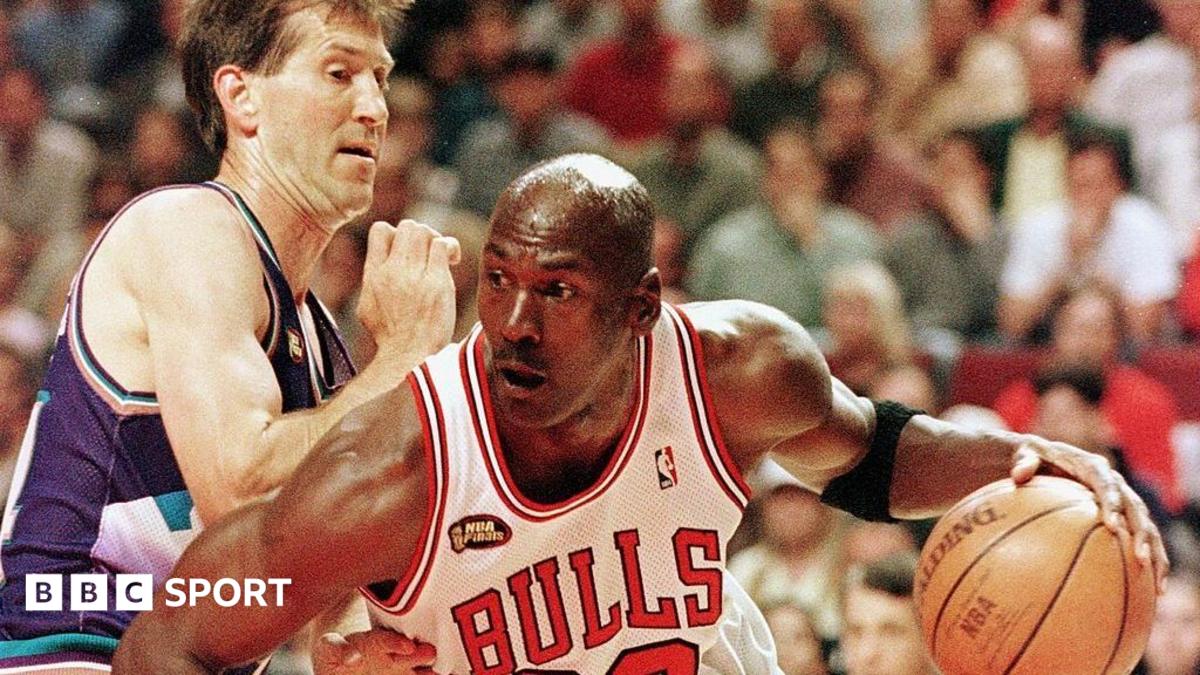
Olympic gold medalist Jordan Chiles announced her intention to train for the L.A. Olympics on Wednesday, publicly beginning her attempt for a third Olympic Games in a video narrated by NBA legend Michael Jordan.

“Why again?” says Jordan, whom Chiles is named after. “Because the dream is still there.”

Chiles helped the United States to a team gold medal in 2024, competing in all four events in the final. She won her first individual Olympic medal, a bronze on floor with her energetic Beyoncé-inspired routine, but that result still is being considered by the Court of Arbitration for Sport after controversy involving the inquiry process that led to Chiles’ score being upgraded to overtake Romania’s Ana Barbosu.

Chiles is the fourth member of that gold medal-winning team to announce a comeback for the 2028 Olympics, joining Suni Lee, Jade Carey and Hezly Rivera. Simone Biles, the 29-year-old, 11-time Olympic medalist, has not officially come out of retirement.

Before Biles, a U.S. female gymnast had not competed in three Olympic Games in 24 years. Dominique Dawes, who competed in her third Olympics in 2000, Linda Metheny and Muriel Grossfield are the only other American women to accomplish the feat. But in a sport no longer dominated by teenage one-hit wonders, there will be three women vying to join the exclusive triple Olympian club in 2028.

Chiles used college experience to help raise her game after winning a team silver in her first Olympic experience in Tokyo, and after returning from Paris with gold, she finished a standout college career at UCLA. The 23-time All-American won her second and third individual NCAA titles, on bars last year and floor this year, and won the AAI Award, which goes to the top senior gymnast in the nation. She had 19 perfect 10s in her college career, which ranks third in UCLA history. On Tuesday, UCLA announced Chiles would return to the team as a student coach.

“Jordan has made an incredible impact on our program over the years,” UCLA gymnastics coach Janelle McDonald said in a statement. “I’m excited to watch her continue that influence in a new capacity as she steps into this next chapter with student coaching. Her energy, passion, leadership and gymnastics experience will make a unique and positive impact on our team this coming year!”

Outside of the gym, Chiles has capitalized on her Olympic stardom. She was a finalist on “Dancing with the Stars” and authored a memoir, “I’m That Girl: Living the Power of my Dreams.” She was named to Time Magazine’s 100 most influential people in sports this year and has been a ubiquitous presence on red carpets and at major sporting events and galas.

With her post-gymnastics life rolling, Chiles still is choosing to return to training with less than two years remaining until the 2028 Games.

“When the world asks why she’s back for a third time,” Jordan says in Chiles’ announcement video, “the answer’s simple.”

“Why not?” Chiles chimes in.

Source link

Iran war live: US bombs Iran, Tehran retaliates on Gulf neighbours, Jordan | Donald Trump News

Source link

US plans to sanction another bank to keep economic pressure on Iran | US-Israel war on Iran News

Washington has recently stepped up efforts to economically pressure Tehran amid the deadlocked truce talks.

Washington plans to impose sanctions on another bank this week as it steps up its campaign to economically isolate Tehran amid the deadlocked truce talks, the US Treasury chief has said.

In an interview with The Associated Press news agency on Sunday, Treasury Secretary Scott Bessent declined to name the bank to be targeted by sanctions.

Recommended Stories

list of 3 itemsend of list

The announcement comes just days after Washington said it would cut off the United Arab Emirates’s operations of Basque Misr from the US financial system after accusing Egypt’s second-biggest bank of doing business with the Iranian government.

“This is going to be financial violence if we have to,” Bessent told AP on Sunday. “We are showing people that we know who you are, you know who you are, and this has got to stop.”

⁠In an interview with the Reuters news agency, Bessent said the next step may be cutting off an institution entirely from the dollar-based financial system.

“You’re going ⁠to see a lot ⁠more of these every week,” he said on Sunday, ahead of a Group of 20 finance leaders ⁠meeting in Asheville, North Carolina. “We’re starting with the banks, and we’re telling ⁠the banks it’s not OK ⁠to have Iranian money and to aid the regime.”

The US has stepped up efforts to economically pressure Tehran to submit to Washington’s demands, a campaign dubbed “Operation Economic Outcast”, amid the stalled truce talks between both parties.

Last week, the Treasury Department imposed new sanctions on nearly 60 individuals and entities that Washington accused of being part of networks helping Iran generate oil revenue, procure weapons and conduct cyber-operations.

Iran, however, has rejected the latest US sanctions, with Minister of Finance and Economic Affairs Ali Madanizadeh saying they will fail.

Violence in the conflict resumed on Sunday, the first time since late July, with Iran launching missiles at two US bases in Jordan following a US attack on Larak Island in southern Iran.

Cooperation against Iran

Bessent is preparing to host the meeting of the G20’s finance leaders, where he will huddle individually with his counterparts from the world’s major and developing economies to encourage cooperation against Iran.

The US Treasury chief also told AP that he would speak to his Chinese counterparts at the meeting and “all options are on the table” in terms of sanctioning Beijing for its continued trade with Tehran

But he rejected the idea that the US was reluctant to confront China, calling it “a completely false narrative that the media picked up on”.

He insisted that Beijing and Washington agreed on the need to reopen the Strait of Hormuz and prevent Iran from developing a nuclear weapon.

Source link

After six months of war, what have US, Iran gained and lost? | US-Israel war on Iran News

It has been six months since February 28, when the US and Israel shocked the world by launching missile strikes on Iran, killing Supreme Leader Ayatollah Ali Khamenei and several senior Iranian officials in Tehran, as well as scores of children in a school in Minab, southern Iran.

US President Donald Trump then claimed the conflict would only last “four to five weeks”.

Recommended Stories

list of 3 itemsend of list

In the months since, the war has erupted on several other fronts, reaching as far as the Caspian Sea. It has triggered a global oil supply crisis as the US and Iran battle for control of the strategic Strait of Hormuz, through which more than one-fifth of oil and natural gas cargo transited.

And it has resulted in an estimated 8,000-10,000 deaths, as well as tens of thousands of injuries.

The conflict is also realigning the global order, experts say, as new alliances form and dominant ones show signs of crumbling.

Here’s what we know:

President Donald Trump arrives on Air Force One as Rep. Brian Babin, R-Texas, right, looks on, Thursday, Aug. 27, 2026, at Ellington Airport in Houston. (AP Photo/Mark Schiefelbein)
President Donald Trump arrives on Air Force One as Republican Representative Brian Babin, right, looks on, on Thursday, August 27, 2026, at Ellington airport in Houston, Texas [Mark Schiefelbein/AP]

Has the US achieved any of its war objectives?

The US’s goals were not initially clear: officials first claimed the strikes were carried out in preemptive self-defence.

According to demands presented on the eve of the war, and a jumble of sometimes contradictory statements from Trump and senior US defence officials, they include the following:

Iran’s nuclear programme

Despite Trump’s claim that the US had “obliterated” Iran’s nuclear capabilities when it joined in at the end of Israel’s 12-day war on Iran in June 2025, the US and Israel again claimed in February that Tehran was just weeks away from developing nuclear weapons.

Repeated strikes on Iran’s nuclear sites during the war have likely caused vast damage to the facilities, but it is believed Tehran still possesses 440kg of highly enriched uranium, which could be used to make a weapon.

The Trump administration wanted Iran to hand over this stock to the US and to commit to zero enrichment of uranium going forward. Iran refused to do this, although at one point appeared open to the possibility of handing the stock over to a third country. Iran also insisted on retaining the capacity to develop a nuclear power programme, which requires much lower levels of uranium enrichment.

Later, Trump briefly floated the idea of US troops retrieving the stock by force – a potentially dangerous mission.

In the June 17 memorandum of understanding (MoU) signed by both sides, Iran agreed not to pursue a nuclear weapon – something it had always pledged anyway. The MoU unravelled as its vague wording led to disagreements about what it actually stipulated.

Clark Summers, a US military veteran and professor at Belmont Abbey College in North Carolina, said the US “can rightly assert that these ends have been achieved. Although for how long before Iran can rebuild is difficult to assess.”

But Iranian expert and professor at the Australian National University (ANU), Alam Saleh, disagreed, and noted that Iran’s nuclear power programme is still intact. “The US lost even before the war,” he said, adding that the effort also shows that Washington failed in last year’s 12-day war.

Regime change in Iran

On day one of the war – February 28 – the US killed Khamenei alongside several other senior officials. Trump, two days earlier, said regime change is “the best thing that could happen”.

As the US launched missiles, he also called on “Iranian patriots who yearn for freedom to seize this moment to be brave, be bold, be heroic, and take back your country”.

Iran’s political leadership has, however, remained largely the same under the new Supreme Leader Mojtaba Khamenei – the late ayatollah’s son.

Summers told Al Jazeera that the goal may have been “ad hoc” or improvised rather than well-planned. But “killing leaders does not mean strategic achievements, even if it’s a tactical success,” Saleh said.

Ending support for regional proxy groups

Iran’s “axis of resistance” is an umbrella comprising a number of armed groups around the region that it funds. This includes Hezbollah in Lebanon, the Houthis in Yemen, Hamas in the Gaza Strip, and several smaller groups in Iraq and Syria.

There are no signs that Tehran’s support for them has ended, and this demand did not appear in the MoU signed by the US.

Hezbollah went to war with Israel in Iran’s defence, and Iran has refused to negotiate an end to the war unless the Lebanon front is included. The Houthis, meanwhile, have launched a blockade on Saudi Arabia in the Bab al-Mandeb Strait, partly in support of Iran.

Iran’s ballistic missiles programme

Washington swore it would “raze” Iran’s missile facilities to the ground when it launched the war on February 28. The US also pledged to destroy Iran’s navy.

Trump has since claimed that about 82 percent of Iran’s missiles are gone and the navy is degraded.

In April, he also said that 158 Iranian naval vessels had been hit, while US Central Command (CENTCOM) has continued to announce dozens of strikes on command centres of the Islamic Revolutionary Guard Corps (IRGC).

Iran, however, has continued to fire missiles, most recently launching a long-range missile in July that killed three US soldiers in Jordan.

Furthermore, the demand for an end to Iran’s ballistic missiles programme was also absent from the July MoU.

Control of Iranian oil

In June, Trump said the US would seize and control Iran’s Kharg island, the heart of Iranian oil production.

To date, the US does not control any Iranian territory.

What have the US and Iran gained and lost during the war?

Besides the US demands at the start of the war, several other pressure points have emerged during the conflict.

Control of the Strait of Hormuz

Soon after the war began, Iran in effect closed the narrow but critical Strait of Hormuz, which passes through its territorial waters as well as those of Oman. Since then, shipping traffic has slumped from more than 100 ships per day to an average of about five.

To enforce this closure, Iran began striking vessels in the strait, the only route to the open ocean for Gulf oil and gas producers, which had not gained its explicit permission to pass through.

The US responded with its own naval blockade on Iranian ports in and around the strait. This is continuing.

Despite a large number of expletive-laden demands from Trump since then – many of them on social media – that Tehran reopen the strait, Iran has not budged. It is currently negotiating plans for the future of the waterway, through which more than one-fifth of the world’s oil and natural gas supplies were shipped before the war, with Oman.

As part of these negotiations, Iran announced this week that it has agreed to a shipping route, which it will partially control, with Oman.

While Trump has recently claimed that the US has “full control” of the strait and that it is open to vessels, shipping remains at an all-time low and Iran has continued to fire at any vessels trying to pass without its permission.

Iran sees the strait as its main piece of leverage in the war with the US, which Salah said, Iran views as an “existential threat”.

INTERACTIVE - Strait of Hormuz - March 2, 2026-1772714221
(Al Jazeera)

Economic impact

  • Iran: The war’s impact on Iran’s economy has been severe. The Iranian rial has in effect collapsed. Food prices have surged amid the war, and the US blockade and renewed sanctions have hampered Iranian oil exports, with the blockade cutting oil revenue by at least $6bn. Tehran’s economy has long been battered by US sanctions, although the fragile ceasefire provided temporary relief. Iran’s Foreign Minister Abbas Araghchi said last week that economic pressure is a “rerun we know by heart” and that the country knows how to survive it.
  • US: US consumers have also felt the pressure of the war at the petrol pump, making the conflict highly unpopular. A July poll by The Associated Press revealed that two-thirds of Americans are against the conflict. While many tend to forget there’s a war, Summers said, they do remember it acutely when petrol prices rise. In states like California, gasoline prices doubled. That anger will likely translate into a political backlash against Republicans in November’s midterms, experts say.

Relations with allies

  • Iran: Iran’s targeting of US military assets as well as both military and nonmilitary infrastructure in neighbouring Gulf states and Jordan has not made it popular regionally, experts note. Iran has hit infrastructure in Qatar, the United Arab Emirates, Saudi Arabia, Jordan, Iraq, Kuwait, Oman and Bahrain. Those states have called this a violation of their sovereignty. However, Iran’s economic and political ties with China have held, as Beijing has managed a delicate dance by advocating against sanctions on Iran while refraining from becoming fully entangled in the conflict. Trade relations with Russia also remain strong.
  • US: The US has faced reluctance from its NATO allies to back it up in this war. Despite being asked directly by Trump, they have refused to join the war. Spain and Italy, in particular, have highly criticised the conflict, while Germany, Israel’s strongest ally in Europe, has done the same. France rejected calls to send warships to enforce the blockade. Gulf allies, Pakistan and Turkiye have all similarly refused, while in Asia, Japan, Australia and South Korea all declined to get involved. Gulf allies are also likely weighing the fact that it is the US’s war on Iran which has caused them to become targets.

Military capabilities

  • Iran: US experts say that claims Washington has degraded Iran’s military capabilities are correct. Several army bases have been struck while Iran’s ballistic missile stockpiles are down by about 82 percent, according to Trump. However, Iran is still launching missiles and, while nuclear facilities have been damaged, it still has possession of its enriched uranium stockpile. Experts point out that Iran likely has a bigger appetite for an atomic weapon now than before the war began. Tehran has also continued to produce and deploy its mass-produced, cheap Shahed drones. An estimated 1,221 military personnel were killed by April, although the real toll is likely higher.
  • US: The US has lost 18 soldiers and more than 750 have been wounded. That’s “quite low”, Summers said. However, US media reports suggest the Pentagon has severely depleted stockpiles of some of its most powerful and most expensive weapons – particularly its Patriot defence missiles – something Washington denies. Those missiles are only produced in the dozens annually and cost millions of dollars each. In August, the US signed a $22.9bn deal with manufacturer Raytheon to boost Tomahawk cruise missile production from 60 to more than 1,000 annually.

Is there an outright ‘victor’?

Observers say there is not.

“Both of them have not achieved anything,” Saleh of ANU said, noting that the US has failed to translate military superiority to actual gains despite being a “superpower” fighting a “middle power”.

China and Russia are likely observing Washington’s weaknesses, making new military calculations in the event of a future conflict with the US, he said. That has implications for Taiwan, especially as the US has now deployed its last aircraft carrier in the Pacific to the Middle East. The shift leaves the US without an aircraft carrier in the Western Pacific, despite Washington’s previous strategic emphasis on the region.

“Iran surviving also does not mean it’s a winner,” however, Saleh said. “This might be a defeat for the US, but it’s not a victory for Iran either.”

Source link

Israel extends campaign against UNRWA to advance West Bank annexation | Israel-Palestine conflict News

Israeli forces have raided the Qalandiya Training Centre, operated by the United Nations agency for Palestinian refugees (UNRWA) in occupied East Jerusalem in what officials and analysts describe as a pivotal step towards dismantling international refugee protections and consolidating control over the occupied West Bank.

Tuesday’s storming of the UNRWA facility, led by far-right National Security Minister Itamar Ben-Gvir, was justified by Israeli authorities under October 2024 legislation banning the UN agency, prompting sharp condemnation from Qatar, which warned of systematic efforts to strip millions of Palestinians of essential services.

Strategic annexation

Israeli affairs expert Adel Shadid identified broader territorial ambitions behind the raid, carried out on the boundary line between East Jerusalem and the West Bank. He told Al Jazeera the assault serves a larger geopolitical scheme involving a historic airport close to the training centre.

“The institute is directly adjacent to the historic Qalandiya Airport, which was built more than 106 years ago,” Shadid said.

“The occupation aims to gain complete control over the airport adjacent to the institute to establish a massive settlement comprising over 9,000 settlement units in addition to a Jewish heritage centre and to erase the historical and geographical Jordanian landmarks of the airport,” he explained.

“By controlling these two areas and annexing them to the occupation municipality, the pillars of the ‘Greater Jerusalem’ project are completed. This project alone will carve out between 12 to 13 percent of the total area of the West Bank,” he added.

Shadid noted that this expansion would allow the municipality to control an area exceeding 800sq km (310sq miles), essentially destroying Palestinian continuity.

“The ultimate goal of the occupation exceeds preventing the establishment of a future Palestinian state. Rather, it aims explicitly to prevent the establishment of any independent Palestinian entity or presence on this land,” he said.

Echoing this assessment, retired Lebanese Brigadier General and military analyst Elias Hanna pointed to Israel’s tactical encirclement of urban Palestinian hubs.

“The importance of Qalandiya is linked to the broader settlement project in the West Bank, which is based on creating settlement blocs aiming to control geographical continuity between Palestinian areas and isolate them from each other,” Hanna told Al Jazeera.

“The control over the area can affect the movement and connection between the two cities,” he added, referring to Jerusalem and Ramallah.

Targeting refugee rights

Detailing the immediate impact on UNRWA’s institutional mandate, the agency’s media adviser Adnan Abu Hasna outlined the unprecedented nature of the takeover.

“UNRWA was not informed [in advance] of any action by the Israeli government against the UNRWA institute and complex in Qalandiya,” Abu Hasna told Al Jazeera.

“This measure is unprecedented as the UN flag is lowered and this headquarters is taken over in this unusual manner, and it represents a dangerous escalation against international humanitarian law, against UN laws and against the mandate granted to UNRWA by the UN General Assembly,” he said.

Abu Hasna underscored how the raid violated historic bilateral frameworks that long governed UN operations.

“There is an agreement signed between UNRWA and Israel on June 14, 1967, providing for facilitating UNRWA’s operations and protecting its facilities and its employees and headquarters enjoying immunity and privileges, but unfortunately, all of this has ended now under the weight of escalating Israeli measures,” he said.

The agency operates schools and provides healthcare, social services and microfinancing for Palestinians. Compounding the Israeli raids, destructions of its compounds and offices, and restrictions on its operations, the agency is also facing a financial crisis. Abu Hasna cited major political defunding campaigns, particularly by the United States.

“We have a large deficit, especially after the Trump administration and Republican lawmakers cut $360m, which constitutes about 30 percent of UNRWA’s annual budget,” he noted.

INTERACTIVE - UNRWA at a glance- jan22-2025-1738139841

Settler-military cooperation

Regarding the operational dynamics on the ground, Israeli affairs specialist Anas Abu Arqoub highlighted the deepening alignment between state forces and armed settlers.

“It is a division of roles accompanied by a state of complete integration,” Abu Arqoub told Al Jazeera.

“The settler phenomenon … [is] in fact armed organisations with a clear leadership hierarchy, a system of regular and reserve fighters called upon when needed, and they possess a military combat doctrine,” he explained.

“A large part of them are elements from within the Israeli army, armed with its weapons, and undergo joint military training,” he added.

Abu Arqoub said Israeli research institutions, such as the Institute for National Security Studies, have recognised the severe implications of this convergence.

“The Institute for National Security Studies recently pointed out that this military force of settlers has become capable, under the cover of ‘loss of control’, of executing complete ethnic cleansing in the West Bank,” he observed.

US green light

Examining the international impunity enabling these actions, Birzeit University political science Professor Ghassan Khatib emphasised Washington’s decisive role.

“The weakness of the United Nations position is one of the two main factors driving Israel to persist and increasingly rebel against international laws and violate the rights of the Palestinian people,” Khatib told Al Jazeera.

“The first and most important factor is the American position, the actual sponsor of this Israeli rebellion,” he stressed, pointing out a “direct correlation between the rising pace of Israeli violations and the reascent of [President Donald] Trump to the leadership of the United States about two years ago”.

“These settler militias have become an integral part of the occupation system, and the danger will inevitably escalate,” Khatib added.

Electoral basis

From the local community’s perspective, Mohammed Saeed – public relations director for the popular committee of the Qalandiya refugee camp, which Israeli forces also raided on Tuesday – framed the raid as both diplomatic defiance and domestic political posturing.

The Israeli incursion, he said, was a clear message of defiance stating: ‘We are the owners of the land, and we decide its fate,’” Saeed told Al Jazeera on Tuesday.

Source link