
joke

Michael Che’s sense of humor is definitely darker than Weekend Update

It has been five years since Michael Che’s last stand-up special. Of course, he has a good excuse, being busy much of the year co-writing and performing “Weekend Update” on “Saturday Night Live,” and he also wrote and starred in two series of his acclaimed sketch comedy show, “That Damn Michael Che.”

But he feels more like himself on the stage, he said in a recent interview. “I really miss stand-up when I’m not doing it because I can really let loose on stage and say all the words I want,” he says.

In his new Netflix hour, with the pointed title, “Michael Che: Shot in Minnesota,” he wastes no time in getting into it, opening with a series of jokes saying a lot of words about Charlie Kirk’s murder: He believes that it happened because “straight white conservative Christian men are being silenced.”

He clearly loves poking at people’s sensitive spots. His favorite joke, he says onstage, is, “Men want anal sex the way women want a sensitive man. It just sounds nice… until you see them crying.”

He talks about race (“I don’t care what color you are — if you’re rich, you’re white”) and goes after President Trump and people who try to police language, but he also talks up how much fun he had at a Pride parade and about growing up poor, with his mother cleaning houses to help make ends meet. In our interview done via Zoom (without a camera on) while he was stuck in traffic on the way to 30 Rockefeller Center and then in an elevator and then in the SNL offices, he discussed it all.

This interview has been edited for length and clarity.

Did anyone in your family shape your humor and your storytelling?

My family has a different kind of humor. It’s a little meaner, if I’m being honest with you.

I’d like to see Thanksgiving at your house.

A lot of people would. It’s kind of crazy.

But the one person was my grandfather who was a pastor. He knew how to hold court and tell a story and he was a funny guy. He could be silly or absurd or dry. So maybe there’s a lot of him in what I do. But he did it week after week with different material.

Speaking of week after week, which is closer to your real self, the “Weekend Update” persona or your stand-up persona?

The stand-up is the most me; “Update” is a job and it’s a character. On stage you get to hear more nuances — on “Weekend Update” it’s a short segment, and I’m splitting time with Colin and guests. There are more needs being met than just mine. I say that respectfully, but there are things we have to touch on that I wouldn’t in my personal work and there are things other people write so it’s never all me.

I can listen, I can build, I can take you on a journey, I can make you think this is a bad joke, but it’s actually a good joke. I can make you think it’s a dirty joke, but it’s a clean joke.

I miss doing stand-up full time, but maybe that’s only because I don’t do it full time. But maybe if I did it full time, I’d miss doing it part time. Getting this hour together for the special, Lorne [Michaels, SNL’s iconic boss] was nice enough to let me go on the road even during show weeks, and he didn’t ask as much of me this past season. He was really kind, and I really appreciate it.

Colin Jost and Michael Che on "Saturday Night Live" sitting on the Weekend Update desk,

Colin Jost, left, and Michael Che on “Weekend Update” on “Saturday Night Live” on Saturday, March 11, 2023. Che has been doing “Weekend Update” for 12 years, as has Jost.

(Will Heath / NBC)

Your stand-up persona is definitely more thoughtful and open-minded than your “Weekend Update” one. Are you conscious of revealing yourself onstage or just thinking about what’s funny?

They tell you in the criminal world that the longer you talk to the police the more chances there are you’re going to reveal something. And I feel like it’s true for comedy, too. A lot of the stuff that I do is just thoughts that we haven’t said out loud and explored yet. I start with the thought, and if I can get a joke, a one liner out of the thought, that’s then I start to explore it onstage. I only write one line because I can’t write in a vacuum. I need to be able to listen to see what an audience gives me; otherwise, I only know how it makes me feel.

You open this special with that riff on Charlie Kirk’s murder. Your audience is not filled with Turning Point members, but people still may be hesitant to laugh. Are you starting there to challenge yourself or challenge your audience, or is it just because you think it’s funny?

I think all three of those things can be true. Those jokes are funny, but it is hard to laugh at. That’s the sort of feat I seek to pull off, to make people laugh about things that they’re not necessarily expecting to hear without being gross and gratuitous. I did those jokes on Shane Gillis’ show and his audience reacted favorably.

None of this is to make any kind of larger point other than I want you to laugh at the things that horrify you. It’s just horrifying on the surface so people think you can’t make a joke about it. People are afraid of the attempt. And I say, “Well, what about this one?” I do like that.

Then you move on to the R-word and the N-word. Are you simply pushing buttons for laughs or pushing people to think about their own biases and preconceptions about language and their political sensibilities?

I don’t want to let words dictate my next emotions. I want you to put the responsibility of self-control on yourself. People are going to say nasty things literally just to get a rise out of you, and it’s up to you to decide how you’re going to handle that. Also, I’m trying to be consistent. If I start with jokes about Charlie Kirk, but then somebody wants to call me the N-word, I can’t say, “Well, that’s crossing the line.” Right now there ain’t no more lines. We’re in a culture war and bombs are going to fly. So let’s see who’s got the stomach for it.

When you refer to a guy buying you drinks in a bar as “visibly gay,” the audience gets uncomfortably quiet in a way. How do you feel when they hush over a line like that?

With a lot of these jokes it’s like dribbling a football, you just don’t know where it’s going to land. But I like putting people on their heels and being a Black comic of my generation, they expect the joke to go one way because they’ve heard the jokes that come from others so they’re apprehensive. I expect them to be apprehensive and then talk them through it. When the joke lands differently with a punchline they’re not expecting, they’re pleasantly surprised.
Source link

Contributor: There’s federal progress on women’s health. No joke

Jennifer Weiss-WolfGuest contributor 

Menopause has been having a moment lately, and Washington is taking notice. On Sept. 16, the Senate held its first hearing on the dismal state of federally funded menopause research and vast gaps in treatment and care. Within 24 hours, the Department of Health and Human Services also convened pharmaceutical manufacturers and physicians to troubleshoot the alarming lack of availability of estradiol patches, an essential menopause hormone treatment, and the Food and Drug Administration held a full day of expert panels on female-dosed testosterone, which is currently only FDA-approved for men.

One week later, Health and Human Services joined the American Urological Assn. for a discussion about a silent killer of postmenopausal women: urosepsis from recurrent urinary tract infections. There is a simple solution — localized vaginal estrogen — and yet because of outdated guidelines and lack of clinician training, the medication is too often ignored or denied. Nor is the prescription routinely covered by Medicare, despite its well-established health and longevity benefits for women over age 65.

These are among the attempts to now, finally, address decades of policy failures — a refreshing change, quite frankly, given neither political party has ever prioritized menopause. That 2026 marks the year when menopause has entered the policy arena comes as little surprise to me. I’ve been beating this drum for years. Every aspect of daily life that menopause touches — the soaring cost of medical care, inadequate access to health insurance, extreme underinvestment in scientific research focused on women’s health, even the myriad ways midlife women are stretched to the limit caring for kids and aging parents — is smack in the middle of the political zeitgeist. These are the kitchen table issues on the minds of voters this election.

Menopause moment, meet the midterms.

Another issue rightly revealed by menopause is the chasm of public trust in government. As one of the four expert witnesses who testified at the Senate, I was heartened that it was a true bipartisan endeavor. But that’s a rarity these days in Congress, an institution rife with dysfunction. Our federal health agencies have become so shamelessly politicized they are on a collision course with science — from HHS’ overt moves to undermine childhood vaccines, to the decimation of leadership at the Centers for Disease Control and Prevention, which is struggling to respond to the crisis of measles outbreaks across the country.

My goal as a policy advocate is to help turn the tide on this country’s long record of neglect when it comes to menopause. Like many other women’s and reproductive health advocates, after the 2024 election l turned my attention to state legislatures — not just as a consolation prize but as a way to test what range of reforms were feasible and to get as many good laws as possible passed. It was the right move. Over the last two years, more than 60 bills have been introduced in 28 states — to do things like require private insurance and Medicaid to cover menopause care and treatment, improve clinician training and public education, and bolster antidiscrimination protection in the workplace. Ten of those states now have 21 laws on the books.

California is one and can claim real leadership. Among the bills passed by the Legislature, Assembly Bill 2270 from 2023-24 incentivizes continuing medical education on menopause for clinicians, the majority of whom receive little to zero training while in medical school and residency. The California Department of Corrections is now collaborating with medical experts to help bring menopause resources to incarcerated women in state prisons.

Newsom also just vetoed AB 1940, which would have codified menopause as a protected category in the state’s workplace antidiscrimination laws.

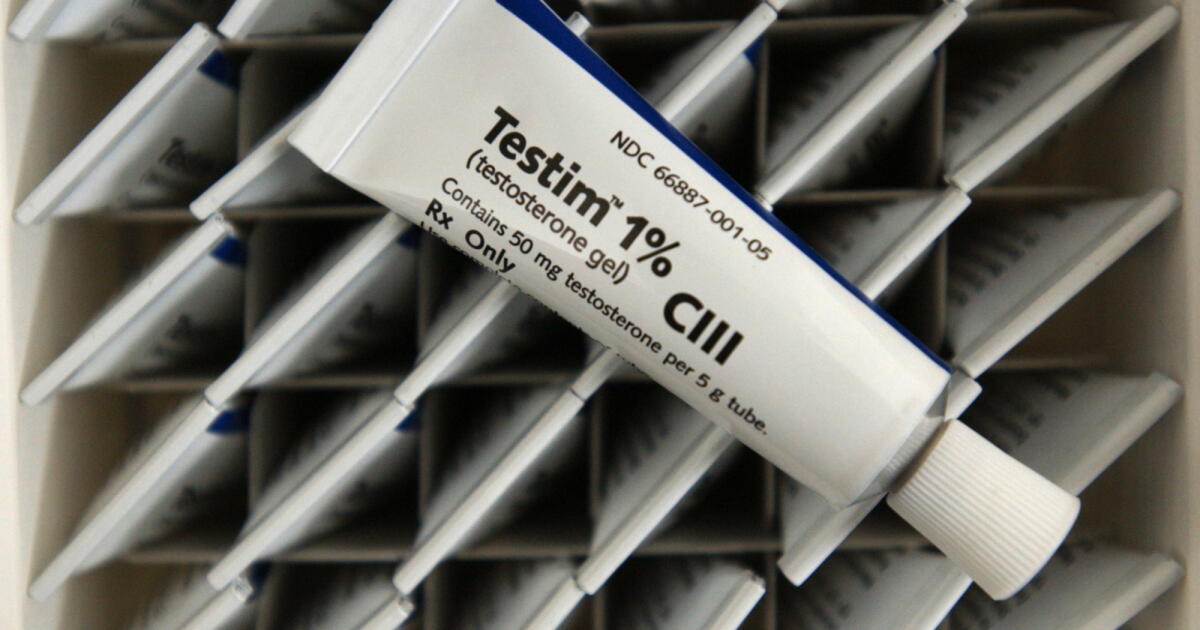
The Legislature has been especially deft at easing access to FDA-approved hormonal treatments, including testosterone, often used off-label by menopausal women: AB 82 ends the requirement to report prescriptions to the state’s tracking database; AB 1778 proactively declassifies testosterone as a controlled substance under state law, should there be action in Washington to do the same under federal law.

Although Newsom twice vetoed bills to mandate insurance coverage for menopause treatment — and deserved all the flak he received — the 2026-27 state budget includes a minor course correct: a $3.4-million “trailer bill” to invest in public education and make menopause treatments more affordable; Medi-Cal patients are not fully covered by the addendum, though, making it a toothless reform for those who need support the most.

Why should California’s menopause agenda, or that of the other 27 states that have introduced reforms, matter to the rest of the country? They offer useful models of what to do — or in the case of Medicaid exclusion, what not to do — in crafting meaningful policies. Perhaps more important, they offer a rationale that can help persuade the public; those who might balk at a congressional bill or federal policy, in part because of skepticism of the federal government or the current administration, can listen to and learn from other stakeholders, including governors and state lawmakers and activists.

Take for example the FDA decision in November 2025 to remove the long-critiqued “black box” warning on estrogen products for menopause. This was the culmination of a decade-long campaign by physicians, researchers and scientists — who had been waging the fight for accurate labeling well before the acronym MAHA ever existed and regardless of which party held power. Yet the very image of Health Secretary Robert F. Kennedy Jr. using his moment at the podium to credit the Trump administration’s deep commitment to women’s health posed a serious credibility challenge. Aligned and contemporaneous state reforms offered much-needed reassurance and clarity to many.

Trust in government is understandably at a low point, but this happens to be when menopause finally has caught the attention of policymakers at all levels of power. Some are taking long-overdue steps for women’s health, however implausibly. Let’s take the wins.

Jennifer Weiss-Wolf is the author of “When in Menopause: A User’s Manual & Citizen’s Guide.” She is executive director of NYU Law’s Birnbaum Women’s Leadership Center.

Source link

Liam Gallagher’s cheeky joke to fans who missed out on tickets as Oasis sells out 42-date tour after scam alert

LIAM Gallagher has made a cheeky joke to fans who missed out on Oasis Live ’27 tickets after all 42 dates sold out in three days.

Tickets went on sale on Friday and remained available over the weekend before completely selling out.

Liam Gallagher has made a cheeky joke to fans who missed out on Oasis tickets Credit: WireImage
He joked that fans could sneak into the shows Credit: X/liamgallagher

Following the news, Liam, 52, took to X this evening to issue a statement as he left a parting joke with their fans.

He said: “That’s all folks, we have officially sold out. No more tickets left.

“Congratulations to everyone who got a ticket and to those who didn’t, sneak in, f**k it, YOLO. LG x.”

Excited fans who managed to luckily get tickets rushed to the comments section as one said: “See you in 2027, Liam!

ticket panic

When Oasis tickets are on sale today: Code and ballot schedule for 2027 dates


SUPERSONIC

Missed the Oasis ballot? Here’s how fans are still bagging 2027 tour tickets

“I’ll be travelling just to see you guys! Best wishes from Costa Rica!”

Another person commented: “See you at Knebworth! Let’s have it!”

However, some unlucky fans weren’t able to get their hands on tickets as one fumed: “I was manifesting it so much, I’m upset.”

While a second moaned: “Liam I’m so sad, I was born and raised on Oasis and I didn’t get a code. I hope I can see you one day.”

All 42 of Oasis’ shows have sold out after a three-day onsale window Credit: Instagram/oasis
The brothers will be embarking on the world tour in May next year Credit: Getty

Pre-registered fans were randomly selected to receive a unique code for nine onsale windows running from Friday to Sunday.

This registration process was the only way members of the general public could buy tickets.

Since the tickets have sold out, fans have been issued with a warning to remain vigilant and avoid scams on social media.

Resale tickets will only be available to purchase via the Ticketmaster and Twickets websites, for the prices originally paid, nearer to the tour dates.

Earlier today, Liam and Noel, 59, issued the stark warning to desperate fans considering buying from sites selling tickets to their gigs at inflated prices.

The statement on the Oasis social media pages said: “All codes have now been sent out, with the final sale windows happening today.

“Please avoid scams involving social media accounts selling codes or tickets. These will be fake or invalid.

“Tickets currently on secondary websites are liable to be cancelled.

“Resale tickets will be available nearer the events and will only be available, at the price originally paid, through Ticketmaster and Twickets.” 

Brothers Noel and Liam will kick off their 2027 mega world tour with performances at the Parkhead stadium on May 21, 23, 25, 28 and 29.

Source link